With the network serving as the foundation for digital business, maintaining the highest availability, performance, and security are the three end states that matter the most.
A new standard of service is required for today’s business critical networks, and Cisco Services is leading the way.
But don’t take our word for it.
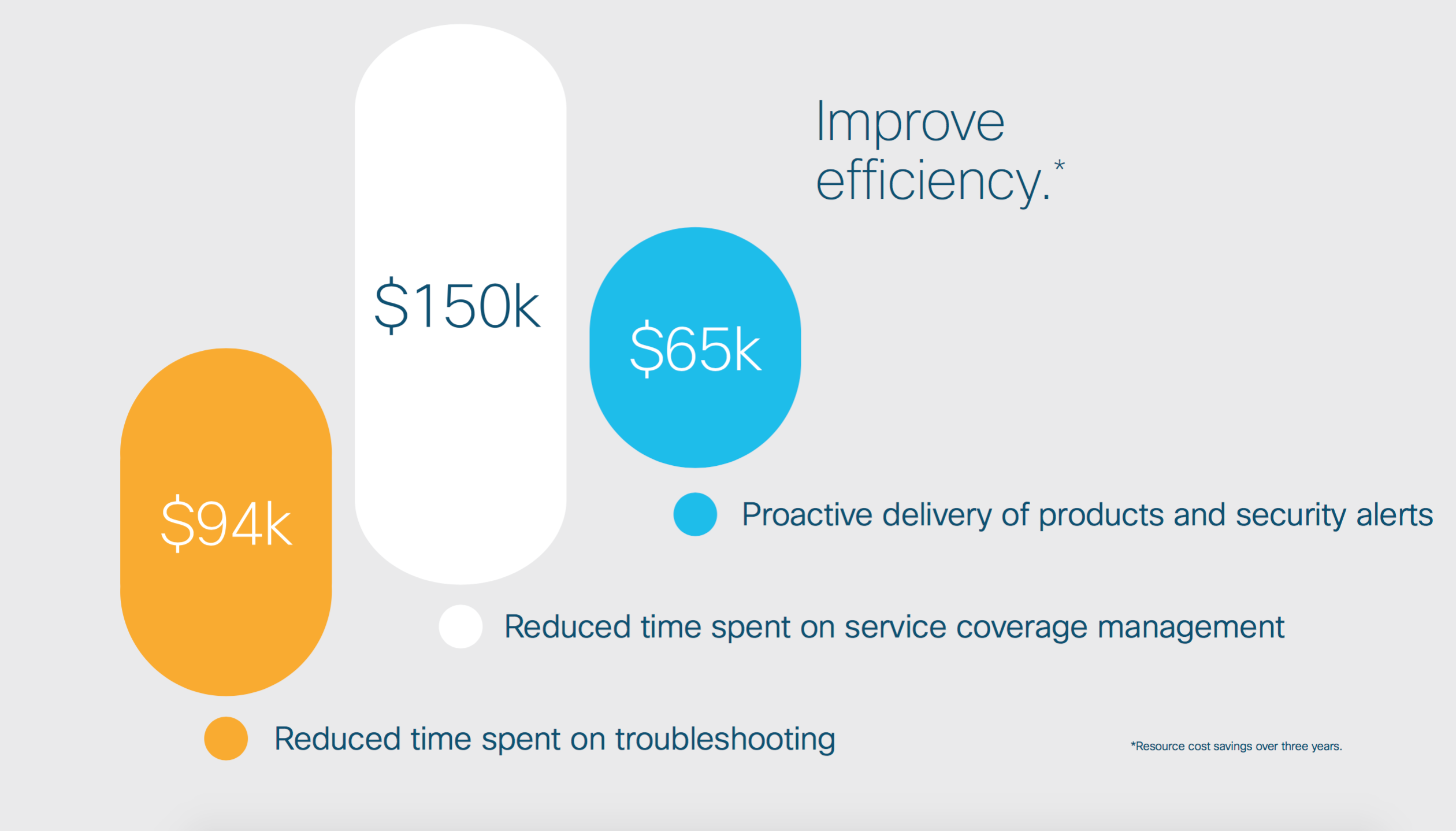
We recently commissioned Forrester Consulting to conduct a Total Economic Impact™ (TEI) study to examine the value of Smart Net Total Care. The findings revealed that a global company with $2 Billion in annual revenue and 20,000 users on its network is able to maintain the continuity and integrity of their network with less effort, resulting in 120% ROI and reduced resource costs of 1,800 hours annually.
How? With automated capabilities that help you resolve problems faster, improve risk mitigation, and increase operational efficiency, Smart Net Total Care helps you proactively manage your infrastructure in three ways:
1. Technical Service and Incident Management
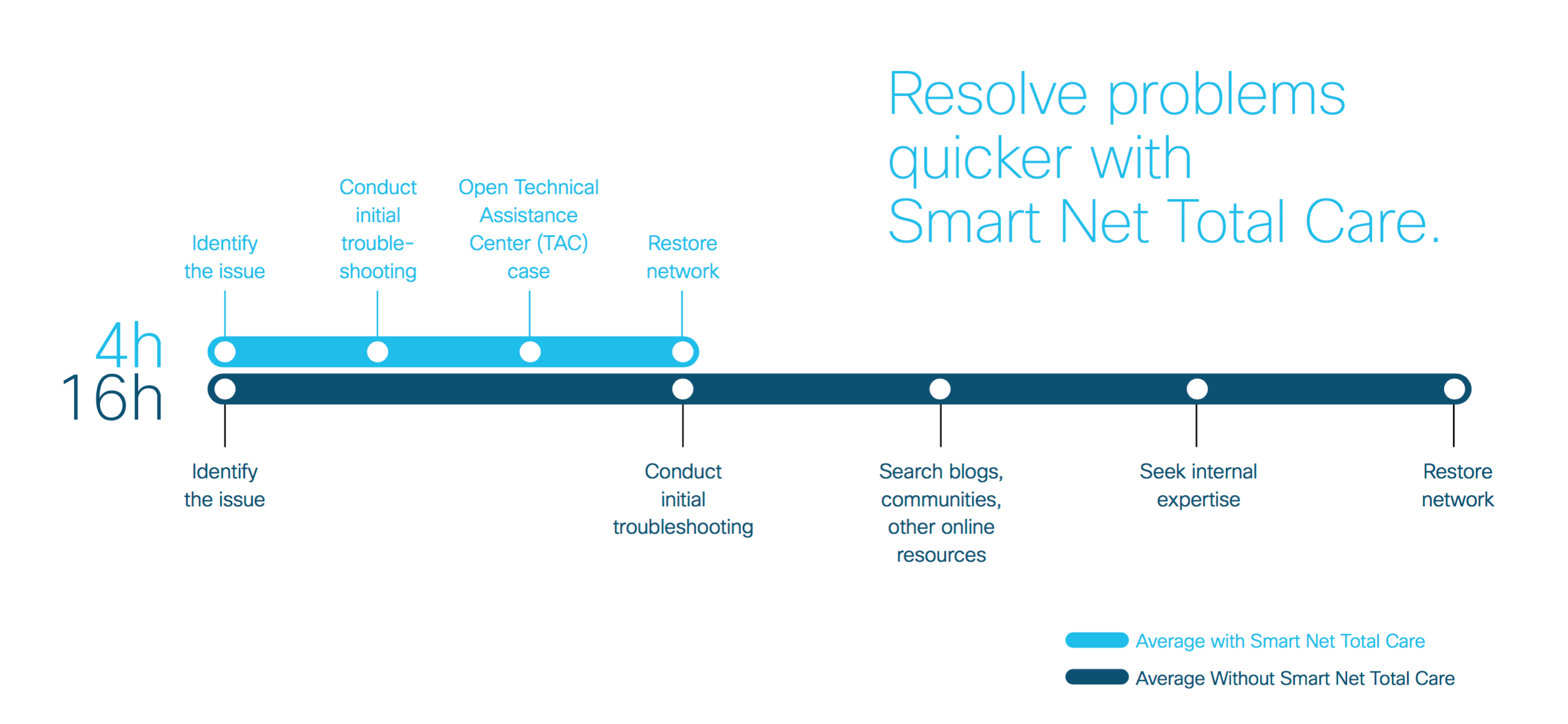
Smart capabilities provide an up-to-date view of the Cisco equipment installed in your network, giving Cisco Technical Assistance Center (TAC) engineers more information so they can resolve problems faster—four times faster according to Forrester. The study also found that by combining timely TAC support with fast hardware replacement times, customers reduce unplanned downtime and can save $1.6 million over three years.
2. Security and Product Alerts
Smart Net Total Care provides product and security alert information, prompting network engineers to
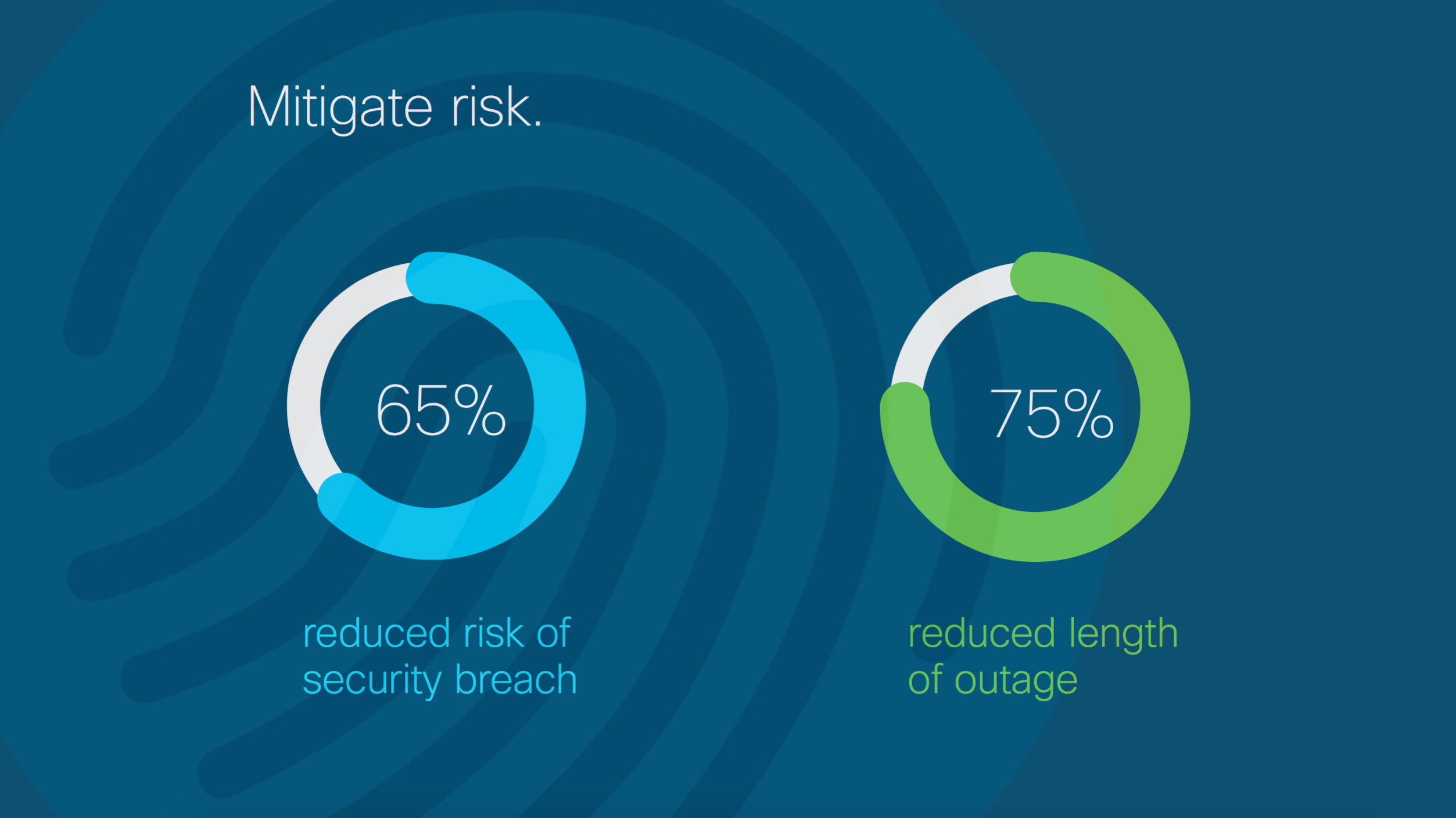
install the latest software updates. This helps protect against the latest vulnerabilities, reducing the risk of unplanned downtime. Forrester concluded that these proactive measures can result in a 65% reduced risk of security breach and 75% decrease in outage length.
3. Service Coverage and Product Lifecycle Management
For most organizations the network is constantly changing with new equipment deployments, or added or deleted network segments. Through the Smart Net Total Care portal, you can easily identify service coverage or OS software to determine whether support levels meet your business needs and comply with corporate policies. Planning and budgeting are also more predictable. Forrester validated that the device lifecycle management capabilities can save customers two weeks of time each month. This can add up to a cost savings of $150,000 over three years.
Companies from across the spectrum trust us with their most vital assets, from 23 of the top 30 global businesses to organizations such as Pella Corporation, the Italian Navy, and Mutual de Seguros. If you’re adding new equipment or refreshing your network, the Forrester TEI study is a must read. Don’t underestimate the value your technical services vendor should deliver.
Some of our largest enterprise customers are deploying the next-generation of data center networking. They are delivering automation and intelligence with programmable hardware and software – deployed with application centric models that work best for their workloads. Their IT leaders have focused their creative energies to re-imagine their business – digitally transforming their operations – to drive customer-centered innovation and enable their organizations to deliver greater value because of new architectures, modernized infrastructure, and the power of intent-based automation in the data center.
And so, this also is the story of Inovalon, a cloud-based analytics technology company helping the healthcare industry transition from volume to value. Facing increasing demand for its services, Inovalon didn’t have the time to stitch together and scale a complex mix of infrastructure components from multiple vendors. The company’s IT staff wanted to adopt new, modern, and scalable technologies to support distributed compute models, a rapidly expanding data lake, visualization tools, and more.
So they chose to deploy first one, and then a second, pre-engineered, converged infrastructure data center design from Dell EMC and Cisco based upon the Vscale architecture.
“We had settled on specific new technologies, but creating and maintaining an optimized environment around them concerned us,” says Faisal Khalid, senior vice president of Technology Solutions at Inovalon. “For example, our distributed database technology is very network sensitive, and we need to build clusters for certain clients that have 90-plus or 100-plus nodes each. We wanted the ability to scale those clusters across racks to achieve linear performance scaling, which often leads to latency.”
Their cloud infrastructure uses Cisco UCS Director and ACI to configure and secure the compute, network and storage resources employed to onboard new customers – in half the time it did before.
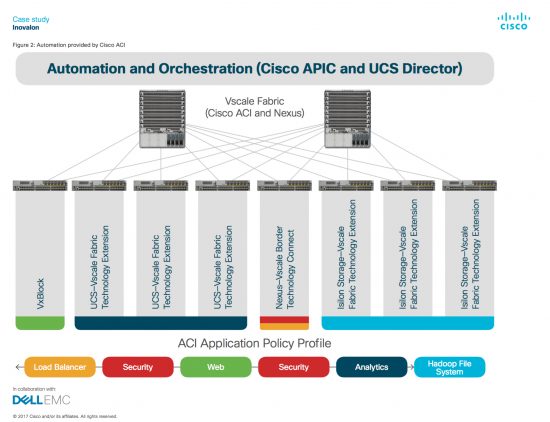
In the figure, the application profile depicted helps visualize how one can provision a secure, isolated instance of the client’s customer records with an instance of the analytics application. Cisco ACI is used to create profiles and policies for their big data solutions, automating the configuration of firewalls, load balancers, and security appliances in and around the application’s end points. In effect, the automation and orchestration creates the effect of a logical converged infrastructure – but at data center scale with flexible options for expanding compute and storage independently. This automated process can be repeated for each and every new client.
“We took advantage of the application profiles that were created for the big data solutions in our Reston data center and used them to automate the deployment of our Phoenix data center,” Khalid explains. “We also added dozens of new corporate application services, and we did it all in the same amount of time and with the same number of people that were involved in the rollout at Reston.”
The data centers weren’t just fast to deploy. They were also easy to expand and manage.
“We quickly refreshed our data center technology and tripled our capacity, including more than 50 new racks, without having to add engineeringor operations staff,” Khalid notes. “And we can expand capacity for our clients on demand through a pay-as-you-grow arrangement with Dell EMC.”
So this is what it means to digitally transform operations.
Onboard new customers in half the time.
Triple the infrastructure with the same IT staff.
Scale the business with agility, flexibility, with security and compliance.
I focused on the enabling technology and business outcomes Inovalon shared with us. But it is important to recognize that the data center infrastructure (compute, network, services, storage) had to be delivered to Inovalon’s requirements and on schedule. Dell EMC and Cisco Advanced Services work together to accomplish that for these Vscale architecture solutions. To learn more about that I refer you to the case study and these references:
You might be surprised to know how similar. Just as within your organization, digital is transforming our business as well.
That’s right. A company that helps others navigate the tides of digital business transformation is also feeling the tidal force. And, the force is growing stronger.
According to Forrester, “The things that used to set companies apart—economies of scale, distribution strength, and brand—are far less potent than they used to be. Digital technology has fundamentally changed the dynamics of the markets in which we operate and the speed required to remain competitive.”
At Cisco, we’ve been working for years to weave together strategy, technology and solutions on our journey to a digital business. Along the way, Cisco IT is sharing its experiences to help others reshape their businesses for the digital era.
From our experiences, we have compiled five considerations that underpin a successful digital transformation in virtually any organization with real-life examples.
Simplify Everything. Deliver IT as a Service.
Think about your last restaurant visit. Did you choose from a menu of items? Did you weigh cost vs. enjoyment value? Did your meal arrive within reasonable time? Probably, or you would have found another restaurant. 1
Consider your IT department. Do you offer an IT services catalog? Can your customers pay for only what they need? Do they receive services in a reasonable timeframe? To support digital business, IT needs to “offer internal clients the power of choice. Allow them to pay only for what they use. Deliver it speedily.” 1 IT functions less as a department and more as a business.
Cisco is forging an IT as a business culture. For example, the service owner for email and calendaring accepts the comprehensive responsibility to provide this service to the company—ensuring that it delivers the right user experience, meets cost targets, and manages security risks. The service owner owns everything about that service.
Regular IT management reviews reinforce this ownership model by tracking KPI metrics such as delivery, cost, quality, user experience and risk. These insights help management weigh tradeoffs and make better business decisions.
2. Build Modular IT and Automate
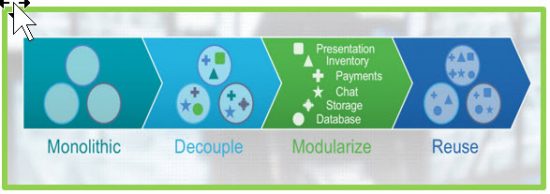
Modular IT is about breaking code into reusable chunks, simplifying and reusing them for greater efficiency and cost control. By continuously enhancing a code “chunk” and redeploying it across many services, you compress the time from coding to business value.
An example is Cisco’s “click-to-connect x” capability. In technical support, when an agent opens a support case, an online collaboration room opens. The agent can bring in subject matter experts right then to collaborate on solving the problem.
Further, any application can reuse this same modularized capability. A developer simply inserts the code “chunk.” It links a person’s name to the directory and launches a call with a collaboration tool. Reusing the same code creates consistency, fosters simplification and saves time.
3. Deliver Data to Drive Business Decisions
The driving force behind digital transformation is customer experience. Customers expect easy, automated processes, whether placing an order, checking a reservation, or researching a purchase. That unified experience results only from a foundation of unified data.
Typically, data is broken up across different departments that each use disparate spreadsheets and fragmented data sets. A successful digital business dismantles these data silos, connecting data elements to act as one.
At Cisco, we moved data to a single, consolidated, and unified view across the company. We took an architectural approach, starting with consistent and shared platforms in data centers. Then systematically, we brought together cleaned data sets to form a single master set (single source of truth). We dissolved silos to forge a common data platform to connect the unconnected, leveraging capabilities like Hadoop. Finally, we provided a simplified platform for business users to access the consolidated data.
It’s a significant undertaking and cannot be done all at once. Yet each step forward powers additional insights, innovation and business value.
4. Adopt Continuous Delivery
Digital business denotes innovating with speed and agility. This necessitates an approach for delivering fast, frequent and high-quality releases of function (code), with less risk while rapidly incorporating user feedback.
At Cisco, we moved to continuously developing and delivering incremental, small-value code, resulting in more frequent business value generation. We accelerated adoption across IT by training all software developers in agile fundamentals, scaled agile framework and scrum master certifications. In only 18 months, we expanded continuous delivery from 23 percent to 73 percent of our services.
Continuous delivery requires IT to get close with its business customer. Cisco IT and its business colleagues jointly identify the smallest function that produces business value. IT then takes on the responsibility for its delivery and success. This seemingly small shift—asking for and delivering things smaller and faster—is key. It ensures that we deliver the right thing for business and build it the optimal way.
5. Embed Security Everywhere
Digital transformation simply cannot happen if the organization fails to keep critical assets safe. Cisco relentlessly pursues a pervasive security approach, based on continuous, policy-based threat protection. It reaches across the entire infrastructure—through the data center, to the edge of the network and into the cloud.
An example is security with continuous delivery. A common concern is that in the pursuit of speed, quality and security will suffer. This is not necessarily true. At Cisco, we designed the end-to-end security approach to secure every aspect of our value chain. We ensured quality from day one based on acceptance criteria. We automated test cases and embedded checks into the release process.
We doubled our delivered capabilities and increased quality by 92 percent. Here’s the sparkler. Vulnerabilities simultaneously shrunk by 60 percent.
Ready to Share
Cisco has accomplished much on its digital journey, and we’re building new capabilities every day. We’re ready to share our learnings to help you navigate your digital future.
It’s definitely been quite a while since I sat in a classroom for more than the annual back-to-school night routine. When I was a student, the classrooms always smelled like chalk. We turned in assignments in our best handwriting and carefully chose the right folder to encase our reports. Eventually, we moved into the wild world of typewriters. Teachers stood at the front of the room and told us what we needed to know. We wrote down what they told us to write, we filled out worksheets, and occasionally we worked together on projects.
The smell of dry-erase markers has replaced the aroma of chalk. Classrooms are more vibrant, interactive places. And educators are finding more ways to integrate technology to enhance learning with more experiential activities in the classroom. Adoption rates vary – while 75% of teachers report that they’re using technology daily with their students, fewer schools have ways for students to learn and collaborate outside the classroom.
“It was very easy to extend my classroom techniques to Cisco WebEx… The chat feature lets students ask questions, and the ability to share video and other content increase their engagement.”
– Jeanine Pfeiffer, Professor, San Jose State University
From early education to post-graduate studies, schools have myriad challenges as technology continues to advance. Student expectations are constantly evolving as their personal use of technology also evolves. Meanwhile, not only do educators have to keep students engaged and adapt their teaching to new technologies, but schools also have to address business issues including budgets, enrollment, growth, and competition.
As different schools and regions have different needs, schools are finding their own ways to make the most of technology to best address their needs. Read on for examples from:
Universidad Panamericana
Utah State University
Oklahoma’s Howe Public Schools
Romanian Ministry of Education
San Jose State University
.
Mexico’s Universidad Panamerica
Improving outcomes with virtual learning and teaching
With some 12,000 students and 33 degree programs, Universidad Panamericana is one of Mexico’s top private institutions. Spread out over four campuses, technology allows the four locations to act as one university.
Cisco WebEx and Jabber give instructors a range of options to help improve learning outcomes. For examples, students can access classroom sessions remotely or replay lectures after the live class. Similarly, MBA students can work together in virtual group sessions to share knowledge.
“New ways of working offer possibilities for teachers and students to collaborate on a more personal level via video.”
– César Hernández Reynoso, IT Director
Guadalajara Campus
Video transforms education and increases student access
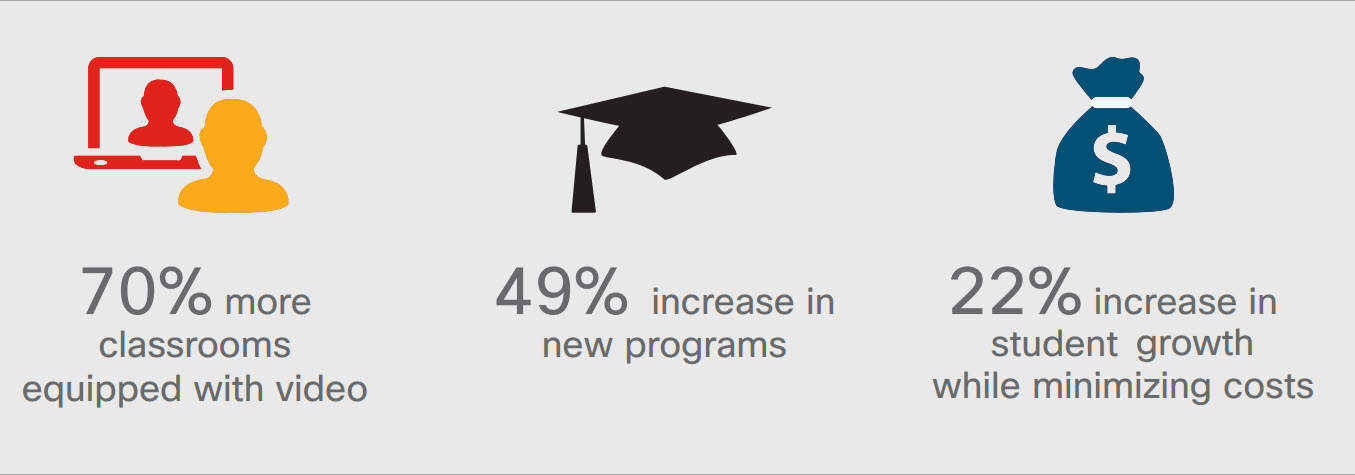
Utah State University is another example of a multi-site university – in this case, one with 43 sites across the 29 counties. Now, the university uses Cisco technology to extend video throughout Utah, allowing students to attend remotely from designated USU sites. Is it working? Video-enabled distance learning enrollments are growing faster than main campus student enrollments.
Today, with 75 distance-education degrees and programs, video is increasing the ability to provide students with access to the best teaching faculty and courses, even in some of Utah’s most remote areas. Trying to do the same in the traditional classroom approach would have been impossible to afford. Faster growth at lower cost. That’s the goal of every organization but even more critical in today’s Internet economy.
Read more about Utah State University, including interviews with students, in the full case study.
Oklahoma’s Howe Public Schools
Removing the limits of location through video
Learning is no longer confined to the classroom, the campus or the home. For students in rural southeast Oklahoma, the commute to school on the bus is an active learning space.
Howe Public School students who were once limited by their physical rural location can now access advanced courses and college curriculum. Cisco collaboration tools, in conjunction with the learners’ devices, provide a seamless conduit to real-time instructors via video-conferencing and just-in-time avenues for peer and teacher mentoring.
“Reimagining education is not about technology or devices, it’s about moving to a truly individualized and differentiated learning experience.” – Dr. Lance Ford, Educational Technology Advocate.
Watch the video to learn how Howe Public Schools is doing just that.
https://www.youtube.com/watch?v=aQTpP3sKCkU
Romanian Ministry of Education
Digital transformation sees soaring grades as educational equality improves
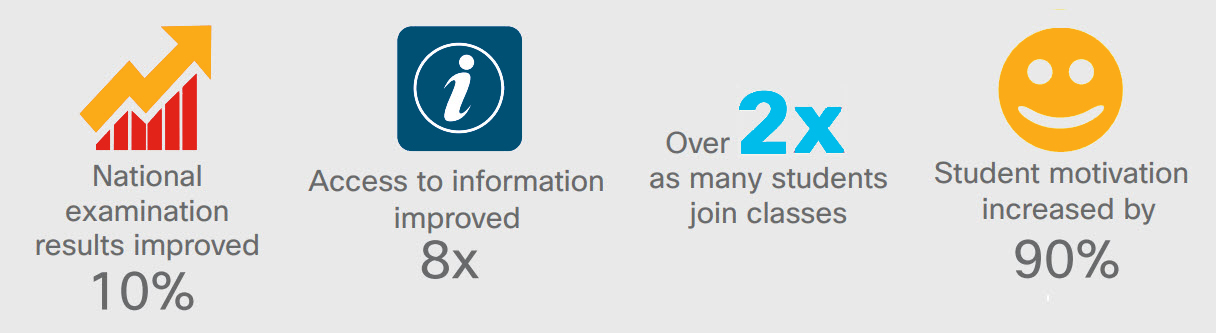
Only a few years ago, where you lived in Romania had a significant impact on your education. Compared to city schools, the country’s rural schools were more poorly equipped, resources were limited, and teachers were stretched. Not surprisingly, students in city schools usually outperformed their rural counterparts in national exams.
Realizing the impact on future competitiveness, the Romanian Ministry of Education set out to bridge the divide, establishing connected classrooms where learning is possible anywhere, anytime, with any device. Regardless of location, educators now have unlimited access to educational resources. Faculty can collaborate on joint projects with peers. And schools record content so students can learn at their own pace, creating a virtual learning environment.
Students in remote schools now hear from and have access to city-based subject matter experts via video conferencing. Digital learning expands the educational opportunity for both students and teachers—from physical textbooks to an entire world of digital information in the form of text, audio, and video.
“Before, only a few students had access to very specific materials. Now, 100% of students can access a much wider range of educational content and learning tools.”
– Ana-Maria Vladau, Schools Inspector, Romania
Innovating to extend educational opportunities and partnerships
As the number one supplier of education, engineering, computer science, and business graduates to Silicon Valley, San José State University (SJSU) is an incubator for top tech talent. Collaboration technology isn’t new to SJSU’s approach, but the university continues to find more ways to take advantage of it to reach new corners of the world.
Just one example comes from Vietnam with SJSU’s Social Work Education Enhancement Program (SWEEP). It’s an initiative to develop and carry out a curriculum that is relevant and adaptable to Vietnam’s changing needs. Eight Vietnamese universities participate in the program, using Cisco WebEx for regular bi-weekly leadership video-conferencing meetings that involve the SWEEP team and high-level representatives of the partner universities.
“The ability to conduct video meetings and build strategic partnerships with Vietnamese universities is contributing to the development of social work in Vietnam… Our partners can connect to video meetings via Cisco WebEx on their mobile devices, making participation very easy for them.”
– Debra Faires, SJSU School of Information
For more examples of how San Jose State University continues to explore collaboration technology, read the full case study.
Use our case study index to search by industry, technology, location, or products to find more case studies about organizations using Cisco collaboration technology.
While everyone else is enjoying summer’s warm days and fun-filled vacations, the analysts at Gartner and Forrester are busy working on their next set of reports covering the data virtualization market and key products in the space such as the Cisco Information Server.
What new data virtualization reports will await you as you return from your fun in the sun?
For all those Gartner and Forrester subscribers in the audience, here is your preview.
Gartner Data Integration Magic Quadrant
The most venerable of analysts’ data integration research reports, with roots leading back into the 1990’s, the Gartner Magic Quadrant for Data Integration is currently scheduled to publish sometime in August on Gartner.com.
As always, this year’s effort involves an “A Team” of Gartner Analysts including:
Mark A. Beyer, Research VP & Distinguished Analyst, Data Management & Analytics
Eric Thoo, Research Director, Application Architecture, Infrastructure and Integration
Ehtisham Zaidi, Principal Research Analyst, Data Management & Analytics
Mei Yang Selvage, Research Director, Data Management & Analytics
The report’s scope spans beyond data virtualization to cover multiple data integration delivery methods as previously defined by Gartner to include:
“Physical bulk/batch data movement between data repositories, such as processes for ETL or extraction, loading and transformation (ELT)
Data federation/virtualization
Message-oriented encapsulation and movement of data (via linkage with application integration tool capability)
Data synchronization when distributed datasets must resolve data collisions resulting from distinct changes in disparate copies of data to retain data consistency
Replication of data between homogeneous or heterogeneous DBMSs and schemas
Migration of data across versions of data repositories (such as databases, i.e. systems, and so on) and applications (resolving logical differences to achieve physical migration)”
Given this wide scope, broader data integration product offerings from vendors such as Informatica and Talend typically fill the “Leaders” quadrant. Specialist providers such as Cisco generally fall into “Visionaries, Challengers and Niche Players” using Gartner Magic Quadrant vernacular. Stay tuned for 2017 results.
Gartner – Adopt Data Virtualization to Improve Agility and Bimodal Traits in Your Aging Data Integration
On July 14, 2017, Ehtisham and Mei teamed up to publish guidance on how organizations can leverage data virtualization help optimize data integration success in Adopt Data Virtualization to Improve Agility and Bimodal Traits in Your Aging Data Integration. In particular, the report showcases data virtualization’s value add within Gartner’s Logical Data Warehouse architecture as well as how data virtualization helps span the agility versus operational challenges Gartner addresses in their Bi-Model IT research.
Gartner Data Virtualization Market Guide
Last summer, Mark and Ehtisham joined with fellow analyst Shubhangi Vashisth to produce Gartner’s first ever Market Guide for Data Virtualization. In contrast with the broader Data Integration Magic Quadrant, this research provided deeper insights into the data virtualization market, per se, where Gartner predicts significant adoption over the next several years. Beyond data virtualization market definition, direction and analysis content, this report also listed 16 representative vendors and their offerings including the Cisco Information Server.
This summer, Mark and Ehtisham are joining Gartner analyst Ankush Jain to produce the 2017 version of the report, currently scheduled for publication later this month. Keep an eye out for these updated insights.
Forrester Wave for Data Virtualization 2017
Forrester’s “granddaddy” of data virtualization analysts’ reports is also under development this summer, with anticipated publication on Forrester.com in November 2017.
Forrester analyst Noel Yuhanna, who collaborated with fellow analyst Mike Gilpin on Forrester’s seminal data virtualization research back in 2006, the landmark Information Fabric: Enterprise Data Virtualization in January 2006, is leading Forrester’s fifth-generation Data Virtualization Wave research efforts. Earlier Data Virtualization Wave’s from Noel include:
The Forrester WaveTM: Enterprise Data Virtualization in March 2015
The Forrester WaveTM: Data Virtualization, Q1 2012 in January 2012
The Forrester WaveTM: Information-as-a-Service, Q1 2010 in January 2010
The Forrester WaveTM: Information-as-a-Service, Q1 2008 in January 2008
Cisco Information Server, formerly Composite Information Server, has been a strong performer or leader in every one of these reports. And we hope to maintain this high standard again this year.
While not exactly “beach reads,” their far-reaching work provides additional perspectives that I think you will find quite valuable complements to the upcoming work from Gartner and Forrester.
Cisco’s software strategy has been getting great external validation following our recent series of major announcements in network infrastructure software and subscription buying models. In May, we introduced Cisco Enterprise Agreement, a simpler, more flexible way for customers to buy network infrastructure software.
And less than one month later Cisco did it again with the June 20 launch of Network Intuitive, a new, intent-based network, over two years in the making, that changes everything about enterprise networking. We announced Cisco DNA Advantage and Essentials subscription-based network software (along with our Catalyst 9000 series of switches) which will transform how network infrastructure software is bought and deployed.
With this latest advance we’ve demonstrated once again how we’re putting software into our core business – with switches this time – and we’re doing it across the portfolio as well. Cisco has made a deep commitment and investment in leading this new era of networking. You’ve been hearing Chuck tell the analysts for more than a year that software plays a massive role in our business, and the company has been working diligently to develop the right technology and business models to continue our shift to a more software-centric business. For example, Cisco ONE, our suites for all of our infrastructure software launched two years ago, has more than 18,000 customers already, and has been adopted by 95 of the Fortune 100.
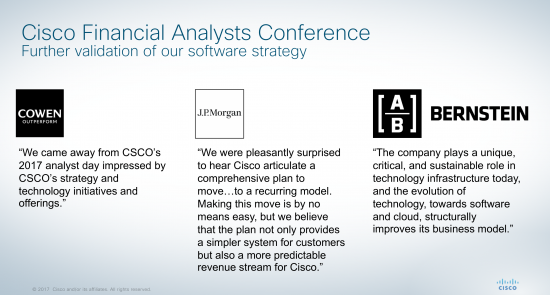
In June, we held our annual Cisco Live U.S. conference in Las Vegas. We held our Financial Analyst Conference there on June 28, and got tremendous validation from the analyst community. Here are just a few of the reactions we received:
I like the strategy, too. I joined Cisco not quite a year ago after 24 years at Microsoft because I saw the incredible opportunity here in software.
J.P. Morgan has it spot on. Nothing this important and innovative comes easy. This transformation is hard. That’s why we chose to do it. Solving problems is in my DNA. Look to us to continue delivering innovation in the way customers want to consume and manage infrastructure software.
I don’t know about you, but everyone seems to be talking analytics – it is another great digital transformation buzzword. Most of the time in financial services, analytics means customer analytics – how we can combine structured data within the bank with the world of big data to give us amazingly new actionable insights that will delight our customers and make the bank a fortune.
On a personal basis, I find that all a little intrusive – the idea that someone is trying to ‘anticipate my needs’ is a little creepy – especially when so often they cannot execute my actual, real life, immediate needs very well at all! Thankfully many consumers disagree so I completely get why banks are doing it.
However, I am increasingly interested in two other areas of analytics (yes really!):
Network analytics
Application analytics
Before you nod off, why should this be of more interest to digital transformation executives and channel/product owners?
Network Analytics
Against a landscape of increasing financial services regulation (e.g. GDPR, PSD 2, etc.) and the move to more open banking, what is happening in your data network and your applications is increasingly crucial and can really drive revenue and reduce costs.
For example, the latest cutting edge work in network analytics – where you can identify and track every data packet that travels across your network. Just stop for a moment and think what this means – you can see, real-time where every packet of data comes from, which part of the business initiated the move, where it goes – and all of this is recorded, stored for future use and used for predictive analysis.
This now gives us the opportunity to set data policy more efficiently, automate policy with less manual intervention and enforce policy in a manner that is provable – all of the time, everywhere. Imagine how much cost this could take out of IT Operations. Imagine also how useful that would be when having to comply with GDPR for example.
And imagine the benefit of this for regulatory reporting – the ability to prove to the regulator that our data behaved in the way we intended it to – all of the time and everywhere.
This also has a major impact on our ability to combat cyber crime – you can monitor the data performance across the network, establish normal patterns and be alerted, real time when these norms are broken. Nice!
https://www.youtube.com/watch?v=My8STWT85lk
Application Analytics
In terms of application analytics, things have moved on too. In the past, we had to add tags to existing software and load a tag manager to make sense of it all. This takes time (often banks take up to 18 months to even get this type of work in the development queue given how much regulatory driven change is in the ‘must do’ category).
The very latest application analytics platforms can do this much more quickly and to a more forensic level. Indeed the very latest approach can enable us to see the application journey map, which systems the application interacts with, how all these elements are performing and identify issues at the code level.
As a channel owner, how good would it be to be able to talk to your IT support colleagues and be able to identify in near real time where the issue lies, even down to the line of code that is the problem! How many incidents could be avoided by being able to spot problems with your application before the customer notices? For many banks, social media is the early warning system as customers start to share their bad experiences more quickly than we can spot them.
I heard one bank who has adopted this new technology describe it as taking them from being ‘paramedics’ to ‘brain surgeons’ in understanding their digital business.
So new developments in network and application analytics can deliver real value very quickly in the business – not as sexy as customer analytics I grant you but much easier to monetise and less fraught with data protection issues.
To see what Cisco is doing at the cutting edge of network and application analytics please visit the following links DNA Center, Cisco Tetration, and AppDynamics.
Written by Mehdi Nikkhah, Software Engineer, Cisco Innovation Labs
Service providers are going through a massive network transformation. Increasing demands from new services, in respect to user experience as well as connecting millions of things every year or month as well as creating new value and revenue streams. The solution is to unlock the data that is hidden inside the network. Data that can help to improve services as well as to run networks more efficiently. However, as we unlock it, we get flooded and overwhelmed with data. The solution to this problem is Automation. Automation that gives you an autonomous network, a self-driving and self-healing network. Or in short, an intuitive network.
So, what is one of the underlying key technologies for Automation? It is often referred to as Artificial Intelligence or Machine Learning.
In this blog we want to explain in simple terms what’s so cool about machine learning and how it can be applied to turn overwhelming network data into meaningful output.
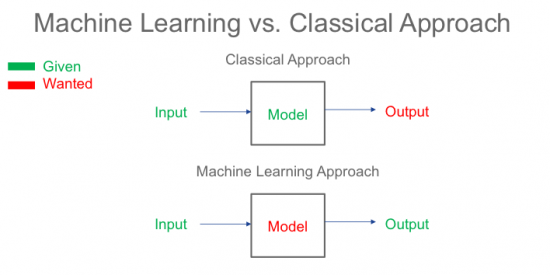
Machine learning is all about understanding data and sorting it into some kind of structure, to make them easier to understand. In the recent years, the world has moved from classical modeling schemes to models that are data-driven. This has been mostly fueled by the vast amount of data available from various sources, such as sensors, Internet of Things (IoT), etc. However, the evolution of machine learning algorithms driven by advancements in parallel processing power of GPUs, also played a critical role in exploiting data for modeling purposes. The following picture illustrates data driven vs. classical models:
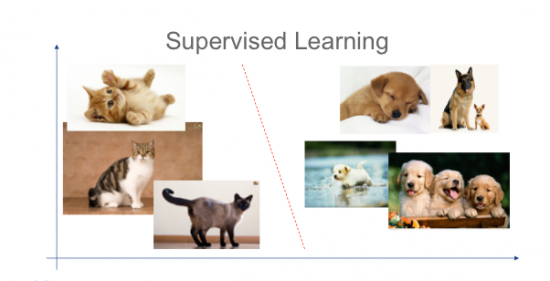
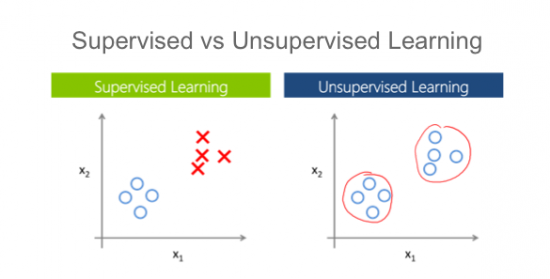
In the classical approach you know a given inputs and you have knowledge about the desired output. This way you could create a model to relate the input to the desired output. In a machine learning approach, however, the inputs and outputs are observed. Using optimization tools, you can create a model that relates the inputs to outputs with a certain precision. The observed inputs are what we call data. The outputs are usually called labels, and the optimization tools are called the machine learning algorithms. For instance, if the goal is to determine whether a picture is of a cat, the data is the picture itself and the existence of a cat is the label (0/1 labels). This is dubbed as “supervised learning”, since a supervisor is required to label the data initially. Usually the supervisor is a human, and that is why labeling is cumbersome. Who wants to look at pictures all day?
So, there may be a better way. Sometimes we deal with data that is not labeled and it is hard, if not impossible, to label it. In those scenarios, we use another approach called “unsupervised learning”. Basically, this is to ask the machine to find features in the data that partition the dataset. For instance, one can give a number of circles in the 2D space, and ask how they can be clustered.
Unsupervised learning is useful, but has its limitations. For instance, a robot that needs to detect an object cannot accomplish this task using an unsupervised learning method, since initially there is no notion of objects given to it. As a result, in many practical scenarios we use supervised machine learning algorithms, and bear the burden of labeling. Although recently a new machine learning approach, called Reinforcement learning has become popular. In this method, we give minimal feedback to the system, while it learns to explore various possible scenarios. A good example of this method in practice is the Google’s Go challenge, where a machine learns to play the game Go much better than the most known Go player champions in the world.
One can categorize machine learning algorithms based on their usage. Some machine learning algorithms are better fits for classification, while others are particularly useful for pattern recognition. Neural networks, for instance, are useful for pattern recognition and prediction, as opposed to logistic regression which is more useful for classification and root cause analysis.
“How does this relate to the Internet of Things IoT?”, you may ask. An example is to use neural networks for pattern recognition in an IoT use-case.
Let us try to answer the following question. Is it possible to detect drunk/sleepy driving behavior using only speed, brake, and steering sensory data from a connected car?
To answer this question, we need to first understand what careless driving is. We know that a drunk or sleepy driver usually tends to swerve across the lanes. There might be other indications of such driving patterns, but this is probably enough for this example. Assuming the speed, brake and steering wheel sensor data is given at a high enough frequency, we need to train a neural network to recognize such driving patterns. First, we need to have labeled data, which can be easily gathered from police reports (vehicle info, time, and location can uniquely identify the car), and assuming that we already collected sensor data from that car, one can give that data to the neural network as a positive label. On the other hand, most of the other drivers are not driving under influence, therefore, we have plenty of data for negative labels. Next step is to train a neural network on a training dataset, and testing it on a separate dataset. This is usually done offline, so the computational load is not an issue.
When the model is ready, we can use it on data from any vehicle and detect whether the driver is under influence or sleepy. Therefore, the answer to the question is yes, detecting careless driving is possible with the right data and the right machine learning tools.
This is just one example, of how data, that is hidden in networks and sensors, can be used to identify a drunk driver in the massive network of cars, streets, roads and highways. This is the approach we also apply to find the “drunk drivers” in your network, that may cause trouble in form of outages, delays, jitter or simple degrading user experience.
Learn more about machine learning in my on-demand webinar and about network automation solutions in our blogs and website.
If you have comments or questions, feel free to drop us a note.
Last month Cisco introduced our latest platform for realizing Cisco’s vision of “intuitive infrastructure“. This initiative is another step forward in the Cisco UCS strategy to provide customers with greater simplicity, automation, and intuitive computing.
Cisco announced the 5th generation of Cisco UCS servers last week, and this would not have been possible without the passion of our customers. From the beginning we’ve focused on simplifying and automating the user experience. The continuous feedback we have received from our users have helped us maintain our edge by effectively developing software along with our hardware and not as an afterthought. UCS embeds the management of the infrastructure elements so it is fully programmable, and it has a unified API. As a result, we have been able to solve a wide set of customer problems, which has translated into proven success in the market.
Product
Problem Solved
Results
Cisco UCS
Simplified computing by automating many routine operations activities
While we’ve made significant strides on simplification and automation, our customers have been relentless in asking us to continue the innovation journey. And thanks to them we are on the threshold of providing an even more intuitive management experience through a new platform, code named Project Starship. Our goal is to achieve what our CEO Chuck Robbins refers to as “intuitive computing”. This is a higher level of computing that delivers three important outcomes: pervasive simplicity, continuous optimization, and agile delivery.
This blog is the first in a series of blogs that will explain the journey we are on with Project Starship, as we pursue the goal of intuitive computing. Our north star is to continue to pursue greater simplicity. This will help our customers realize much greater efficiencies, as they pursue their business objectives and desired outcomes.
Pervasive Simplicity
Our goal is to provide a highly intuitive user experience that can fit a variety of user personas. While ease of use is important, we definitely wanted to delight our customers with simplicity being the core of every operation without compromising critical capabilities like scale, availability and functionality. We also learned from other groups within Cisco, and we understand that our customers love the benefits of cloud-based network management they’ve realized with our Meraki product lines. They wanted us to deliver these same advantages, such as seamless scalability, frequent enhancements, and ease of software updates provided by Meraki and other Management as-a-Service (MaaS) tools.
We realized in order to provide this experience we needed to not just make incremental changes to our products, but we really needed a transformative experience. This meant we had to change the way we developed and delivered our products. This will allow us to deliver updates to our customers more rapidly. Going cloud native also meant upgrades can be implemented without the added manual processes and hassles for our customers.
To transition to cloud-based systems management without impacting our existing customers we had to separate the local element management of UCS from global policy functionality. We’ve been making this transition over the last couple of releases of the UCS management software products. The new M5 servers and the recently announced HyperFlex Edge systems will be ready to connect to the cloud from day one.
Simplified Support
Customers also wanted better, simpler support. They wanted the process of reporting problems and opening tickets to be easier, so issues could be resolved more rapidly with fewer manual steps. As we move towards a model of cloud based systems management, one of the ready advantages is the tighter integration with our support team. The data and incidents generated from the “connected” install base will be available for use by the Cisco Technical Assistance Center (TAC) to gain insights and provide more proactive support. This will also provide capabilities for our customers to provide more direct feedback into our products.
In addition, the tight integration with Cisco TAC also extends the solution scope by enhancing continuous delivery to further speed up fixes and future development. There are other advantages that we’ll expand upon in future blogs.
Simplicity Can Move Mountains
Change is never easy, but we believe the benefits for our customers will be extraordinary. Our goal is to make the transition as easy as possible for our customers. I can tell you it has taken quite a bit of work to lay the foundation for this transition. We’ve done the hard work to reduce the complexity, so we can minimize the bumps and hassles for our customers.
We hope you’ll go with us on this journey as we pursue intuitive computing. We think you will find, as we have, that’s Steve Jobs was right when he said, “Simple can be harder than complex…but it’s worth it in the end because once you get there, you can move mountains.”
You can learn more about this journey by reading the series of blogs on this endeavor.








 An example is Cisco’s “click-to-connect x” capability. In technical support, when an agent opens a support case, an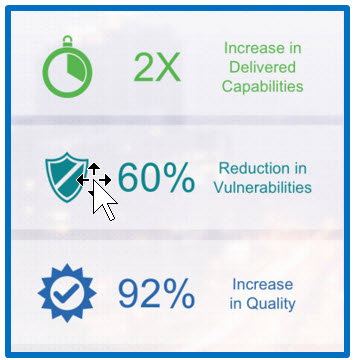
 Digital transformation simply cannot happen if the organization fails to keep critical assets safe. Cisco relentlessly pursues a pervasive security approach, based on continuous, policy-based threat protection. It reaches across the entire infrastructure—through the data center, to the edge of the network and into the cloud.







 Pervasive Simplicity
 Change is never easy, but we believe the benefits for our customers will be extraordinary. Our goal is to make the transition as easy as possible for our customers. I can tell you it has taken quite a bit of work to lay the foundation for this transition. We’ve done the hard work to reduce the complexity, so we can minimize the bumps and hassles for our customers.