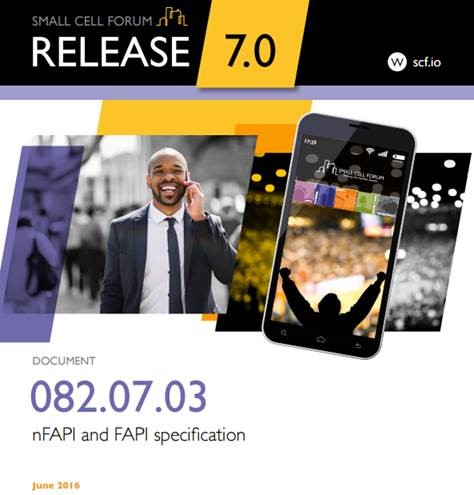
This week we saw an important milestone in the digital transformation of the Radio Access Network (RAN) with the publication of the Small Cell Forum’s nFAPI specification. Cisco has been instrumental in driving the small cell industry by championing the virtualization work stream within the Small Cell Forum that resulted in the nFAPI specification. nFAPI is specifically designed for realizing the interface between a Physical Network Function (PNF) that implements the RF and physical layer aspects of the small cell and a Virtual Network Function (VNF) that implements the upper layer protocol aspects of the base station. With 3GPP now analyzing how the future RAN will be virtualized, nFAPI prepares the foundation for 5G and its separation into PNF and VNF components.
For those who want to get an update regarding how virtualization is going to impact the realization of the RAN, we will be hosting a 2 hour session at Cisco Live next week in Las Vegas. The Radio Access Network Virtualization session will provide a review of RAN virtualization, detailing alternative approaches for how RAN controllers can be introduced into the flattened LTE RAN, and describing the benefits of centralization and virtualization of RAN workloads. The session further details how RAN virtualization is accelerating the multi-operator/tenant capabilities in small cell systems and how RAN virtualization enables new consumption models, including neutral host as-a-service offerings for the Enterprise. In a very exciting development, we will demonstrate the operation of a multi-operator, sliced, virtualized RANdeployed on OpenStack and orchestrated using Cisco’s Network Service Orchestrator.
I look forward to seeing you next week in Las Vegas!
For me personally, this year’s Cisco Live will be the most exciting event ever! It comes after our Tetration Analytics announcement, the introduction of Cisco CloudCenter, and the showcasing of the latest generation of Cloud Scale Nexus fabric switches for Application Centric Infrastructure (ACI). We have over 28,000 expected attendees this year, so I hope you are as excited as I am to make new connections and learn more about the latest “must see cool” innovations in data center.
In my first blog, Applications: The Reason We Have Infrastructure, I started explaining the relevance of ACI to the application teams. And with CloudCenter, Tetration, and ACI demonstrations all being show cased at this year’s Cisco Live, app developer and infrastructure operation teams have the opportunity to see firsthand the power of the model driven approach to software-defined infrastructure.
Key takeaways to consider as an app developer team when spinning up on the product:
CloudCenter allows you to model applications once and deploy them anywhere, with enhanced security and visibility on ACI.
Tetration Analytics helps you identify where your existing applications are, automatically create the application dependency maps to see them, and to create the application profiles for ACI simplifying the on-boarding of hundreds of applications.
And ACI is the comprehensive SDN architecture based on a business-relevant application policy language to centrally manage and control the network fabric, services, and, especially, to govern and secure the access to applications and its data.
Take a look at our Cisco Live session catalog to learn about these open platforms – ACI, CloudCenter, and Tetration Analytics. And keep in mind, all of them feature open interfaces for integration, and also share a common application policy model for describing application requirements.
Finally, I encourage you to come see my session at Cisco Live, Simplify DevOps for Application Centric Data Centers. I will demonstrate how a common application policy framework enables application development teams to integrate and automate developer and operational workflows – a critical and necessary piece to supporting on-demand application deployment on the right infrastructure. All of this is accomplished through open APIs in ACI and CloudCenter which, in turn, enables easy integration with popular continuous integration applications like Jenkins.
I look forward to talking to you at my session, and if not there, at the World of Solutions Campus for Data Center and Cloud / SDN.
And for those of you attending Cisco Live Las Vegas 2016, make a note to take in these must see sessions. We will cover exciting new ideas designed to help you map your data center and cloud strategy to your business priorities:
As digital transformation sweeps across the world, there is a driving need for more effective logging and data recording for incident response. In today’s IT world, your agency’s Computer Incident Response Team (CIRT) must have the capability to quickly determine the source and scope of an attack on its network in order to effectively mitigate it. In an attempt to do this, most administrators will build an audit trail of information collected from network traffic using either NetFlow orpacket capture (PCAP). In reality, the best solution is to leverage both to your advantage.
It is important to realize that effective incident response it is all about size. For example, if you are collecting only PCAP, then you may have too much data over too short a time. Using PCAP to find out who one machine was connected with on a busy segment of the network is, at best, a lengthy query and, at worst, the TCP reconstruction can be computationally impossible.
With NetFlow, it’s a quick and speedy query over a lengthy forensic record. This is because the space that could hold hours of PCAP could hold 2-3 months of NetFlow records. With full PCAP and NetFlow, it’s definitely an “and,” not an “or,” proposition. So the best approach for organizations is to use NetFlow first (due to the ease of collection and queries) then complement with PCAP later, as resources allow.
Here’s a good example: imagine you had a time window reflecting both NetFlow and PCAP. First, you would use NetFlow to know what and where to query, then you could filter those results down to the network for more precise capture, ending up with something that could be realistically returned. In comparison, if you use a week of PCAP with the best of breed full packet commercial solutions (on a busy enterprise point of presence), with the query “show me everything the computer gavin.reid-machine did on the network”, it will never return that query. In order to get something returned using PCAP, you must carefully define your query. The more specific the better, such as “on June 12th between 10:15-10:30, over port 80, show me what gavin.reid-machine did on the network”. This type of query would return usable data.
In essence, with PCAP you need a more precise and focused query to achieve an optimal return, while NetFlow enables you to find out the “what and where” to query with. Plus, with flow data, you can easily and quickly query for everything gavin.reid-machine did on the network, and do so while covering a much longer period of time. So don’t be fooled into thinking your organization needs only one of the two. The reality is you need both since they support and feed off each other. And as digital transformation continues to push rapid change in IT, it is even more critical that NetFlow and PCAP – working together – become a significant piece of your CIRTs detection arsenal.
Cisco Live US is just days away, and we’re ready to show our customers, partners and colleagues the impact of Cisco technology in the healthcare industry.
Whether you’re attending Cisco Live US (CLUS) for networking, continuing education or technology inspiration, there’s certainly something for everyone.
So, as you build out your Cisco Live schedule and begin to make plans for the event, don’t forget to include the healthcare demos and theater presentation in your calendar.
On Monday, July 11th at 6:30pm, we’re hosting a theater session on security in healthcare. In this session, expert Jason Mortensen will focus on the strategy for a Threat-Centric security model to address security needs in your healthcare environment. Click here to add to your schedule today.
Additionally, we’ll have seven demos in the World of Solutions (Zone 1). Stop by to learn more about the following solutions:
Secure Devices and Patient Data with Cisco Identity Services Engine (ISE) and Trustsec: This demo illustrates how access management can be simplified, consistent policy enforced across the network, and the overall operational expenses for healthcare organizations reduced.
Remote Patient Observation: This demo illustrates how workflows for care providers can be improved with a centralized approach to patient observation, improved staff satisfaction and patient safety.
Scalable and Secure Connectivity Platform with Cisco Care Access Kit: This new solution is comprised of Meraki APs and security components along with desktop video collaboration endpoints.
Automate Communications with Cisco Tropo platform: This demo showcases a cloud API platform that enables healthcare customers and developers to embed real-time communications within their applications.
Empowering Digital Health Innovation with Cisco Connected Health Interoperability Platform (CHIP): This demo illustrates how multiple silos can be broken down in a healthcare ecosystem by providing a seamless patient experience throughout the continuum of care. Experience an integration platform of EHR systems, laboratory and healthcare devices.
Improve Wellness and Patient Experience with Cisco Extended Care: This demo illustrates personalized Collaboration platform for telehealth workflows. It highlights integration with Epic EHR.
For more information about Cisco Live including registration, session and event information, please visit the CLUS site.
Not attending Cisco Live? Follow along as we share updates from the event on our Twitter (@CiscoHealth) and Facebook (Cisco Health) accounts as well as our healthcare blog.
This post was co-authored by Lauren Brommer & Rachel Plocharsky.
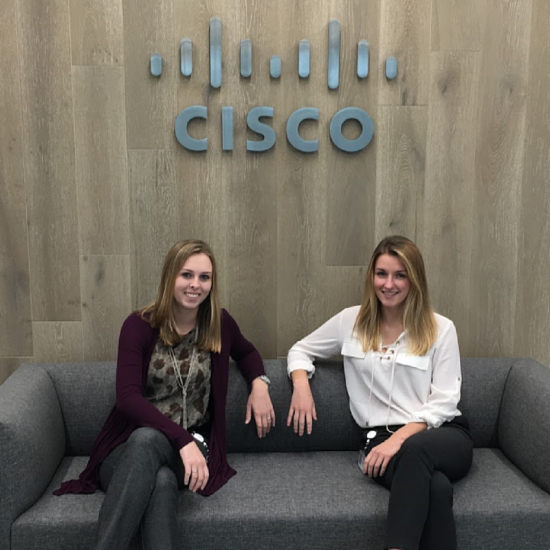
When you think of it, it’s funny how many times a simple “hello” can turn into a lifelong friendship. For Rachel Plocharsky and me, our “hello” happened in a math class of over 300 freshman at NC State. Immediately, we clicked.
During our sophomore year, we both joined the executive board for the American Marketing Association (AMA), and our professional relationship took root. During our junior and senior years we became roommates, and through the AMA we became connected with Cisco.
Now, here we are! And this summer we’re both working as Cisco marketing interns, with Rachel working in Americas Field Marketing and myself in Enterprise.
Working with my best friend has proven to be one of the greatest benefits of joining a company as it ensured that I had at least one connection before my first day of work.
I love Cisco because it recruits great talent, and gives me the freedom to utilize my talents for the betterment of the company. I am a huge people person, so getting the chance to work with Cisco’s Partners through their cloud services is really exciting to me.
I get to come into work everyday doing what I love, all while working with my best friend! It’s great to have someone that can share the journey with me, and who is along for every step as we celebrate each mini success that we have.
Rachel adds, “The fact that I’m interning at Cisco is still surreal to me. There was a time before I got my offer letter when I didn’t think I’d get it! It was Lauren, actually, who was pulling for me that whole time and refused to let me believe I didn’t deserve it. And that’s what’s so great about our relationship — we’ve encouraged each other to become the young professionals we are today!
“Cisco values the same qualities in people and knows that the potential of people is our greatest asset. I feel so valued here, even as an intern and I know everyone I work with feels the same way. You can feel it in the air. Furthermore, my involvement with the amazing talent on the Americas Field Marketing team grants me exposure to some cutting edge topics. I get to work with security marketing campaigns and marketing analytics, both of which are huge growth centers right now.”
However, working with your best friend is not without its challenges. So here is some advice we recommend:
Be sure to step out of your comfort zone and branch out during your internship! It’s always a good idea to find ways to create your own experiences apart from each other. This could mean getting involved in different company cohorts, working in different teams, or even grabbing lunch with different people. Interning with your BFF is a lot of fun but at the end of the day, it’s all about personal growth and your own career path too. Be sure to open your horizons during this time – you never know what opportunity is out there!
Avoid wearing the same outfits to work. “It’s a lot harder than you think, especially when we go shopping for work clothes together! There have been several occasions where we are wearing the same colors from head to toe, and one of us has to go change before we head out the door,” Rachel commented.
Do not be afraid to reach for your goals. Dare to believe that you deserve your dreams. Keep people close who support you and can believe in them with you! Most importantly, make sure you value them in return. At Cisco, it’s obvious that this system of mutual support and value is engrained in our culture. Find someone that understands your passions and life goals, someone you can count on to point you in the right direction when an opportunity arises.
Do you have a best friend at work? Tell us how working with them has enhanced your own career!
Today’s consumers demand a more mobile, interactive and personalized shopping experience. Research shows that 64 cents of every dollar spent in store is influenced digitally (Deloitte). A few weeks ago, I hosted my first #CiscoChat event on Twitter together with Jeremy Witikko, Practice Advisor at Cisco and Scott Lachut, President of Research and Strategy at PSFK to discuss how retailers can meet the new demands of the digital consumer.
If you missed our TweetChat, you can view the full discussion on Storify now.
We’d like to thank all of our participants and our friends from PSFK for such an interactive and fun hour! We hope to see you all in our future #CiscoChats! Please visit our Retail page and follow us on Twitter @CiscoRetail for updates.
In today’s digital economy, established organizations need to be more innovative than ever before. But why? And what does that actually mean?
The truth is digitization is driving a new pace of innovation. In fact, a new wave of competition is already here and companies that don’t go digital now may not survive.
Look at what happened to Blockbuster. In 2004, it had nearly 60,000 employees and over 9,000 stores. By 2007, when Netflix began streaming movies, it had all but lost the rental war. They missed the future. Kodak is another example.In this case, the company spotted the emergence of the digital camera, but failed to react in time and the rest, as they say, is history.
The need to digitize is one of the biggest challenges facing organizations today. The Internet of Things (IoT), security, data, automation, analytics, and cloud are rapidly defining the fourth era of Information Technology. When you combine this with ever-decreasing barriers to entry for risk-hungry entrepreneurs, organizations that don’t innovate fast will pay a high price.
The question on the minds of many executives is what to do, where to start, and how to build sustainable innovation capability. To disrupt or be disrupted.
At the same time, innovation can often mean different things to different people within organizations. In my view, a good starting place is creating value by doing things differently. Sometimes it’s incremental, other times it’s breakthrough. Regardless, in the world today innovation must be part of everyone’s job. It has to move beyond the responsibility of a few senior managers or R&D specialists. It must become the norm to harness the collective talents of the many.
These factors are why building a culture of innovation has become an even bigger priority for surviving the perils of the new digital economy.
Building a Culture of Innovation
There’s no one way for established organizations to innovate. It tends to happen across multiple fronts. Some of it is visible and some takes place in what I like to call the “underground railway.” It’s out there but you can’t always see it. There’s likely to be some chaos, some trial, and almost certainly some error.
It requires leadership, collaboration, diversity, risk-taking, creativity, and many other things. The bottom line is that building world-class innovation capability is multi-faceted. It’s best tackled using a systematic and integrated approach. That includes embedding a number of innovation tools and best practices into the approach.
To begin with, there are a few prerequisites for establishing the right kind of culture to foster innovation from the outset. In my next blog, I’ll discuss these prerequisites and share some simple, but tough questions any organization must ask themselves before embarking on building a culture of innovation.
Cisco and Denmark Telco Incumbent TDC Sign Key Partnership Agreement
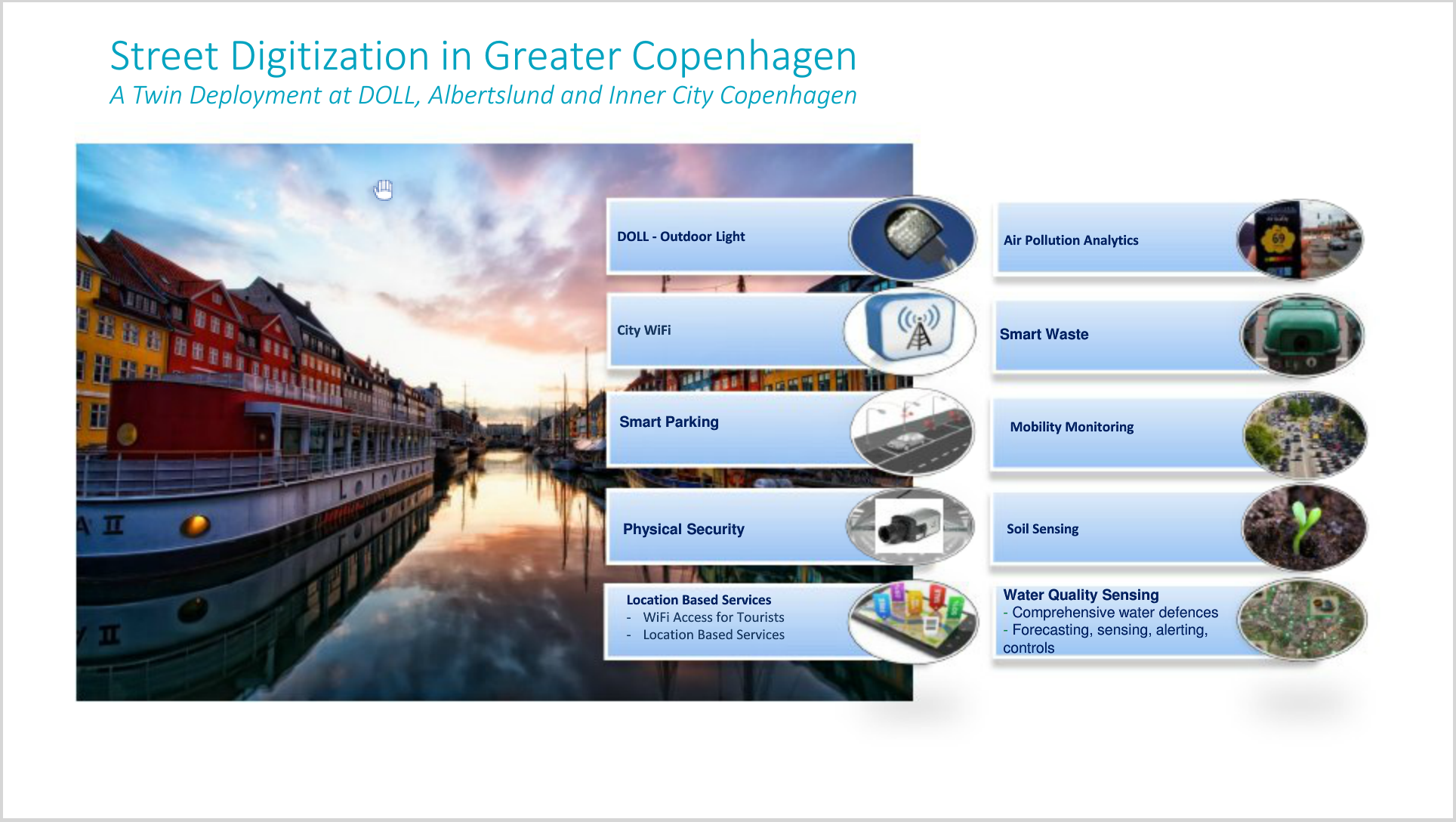
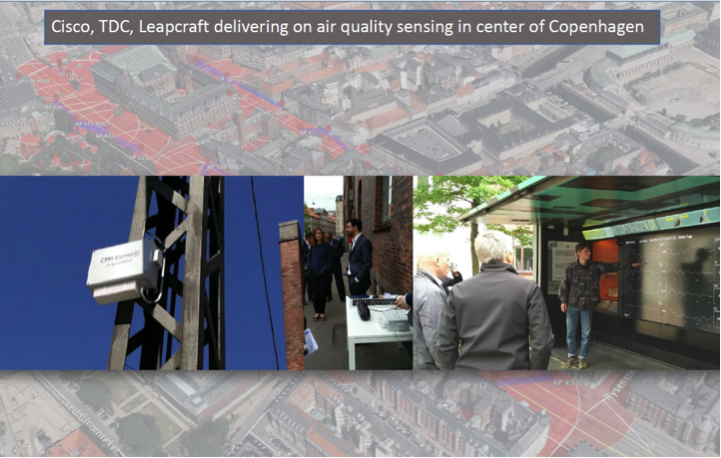
On June 9, an Internet of Things (IoT) Regional Forum took place in Copenhagen. The backdrop to the event was the smart city lighthouse engagement in Copenhagen and the twin deployments that forum participants were able to witness and experience for themselves during the week of the event. Facilitated through Cisco’s partnership with Danish telco incumbent TDC and the municipal leaders in greater Copenhagen, the deployments – one in the heart of Copenhagen, covering a stretch of the Danish capital, and the other at DOLL in western Copenhagen, one of the world´s largest smart urban services outdoor labs – involve over 40 solutions for lighting, parking, waste and environmental sensing converged on 7 miles (over 10km) of road.
Integrated Digital Platform Live in Copenhagen
Key to the greater Copenhagen deployment has been the implementation of Cisco’s integrated digital platform for cities. This cloud-based offering helps to converge various data streams from sensors and end-points around the city, forging an ecosystem of city management applications in an open application program interface (API) environment. While this digital platform has been going live in cities around the world, it will be a cornerstone in the rich, cross-city use case, multiple vendor environment forged in greater Copenhagen. DOLL leadership can now monitor and manage each light pole, parking spot and waste bin, receiving granular real-time readings on a single interface. With the platform live, the service can be extended to any other community in Denmark – and that is exactly what Cisco and TDC plan to do.
The Future of Partnerships for Smart City Engagements
Cisco and Danish telco incumbent signed their partnership agreement for continued collaboration, committing themselves to jointly provide cities with digitization solutions, while also collaborating on new technology innovations and enhancing the joint partner ecosystem already in play. This partnership is fundamentally important. Not only does it pave the way for large and mature deployments throughout Denmark, in Europe and beyond, it also serves as a great example for the evolution of smart city deployments. As service providers (SP) around the world rethink their roles in the industry, the potential for SPs to bring digitization and technology solutions to a multitude of community environments such as ports, airports or large retail areas, is simply enormous.
Are Smart Cities Entering a Phase of Maturity?
Cisco and many of its partners have been active in the smart city space for a good number of years now, driving key engagements in just under 100 communities around the world to date. Yet the Copenhagen engagement appears to signal a significant inflection point in the arena of smart city digitization, it’s all becoming real in the mainstream scene.
A few new and exciting things worth mentioning:
First, while technologies underpinning city digitization strategies have matured greatly over the past few years, discussion has shifted from technology to business outcomes. This rationale for deployments, whether that is economic, social and/or environmental, is panning out in countless communities around the world. Scalable, mature solutions – ranging from smart mobility and dynamic outdoor light, to solutions with indirect city and public service benefits such as air quality and community safety have been and continue to be validated – to the point that common adoption is now a reality.
Second, new partnerships – and old partnerships redefined – such as the one signed by Cisco and TDC allows for a vast scalability and mature servicing of solutions and the connectivity they require at a level unthinkable just two years ago.
Third, an integrated management platform for cities is a fundamental to city digitization. With the IoT and data boom, a digital platform allows for proper management of sensors and devices, as well as the data they produce, helping cities to avoid vertical vendor lock ins and maintaining data sovereignty. The extended architectures at the heart of city digitization have become effective, open, seamless, scalable and replicable, while delivering on measurable, desired outcomes.
With that, smart cities are finally becoming real, not just a thing of the future. It’s true, there´s never been a better time to build a smarter community.












 I love Cisco because it recruits great talent, and gives me the freedom to utilize my talents for the betterment of the company. I am a huge people person, so getting the chance to work with
 Get the Podcast