From data to data-driven decisions… What does it take to make the leap? It’s the kind of shift that has the power to change the enterprise — and the power rests in IT’s hands. Now, as part of our new webinar series “Unscripted,” we’re bringing together IT innovators from across the globe to participate in candid conversations on digital transformation, before taking to Twitter to talk in a more open forum. In our upcoming post-”Unscripted” #CiscoChat, on Wednesday, August 9th, at 1 p.m. PST, we’ll specifically discuss how to leverage data to make smarter, more sustainable energy choices for the business. Join us for the chat, and make sure to attend the “Unscripted” webinar beforehand!
The chat will be led by Robb Boyd (@robbboyd), host of Cisco’s TechWiseTV program, who will be joined by Blair Antcliffe, Energy Engineer at the University of British Columbia, as well as Stefan Storey, Co-Founder and Director of Sensible Building Science. By joining the chat, you’ll learn about how your peers are putting data to work to reduce energy usage, lower gas emissions, and so much more.
To participate in the chat:
Make sure you’re logged into your Twitter account.
Search for the #CiscoChat hashtag and click on the Live tab.
Follow the moderator’s account to participate.The Twitter chat will be moderated by Customer Reference Specialist Dani Sherriff (@CiscoCustomers), who will begin welcoming guests at 1 p.m. PST (4 p.m. EST) and posting questions for discussion.
If you need multiple tweets to answer a question, preface each tweet with “1A,” “2A,” etc. in order to make it easier for others to follow along with the conversation.
Be sure to use the #CiscoChat hashtag at the end of each tweet, so that others can find your contributions to the discussion.
Don’t forget to bring your own questions to the #CiscoChat. We look forward to talking with you!
They say that time flies when you’re having fun, but I didn’t expect it to fly this fast. It seems like half of my internship with Cisco has flown by in the blink of an eye. With five weeks in RTP (Raleigh, NC) and one week at our headquarters in San Jose, California under my belt, I have learned and grown more than I ever thought possible.
Here’s four of the strongest lessons I’ve experienced in the past six weeks as I reflect on the halfway point during my Cisco Internship:
Networking is Real
I know, I know. My gut reaction to the word “networking” is to cringe too. But hear me out here. I’m not talking about the fake, schmoozing, shaking hands, and forgetting the name of who you just talked to type of networking. I’m talking about forming relationships and getting to know the people in your company. At Cisco you have the opporunity to learn from a diverse group of people that have so much to offer!
Different professional organizations I have been a part of at school have always stressed the importance of networking and in the past I’ve brushed it off. One of my strongest values is authenticity, and I honestly thought that there was no way that this could go together with networking. However, during my time at Cisco, I’ve realized my values are what have made networking so valuable to me.
One on one meetings with anyone, from a director to a person in an entry level position, mean so much more when you go into them with genuine interest and authenticity. I’ve found that people have such a positive response to my transparent enthusiasm and passion for Cisco. This has shown that by being myself, networking doesn’t have to be something to dread. In fact, I now look forward to it.
People and Culture Matter
In a company as large as Cisco, I think it’s easy to feel like a faceless employee in a sea of 70,000+. However, the reality here at Cisco is that it’s nearly impossible to feel this way. Coming into my internship I was nervous and doubted that I would find a place here. It’s surreal how quickly this feeling faded away.
I now walk into work every day truly content, knowing that I am surrounded by kind, like-minded individuals who are passionate, intelligent, and fun. But it’s not just the amazing people, or even the Creativity Zones scattered around campus that make me admire Cisco’s culture (although they are definitely a plus.) The culture of giving back is what stands out the most to me!
During my time here, I have had endless opportunities to volunteer with the Cisco community. During my second week, my roommate and I participated in a Sort-A-Rama with Cisco to give back to a local food bank. Working side by side in the huge fair grounds with coworkers from all walks of life, who took the time out of their busy work days to give back to the community around them was an invaluable experience I will always be grateful for.
Yes, Cisco is an industry leader and a technology innovator, but what matters the most to me, and what will keep me coming into work every single day, is the people and the culture.
How to Deal with Stress and Negativity in the Workplace
It happened. I finally had my first stressful week at work. For the first time I felt overwhelmed and wasn’t quite sure how I was going to follow through on all of my responsibilities. I could have let myself get stressed to the max and intimidated by my workload. I could have complained to anyone that would listen, and let the negativity that was starting to creep in consume me. This was such an easy trap to fall into, and I admit that more than once I felt myself starting to give in.
However, there was one thing that kept me from falling into this trap- perspective. It was on an after work run actually, that I realized all I needed to do was view my stressful work week as an amazing opportunity. An opportunity to learn about myself, how I work under pressure, how I react to huge responsibility, and how I can turn a negative situation into a positive one. I chose to be grateful instead of stressed.
I worked so hard to get this internship. I spent hours reviewing the company before recruiting at Career Week, and even more hours studying before my interview. I attended (some might say stalked) every single session that Cisco held at my school so I could learn as much as I could about the company and how I could work there. I have never been so happy and felt as accomplished as I did when I got my offer to work here.
So why would I ever waste even a minute being ungrateful for this opportunity? My team was trusting me with important work, and instead of being freaked out, I relished in their trust. It was scary and it was intimidating, but facing the challenges of a huge workload with a positive attitude completely changed my experience, and I wouldn’t have learned or grown as much as I have if I didn’t.
Cisco is Truly One of a Kind
Sitting in the heart of Silicon Valley at Cisco Beat on Wednesday morning, I think every person in the audience could feel it. I had goosebumps – and not just because I was completely star struck by the number of executives that surrounded me. The energy and the passion that employees at Cisco have for the work they are doing cannot be replicated anywhere else, and it’s contagious.
With the launch of Cisco’s latest and greatest network, we are continuing to innovate and stay ahead of our competition, and it is such a great feeling to be a part of that ride. Having executives that take the time out of their incredibly busy schedules to discuss openly the direction of the company is something that truly sets Cisco apart. Furthermore, having a CEO like Chuck Robbins that would take the time to stay almost an hour after the Beat ended just to take pictures and talk to interns is incredible to me!
I could not have imagined before my internship that I would even get the opportunity to be in the same room as our CEO and CMO, let alone get a picture with Chuck Robbins at the Cisco Beat and have a happy hour with Karen Walker in downtown San Jose. Having such approachable and transparent leadership completely changes the experience of an employee, and I am so thankful that Cisco has shown me this.
So, what do you think? Are you ready to become a Cisco Intern? We’re hiring!
With Open IOS XE, Cisco is Changing the Game
Old-school network engineers probably remember the Cisco 2500-series router. It ran a slow Motorola 68000 CPU, the monolithic IOS operating system, and did one thing only: route packets. Routers and switches have certainly sped up since then, and the operating system has been modernized, but networking hasn’t changed much otherwise. We still use CLI and SNMP to manage our networks the same way we did in the 1990’s.
With Open IOS XE, however, Cisco is changing the game. We now support powerful programmable interfaces like NETCONF and YANG. We can easily on-board devices without tedious manual configuration, and we can host Python scripts and applications all directly on the box. As a result, network engineers are able to configure their networks more quickly, with fewer errors, and build a network that understands and adapts to events.
Let me introduce you to four key areas where IOS XE helps you program the network, automate routine tasks – day zero provisioning, NETCONF/YANG, On-box Python, and app hosting.
Day Zero Provisioning
If you were given 50 switches to configure, how would you do it? If you’re like most network engineers, you would configure one, paste its configuration into Notepad, tweak a few values, paste that back into the next switch, and repeat. Aside from being highly inefficient and error-prone, this probably isn’t the most exciting part of your job. When it comes time to do the image upgrades on those switches, it’s TFTP and a lot of coffee.
Today’s day-zero technologies automate the provisioning process for network devices like the Catalyst 9k. Switches, routers, and other devices can pull down both their configuration and system image from an external server, resulting in automated deployment with no touch other than plugging in the box and turning it on.
Figure 1 – IOS XE offers three different Day Zero provisioning options to
meet the needs of customer environments
Figure 1 above shows you the three provisioning options available in IOS XE. Cisco has developed Network Plug-N-Play, which works across a number of different platforms and offers robust enterprise features such as a cloud redirection service. PnP, which uses Cisco’s APIC-EM SDN controller, has been around for a while now and is our most turnkey solution.
IOS XE goes beyond PnP starting in 16.5. We now support Zero Touch Provisioning (ZTP) and Preboot eXecution Environment (PXE) on our switches and routers. While not as full-featured as PnP, ZTP and PXE boot use entirely open protocols, and may be better suited to environments with a mix of products.
NETCONF/YANG
Network scripting used to mean two things: Expect and Regular expressions. With Expect, we had to send CLI commands to the box while “expecting” (waiting for) a response before sending the next command. Regular expressions are just a complex way of doing string parsing. They look like “/^(?=.*\d)(?=.*[a-z])(?=.*[A-Z])(?=.[\W]).{8,}$/” but for most network engineers, they’re more like, “!@##!@#”.
If Expect and Regular expressions give you nightmares, we have good news. Open IOS XE supports YANG data models and the NETCONF protocol. Data models describe the structure of configuration and operational data on a network device like a Catalyst 9k switch. YANG models make it far easier to write scripts that read or write data from IOS XE products. When reading operational data, a single line of code can convert an output into a Python dictionary, saving hours of laborious Regular expression building and verification. When sending configuration, we can use data models to easily turn configuration into a template into which we can quickly insert variables.
Figure 2 – Cisco’s YDK tool automatically generates APIs based on YANG
models for many languages
NETCONF is the protocol that uses YANG models. Think of NETCONF like SNMP and YANG like the MIB. NETCONF uses a secure channel to send and receive data structured according to the YANG models. NETCONF adds an additional layer of functionality. For example, it allows for easy rollback of an entire block configuration change if an error is detected.
Let’s look at an example of reading operational data with YANG models. (If you need to back up a few steps to learn more about YANG and NETCONF, please check out the Network Engineer Learning Track on DevNet.) In the following example, We can use a Python script to read in the BGP neighbors using the models:
Figure 3 – Using Python to quickly extract BGP neighbor information using a YANG model
The first line of code reads in the data using the NCClient Python tool and converts it to a Python dictionary. The second line extracts the BGP neighbors from the RPC message that comes back. If we wanted to loop through the list and print out all the neighbor IDs, we could do it like this:
Figure 4 – NETCONF YANG example continued
Try that with regular expressions!
On-Box Python
If you don’t want to run your scripts on a server, why not run them on your switch? Starting in Open IOS XE 16.5, Catalyst switches support on-box Python running in a Linux container. On-box scripts can access the same data models we just described, but can also directly access the device bootflash and send CLI if necessary. Even more powerful, on-box Python can be integrated with Cisco’s Embedded Event Manager (EEM). EEM takes actions based on events on the device, so you could use it to trigger a Python script when the box is configured, when an IP SLA probe fails, or when an interface shuts down. With REST APIs, you could even post a notification of the error condition to a Spark room, or open a trouble ticket in your help desk system.
Python wouldn’t be much without its libraries, so we also support PIP install of Python modules.
App Hosting
When is a switch not a switch? When it’s hosting third-party applications! You won’t be playing video games on your Catalyst, and we don’t recommend mining digital currency with it, but you can install applications for network troubleshooting and performance monitoring.
Figure 5 – The Catalyst 9000-series can host several applications in VMs or containers
The Catalyst 9k has an x86 processor and an option for USB and even SSD external storage to make it possible to run a variety of applications directly on the switch. Want to run a performance monitoring tool like iPerf directly on your switch? It’s now possible with the Catalyst 9k and Open IOS XE. Take a look:
Figure 6 – Running iPerf on an IOS XE device to test performance
You can see from this output that we actually connected to an LXC container from our switch, and ran an iPerf test successfully. IOS XE supports both LXC containers as well as full-blown virtual machines, depending on your requirements. Containers run directly on the IOS XE kernel, so they are lightweight and have better driver support. VMs have their own kernel, so they provide better security.
You could spin up a VM and then install your software on it using standard tools like RPM or Yum. However, you probably don’t want to do this 50 or 100 times. Cisco’s IOx framework provides tools for packaging applications which can be easily distributed to your switches. There are three ways to get your packages on to your switches:
CLI-based copy of the package to the device, followed by CLI-based activation
Copy and activate through the GUI using Local Manager on a single device
Copy and activate on multiple devices using Fog Director
Conclusion
Cisco routers and switches have come a long way since the days of IOS. Our latest products provide a robust platform for programming the network, automating laborious tasks, and hosting applications. As the management of network devices changes, it’s critical for network engineers to keep developing their skills to take advantage of programmability. Cisco offers a number of resources to helping engineers grow their skills. In addition to breakouts and labs at Cisco Live, the DevNet community is a great place to start learning about programmability and expand your skills. Check out the Network Engineer Learning Track on DevNet and start programming with IOS XE!
We’d love to hear what you think. Ask a question or leave a comment below.
And stay connected with Cisco DevNet on social!
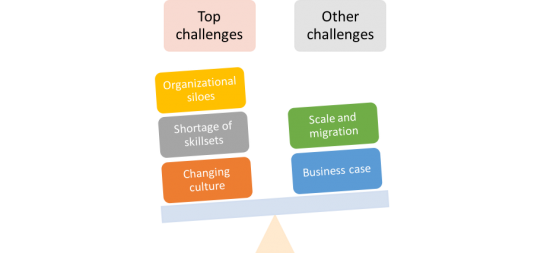
As part of our SDN and NFV study, we asked service providers what they considered to be their biggest challenges in their transformation. We have synthesized their responses and will share some of the top ones with you here. We assumed that the top challenges your peers faced would be technology focused. But what we found out was that most of their challenges were around operations, organization and skillset.
At the very top of their list was the difficulty in changing the culture across the organization to a new software-centric model. Early engagement with the workforces and sharing the value of SDN & NFV is key to bringing everyone onboard to make the transition easier.
Service providers shared that their lack of skills in both software and virtualization was a major barrier to their efforts, as well. To ease the skillset gap, they recommend partnering with universities to retrain employees and hiring more software engineers.
Organizational siloes are also a challenge that hindered many of them from working across existing organizational boundaries. SPs recommend creating a core team with members from various organizations to plan the transformation. Using a steering team to ensure continuous communication across the organization helps maintain alignment as you move forward. Also, implementing agile product development and management practices improves collaboration among internal organizations.
You can get the full list of the top 10 challenges from the study. Let us know if you are facing these same issues. We have a set of recommended actions to help you overcome these challenges based on the steps your peers have taken.
Mobility continues to change how people interact with data—and what data types they want to interact with. In addition, better availability and accessibility of data, now in real time, increases an individual’s ability to make informed choices.
This digital transformation is putting pressure on companies across all industries. The ability to adapt is critical. At Cisco, we have a long history of adapting. Some of the tools we rely on are:
Building necessary technology
Buying start-ups
Partnering with other companies to create new products
Investing in emerging ventures
Co-developing new capabilities with our Innovation Center
This strategy is built into our corporate structure and includes R&D in excess of $6 billion and a $3.2 billion investment portfolio.
So what’s your company’s strategy to succeed as digital transformation continues to upend traditional business models?
Companies that are early to digital transformation follow a pattern of using technology to abstract complication. By making complex problems simpler, companies can improve and differentiate customer experience.
Another pattern these companies follow is optimization. To decrease waste in time and resources, companies with a closed-loop business model follow phases of measuring data using IoT sensors, analyzing the data, and optimizing to improve efficiency.
These two patterns enable companies to move people to higher value work, augmenting human skills to drive value. By using tools such as Artificial Intelligence and Augmented Reality, people can be guided step-by-step to complete diverse tasks.
As a company, it’s better to be a first mover. While there’s a potential for great risk, it’s worth the cost to experiment and, possibly, win significant market share. Those who follow typically become “fast followers” of maturing technologies. This leads to even great expense—and results in playing defense. Rarely a good position to be in.
But still many companies take this wait-and-see approach. A Canadian IDC survey found that while 96 percent of Canadian business owners know digital disruption is happening, only 17 percent have a digital plan to manage the changing technology landscape.
For incumbent companies, changing office culture is a good place to begin. Employees may fear automation out of a belief that they’ll be replaced by machines. However, this situation provides an opportunity to use automation technologies to assess how to move people to higher value work. This is where top-down leadership is key as they can set the example that transformation is not only essential, but can provide a new opportunity for employees.
In addition, by shifting to software-defined infrastructure, companies can reduce budget to run old technology from 80 to 90 percent to 50 to 60 percent. Focusing on system complexity, corporations can optimize IT and make IT staff free to do new things and adapt to be competitive in new technological environments.
Without a doubt, digital transformation isn’t going to stop. On the plus side, it provides many benefits. But only if your company takes action. Follow and fail—or move now to increase your chances of thriving in the digital era. The choice is yours.
At last year’s Cisco Partner Summit, our CEO Chuck Robbins described how the rise of the internet in the 90s fundamentally changed the way businesses work. The invention of e-commerce completely disrupted how we purchase and sell goods – and now, our current digital transformation changes something deeper, something at the core of our society.
In a culture fueled by technology, innovations like social media have gone as far as reshaping our lexicon by redefining the words ‘share,’ ‘like,’ and even ‘friend.’ But technological innovations create new communication and working methods that impact our society every day. Look in any conference room or data center and you will see a variety of Cisco products supporting a vast number of thriving, innovative organizations from consumer technology brands to education and healthcare. If you think a lot has changed in the past ten years – just wait for the next ten.
We pride ourselves on partnering with the organizations, companies, and innovators that work tirelessly in the present to shape tomorrow. With Cisco and Cisco Capital offerings, our customers and partners gain a competitive advantage despite a multitude of variables resulting from the digital shift. Whether supplying organizations with technology – hardware, software and services – to construct an infrastructure primed for innovation, or offering tailored, customer-focused financial solutions, we aim to help organizations prepare for the future and solve any challenges that come their way.
Organizations can prepare for (or get ahead of) change by starting data-driven discussions around flexible payment options – opening up opportunities to rapidly scale and accelerate technology adoption. Solutions like Open Pay enable customers to adjust payment plans to their specific usage, unlocking new pockets of capital previously tied to technology ownership. Ultimately, it is about building stronger relationships with our customers and partners to make transformation simple and accessible for a wide range of industries and companies.
In a series of upcoming blog posts, we will discuss several tools that Cisco Capital has created to help companies adapt to the times of digital transformation and innovate at speeds that have yet to be realized. Topics include:
Consumption-based solutions
Understand how to align investments to operational and financial objectives while preserving capital.
Hardware subscription
Discover the benefits of partial- and full-subscription payment solutions.
Software enablement for a new generation Learn more about how the software acquisition experience can be simplified, with built-in affordability.
Cisco Capital makes it easy for partners to sell and for customers to acquire Cisco technology through consumption-based solutions, subscription-based hardware, and Enterprise Agreements with flexible payment options. Simply put, with these tools, organizations can accomplish their goals, prepare for the future, and gain a competitive advantage.
When business leaders think about the Internet of Things (IoT), they tend to focus on the potential opportunities for the enterprise and give far less attention to security risks. That’s a mistake. So, too, is believing that the IoT is only a concept on the distant horizon. The IoT already exists and is expanding rapidly. In fact, according to Gartner, at the end of 2016 more than 6 billion Internet-connected devices were in use worldwide; the research firm projects that by 2020, the number will exceed 20 billion.
To underscore the realness of the IoT, and why it’s critical for organizations not to dismiss IoT security risks, just consider what’s happening in the threat landscape. First, IoT botnets, and their population, are growing larger every day. And IoT-driven DDoS attacks of significant power—over 1 TBps—are actually last year’s news. (The Cisco 2017 Midyear Cybersecurity Report, which features IoT botnet research discusses these developments in detail.)
So, the IoT and IoT-related threats are very real. A massive compromise of IoT devices has the potential to severely disrupt not only organizations, but also the Internet itself. Fortunately, we are still in the early days of the IoT, which means there’s still time for defenders to do their part to help secure it.
Martin Lee summed up the unique but fleeting security opportunity that the IoT presents to defenders in a recent blog post: “As the world builds the infrastructure and deploys the devices that comprise the IoT, we as a society have the opportunity to apply the decades of good practices learned as part of the development of the Internet—including painful lessons about the importance of security.”
A top priority for all enterprises: more visibility
In the Cisco 2017 Midyear Cybersecurity Report, we outline several of the “good practices” that security teams should apply to IoT devices. Implementing patches promptly and employing IPS defenses are just two of our recommendations. These devices are computers and, therefore, require the same security measures as any other networked machine. But IoT devices typically lag well behind desktop security capabilities and have vulnerability issues that can take months or years to resolve and even with some issues never being addressed.
The top IoT security priority for any organization, though, should be gaining visibility into their budding IoT environment. This is a critical first step to IoT security. Enterprises need to know what IoT devices are connected to their network today and study how they are behaving.
If organizations have no idea what computers, of any size or type, are on their network, and what those computers are touching, how they’re interacting with other devices, and what their normal network traffic patterns are, then they can’t even begin to secure their network. And that lack of visibility will only get worse as the number of IoT connections grows exponentially over time, and as IT and operational technology (OT) systems become increasingly more integrated. Without visibility IoT devices offer our adversaries a safe haven inside our network. A place to observe, plan, and carry out future attacks.
Defenders must act now to address IoT security, or risk repeating critical mistakes that we made when building the Internet. This time, we all know better.
Borrowing again from my colleague’s blog post: “For businesses and consumers to truly embrace the convenience and power of IoT, they must feel fully confident that we’re building IoT with security foremost in mind.” For organizations, gaining that confidence will hinge on developing a proactive approach to security and a layered defense strategy—and understanding that every insecure IoT device, large or small, connected to their corporate network creates a security gap for attackers to exploit.
This post comes from Stacy Shrader, an intern with the collaboration marketing team and a rising senior at Virginia Tech with a dual degree in business management and public relations.
What’s one thing that drives business? Revenue. That means a sales department is one of your most important business units. Essentially, if your sales team isn’t performing at – or exceeding — quota, then the whole business is affected. No money means no budget, and low budget may put your job in jeopardy.
But what if simple communication problems are the reason your sales department isn’t reaching all-star status?
Improving communication and collaboration may be the ticket to the anticipated “yes” you’ve been waiting for from a specific client. Customers will always remain the priority for sales and adapting to their needs is a necessity. Collaboration technology can both improve the way sales teams collaborate internally, as well as evolve customer contact from phone calls to a collaborative experience. When customers are engaged and feel connected, they are more likely to buy into what you’re selling.
Save Time and Effort
Nearly every sales representative survives by quota goals. Whether they struggle to meet goals or regularly exceed them, it rarely becomes easier. Collaboration solutions like video conferencing can enable sales reps to reach their goals quicker. You can create more personal connections with customers through video, audio, and content sharing. And, it means you can meet face-to-face with customers around the globe without the travel time or cost.
Collaboration solutions can also result in shorter sales cycles, which makes both clients and account teams even happier. Happy clients mean higher sales. It’s a win, win.
Aberdeen Group reports that 45% of sales executives indicate that they plan to increase the use of virtual online technology. This means video conferencing becomes more of a must-have technology enabler for sellers. Real-time video can maximize efforts across revenue generating departments and become a staple in sales. A company can now feed its customers personalized messaging with little effort and time. It’s difficult to avoid a face-to-face meeting, but you won’t think twice to ignore that incoming phone call.
ING Bank is located in Italy and provides its members with clear and easy banking. It struggled to make its services accessible anytime and anywhere. ING Bank implemented Cisco Unified Contact Center Express to break down geographic barriers when it comes to tailoring investments, loans, and mortgages for its members. The result? Shorter sales cycles and improved training for employees. This works together to train their employees more efficiently and create better sales representatives for the business.
“We now have the high-touch personal interaction needed to sell investment products and it’s more convenient for customers. It’s helping drive top-line growth with a 15% increase in sales already.”
—Mario Carrara, Head of Sales and Product, ING Bank
Build a Flawless Experience
Bechtle simplifies communications with collaboration technology.
Quotas are important and pay the bills. But there’s more to the customer relationship than making the sale. Sales departments should reach beyond quotas to reach great customer relationships. A great sales department turns customers into repeat buyers, advocates, and partners. The main route to this ultimate goal is relationship building.
Solutions like Cisco Spark Care can help sales departments support their customer relationships and maintain communication more efficiently. The journey doesn’t end at a purchase but remains ongoing to ensure the strength of the customer relationship.
Bechtle, located in Germany, is a leading IT e-commerce provider that struggled with connecting with partners and their other locations around Europe. With Cisco’s WebEx, Bechtle was able to reach each location quicker and increase better-informed decisions from each sales representative.
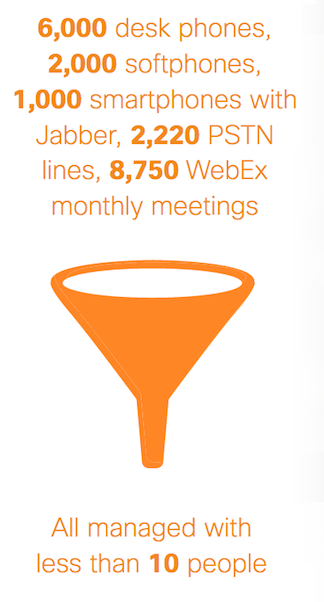
“We meet on WebEx daily. Experts from different companies and functions work on a single platform. It’s a very successful way to get the job done,” says Harald Weickert, CIO of Bechtle. In fact, Bechtle now holds up to 8,750 Cisco WebEx meetings every month.
Harvard Business Review found that connecting with a prospect now takes 18 or more phone calls. Callback rates are below 1% and only 24% of outbound sales emails are ever opened. These numbers support that without a strong customer relationship, sales reps have a small chance of making impressions on potential buyers.
I’m certainly guilty of hitting the spam button when a telemarketer reaches out to me. For me to respond, I question if a company cares about me or my wallet. I value the sales reps who work on building a customer relationship as much as meeting their sales goals. It’s easy to understand why sales departments struggle to reach quotas if they aren’t applying experience-building technology to their structure.
Today, Talos is releasing details of a new vulnerability discovered within the EZB Systems UltraISO ISO disk image creator software. TALOS-2017-0342 (CVE-2017-2840) may allow an attacker to execute arbitrary code remotely on the vulnerable system when a specially crafted ISO image is opened and parsed by the UltraISO software.








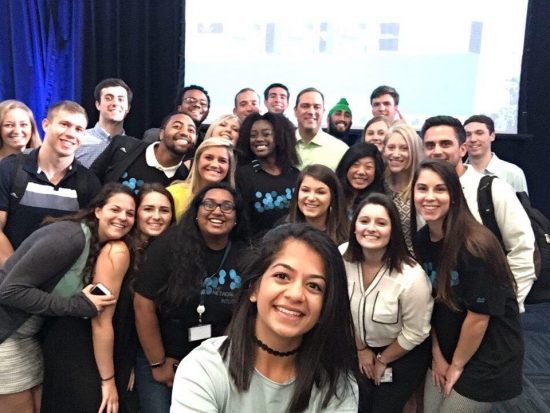

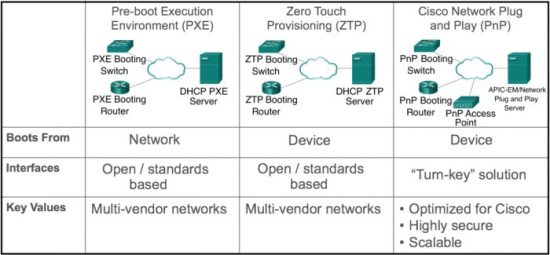 Figure 1 – IOS XE offers three different Day Zero provisioning options to
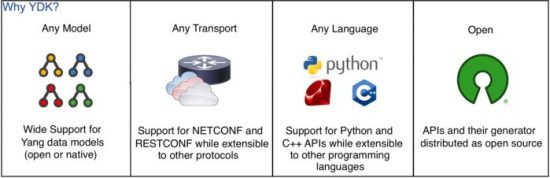 Figure 2 – Cisco’s YDK tool automatically generates APIs based on YANG
 Figure 3 – Using Python to quickly extract BGP neighbor information using a YANG model
 Figure 4 – NETCONF YANG example continued
 Figure 5 – The Catalyst 9000-series can host several applications in VMs or containers
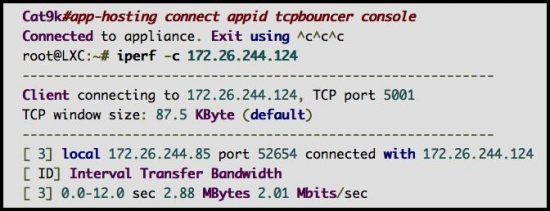 Figure 6 – Running iPerf on an IOS XE device to test performance