Avatar

Like many folks (100 million in America to be exact), having a cup of coffee is a part of my daily routine. Oftentimes, my mornings are hectic between preparing my kids for school (I handle the drop off duties in my house) and finishing up deadlines, so finding time to enjoy a great cup of coffee is often difficult.

My problem – how do I fit coffee into my busy morning, without taking time out of my day?

Aha – there’s an app for that.

Over the past few weeks, I’ve used Starbucks’ Mobile Order & Pay App. It allows you to choose, customize and pay for your order from any iPhone or Android device. Here’s my favorite part – you can choose the location you would like to have your items picked up at.

In a matter of seconds, my order is ready for pickup upon arrival. The app allows me to continue on with my day without wasting time and energy. This example shows a great way technology is bringing people, processes and things together to create amazing experiences.


Increase Speed toward Digitization

In a previous blog post, I introduced how Digital Network Architecture (DNA) helps innovate faster, meet compliance and reduce cost.

It’s predicated around the ability for IT to scale faster and leverage any number of services on any platform. DNA provides agility and control, while protecting an IT investment.

The shift towards digitization is imminent, and we stand ready to assist in the digital journey by leveraging digital business through insights, automation and security.


The All-In-One Solution

Time, energy, and complexity. These are a few key strains businesses have in moving faster and growing more rapidly.

Picture a way that your business could get everything needed in one service. Wait for it…. I give you Cisco ONE.


What is Cisco ONE?

In short – it’s the software solution that customers crave for their networks.

It comes in a single software product bundle, eliminating the hassle of purchasing separate features for data centers, domains or WAN. It’s even more cost effective because licensing is now portable.

Translation: you pay for licensing once, eliminating repay cost

Some of the services include:

  • Rich data and analytics
  • Solutions like Prime, which provides wired and wireless lifecycle management
  • CMX for real-time location statistics.

Translation: align Cisco ONE with our business and reduce time spent overthinking products, solution or licenses

With Cisco ONE, customers can start their digital journey today on our current portfolio. With Cisco Software Support Service, they can continue to adopt network innovations going forward.


Make Your Impact Felt

For you, our Distributors, look no further than the playbook – it will cover all you need to know about positioning Cisco ONE and maximizing efficiency for your partners and customers.

For partners, by selling Cisco ONE, you’ll see increased deal size, faster hardware refresh and drive business outcomes.

For Customers, take advantage of access to ongoing innovation and benefit from software portability all in one simple and flexible way.


Your Opportunity

Cisco ONE is the way to get all the features, function, products and solutions businesses need. It is easier to sell because it solves the problems for you by taking away the complexities of a digital transformation in a simplistic way.
Oren pic


Customer adoption is hugely important. Help them activate their software capabilities. That way, they see the full value of the ongoing innovation come renewal time.

Learn more about how to take advantage of Cisco ONE here.

Let’s keep the conversation going. Connect with me on Twitter: @OrenCisco. And, feel free to leave any questions or feedback in the comments below.

Authors

Oren Singer

Sr. Marketing Manager

Global Distribution Organization

Avatar

The recently concluded OpenStack Austin Summit was a fantastic showcase for the growing maturity and adoption of OpenStack. The evolution of the fundamental infrastructure services for compute, networking, storage, identity together with ancillary services for image management, security, monitoring makes it possible to leverage these building blocks to satisfy interesting use cases.

One such use case is the deployment and management of L4-7 network services in an on-demand, elastic, scalable, and easy-to-consume composable fashion. This complex use case decomposes into several independent but complementary problems. Some of these are being individually tackled in different projects and sub-projects in the OpenStack ecosystem. For instance, the Neutron *aaS sub-projects define the resource model for network services; the Networking SFC sub-project defines traffic steering abstractions; the Astara project, which performs Neutron agent-level network orchestration for services; the Tacker project, which aims to bridge with the  ETSI MANO NFV architecture.

For the past couple of years I have been involved with the Group Based Policy (GBP) project that uses policy as a unifying principle to leverage all this richness in the OpenStack ecosystem. GBP provides a framework to achieve high level of automation by deriving network parameters from the definition of intent for application, network, and network services. When a user requests a service chain to be created, GBP understands and manages the resources for those network services based on prior policy definitions.

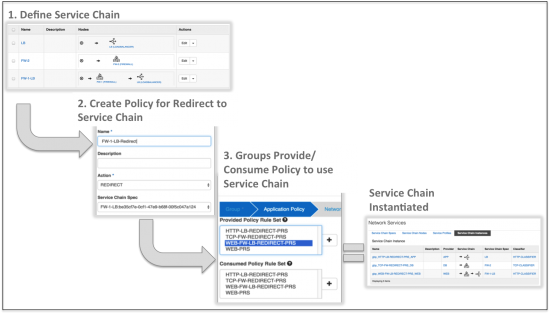
The GBP user workflow for service chain creation can be described in three steps – (1) define the Service Chain (composition of individual network services), (2) create a policy that redirects traffic matching a classifier to the Service Chain, (3) associate this policy with the Groups of endpoints that are communicating.

3-service-chain-steps-3That’s it! Those three easy steps capture the user’s intent to deploy a Service Chain. The predefined operator policies are able to match the user’s intent to the relevant and optimal rendering of Network Services in the appropriate tenant context. We demonstrated this solution as a part of our Hands-On Workshop at Austin. You will find more details about the workflow and policy configuration here. Even if you missed the workshop (or you attended and want to explore further), we have all the instructions for you to try this with a cloud-in-a-box devstack setup. Give it a spin and tell us what you think.

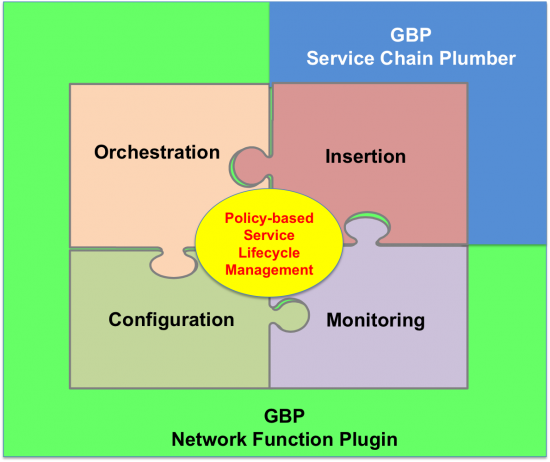
While the above is all good, and is validated in production, what I am really excited about is the next phase of evolution of this feature called Network Function Plugin (NFP). NFP comprehensively addresses the policy-based lifecycle management of Network Services by consuming GBP’s policy and network context, and using it to orchestrate, configure, and monitor the lifecycle of Network Services. NFP seamlessly spans from under-the-cloud to managing the Network Service VMs in over-the-cloud tenant context. No more burning floating IPs for every service VM, and no messy out-of-band external network connectivity even before you can get started. NFP defines southbound interfaces which allow any network service to be easily integrated and realized into a Service Chain. This solution truly democratizes the deployment of network services, we like to call it Bring Your Own Function (BYOF)!

jigsaw-2

We have been working on the design and implementation of this feature for a few months now, and it was also demonstrated in the Austin Hands-on Workshop.  In an upcoming post I will outline how you can write a simple Network Service that can be deployed in a Service Chain with a few easy steps. Stay tuned! Meanwhile, the NFP framework is fast evolving and we invite you to participate in its evolution.

And as a final wrap on Austin, I would like to thank my co-presenters from Ivar (Cisco), Igor (Intel), and David (SunGard) who helped make the hands-on session exciting and successful, and also, in a big way, Hemanth Ravi and his team at One Convergence who have conceived the NFP feature and have been driving its development and evolution.

Authors

Sumit Naiksatam

Principal Engineer

Avatar

Liz (2)

Submitted by Elizabeth Coyne, the Managing Editor at Light Reading, who is responsible for driving the curriculum and direction of Upskill U.

The impact of cloud services and platforms on the telecom sector has been nothing short of revolutionary. Without the cloud, there would be no NFV, SDN, IoT, white boxes or open source and all those other buzzwords that have taken our industry in new and exciting directions. Plus, we have the cloud to thank for re-energizing the industry around collaboration and for pushing traditional waterfall management-style businesses into Agile and Dev/Ops methodologies.

For these reasons and more, Light Reading and Cisco are diving into cloud platforms and services for the next round of courses at Upskill U, a free online university aimed at upskilling and reskilling the communications industry on a variety of key topics essential to success in the virtualized, software-based future.

blog photo 2

Our powerful cloud line-up features four highly relevant courses taught by industry thought leaders:

Cloud Platforms & Services 101 (Wednesday, May 18, 1:00 p.m. ET): This introductory course taught by Jim Hodges, Senior Analyst, Core Network Evolution & Analytics, Heavy Reading, covers all the important aspects of transforming to cloud-based networks and services, including what it means for service providers, why it’s important, how it’s impacting the industry, the challenges and benefits and more. This course prepares students for subsequent courses on cloud platforms and services.

Cloudifying the Network (Friday, May 20, 1:00 p.m. ET): During this course, Mary Stanhope, Vice President, Marketing, Global Capacity, looks at how interconnection is evolving to meet the on-demand enterprise requirements, including the evolution of exchanges and the expansion of traditional colocation.

Assuring Security in a Cloud-Based NFVi (Wednesday, June 8, 1:00 p.m. ET): In this lecture, Patrick Donegan, Chief Analyst, Heavy Reading, covers ways of ensuring that security is preserved in the NFV environment and the security orchestration and other technologies needed for virtual networks.

Ethernet & the Cloud (Friday, June 10, 1:00 p.m. ET): Chris McReynolds, Vice President, Cloud & Data Services, Level 3 Communications, will discuss how the rise of virtualization is creating new demand for network-as-a-service options that combine physical and virtual network elements flexibly, while also delivering on the quality promises for which Carrier Ethernet has become known.

Plus, don’t miss our Upskill U Live @ BCE classes on 5G and mobile video. We’ll be live-streaming the classes to Upskill U from Light Reading’s flagship BCE event in Austin on May 24 and 25 at 8:30 a.m. ET.

5G: Are We There Yet? (Tuesday, May 24, 8:30 a.m. ET) taught by Gerry Flynn, Director, Corporate Technology, Verizon Communications, and Gabriel Brown, Senior Analyst, Heavy Reading.

Mobile Video: Finding a Solution (Wednesday, May 25, 8:30 a.m. ET) taught by Upinder Saini, Vice President, Wireless Product Management, Rogers Communications, and Alan Breznick, Cable/Video Practice Leader, Light Reading.

As you can see, with our cloud courses and BCE, we’ve lined up an exciting May and June at Upskill U. I look forward to seeing you all on the Upskill U message boards.

For the complete Upskill U schedule, visit our website: www.lightreading.com/upskillu.

Authors

Greg Smith

Sr. Manager, Marketing

Cisco Solutions Marketing

Avatar

Years ago, my family got a Roomba—we all watched wide-eyed as the robot vacuumed up crumbs, bumped into walls, magically “knew” when the whole room was done and docked itself to charge. Wow!

The initial wow wore off after a few uses, but the device continued to delight: My young son giggled with glee the first time it played a few funereal notes to announce it had run out of juice mid-job; I marveled at its perfectly-tailored-to-the-task cleaning tools the first time I used them.

I am not saying the Roomba’s design is perfect; my inner engineer has plenty of ideas to improve it. But I am saying that it has an element that’s critical to great design: It delights not just at first sight but over and over again.

Delight at First (and Second and Third) Sight
Building products that delight over and over again is what gets me up in the morning. It’s what I came to Cisco to do. I am so pleased to say that we’re doing just that: As we announced yesterday, earnings in our collaboration group are up for a sixth consecutive quarter.

How did we go from 10 consecutive quarters of flat or declining revenue to 6 in a row of incredible growth? Simple: by making sure we delight not just at first sight but over and over again. We are fully focused on continuous improvement. Case in point: It made me smile the other day when an engineer in one of our internal Cisco Spark rooms asked if anyone knows anyone who owns a Tesla, because he wants to run some tests on how our Spark app works in the vehicle.

The Cloud as Game-Changer
Speaking of Tesla and Spark, the cloud is a complete game-changer as far as our ability to continuously delight. Products can be one thing today and something completely different tomorrow, thanks to cloud-based software updates. While my Roomba is still the exact same device it was when I first unboxed it, the cloud-connected video device I use to make calls every day gets a steady stream of new features and capabilities that make meetings better.

I am so excited about this milestone our collaboration group has achieved. And I am equally as excited about the future of the rest of the portfolio I oversee: Great things are happening in the Internet of Things. This business is the future—not only of Cisco, but of the world.

Thanks to our customers for all the great feedback that helps us keep innovating in the right direction. And, thanks to our engineers for staying curious and ahead of the curve.

Keep those seatbelts fastened—things get very interesting from here on out!

Authors

Rowan Trollope

Senior Vice President and General Manager

IoT and Collaboration Technology Group

Avatar

Recently, I had a day to remember. And I had Cisco to thank for it.

I’m a marketing leader for Spain and Portugal here at Cisco, and every day I’m astonished at the privilege of the Internet and social media. But this day was extra special and inspired me to share.

To start, I woke up and I walked my daughters to school (5 min walk from home, an privilege in itself).

After leaving them –and thanks to my new watch – I walked and hit my 10,000 steps target, all while I attended 2 WebEx calls on my mobile (one meeting and a training.) I believe you really can’t multitask in front of a computer, as human nature urges us to goes back to mail and other things while pretending to listen. Walking and listening is another story, it´s possible and allows much more focus.

After that, I tot back home to dress up and grab some food to take to the office. (“arroz with chorizo” my 5 star dish – Tweet me for the recipe!) I had prepared the food the previous evening with my daughters. They are such observers, and they had asked me why I was cooking for Cisco if I was in Marketing. Ha!

Then I began my seven-minute drive to the office. Wow, am I lucky!

This time, I had an amazing meeting with amazing colleagues. Plus, thanks to the leadership team, all the Cisco Spain employees all enjoyed a cocktail and some terrific food, like Gazpacho ensaladilla rusa, tortilla de patata, rabo de toro, pastel de verduras y pescado, albóndigas.

Then another meeting thanks to more of our awesome technology like the Proximity app and Spark, and it was one of the most enriching and profitable meetings I ever had. The core team demonstrated all the values that I think need to be present in a team: creativity, respect, teamwork, pride, believe in the future… and many more you for sure have in your minds while reading.

Being able to learn from others empathy and a well-structured and elaborated plan enriched me to such levels I cannot describe with words.

Each of the members made me learn in one hour so much. Right there, the day could have finished on a high note, but destiny had just a little bit more for me on this great day.

I had to get into downtown during rush hour. Got into the Cisco car full of thoughts and ideas thanks to such a positive day. I was on my way to a “round table” to talk about visual thinking, digitization, innovation and creativity – all found at Cisco in plenty.

I called my daughters, who wanted to know, “Mom, when will you be home?”

“Late Darling, don´t wait for me and have nice dreams,” I answered. I asked them about their day, how had it gone, for any best moments. I listened to their laughter, which makes me be so grateful for what I have, where I am and where I see myself in the future.

One, two, three times rehearsing my speech while in the traffic jam. The traffic did not bother me, I can’t fight against it, so I embraced it and took advantage of it. It gave me more time to think about my presentation.

I took another WebEx meeting, thanks to Cisco I can have it via phone while driving (hands-free, safety first!) What I didn’t finish this day, I will work on it tomorrow thanks to VPN and DX80 provided at home thanks to Cisco.

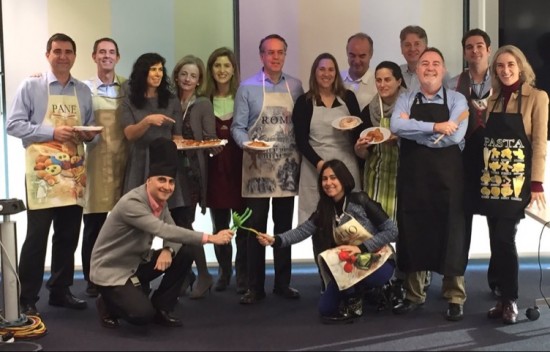
Team cooking event
After the round table, I went to celebrate with colleagues and I began to think on lessons learned from that day. I think they’re important for all – and I’d lie to share them with you.

  1. Believe in yourself
  2. Believe in people around you, don’t lose Faith
  3. Listen and be open to spotting signs
  4. Be grateful for what you have
  5. Be innovative
  6. Be creative
  7. Aim to the moon or further
  8. Be present in every moment, specially when home with your kids. Phone off, work left at home entrance.
  9. Listen to your kids
  10. Learn from your kids
  11. Don´t be frightened to and of change, take advantage of it and transform a challenge an opportunity.
  12. Open your ears and mostly, your heart.
  13. Believe there is good in the world
  14. Never doubt yourself. Like Will Smith said in the film “The Pursuit of Happiness” – don’t ever let somebody tell you you can’t do something. Not even me, all right?”
  15. You got a dream… You got to protect it. People can’t do something’ themselves, they want to tell you can’t do it. If you want something’, go get it. Period.

I am proud of the company I work for, which has made me grow and aim for the moon, not only at a professional level but also at a personal, spiritual and affective level.

I truly think these days are everywhere (and there are many) but it´s in us to see them and take advantage of them and the learning they provide.

Thanks Cisco for helping me have this great day.


Get inspired at Cisco. Apply for openings here.

Authors

Carla Luca de Tena

Global SB Mktg Campaign Mgr

GSM

Avatar

HeadshotsmileGuest blog by Wendi O’Neill, Splunk Platform Leader, Sirius Computer Solutions.  Follow Wendi on: Twitter  @WendiONeill9; or Linked in:https://www.linkedin.com/in/wendioneill.


Do you ever wish you could gather up ALL your machine data, lock it in a room, and grill it for answers until you find all the faults in your IT infrastructure? Come on Big Data, I want to identify your problems, get answers, and find new business insights. Is that too much to ask?

Most IT management tools today are silo-based – locked in different departments and not designed to interact. To get real value out of machine data and leverage its power, data needs to make connections and correlations so you can use it for insight and visibility to see exactly what is going on, where it is happening and why. If only I could find a solution that could help me see….

Have you heard of Splunk?

I would like to introduce you to the power of Splunk. At its core, Splunk does three fundamental things really well:

  • It collects data from anywhere by using powerful universal forwarding and indexing technology.
  • It searches and analyzes everything across all your data using powerful search algorithms and schema-on-the-fly (aka ask any question any time) technology.
  • And finally, Splunk very quickly delivers real-time insight from your machine data so you can get it into the hands of your IT and Business people.

Why should you care that Splunk can collect data from anywhere? Continue reading “Hey Big Data, what’s your problem?!”

Authors

Gary Serda

Senior Strategic Partner Marketing Manager

Global Partner Marketing

Avatar

“Can drones save lives?”

It’s a question that many outside the drone industry might find startling. Much of the general public still perceives drones as being deployed primarily for aerial surveillance or attacks in times of war.  This view was certainly reinforced in the recent movie, “Eye in the Sky.”

However, that’s a very narrow view of drone technology and what it can do for business and society.   Those of us inside the drone industry immediately know the answer to the question, “Can drones save lives?”   Of course they can! They do it all the time.

Drones, or Unmanned Aerial Vehicles (UAV), already save lives in myriad ways, including emergency or disaster relief, humanitarian efforts or even in criminal investigations to help find suspects before they do more harm.

But that’s really the wrong question. Those of us inside the industry should really be asking ourselves, “How can drones save moreInSted lives?”  I posed that question a few weeks ago to a group of elite drone developers during my keynote at the Singularity University Lab NASA Ames Research Center campus in the heart of Silicon Valley.

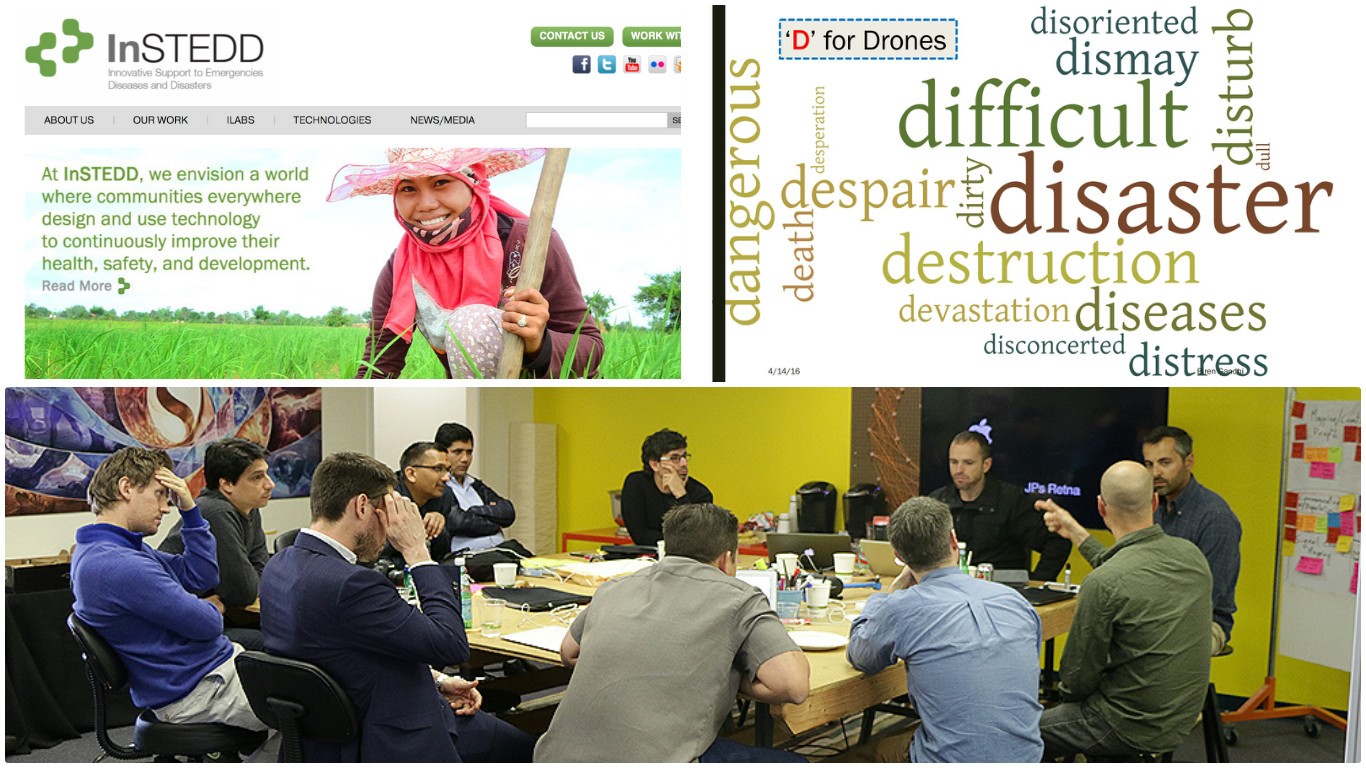
The workshop, co-hosted by Cisco’s Corporate Social Responsibility program and  InSTEDD, a non-profit providing innovative support for emergencies, diseases and disasters, brought together  researchers, humanitarian aide workers and drone (UAV) experts last month as part of a three-day workshop. The workshop focused primarily on various applications and challenges faced by innovators to improve and extend drone solutions for humanitarian purposes.

We grappled with the issue I provoked. It’s clear that the full potential of drones has barely scratched the surface.  Opportunities abound – not only to save more lives but also to enhance business and society in general.

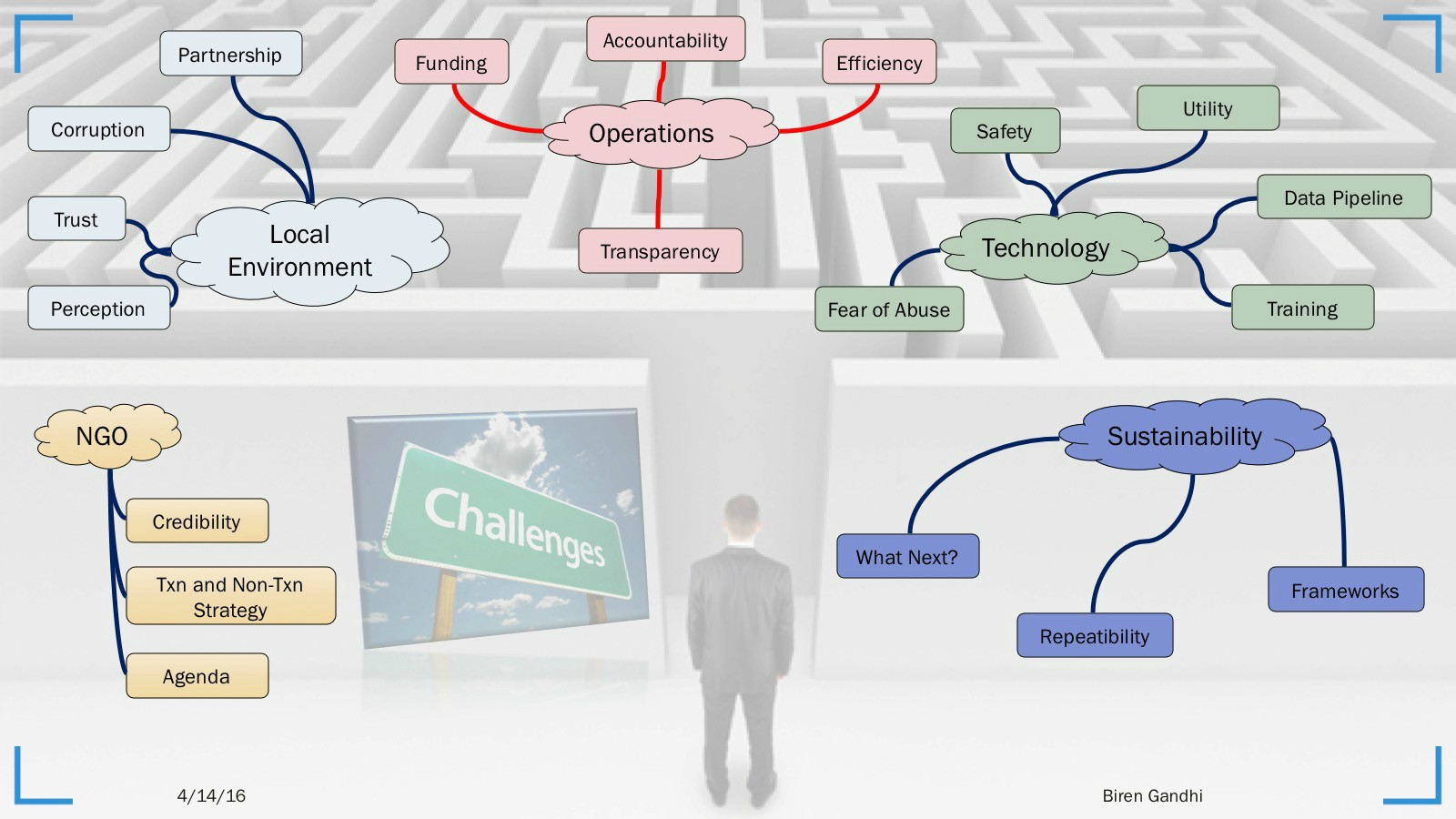
Drone ChallengesHumanitarian activities always pose their share of sticky political and logistical challenges, and the further adoption of drones just adds new layers of complexity. Although drones can augment and accelerate many Dirty, Dull, Difficult, and Dangerous activities undertaken by humans, numerous obstacles can arise during the fieldwork.

Over the past 20 years, I have personally encountered many of these challenges and learned some practical solutions. I’ve gained this valuable experience while supporting many disaster relief and humanitarian activities with another non-profit, BAPS Charities. As you can find in the following video, many of those practical challenges and tips were shared during my session.

https://www.youtube.com/watch?v=8K2SBmT4XBk

Whether collaborating with multiple NGOs in the aftermath of a disaster or dealing with local authorities, a host of operational, technical and sustainability issues must be addressed in a very sensitive way. In my experience, I have found that the most critical first step – the cornerstone to drone success – is to build trust and credibility with the authorities at hand. Open-minded collaboration, persistence and authenticity of volunteers go a long way in establishing trust, especially during intensely traumatic circumstances.

We should be standing on the shoulders of the giants of this industry in the interest of achieving greater good. In addition to Cisco’s TacOps team, drone innovators such as Dr. Patrick Meier and Faine Greenwood have shown how the skillful combination of technological and collaborative people skills have led to successful humanitarian efforts leveraging drones.

Now is the time for all of us to learn from the best humanitarian efforts, build an ecosystem of genuine trust and keep our spirits high to help humanity at large.

Now is the time for us to flip the original question, “Can drones save lives?” and put it in a new perspective of, “How can drones save more lives?” There’s never been a better time for us to elevate the power of drones to save more lives. #NeverBetter

Humanity needs collaborative innovators! Are you ready to be one?


Authors

Biren Gandhi

Head of Drone Business & Distinguished Strategist

Corporate Strategy Office

Avatar

Protecting businesses from the cyber threats of today and tomorrow can unlock extra revenue for trusted service providers.

Your customers are more mobile and better connected than ever. This means there are fresh security threats to exploit new devices and network vulnerabilities. Cyber criminals are increasingly targeting businesses with malware that disrupts operations and steals customer data.

Worse yet, the sophistication of threats is also growing. We know that 95 per cent of large companies have faced attacks from malicious traffic. What is more, all organizations have interacted with websites that host malware. If an advanced threat penetrates a business, its IT team may not detect it for weeks, or even months.

Your customers understand that strong security is important to maintain their reputations and minimize revenue losses resulting from breaches. But many fear that they lack skilled security staff to fend off threats. A 2015 study found that 45 per cent of organizations struggled to find qualified people. Instead, they are turning to managed service providers for protection before, during, and after an attack.

security snip

Customers want managed services to provide security

What makes network functions virtualization and cloud security services so appealing for customers? Well, they allow them to purchase the level of protection that is right for them. Clients can have effective security with agile services and solutions that is integrated, automated, open and simple to use.

Managed services deliver an integrated threat defense that combines high visibility with perfect response, driving down the time to detect and mitigate threats to zero, without the cost of skilled staff and upgrades for hardware and software. These solutions are easy to scale up or down as needed, and the subscription model lets customers switch from a CAPEX model to an OPEX approach.

Service providers also benefit

For SPs, these services offer a chance to extend protection to their customers and monetize the additional services. Clients trust their providers, and cite them as their preferred source for network access and managed network and security bundles.

Experts predict that revenue from cloud-based security services will grow from $4 billion in 2010 to more than $10 billion by 2019 (© 2015 IHS / Infonetics Research: Cloud and CPE Managed Security Services Market Size and Forecasts; March 2015). Managed security offers a prime opportunity for service providers to unlock this new revenue. SPs can offer customers a menu of security and coverage choices, tailored to their business needs. A typical business may choose a “bronze” level offering with basic security, while ecommerce customers would need more advanced “gold” or “silver” options. Your customers can choose the right package they need to reduce their risk.

For example, Exaprobe in France uses Cisco’s Hosted Security as a Service (HSS) solution to deliver its STARC cloud-based security services. This includes advanced malware protection and sandboxing. HSS also met France’s tough security regulations.

Cisco solutions, available in cloud, CPE and hybrid models, can help you safeguard your customers against today’s security threats and arm them for the future. They are pre-packaged, so you can get to market at speed and seize the opportunities for growth.

Find out more

To learn more about how Cisco can help you tap the full potential of security, visit the Cisco Cloud And Managed Services Program.

Authors

Sam Rastogi

Senior Product & Solutions Marketing Manager

Avatar

Workforce management is one of the most vexing challenges an organization faces. But it also presents one of the greatest opportunities. After all, people are our greatest assets.

In fact, 64% of private sector digital value at stake is tied to people and connections. So, why are so many neglecting this rich arena of opportunity? Many digital transformation efforts focus on IT and business processes, while neglecting people.

Cost and efficiency improvements can achieve only so much. The collective knowledge and skill of employees working together to innovate and take bold chances has the potential to drive the next multi-billion dollar market.

Humans are collaborative beings: sharing, meeting, talking, plotting, conspiring, joking, playing, partying…

Charles Darwin, almost 150 years ago, said “It is the long history of humankind (and animal kind, too) those who learned to collaborate and improvise most effectively have prevailed…” So, why wouldn’t we—as Mr. Darwin suggests—enable people to prevail?

Collaboration is central to our survival, and it’s central to our work. The way we collaborate at work has evolved. From the days of the traditional cubicle workspace with one phone line to networked computers. And now to agile, mobile workforces connected in digital workspaces anywhere, anytime.

Agile teams encourage experimentation, drive innovation, and respond rapidly. They depend on open flow of information through a network of employees, customers, and partners motivated by a shared purpose.

How are you creating a more collaborative work environment for your organization? Join me in this conversation: Share how you are reimagining how your employees work together to drive agility and innovation.

Check out the following papers for more great detail on digital transformation for your workforce:

Authors

Lowell Johnson

Senior Director

Advanced Services for Collaboration