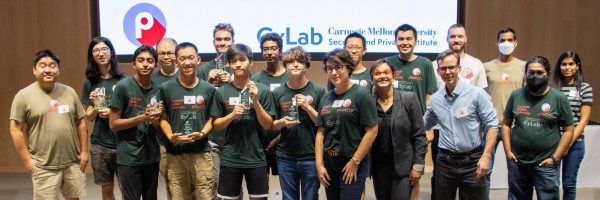

picoCTF: How gamified cybersecurity piques curiosity in STEM
Created by Carnegie Mellon University’s Cylab, picoCTF encourages interest in cybersecurity with a capture the flag game.


Created by Carnegie Mellon University’s Cylab, picoCTF encourages interest in cybersecurity with a capture the flag game.


Businesses, governments, universities, nonprofits, and other organizations are entering a new era of connectivity and technology. Whether to boost productivity, improve public services, or help make cities more sustainable, this rapid adoption of


Teaching Global Problem Solvers: The Series (GPS: The Series) is an easy, fun way to keep students engaged in STEM. To help you get started, seasoned computer science teacher Visa Thiagarajan shares a few tips for teaching GPS: The Series online.


As school closures impact students, we realize how important it is for them to have access to quality educational content while they learn from home. Cisco's nonprofit partners like Science Buddies, Code.org, Technovation Families, and MIND Research


This guest post was written by Emma Reid, global marketing manager, Cisco Networking Academy Corporate Affairs, Asia Pacific & Japan at Cisco and recent winner of the ARN Women in IT Awards.

In advance of her presentation at a Women Rock IT event, entrepreneur Maha Achour shares her journey from her birth in North Africa to a career in a STEM field, how she balances family and career and how she supports young people to help them achieve


Cisco and the San Jose Tech Museum of Innovation promote the Tech Challenge, demonstrating how a diverse groups of engineers and leaders create technology and solutions to benefit everybody.


For the second summer in a row, the United States Department of Agriculture (USDA) and the Governance Lab (GovLab) put on camps for middle and high school students to teach them how to harness the power of open data and crowdsourcing to make important

We are in the midst of an exciting technology transformation – digitization. Digitization will enable countries to maintain global competitiveness, increase GDP, foster innovation, and create new jobs. It’s predicted there will be over 50 billion


