Avatar

The Wealth and Asset Management industry is about to undergo unprecedented disruption according to new industry research by Roubini ThoughtLab in partnership with Cisco and 16 prestigious industry firms.  Get your seat belts on!

IMG_7667

The three main takeaways from this research are:

  1. this is the first research piece that combines economists, technologists, providers, and investors — 500 wealth services providers and 2000 investors across 10 leading markets
  2. the wealth and asset management industry will expand by $50 Trillion USD by 2021 yet 48% of investors declared they will switch providers if their new needs are not met
  3. Digital technology will play a big factor in market leadership and the winners will likely be full-service institutions and mutual funds companies who invest in Fintech capabilities.

Unprecedented market dynamics are in play as we continue to see margin pressure in the wealth industry, increasing operational risks due to cyber-security vulnerabilities, and increasing regulatory costs.  In order to meet Return-On-Equity targets firms need to consider headcount, the cost of buildings, and innovation programs for both financial advisors and external client experience.

The Internet will grow from 3.1 billion unique users today to 4.1 billion over the next 3 years creating market reach at scale the world has not yet experienced.  Price points for automated financial advice are approaching zero so wealth firms need to learn how to compete with free for asset allocation and information services while using digital technology to enhance their people side of the advisory business.

There remain gaps in digital readiness.  For example the Wealth 2021 study revealed that 63% of investors believe their providers are prepared to ensure cyber security but only 48% of providers said they were prepared. Providers are investing and expect to grow use of telepresence and collaboration by 68%, web analytics and sentiment analysis by 77%, and use of artificial intelligence by 128%

We see the potential for hundreds of millions of new entrants into the financial system by 2021 given the new reach the 4.1 billion user Internet provides.  This will take place in the context of the Internet of Things, wealth advice services being delivered via software platforms at scale, and professional financial advice price points approaching zero. Everyone with a bank account is going to become an investor.

These trends will put extreme price pressure on wealth advisors the world over, fuel a new wave of financial advice capability and self-service automation, and require wealth firms to rethink their business models in order to earn a market leadership position in the year 2021.

What are wealth and asset management firms to do?  Wealth and Asset Management firms can:

  1. Create a gap analysis and future state digital vision and plan (tip: the new vision for financial services providers is to be present in the financial lives of their customers any time, any place, on any device, across any channel)
  2. Create a digital transformation roadmap with clear business outcomes and success measurements
  3. Consider the digital transformation pillars of people, process, policy, governance, and technology
  4. Put the customer at the center of the strategy when re-engineering the front, middle, and back offices for the wealth and asset management provider of the future


 

Authors

Joe Pagano

Practice Advisor, Sales

Avatar

This blog post was authored by Jaeson Schultz.

For the past five years we have enjoyed a relatively calm period with respect to spam volumes. Back at the turn of the decade the world was experiencing record-high volumes of spam. However, with the evolution of new anti-spam technologies, combined with some high-profile takedowns of spam-related botnets, voluminous and indiscriminate spam attacks fell precipitously in popularity with spammers. Subsequently, having lower volumes of spam to contend with, anti-spam systems had the luxury of dedicating more computer processing resources to analyzing fewer messages for email-based threats. But, as the fashion industry adage goes, “everything old is new again.” Spam volumes are back on the rise.

Read More

Authors

Talos Group

Talos Security Intelligence & Research Group

Avatar

By Robert Mahowald, IDC Group Vice President

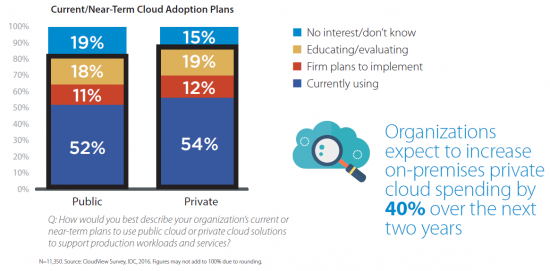
IDC recently surveyed more than 6,159 executive-level IT and LOB decision makers in 31 countries to find out their future plans and current state of cloud adoption. What we discovered is pretty remarkable.

According to IDC’s CloudView Survey 2016, 78% of organizations are already using or planning to implement some form of cloud services, up from 60% in last year’s survey. Sixty-six percent of organizations we surveyed are using or planning to implement private clouds. But respondents pointed to hybrid cloud — a strategy for operating in a mix of public and private cloud, provider and customer-based environments — as their dominant operational model, at 73% of all organizations surveyed.

Moreover, organizations intend to invest more money in hybrid clouds. Over the next 2 years, we expect a 30% increase in the number of cloud users planning to allocate funds to more than one type of cloud deployment as part of a hybrid cloud strategy. It’s important to note that future budget allocations for provider-based cloud plans grow primarily at the expense of spending for traditional in-house IT. This means that organizations are focusing on sorting out what types of workloads are best suited for private clouds (re-platformed, virtualized and/or containerized to run in the corporate datacenter) versus public clouds (running at a provider’s site). In general, sustained workloads requiring control and compliance, such as financial planning applications, tend to be allocated to private clouds, while elastic workloads such as analytics, or eCommerce can go to public cloud providers for quicker ramp-up and scalable services. Nonetheless, organizations expect to increase on-premises private cloud spending by 40% over the next two years.

Cloud Adoption Private and Public Cloud 2016

Hybrid cloud growth also means that organizations are expecting greater returns from their cloud investments on strategic business outcomes. For example, more than half of all organizations expect to increase revenues from their use of cloud services. However, only 31% of organizations in our survey had repeatable, managed, or optimized cloud strategies, and 22% had no cloud strategy at all. Nearly 50% had a 2-year goal to achieve “Optimized” maturity, the highest level of sourcing and management in IDC’s Cloud Maturity Model. But only 3% of firms currently have that fully-optimized cloud strategy. Obstacles to achieving greater cloud maturity include skill gaps, legacy siloed organization structures and IT/LOB misalignment. Clearly there is significant room for improvement, which perhaps is why 89% of organizations think it’s important to work with their major incumbent provider to carry current operations into the cloud.

IDC research indicates that these expectations of cloud adoption are grounded in tangible benefits. Organizations we’ve studied are now realizing $3 million in revenues and $1million in reduced costs per cloud application deployed on a yearly basis. Most respondents expect to migrate data between public and private clouds, and they have high security and policy requirements. These IT executives also expect to act as IT service brokers and want solutions that support their requirements.

Indeed, IDC foresees the emergence of “Provider-Based Cloud,” in which trusted IT infrastructure vendors become the cloud providers of choice. IDC sees a growing potential for IT incumbents to deliver feature-rich cloud services fully managed by the enterprise, with features such as mobile asset management, directory integration, and customer-managed encryption keys.

Additionally, what IDC sees as the “second wave” of cloud adoption continues to advance. The first wave was tied to metrics such as improved service-level agreements (SLAs) and lower costs, but now organizations view cloud as a platform that can help them drive innovation and digital transformation. In fact, this study shows that as companies achieve greater levels of cloud maturity, business benefits increased. The more mature organizations have greater revenue and are able to more strategically allocate their IT budgets to keep more focus on innovation and less on activities necessary to “keep the lights on.” However, the second wave has not reached all IT buyers yet. There are still organizations out there who resist cloud deployment, citing security concerns (48%) and high costs (26%) as the top two reasons for their stagnation, according to IDC CloudView.

For more information and guidance on cloud adoption, I invite you to read the IDC InfoBrief “Cloud Going Mainstream. All Are Trying, Some Are Benefiting; Few Are Maximizing Value” sponsored by Cisco. Cisco has also made many of these market research findings actionable by developing the Cisco Business Cloud Advisor (BCA) framework enabled by IDC. Begin to explore the possibilities by completing a brief survey.


Author Bio

Robert-MahowaldRobert Mahowald is a Group Vice President at IDC and leads IDC’s Applications team, the Cloud Software team, and co-leads IDC’s Cloud Services: Global Overview program. In his roles, Robert advises clients on key trends and opportunities in the changing world of software creation and delivery in the age of cloud computing. An experienced speaker, Mr. Mahowald is well-known as a subject matter expert in the areas of SaaS, IT cloud services and software application delivery. He has been a featured lecturer at various executive events, industry seminars and conferences such as InternetWorld, and on such television programs as CNBC and CNET TV. Mr. Mahowald’s research and commentary has appeared in trade journals and publications including The Wall Street Journal, USA Today, The New York Times, and Investor’s Business Daily.

Authors

Enrico Fuiano

Senior Solutions Marketing Manager

Cisco Cloud Marketing Team

Avatar

There is greenfield innovation. And then there is innovation that shakes you out of your own comfort zone. Without comparing the two, our story is steeped in the second. There was an era when Cisco’s enterprise products not only looked very different from each other but also operated on completely different operating systems. These products were generally built in parallel, from the ground up, and were often tailor-made for specific segments. What this meant was that although the products worked effectively, they weren’t standardized. The lack of standardization was especially apparent when one examined the numerous different operating systems that existed. Innovation is about finding new ways to deal with pain points, and we decided it was time to fix this particular one.

We wanted all our enterprise hardware platforms to run on a unified software stack. Which is why we created a modernized IOS XE software stack for all of our enterprise routing, switching and wireless products, internally code named Polaris. This groundbreaking common software stack allows us to offer a completely consistent user experience across our entire portfolio while at the same time using a common platform to continue our industry-leading innovation. Releasing features has become vastly more efficient as they can be developed in a single release train across all enterprise platforms. And, as we continue to build next-generations platforms and capabilities we can do so with hitherto unmatched engineering efficiency.

Single Pane of Glass

So what does this mean for the future?  We are on a path to making enterprise-grade software as intuitive and adaptive as consumer technology. For the first time in the history of Cisco, we have a single software stack across the enterprise routing and switching product lines. Polaris not only brings together a single software stack across enterprise, it also lays a modern infrastructure foundation. A foundation that will help define enterprise networks of the future by enabling automation and programmability for network management and a slew of advanced functionalities like serviceability, device and network analytics, smart licensing, and more. For instance, streaming telemetry, built natively and deep into the software stack, will allow network data from the devices to be consumed and processed by controller layers to create information and actionable insights for new forms of innovation in network monitoring and control. We will also bring together wired and wireless functionality together for seamless operation and consistent policies across wired and mobile devices. Just as for smartphones and other consumer devices, we can make available an app store-like experience for enterprise third party apps to run on the network devices for fog computing.

A common software stack for the enterprise is the way of the future. It allows for increased efficiency, ease-of-use, consistency in operation as well as new innovation and much more.  At the end of the day, however, delivering the best possible product and experience to our customers is what drove this re-invention of enterprise networking.  Onward and forward!

Look forward to continuing the discussion @aoswal1234.

https://www.youtube.com/watch?v=ggxfjlYmU08


Authors

Anand Oswal

No Longer with Cisco

Avatar

There continues to be a lot of talk about automation and orchestration for carrier-grade workloads. However, these technologies can’t be fully leveraged until proper telemetry can be implemented. To shed some light on progress we’re making in delivering on network telemetry for we recently hosted a Cisco Knowledge Network webinar on the subject: How to “Transform Your Network with Model-Driven Telemetry”. We brought in Shelly Cadora, a Principal Engineer here at Cisco to share how model-driven telemetry is a first step in transforming how you monitor and operate your network.

Model Driven Telemetry Straight from the ExpertsShelly identifies three major enablers for telemetry:

  1. Enable a push architecture for performance
  2. Analytics-ready data for tool chains to standardize on
  3. Data driven models for automation

After providing several CLI samples, config models, YANG models, and more to show how you can stream data from network devices, the webinar takes it one step further, and shows how everything that had been shared can be put into real use. Shelly demonstrates, live, how IOS XR (6.1.1), YANG models, and open source tools can be used to develop helpful tools for abstracting network data.

Carriers need to be more agile, reduce operational costs, and simplify their network. Telemetry offers a path to achieving these goals. Learn more by watching the Cisco Knowledge Network event here.

Authors

Dan Crawford

Strategy

Data Center, Mobility, & Network Infrastructure

Avatar

NYCMinuteImage

OK, a New York minute? In less than 60 seconds let’s see what’s going on with Cisco at Strata+Hadoop 2016 New York City next week. The event is the largest Big Data event in the Americas and we look forward to attending each year.

Cool Things…

We have a lot happening with learning and listening opportunities in our Strata+Hadoop Booth #833.  For Learning, our in-booth theater has 15+ speaking sessions scheduled. Come by and learn from our Cisco Big Data Subject Matter Experts on Analytics, Big Data, Data Virtualization, Hadoop Infrastructure solutions, ROI/TCO,  and more…

For Listening, our SME’s will be available in our Meet the Expert area in the Cisco booth.  Stop on by, grab a chair, and meet with them.  Our SMEs are top notch –  some of our best Factory and Field folks will be present at Strata+Hadoop. They can listen to your specific questions be it on Apache Spark, Hadoop, Lambda architectures UCS, etc. It’s a great opportunity for some 1:1 consulting.

Fun Things… 

DaD

Data After Dark!

It’s Strata+Hadoop, right? Cisco again will be a top sponsor for Data After Dark, the show’s main social event. This year the event is being held on the historic USS Intrepid. We look forward to ‘logging off’ from our trade show duties and socializing with you. Stop by for a drink and let’s chat.

StrataDroneSwag, Swag, and More Swag!

It’s a trade show, right? We’ve got some cool Cisco branded handouts for you during your Cisco booth visit. Stop on by and grab some. Be the envy of your office when you return back to work from New York City.


Speaking and Other Things…

In addition to our in-booth theater sessions we have Cisco speakers lined up during the show. Raghu Nambiar, CTO of Cisco’s Data Center, business will provide a quick view into his thoughts on “Business Insights Driven by Speed” during the early Thursday morning Keynote session.

Later Thursday morning, Cisco presents “Big Data and Analytics with Cisco UCS: Lessons Learned and Platform Considerations”. Rajesh Shroff, one of our Factory-based Big Data Architects will describe best practices for your Data Center infrastructure architectures.

To close, if you are interested in learning more about Cisco’s Big Data and Analytics solutions, please visit http://www.cisco.com/go/bigdata

Authors

Rex Backman

Senior Marketing Manager, Big Data Solutions

Data Center and Cloud

Avatar

As I get ready for my presentation on The Factory of the Future, Today: Lessons Learned from Deploying IoT at the Design & Manufacturing Conference, I think the main value I get out of these conferences is networking with peers and staying relevant in a fast-evolving job market. Companies are also having to reinvent themselves and stay relevant in light of Digitization.

I remember when John Chambers predicted that by 2024, 40% of Fortune 500 companies would no longer exist. This was an eye-opener, but seems particularly prophetic given how quickly traditional manufacturing companies are evolving into software-centric organizations.

designthinking_2

Source: Creative Commons

These forces of change are even driving traditionally risk-averse corporate IT managers to trial & deploy applications from startups that embrace cloud, smart devices, web applications, analytics, and all those buzz words. This is IoT: the application of internet-technologies to the world of things.

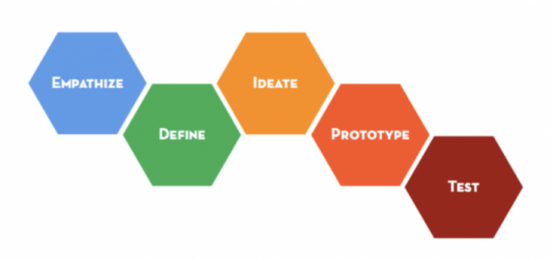
As we evolve our M2M thinking to embrace IoT, applying the principles of design thinking helps ensure we are addressing the right problems.

Innovation = Creativity X Execution

Design Thinking can be traced back to 1969, but the concept really came into its own in the 90’s with the work done at Stanford and IDEO. It is perfect for maximizing the ROI of ambiguous journeys like Digitization because of its emphasis on creativity & problem finding that is suited for dealing with ambiguous outcomes and the need to consider the human element.

steps-730x345

Source: Stanford D-School

Rather than blindly assuming that every technology issue is an IoT-shaped problem, Design Thinking can focus on where the IoT can provide a tangible ROI today and how to apply the technology.

I see many design thinking success stories firsthand from my work with customer and partner executives who are monetizing IoT for their businesses. These folks are becoming increasingly valuable to their employers because they combine their knowledge of the problem with a willingness to think outside the box.

I’ll get into more of the details in Minneapolis on the 22nd. I hope to see you there!

Authors

RJ Mahadev

Head, Cisco Retail IoT Solutions

IoT Business Unit

Avatar

We wrote recently how Cisco’s innovation machine is moving faster than ever – with the “x-speed” project that delivered several new platforms last year, including the NCS1000, NCS 5500, and enhancements to IOS XR, such as streaming telemetry, application hosting, and segment routing.

The Cisco NCS 5500 series is proving to be a big hit, for several reasons.

First of all, the IOS XR operating system has been running the backbone networks of many carriers for over a decade. It’s resilient, feature-rich with a full suite of both layer 2 and layer 3 protocols, and well operationalized.

Second, many carriers are trying to align with a software-centric, DevOps model of operations. New data-driven capabilities such as streaming telemetry enable service providers to optimize their network operations in ways that were impossible before.  Network programmability using native YANG models allows for unprecedented automation and efficiency.

And lastly, it’s proving to be remarkably adaptable to many applications. We’re seeing a number of customers seeking to transform their central offices to virtualized data centers, and NCS 5500 provides the scale, low power consumption, and software features they require. One recent design win has uncovered 16 different applications for the platform.

Hear from Kevin Wollenweber, Senior Director of Product Management about the NCS 5500.

https://www.youtube.com/watch?v=bYeVEPDGKME

To learn more about the Cisco NCS 55000 click here or contact your Cisco account team or authorized partner.

Authors

Greg Smith

Sr. Manager, Marketing

Cisco Solutions Marketing

Avatar

How do you improve on what’s already an incredible experience? Easy, unleash the innovation prowess of two great companies.

Well, it may not have been easy, but that’s exactly what Cisco and Apple did last week with the introduction of iOS 10. This monumental upgrade ushered in a new era of mobile connectivity and collaboration by optimizing the way one billion iOS devices around the world connect to Cisco Wi-Fi networks.

Not only is connecting to a Cisco Wi-Fi network significantly enhanced, but customers also receive prioritization of business apps and an intuitively simple and reliable collaboration experience with Cisco Spark.  A new API featured in iOS 10 enables Cisco Spark to seamlessly unify VoIP and cellular calling so that the native phone app handles both. Customers now get the same experience, while preserving the unique benefits the VoIP app provides.

So, what does this mean for our partners? A lot!

  • First, partners can differentiate themselves and provide their customers a new premiere mobile collaboration experience right now, today!
  • Second, Cisco Spark represents a predictable recurring revenue stream through lucrative subscription licensing.
  • Third, Cisco is rolling out several new services this fall to help customers get even more from their Apple and Cisco solutions. Our certified partners can provide these services and capture additional revenue opportunities.
  • Finally, many network environments are prime candidates to be upgraded so customers can take advantage of the powerful capabilities applications like these can provide their IT and end users. Partners can leverage Cisco’s Digital Network opportunity to drive these enhanced mobile experiences with new offers that are available today. (Learn more here.)

Our co-development partnership with Apple started just 10 months ago, and this milestone represents how both companies are maniacally focused on delivering a premium experience for customers. And for our partners, this represents an incredible opportunity to deliver greater value, capture new revenue streams and differentiate themselves.

Congratulations to the Apple and Cisco teams who’ve made this landmark milestone possible!

Want to learn more about the Cisco-Apple solutions? Click here.

Read Rowan Trollope’s blog.

If you are not a partner with Cisco, learn how to get started today.

Questions or Comments? Feel free to connect with me on Twitter.


Authors

Wendy Bahr

No Longer with Cisco