Avatar

cgentalWritten by Christelle Gental 

IBC 2016 treated us with the hottest weather in 20 years – and with the prize for the Best Stand Design in its size category – described as providing an ‘inviting, stunning and fresh approach’! What a wonderful surprise and amazing reward for the team who worked hard for the last 4 months to make this happen.

On Saturday at 5PM (CET), Roger Thornton, newly appointed chairman of IBC Committee, turned up on the Cisco booth with a Certificate declaring the Cisco Booth the best looking stand of this year’s show. I had the privilege to collect the certificates and the invitation to the Innovation Awards Ceremony taking place that very evening at the RAI auditorium – a very impressive 500-seat conference room which was packed. Bruno Touret represented George Tupy and joined me for the ceremony. We were greeted as VIPs with sparkling drinks… took our seats and enjoyed the ceremony rewarding innovative video projects such as BT Sports (a Cisco customer) and NASA – as well as the amazing film director Ang Lee who shared an early projection of his new film.

When it came to the Stand awards category, both our names were called – we walked to the stage being filmed and photographed during the crowd’s applause. It was brief but we felt proud! One thought crossed my mind: ‘so this is how it feels to be famous… I could get used to it’.

This prize is a shared trophy for the team who engaged in this process back in May – starting with Ally Thorndike who focused our efforts on understanding the customer journey – a critical process to identify our objectives which shift slightly every year. One strong idea that came out of this was to have a partly closed stand with demonstrations facing inside which would help us being more focused on invited guests and less on passing traffic. We’d keep a whisper suite on the top floor for our special Infinite Video Next which gives an amazing taste of how personalized Video can engage viewers – and the ground floor would display here-and-now solutions in an open environment that facilitated traffic flow. The hierarchy of the messaging was simple but effective – Cisco logo treated with modern effect, the corporate campaign tagline adapted to the show ‘There’s Never Been a Better Time to Transform Entertainment’ which conveys so perfectly our story and where we are in transforming the Service Provider Video space, concise solution descriptions for each area and a twitter call to action #neverbetter facing the passing traffic. The icing on the cake was the beautiful floating cube display and LED wall with amazing content from Cisco campaigns and customer testimonials. The whole stand was then wrapped up by a subtle LED line at 5m height linking up all the parts. Check the photos!

DSC00019 DSC00060 DSC00068

Authors

George Tupy

Market Manager

Service Provider, Video Solutions

Avatar

When it comes to leadership in the SDN marketplace, clearly there is one winner. And that is, Cisco ACI. The proof is in customer momentum numbers. In the recently concluded quarter, Cisco ACI announced 8600 plus ACI ready customers and a rapidly growing ecosystem of 50 plus technology partners.

In fact, the growing ecosystem of partners is a direct testimony to the openness of the ACI platform. I like specifics. In recent blogs, I presented the customer success featuring ACI with F5 and ACI with Citrix, and it was clear how customers are benefiting from these solutions. In this blog, I want to highlight recent North-bound technology partner solution integrations with ACI, the use-cases they address and the key benefits to customers.

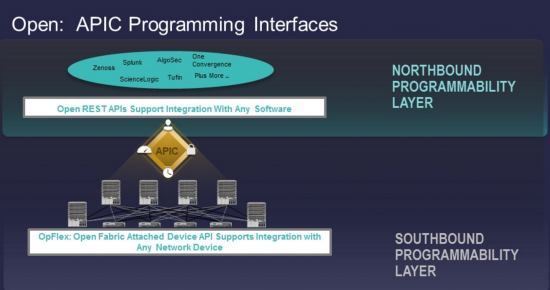
In this blog, I will focus on Splunk, Zenoss, AlgoSec, Tufin, Sciencelogic and One Convergence. What is unique about these partners? Well, they all use the Cisco ACI’s REST API to integrate with Cisco ACI and are also referred to as North-bound partners.

Screen Shot 2016-09-20 at 9.35.22 AM


Splunk Enterprise (Analytics) – Cisco ACI for Splunk Enterprise offers a flexible approach to monitoring Cisco ACI and all other elements of customer’s technology stack. ACI and Splunk together reduce customer costa and accelerate MTTR, meet SLAs and improve the efficiency through realtime and historical insights into ACI health, user and fabric analytics and single console visibility across physical and virtual infrastructure. For details read solutions brief and visit splunkbase.

Zenoss Service Dynamics 5 (System Management) – Zenoss, a systems management software company, focuses on the challenges of helping ensure the delivery and operation of large-scale IT services. Zenoss Service Dynamics 5 replaces a patchwork of traditional management frameworks and custom-built solutions, bringing highly scalable, unified monitoring and operations management to Cisco ACI. This powerful combination is well suited to a new class of IT demands, including IT-as-a-Service (ITaaS), automated operations, and hybrid cloud infrastructure. For more information, click here

Tufin orchestration Suite (Security and Application connectivity) – The integration of Tufin Orchestration Suite with Cisco ACI provides visibility, compliance, and automated provisioning of security policies across ACI fabric, firewalls and cloud platforms. Tufin manages all security policy changes using an auditable, documented change process with inherent security and compliance checks. With a comprehensive audit trail for all changes, Tufin helps ensure compliance with internal and regulatory standards. Customers can configure alerts and reports to instantly identify and remediate violations, reducing the time and effort needed to achieve audit readiness. For details read solutions brief

AlgoSec (Security and Visibility) – AlgoSec complements Cisco ACI by extending and enhancing its policy-based automation to all security devices across the enterprise network. Through AlgoSec’s visibility and unified security policy management, customers can now process and apply security policy changes quickly, assess and reduce risk, ensure compliance and maintain a strong security posture across their entire environment – thereby rapidly realizing the full potential of their Cisco ACI deployment. Click here to read Press Release.

ScienceLogic (Monitoring) – Cisco ACI is great for reducing the amount of heavy lifting network engineers have to do to get a network up and running. Gone are the days of manually establishing Access Control Lists (ACLs) — all of those activities are automatically handled by ACI behind the scenes. ScienceLogic’s hybrid IT monitoring platform automatically discovers all of the elements making up your Cisco ACI system. It maps your ACI components onto visual topology views, applies best practice monitoring templates, and populates a number of out-of-the-box dashboards.

Why should customers care for this? Well, for starters, the joint solution ensures network performance, by spotting bottlenecks before end-users notice them. It also helps reduce downtime – If an application is performing poorly or has spotty availability, IT personnel can quickly diagnose whether the issue is with the application, virtual machine, hypervisor, or ACI network element — using intuitive, graphical maps. By now, I am sure your interest has peaked – read more

One Convergence (Network Service delivery) – One Convergence – Cisco ACI solution provides high level of automation of all layers of the networking stack and enables enterprises and service providers to roll out rich set of network services at scale in OpenStack cloud deployments. The solution addresses the scale and efficiency required by large Data Centers. ACI/APIC in combination with NSD provides the scale and assurance required by enterprises for all layers of networking. While ACI/APIC hardware fabric provides scale and assurance for L2 networking, the distributed routing and NAT capabilities along with distributed OPFLEX control plane of the software scales L3 networking. NSD further provides the scale and assurance for network services with per tenant network service model, elastic scalability and high availability. Need Additional information, click here

The momentum is going strong with ACI ecosystem, and several new technology partners are in the process of coming on board. I will highlight these new partners and their differentiated solutions via a new blog in near future. We have lots of exciting ACI ecosystem sessions at Microsoft Ignite during sept 26-30, Atlanta. If you happen to attend, please come by the Cisco mini theater to find details. I can go on and on, but I will then exceed the limits of a blog. I want to recommend a few useful links for you to check out.

New ACI-Splunk release:

APP:   https://splunkbase.splunk.com/app/1896/#/overview

Add-on:   https://splunkbase.splunk.com/app/1897/#/overview

ACI-Tufin Integration demo:

https://www.youtube.com/watch?v=ASTvOBv_b8A

New Zenoss release for ACI:

http://blog.zenoss.com/2015/01/new-cisco-apic-zenpack-the-day-2-plan-you-need-for-cisco-application-centric-infrastructures/

ACI resources

www.cisco.com/go/aci

http://www.cisco.com/c/en/us/solutions/data-center-virtualization/unified-fabric/aci_ecosystem.html

Cisco ACI App Center

http://blogs.cisco.com/datacenter/introducing-the-cisco-aci-app-center

Authors

Ravi Balakrishnan

Senior Product Marketing Manager

Datacenter Solutions

Avatar

This blog was guest-written by Kelly Petrich, Community Relations Manager at CiscoAAEAAQAAAAAAAAfLAAAAJDZhYmY4MTNlLThkOTItNGUwZS04ZGRiLTQwMWUzODlhYzVmNg

The shift in seasons not only brings a time of change, but also a chance to grow our commitment to being of service to others. Giving back to our communities is part of who we are at Cisco and makes us a stronger, better company.

To reaffirm this value, we are hosting a new week-long global initiative called Global Service Week. From September 26 through September 30, we will celebrate our commitment by making a collective impact in the communities where we live, work and play.

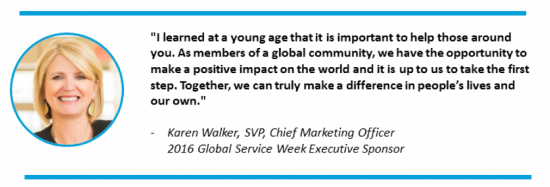
Karen W

Global Service Week provides employees, team members and Business Units with the opportunity to showcase Cisco’s strong culture of giving back while creating meaningful change in our communities.

Throughout the week, Cisco employees will come together to work on hundreds of projects designed to address the social, economic, environmental, and critical human needs issues in 16+ countries.

During Global Service Week, the Cisco Foundation will also provide “Dollars for Doers” matching gifts by donating to Cisco’s vetted and approved community partners where our employees volunteer their time.

Here’s a snapshot of a few of the Global Service Week projects:

  • San Jose, California: 1,000 employees from the World Wide IT Manager’s Offsite (WWITMO) team will participate in The Crayon Initiative, where WWITMO volunteers will sort unwanted crayons to provide sick children in Northern California hospitals the resources to express their creativity and individuality through the arts.
  • Research Triangle Park, North Carolina: 75 employees will come together with Habitat for Humanity of Wake County to help build affordable housing for families as a special build project in a Southeastern Raleigh neighborhood.
  • Lima, Peru: 20 employees will help prepare food kits for children who have recently undergone cleft palate or lip surgery as patients of Operation Smile.
  • Bangalore, India: Employees will help create Science, Technology, Engineering and Math (STEM) educational kits for children supported by the Children’s Lovecastles Trust (CLT)
  • London, United Kingdom: 50 employees will help improve local park or green space for people and for wildlife by volunteering with The Environment Trust.

We are encouraging all employees to participate no matter their availability and location. For employees who are not able to join an organized project at a site, we are asking they pursue their passion for volunteering by creating their own opportunities or by joining one of the many virtual volunteer activities, like the Missing Maps project.

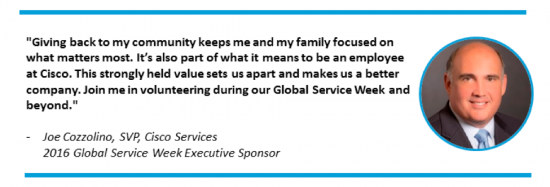
Joe C

Cisco’s Global Service Week is part of My Making a Difference, one of Our People Deal Moments that Matter.

Cisco offers a robust set of resources to support our employees in volunteering for the causes, issues, and nonprofits that reflect their passions and interests. Year round, employees are empowered to “be the bridge” in their communities.

Cisco provides employees five calendar days per year of paid volunteer-time-off through our Time2Give employee benefit, a matching gifts program through the Cisco Foundation, and global programs that align with our employees’ passions — like Girls Power Tech and the Be the Bridge annual giving campaign. In FY16, Cisco employees volunteered over 187,000 hours and donated nearly $11.3 million to organizations around the world.

Together, we can make a difference. Spread the word on social media and let the world know how you are “being the bridge.” Share your stories by using the #ServiceWeek and #WeAreCisco hashtags and inspire others by posting to the Cisco CSR Facebook page.

If you’re an employee, learn how you can make a difference by visiting the Global Service Week Jive page.

Authors

Austin Belisle

No Longer with Cisco

Avatar

The Enterprise Strategy Group (ESG) conducted research into how cybersecurity professionals view network security monitoring and how they use it in their organization. The report Network Security Monitoring Trends surveyed 200 IT and cybersecurity professionals who have a knowledge of or responsibility for network security monitoring. Some of the key findings include:

  • Many organizations now understand the value of network telemetry
  • Large organizations collect large amounts of security data but there’s still an opportunity realize its full value
  • While network security monitoring is highly valued, practices remain fraught with challenges
  • CISOs have aggressive network security monitoring plans for the next few years

Jon Oltsik is an ESG senior principal analyst and the author of this study. We sat down with him to discuss the significance of the findings and the important role network security monitoring plays in today’s cybersecurity market.

How do security professionals currently perceive network security monitoring?

They perceive it as a very important component of their overall security strategy. Eighty percent responded and said network security monitoring is critical to their overall security strategy, and 17 percent said that network security monitoring is important (but not critical) to their organization’s overall security strategy.

So they view monitoring network traffic, understanding network traffic, and being able to detect anomalies as really important to the overall mission. In the past, some companies understood this, but it was largely overlooked.

Why do they view it as so important in today’s threat landscape?

The beauty of network security monitoring is there are a lot of different use cases that can have a drastic effect on security if used properly. For instance, 42 percent of the people we surveyed said they used network security monitoring for proactive querying of the network – really hunting for suspicious behavior. We see more and more organizations, especially large ones, investing in hunting capabilities. You need those clues from the network to understand where the network traffic is flowing, from what devices, and to what external IP addresses. Is there anything anomalous about the traffic? Can I relate or correlate those responses to what is happening in the wild with threat intelligence?

Network security monitoring provides this rich repository of information on what everyone is doing, and from that, you can gauge what is normal and abnormal. If you have the right tools or people in place, you can dig further into investigating anomalous behavior or fixing problems.

What are the challenges to successful network security monitoring?

There are a number of challenges that we found in the research. Seventy-two percent of companies we interviewed said network security monitoring is more difficult today than it was two years ago. Some of this can be attributed to an increase in malware volume – 34 percent said that – and 28 percent pointed to an overall increase in network traffic.

Gaining comprehensive visibility was mentioned as a specific challenge, with 31 percent of organizations indicating they had one or several network blind spots. While they monitor network traffic, there are areas of the network or particular workloads that they can’t see or don’t see very well. That makes it hard to get an end-to-end view of network security.

Twenty-nine percent said there were communications and process issues between the cybersecurity and network operations teams. That is an organizational issue. Network security is really a cooperative endeavor between security and network ops, and maybe they’re not using the right tools or communicating or collaborating well on processes.

Twenty-five percent said they don’t always collect the right data at the right time. Network security data as well as threat intelligence is all about timing, so to detect things quickly, you need timely data. Sometimes they are sampling data, sometimes there aren’t the right sensors in the right place, and sometimes they don’t know what to look for.

Due to the complexity of what they’re after, sometimes there are a lot of challenges across people, processes, and technology. But CISOs appear intent on addressing these issues – 41 percent of organizations say they will significantly increase their investment in network security monitoring, and another 50 percent say they will increase investment somewhat.

You mention issues between security and network operations, how can we address this disconnect?

The greater emphasis on network telemetry is very good because it is a source of truth for both the security and networking teams. Both organizations understand that data. If the data is pointing to a particular host IP address, both organizations can relate to that. If it is talking about rogue connections, rogue traffic, protocols, or encryption that is happening on the network that shouldn’t, both organizations can interpret that data and have it as a common source of truth.

To the extent that we can have those groups collaborate better, we’ll make improvements. Workflow improvements will help. There are tools like ticketing systems to track the problem of detection and remediation of events. But it is important to start with a baseline that everyone understands, and network telemetry can provide that.

Going back ten years, there was a market called network behavioral anomaly detection (NBAD). Those tools were purchased by the security teams, but I noticed that often after the purchase, they were used extensively by the network ops team. I think we are just seeing the fruition of that kind of telemetry in the tools we have today.

What kind of data sources are being used for network security monitoring?

There is a legacy aspect to this in that people have always collected data at the network perimeter – things like IDS/IPS and firewall logs. SIEM tools used to be pointed at those sources. So we are looking at data ingress and egress in the network. That is still important, but it doesn’t give a complete view of network activity. I would say people are now looking much broader at traffic across their network, including internal networks, WANs, and remote offices to get a better understanding of what is going on.

Some of the tools they are using include telemetry like NetFlow, packet capture, and endpoint forensics. There are more data sources now than in the past, and there will be more as computing gets more and more complex and diverse.

What data sources should organizations look toward for future network security monitoring?

Historically, we looked at log data, and we still should. But network telemetry is generally the next step that people take. In the past, it was based on NetFlow, but it has gotten broader than that. It’s NetFlow, it’s packet capture, it’s looking at recursive DNS traffic. Probably the next two things after that are threat intelligence and endpoint forensic data. With that, I can equate what is happening on the network with what is happening on the host and I can compare both of those things to what is happening in the wild. That gives me the right touchpoints to do pretty good analysis.

Looking forward, what are the key ingredients for successful network security monitoring?

Workflows are going to the cloud, and we need eyes and ears in the cloud. The tendency is to do that discreetly, and that really is not helpful. We need our existing network security monitoring technologies to also be able to view cloud connections in a consistent way so we can then apply our analytics and best practices. Part of that is just instrumenting more and more points of data collection. For instance, network security monitoring is generally associated with core networks or data centers, but we have to expand on to access networks, distribution networks, WAN connections, and local area networks in branch offices. Eventually we’ll probably exchange some of the telemetry with our business partners too. So if I am a manufacturing organization and I have ten key suppliers, I may want to exchange that information with them as well to get a better picture of our inter-IT environment.

What should organizations keep in mind when building their network security monitoring capabilities?

There are a few things to keep in mind. One is if they don’t have experience with network security monitoring, they should look for a phased approach where they address some really burning issues in the short term, learn the tools, establish some processes, establish some success metrics and then apply them broader.

They should also view network security monitoring as something they want to integrate with some other types of technology such as endpoint security monitoring, threat intelligence, SIEM platforms, security analytics, and some of the machine learning behavioral-type stuff that is going on. You want to understand the network – and many security and networking professionals do – but you want to be able to correlate that with what is happening elsewhere for better situational awareness.

Was there anything from the research that stood out to you?

I’m pleased to see in the research that there is a clearer understanding what network security monitoring is compared to other types of monitoring and analysis tools. In the past it wasn’t uncommon for something like Stealthwatch to compete with tools like HP ArcSight or Splunk, which are really different tools for different purposes, and the fact that many companies confused those was disheartening.

Now, there is a clear understanding that network security monitoring is an important component and we see that it is the first place people go beyond SIEM. And they typically have a strategy that goes beyond network security monitoring alone that includes things like threat intelligence and endpoint monitoring. The future is continued broadening of the visibility, broadening or integration of the tools, and probably more intelligence solutions – machine learning algorithms and that kind of stuff, but it will take a while before these things come to fruition.

How does Stealthwatch, the Identity Services Engine, and the rest of Cisco security portfolio fit the needs of network security monitoring?

I think it fits very well. On one hand you have telemetry and actionable intelligence with Stealthwatch and the integration with the Identity Services Engine (ISE) gives you some remediation capabilities. I know Cisco talks about Network as a Sensor and Network as an Enforcer, and I think that those two things are starting to be understood more and more. Not only are they important independently but there is an intersection point where you get more value.

With Stealthwatch, it’s not a new technology, it is a mature technology with a good entry price and install base. The people from Lancope really understand this problem and I think Cisco gives Lancope a lot more scale and resources. Then the integration into things like ISE, TrustSec, and ACI gives you a greater ability to decrease the attack surface.

Cisco has all of the right pieces and the trend to integrating them toward an architecture is very important. It is certainly the right direction. Each piece has to compete on its own and have the integration capabilities, and that is generally what I see.

To learn more about network security monitoring, read the ESG report Network Security Monitoring Trends.

Authors

TK Keanini

No Longer at Cisco

Avatar

Today I’m pleased to announce general availability of Cisco’s next-generation software for contact centers operating in the age of digitization. This release establishes a platform offering a Connected Digital Experience. As a result, companies can deliver contextual, continuous, and capability-rich journeys for their customers.

Here’s what the Connected Digital Experience means for businesses like yours.

Connected means:

  • You can connect people to people, people to things, and things to things.
  • Your business can connect with consumers throughout the customer lifecycle, when and how they choose
  • You know your customers, and how they’ve interacted with you before.
  • Your customer care solution draws from the power and security of the Cisco network.

Digital means:

  • Your business can connect with digitally-savvy consumers, on any channel.
  • You can gain insights and take action from the Internet of Things.
  • Your business can achieve a competitive advantage in your internal and external operations.
  • You have the technology to reduce costs and improve service.

Experience means:

  • You can deliver a positive, start-to-finish care journey for consumers and your business.
  • It requires lower effort for your customers to do business with you.
  • You can address the top concerns consumers complain about in customer service.
  • You can differentiate your business from your competitors.

What does the Cisco Connected Digital Experience (CDX) look like?  Here’s a simple example:

An outage detected on the Internet of Things securely sends an alert to Maria’s mobile device. Maria contacts your company for self-service via the web or interactive voice response. With CDX, your company is already aware of the outage and how it affects Maria. If Maria later speaks with a care specialist, that person also knows about Maria’s customer journey to that point. Maria doesn’t have to explain what’s already happened. And your agent has the information needed to deliver relevant, differentiated service.

The result? Maria praises your business.

Want to learn more about the Cisco Connected Digital Experience and how your business can benefit?  Visit cisco.com/go/cc

Authors

Chris Botting

No Longer with Cisco

Avatar

NetApp’s annual technology conference takes place in Las Vegas next week and Cisco is excited to be a premier sponsor for the event. At the event, Cisco and NetApp will highlight FlexPod, our partnership, and the need for simplicity and automation.

The digital business phenomenon seems to be happening at a faster pace than anyone expected and IT will be at the heart of this emerging digital enterprise. IT infrastructure will need the fastest technologies to handle the deluge of applications and data that the digital world is producing. The deployment of IT Infrastructure and applications will also need to be automated to meet new and emerging operational models that demand simplicity and speed. With that in mind, Cisco and NetApp have updated FlexPod with the latest Cisco UCS servers, Nexus 9000 switches, and NetApp All Flash FAS storage to offer more processing power, more bandwidth capability that we now feel can be exploited by all flash technology. We have also introduced capabilities to make it easier than ever to order, deploy, and manage a FlexPod solution with FSA One Frameworks, automation with UCS Director, and lifecycle management. Continue reading “Partnership and FlexPod Innovation at NetApp Insight 2016”

Authors

Tim Stack

Product Marketing Manager

Data Center and Compute

Avatar

Have you noticed? Innovation is happening everywhere. In fact, according to the Bloomberg Innovation Index 2015 and the blog, These are the World’s Most Innovative Economies, innovation is spreading into many parts of the world. And if you look at the top ten countries on Bloomberg’s list, it’s exciting to see who’s leading innovation and how it’s spreading across the globe.

To quote Alex Goryachev’s recent blog (There Has Never Been a Better Time for Innovation),

“… Ingenious entrepreneurs around the world, sculpting new technology solutions, are the ones accelerating innovation at an unprecedented pace. These tech-driven innovators are highly creative in their own right—business and social problems capture their mind’s eye, digital platforms become their canvas, and technology tools are their paints and brushes.”

You may wonder what kind of innovation is happening in different parts of world. Since I’m based in the Asia Pacific Region, I’d like to share one of the latest activities happening in my part of the world. And it’s based on co-innovation, a growing approach to building new solutions.

The activity is the Cisco TAG.PASS Smart Innovation Programme in Singapore. This 20-week accelerator program focuses on corporate-startup, co-innovation. The main objective of the program is to create a collaborative ecosystem to nurture innovative IoT/digital solutions to develop solutions and help drive Singapore’s Smart Nation vision.

As part of the program team, I help select startups to incubate their solutions at our Songdo Cisco Innovation Center. I’m fascinated by the passion and interest in this program from so many startups and developers from all around Asia. They’re excited about jointly developing proof-of-concept (POC) solutions for the Smart Nation projects.

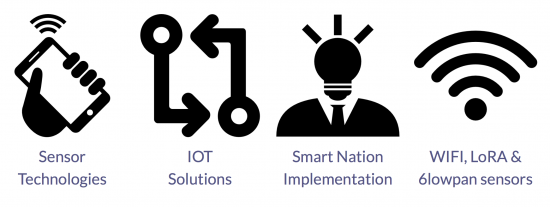
I’ve been seeing many startups very keen to develop innovative solutions using the latest technologies and areas below, which are linked to digital transformation:

Chung Graphic 1

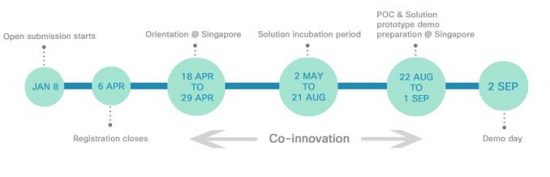
What makes me most excited about this program is co-innovation. (To learn more, read Maciej Kranz’s blog that digs deeper into co-innovation.) The program structure is illustrated below, including the scheduled activities surrounding co-innovation and co–development.

Chung Graphic 2

At the same time, co-innovation, co-development, and co-creation are regarded as the key drivers to realize Singapore’s Smart Nation vision.

Chung Graphic 3
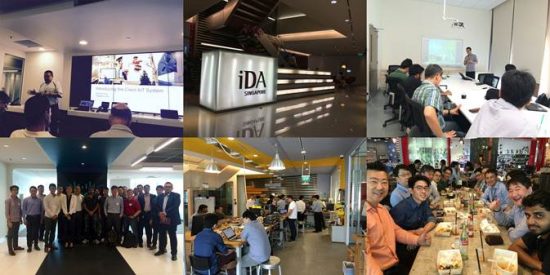
Pictures from during the orientation at Cisco TAG.PASS Smart Innovation Programme

We’re in the last week of this program and see a lot of innovation happening at the moment. The six startups selected as the finalists are working to mature their own innovative solutions. At the same time, they’re teaming up with each other for solution co-development. The finalists are confident this approach creates the needed synergy to develop innovative solutions.

It’s amazing to witness innovation happening all around the world, but it’s equally exciting to see co-innovation happening all around the world as well.

I’ll keep you updated on the progress and outcome of the Cisco TAG.PASS Smart Innovation Programme.

Meanwhile, in my next blog I’ll give you a look at Living Lab, another innovation activity happening in the Asia Pacific region.

Until then, happy co-innovation!

Authors

Ben Chung

Innovation Center Manager / Program Leader

Global Center of Excellence, Cisco Innovation Center

Avatar

Is your cloud strategy achieving all your business goals? Do you know where you stack up against your peers? Here at Cisco we partnered with IDC in a cloud study of unprecedented scale of over 6,100 organizations to help our customers find exactly that out. Because cloud – private, public or hybrid – is a key ingredient of our customers’ digital transformation strategy. Cloud is no longer just a way to increase operational efficiencies, but it drives strategic business outcomes in a multicloud world where ‘there is an app for that’. However, it is a journey, and our customers are at different stages, facing very disparate sets of objectives, challenges and opportunities.

In the IDC study of 6,100 organizations of varying sizes across 31 countries, we wanted to learn more about the barriers that prevent organizations from advancing their cloud strategies. Today, we have announced the results of our IDC market research and make available to you an online quick self-assessment tool – the Cisco BCA Adoption Report.  In addition, Cisco is launching a new and enhanced set of Cloud Professional Services to help businesses navigate the multicloud maze and optimize their cloud environments.

The Multicloud Adoption Continuum

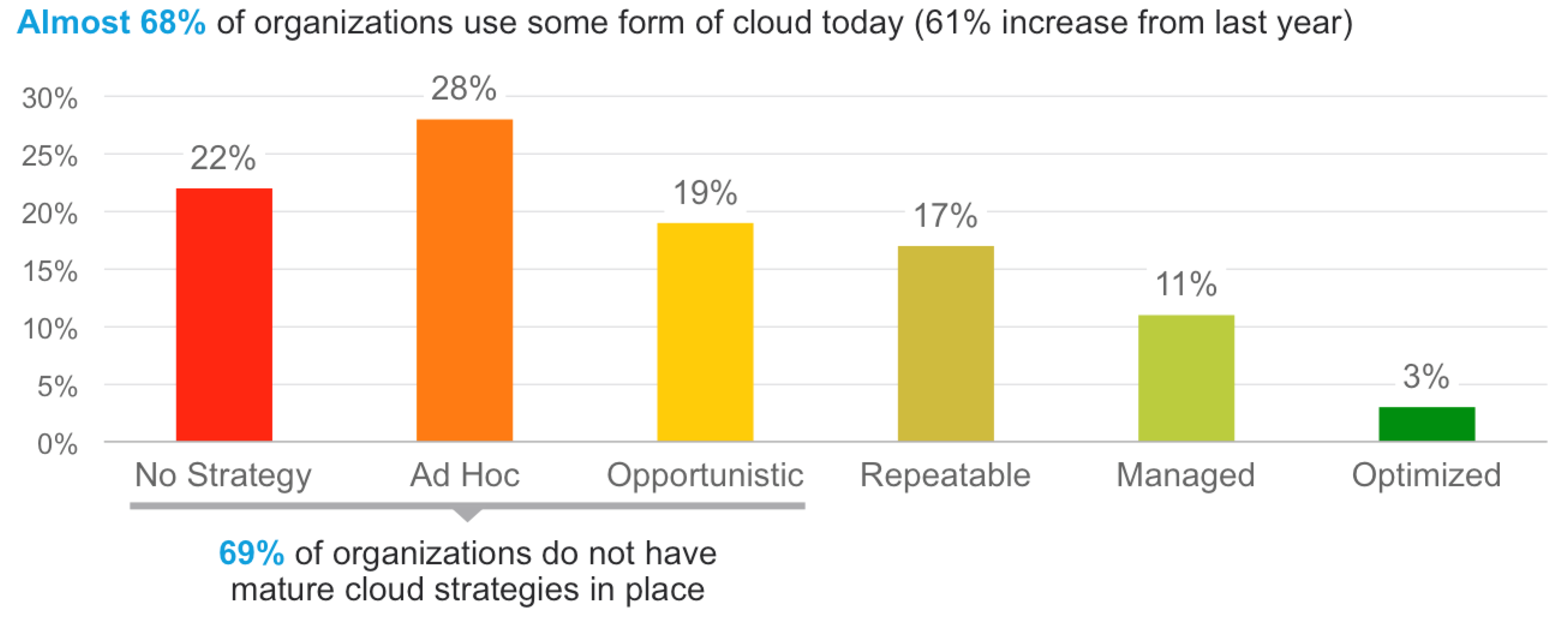
As a result of the study, IDC and Cisco view cloud adoption along a continuum. Cloud Adopters range from “Ad Hoc”— the experimental stage where organizations use cloud to fulfill an immediate need, often unauthorized by IT—all the way to those with repeatable, centrally managed cloud environments that connect stakeholders with innovative IT products and services from both internal and external providers. Organizations with the most mature, or “Optimized,” cloud strategies are the ones seeing the most significant business benefits.

cloud today stats IDC Cisco

Source: IDC InfoBrief, sponsored by Cisco, Cloud Going Mainstream. All Are Trying, Some Are Benefiting; Few Are Maximizing Value. September 2016

The study confirms that cloud adoption is going mainstream; in fact, nearly 68 percent of organizations are using some form of cloud to help drive business outcomes; however, most organizations (69 percent) do not have mature cloud strategies and only 3 percent have optimized cloud strategies in place today. Increased cloud adoption is fueled by cloud native applications including Security applications and the accelerated growth of cloud-based IoT apps at 29 percent of organizations.

Organizations around the globe are dealing with increasingly diverse and complex environments as their hybrid and multicloud deployments grow. These customers want the freedom to choose the best environments and consumption models for their traditional and cloud native applications, which all drive a variety of business benefits. According to the study, the most-mature cloud organizations expect to be able to choose from multiple cloud providers based on location, policies, and governance principles. Integrating across this multicloud environment presents very real technological, operational and organizational challenges that cut across the entire IT value chain.

Additionally, according to the IDC study, obstacles to achieving greater cloud maturity include skill gaps, lack of a well-defined strategy and roadmaps, legacy siloed organizational structures and IT/LOB misalignment. And we see this every day, cloud optimization requires not only a transformation in technologies but also in people and processes. This includes the use of IT resources, IT staff skillsets, work culture, IT operating models, organizational structures, processes, and financial models.

Cisco Business Cloud Advisor Adoption Report  

Cisco is helping customers translate the findings of this study into personalized analysis and guidance. We make available to you an online quick self-assessment tool – Cisco BCA Adoption Report – that based on a brief survey allows you to receive a personalized review of your cloud adoption along with benchmarking information and preliminary vendor agnostic guidance enabled by IDC.

New Cloud Professional Services

More importantly, to help businesses navigate the multicloud maze and optimize their cloud environments while making these market research findings actionable, Cisco is launching a new set of Cloud Professional Services. These services will help our clients bridge the change management and skillset gaps they may be facing as they accelerate their Hybrid IT transformation strategies while adopting DevOps methodologies and abating organizational silos to foster cloud native initiatives.

Available now, these Cisco Professional Services will include:

  • New multicloud management and orchestration services for Cisco CloudCenter (resulting from the CliQr acquisition) empowering customers to model once, deploy and manage anywhere.
  • Enhanced application and cloud migration services to automate and de-risk the complexity involved in onboarding and migrating to the cloud.
  • New Cloud Acceleration Services that accelerate the design and deployment of both traditional private clouds and cloud-native solutions such as OpenStack and PaaS.
  • New IT Transformation services focused on DevOps change management initiatives that help align business processes and capabilities enabling customers to integrate and optimize across both traditional and DevOps environments and teams.

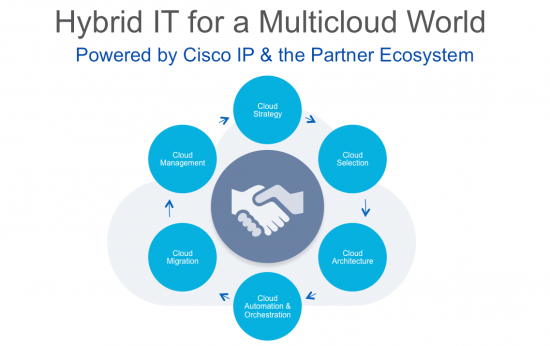
Screen Shot 2016-09-19 at 3.47.01 PM

Cisco plans to offer an integrated strategy workshop combining the Cisco Domain Ten® Service with Cisco Business Cloud Advisor Workshop. The Cisco and channel partner-delivered workshop will help organizations identify cloud adoption gaps and benchmarks, continuously improve their multicloud environments and facilitate alignment between IT and line of business (LOB) stakeholders. The workshop will also help organizations better measure the potential impact of cloud adoption in their IT organizations across a broad range of key performance indicators.

These new services and integrated workshops will also provide channel partners with opportunities to either resell Cisco services, or combine their own complementary services and work with Cisco to deliver a holistic solution to customers, bringing the right combination of skills, capabilities and offers together to help organizations achieve their business outcomes.

There has never been a better time to reimagine your cloud strategies.

Additional Resources:


Authors

Scott Clark

Vice President, Advanced Services

Cloud & Networking Services

Avatar

On September 7 Dell Technologies officially acquired EMC Corp., and became the world’s largest privately controlled technology company.

EMC and Cisco have a long and great legacy, collaborating together for nearly 20 years. Most recently, we’ve demonstrated tremendous value to customers working together to deliver Vblock and VxBlock, converged infrastructure systems that combine the compute power of Cisco’s UCS servers, as well as networking technology, with Dell EMC’s storage and provisioning capabilities. This strong combination allows customers to adopt best-of-breed technology, yet makes it simple to deploy and operate. The result? Data centers that help run the business in a stable, reliable manner. And that’s no small potatoes.

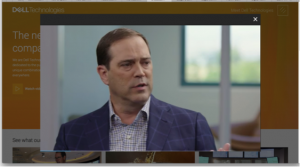
That successful collaboration will continue. Both Cisco and Dell EMC are committed to the partnership at the highest levels – see video from Michael Dell and Chuck Robbins and a blog from Burney Barker, SVP, Sales, Dell EMC.

Chuck Robbins and Michael Dell on the Cisco - Dell EMC partnership
Chuck Robbins and Michael Dell on the Cisco – Dell EMC partnership

Vblock is now a $3B business, and we’re well positioned for the future to take advantage of its tremendous growth potential. We have long-term engineering and sales agreements, and provide joint support, so customers and partners can continue to invest with confidence in our converged solutions.

The foundation of our partnership is very strong, and we are confident that it will only become stronger.

@fpalumbo @CiscoDC #ciscodatacenter #CiscoUCS

Authors

Frank Palumbo

Senior Vice President

Global Data Center Sales