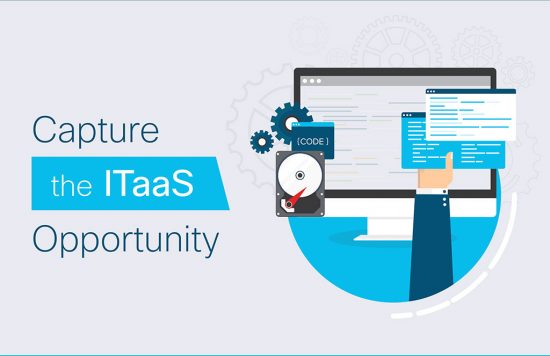
Digital Transformation is transforming businesses and our lives everywhere. The first step in your digital transformation journey is understanding what it means to your industry. For communication service providers(CSP), it means using technology to radically improve performance and reach of services. How you transform your business processes using digital technology will determine how you can achieve competitive advantage and gain differentiation in your market. SPs are moving forward with digital transformation at varying paces and experiencing varying levels of success. The key technologies behind the service provider digital transformation are SDN/Automation and NFV. These technologies provide the capabilities for SPs to deliver ICT services on demand with minimal friction –ITaaS.
With ITaaS, enterprises get the following benefits:
Simplify service ordering and provisioning
Consume and adjust services on-demand
Enable flexible consumption based billing
Dynamically scale services up and down
Service providers also get the following benefits:
Reduce service delivery process time
Reduce manual tasks
Provision services faster
Improve customer satisfaction
Accelerate order to cash
One of the fastest growing opportunity of ITaaS is SD-WAN which provides an optimized way to deliver and manage applications at a branch. SD-WAN is estimated to grow from $3.8 B in 2016 to over $54 B by 2021, a 71% CAGR. Find out the value ITaaS services like SD-WAN bring to the market and what the SD-WAN opportunity is in your region.
The report, now in review after the public comment period, zeroes in on three areas:
Network modernization and consolidation seeks to maximize the secure use of cloud computing, modernize government-hosted applications, and securely maintain legacy systems. The report recommends several specific actions to drive modernization across the government, such as prioritizing high-risk, high value assets, identify solutions to overcome current barriers to cloud adoption, and consolidate acquisitions and management.
Shared services drive toward a consolidated IT model through the use of commercial cloud offerings. Some centralized capabilities, such as email and collaboration services, are ripe for a shared services consumption model. In today’s heightened threat environment, security services are also a key area for improvement and centralization across agencies.
IT modernization streamlines data centers and encourages moving to the cloud where possible.
Resourcing poses another challenging area for federal IT leaders. The report calls for prioritizing systems for modernization, and proposes that agencies pause or halt existing programs that sustain legacy systems rather than modernize or sunset them. The report also suggests a “cut and invest” funding strategy to move funding away from legacy systems and toward modern technologies, cloud solutions, and shared services.
The motivation to modernize is clear. Technology outpaces the ability of such a large IT enterprise to quickly respond to new innovations. Yet, without keeping up, existing systems become less economical and less secure.
As a leader in government IT who recognizes the ongoing need to upgrade and modernize systems and services, where do you begin? The cloud-first policy still confounds many federal IT leaders. The breadth and depth of legacy IT systems seem insurmountable, yet CIOs and IT leaders need to take that first step and begin navigating the path ahead. The American Technology Council has now laid the groundwork; now it’s up to you to head on down the road.
It’s more than a journey. As Henry David Thoreau proclaimed, “Every walk is a sort of crusade.” To modernize today’s federal IT is indeed a challenge – a crusade, but one that increases in urgency every day because of the size and scope of federal IT.
Last week 80 people came together in Seattle for the sixth meeting of the OpenFog Consortium. The excitement and engagement at the meeting reflected a market segment that is growing up, and growing strong. Still shy of its second birthday, the Consortium boasts 59 members and counting, including leaders of industry and academia from around the world.
Why is this important?
I believe that fog computing is one of the most important accelerators of the Internet of Things (IoT). Fog pushes computing power and storage from the cloud into devices at the edge of the network, where they can process, analyze, and store data for real-time and near-real-time applications—the very things that drive value in IoT. Fog provides enhanced latency, reliability, security, and bandwidth efficiency compared to cloud-based solutions. Without fog, we wouldn’t be able to have self-driving cars, autonomous drones, or real-time production control systems.
As fog enables IoT adoption, IoT’s need for fog capabilities is accelerating the development of widespread fog architectures and standards. And that’s where the OpenFog Consortium comes in. The Consortium’s committees and workgroups have been hard at work defining an open, interoperable fog computing architecture to ensure interoperability as fog technology develops.
The OpenFog founders celebrate with a little fun.
We published our Reference Architecture last February and it’s been gratifying to work with other organizations to influence standards development. I’m particularly excited that IEEE is in the process of certifying the OpenFog Reference Architecture as the defacto industry standard for fog computing. We continued our work with IEEE representatives in Seattle last week to move this process forward. Stay tuned for the announcement of Version 1 of the standard, which I expect will be finalized within a few weeks. In the future, any sub-architectures that derive from the Reference Architecture will go through a similar process.
The OpenFog membership also elected officers, board members, and workgroup chairs last week. I was honored to be unanimously reelected for a second term as chair of the Consortium—a testament to Cisco’s leadership in shepherding the organization through its formative stages. Now that the Consortium is going strong, I view this as a mandate to continue growing the membership, solidify the architecture, and further develop policies on test beds and certification of fog technologies and devices.
The next important event for fog computing will be Fog World Congress, October 30-November 1, presented by the OpenFog Consortium and IEEE Communications Society, and co-sponsored by Cisco and other industry leaders. The agenda is packed with industry luminaries, including Cisco’s own Chief Strategy Officer Hilton Romanski. Cisco will have a strong presence on panels and the demo floor, where we will showcase our existing fog technologies and architectures.
I hope you’ll join me there—at the intersection of fog and IoT—to be part of the next stage in fog computing.
While my day-to-day job is focused on helping our customers transform their business, what I’m about to share with you has nothing to do with making the numbers. Yet, it highlights one of the great honors of being in this role and why I love being part of Cisco.
Recently, Cisco had the opportunity to see Grammy award-winning artist John Legend, sitting at a grand piano in a Los Angeles recording studio, connect with high school music students located across the country in Springfield, Ohio. Using technology, they were able to engage in conversation and share experiences including how John conceived his hit song, Ordinary People. He says he wrote the music first and then hummed along to the melody until the sound turned into words. In Springfield, John’s hometown, the students nodded in awe and one student commented that this mirrored his own song-writing process.
For John Legend, his work with these students and others all over the country through his non-profit, LRNG, is a labor of love. Through LRNG, John can help give young people, especially those from underserved communities, inspiration and guidance to prepare them for life and work in the modern economy.
The technology behind making that connection from LA to Ohio possible is our collaboration platform, Cisco Spark, which lets people share information, create together and move projects forward. People can use Cisco Spark on their smart phones, tablets, laptops or dedicated devices such as the Cisco Spark Board as John and the Springfield students did on this day. Seeing the happiness on these students’ faces when they saw their idol and were able to interact with him, receive feedback on pieces they were working on, and jointly white-board about how a piece of music should be “EQd” (that’s music lingo for equalized) was profound. It underscores the role technology can play in everyone’s lives and the experiences technology makes happen.
As John signs off, he tells the students, “You can start in Springfield and end up here.” The message is anything is possible, and I’m proud that Cisco could play a part to help make dreams come true. Please watch the video and see it all come to life.
Over the past few years, telehealth has become increasingly common across the continuum of care. Neurology, behavioral health, cardiology, dermatology, post-procedure follow-up, acute care, home care, evaluation and management, and patient outreach – many are adopting remote and virtual care strategies. But not all telehealth solutions are created equal, nor are all organizations defining a clear, holistic strategy for implementation.
A unified approach is a critical step to a successful, scaled telehealth program. Too common are limited deployments in a handful of areas across a healthcare organization. These siloed deployments typically Cisco can help your organization to establish a vision and architecture for deploying a telehealth program.
Design a unifying architecture approach, addressing today’s use cases with flexibility for the needs of tomorrow
Reduce IT support and administrative overhead of managing disparate systems
Measure the value of successful deployment
Check out the white paper below to discover how to extend your delivery of quality care to whenever and wherever it is needed, or view our website for remote care solutions.
Wait, how did I end up as a Live correspondent for WeAreCisco?
A few months ago, I was minding my own business, doing my daily job as the Social Media Channel Manager for Cisco’s Collaboration team, when out of the blue I got a request.
Cisco’s Talent Brand team is always finding new ways to put employees front and center to help get the word out about why we love working here, and why other people should think of Cisco as a great place to grow a career. Have you seen the WeAreCisco Snapchat? It’s an employee takeover every day!
The team was launching a new pilot to bring that strategy to Facebook, using new functionality on Facebook pages. They had a crazy (like a fox?) idea to allow, no, ENCOURAGE, Cisco employees to go LIVE on behalf of the page. They called this pilot the Cisco Culture Correspondents, and they asked me to participate! I said YES!
My first assignment, Cisco Live!
If you’re going to do something, you might as well go big, right?
During our kickoff meeting of the Culture Correspondents, we were talking about ideas for events that would be good for the program. I spoke up and said that I was going to Cisco Live! – Cisco’s largest US event. I think I surprised the Talent Brand team – but they were all in!
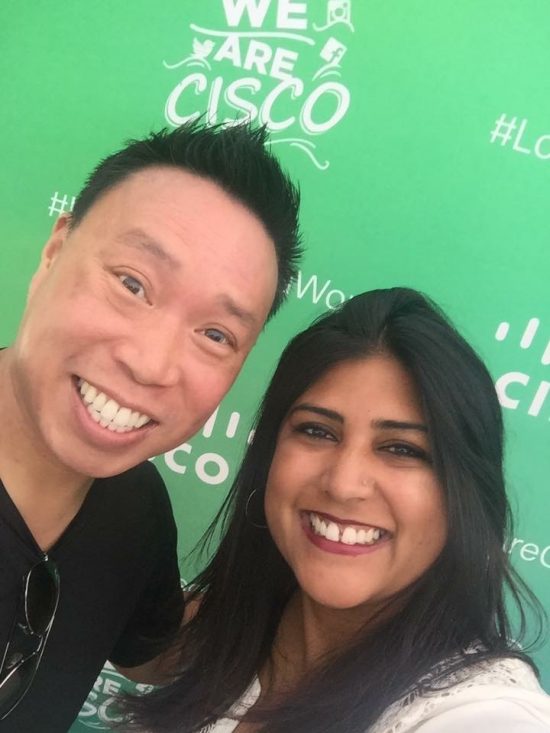
Another correspondent and Cisco friend – Rehana R. – said she was going as well, and we partnered on this, the first LIVE of its kind. Both of us work in social media, but neither of us had done anything like this before. Truth be told, we may have gotten cold feet if we weren’t each other’s “lifeguard” for the first broadcast. We wanted to impress, and apparently, we did, because . . .
Wait, they want us to do another one?
After surviving the first one, a second opportunity arose!
During the summer, the San Jose campus (and other campuses as well) do employee “parties” called Party on the Patio. It just so happened that my team was sponsoring one of the parties, introducing employees to the awesome new Cisco Spark technology, teaching them how they can use it to do their jobs more effectively, and also FOOD! (Cisco employees love to eat.)
Good thing there was a lot going on, because our second LIVE was supposed to be longer than the first!
What I learned – about social and about working at Cisco.
Everyone is learning. I’m learning more about social. The Talent Brand team is learning how to use Facebook Live to tell their culture story. The important thing is that we never stop learning!
Be flexible. This goes for work as much as for social media and even life!
We had a few hiccups on the way. When you “check in” during a Facebook Live, apparently, you’re limiting the audience to that location (we won’t do that again.) So after frantic “START OVER!” comments, we stopped our first broadcast and restarted.
Stuff happens. You have to go with the flow. Turns out, the LIVE we restarted performed extremely well, and the feedback earned us another one!
Lesson: Cisco lets you try new things, adjust course and fly!
Be you! The feedback we got was that no matter if we made mistakes, our personality is what “sold” the audience!
I think Cisco is great like that. Your passions, your skills, your YOU-NESS is encouraged! My manager was very supportive of me trying something like this.
Have fun! Look, we work hard, but we play hard, too. It was important to the Talent Brand Team, and to the Culture Contributors that we not be reading a script and stoic and starched. Because that’s not how Cisco is! We had fun doing the Live, and we showed the fun atmosphere at Cisco.
Stay tuned to WeAreCisco’s Facebook page to see more of my face on the “big screen.”
And I hope my experience and my broadcasts will help you consider a career at Cisco! We’re hiring!
When Rand Morimoto was 11 years old, he did some sweeping and other cleanup tasks at a local business in exchange for the privilege of playing their computer games.
One day, the mainframe that the company depended on broke down. IBM techs came out and tried to fix it, but they were all too large to get inside the machine and access the vacuum tube that needed to be replaced. At 11 however, Rand was just the right size. So they hung him upside down inside the mainframe, where he successfully replaced the tube and repaired the machine.
And with that, an impressive IT career began. One that would lead him to serve as the Internet Security Advisor to the White House during the Clinton administration, get a Ph.D. in Motivational System Theories, become a published author, start a business, and travel the world speaking about technology and entrepreneurship.
In an exceptional episode of Cloud Unfiltered, Rand discusses all of those things, as well as:
The Equifax data breach
Why companies should treat their data a little more like Fort Knox treats its gold
Why Azure took off so fast and continues to grow
How the “psychology of cyberspace” is helpful when pursuing hackers
Why you should focus on protecting the 5% of your data that really matters instead of trying to protect all of it
What he means when he says “you can be part of the change or you can be a victim of it.”
See the video podcast on our YouTube page, or listen to the audio version on iTunes. And if you like what you hear, we invite you to subscribe to our channel so you don’t miss any of the other exciting podcasts we have scheduled over the next several months.
The ability to consistently and effectively innovate is something many organizations find challenging. While the importance of innovation is widely acknowledged for long-term business health, surprisingly few can legitimately claim to be achieving powerful, repeatable results on a regular basis.
This is because innovation, much like any other business process, requires careful planning and management to be effective. Yet despite this, too many organizations still rely on a piecemeal, sporadic approach, resulting in short-term wins with little chance of repeat success.
What they don’t realize is how many tools are available to assist in developing a more strategic approach to innovation activity. My blog series will focus on one such tool, an Innovation Maturity Model (IMM), and how to build the right model for your business. If done correctly, not only will it enable an understanding of existing innovation capabilities (and limitations), it will put a structure in place for effective long-term Strategy and Leadership, People and Culture, and Processes and Tools conducive for innovation to flourish within an organization.
Four Guiding Principles of a Successful IMM
Successful IMMs are built on four basic guiding principles. When applied properly, they ensure a final model suited to the needs of a specific organization. The four principles are:
Scalable and Repeatable
The most important guiding principle of any effective IMM is that it must be both scalable and repeatable. This improves consistency over time if every division within an organization adopts the same approach to innovation maturity. It also boosts overall efficiency by eliminating the need to create, learn, and apply a new model each time.
Evidence Based
Another key guiding principle is that innovation maturity assessments must be based on real evidence, not the word of the leaders and teams involved with ongoing maturity programs. It’s not uncommon for there to be major discrepancies between what innovation leaders say is going on within an organization and what’s actually happening. Focusing on tangible evidence helps to quickly sort the facts from the fiction.
Simple to Administer and Measure
Like so many business processes, simplicity is the key to ensuring an IMM’s ultimate effectiveness. Keeping the IMM assessment process simple means that regardless of who’s conducting it, results will be consistent and reliable each time. Innovation maturity targets within the IMM should also be easy to measure and clear to identify once hit, to avoid any ambiguity.
Predictive of Innovation Program Performance
A strong IMM should enable internal innovation teams to accurately gauge current program maturity, but also provide strong direction on how it can be improved going forward. If an organization has the right IMM in place and is executing against it effectively, there should be clear impact on ROI and business results. If innovation program targets are being hit but business results remain unchanged, something isn’t quite right—either with the model or the way targets are being set.
Learning From Existing Best Practices
When building a new IMM it can be very difficult to predict how effective it will be in the absence of tangible results (which can only be gathered once the IMM is in place). Fortunately, there are already numerous examples of innovation best practice in the public domain that can and should be used to underpin any new model creation.
Taking the time to accurately map innovation activities to financially successful organizations (through heat-mapping or other means) is a great way to identify tried and tested predictors of innovation success. These research findings can then be used to create reliable success criteria for any new model, greatly reducing guesswork at a critical stage of the process. This is, in fact, the approach that the author of Cisco’s IMM took.
The next installment of this three-blog series will look more closely at the IMM creation process itself, with a specific examination of Cisco’s own IMM as a working example.
Global Service Month (GSM) is in full-swing mid-September. We’re excited to see Cisco employees from all over the world continuing to #BetheBridge in their communities. I am constantly in awe of the spirit of generosity of our employees as we look to serve many causes in need of support. Cisco’s Global Service Month is a part of My Making a Difference, one of Our People DealMoments that Matter.
Within our culture of giving back, lending a helping hand to address critical needs in different countries is at the heart of our values. The wide spectrum of diversity at Cisco gives us broader perspective and deeper insights on opportunities to expand our impact in our communities and across the world.
Global Service Month is the perfect complement to the year-round impact of Cisco’s employee volunteerism and giving initiatives, as well as our thriving Inclusion & Collaboration community.
Employees have many choices: they can create and lead volunteer events, participate in opportunities in their local area through our online volunteering and giving platform, or become a virtual volunteer through Cisco’s work with Missing Maps.
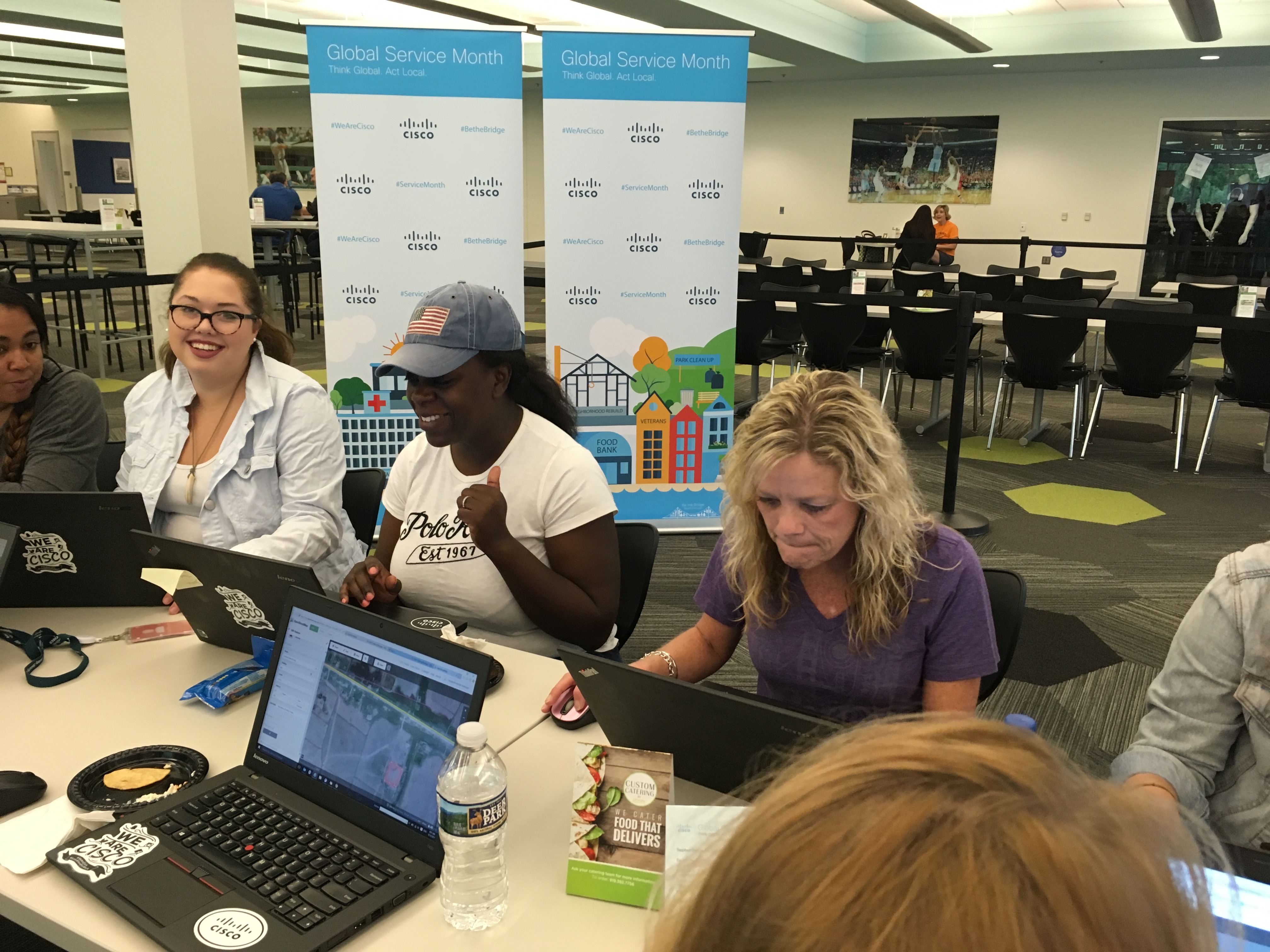
Spotlighted in our August 22 blog post, Missing Maps is the result of a collaboration between the American Red Cross and multiple humanitarian organizations. Their goal: to map out the most vulnerable places in the developing world so disaster teams can reach them.
Following below are variety of global efforts underway that exemplify Cisco’s commitment of giving back:
Missing Maps
Several hundred worldwide employees came together this past week to build virtual roads for first responders. Sites included China, Bangalore, Singapore, Pune (India), Sydney (Australia), Richardson, Atlanta, Austin, Lisbon, Boxborough, San Jose, RTP and more!
RTP has been busy hosting Missing Map-a-thons in partnership with the Operations team, Cisco’s Early Career Network and other teams. In recognition of the National 9/11 Day of Service and Remembrance, a donation drive was also initiated to support recent relief efforts for Hurricanes Harvey and Irma, and Save the Children.
Bangalore, India
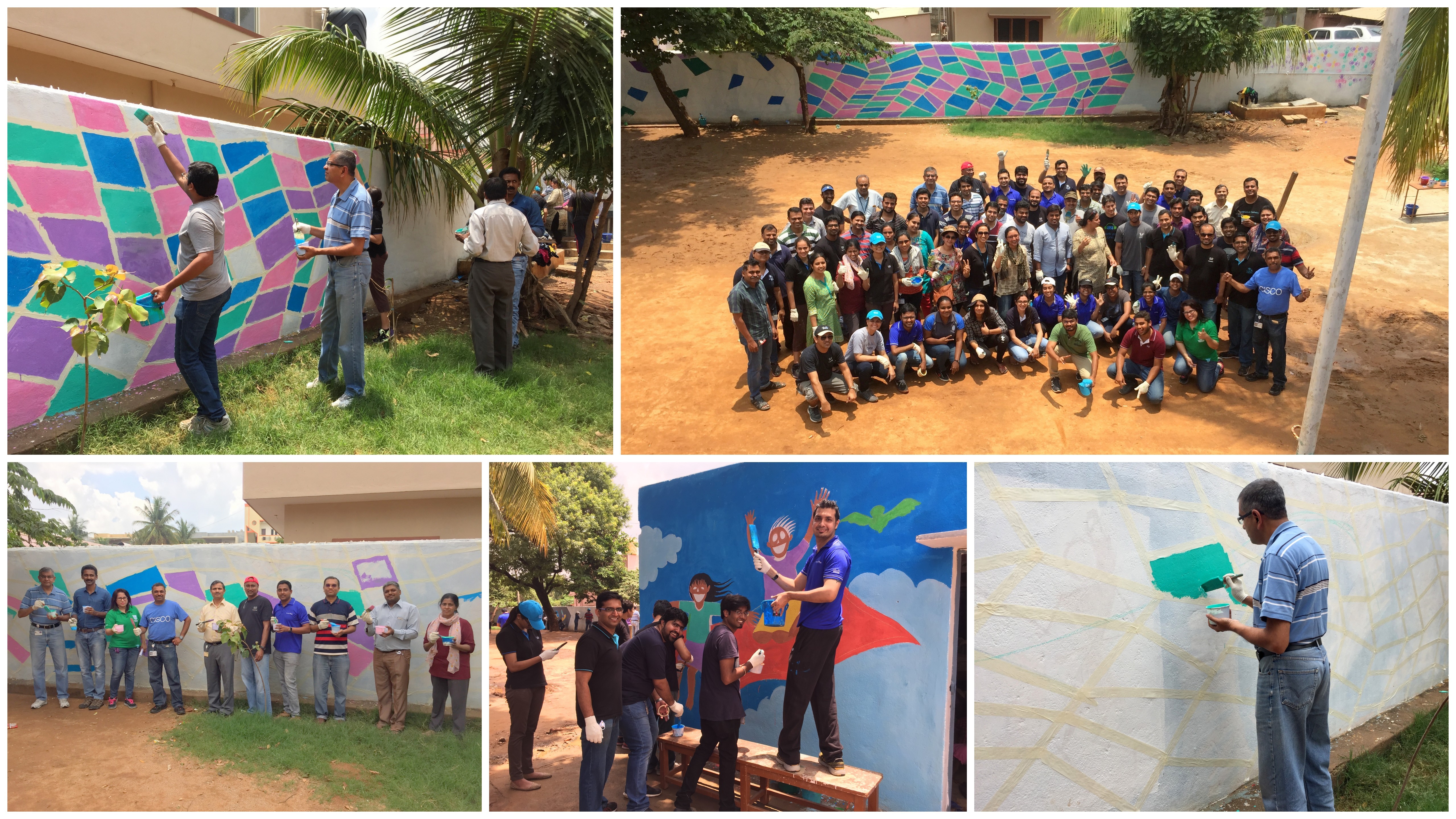
The “Paint for a Cause: School Transformation Project,” worked with the Akshaya Patra Humanity Foundation to make a local school environment more engaging and colorful. The event kick-started Operations Service Month in India, and included participation from V C Gopalrathnam, SVP, Information Technology Leader, benefitting approximately 400 students in government high school, Panathur.
Galway, Ireland
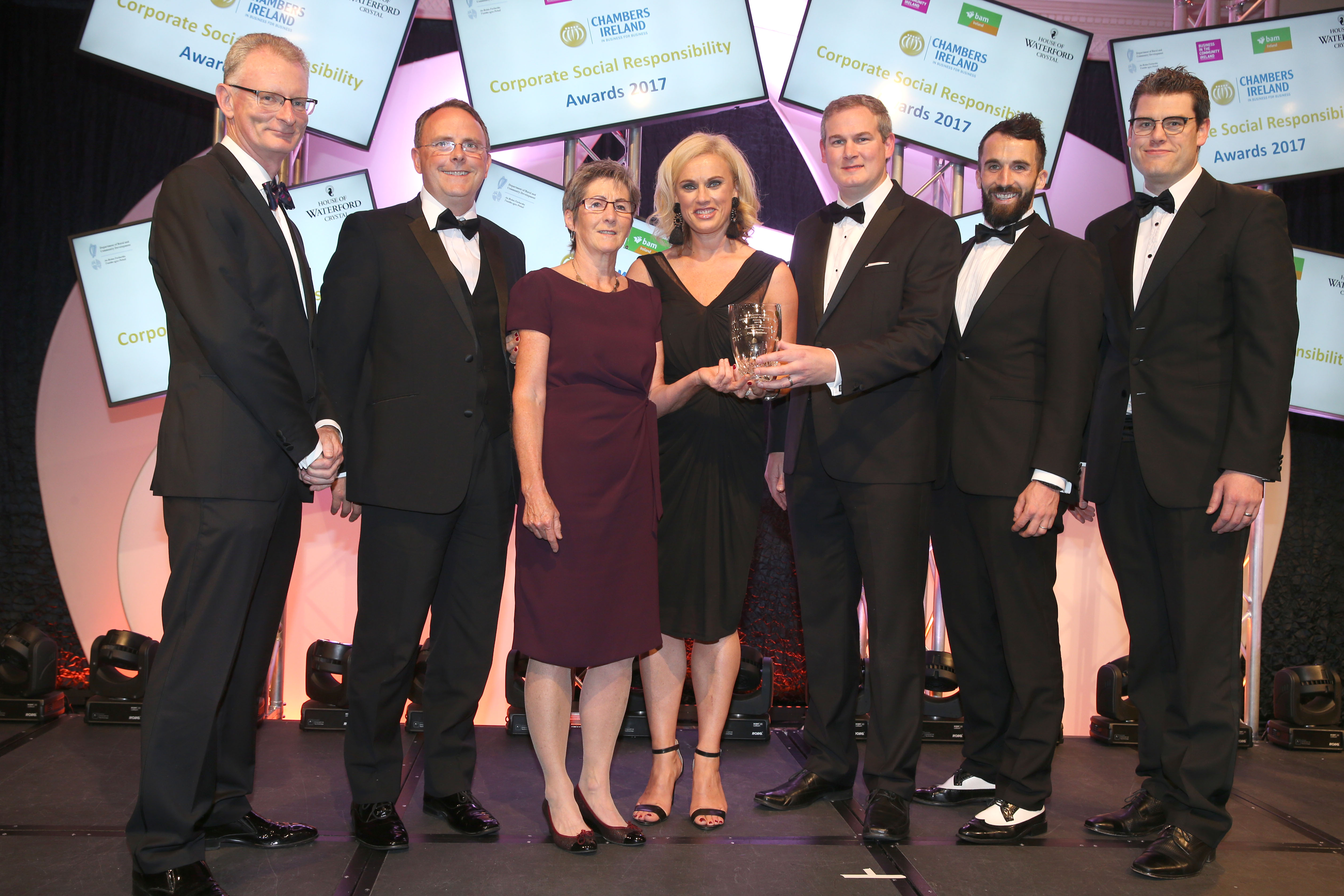
Cisco Galway won the Corporate Social Responsibility award, “Contribution in the Community,” for their work on Age Action Classes. Cisco Galway has worked with Age Action for over five years, offering computer classes to baby boomers and beyond. The team currently runs a five-week course, where students come on-site to receive 1:1 tutoring on technology-related topics — from sending a text message to booking a flight. The team is working across generations to prove that anyone can be tech savvy, and that learning has no age limit.
Japan
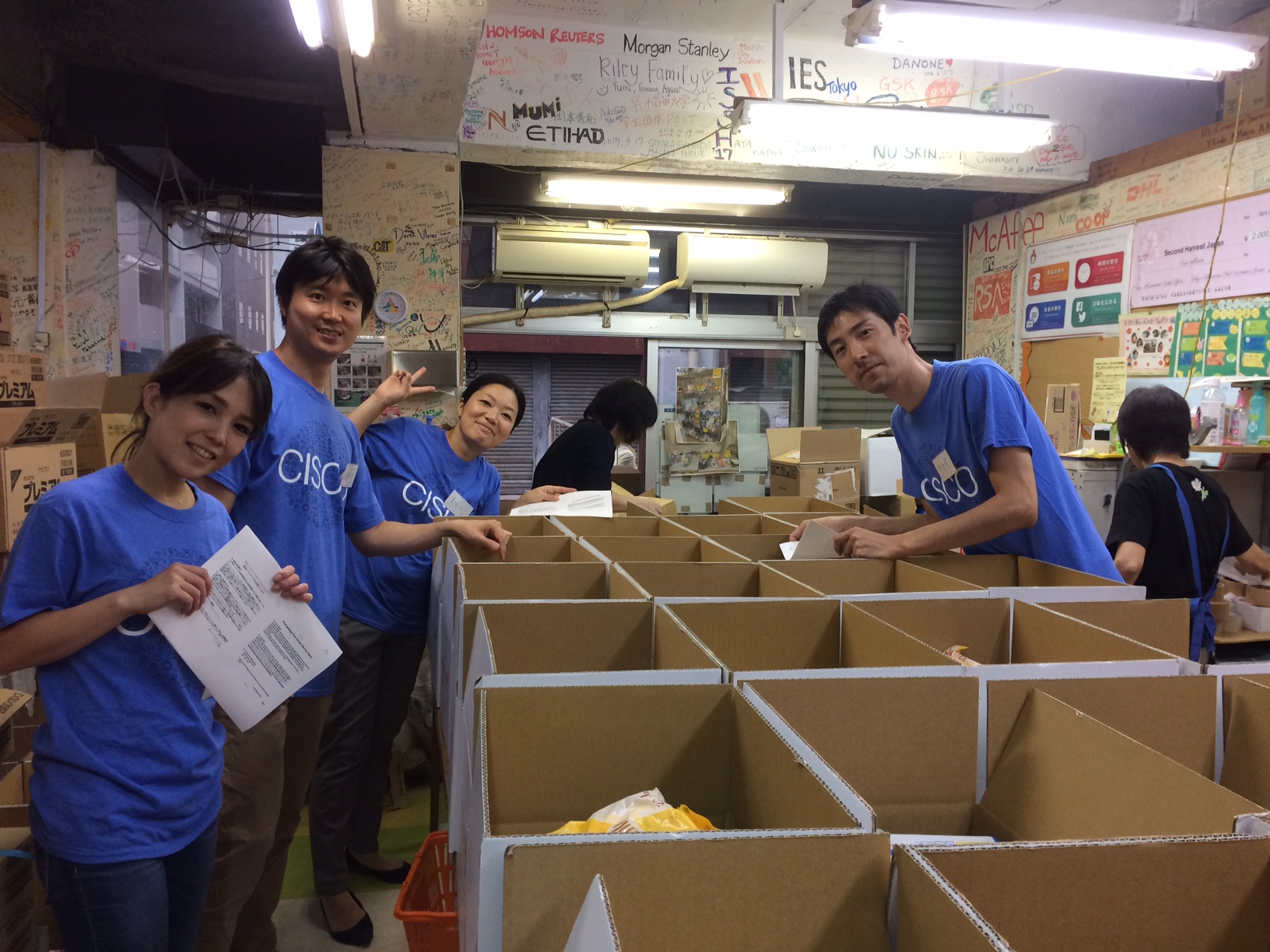
On September 6, several Cisco Japan employees worked together with Second Harvest Japan, the only nationwide food bank in Japan, to improve food security through donations for those in need. The small but mighty team of Midori Matsui, Yukinobu Yamamoto, Akira Sakai and Sayako Christensen, packed over 70 large boxes of food to deliver to a local child care facility.
Over the next few weeks, there are over one hundred additional volunteer events that Cisco employees are leading around the world, working to improve the lives of those in need.
Stay tuned for a wrap-up blog from co-executive sponsors, Karen Walker, SVP and Chief Marketing Officer, and Joe Cozzolino, SVP, Cisco Services following the conclusion of Global Service Month!
Together, we can all make a difference. Throughout September, spread the word on social media and share your stories by using #ServiceMonth, #WeAreCisco, and #BeTheBridge hashtags.