Avatar

October is cybersecurity awareness month, which was perfect timing for the Department of Homeland Security to formally announce a policy to protect federal agencies against cyberthreats coming from email solutions. Mid-month, the Department of Homeland Security Assistant Secretary for Cybersecurity and Communications, Jeanette Manfra, announced that federal agencies have 90 days to implement Domain-based Message Authentication, Reporting and Conformance (DMARC) for their email systems. DMARC is an email-validation system designed to detect and prevent email spoofing, developed specifically to address the shortcomings of previous methods. For details about the mandate, go to the site here: https://cyber.dhs.gov/.

DHS has officially recognized what we have known all along, email is the number one threat vector and federal agencies are at risk for phishing, business email compromise and ransomware. Business email compromise often starts with a spoofed email, one that looks like a legitimate request, coming from a legitimate sender. Social media and social engineering have fueled spoofing attacks, and their success. According to the 2017 Midyear Cisco Cybersecurity Report, $5.3 billion was stolen due to business email compromise fraud between October 2013 and December 2016, an average of $1.7 billion per year. Implementing an email security solution with DMARC can help mitigate this risk.

So now that you know you have until January to comply, what should your next steps be?

Here are 5 things you need to know about DMARC and how Cisco can help.

1. Why mandate DMARC now? It is a years old security standard.

Members of Congress have been pushing the federal government to take cybersecurity more seriously, particularly since there have been high profile incidents involving spoofed emails sent to government officials.  

2. If I have an email security solution, does it have DMARC? Do I have to buy something new to be compliant with the new mandates?

It depends what solution you are using today. If you have Cisco Email Security, it is included in your base license so you do not need to buy anything new. However, we recommend you create a plan to enable, test, and implement it successfully.  Cisco Technical Assistance Center and Advanced Services can help and so can your Cisco Account Manager

3. How do I know if I have DMARC turned on in my solution?  If I do not is it hard to do?

DMARC record verification is available through many online tools. You can use, for example, MXtoolbox: https://mxtoolbox.com/dmarc.aspx. Publishing a DMARC record is not hard on its own, but DMARC relies on two underlying technologies, SPF and/or DKIM, to provide validation of the sender address. Ease of deployment depends on your current state of SPF or DKIM support and complexity of your email infrastructure. Your Cisco Account Manager and Cisco Advanced Services can provide guidance on DMARC implementation.

4. What if I use third party services to send my emails? Do I need to stop doing this now? Should I be concerned about someone sending emails on my behalf, even if it is legitimate and I am allowing them to do it?

You do not need to stop using your third party vendor but you do need to ensure that you coordinate the validation schemes and align your settings properly.

5. Do I need to alert my users and customers? Do I need to put new training/best practices in place with my users?

As with any change in your email policy, you should follow your change management guidelines. Your end users will not be required to do anything differently as these are changes in global configurations; there is no action that users will need to take.

To learn more about protecting your organization from email-based threats with DMARC and other threat protection technology, read the Cisco Email Security Buyer’s Guide (pdf).

 

Authors

Beth Barach

Senior Manager, Product Marketing, Email Security

Avatar

Cisco Live Cancun is almost here (November 6-9) – are you ready to hone your super powers? The Technical Services team can show you how to keep your networks humming by building on foundational product support with the new suite of high-value services.

Don’t miss these opportunities to explore the industry-leading tools, technologies and best practices that can help propel your business forward.

  • Stock your tool belt with these Technical Services sessions

Come learn how technical services can help you stay ahead of the digital curve while defending the network and simplifying complexity.

Your Competitive Edge: Moving Beyond Basic with High-Value Services

Tuesday, Nov 07 – 02:40 p.m.

Add to your schedule

Cisco High-Value Services

Thursday, Nov 09 – 11:45 a.m.

Add to your schedule


  • Check out an interactive demo in the Services Booth

Get a “hands-on” look at ground-breaking tools that will help you automate product support functions, manage your Cisco inventory, connect devices to the Cisco TAC for proactive support, and engage with peers. Our experts will also be onsite to talk about High-Value Services and the innovations to software, multivendor, and network-level support that will help you adopt new IT solutions.

Drop in at the Cisco Services booth located in the World of Solutions, opening Tuesday through Thursday at 11 a.m.

  • Talk to a TAC engineer…and more

Want to tackle your toughest challenges with our technical experts? Schedule an instructor-led lab or drop in on a self-paced lab. To dig deeper on specific network issues, visit the Technical Solutions Clinic to consult with TAC engineers and discover possible solutions you may not have even considered. No appointment is necessary – just come on by.

  • Visit the Services Game Room

Learn about Cisco Services while you have a little fun in the Services Game Room. Check out six different “service-themed” games,

including the Cisco Solution Support Kingpin game where you can knock out digital network issues. Play five games and you’ll be entered into a daily drawing for a GoPro.

  • Engage with us on social media

Whether you’re at the event or attending remotely, follow the conversations and see the highlights on Facebook, Twitter and Instagram. Use the hashtag #CiscoLiveLA to share your experience (and maybe win a prize).


You don’t have to be super human to navigate your next IT transformation – Cisco Technical Services has you covered!

P.S. Have you taken the IT Superhero Quiz yet? Which one are you?


Authors

Denise Cox

No Longer with Cisco

Avatar

A modern-day enterprise Wi-Fi infrastructure has to be multi-faceted. It should be optimized, not only for high performance, but also in order for other areas to maintain a smooth flow of Wireless LAN operations. Enterprise Wi-Fi vendors offer various features to furnish the business requirements of the customers. However, not all products are the same, and the functionality of the features differs from vendor to vendor too.

To assess the performance and features of Cisco and Huawei enterprise networks, at Cisco’s request Miercom, an independent and unbiased testing lab, conducted a slew of tests and published a comprehensive test report of the findings. This blog will focus on the conclusions from wireless LAN features testing. To get an overview of the tested Access Points, Wireless Controllers and software code, refer to the recently published, Miercom Proves: Cisco versus Huawei is No Contest blog.

Application Visibility and Control

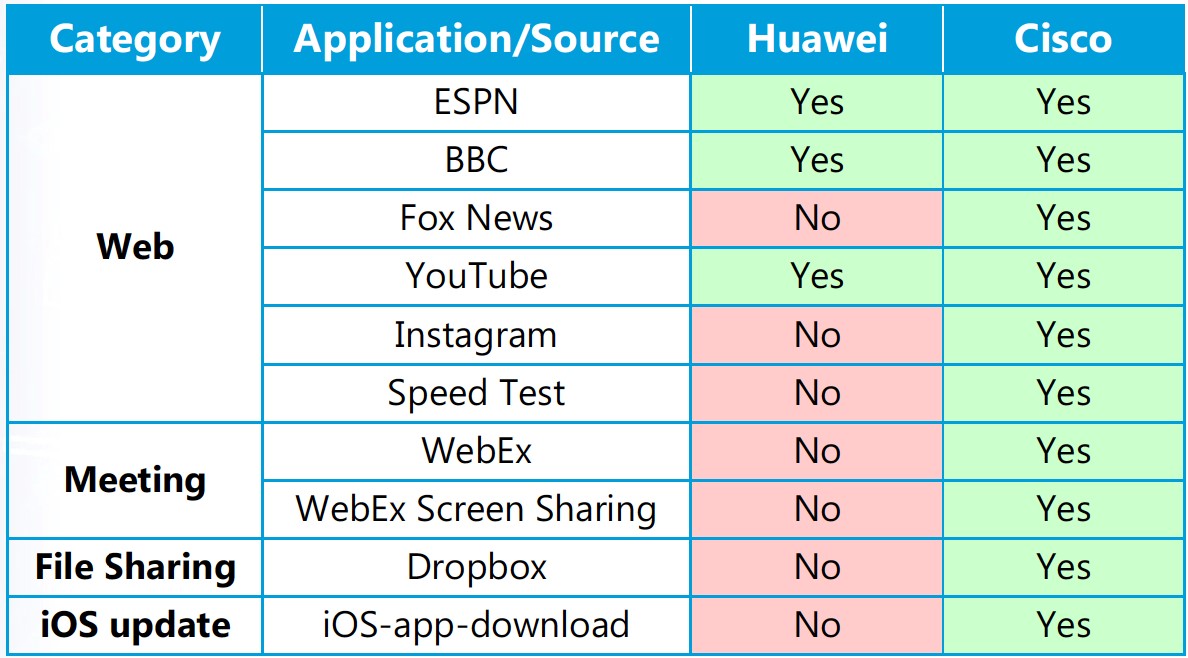
 As a network administrator, you need to understand what type of traffic is flowing through the network. Cisco can help you by recognizing and controling the network traffic with the help of the Application Visibility and Control feature. Huawei also offers an equivalent feature called Smart Application Control (SAC). For this test, ten applications belonging to four categories were tested to assess if the WLC recognize these applications.

Cisco accurately recognized all of the ten applications thanks to its deep packet inspection (DPI). Huawei’s SAC, could only identify three of six web-based applications and failed to recognize any of the remaining applications.

Passing three of ten tests doesn’t inspire a lot of confidence.

Client Profiling

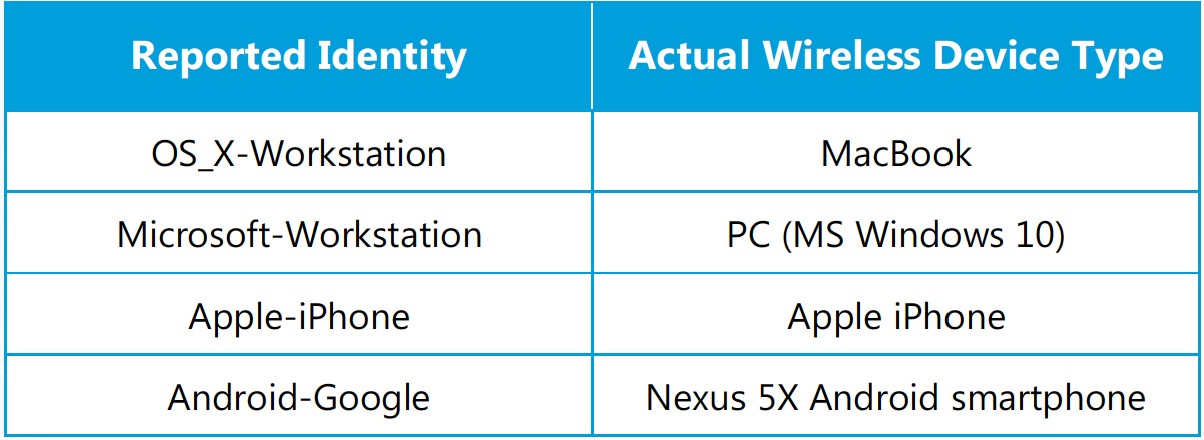
Knowing what devices your users are using is an important piece to fully understanding your network. Luckily, the Cisco Client Profiling feature learns the device type of the users’ devices that are connected to the wireless LAN. Based on this information, a network admin can implement device-based policies in the network. This feature provides you more network control. Cisco WLC supports Client Profiling and accurately identified the operating system of a Windows 10 laptop, MacBook Pro, iPhone 6, and Nexus 5X. Huawei doesn’t offer any client Profiling capability in their wireless controller.

Interference Detection

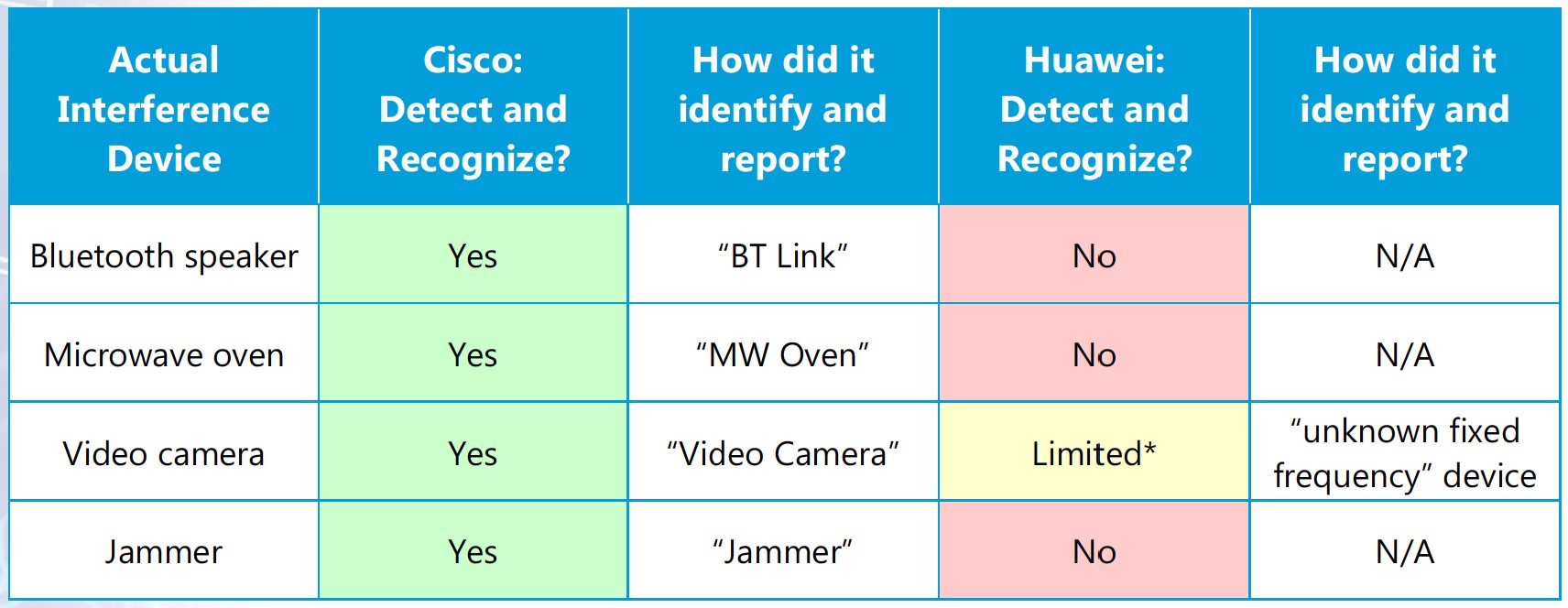
The impact of non-Wi-Fi interference can be a significant challenge for any network administrator. Enterprise Wi-Fi vendors offer the capability of identifying the non-Wi-Fi interferers, but the granularity of the detection can vary from vendor to vendor. To gauge the spectrum analysis capability of both vendors; four interferers were tested on the 2.4GHz channels. They included a Bluetooth wireless speaker, a microwave oven, a video camera and a jammer.

The Miercom findings show that the Cisco CleanAir® successfully detected and identified all of the non-Wi-Fi interference devices. Whereas, the Huawei Spectrum Analysis only discovered the video camera as an “Unknown fixed frequency device” out of the four interferers. Not only that, but the video camera had to be placed very near (4ft away) for the Huawei access point to detect it.

High Availability

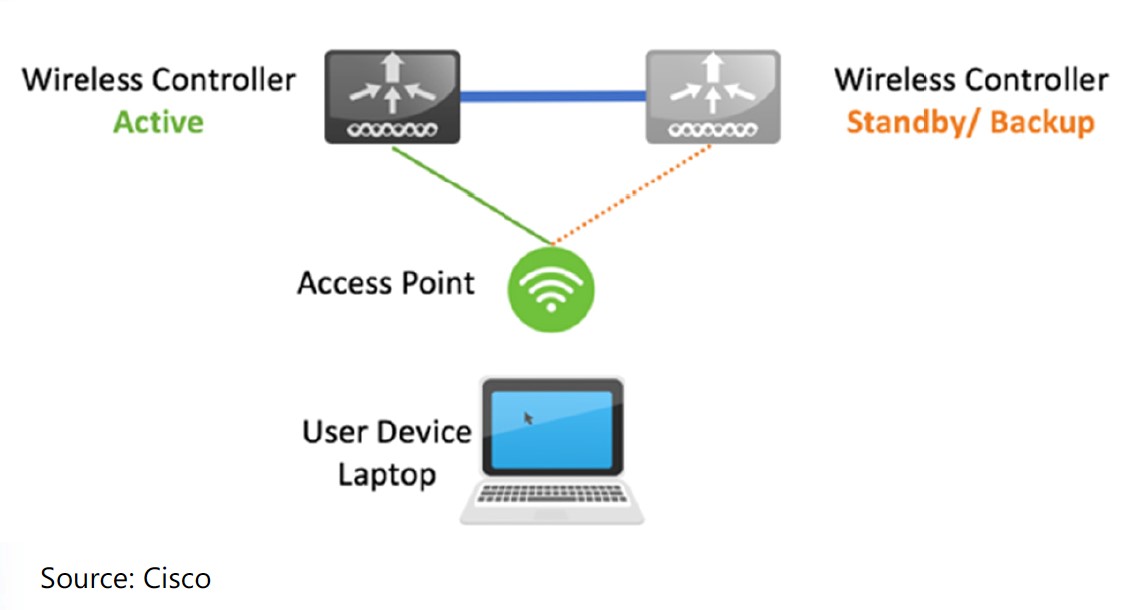
An enterprise business requires their applications running 24×7 and to support that the wireless network has to provide connectivity all the time. In the case of an event such as a switch port or a controller power failure, the enterprise wireless controllers must offer a failover feature to a secondary controller to reduce the downtime. The motive of this test is to find out that how long it takes a wireless controller to failover to another controller. In simple words, what is the network downtime in the case of a failure?

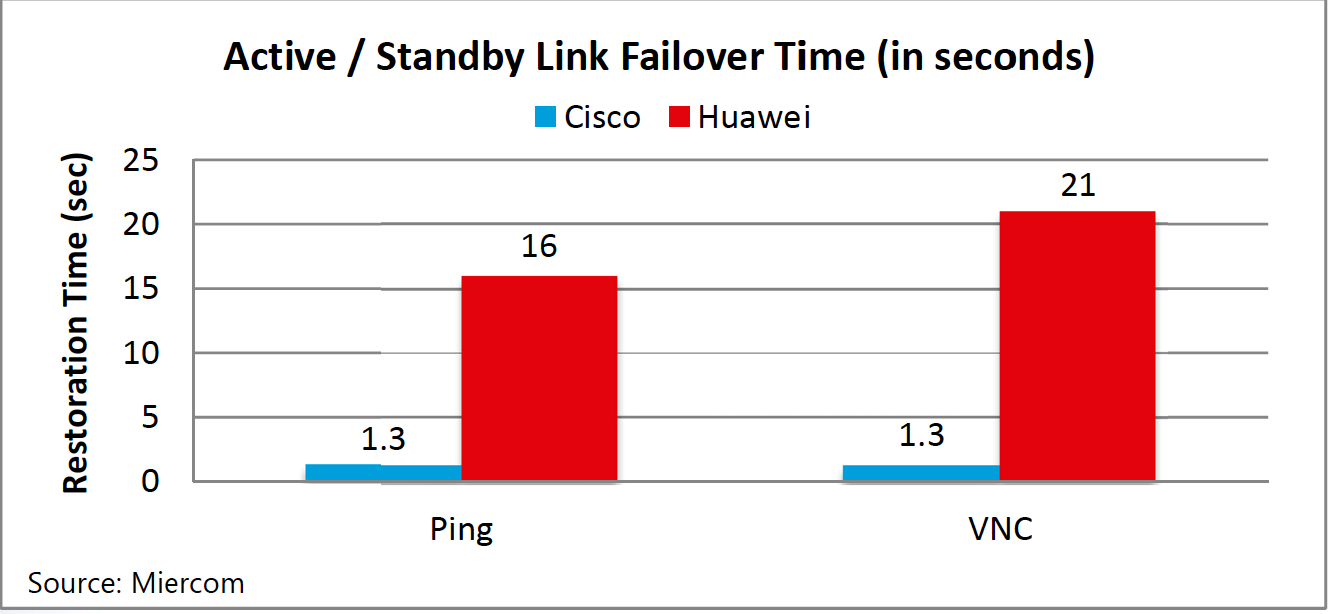
For this test, two Cisco WLCs were configured in Client Stateful Switchover (SSO) and two Huawei WLCs were configured in Hot Standby (HSB) mode. VNC screen sharing applications and a fast ping of 0.1 sec were running to measure the recovery time. The test consists of two scenarios:

  1. Loss of active link between switch and the WLC due to switch/port failure
  2. A power failure on the WLC.

In the first scenario, Cisco instantly restored both of the applications whereas Huawei had 16 and 21 seconds of downtime for ping and VNC respectively. In the case of WLC power failure, Cisco had zero downtime while running the applications. Whereas, Huawei had a considerable amount of downtime while switching from the primary to the backup controller.

The cliché, “Time is money” is a cliché for a reason; because it’s true. If your network is down, even if it’s just for seconds, that’s money that’s leaving your pocket. Don’t make that mistake.

To download the full report on detailed test cases, refer to the Miercom report.

Authors

Rahul Tiwari

Technical Marketing Engineer

Enterprise Wireless Networking

Avatar

You already know that Cisco CloudCenter is CliQr, right?

Right?

OK, maybe not. If you follow technology news, you probably heard a lot about CliQr a few years ago. It was a hot cloud management startup. You also probably heard that Cisco acquired it back in April of 2016. But you probably didn’t hear much after that. (Or maybe you did and you just didn’t know it because we renamed it CloudCenter, and let’s face it—that could mean almost anything.)

Maybe you wondered what happened to CliQr. Maybe you didn’t. Either way, in this episode we’re going to find out what has happened with CliQr (now CloudCenter) since the acquisition. Specifically, guests Kurt Milne and Zach Kielich explain what exactly CloudCenter does, why people love it so much (I swear, it’s the thing I’m asked about most whenever I’m at a trade show and mention that I’m with the Cisco cloud team), and what the roadmap for the product looks like for the future. In addition to that, they get into:

  • The upside of the application-first approach to deploying and managing clouds
  • Who the typical CloudCenter users are and why they use it
  • Why they’ve prioritized Azurestack
  • How CloudCenter and AppDynamics complement each other
  • Why the Cisco/Google announcement is exciting
  • What they’re doing at the upcoming Amazon re:Invent

See the video podcast on our YouTube page, or listen to the audio version on iTunes. And if you like what you hear, we invite you to subscribe to our channel so you don’t miss any of the other exciting podcasts we have scheduled over the next several months.

Authors

Ali Amagasu

Marketing Communications Manager

Avatar

The time has come again for the biggest Technology conference in Latin America: #CiscoLiveLA.  This will be my third year making the trip to Cancun.  Previously, I spread the word and highlighted the real-life scenarios and wins made possible by the #dCloud team.  This year, I am representing #DevNet.

The pressure is on.

As a Community Manager, this is my busiest #CiscoLive.  Why?

  • Because everyone who gets to go to Cancun does at least double-duty.
  • Because relationships in Latin culture are long-lasting and meaningful.
  • Because these are my people.

So, here’s my list of everything I’m going to try to showcase for you via Social Media.  Join me in my heroic efforts to try to cover all things #DevNet at #CiscoLiveLA!

Cisco DevNet Latin America CiscoLiveLA

#Sandbox

Joe Kearns Sandbox Cisco DevNetWe are still celebrating our Team being recognized with the prestigious Pioneer Award.  How did the #DevNet #Sandbox team win Cisco’s most important prize for engineering innovation?  Come to the DevNet Zone for a demo by Joe Kearns.  This is your playground, too!

 

#DevOps

Silvia_Spiva_and_Cindy_Goodwin-Sak-WomenInTech_Cisco_DevNet_Systems_EngineersFollow our meeting with our dear Cisco Partners, as we devote a full day to innovation and agility. Cindy Goodwin-Sak will answer the question: “Can big companies innovate?” We will cover her presentation Creating Capacity for Innovation. Then, we will treat the audience to an exercise in Network Programmability and App Development, as we showcase the tools available to them (and you) through SolutionsPlus, presented by Gerardo Chaves.

 

#DevNetExpress

Mike Koons Systems Engineering at Cisco Who better to tell us about the importance of coding skills for networking experts than the person who leads Cisco’s world-class Systems Engineers?

Mike Koons will deliver the Technical Keynote on Tuesday, and give you an update on the innovations born from the #CiscoSE Team.


#RedeIntuitiva 

Cisco_do_Brasil-Flavio_CorreaThat’s right: we’re going to speak Portuguese in Mexico, as we welcome and feature our brothers and sisters from Cisco do Brasil!  Come to the DevNet Zone to hear directly from one of Cisco’s top Systems Engineering leaders in the world: Flavio Correa.
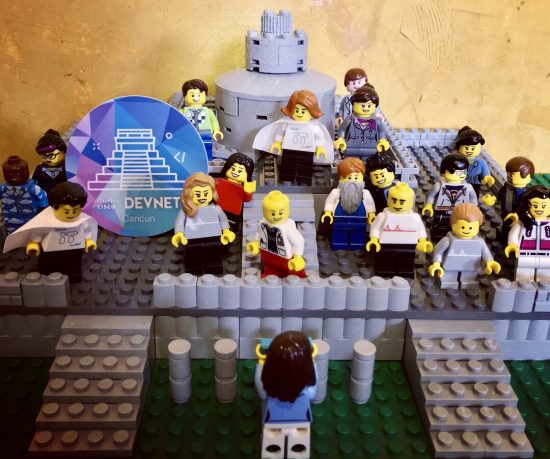

Stick around and share your expertise with us! Our friend Julia Funchal Tigevisk will be conducting interviews and recording customer stories.  Visit the DevNet Zone, ask questions, and give us your feedback on the spot.


Julia_Funchal_Tigevisk-Cisco_Brazil_DevNet_Collaboration

#Cisco

Wait…isn’t that our main hashtag for the entire company.  Yes, it is!  And on Wednesday, @Cisco is letting us take over their Snapchat account! We’ll bring you surprises LIVE from the DevNet Zone.  If you’re in Cancun, make sure to visit us!

Cisco_Live_LatinAmerica_DevNet_Zone_friends


#WomenInTech

Ok, so our friends Mia and Susie won’t be in Cancun this year, but I will be in attendance at the annual Cisco Empowered Women’s Network meeting, to inspire and get inspired by everyone there. As Latinas, we share a rich tradition of feminine power.  It is always energizing to spend quality time with my sisters.

Susie_Wee_Cisco_Empowered_Women_Network

#CiscoLearningNetwork

Not in Cancun? Well, you can still learn a lot about Network Programmability, and maybe even make progress on your Cisco Certifications.  Tune in to the events and recordings hosted on The Cisco Learning Network.

In any case, you can reach us any time, from any time zone or part of the world, by using the hashtag #DevNet on Twitter, Instagram, or LinkedIn.  Make sure you’ve registered with DevNet, and tell your friends!

developer.cisco.com/join/ciscolivela2017


We’d love to hear what you think. Ask a question or leave a comment below.
And stay connected with Cisco DevNet on social!

Twitter @CiscoDevNet | Facebook | LinkedIn

Visit the new Developer Video Channel

Authors

Silvia Karina Spiva

No Longer at Cisco

Avatar

In our digital and connected world, the opportunities are simply too large and fast-moving for any one company to seize on its own. That’s why we created Cisco Hyperinnovation Living Labs (CHILL). CHILL gathers together an impressive cross-section of large industry players to tackle large industry issues. We’ve taken on big challenges in retail, supply chain, and healthcare—with four out of five concepts developed in our most recent Living Lab receiving on-the-spot funding.

I love the dynamics of getting giants of industry together to innovate shoulder to shoulder along with startups, hackers, end-users, and entrepreneurs. In just 48 hours we take three to five ideas from concept to viable working prototype. The result might be an internal initiative, spinout or joint venture—and sometimes we even build startups from scratch.

As we approach our next lab on the Future of Work, one area I believe is ripe for innovation is the use of analytics. Companies today are using analytics to target their marketing efforts, plan equipment maintenance, and optimize routing of ships, planes, and trucks.

What else can the power of analytics unleash? How might it shape the future of work?

Analytics can democratize knowledge and drive new insights—so that every worker becomes a knowledge worker. It can help keep workers safe, and make workplaces more inclusive. Here are some ways this is already happening:

  • Making workers smarter: Our own Cisco Services just announced a suite of predictive services that uses analytics, artificial intelligence (AI) and machine learning to fill the growing IT talent gap and automate many of the processes we use to keep networks up and running in top condition. It gives every service engineer the knowledge and skill of the best engineer—because 20 years of historical network performance data is built right in, helping them predict and prevent problems before they happen.
  • Making workers safer: Imagine a worker checking out a problem deep in a mine, or in a chemical plant. What if there’s a toxic gas leak, or the worker is injured by heavy equipment? Wearable technology plus analytics can reduce those risks. Guardhat, for example, uses a smart hardhat to monitor temperature, air quality, and the presence of gases or chemicals in mines, refineries, chemical plants, or other hazardous sites. It can provide live remote guidance through a dark mineshaft, and send an alert if a worker is injured or strays into an unsafe location. So people whose jobs take them into dangerous situations have a better chance of coming out alive and well.
  • Making the workplace more diverse and inclusive: Innovation thrives when everyone has a seat at the table. Yet despite decades of effort, most companies still don’t reflect the rich mixture of cultures, races, genders, ages, and abilities of the world we live in. That’s a tremendous waste of talent. Several startups are trying to change that with AI, machine learning, and Talent Sonar scans resumes and separates out information that could feed unconscious bias—such as name, educational background, and hobbies. And since bias doesn’t stop with the hiring process, Awari analyzes performance reviews to help companies proactively identify age, race and gender bias in employee advancement. The aim is a workplace that benefits from a full spectrum of perspectives and experiences.

If this is what the current analytics landscape looks like, what might tomorrow bring? How do you want to influence the Future of Work? What is your company’s strategy for harnessing and shaping the disruptive power of analytics, AI, robotics, virtual reality, and other transformative technologies? What unique perspectives could you add to the CHILL Future of Work lab?

Let’s talk. If your company is ready to join us, send an email to AreYouIn@cisco.com.

The future of work begins now. Are you in?


Authors

Kate O'Keeffe

Senior Director

Customer and Partner Innovation

Avatar

Hey Spark, let’s get started.

We’re all familiar with Siri, Alexa, and Google Assistant—virtual assistants that help you save time and get things done at home like check the weather, turn on your TV, set a reminder, or summon your car from the garage. These products are great in your personal life, but what about at work?

Have you ever been late for a meeting, either because you don’t know how to connect or you’re wandering the halls trying to find an available room? How many times have you forgotten to record a meeting or write down action items?

What if you had a virtual assistant that could do all of those things and more? Imagine how much more productive you could be by focusing on what’s important – getting work done with your team.

Meet Cisco Spark Assistant

Cisco Spark Assistant is the world’s first enterprise-ready voice assistant specifically designed for meetings. It leverages the deep-domain conversational artificial intelligence (AI) technology from our acquisition of MindMeld earlier this year. With the MindMeld team’s technology and expertise, we’re enabling cognitive capabilities within the Cisco Spark platform. This makes Cisco Spark a comprehensive AI-powered collaboration solution.

So, what will Cisco Spark Assistant help you do?

Designed to help you focus on the meeting, Cisco Spark Assistant will help you before, during, and after a meeting. We’ll begin rolling out Cisco Spark Assistant to a small group of Cisco Spark Room Series customers (and partners) early next year. The initial cognitive capabilities are designed to make it easier to:

  • Start meetings
  • Join and leave meetings
  • Call anyone in your organization
  • Navigate and control your Cisco Spark devices

A phased rollout allows us to receive continuous feedback. We’ll focus on making Cisco Spark Assistant smarter and more intuitive, improving its accuracy and usability, and increasing the group of devices with which it works. It will recognize you when you enter a meeting room that has a Cisco Spark registered endpoint, so don’t worry about memorizing commands, just speak naturally.

In the future, Cisco Spark Assistant will become a full-fledged part of your team.

Our long-term vision for Cisco Spark Assistant goes beyond joining and leaving meetings. In the future, it will become a full-fledged part of your team with the ability to:

  • Finding a free room… and booking it for you
  • Helping you share your screen or bring up a whiteboard
  • Recording meetings
  • Taking meeting notes
  • Finding relevant documents
  • And much more

In the future, Cisco Spark Assistant will leverage and learn from your calendar, company directory, and your activity in Cisco Spark Spaces. It will also learn about your organization’s unique business by processing internal data sources and gleaning insights from activities that live outside of Cisco Spark. All with the best-in-class security that you’ve come to expect from Cisco.

This is just the beginning. We’re committed to delivering incredible advancements to the Cisco Spark platform. So get ready…

Hey Spark, end the call.

Get more information about the Cisco Spark platform and devices, including the new Cisco Spark Room 70.


Authors

Jason Goecke

Vice President & General Manager

Cognitive Collaboration & Cisco Spark Platform

Avatar

How many people did you work with on your last project? A study by CEB puts the typical number of individuals we collaborate with at 10. For us, a project to implement a single new capability on a Cisco video system can involve upwards of 35 individuals.

Putting more experts on complex projects is not particularly new, but having the right tools to make them innovate faster together is. Today we are announcing the Cisco Spark Room 70, our flagship video collaboration device. The Room 70 brings together people, content, and artificial intelligence (AI) to help teams be more effective.

The Room 70 is the largest and latest offering in the Cisco Spark Room Series portfolio. Previous customers can think of it as an MX800 replacement with some amazing new capabilities. The Room 70 has “built for both” investment protection: you can register it on premises today with an easy migration to Cisco Spark for the workflow benefits of cloud collaboration and many of the new AI features.

Seeing cameras and screens in an entirely new way

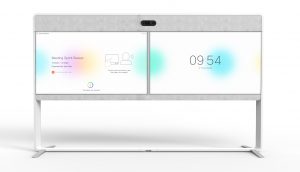
The Room 70 is an all-in-one device with a powerful codec, a quad camera, and 70-inch single or dual display with integrated speakers and microphones. It’s ideal for rooms that seat up to 14 people and works for local meetings as well as for connecting a remote team.

Configurations: The Room 70 is available in two configurations:

  • The single-display option puts the focus on the people in the meeting
  • The dual-screen adds a bold content-sharing experience that works whether everyone is in the same room or around the globe.

Cameras: The Room 70’s quadruple 5k camera cluster means that one camera always has a full-room view. This enables faster, more intelligent framing of the room and active speakers for a better visual experience. A related diagnostic mode provides people count metrics for room utilization analysis.

Screens: The 4k screens provide amazing clarity and resolution, including when participants are engaging in Cisco Spark whiteboard sessions.

Start the meeting with a simple “Hey, Spark” voice command using Cisco Spark Assistant on the Room 70.

Intuitive Meetings with AI

The Cisco Spark Room device portfolio uses the NVIDIA Jetson platform, the same platform many self-driving cars use. That makes sense when you think about how both leverage camera technology with machine learning. Our engineers have capitalized on this processing power to provide advanced capabilities that include AI, especially when registered to Cisco Spark.

Here’s what they are delivering (and it’s just the beginning):

  • Voice control: Voice control using the new Cisco Spark Assistant (first half of 2018) enables you use to voice commands to start and end a scheduled meeting, dial a person, and even to search the directory.
  • Automatic noise suppression: The device software detects and reduces non-voice sounds to minimize disruptive noise coming from the room when no one is speaking. Think typing, paper rustling, and dog barking (first half of 2018). It automatically raises the sound levels up when someone begins to speak. WebEx users have already seen the value with a similar noise-detection capability.
  • Face recognition: We are continuing to invest in technologies to continuously improve the answer to the questions: Who’s in the room? Who is speaking?

We’ve covered a lot of ground and I want to leave you with the most important takeaway: Whether your project team includes 10 experts or 50, having the right tools makes the difference. The Room 70 will meet your need for better collaboration today, and take you into the future with AI-enabled meetings.

Get more information about Cisco Spark Room 70 in the data sheet.

Room 70 will begin shipping in December.
The Room Series will support Cisco Spark Assistant in the first half of 2018.

https://youtu.be/4a3NYHURa2c

Key facts about the Room 70:

  • Based on Cisco Spark Room Kit Plus platform
  • Available single and dual 70” 4K screen configurations
  • Quad camera bar for deeper and larger rooms – for more discreet speaker tracking and best overview capabilities
  • Stereo sound optimized for voice

Key features of Cisco Spark Room Series:

  • Smart meetings: Powerful, integrated cameras deliver intelligent view capabilities, such as automatic framing and speaker tracking
  • Smart presentations: Dual screens, dual content sources, wireless sharing, and 4K content support great presentations
  • Smart integrations: People-count function for usage metrics and resource allocation; tight integration with screens for enhanced functionalities
  • Powerful AI engine: Ongoing roll-out of AI features for intuitive meetings
  • Registration flexibility: Built for both cloud and on-premises deployment, protecting your investment
    .


Authors

Snorre Kjesbu

Senior Vice President/General Manager of Webex Devices

Meeting Room Systems

Avatar

Ymasumac Marañón Davis is an educational consultant, intuitive life coach and author. This blog is the fourth in a series around access. All thoughts are her own. 

Today, technology is a bullet train rapidly transforming every sector in society. Disruption is evident in companies like Airbnb and Lyft that have completely rearranged how we vacation and commute. This disruption not only shifts what we do, but impacts our mindset, as well. We think differently about lodging when we vacation now. Our boundaries and expectations change when we order a ride. So, when we think of the disruption technology has caused in education, we must ask ourselves: What is the mind shift that accompanies this change?

What often makes this feel uncertain is how new these learning spaces are to us – we have never had such a strong disruption in our learning culture before in formal education. This disruption asks us to rethink the role of the teacher, students, administrators, the tools that we use, the space we learn in, the time when we learn — everything has been upended and is being reevaluated to best serve the needs of the 21st century. What makes this shift unique is that the impact is not just on the school environment, but it impacts the home learning culture, as well. How do we engage parents in a learning shift that we are still unsure of how to navigate ourselves?

Every major learning shift requiring professional development for teachers also necessitates training for parents. It does not have to be the same kind of training, but should be relevant to the person receiving it – from teachers to parents to bus drivers. This is not something district personnel need to figure out for everyone. We just need to create an opportunity for these different groups to come together to reflect on these new learning opportunities. Research shows that asking open-ended questions foments curiosity, and curiosity leads to new ideas. So, we should ask parents where there are opportunities to support learning in their homes, their learning spaces. The same is true for every person that comes into contact with students – bus drivers, office staff, etc. When I bring this up, I often hear, “That’s not their role, we are asking them to do something that belongs to teachers.” This is a false dichotomy based assumptions that learning happens in silos and that the community supporting the child is unable to nurture the academic learning that happens in the classroom. Including all members of the learning community in this training creates meaning that serves students in a very direct and profound way! We have to give all participants in the life of a child an opportunity to understand the shifts in learning that impact the child.

Here’s why this is important work and why it is imperative we include families in our learning spaces at schools: Kids go home somewhere! And wherever that home is, there is a learning space there. If it doesn’t mirror the learning space students experience in school, then they don’t know whom to listen to – their parents or their teachers?

This conundrum has practical implications. As educators, we know that students need to think critically, and, in order to do this, they need to learn to question and to dig deep into a problem or idea and try to uncover the why. It is an incredible skill to develop and will help the world uncover truths that are sorely needed.

So, where do families come in? Developing any new skill requires two components in order to develop strong brain patterns and synapses: repetition and emotional connection. Time spent learning a new skill in school is never enough – they need to keep practicing in diverse learning spaces, including home. However, traditional methods of authoritative parenting often do not support this style of learning:

I want to go to my friend’s house tonight. You can’t go. Why not. Because I said so.

Whoa, why are your grades so bad?! I don’t know. That’s just an excuse. You need to try harder.

When we don’t include families in the conversation of learning that we are having, they will not know the powerful impact these types of answers can have on their child’s brain and thinking patterns. If we shared with families the learning we are having around the power of questions and the importance of repetition and emotion in developing strong brain patterns and synapses, their conversations could be more meaningful:

I want to go to my friend’s house tonight.

Tell me about your plan, why is tonight so important?

Whoa, why are your grades so bad?!

I don’t know.

Let’s look at each one and tell me more about the class and what is making it a challenge.

These are not new ideas, yet framing them in the context of learning gives them added urgency and a deeper layer of understanding. It also gives parents one of the most powerful roles in parent involvement, according to Johns Hopkins researcher Joyce Epstein’s “There are Six Types of Parent Involvement.” According to Dr. Epstein’s research, learning at home is the type of parent involvement that most strongly correlates with student achievement. No wonder! This is where parents get to engage on a profound and meaningful level with their kids as they learn. This doesn’t require them to have formal education, it just requires them to participate more effectively in their child’s learning environment – including the one they create at home.

When you integrate technology into the learning culture, it is imperative to involve families in this conversation. They, too, wonder how these new tools support learning and often believe that technology is just for playing. So, when kids come home with school-assigned devices and are watching videos for homework, parents don’t understand that this is part of the flipped classroom. Or, when kids come home with their school devices and are chatting in online classrooms, parents don’t understand that this is a powerful way to develop academic discourse. Including families in relevant training about the disruptions happening in our learning cultures empowers them to be active participants in this learning shift.

Now, we can begin to truly talk about equity. When we include families as equal learning partners in our schools’ learning cultures we will ultimately begin to explore this question: How do learning cultures in our students’ homes impact our schools, and what can we learn from their families? This is another powerful path that further supports the dramatic shifts in learning.

Want to hear more from Ymasumac? Read more on her blog, then follow her on Twitter, and visit her website, Limitless Learning Lab.

Authors

Ymasumac Marañón Davis

Educational Consultant