
Avatar

I recently had the privilege of taking my family to see Hamilton, an American Musical. It blew me away. It was the best play I’ve ever seen. For three hours, we were held captive by the pure energy of the music and lyrics, recounting the history of America’s founding fathers. The song, “My Shot,” which introduces the show’s refrain to “rise up,” hit me instantly with its urgency and optimism. I couldn’t help but find inspiration from it for the revolution we are undergoing in collaboration.

New ways to work, new ways to buy
We are in the midst of a huge shift in the way we work, moving from the industrial age of predictable and static work routines to the modern age of agility, teamwork, and rapid response. At Cisco, we are executing on our vision to bring seamless meeting experiences to billions of people across every room, desktop, pocket, and application. It’s not just the technology we use to get our work done that is changing, but also the way you buy our technology. It is all part of a simple, unified experience we are on a mission to bring about.

As the global collaboration sales team, we’re focused on simplifying the way you buy collaboration. Last August, we launched the Cisco Spark Flex Plan to meet demand for bundled buying options purchased on a subscription basis. It was an industry first, providing a single plan to buy messaging, meeting, and calling, and to deploy it any way you like – on premises, hybrid, or cloud.

Rise up and simplify
Doing anything revolutionary takes time and it’s rarely easy. As a big company with a large installed base of customers, we have encountered our share of challenges in moving from single-purchase licensing to a subscription model. But we have a shot at bringing magical collaboration to a billion people, so it’s our duty to rise up and make buying simple!

We have made a lot of progress in the Flex Plan over the last year. Today, I’m delighted to highlight two additions to our subscription model that make buying even more flexible:

  • Active user: Purchasing is based on usage. Anyone can host a meeting, and you only pay for those who use the service. A meetings subscription is less than $4 per user per month for the first year.
  • Hardware add-ons: Now you can buy our award-winning endpoints on a monthly subscription, including Cisco Spark Board; Cisco Spark Room Kits; Business Edition; and the SX, MX, and DX Series devices. You pay a reduced up-front price for the device along with a monthly rate that includes application software, upgrades, cloud registration, and 24/7 support.
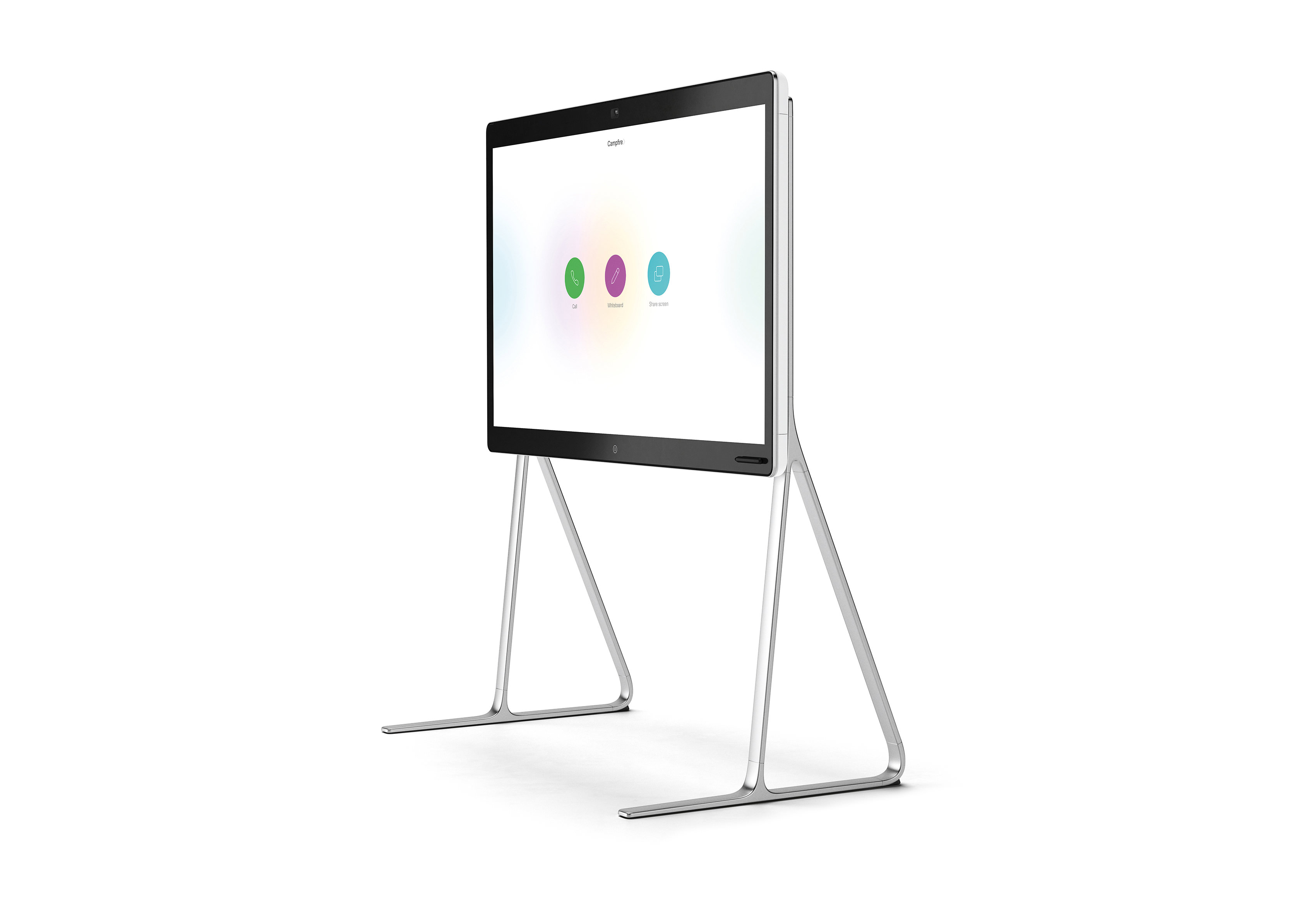
A subscription to the Cisco Spark Flex Plan is the best way to put your organization on the path to the world’s best meeting experience with complete investment protection. These steps toward simplicity and flexibility in purchasing are taking the market closer and closer to a complete revolution in the way the world works.

Last week while I was at Cisco Live US, my family came out to join me in Las Vegas to see David Copperfield. We were all blown away again, but who doesn’t love magic? And our Cisco Collaboration team is bringing our own dose of magic to the buying experience!

Learn more about how Cisco Spark Flex Plan can simplify your purchasing experience.

Authors

Andre Smit

Vice President

Avatar

Just think of the volume of healthcare data being transferred and stored every day—data from connected medical devices, electronic health records (EHR), clinical workstations, and smart hospital applications for patients, clinicians, researchers, and administrators.

Is it safe? What role can the network play in keeping what’s important secure?

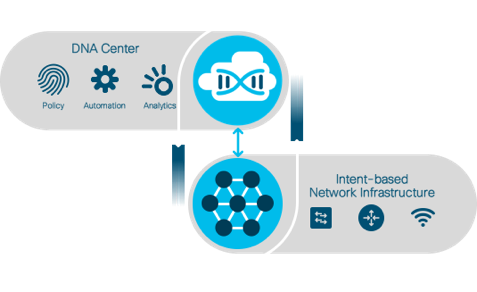
With Cisco DNA, the network acts as sensor and enforcer, providing real-time threat defense through visibility of encrypted and unencrypted data. Cisco DNA enables you to:

  • Reduce risk by turning your network into a security system with interoperable solutions that provide multilayered protection
    enter
  • Lower complexity by choosing among integrated, dedicated, and cloud-managed options for end-to-end security
    enter
  • Gain deeper insights using real-time data to secure access, provide intelligence, and sense suspicious activity—even in encrypted traffic
    enter
  • Protect against threats by enforcing policy and taking action to protect your organization across the network from known and unknown threats.

With security and assurance embedded networkwide—across routing, switching, wireless, and the cloud—Cisco DNA speeds threat detection and containment. Check out the infographic below to learn more about what Cisco DNA can mean for security at your healthcare organization.

Stay tuned for the final installment in our Cisco DNA for Healthcare blog series, which will focus on what you can do to make your hospital digital ready.

Learn more about DNA for Healthcare at cisco.com/go/dnahealthcare.


Authors

Sarah Struble

No Longer at Cisco

Avatar

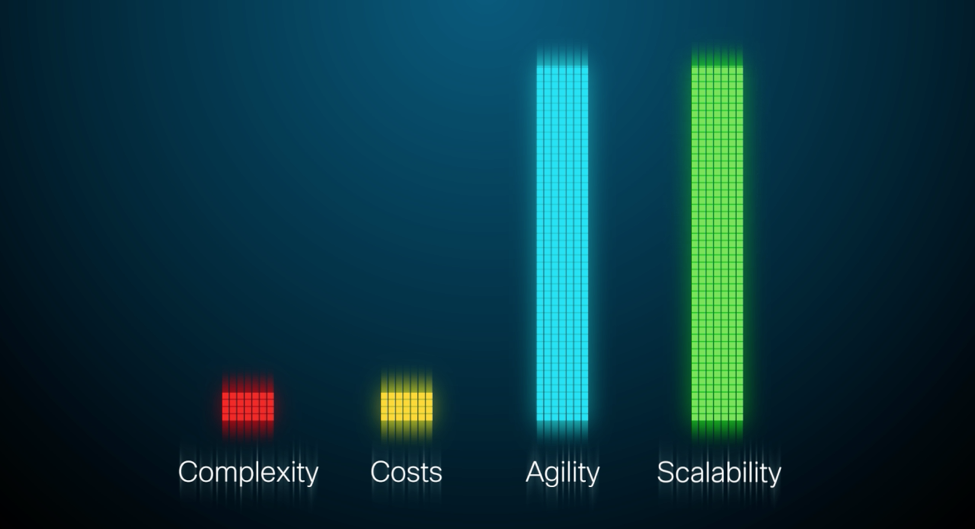
In this new digital economy, data is king and storing it requires a well-funded army. At least it does when you maintain the status quo with legacy storage solutions. In this scenario, cost and complexity often impede a business’s ability to scale and adapt to these new digital demands. This signals the need for a new approach and only a distributed software defined storage architecture can solve it.

This past year Cisco launched Cisco Software Defined Storage Solutions to catch the industry transition to distributed storage on x86 systems. In this program, Cisco and Scality initially came together to certify the Scality RING software on the Cisco UCS S-Series Storage Server. This is an ideal match bringing industry leading software defined storage together with the industries most versatile storage server that scales effortlessly to Petabytes in minutes with it’s embedded policy-based automation.

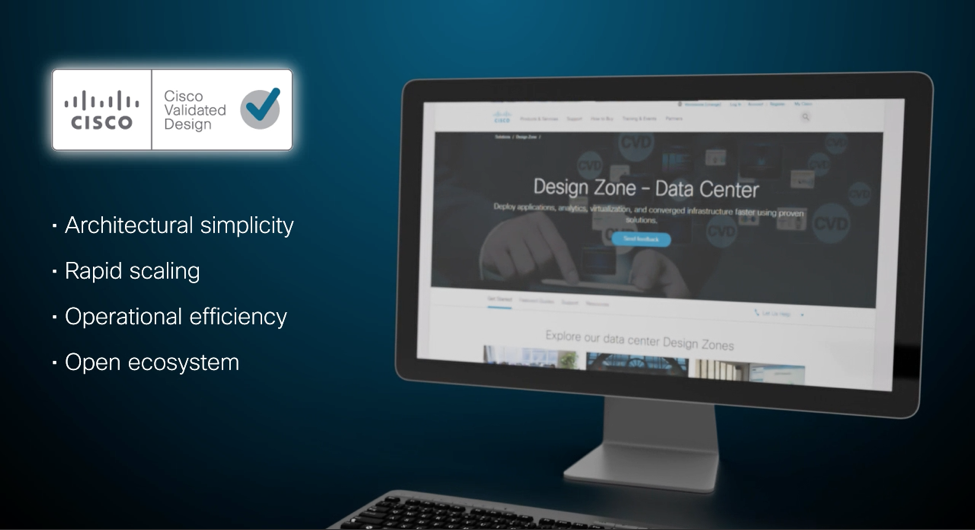
More recently, we took it a step further by publishing a full-blown Cisco Validated Design for deploying Scality RING software on Cisco UCS S3260. If you are not familiar with a CVD, think of it as a blueprint that simplifies the build process and delivers an expected positive outcome. Simply put, we do all the heavy lifting for you to mitigate risk, decrease complexity and speed up deployment times getting you operational faster than any other “meet in the channel” partnerships.

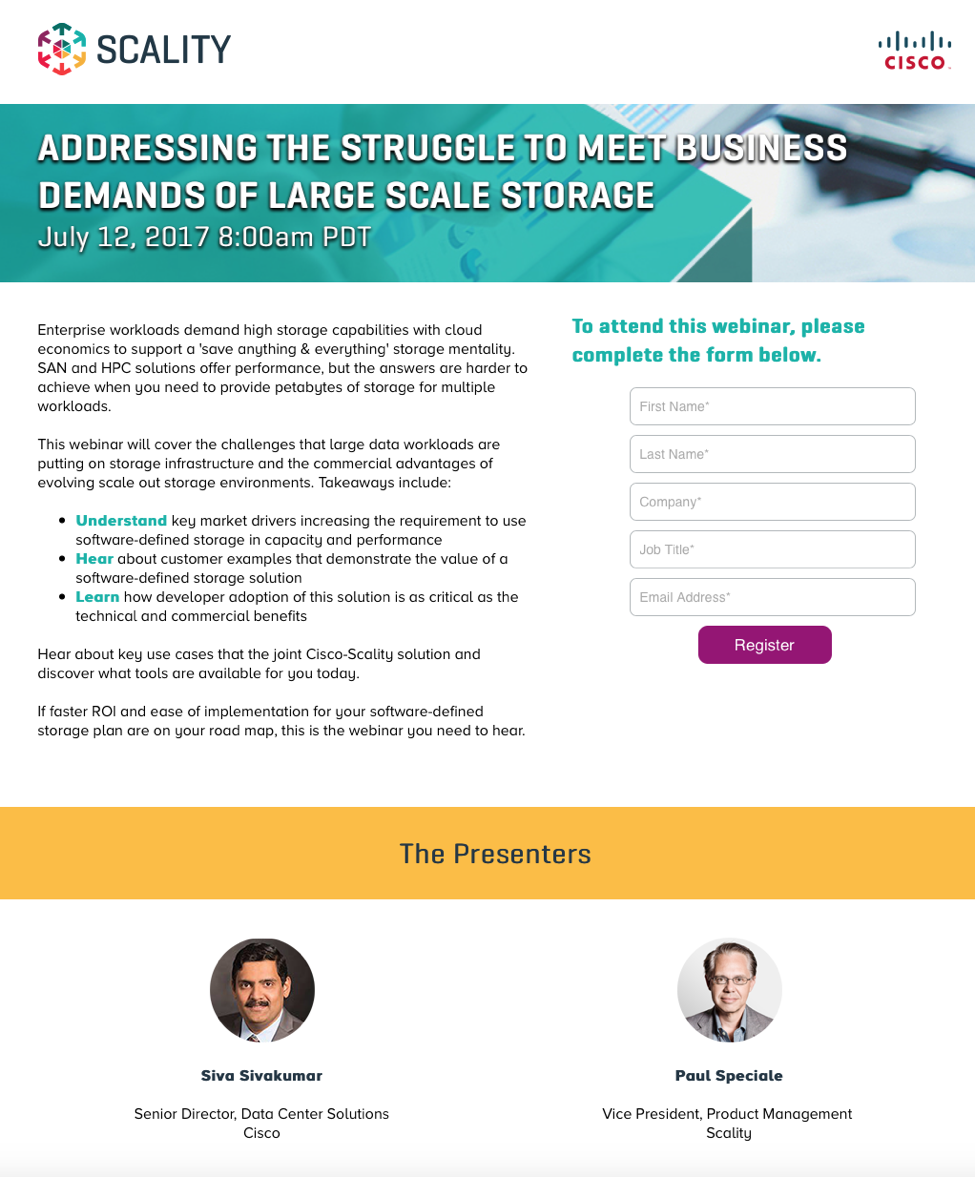
Please join us this coming Wednesday, July 12th, at 8:00am PDT for a joint webinar featuring Cisco’s Siva Sivakumar and Scality’s Paul Speciale. In this webinar, you will learn about the business drivers behind digital transformation and the most common use-cases where Cisco and Scality come together. If you are interested in attending you can register for this must see event below.

Authors

Chalon Duncan

Partner Managed Service Offer Manager

Global Partner Organization

Avatar

Every person has a few key events in their professional lives they will remember forever. Being the first male to host this year’s Cisco Empowered Women’s Network (CEWN) event is one of these moments for me. If you’re not familiar with CEWN, it is a network of Cisco customers, partners, and employees joining together to make a difference for women in IT.  Their focus is on identifying the challenges and opportunities of today to truly drive change to empower the women of tomorrow.

I was in awe and truly inspired by the presence of so many smart, motivated, energetic, insightful, and connected women and men who are all involved with Cisco’s success. The women of CEWN are truly a powerful force and delivered on the mission of this year’s event which was to lead, connect and inspire.

Shari Slate, Chief Inclusion and Collaboration Officer at Cisco, and Patrice D’Eramo, VP, Americas Marketing at Cisco talk with me about accelerating diversity


For those of you who were unable to attend, my remarks focused on inclusion and diversity, change, and teams as they relate to digital transformation. While we, as a company and industry, have acknowledged the issues of inclusion and diversity, we have not done enough to solve them. Many of us spend too much time admiring the problem rather than fundamentally changing our behaviors. Importantly, change happens when it’s an ongoing process. Moreover, change is required of everyone and needs involvement from all levels.

Inclusion and diversity are about being a true team, where everyone plays a different, but important, position bringing their various strengths, perspectives, and value. While everyone plays a different role, we all have the opportunity to define how well we perform and how we help the team achieve its goals.

I also related how it’s not up to me or you to define inclusion and diversity. We shouldn’t set boundaries on the issue, but instead start with your inclusive and diverse team to define the basis for what will make it thrive. For example, the Cisco People Deal doesn’t tell you what to do, but empowers you to think. I’m especially proud of the CDO Women’s group, started by my Chief of Staff, Clare Markovits, which has taken a lead role in developing the next generation of leaders to tackle topics of broader gender diversity, inclusion, and collaboration throughout Cisco and on an ongoing basis.

We also discussed the power of sponsorship to accelerate the pipeline of the extraordinary diverse talent in the tech industry.  To clarify, when we talk about sponsorship, it’s different than mentorship.  Sponsors have three key attributes.  They:

  • Believe in your potential and are prepared to take a bet on you
  • Have a voice at the table and are willing to be your champion
  • Provide you the air cover you need to take the risks necessary to succeed.

At no time in Cisco’s history are the members of CEWN more needed than they are today. As Cisco, our partners, and our customers become digital businesses, we must literally change everything we do and how we do it. This means everyone needs to be involved.

If you are not already involved with CEWN, please participate. We need your strength. We need your experience. We need your energy. We need your ideas. We need you to lead, connect, and inspire. By working together, you literally are IT!

If you attended CEWN or are a woman in technology, please share your thoughts and perspectives.

Authors

Kevin Bandy

No Longer with Cisco

Avatar

Welcome to the third installment of the new #CiscoChat podcast. This episode, recorded live from the Cisco Live Las Vegas floor, focuses on security — and more specifically, on encryption. Aside from detailing recent developments in this rapidly developing field, it also offers a glimpse into Cisco’s latest security solution – Encrypted Traffic Analytics.

In this podcast, I chat with TK Keanini, CTO of Cisco’s Advanced Threat Group. We discuss the evolving role of encryption, how it’s expanded over the years to encompass half of all web traffic, and the benefits it can bring to the business. TK then describes the latest Cisco security innovation, Encrypted Traffic Analytics, and shares some initial feedback from users. Listen in for answers to some of the following questions:

  • How has encryption technology changed over the years? Where are we now?
  • What challenges does encryption pose for cybersecurity?
  • How does Encrypted Traffic Analytics work?

Download the episode on SoundCloud or listen here now, and post your questions to the comments below.

https://soundcloud.com/ciscochatpodcast/e3-encrypted-traffic-analytics

Encrypted Traffic Analytics is made possible by innovations in Cisco DNA. Learn more about Cisco DNA here.

For a technical overview of how ETA works, read Blake Anderson’s blog post.

Authors

Brian Remmel

Marketing Manager, Security

Avatar

Whether at the IoT and Industries demo showcase in Mandalay Bay or walking through the crowds on Las Vegas Boulevard, the buzz around the New Era of Networking cut through the scorching desert heat. This new, intuitive learning network which is powered by intent and informed by context, opens the way for enterprises to meet the business demands for transforming data into insight from a rapidly growing number of IoT devices and mitigate security risk in an increasing hostile threat environment.

Chuck Robbin’s keynote set the tone for the far-reaching industry impact of Cisco’s Digital Network Architecture, highlighting with Apple CEO, Tim Cook the increased security within the Apple ecosystem delivered by using DNA to enhance visibility and policy enforcement. David Wichmann, CEO, UnitedHealth Group shared his customer perspective from the healthcare segment on the need for using data more effectively to deliver improved patient care.
The spotlight on IoT continued with Tuesday’s keynote from Rowan Trollope introducing Cisco Kinetic, the IoT operations platform that helps companies accelerate their IoT initiatives by leveraging the network, automating management of their IoT devices, and extracting value from the terabytes of IoT data within the extended enterprise. Cisco Kinetic integrates three essential elements necessary for companies worldwide to maximize the value of their IoT data:

  • Connection management – leveraging the IoT network to recognize and authenticate devices, apply appropriate policies, and ensure data delivery to intended applications
  • Fog computing – processing data at the edge and executing IoT applications close to the action, when and where required by the business
  • Data delivery – maximizing the value of IoT data by making it easy to extract, normalize and securely deliver data, across all the participants of an ecosystem, based on rules defined by the data owner

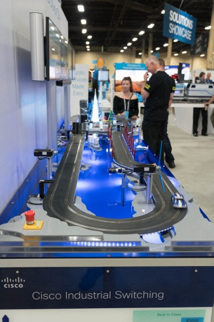
Customers and ecosystem partners had the opportunity throughout the week to get a hands-on experience of IoT in action with a broad ranging set of demonstrations, tutorials and presentations at the IoT and Industries showcase within the World of Solutions. Highlights included:

  • Purpose-built IoT security – Cisco’s recently announced IoT Threat Defense solution for segmentation, visibility and analysis, remote access and tailored professional services
  • Secure connectivity for public safety – showcased through through a police car outfitted with Wi-Fi and redundant LTE data delivery for mission critical IoT applications
  • Low Power Wide Area network solutions – connecting battery-backed sensors across long range deployments with LoRa technology
  • Fog computing in action – demonstrated through edge applications from Cisco ecosystem partners including OSISoft and Telit
  • Operations centric management tools – demonstrating how Cisco Industrial Network Director helps drive up availability in manufacturing environments
  • Open standard time sensitive networking – highlighting the ability to used standard Ethernet for low-latency requirements in industrial IoT deployments

The conference was also filled with informative sessions and learning labs in addition to more announcements from ecosystem partners. Check out more photos and links to sessions by following @Cisco_IoT on Twitter. Learn more about the latest developments with Cisco IoT at Cisco.com/go/iot.


Authors

John Reno

Marketing Manager

Avatar

Workloads are forecasted to grow 26% over the next three years.   Yet the business is only funding increases of 3% to IT budgets.  How will your business address this gap?

Organizations are turning to automation, digitalization of processes and intent-based analytics to support year over year workload growth.  Automation simplifies your data center’s operating model by translating infrastructure provisioning, configuration and management services into standardized processes that are delivered on-demand.  Automation delivers the speed and accuracy your organization needs.  But how can your environment scale to accommodate growth?

Intelligent scaling requires intent-based solutions that deliver elastic resources to on premise or multi-cloud environments in real time. Not just deploying resources but also decommissioning idle underutilized ones.

Cisco IT manages over 30M watts of raised floor space – that’s $B’s in hardware spread across multiple labs and data centers.   The team was challenged to deliver innovation and an improved user experience while at the same time supporting 20% growth, improve utilization and increase workload density.

Watch this video to learn how they tackled these challenges.

Built on Cisco programmable infrastructure, Cisco IT was able to create self-managing elastic environments by teaming with Turbonomic.  The results have been amazing:

  • 40% improvement in operational efficiency
  • Recovery of 54 TB of RAM and 4,800 virtual CPU cores
  • 49% increase in headroom with elastic scaling efficiency
  • $17M in cap ex savings along with floor space savings of $2.8M/year

 “Turbonomic’s dynamic model is really the secret sauce to how you get everything out of that data center that you can,” says Michael Myers, Sr. Director, Cloud Orchestration and Platform Services. “After installing Turbonomic and optimizing our data center, we were able to deploy 2,200 servers for free.” 

These results became the stimulus for a technical alliance between the two organizations that has delivered Cisco Workload Optimization Manager.

https://www.youtube.com/watch?v=HP9vvHHGujI

The primary difference between Turbonomic and Workload Optimization Manager is the deeper level of inspection of Cisco UCS chassis, blades, IO modules and fabric interconnects to deliver granular allocation decisions, increased workload density and assured workload performance on Cisco UCS. This is the first of many planned integrations across Cisco’s hybrid cloud stack.

How do you close the gap between workload growth and IT staffing levels?  With comprehensive automation and intent-based analytics that can turn your data center into a self-managing environment.  Contact your Cisco sales representative or partner to learn more about Cisco Workload Optimization Manager.


Authors

Joann Starke

No Longer with Cisco

Avatar

Many of you are familiar with the WannaCry ransomware attack that struck businesses in over 150 countries worldwide in May 2017.  Targets of the attack included huge corporations and organizations in the UK and U.S. in sectors as diverse as healthcare, telecommunications, logistics, manufacturing and even government.

Now, with WannaCry barely in the rearview mirror, more recent headlines show a new generation of threats proliferating on a global scale at even faster rates. The latest ransomware attack is identified as Nyetya and while it exploits some of the same vulnerabilities as WannaCry, it has distinct differences. Cisco’s Talos, one of the industry’s leading threat intelligence teams, is actively investigating Nyetya and their updates are published regularly on their blog.

With this dynamically growing threat, Cisco is working vigorously to integrate security into every level of infrastructure. We are achieving this through breakthrough innovations, with industry-first features like Encrypted Traffic Analytics (ETA), and by introducing better ways for our customers to purchase security together with infrastructure. The Enterprise Agreement, as discussed in Dan Lohmeyer’s blog, is a strategic vehicle to drive adoption and simplify deployment of this cross-architecture offering for our customers. Additionally, the Cisco ONE Advanced Security offer simplifies purchasing by enabling customers to take advantage of Cisco security innovation across their data center, wide area network (WAN) and access infrastructure through a single agreement.

When we launched Cisco ONE Advanced Security about six months ago, I shared the details of these offers on my blog. We have been growing our customer base with these offers since launch, and seeing more adoption in small- and medium-sized business, with 71% of the business coming from commercial customers. The top three industry verticals that are benefitting from these offers are healthcare, financial and education.

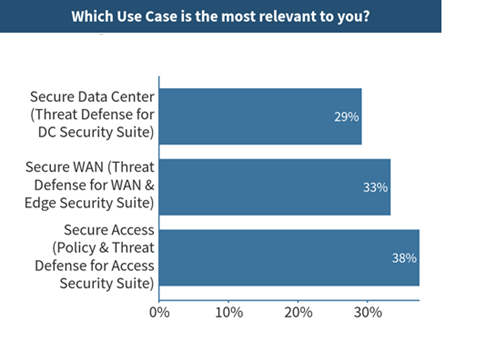
We shared these offers recently with around 200 customers and partners at Cisco Live to get their perspective on which use cases might be most relevant to them, and the responses were very interesting.

These poll results show an almost equal demand from customers across each part of the infrastructure, indicating recognition of the need to secure their data centers, branch environments and access infrastructure.


These insights are very valuable as we continue to improve the suites in this offer, making more innovation accessible to our customers. Stay tuned for more to come…

Pooja


Authors

Pooja J Kapoor

Product Management Leader

Digitization Office

Avatar

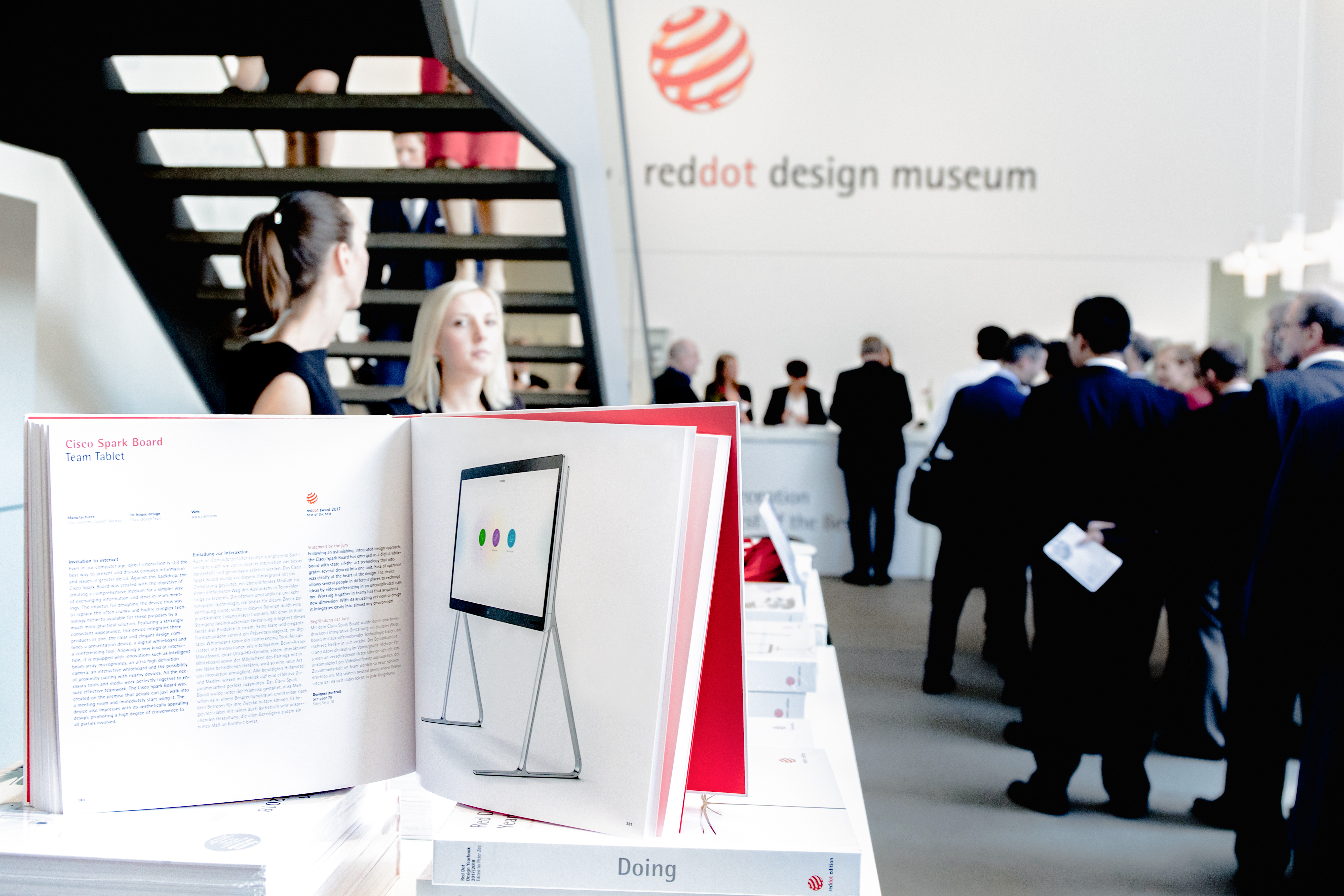
Last week, our industrial design team traveled to Essen, Germany to receive one of the greatest honors in the international design community: the Red Dot award. It would be a great honor to receive one award. Instead, Red Dot awarded us with four. We received awards for Cisco Spark Room Kit, Cisco Spark Room Kit Plus (both for the camera and codec) and the prestigious “Best of the Best” award for Cisco Spark Board.

I’m humbled that Red Dot recognized our work but it’s inaccurate to attribute this award only to the design team. There’s a tendency to look at accolades as the result of a skilled individual or team. In reality, it’s the sign of an ecosystem built on teamwork. Countless complex interactions go into product development. Building great products takes a village.

People make similar assumptions about Apple’s design chops. They assume Apple must have the best design team and the best design processes. Mark Kawano, a former design evangelist at Apple, refutes the hero mentality. “It’s actually the engineering culture, and the way the organization is structured to appreciate and support design,” says Kawano. “Everybody there is thinking about UX and design, not just the designers.”

His quote underscores an overlooked aspect of “good design.” There’s an illusion that it requires all-star designers focused intensely on aesthetics. Conversely, it requires a shared vision across each stage of product development — design, engineering, marketing, product management, and support. The user experience is too important to leave to designers. Everyone must feel responsible for it.

In an organization, design can act like a canary in the coal mine. It keeps everyone honest. If there’s comradery or dysfunction within teams, it will show up in the design.

In April, we announced the creation of Cisco’s first unified design team. The Design Group brings together all designers working on collaboration products. Creating a central design group aligns our values, ambitions, and practices across all areas — industrial, interactive, service, UX, and visual design. It creates an environment for building a holistic approach for the entire portfolio. This new team will help us shift away from creating products for customers to buy towards treating every product as a service, one that builds a long-term customer relationship. It also aligns with a broader Cisco initiative of teaching design thinking to a variety of employees and groups.

While Red Dot honors the Design Group, this award is a success for many teams. It demonstrates the scope and depth of teamwork we achieve when we work together. It’s no coincidence that we’re an organization committed to rethinking and redesigning the way teams work.

Learn more about the Cisco Spark portfolio.

Want to learn more about how the Design Group works? Take a behind-the-scenes peek at the creation of Cisco Spark Board:

https://youtu.be/-YdMXDI_o_Y


Authors

Torkel Mellingen

Vice President

The Design Group