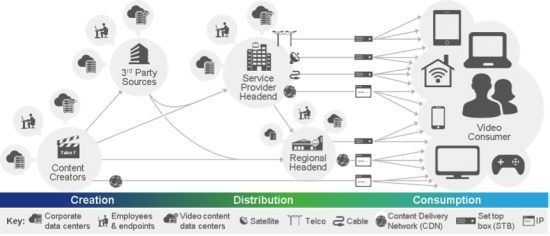
Not that long ago, life was much easier. Video was delivered in a linear managed path and there was a well-defined process – from content creation to distribution to consumption – with distinct roles for content creators and service providers. Video infrastructure was largely isolated and used unique technologies designed for broadcast video delivery.
This model also made security much more straightforward. Video content was protected using encryption and conditional access integrated in the set-top box.
But today, life is getting more complex. IP and cloud based delivery allows service and content providers to meet customers’ demands, but it’s also more challenging to secure.
In this open environment, service and content providers need to protect their entire network from new vulnerabilities, stopping attackers from stealing video content, services and confidential data. At the same time, they need to retain full flexibility to deliver the services customers want – security should not be an inhibitor but an enabler.
NFV and SDN are past their hype cycle and way into gaining significant traction since their initial introductions into the market. Many of our customers who have deployed or plan to deploy our solutions based on these technologies understand that an important factor for realizing the full benefits of NFV and SDN is service assurance. Service assurance is crucial in the era of digital transformation and in effectively operationalizing NFV and SDN enabled networks, towards offering your customers an outstanding, end-to-end digital experience. However, in today’s virtualizing network, service assurance requires a whole new approach and one that greatly differs from what traditional systems can provide.
First, let’s take a look at some of the important characteristics of the changing cloud infrastructure on which services are offered and what this means for assurance systems.
Complexity and scale: Cloud infrastructures are extremely complex due to the large number of distributed network elements across multiple technologies and service domains. The multiple layers of the infrastructure stack which include the underlying physical elements, the virtual overlays, and service components creates critical inter relationships and dependencies. In order to rapidly isolate problems and proactively resolve them, first, the assurance system must holistically understand these links and dependencies and second, it must be scalable given the significant number of services it must support
On-demand services and elasticity: NFV and SDN help deliver services agility and enable more flexible service consumption models such as the “pay as you go” option which is increasingly adopted by customers whose service requirements change over time. In this model however, the time between service turn-up and turn-down is much shorter compared to that of traditional services. This means the assurance system must be aware of the dynamic changes to service topologies, in real-time, in order to proactively assure services. Additionally, in NFV based infrastructures, service placement can also dynamically change, such as in failure scenarios. In such instances, the assurance system must again, quickly recognize and adapt to the associated changes.
Multi-tenant environment: More and more businesses are turning to the cloud to experience new applications, collaborate on mission critical projects and utilize IT resources more efficiently. Here the service elements (compute, network, storage) that support these functions are virtualized on a per customer and per tenant basis. Therefore, it is essential for the assurance system to have an accurate and contextualized knowledge base on a per customer/tenant perspective in order to understand the potential impact a network issue may have. This is especially important for supporting those customers who rely on your services to run their most critical business functions
There is a cultural evolution happening at Cisco, driven by our business, our innovation and technology, and most importantly, our people. It is being shaped by feedback from our employees and it is helping us define who we aspire to be as a company.
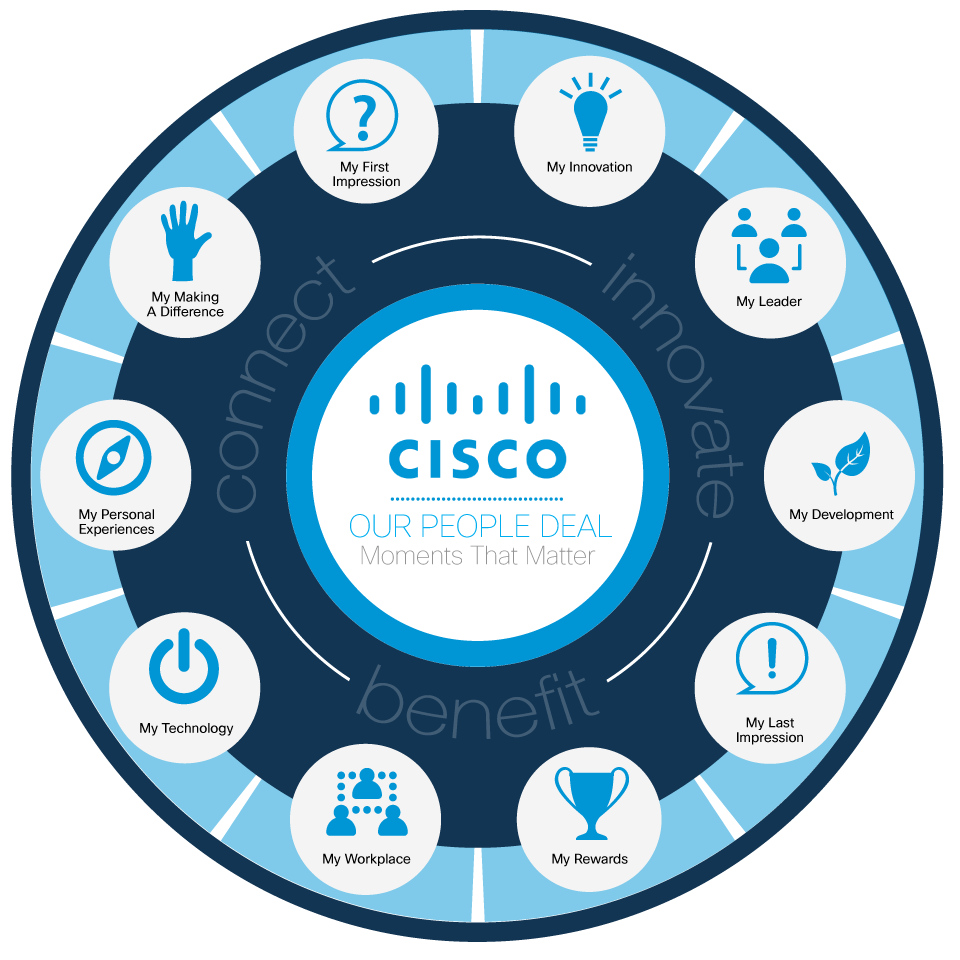
It starts with Our People Deal, which is simply the understanding of what Cisco can do for our people and what we expect in return. Our People Deal sums up what it means to be part of Cisco and it shapes everything we do. Every interaction, every communication and every experience.
By connecting everything, innovating everywhere and benefiting everyone, Our People Deal is transforming our employees’ experience by delivering on the Moments that Matter ─ those defining career and personal moments that are important to them. As you can see from the visual below, these moments range from taking your birthday off to healthcare options to focusing performance management on development.
We have recently announced a few more that we are excited about.
Time2Give
Giving back is a part of Cisco’s DNA. Last year, Cisco employees gave a combined $12 million in donations and matched funds, as well as more than 155,000 hours of volunteer time, to the nonprofits and causes of their choice. And our employees want to do even more – they’ve identified giving back as one of their Moments that Matter. We recently announced Time2Give, a global program that gives our employees five days of paid time per year to volunteer, in addition to any paid time off or vacation they already have. Employees can choose where they contribute their Time2Give. By empowering our people to take time off to volunteer, we’re collectively helping to change the world through active participation in our communities.
Pay Parity
Another way we can provide an unmatched employee experience is to ensure everybody is compensated fairly and equitably. This is an important conversation for us, and an integral part of Our People Deal. Our Pay Parity initiative builds on our long-standing commitment to fair pay and is being integrated with our existing strategies for pay for performance and market competitiveness. Pay Parity is an ongoing commitment – not a point-in-time initiative. We are proud of the results of our preliminary review which demonstrated that we have a healthy and equitable compensation program. This new agile framework introduces more analytics, targeted strategies, new accountabilities and enhanced decision making tools built for us – by us – to support our commitment to drive and maintain a highly inclusive and equitable compensation environment.
Time Swap/Job Swap
With a focus on development we will be rolling out a new program that promotes and supports talent rotations and agility. Time Swap/Job Swap allows employees to either swap ~20 percent of their time with another individual for a defined period or swap roles for a limited time. This enables our people exposure to another part of Cisco’s business, while also helping them develop their own skills and bring innovative thinking and ideas to programs and among broader teams.
We want every day to be a great day at Cisco and that starts with our employees’ experiences. We have incredible people doing extraordinary work. Together, we’re #allin to make every moment matter.
Cisco Corporate Social Responsibility strategy prioritizes the issues that are most important to our business and to our stakeholders, identified through a formal CSR materiality assessment. We use the Cisco CSR Report to communicate our approach, objectives, progress, and challenges around five high-level priorities. This morning, we’ll focus on the Environment:
Over the years, Cisco has built strong relationships with key global advocacy organizations and established credibility with customers who want to use Cisco solutions to improve their own environmental sustainability. Our two most important environment-related issues are energy consumption/greenhouse gas emissions (GHG) and product end of life, as explained by Kathy Mulvany and Darrel Stickler in the video below:
https://www.youtube.com/watch?v=awIskQpmieg
Randy Pond, Cisco’s Senior Vice President of Operations, shared how the company’s emphasis on environmental performance is helping to improve the business and Cisco’s reputation among industry leaders:
“We’ve found strong environmental performance and reputation enhances customer loyalty, strengthens strategic relationships with governments, and helps attract the best employee talent.”
Recently I had the opportunity to talk to a group of students who had a decision to make. They had multiple job offers, a good problem to have, but could only pick one. Hard Choices. My job was to sell them on Cisco. But it turned out to be more than that. While I was happy to share why I came to Cisco and stayed for 15+ years, I wanted them to really think about what mattered most to them. Here’s some of what we talked about.
One of the main things that people forget when looking for a career is that yes, a company chooses you, but most of the time, you get to choose the company. So “Choose Wisely” (channeling the Grail Knight in Indiana Jones and the last Crusade.) How? Start with these 3 things:
1. Choose a Culture where you will thrive:
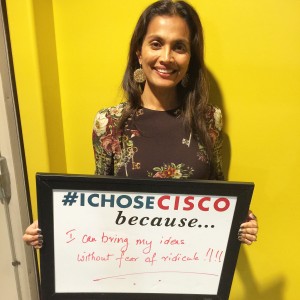
Choose a Company that cares about what matters to you and what matters to the company. It’s important to find a place that allows you to experiment, take risks and most importantly to break glass. A place that will invest in you, where you are around other bright people with whom you can learn from as well as a culture that enables success and allows you to pursue your passion. And it needs to be fun too.
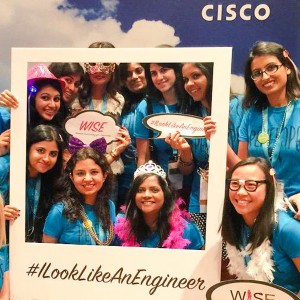
This picture is at Grace Hopper Conference a couple of months ago. We had free reign on everything from booth design to hosting advanced tech node sessions to designing demos we wanted to showcase. It allowed us to be creative and have fun and get the end result we wanted despite achy feet from three days of running around the cavernous conference center.
Cisco is a fun place to work! Teams have their own micro cultures and have done many different things from Bollywood dance offs to orchestrating haunted houses on Halloween in various buildings to Dodgeball tournaments to raise funds for March of Dimes. Cisco is also a company that cares for our community. We care about the world and we take our social responsibility seriously. What’s good for our community & our world is good for business. Just a couple weeks ago, we raised over $750,000 in a 48-hour challenge for the Second Harvest Food Bank.
A company culture that allows you to thrive and aligns to your values sets you up for success while having fun!
2. Choose a company that offers many opportunities.
Choosing a company isn’t just about your first job. Think about your second or third job and so on and so forth. Is the company you’re choosing going to provide you with lily pads to other roles? You should choose a company where you can establish a career trajectory. I thought I would be at Cisco for 12 to 24 months at the most. Fifteen years later, I am in my fifth role in Engineering and its very much “One Company, Multiple Careers.”
My mentors and sponsors here played a big role in changing the trajectory of my life and career. I was encouraged (it was more of a sharp elbow vs. gentle nudge at times) to take on roles that helped build new capabilities. It took me out of my comfort zone each time going from being the “go to” person to once again being the “new kid on the block.” I failed at some, succeeded at many others and the challenges and opportunity to reinvent myself each time gave me the confidence and visibility to continue to push forward. And I can continue to do that because Cisco is a company with multiple businesses and technology domains, so the career opportunities are vast and interesting.
3. If you want to be inspired, choose a company that innovates.
Choose a company that thrives on Innovation. Choose a company that inspires YOU to innovate and allows YOU to take risks to do so. You want to belong to a place where you can be at the forefront of technology. At Cisco, it’s about innovation that matters to our customers whether you’re Connecting and Securing the World to IoT, Analytics, Cloud, Collaboration.
In Engineering, we have internal start ups called Alphas. These start ups are focused on disruptive innovation ideas and combine the agility and risk profile of a startup with the resources and scale of a large, resourceful company like Cisco. Anyone can submit an idea for review and have the opportunity to get funded. The same concept is now available company wide under the “Innovation Challenge”
We innovate to change the way the world, lives, works, plays and learns.
It’s critical to get clarity around what you’re passionate about so work doesn’t feel like a chore, but you also want to choose a place that is fun, challenging and filled with opportunities. If you do, you can’t go wrong!
I’m always happy to connect and help future and current Cisconians. Find me on Twitter @LizCentoni, or comment below.
If you’d like to join the company that has inspired me, you can see openings here.
By Yves Padrines, Vice President, Global Service Provider EMEAR, Cisco
It’s official: Sky, Europe’s leading entertainment company with 21 million customers across five territories, is set to launch Sky Q, a next generation TV home entertainment system that will reinvent the way customers watch TV. Sky Q combines live, recorded and on-demand TV, accessible on multiple screens anywhere around the home or on-the-go, in a seamless experience Sky calls Fluid ViewingTM.
This is not the first time that Sky has innovated with a combination of broadcast, broadband and advanced video technologies to provide premium TV experiences to its customers. Nor is Cisco a newcomer to this arena. We are a long-standing technology partner, working closely with Sky to define and implement video software solutions that help turn Sky’s vision to reality.
Learn how Cisco SON helps MNO lower CAPEX and increase network efficiency
The Challenge:
In discussions with Mobile Network Operator (MNO) CTOs, the need for automation and simplification is a recurring theme.
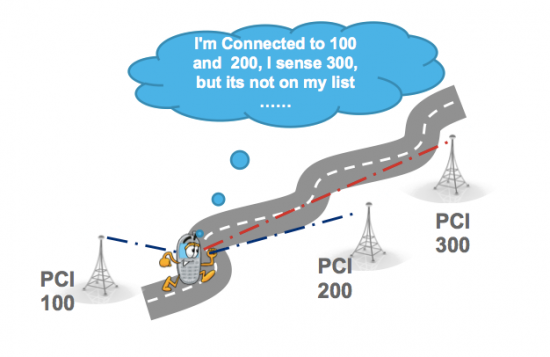
Legacy manual optimization methods are not keeping up with the network complexity and growth. RF engineers only have time for a minimum or “maintenance” level of activities and are unable to perform detailed, wide-scale network optimization. Solutions intended to improve network performance go unused by field technicians due to their complexity and the time required for proper operation:
• For instance, we have found numerous examples where Remote Electric Tilt (RET) antennas have not had tilt changes since their initial deployment optimization. The process to tilt RET antennas is extremely time intensive and therefore only the most egregious sites are tilted. This results in less than optimal user experiences.
• Another example is the limited use of a RAN vendor’s dSON (distributed SON) functionality. We have seen several instances where field engineers have disabled dSON tools meant to improve neighbor-relation lists. They have found the tool can create more problems than it solves, such as “ping-ponging” of neighbor relations or creating distant neighbors. This also results in a poor experience for customers.
To remedy this, many RF engineers manually create and maintain their own neighbor relation lists. They spend over 30 minutes per day, every day, performing basic maintenance activities on neighbor lists.
As a result of these complex operating environments, RF engineers maintain high network performance levels through the easiest, but less than optimum, practice of capacity expansions. The time and effort required to highly optimize the network becomes so challenging that engineers add macro sites, small cells, or carrier additions to address problem areas earlier than required. This results in accelerated CAPEX and inefficient use of network capacity.
The increasing network complexity driven by VoLTE, small cells, continued carrier adds, and site additions will only accelerate the trend described above. MNOs will either need to add more field engineers or come up with a solution that automates and simplifies their network operation, enabling their current workforce to manage a greater number of cells.
2015 will be remembered as the year of the Internet of things. The tipping point when IoT went from the back rooms of the technology world to become mainstream.
The consultancy McKinsey estimates that the Internet of Things – a world where up to 50 billion things (or devices) will be connected to the Internet – could create up to $11 trillion per year of new economic value to business and society. The term Internet of Things traces its origins to 1999, but it is only over the last year or so that the realization of its transformational potential has reached the business community and the general population. The number of research reports, conferences and media articles devoted to the topic has exploded. With the media making the connection between the smart home and the connected automobile IoT has begun to become part of the popular parlance.
It would be easy to say that the primary drivers behind hyper-distributed computing are social, mobile, analytics, cloud and security (SMACS). While it is true that these approaches are influencing or enabling hyper-distributed computing, they are not the business drivers. SMACS technologies are necessary but insufficient enablers of hyper-distributed computing. The premise of hyper-distributed computing is the ability to sense and react in context relative to people and systems– this is the domain of IoT and software automation-based platforms.
IoT technologies which are focused on data virtualization and edge analytics are of primary relevance because of the nature of how they support hyper-distributed computing and provide new capabilities to the IoT landscape.
Data Virtualization
Data virtualization is the idea that data can reside anywhere and be logically joined together for different purposes without creating new copies of the data. This kind of data integration software makes organizations more agile by increasing the value of your data, network and other IT assets, without the long delays of data replication and physical consolidation traditionally required to achieve your goal of a unified view of the business.



 NFV
NFV 







 By Yves Padrines, Vice President, Global Service Provider EMEAR, Cisco


 The consultancy McKinsey estimates that the Internet of Things – a world where up to 50 billion things (or devices) will be connected to the Internet – could create up to $11 trillion per year of new economic value to business and society. The term Internet of Things traces its origins to 1999, but it is only over the last year or so that the realization of its transformational potential has reached the business community and the general population. The number of research reports, conferences and media articles devoted to the topic has exploded. With the media making the connection between the smart home and the connected automobile IoT has begun to become part of the popular parlance.
 IoT technologies which are focused on data virtualization and edge analytics are of primary relevance because of the nature of how they support hyper-distributed computing and provide new capabilities to the IoT landscape.