Avatar

Many organizations realize the fact that only a limited percentage of private cloud implementations will remain within the boundaries of their data center(s). And that is why they are already deploying hybrid clouds to achieve significant benefits such as:

  • Lower TCO
  • On-demand flexibility for hosting workloads on-premises or in the cloud
  • Faster response to market and business needs
  • Better alignment between business and IT

But what are the key ingredients for your hybrid cloud? The infographic below outlines some of the key points …

Cisco Cloud Infographic


Authors

Enrico Fuiano

Senior Solutions Marketing Manager

Cisco Cloud Marketing Team

Avatar

In the past 15 years we’ve developed data virtualization products and solutions to keep our customers ahead of the game for many different needs. Our world-renowned engineering provides the competitive advantage our customers have come to rely on. From strategy to infrastructure, from access to analysis, I’m proud of the architectural solutions that drive the highest levels of performance and scalability that fully align technology investments to our customers’ business goals. Today, I’d like to share a few of my favorite operational use cases with you.

An IT Transformation for Power Outage Management: Long Island Power Authority

Hurricane Sandy left roughly 90% of Long Island Power Authority’s (LIPA’s) 1.1 million customers without power, leaving many without power for weeks. LIPA experienced significant issues delivering outage information due to middleware and interface performance and reliability during the stresses of the storm. As the response was the slowest on Long Island, LIPA knew they needed a new storm process with a supporting power outage management system and a transformation of the IT infrastructure.

LIPA selected the Cisco Information Server, the foundation of the Cisco Data Virtualization Suite, for its data federation, query optimization, and enterprise data-sharing capabilities. This enterprise-level system meets the needs of operational and regulatory reporting, while serving the real-time needs of customers. What was once deemed a 3-year project was completed in less than 12 months with Cisco Data Virtualization with 50% faster data integration and 150% improvement in outage location accuracy.

Optimizing the Customer Experience: Comcast

Millions of Comcast customers use comcast.com or comcast.net to manage their Comcast products and services online. Supporting this process involves many products and many disparate data sources that have to be integrated in a variety of ways depending on what the customer needs. A critical challenge was optimizing the process of executing ownership changes on an account. What seems like a simple request has quite a bit of complexity involved with a hierarchy of permissions.

Cisco Data Virtualization was brought in to improve both the performance and accuracy of ownership changes. Comcast’s entire ownership change process is now handled in the data virtualization layer. With this solution Comcast has reduced transaction time for processing a request from 5 seconds down to 1 second. Development costs for managing the systems have reduced by 20% while time to market for deploying new applications has been reduced by 25%. After eliminating the complex reconciliation process, Comcast has reduced technology operating expenses (hardware and software), reduced customer care call loads, and reduced development and maintenance costs – all totaling in excess of $1,000,000 per year.

Building a Better Foundation for Success: Cisco on Cisco

Cisco’s own Smart Web Technology Group was having difficulties accessing all of the data they needed with Denodo Data Virtualization. Too much time was spent trying to get access to each and every data source. The solution was completely inefficient as each team had to be retrained and unlearn what way they had been doing things and relearn a new way that was specific to that team.

As the team moved over to Cisco Data Virtualization they found a lot of the things that were problematic in Denodo were much easier. The biggest challenge, improving time to market, was done easily with Cisco Data Virtualization. Projects can now get done in a day or afternoon, compared to next month or next quarter with Denodo. And as security is key for our customer data, with several layers of security controls, certain teams can have more access while restricting data source access to other groups, as needed.

Learn more from Bill Schongar and Susann Ebberts of the Smart Web Technology Group as they share their experience replacing Denodo with Cisco Data Virtualization:

https://www.youtube.com/watch?v=GGPIVgHDWkM&index=33&list=PLFT-9JpKjRTDSyR4jbCVS5e94fzzhIzWz

Moving Forward

Each day we are working to develop solutions that respond to our customers’ most critical needs. I couldn’t be more proud of the team that has built our data virtualization product and look forward to delivering our future roadmap. Stay tuned for updates as Cisco continues to pave the way for the future of data virtualization!

What are your favorite operational use cases from Cisco Data Virtualization? Comment below.


Join the Conversation

Follow @KevinOttCisco@CiscoDataVirt, and @CiscoAnalytics.

Learn More from My Colleagues

Check out the blogs of Mala AnandMike FlannaganJim McDonnellJames Jamison, and Bob Eve to learn more.

Authors

Kevin Ott

No Longer with Cisco

Avatar

At RSA this year and last, Marty Roesch, VP and Chief Architect for Cisco’s Security Business Group, talked about the need of an integrated threat defense to drive systemic response. The idea is to correlate and analyze data and telemetry from the multiple security technologies that organizations have deployed across different control points. And then to define what “looks bad” consistently and in one place via a single visibility platform. With that visibility and context, you can drive a simultaneous and instant response across the entire infrastructure.

This strategy makes a lot of sense, especially given the nature of the advanced malware problem with multiple attackers launching multifaceted attacks using multiple attack vectors across your architecture. With a combination of attacks joining forces and coming at you from all angles, shouldn’t your security tools also join forces to better protect you? To do this, the security technologies you’ve deployed across networks, endpoints, web and email gateways, virtual systems, mobile devices, and the cloud need to be able to share information to detect, contain, and respond to attacks faster and more effectively. More specifically, an integrated threat defense is:

Great for Detection. Malware is stealthy, often flying under the radar. But when tools can talk to each other and share information about behaviors they see in the environment, they can identify the weird one-offs. It’s these nuanced anomalies that we haven’t seen before that can indicate part of a larger attack that could go unnoticed. If you can correlate telemetry and threat events and share that information, you can uncover relationships between malware to detect different attacks and techniques being used simultaneously.

Great for Outbreak Control. Once a threat is detected, and each control point knows about the threat, they can lock down their respective areas. It’s no different from a state-of-the-art museum security system. If a threat is detected in one area, then all rooms in the building are quickly closed off to contain the threat. This requires an interconnected system working as one, not multiple disparate systems that don’t communicate. If that were the case, the thief could easily navigate through the other security control points to escape.

Great for Remediation. Going beyond outbreak control, if every tool has visibility into where the threat is, where it has been, and what it’s doing, then time-to-remediation (at the source and across all affected areas) is accelerated. And knowing that 60% of all data is obfuscated within just a few hours of attack, time is of the essence here.

The Cisco Advanced Malware Protection (AMP) technology and portfolio of products share many of the characteristics that Marty outlined as being essential for an integrated threat defense and systemic response. AMP is a technology that can be deployed across many different security control points: on the network, endpoint, servers, mobile devices, email, and web. When these different deployments are used together, they communicate and share information. For instance, when the network sees a threat, the endpoint knows about it. When the endpoint detects malicious behavior, the network is notified and can contain network level communications. With more “AMP eyes” in more places across your network, and communication of threats between security control points, organizations can more quickly detect, contain, and remediate threats.

An integrated threat defense can turn the fight against advanced malware in your favor. To learn more about the ways in which AMP can achieve this, visit www.cisco.com/go/amp and see how Cisco’s own IT security group used AMP technology deployed on the network, web, and email to decrease management complexity, increase detections, and better protect their organization.

Authors

John Dominguez

Product Marketing

Cisco Security Business Group

Avatar
Option 3
My son Lucas doing a 5k race

As consumers, we gravitate to any retailer that personalizes our experience. Netflix and Amazon did it with recommendations and others are following suit. My twelve-year-old son and I recently got new Garmin smart-watches for Christmas – the Forerunner 620 and 630. We created workout plans, set our goals and now we can automatically track our runs on a mobile app and web portal. Our workout stats are automatically uploaded to the cloud via Wi-Fi or Bluetooth. My son has improved to a 5:40 minute mile with the personalized workout plans and feedback that he gets. I have received more health incentive credits towards my health insurance in the last 3 months than I had over the previous 6 months. That is because the app automatically uploads my workouts to Cisco’s Redbrick healthcare cloud. Now, that is personalized service at its best. The service is fast to setup, seamless to navigate and easy to use. And this is the kind of personalization and simplicity businesses want from their service providers.

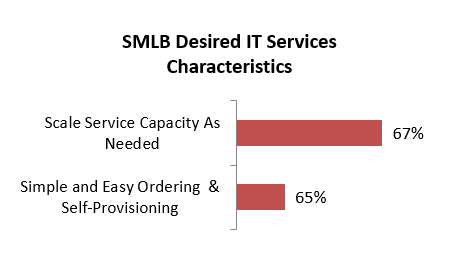
On our last ITaaS blog, we shared with you some of the highlights from our recent ITaaS study we conducted with AMI-partners. We summarized what IT decision makers from across the globe expect from their ICT services. The verdict is they expect to get the same type of personalization and flexibility as the services they consume at home. And this can be attributed to the fact that IT decision makers often bring a “consumer mindset” with them when making IT purchasing decisions. In fact, the research shows that a significant proportion of global SMBs and LEs want the IT services they purchase to be flexible and scalable (67%) as well as easy to order and self-provision (65%).

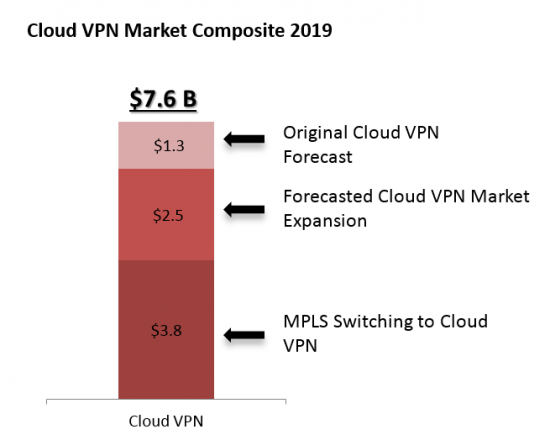
graph 1One of the immediate opportunities for service providers to deliver on the promise of IT services simplicity and flexibility is Cloud VPN. Cloud VPN makes ordering and signup easy on a portal. The service is activated, provisioned and scaled dynamically. This simplicity will open up a new, untapped market for service providers. The study shows that SPs will see a $7.6B Cloud VPN opportunity globally. We have summarized these key findings and your opportunity in regional whitepapers.
graph 2

If you want to learn more, we have analysts from AMI-Partners share key findings of the ITaaS SDN/NFV study in a webinar on April 6, 2016. Please sign-up to hear details from the study. We will also share with you details about the Cisco cloud VPN solution and orchestration platform.

We also have a Monetization models online to help you understand your opportunity. So check out MOI, or browse through the highlights. Let us know what you think (ps_bta@cisco.com). If you want to learn more, please contact us or your Cisco representative.

moiWatch this video to learn more about Cisco MOI.

Authors

Ben Bekele

Director Prouduct Management

Avatar

As part of the work we did for TechWiseTV 181: Shining a Light on the Digital Ceiling, I had a chance to meet and work with some really smart people from Cree. Cree pioneered much of what we are now seeing as commonplace when it comes to LED’s. They have also come in as a key partner in our Digital Ceiling. Cree was founded in 1987 and brought the first blue LED to market in 1989. LED’s are considered pretty darn flexible these days…its hard to imagine there is a color they can’t make.

https://youtu.be/zRy_b1bfEvs

In the full length show, I drew some connections between the invention of the first electric ‘network’ and how the common storyline was usually how (AC) ‘alternating current’ from Nikolas Tesla had beaten ‘DC,’ Thomas Edison’s ‘Direct Current’. Now for the sake of space, I largely skipped over the mass market adoption of fluorescent bulbs in my cherry picked historical account (nothing to do with how much money I have personally wasted on short lived CFL’s…). LED’s have turned out to be a much bigger deal now of course. But as new as they are…I never realized just how long they had been around and why their growth had been so limited until, relatively speaking, recently.

Much of it had to do with the color blue.

Continue reading “Digital Ceiling and the Semiconductor Blues”

Authors

Robb Boyd

Producer, Writer, Host

Avatar

It’s that time of year again!  April 4th kicks off NVIDIA’s GPU Technology Conference (GTC) in San Jose California.  If you’ve never heard of GTC or wonder what goes on at a “Graphics Conference”, you might be surprised by the breadth of technology and solutions that surround this event.  With everything from self-driving cars, gaming, deep learning/machine learning, and artificial intelligence, there is no shortage of exciting and cutting-edge technologies on display.

Deep Learning

For the 3rd consecutive year, Cisco will be present at GTC.  Wondering what Cisco has to do with deep learning?  A lot more than you might think!  Hugo Latapie, Cisco Principal Engineer, will be presenting a session on Deep Learning at the Edge of the Network. Check it out and stop by our booth to talk to Hugo about the cool things Cisco is doing in this area.

Virtualizing Graphics-Intensive Applications

To meet the demand for business agility, companies are turning to virtual workstations to increase flexibility for their workforce and accelerate business transformation. This is happening across a wide range of industries. Take the Corona-Norco Unified School District for example. It is replacing physical computer labs with virtual workstations that can be delivered to students anywhere, any time on less expensive end devices.
Cisco also works with application vendors to deliver validated solutions for deploying highly specialized 3D applications virtually. We have solutions for the PTC Creo Suite (Manufacturing) and Esri ArcGIS Pro (geospatial mapping) among others.  By the way, we will be showing a virtualized deployment of Arc GIS Pro in our booth and John Meza from Esri will talk about how they implemented their virtual development environment in a session on Tuesday.

Cisco UCS and NVIDIA GRID

Cisco UCSCisco offers a complete infrastructure solution that provides an exceptional graphics experience for delivering virtual applications and desktops. It is based

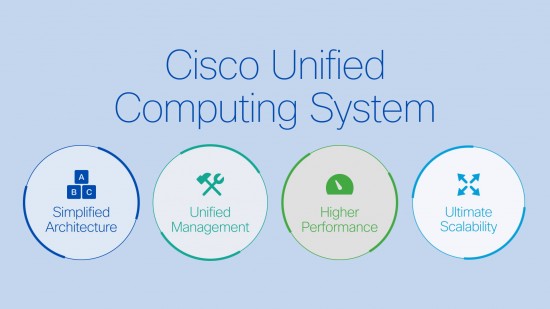
on the Cisco Unified Computing System (Cisco UCS) platform and NVIDIA GRID technology. New to our product line this year are NVIDIA GRID 2.0 products; especially the new TESLA M6 MXM GPU which brings graphics acceleration to our VDI workhorse the UCS B200 M4 blade server. This provides UCS customers a wide range of configurations to support any VDI deployment needs they may have. And for customers who need a dense GPU configuration we support the Magma ExpressBox 3600-AB on our UCS C240 M4 rack servers for VDI deployments. And further extending our relationship with Magma we added support for TESLA K80.  With up to 8 x TESLA K80 GPU on a single UCS C240 M4, the most demanding GPU compute problems are no match for Cisco UCS!  Make sure to stop by the Cisco booth to see, touch and learn more about our GPU support for VDI and Compute solutions and speak with our experts.

Stop by Cisco Booth 304 at GTC

We are also pleased to host our partner, Citrix, in our booth. Citrix will demonstrate the latest remote graphics solution powered by Cisco and NVIDIA. Come experience the power of Citrix HDX 3D PRO running on the flexible Cisco UCS platform. This demo will cover HDX 3D Pro user experience, Citrix HDX Framehawk with GPU support and HDX USB device redirection to support additional USB drawing tools used by professionals.

We will also be showing our new Cisco HyperFlex hyperconverged infrastructure (HCI) solution in the booth. Cisco HyperFlex is the first end to end HCI solution that combines compute, networking and next generation storage.

So come see us at booth 304 to discuss how we can power your applications with GPU-enabled Cisco UCS and attend our sessions on virtual workstations and deep learning on Tuesday April 5th at 3:00 PM and 4:30 PM respectively.


This blog was written in collaboration with Shawn Kaiser, Solution Architect at Cisco

Authors

Francoise Rees

Marketing Manager

Customer Solution Marketing, Cisco Intersight

Avatar

Created in 1947, the Doomsday Clock is an internationally recognized concept that conveys the impact of dangerous technologies on our society. Each year, scientists assess these threats and adjust the clock accordingly, moving the minute hand closer or further to midnight. Originally set to seven minutes before midnight, the clock is now closer than it has been in over 20 years; just three minutes from midnight. Why?

Up until 2007, nuclear war was at the top of the list. But recently, climate change, biotechnologies, and the vulnerability created by billions of connections to the Internet have become real threats to society.

That can be quite depressing, but the good news is, we have the power to make a difference. It’s those same connections and technologies which will allow us to move the clock back and speed the pace of change around the world.

Continue reading “Why the World Urgently Needs Global Problem Solvers”

Authors

Harbrinder Kang

VP

Corporate Affairs

Avatar

I was fascinated recently when I read about the detection of gravitational waves for the first time ever. “With this discovery”, the article states, “invisible objects in the universe may soon become visible”. That’s the exact analogy I use when I describe Cisco’s implementation of Fog Computing, or IOx as Cisco refers to it. IOx opens up a new level of visibility in networking infrastructure and decision-making by pushing application logic and data analytics to the network edge. And, just as LIGO (the ruler used to measure the gravitational waves) changes how we measure gravitational forces, IOx changes how we process data.

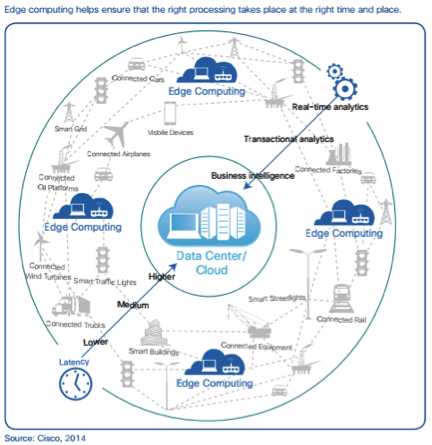
Why do we need intelligence at the edge? Cisco forecasts that there are going to be 50 billion connected “things” or “devices” in the “Internet of Things” world by 2020. Most of these devices are at the edge of the network and can generate zettabytes of data. So, a traditional two-layer IoT architecture that connects the devices and things directly to cloud, where the IoT application logic resides, presents two big challenges. The first is these applications have strict latency requirements; the devices, often geographically distributed, are connected through low bandwidth uplinks and moving large data to and from cloud impacts it adversely. Second, it costs to send and receive so much data to and from the cloud.

It is, therefore, more optimal to employ a combination of cloud computing and edge computing to industrial IoT solutions. The application logic residing in the data center or cloud could focus on long-term data processing, central aggregation and historical analysis of data. The application logic residing in the edge, closer to the IoT devices, could then focus on performing analytics at the edge itself, making real-time decisions and optimizing the bandwidth by intelligently reducing the data before it is sent to cloud. The compute capability that is inherent in the edge network devices can itself be used for performing this edge processing and analytics.

1

In order to provide a comprehensive and customer-focused experience, the engineering team engaged with multiple customers spanning several industries and geographies and derived many forward looking requirements including ease of remote manageability, security, edge analytics, multi-tenancy and the need for a policy based application life cycle. Cisco understands that the IoT market’s growth is mandated upon enabling verticals to develop their own applications in their domains that ultimately help end customers. With IOx, we provide a software platform that helps organization develop, manage and deploy applications to the edges. The platform supports device orchestration and analytics at the edge devices. The platform hides network heterogeneity and complexity from developers, essentially eliminating the mismatch between a developer’s preferred language and the IOx development environment by providing a web-like development experience.

Like with the recently-detected gravitational waves opening up the cosmos in a whole new way, the most exciting aspect about data processing at the network edge is that it opens up a world of new possibilities that simply couldn’t be achieved if all of the raw data had to make a trip to the cloud. The promise of IOx is resulting in a new class of edge applications being built for use-cases as diverse as city governance, retail, heavy industry, mining and transportation to name a few.

3

The newly announced Cisco Digital Network Architecture, or DNA as we like to refer to it, provides an open, extensible and software-centric platform for all things digital, including IOT. A central element of Cisco DNA is Evolved Cisco IOS XE, which among other things supports application hosting and edge computing, so that IOx-based micro-services can be hosted virtually anywhere in the network, on virtually any platform. IOx accelerates innovation in IoT by enabling BYOI (Bring Your Own Interface) and BYOA (Bring Your Own Application) creating the ability for apps to become “network aware”. Similar to the notion of big data platforms, which brought compute to storage, processing IoT data at the edge is about bringing compute to the network. The edge is pushing the limits of networking excellence and we invite you to join our journey.


#CiscoDNA #digitaltransformation #IOx #IOT

Authors

Anand Oswal

No Longer with Cisco

Avatar


numbers10 Million is a big number. How big? To put it in perspective, 10 million minutes is a bit over 19 years…Which is about 15 years longer than it took the Nexus 3000 to reach 10 million ports sold.

Said differently, the Nexus 3000 is the Top of Rack switch of choice for lots of customers. Indeed, customers have purchased over 10 million Nexus 3000 ports in just 4 1/2 years of shipping. This is a major milestone for the Nexus 3000 since it is a number very few products attain, and to do so in less than 5 years is testimony to the value its providing.

Consider this – Nexus 3000 switches alone accounted for more data center 10/40/100G fixed ports than shipped by any other vendor during the past 4 1/2 years. Something else to consider is that the Nexus 3000 is based on merchant silicon. Switches based on the same merchant silicon are available from lots of different vendors.   So, if we combine these 2 facts – 10 million ports shipped and the use of merchant silicon – we arrive at the conclusion that the Nexus 3000 is the merchant silicon switch of choice for customers.

This is interesting for two reasons:

  • Cisco offers choice: Cisco provides the option of buying switches based on custom ASIC’s, which have their own set of benefits, or buying switches based on merchant silicon. (See this excellent IDC paper for more on Cisco’s new custom ASIC’s and their benefits.)
  • Cisco is essentially the largest “brite box” (i.e. branded white box) vendor in the data center market.

Since the same merchant ASICs are used by many switch vendors, what makes the Nexus 3000 the better choice?  There are multiple reasons, but let’s highlight 3 here:

  1. Best in class support model
  2. Feature capability and agility
  3. Open, programmable operating system

1. Best in class support model providing a single spot to rapidly solve problems

Most customers – including those who want merchant silicon – want a switch pre-loaded with a network operating system and an effective, comprehensive support model. There is a very small subset of customers who are interested in buying commodity hardware, then loading software on top of it, and integrating hardware and software. However, that model simply does not work for most people running networks. That’s why the Nexus 3000 offers a best in class support model, from start to finish, from sourcing to the Technical Assistance Center. Customers want a central point of contact that will solve their problems quickly. Cisco and the Nexus 3000 provide this.

2. Feature capability and flexibility

The Nexus 3000 has numerous features that provide differentiation. Many customers depend on heightened visibility for effective operations and troubleshooting. The capabilities of features like Nexus Data Broker help to address this.  For example, for customers in the finance vertical, it allows them to filter all incoming and outgoing traffic to their suite of analytic, risk and compliance tools. Flexible connectivity is another reason customers are buying Nexus 3000s.   Our latest Nexus 3232C offers an even broader array of speeds than before with 1/10/25/40/50/100G, as well as copper/fiber cables & transceivers (including Bidi) to suit any DC connectivity need. Other key features Nexus 3000 customers leverage involve API’s and integration with DevOps tools, which are covered below.

3.Open, programmable operating system with NX-OS

The Nexus 3000 series provides a wealth of programmability options, creating a very open environment so as to integrate smoothly into orchestration, automation and management tools of choice. You can use tools like NX-API (built into the Nexus 3000’s NX-OS) to basically auto generate chunks of code leveraging Python scripts. This is quite useful if you are a network engineer just learning scripting. Or maybe you are much more comfortable with a Bash shell than a NX-OS CLI prompt. If you’re used to using tools like ifconfig or ethtool on servers, you can use the same tools – and many more – on the Nexus 3000.  For a bit more on some of the programmability tools (which are available across the Nexus portfolio) here are a few references:

For these, and many other reasons, the Nexus 3000 series switches are celebrating this milestone of 10 million ports shipped. With the recent addition of the Nexus 3200 series using Broadcom’s Tomahawk ASIC, the success is bound to continue. Many thanks to all the customers who have helped the Nexus 3000 hit this milestone so quickly.

Thanks to Thomas Scheibe @thomas0002 for his contribution to this blog.

Photo credit: pixabay.com

Authors

Craig Huitema

No Longer with Cisco