Avatar

Did you know Cisco.com gets more than 355.5M visits a year?  One out of every 10 visits is from a mobile device and mobile usage is growing. Much of the Cisco website is mobile-friendly, with the new Cisco.com Home page, Product pages, revised Support Home Page, and over 7,800 Model pages. Now we are turning our attention to 200K+standalone, single HTML content pages.

Continue reading “Cisco.com goes Mobile – One Page at a Time”

Authors

Joann Hartman

Technical Lead, Services

Smart Web Technology Group, Tech Comms, and WEM IT

Avatar

Today, Cisco filed comments on a Proposed Rule published by the Department of Commerce’s Bureau of Industry and Security (BIS) in an effort to comply with an international agreement called the Wassenaar Arrangement. The proposal would regulate a wide array of technologies used in security research as controlled exports, in the same manner as if they were munitions. Cisco, along with many other stakeholders in the cybersecurity research field, has identified a number of significant concerns that we believe require BIS to revisit the text of the Proposed Rule.

BIS’ focus on limiting the cross-border trafficking of weaponized software is well-intentioned, but the current text would cause significant unintended consequences that must be addressed in a revised draft of the Proposed Rule. If implemented in its current form, the Proposed Rule would present significant challenges for security firms that leverage cross border teams, vulnerability research, information sharing, and penetration testing tools to secure global networks, including Cisco. The result would be to negatively impactrather than to improvethe state of cybersecurity.

The goal of regulating the export of weaponized software is understandable. However, many of the same techniques used by attackers are important to developers testing their defenses and developing new effective responses. Cisco needs access to the very tools and techniques that attackers use if we have any hope of maintaining the security of our products and services throughout their anticipated lifecycles. The development of new export control requirements must, therefore, be done carefully and based upon the needs of legitimate security researchers. Otherwise, we will leave network operators blind to the attacks that may be circulating in the criminal underground—and ultimately blind to the very weaponized software that the proposed rule intends to constrain.

The requirements in the Proposed Rule are far broader than necessary to address BIS’ stated intent—controlling the export of weaponized software. We look forward to working with the Department of Commerce to ensure that the goals of the proposal can be met in a manner that is technology neutral, narrowly tailored to the actual risks faced by the nation, and reflective of the needs of legitimate security researchers seeking to protect the information technologies upon which we increasingly rely.

We look forward to continuing the conversation.

Cisco_Wassenaar_Final_07202015

Authors

Eric Wenger

Senior Director, Technology Policy

Global Government Affairs

Avatar

For the past year, I’ve worked with Carola van der Linden (Carola van der Linden), Marketing Manager in EMEAR, on Social Selling. I wanted to get her unique perspective on how sales and marketing works together and what marketing can learn from sales. Carola brings not only a deep understanding of how social is used in her region but first hand experience implementing new capabilities to the sales organization.

Jennifer Roberts: You’ve been working on the social selling program for some time, what do you think marketing could learn from sales? 

Carola van der Linden: Ownership and accountability. Sales teams have very clear accountability for revenue, and marketing is moving in that direction. Revenue Marketing is a first step, which means it’s their job to get closer to the sales organization, to understand the sales dynamic and provide quality leads that convert. Moving forward, I think the link between the two organizations will be even tighter. Marketing is beginning to use the same tools as sales, and we are tracking to the same set of goals and using the same definitions to describe our progress.

JR: What is the role of marketing in social selling? How can marketing help sales?

CvdL: 70% of a customer’s buying decision is now made based on information he or she finds online. We want to make sales aware that the customer’s buying journey occurs online and that it’s important for them to have an online presence. One way they can begin to create their presence is to become socially active—use social as a communication vehicle to engage and help customers and partners.

Creating an online presence isn’t limited to sales. We are all social sellers. Marketing is trying to lead by example. Many of us have a Twitter account and are encouraged to share relevant information with our social networks. We also track our progress using an online dashboard– a leaderboard so we can compare and compete against our colleagues.

JR: You mention the need for sales to have an online presence. How can marketing support sales through this transition?

CvdL: Marketing can support to sales by developing an onboarding process for new tools, new ways of doing business and by providing relevant training. Content is also a huge priority; it’s important that it support the buyer’s journey. So, marketing needs to be able to provide the sales rep with relevant content for different stages of that journey. We also have to realize that the type of content shared through email is different than what is shared via social media.

There is also a behavioral shift and level of knowledge the sales reps need to gain so they understand what they can share with customers. Marketing can have an impact through training and content, both of which can help our sales reps make that cultural change.

Another area where marketing can help is demonstrating a clear ROI. They need to show how social activities can help grow opportunities, bookings and account knowledge.

JR: Thanks, Carola, for your time and good luck in FY16.

Authors

Jennifer Roberts

Social Media Marketing Manager

Avatar

Recently, I spent a week in Asia with clients, partners, and our various teams. One of the most common themes I heard from clients is that the pace of disruption in today’s markets can be overwhelming. Yet, despite the speed and pace of change resulting from todays’ technology forces, most leaders recognized that the disruption also presents opportunity — and that cutting-edge innovation can provide the path to success amidst all the change.

Lately we’ve been looking at a new concept of how ideas constantly collide, combine, and reform, and how the disruption rate varies by industry. It’s an interesting topic and has yielded some fascinating insights. One of the areas we’ve unveiled involves what we call the “Digital Vortex” — and you can read more about it in this post by my partner Martin McPhee.

Out of that swirling, chaotic “Digital Vortex” comes game-changing innovations that upend existing business models and blur industry lines. It’s exciting, yes, but more than a bit unsettling, especially for industry incumbents.

However, I believe that even market incumbents can gain an edge by understanding the nature of the Digital Vortex in which they compete — along with the “combinatorial disruption” that redefines industries by combining and recombining value drivers such as cost, experience, and platform. Continue reading “In the Digital Vortex, Disruption Blurs the Lines Between Industries”

Authors

Michael Riegel

Vice President

Industries, Platforms, and Services Marketing

Avatar

I recently had the opportunity to sit down with Roland Cloutier, Global Chief Security Officer at ADP and former CISO at EMC, to discuss how they integrate and leverage threat intelligence into their security operations centers as well as their greater security technology infrastructure. It’s pretty rare for the CISO of a F500 company to discuss what technologies they use in such an open way, but it was really a testament to the trust they have for the solutions they have chosen. To hear Roland discuss it himself, watch the video at the end of this post or read the case study.

ADP had created a much more proactive, and dare I say “predictive” security program than most. They are consuming threat intelligence from numerous sources including AMP Threat Grid to create what Roland dubbed ‘intelligence-led decision making.’ How is this different from today? Most security organizations, whether it’s analysts in the Security Operations Center (SOC) or the <<other group>> tend to be in a very reactive mode. They see an alert pop up on screen and start to scramble. It’s tough to get ahead of the game when the technology you’ve invested in is merely a reactive one. Roland and his team have spent the time to develop and execute on a strategy that has flipped this model and puts them in a very proactive situation. So how have they done this? A few key elements: Continue reading “Creating an Intelligence-Led Security Organization”

Authors

Joe Malenfant

Director, IoT Marketing

Internet of Things (IoT)

Avatar

Digitization is in full swing in nearly every sector of the economy. In this atmosphere of universal disruption, every firm must be highly innovative and agile enough to respond to rapidly changing business demands. In short, the Internet has changed, companies are changing, and now IT needs to change. The Internet of Everything provides a superb opportunity — and an urgent imperative — for IT to accelerate innovation. This cannot be done without collecting and connecting data and running analysis, the backbone of IoE.

As John Chambers’ said in his latest blog, “The Marathon Sprint to go Digital: Are You Ready? “Every market and every industry is moving from the Information Age to the digital age, and the pace of change is happening faster than ever before. Every company, city and country is realizing they must transform to survive and thrive in this new era.”

IoE is creating a new tomorrow globally. The first step of IoE is to become a digital business, by simplifying IT to undertake digital transformation. Enhancing customer satisfaction and generating improved results requires good communication, shared responsibilities and clear objectives.

Cities stand to benefit the most from IoE, connecting people, process, data, and things. Working with Cisco, in partnership with global and local innovators, cities are developing IoE-related projects, platforms, and implementations. Importantly, the IoE ambitions and scope are designed to respond to the need for real-time, context-specific information intelligence and analytics to address specific local imperatives.

Recently at Cisco Live 2015 in the World of Solutions, I saw an interesting Powertoon that shows how Smart Connected Cities can use data and analytics at the edge to prepare for the digital transformation and the Internet of Everything.

The video shows a practical use case – everyone can relate to – on how all the connected data, people and processes seamlessly working together enable better experience, rapid responses and service. Orchestrating all the vendors, processes and data via a single integration platform in the cloud is a prerequisite to orchestrate an integrated experience.

Cities around the globe are beginning to build out new digital services such as smart lighting, traffic, waste management and data analytics to reduce costs, tap new sources of revenue, create new innovation business districts and improve the overall quality of urban life. With these new digital services come high expectations around management and availability of the integrated solutions combining technology from multiple vendors and partners. In order to ensure these expectations are met solution providers need to work in a seamless ecosystem. With the number of vendors, providers and partners needed to deliver such a solution, a scalable multi-party service & support ecosystem is imperative. In order to make the smart city initiatives a success all parties involved need to collaborate and operate very efficiently. Seamless multi-party collaboration enabled by a cloud integration platform is an essential piece at the center in delivering exceptional services to the people and run a successful smart city.

Interesting view from CNN on how the cities of tomorrow could look like

Barcelona Smart City Use Case


Authors

Jim McDonnell

Director, General Manager

ServiceGrid, CMCP, UCSF Alliance

Avatar

Customers are interacting with organizations in many different ways – from voice to email, chat and social media – using a variety of devices including smartphones and tablets. Many organizations are still figuring out how to deal with the evolving customer who is using any channel, any device and at any time. You need collaboration tools to share information faster and make more informed decisions. Legacy metrics are no longer adequate to measure customer engagement. The terms of engagement are changing rapidly and you need a flexible platform that will adapt to their requirements and growth.

Developing a system that meets all these requirements – yet is simple to deploy and use — requires an ecosystem approach. It’s no longer enough just deploy a contact center and expect to meet the needs of a new generation of customers.

Cisco combines the power of Cisco Collaboration Cloud with the versatile toolbox of Cisco Unified Contact Center Express (Unified CCX) to create a solution that scales to meet organizational requirements and is yet simple to deploy.

Deployed by more than 16,000 organizations worldwide, Unified CCX provides multiple channels for customer engagement. Customers can call in, email, Web chat or connect via social media. Agents use the Cisco Finesse desktop for integrated access to voice, email, and, web chat. Finesse, which  is extensible with open APIs, can be integrated with other business applications to create gadgets which put all the information an agent needs on their desktop. Continue reading “Transforming Customer Care with the Cisco Collaboration Cloud”

Authors

Girish Variyath

No Longer with Cisco

Avatar

These are three conversations that I had recently with a partner, a customer, and a Cisco executive (not necessarily in this order):

“Cloud refers to only private and hybrid cloud, right?”

“I thought infrastructure-as-a-service is public cloud, not software-as-a-service.”

“We know how much public cloud we are using because we know what infrastructure-as-a-services we are using. What I need to know is what SaaS applications we are using.”

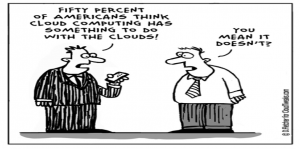
This stood out to me in a major way. While the term “cloud” has been around for a while, there is still confusion as to what it actually means.

Untitled

Continue reading “Overcoming Cloud Jargon”

Authors

Robert Dimicco

Senior Director

Advanced Services

Avatar

Leading organisations now realise that improving the representation of female leaders is crucial to business success. In fact, according to research from McKinsey, “Companies in the top quartile for gender diversity are 15 percent more likely to have financial returns above their respective national industry medians.”

Where are all the women?

Cisco is a shining exemplar of gender diversity at the executive leadership level.

A look at our Executive Leadership “wheel” shows a well-balanced team, equal parts male and female.  But many companies across the globe would present an extremely lopsided wheel.   A recent Harvard Business Review article notes the lack of women executive officers in the Fortune 500 and asks this compelling question: “Why, when there’s so much conversation about the topic, are the numbers not moving?”

Before the top comes the middle

Why indeed? I believe there are few women at the top of the corporate ladder because companies are not focused on women working in the middle levels – middle-women, if you like. In her brilliant essay in The Guardian, “Forget the glass ceiling, we need to fix the broken windows first,” Jean Martin explains this phenomenon, “In many cases, women are not held back because of a glass ceiling but because of the cumulative effect of the micro-issues that women face day after day that slows their journey, or stops them getting to the top.”

Said another way, they never reach the ultimate destination because the middle of the journey is such a hard slog.

Fixing broken windows

Martin proposes a solution based on the crime prevention strategy known as the “broken widows” approach which asserts that small acts of crime (littering, graffiti, broken windows) escalate to more serious crimes if left unaddressed. She explains, “Translating this into the business world, preventative measures to fix the fairly minor day-to-day issues must be taken now. The smart employer puts the focus on understanding and engaging female employees just as they start to consider their careers. This means engaging in proper discussions with female staff about career aspirations early on, ensuring there are female role models within the company and making flexible working the norm rather than the exception.”

So what can companies do to help middle-women survive and thrive? Here are 5 ideas:

1. Begin at the beginning 

Attracting more female employees could be as simple as changing the language in your recruitment ads. In fact, Inc. Magazine reports: “Women are turned off to job descriptions that list traits typically associated with men such as assertive, aggressive, and analytical. Women prefer to see words like dedicated, responsible, sociable, and conscientious.”

2. Develop the talent you have  

Once you have female talent in the door, build your bench strength. For example, Cisco offers two unique programmes designed to address the specific development needs of aspiring women leaders. The DARE and JUMP women’s development programmes arm women with the skills and behaviours needed to excel in their current role and contribute to the future success of Cisco. They feature workshops that encourage networking with peers and leverage internal leaders as role models.

3. Establish networks and communities of interest

The benefits of networking are well documented. And women tend to be excellent networkers. At Cisco, volunteers have created the Connected Women network, a global community to attract, develop, retain, and celebrate talented women as part of a competitive and diverse workforce.

 4. Provide strong role models

Facebook’s Sheryl Sandberg and Yahoo’s Melissa Mayer are often cited as role models for working women. But these examples can seem too far-removed. Women also need accessible role models within their own organisations. To that end, Connected Women at Cisco champions an Executive Shadowing programme that pairs middle-women “shadowees” with women executives for career insight and coaching.

5. Give women what they want 

The number one thing female employees value? Flexibility. In fact, 86% of companies on Fortune’s 100 Best Companies to Work For (which includes Cisco) offer some type of flexible schedule. In the U.S., we were recently named #3 on a list of “The 25 best tech companies to work for in America” based on six criteria including pay and ability to telecommute.   Last year, we were named #8 on a list of “The top 25 places to work in the UK” based on a survey by jobs website Glassdoor. Cisco was praised for “its training and development programmes and the work-life balance for staff.”

It’s all about the culture

Although companies like Cisco are making great strides at the executive levels, we must continue to “fix broken windows” for middle-women. And while the above ideas may help, ultimately what will attract and retain talented women is a culture that embraces diverse leadership styles.

What are your ideas for “fixing broken windows?” Share your insight in the comments below

Authors

Dr. Christine Bailey

Marketing Director

EMEAR