
Avatar

Rob Amster

This post comes from Rob Amster, Cisco’s Director of Contact Center Sales for the Americas. He directs the sales and go-to-market strategy for Contact Center sales, working in close partnership with Enterprise, Commercial and Public Sector leadership; engineering; and solutions marketing.


In my role, I speak with many business leaders about customer care strategy and goals. Sometimes, like now, our conversations turn to industry shake-ups. We saw it with Nortel in 2009, Aspect in 2016, and now with Avaya.

In times like these, you may worry about your contact-center solution – and the impact on your customers:

  • Will my solution still have support?
  • Will my maintenance costs rise?
  • What about new capabilities and innovation?

If you’re responsible for your company’s customer care or unified communications (UC) solutions, these questions can keep you up at night.

But there’s good news. Many businesses have successfully changed contact-center and UC vendors. In fact, most of our new Cisco contact center customers formerly used Avaya.

I recently spoke separately with leaders from two such companies–Apria Healthcare and Experian®—who shared some of their experiences migrating to Cisco.

Experian
Jeff Scanlon is vice president of Cloud and Platform Services at Experian, a leading global information services company.

Experian has been using multiple Avaya and Aspect telephony platforms to connect with customers, creating a complex technology ecosystem. According to Jeff, Experian’s UC environment is a “hodgepodge” of solutions.

“Moving forward, we want our customers to see one Experian,” Jeff explains. “Instead of having to hang up and dial a different phone number depending on their service needs, our customers should have one seamless journey.”

“We chose to move to a new contact-center solution because we recognized the limitations of our existing solutions,” Jeff says. “We already knew and had experience with Cisco’s strengths in networking and security. Cisco’s strength in support and customer service were also major factors.” A rigorous RFP process led Experian to choose a Cisco contact center and collaboration solution, based on breadth of capabilities, cost, and strong customer service.

“With Cisco customer care and UC technology, we plan to offer a unified customer experience across all our products and services,” Jeff says. Experian intends to offer customer service using voice and digital channels such as email, chat, and social. Mobile application integration and co-browse are also important.

I asked Jeff what advice he would give to companies that may be concerned about their existing contact center providers. “Put the consumer first, not technology,” he replied immediately. “Provide the experience they want.”

Apria Healthcare
Danielle Tucker is a senior telecommunications engineer at Apria, one of the leading home-healthcare suppliers in the United States and a provider of clinical services and equipment.

Apria’s contact center and UC environments grew in part from acquisitions, resulting in a mix of technology from Avaya, Nortel, Aspect, Evolve IP, and others. “It was getting more and more difficult for us to support and manage everything,” Danielle explains. “Even queuing calls could be a challenge.”

Apria wanted to migrate to one platform with one roadmap, in the cloud. “We wanted a customer-care solution from a vendor we felt confident in,” Danielle says. “And the cloud is a better environment for managing our many branches and home workers.”

Apria selected Cisco cloud contact center and collaboration technology delivered by a Cisco Hosted Collaboration Solution (HCS) partner. “We chose Cisco after an exhaustive RFP process,” Danielle explains. “Cisco supports our broad-based requirements, and we like their stability as a vendor. We also appreciate now having more control over our solution. We don’t have to pay somebody else when we want to make changes.”

Apria is looking forward to connecting patients to the right agents more quickly, and making better use of agent resources. Over time, they plan to offer support to customers via additional channels such as chat, email, video, and mobile. Ultimately, Danielle envisions a single platform for both UC and customer care that further enhances Apria’s environment and lowers costs.

Danielle was emphatic when I asked what advice she would give to other businesses who may be worried about their customer care technology or vendor: “Don’t put off switching until it’s too late! The migration is manageable if you start small and then add on,” she says. “The key is to get started.”

I can’t put it any better than Danielle and Jeff have. Their companies took action in a time of industry unrest, and they’re glad they did.

Does your business need to take action, too? Learn about our Cisco customer care solutions.

Authors

Kim Austin

No Longer with Cisco

Avatar

New and Emerging Applications Require Broadband Innovation

While the turn of the century and the hoopla that surrounded Y2K was nearly two decades ago, for many of us, it feels like the very recent past. As the year 2000 began, mobile carriers were just starting to offer data and texting capabilities. “Geek talk” at New Year’s eve parties in 1999 included discussions around getting a dedicated DSL/Cable internet connection or even cooler was sharing a T-1 line to get better bandwidth and connectivity. It was a challenging time for service providers and operators with a downturn precipitated by the bursting of the “dot com” bubble and subsequent stock market repercussions. Traditional voice revenues were falling, while Internet and new digital revenues had not yet begun to bolster bottom-line growth in the telecom industry.

As we enter 2017, network operators are still focused on finding greater efficiencies while deploying new technologies to deliver greater bandwidth, lower latencies, and higher throughput for broadband products. Service providers are constantly striving to improve and transform their infrastructures to meet the changing digital demands of consumers and businesses (see video). It can often be difficult to balance network efficiency (cost savings) with cutting-edge innovations that can deliver affordable new service offerings with for consumers and businesses (top-line revenue growth).

Telecom operators have historically addressed these challenges by investing in hardware and software and that supported more device types (end points) and introduced new or enhanced services. As demand for applications and devices grew, the telecom industry has invested in infrastructure to improve network quality with 4G/LTE and high-speed broadband to accommodate smarter devices such as the iPhone (which led to larger-scale smartphone and tablet adoption). We have definitely come a long way since Y2K.

The basic applications of yesterday (text messaging and web browsing) required download and upload speeds around 10 kilobits per second (Kbps) and a latency of 160 milliseconds (ms).  With the introduction of smarter devices and increased investment leading to better network quality, operators were able to support intermediate-level applications such as high-definition video streaming and electronic health records (EHR) by healthcare providers. These intermediate applications required around 2 megabits per second (Mbps) download, 800 Kbps in upload speed and 100 ms or lower latency ranges.

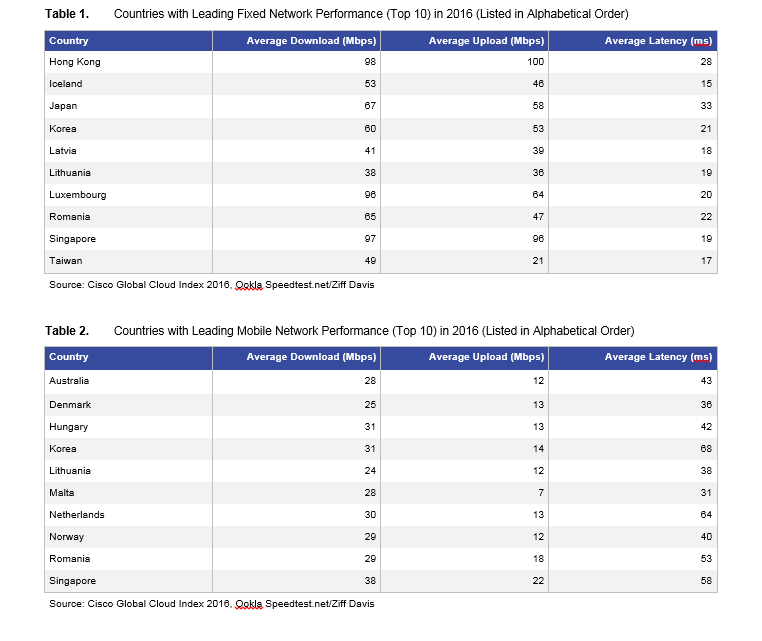
The tables below show the 2016 average fixed and mobile speeds and latencies of the leading countries (based on network performance characteristics) around the world:

tables1and2

While these metrics set an impressive measure of performance (and represent significant improvement over the last decade), the telecommunications industry is at the cusp of yet another service/demand crossroad. There are new and much more advanced demands on public and private networks driven by cloud and IoT-based applications such as 4K streaming, connected/autonomous car safety applications, Virtual Reality (VR) streaming, and Telemedicine (just to name a few). These advanced applications and others will require download speeds that exceed 50 Mbps with latencies less than 10 ms (as well as advanced application management).  Some tactile operations such as robotic surgeries will require latencies that are much lower. The potential capabilities of 5G, 802.11ad and further fiber deployments are poised to be the right solutions to support a new era of connectivity. In other words, more bandwidth and intelligent infrastructures can serve as the essential foundation upon which service provider innovation can be built to create new services/applications and sustainable growth.

Together, we’ll learn why and how networks still matter in 2017 — Happy New Year!

Helpful Links:

Save

Authors

Usha Andra

Leader, Product Marketing

Data Center and Cloud Networking

Avatar

I’m looking forward to seeing you at our Cisco booth and our two Insights Sessions at NRF 2017. Start by visiting Booth #1963 at NRF and experience the power of Cisco to transform your business!

Today’s retailer faces all the benefits and challenges of digital transformation. You need technologies that help you create dynamic customer experiences, implement more effective staffing and operations, and secure omnichannel store environments.

Digital’s growing impact requires companies to take a different approach to retail, regardless of channel or platform. Mobile, collaboration, and automation technologies allow retailers and brands to scale new services such as always-on assistance, intelligent transactions, and on-demand delivery. And, with each interaction, you need advanced analytics solutions that provide a more nuanced understanding to personalize that interaction – from the traditional to the Millennial user, no matter who they are, where they are, how they shop, or how they work. Continue reading “There’s Never Been a Better Time to Reimagine Retail”

Authors

Brian McDonald

Global Retail & Hospitality Industries Marketing Lead

Private Sector Industry Marketing

Avatar

Lend your voice in the new year to sharing your knowledge and expertise and become a Cisco Cloud Blogger.

Our team is currently looking for contributors who can commit to sharing their insights and starting conversations around the latest offerings in the cloud space.

A great way to boost your exposure and leverage yourself as an expert, bloggers become a staple of the Cloud community and may have opportunities to participate in webinars, podcasts, tweet chats, and expert interviews.

Your take could be an overall business view, predictions or trends, a look back at the evolution of cloud in previous years, or simply explore core topics like containers, microservices, openstack, private cloud, hybrid cloud, and more.  If you’ve got a unique perspective or customer experiences to share, we want to hear it.

For further details or to get started, reach out I’m excited to hear from you: Cloud Social Media Manager Jamie Shoup.

Let your star shine brightly in the cloud. 


Authors

Jamie Shoup

No Longer With Cisco

Avatar

It’s a wrap on another holiday shopping season. The results are in: overall estimated retail sales during the holiday season rose 4%, beating National Retail Federation’s (NRF) forecast of 3.6% – both of which are higher than that of last year (Wall Street Journal). Not surprisingly, this growth was primarily buoyed by online sales. So if you’re a mall, shopping center, or boutique shop, how will you drive foot traffic and generate sales? How can you make the trip to the mall or store worth it for customers?

I’ll admit, with an energetic and impatient 2-year-old vying for my attention, it can be challenging to leisurely shop at the mall or store, browsing racks and comparing products. What ultimately leads me to brave the crowds, parking wars, and long queues is the promise of a better shopping experience in-venue such as:

  • Real-time, relevant coupons for products based on my purchase history
  • Alerts for exclusive live events happening today
  • Real-time navigation to find my favorite store that recently opened in the mall
  • Nearby dining recommendations based on my preferences
  • Purchasing always-in-stock products through virtual merchandising

How will you deliver this type of interactive, personalized service to demanding shoppers? It’s possible with Cisco Digital Network Architecture (DNA), the foundation for digital transformation in retail. Cisco DNA makes it easy to roll out a retail network that is simple, secure, and intelligent, so that IT and business leaders can instead focus on innovating customer experiences.

Learn how you can stay ahead of the curve with Cisco DNA at NRF’s retail technology conference, coming up January 15-17. Cisco will be at Booth 1963 with bells on, ready to guide you through an interactive, real-time customer journey and help you get hands-on with innovative retail solutions such as our Virtual Beacon Solution and Connected Mobile Experiences (CMX) Analytics. On Tuesday, January 17, 1:30-2:30pm, don’t miss a session with our VP of Enterprise Solutions Marketing, Inbar Lasser-Raab, and two major retailers. You’ll hear how digital transformation helped these retailers achieve their business outcomes.

Comment below if you’re attending, and don’t hesitate to post a burning question for Inbar if you’ve got one!

Authors

Jolene Tam

Product Marketing Manager

Security

Avatar

Vulnerabilities discovered by Talos

Talos is disclosing multiple vulnerabilities discovered in the Aerospike Database Server. These vulnerabilities range from memory disclosure to potential remote code execution. This software is used by various companies that require a high performance NoSQL database. Aerospike fixed these issues in  version 3.11.

The Aerospike Database Server is both a distributed and scalable NoSQL database that is used as a back-end for scalable web applications that need a key-value store. With a focus on performance, it is multi-threaded and retains its indexes entirely in ram with the ability to persist data to a solid-state drive or traditional rotational media. 

TALOS-2016-0264 (CVE-2016-9050) – Aerospike Database Server Client Message Memory Disclosure Vulnerability

TALOS-2016-0266 (CVE-2016-9052) – Aerospike Database Server Index Name Code Execution Vulnerability

TALOS-2016-0268 (CVE-2016-9054) – Aerospike Database Server Set Name Code Execution Vulnerability

<<Read_More>>

Authors

Talos Group

Talos Security Intelligence & Research Group

Avatar

During the final days of 2016, the news that Coca-Cola shut down its Founders program caught many by surprise. It shouldn’t shock experienced trailblazers though as we embark on our innovation journeys into 2017. Transformation, after all, is a journey and not a destination.

As articulated quite effectively in this blog post, innovation is a beast that is difficult to tame—especially for large corporations. On one hand, there’s a well-oiled machinery composed of traditional businesses focused on substantially high profit margins. On the other hand, lurks some unknown, “never tried before” ideas that consume significant resources without offering any ROI guarantees. Where to balance and how to balance are dreaded questions facing almost all enterprises. And neither Coca-Cola nor Cisco are immune to those issues.

f

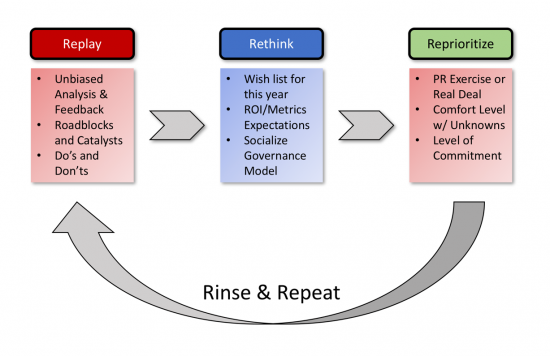
Here are some past, present, and future lessons that we can collectively reflect upon in 2017 to gain better control of our innovation strategies.

Replay

Focus on the past and perform a good, unbiased analysis of your innovation journey. It’s always valuable to understand what works and what doesn’t in big company contexts. Collect feedback from your teams on the biggest roadblocks and catalysts over the past year or so. Derive some “Do and Don’t” lessons from the past.

Rethink

Think in the present on what you’d like to achieve in the coming year. Strategize on setting appropriate internal expectations for ROI and metrics around innovative projects. Socialize with stakeholders on resources allocated towards your innovation strategy. Think of a lightweight governance model around disruptive ideas.

Reprioritize

Now, focus on the future and scrutinize whether the innovation is just a PR exercise or a real deal for your company. Are you and your company comfortable in being out of your comfort zone? Be brutally honest with yourself about how committed you really are when things don’t work out. And they won’t, at least 75 percent of the time.

pic2

As the world gets more competitive and complex, we need to be much more creative in shaping the innovation strategy itself. Cisco has been trying various ideas around making innovation more holistic and pervasive. These efforts include extending out build, buy, and partner strategy to include invest and co-develop elements. We also continue to focus on leveraging the creative wisdom of founders and entrepreneurs of acquired companies. And we’re even empowering employees to tap into their own “inner entrepreneurs” through internal innovation challenges geared for employees across all functions.

Bottom line: Anything new will never be simple and easy. The balancing trick is to be persistent with your innovation strategy while also keeping things flexible, experimental, and nimble. When the changes of innovation are so constant, there is no silver bullet!

Authors

Biren Gandhi

Head of Drone Business & Distinguished Strategist

Corporate Strategy Office

Avatar

We are looking forward to participating in the HIMSS17 Annual Conference & Exhibition from February 20-22 in Orlando, FL.  If you are planning to attend HIMSS17, be sure to visit the Cisco booth (#1850) to experience healthcare solutions that empower innovation by streamlining clinician workflows, increasing collaboration, and improving patient satisfaction.

Visit Cisco Booth #1850
Join us in booth #1850 to see how technology can help your healthcare organization connect people, processes, data and things while maintaining security and patient privacy.  You will see solutions to help you prioritize patient data on your network, protect devices on and off the network from ransomware, and provide robust integration for your EHR.

Our booth demonstrations will include:

  • Patient Connect: Deliver personalized information and services at the point of care.
  • Contact Center with SpinSci: Integrate your Cisco Contact Center and EHR for a complete view of patient data.
  • Extended Care: Unify infrastructure components and devices to enhance the patient-doctor experience.
  • Cisco Security: Protect medical devices and patient data from network threats.
  • Cisco Spark: Cloud-based voice, video and collaboration service that unifies clinical communications.
  • Connected Health Interoperability Platform (CHIP): Seamlessly and securely connects digital health innovations to dispersed patient data.
  • iOS Mobile Solutions: Seamless integration between Apple iOS devices and Cisco voice and video collaboration solutions.
  • Mobile Wayfinding with Phunware: Wayfinding and asset tracking for efficient clinical operations.
  • Cisco Meraki: HIPAA-compliant cloud networking solution.

Register for the Connected Health Summit at HIMSS17
Before you head to HIMSS17, be sure to register for the Cisco Connected Health Summit at HIMSS17, co-sponsored by Optum, to hear directly from key healthcare customers about new innovations in care delivery.

Screen Shot 2017-01-12 at 1.20.28 PM

Tuesday, February 21, 2017
10 am – 2 pm (check-in starts at 9:15 am; lunch included)
Valencia Ballroom, Orange County Convention Center

Speakers will include Annabaker Garber, Chief Nursing Informatics Officer, HCA who will discuss selecting and implementing at scale a secure clinical communications platform.

Prior years have sold out quickly, so don’t delay!

Learn more about the Cisco booth, the Connected Health Summit on February 21, and the other exciting activities we have planned for you at HIMSS17.

Hope to see you in Orlando!

Authors

Joyce Perrelli

Healthcare Program Manager

America’s Field Marketing

Avatar

El Cisco Live Cancun de este año 2016 ha sido todo un éxito. Me dio mucho gusto ver miles de mentes brillantes conectarse y hablar cómo la tecnología de Cisco ha podido solucionar sus problemas.

Las demos de data center han recibido muy buenos comentarios, y varias personas me ha solicitado que les de un resumen. Por eso, aquí les presento un breve resumen de las demos de data center.

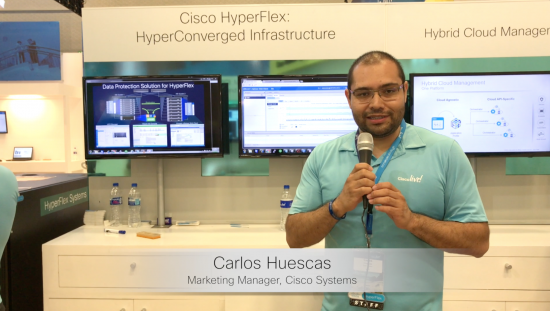
Cisco Hyperflex: Infraestructura Hiperconvergente

Hyperflex unifica el cómputo, servidores y la red para aprovechar todo el potencial de la infraestructura. Esta solution toma menos de 1 hora para implementar, crear clones de cualquier tamano en pocos segundos, y te ayuda a reducir hasta 80% en almacenamiento de datos! Aprende más de la solucion hiperconvergida más comprensiva del mercado aquí:


Screen Shot 2017-01-11 at 3.18.43 PM


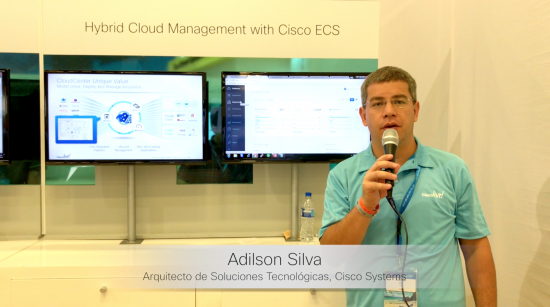
Administracion de Nube Hibrida con Cisco ECS:

Ya puedes modelar, administrar y desplegar aplicaciones de diferentes nubes en una sola herramienta de software. Lo que me gusta de esta herramienta es que te deja saber cuanto te  cuesta usar diferentes servicios de nubes. Por ejemplo, si usas una mezcla de Amazon, Vmware Softlayer, etc; esta herramienta te ayuda a calcular cuanto te cuesta al fin del mes. Sin bromas, es realmente muy simple:

Screen Shot 2017-01-11 at 3.12.32 PM

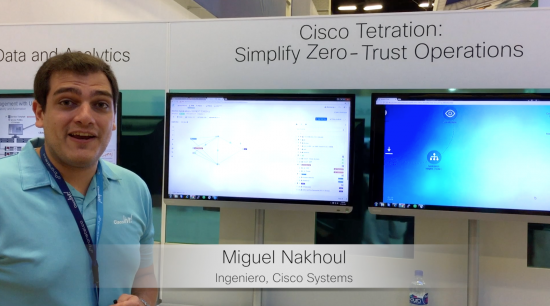
Tetration Analytics: Simplificación de Operaciones por Medio de Zero-Trust

¿Sabes de toda la lista de aplicaciones que hay en tu data center? ¿Sabes en donde se ubican exactamente o como se estan comportando? Si no estas seguro, entonces su data center tiene severos riesgos de seguridad. Cisco ha desarrollado una tecnologia que nadie ha logrado hasta el dia de hoy. Averigua como Tetration Analytics permite monitorear y obtener una completa vision de lo que esta sucediendo en su data center:

Screen Shot 2017-01-11 at 3.14.35 PM


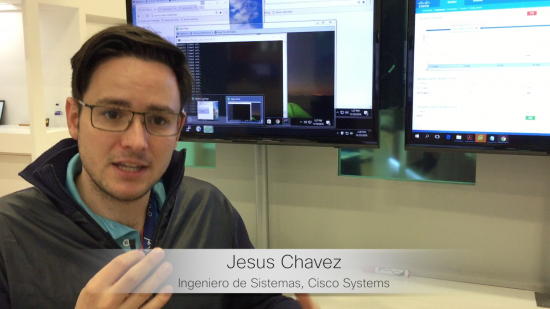
La Infraestructura Centrada en Aplicaciones (ACI):

Basado en Network World, ACI es el lider numero 1  en despliegues de redes definidas por software (SDN). Hay 5 razones por la cual nuestros clientes eligen ACI. Para empezar, ACI ha puesto alto enfoque en simplificacion del despliegue, administracion e identificacion de problemas en el data center. Ademas, ACI tiene un robusto ecosistema de 65 socios que brindan soluciones para cualquier ambiente o solucion que desee.  Asimismo, ACI provee una solucion comprensiva e integrada no importe que tipo de punto final o sea lugar remoto. Aun mejor, ACI tiene capabilidades de automatizacion que reduce errores y acelera despliegues y procesos de IT. ACI no solo brinda beneficios a su infraestructura, sino tambien a su presupuesto. Como por ejemplo,a Symantec le tomo 11 meses para obtener un reembolso, y Pulsan, logró reducir 85% el tiempo de aprovisionamiento.

Jesus Chavez le habla mas de ACI:

Screen Shot 2017-01-11 at 3.16.33 PM

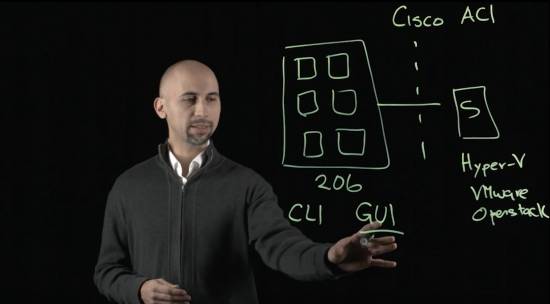
Para información más detallada, chequea esta explicación super fácil de entender (te juro que lo vi con mi papá, y hasta él lo entendió y quedó sorprendido):

Screen Shot 2017-01-11 at 6.43.31 PM

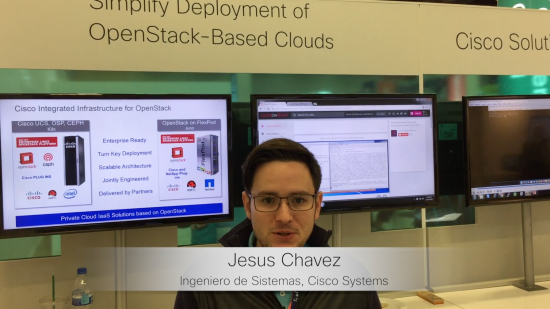
Simplificando Despliegue de Nubes a Base de OpenStack:

Provisionar maquinas virtuales en segundos! OpenStack es una plataforma de opensource (“código abierto”) para nubes privadas, publicas e hibridas. Esta tecnologia te permite tener mas control de sus recursos y reducir costos. Aprende como:

Screen Shot 2017-01-11 at 3.20.08 PM

Cisco Business Cloud Advisor (BCA):

¿Estas usando la tecnologia nube efectivamente? 6159 usuarios de 31 paises han participado en esta encuesta para comprender mejor en donde estan en su viaje hacia la nube. Tu tambien puedes tomar esta encuenta GRATIS y optener un resumen personalidado para ayudar a tu organization a tomar decisiones estratégicas.

Screen Shot 2017-01-11 at 3.21.22 PM

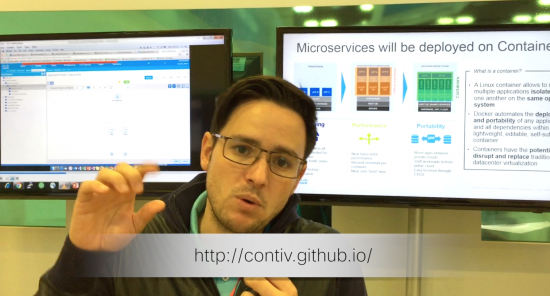
Contiv: Soluciones de Cisco para Contenedores de Software

Muchos todavia creen que las funciones primarias de los containers son para optimizar recursos en comparacion a las maquinas virtuales (VM). Es cierto que los containers aumentan la escala hasta 10x mas, reduce la huella (memoria, CPU, disco duro), y permite crear y destruir mas rapidamente. Mientras todos estos beneficios con ciertos, containers trae beneficios mas alla de eso. Aprende como:

Screen Shot 2017-01-11 at 3.23.36 PM

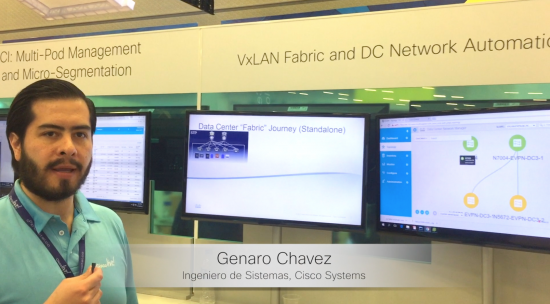
Automatizacion de Redes de Data Center y VXLAN

Ya sabemos bien de las ventajas de VXLAN, pero el Cisco Data Center Network Manager (DCNM) de Cisco hace que esta aplicación sea aún más sencilla, rápida y escalable. DCNM te permite administrar gran numero de dispositivos y te provee capabilidades de administración y automatización listo para usar. Ve este breve demo con Genaro Chavez:

Screen Shot 2017-01-11 at 3.24.39 PM

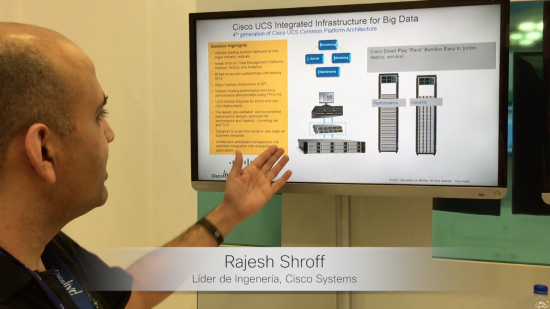
Cisco UCS Para Analítica de Big Data:

Simplifica la implementacion en la nube abierta, aborda aplicaciones usando graficos intensivos, aprovecha el valor oculto en sus datos. Vea esta breve demostración:

Screen Shot 2017-01-11 at 3.30.26 PM

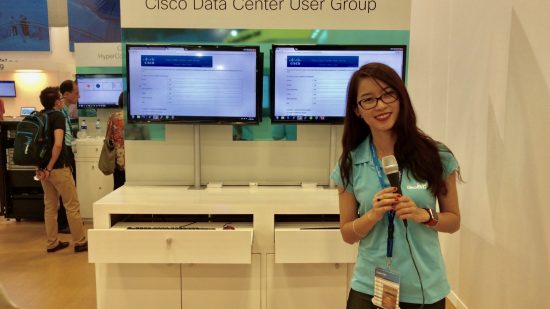
Aparte de tecnología, claro que fue todo un gusto mío conocer gente super interesante en el evento mismo y en Mandala. Mi experiencia fue muy memorable gracias a ustedes! Espero verlos de nuevo en los próximos eventos!

Para los que se acuerdan de tu chinita que habla español, escríbeme o  sígueme en Twitter para mantenernos en contacto: @EmmelineWong
FullSizeRender.jpg-11


Gracias a Carlos Huescas por editar este artículo.

Authors

Emmeline Wong

Product Marketing Specialist

Data Center Marketing