Shamoon is a type of destructive malware that has been previously associated with attacks against the Saudi Arabian energy sector we’ve been tracking since 2012. We’ve observed that a variant of Shamoon, identified as Shamoon 2, has recently been used against several compromised organizations and institutions. Talos is aware of the recent increase in Shamoon 2 activity and has responded to ensure our customers are protected. Additionally, Talos will continue to monitor for new developments to ensure our customers remain protected.
Propagation
Shamoon 2 has been observed targeting very specific organizations and propagating within a network via network enumeration and the use of stolen credentials. Some of the credentials are organization specific from individuals or shared accounts. Other credentials are the default accounts of products used by the targeted customers.
December 2016 will go into history as the month when the first “ Open RPD” Remote PHY interop was completed at Cablelabs®. The event, hosted by Cablelabs® took place in Denver the week of the 5th of December. Multiple vendors participated, many of them member of the Open-RPD forum.
What was Open-RPD again?
Open-RPD is an Open Source software project for the Remote PHY Device (RPD) labeled “Open-RPD” originally developed by Cisco and contributed to the open source environment hosted at CableLabs®. The RPD is a physical layer converter commonly located in an optical node, or shelf, in the cable network. The “Open RPD” program is open to vendors, silicon manufacturers and MSO’s alike who share a common goal to have RPD software common across all vendors to ensure interoperability.
Remote PHY is a Cablelabs® standard (CM-SP-R-PHY, latest version IO5) that we have talked about in previous blogs:
Why is this interop testing important? Well, getting vendors together for the first time to validate if their product implementation is allowing interoperability is the first step to get towards commercial products. With the Remote PHY interop testing at Cablelabs® the vendor community supporting Remote PHY have now proven that Remote PHY has become a productized standard with an Ecosystem of many vendors. It actually was specifically interesting to see the success of the Open-RPD community, members utilizing the open source code of Open-RPD achieved rapid interoperability with some of the RPD’s working with the CMTS Core right out of the box. Already on the first day the Open-RPD vendors were able to get cable modems on-line with DOCSIS® 3.0 bonding and passing traffic.
I did want to give credit to the participating Open-RPD vendors and thank them for the participation and their collaboration within the Open-RPD forum, this is a group effort and the first open source program for DOCSIS® envisioned to enable the market with Remote PHY and to improve interoperability between different vendors.
As for the interop testing itself, the Open-RPD members that have participated were;
Cisco, we provided an Open-RPD CMTS core and RPD
Vector, participated with an RPD
Applied Optoelectronics, participated with an RPD
Intel/Capacicom, participated with an RPD
Our appreciation also goes out to Cablelabs® for hosting and organizing this event.
Companies will disrupt themselves to survive the digital age
To survive relentless market disruptions ignited by the digital economy, established companies in every industry sector will have to massively disrupt their own cultures and employees. In-company “activists” will provoke their own innovation disruptions companywide. This means companies will increasingly return to their startup roots by reviving an entrepreneurial environment of urgency, flexibility, agility and bold creativity.
2. The pace of change will force businesses to create game-changing solutions rather than incremental improvements
Mass digitization, fueled by Internet of Things technology, is the most powerful market transition since the Internet itself, and pundits often hail it as the Fourth Industrial Revolution. New business models can pop up like Pokemon GO from anywhere without warning, trail blaze new markets and dismantle household brands in the process. The digital economy is forcing big companies to rapidly reinvent themselves, and tap into new reservoirs of their own talent to unleash that next billion-dollar idea. Slow, incremental improvements to core solutions or services are a sure-fire path to the dinosaur wasteland.
3. Smart companies will recognize that innovation can come from anywhere
Industry and Cisco experience show that innovation can come from anywhere, across all job functions, titles, experiences, and geographies. That’s why the most innovative companies will scout across the full landscape of their own workforces to unearth leapfrog ideas, whether employees are in Human Resources, Operations, Finance, Marketing, Engineering, or wherever.
4. Silicon Valley startup traits will be infused into corporate workforces
Big, successful companies inevitably become more process-driven, bureaucratic and slow to change their strategic direction. The most progressive of these institutions, however, will try to ride the digital wave the same way entrepreneurs do in a startup. They will empower employees to form their own venture teams around an idea, democratize decision-making, encourage experimentation, celebrate lessons learned from failure, and show idea-makers how to pitch their proposals for development funding.
5. Successful companies will adapt the best of both worlds by balancing the tension between startup and big-enterprise cultures
In “Collective Disruption,” Michael Docherty points out there will always be a struggle, or polarity, between big-company discipline and risk aversion versus entrepreneurial speed and risk taking. However, traditional companies will need to take a “best of both worlds” approach when adapting start-up traits to their own cultures. One size doesn’t fit all, so large organizations must balance the two mindsets for the best fit to their existing culture and future innovation goals. Companies must disrupt, but not destroy, the cultures that got them this far.
6. Coaches and mentors will become more important than traditional managers
Experienced mentors and coaches will be more important than traditional managers in guiding innovative teams. Traditional managers often slow innovation by focusing on hierarchy, top-down decision making, rigid deadlines, and short-term outcomes. Coaches, however, accelerate development by focusing on collaboration, show the way forward, and clearing political or technical roadblocks. Then, like a well-oiled sports team where each player has a vital role, the turns it over to the team on the playing field.
7. Organizations will encourage cross-functional innovation teams
Cisco experience and research shows that inclusive and diverse teams are the second biggest factor—behind a digital infrastructure—in capturing the most value from the Internet of Things. Nothing profound will come from engineers working with other engineers unless they involve multiple functions to round out the solution. To create true breakthroughs, you need to eliminate business siloes, and form cross-functional teams where each member contributes value because of different skills, backgrounds, perspectives and approaches.
8. Companies will see the rise of the internal entrepreneur
A growing number of companies will nourish lean startup methodologies to turn employees into entrepreneurs. For example, Cisco’s ongoing Innovate Everywhere Challenge encourages all employees to tap into their “inner entrepreneur” by providing ways to discover their true passions, purposes, and motivations. All employees have quick, easy access to startup resources, clear steps to form and co-develop ventures, lean startup methodologies (ideation, validation, funding, development), and an open collaboration platform to find and connect with like-minded entrepreneurs.
9. The rise of innovation ecosystem and co-innovation
The opportunities presented by digitization and Internet of Things technologies are too big and complex for any single company to capture alone. Partner ecosystems of developers, startups, entrepreneurs, academia, government and others will grow exponentially around the major technology platforms. Solution providers, along with their partner ecosystems and customers, will increasingly co-innovate market-changers in more transparent and collaborative environments from conception to completion. We will see the growth of global innovation centers where platform-driven ecosystems can come together to co-innovate.
10. Internal and external innovation will converge
Companies that cultivate innovation inside and outside their four walls will begin to cross-pollinate programs, strategies and methodologies. Innovative ideas and approaches from employees or from customers and partners will be shared to synergize creativity around mutual goals. Forward-leaning companies will encourage their in house innovators to study and adapt outside startup models, as well as reach out to external coaches, customers and partners to get fresh perspectives, validate and incubate their ideas.
On a personal note, I am most passionate about disruptive innovation that leads to new business models in companies of all sizes and types. Don’t hesitate to contact me if you have questions, get stuck, or need an innovation therapist:
This is the conversation you might encounter when you ask a Cisco employee about their job. Why do they love it so much?
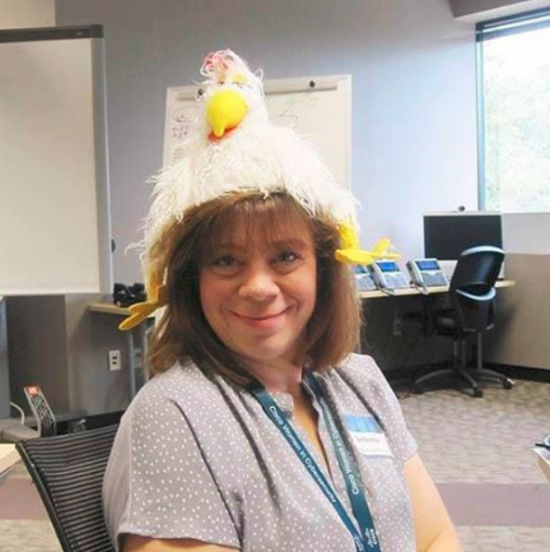
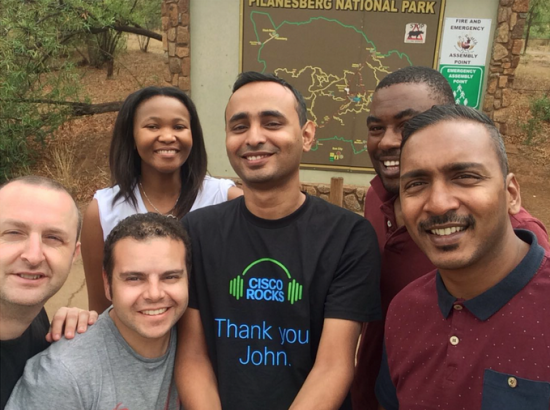
Employees won’t just tell you, they’ll show you. If you follow the #WeAreCisco hashtag on Twitter or Instagram, you’ll see photos and social media posts where employees talk about the awesome culture at Cisco. Especially if you also look for the #LoveWhereYouWork hashtag.
In 2016, the @WeAreCisco team launched a contest to encourage more posts like this, and give employees another reason to love where they work. Over 1000 entries came during the month of love – February – and the themes became clear.
Why do employees love where they work? It’s the people – our teams are awesome and our colleagues are our friends. It’s the culture – where you can fail, but learn, and then succeeed. It’s the focus on giving back. And yes, it’s the cupcakes and cookies and pizza and, well, Cisconians like food. 🙂
Here are a few of last year’s photos, and you can see a more robust version by clicking through to the Storify with all of the finalists and winners.
The hashtag #LoveWhereYouWork carried on long after the contest ended, because it felt good to share Cisco’s culture with our networks.
With a new year and a new focus on Cisco’s People Deal – that “agreement” between Cisco and employees on what the company expects of them and what they can expect of Cisco – employees are once again being asked to share why they love being a part of the #WeAreCisco tribe, and why they #LoveWhereYouWork.
This year’s contest will be bigger, better, more fun (if that’s possible) with more entries from more global sites.
For employees reading this blog, you can click this link for all the rules, directions and incentives. (Internal link only)
For those of you that are reading this post and wondering what all the hub-bub is about when it comes to Cisco’s culture, now’s your chance to see for yourself directly from the networks of Cisconians. Follow along with the #WeAreCisco and #LoveWhereYouWork hashtags to see all the fun photo goodness. Winners will be announced here on this blog in March, and you’ll be able to see a few check-ins during the month of February to see how the contest is shaping up.
If you’d like to join in the Cisco fun, you can check out all of our openings here.
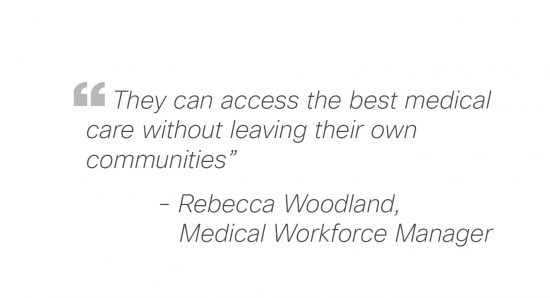
The practical reality of regional and remote communities in Australia is that they have been consistently disadvantaged in accessing specialist care. Getting access to specialised clinicians, whether it has been for emergence room consultation, acute patient care or post-operative support has often involved delays and inconvenience for both patients and clinicians. This translates to both a quality of care and an important productivity issue for small regional hospitals.
Bairnsdale hospital, servicing a small regional community in south east Victoria has taken advantage of the significant advances in ease of use and quality of telehealth systems, they have implemented a comprehensive Cisco telehealth environment within their facility. The capability has enabled patients and staff to seamlessly communicate with each other on devices appropriate to the task that is required. The systems link up room based and mobile dedicated telehealth systems with tablet and laptop technologies enabling patients to be engaged while in a wide variety of clinical and personal environments.
This capability allows Bairnsdale Health to reach out and engage with clinical expertise from across the state to fill the urgent gaps in the timely and cost effective delivery of high quality care to their community. Watch the video below to see this solution in action.
https://youtu.be/oLuXH4ouZ9I
See more case studies on our remote care and collaboration solutions here.
The few last days, a malware sample named EyePyramid has received considerable attention, especially in Italy. The Italian police have arrested two suspects and also published a preliminary report of the investigation. This malware is notable due to the targeting of Italian celebrities and politicians.
We conducted our analysis on one of the first public samples attributed to EyePyramid. Sources in the security community have described this malware campaign as unsophisticated, and the malware samples involved as uninteresting. However Talos was intrigued to determine just how EyePyramid managed to stay hidden under-the-radar for years.
The world is being transformed by technology. Almost everything we see, touch, and do is being transformed by technology.
Government isn’t immune from technologically driven change. From intelligent street lights to traffic data gathered through Internet of Things (IoT) devices to using big data and analytics to develop and deploy social services, government is being transformed. Beyond the technology, how government operates and engages with citizens, constituents, businesses, and other government organizations is being changed.
To better understand the digital transformation of government, the following questions were posed by Cisco to Alan Webber, Research Director, IDC Government Insights, on behalf of Cisco’s customers.
Check out the recap infographic below, or click here to read the full set of questions.
Cisco recently announced our exciting new Cisco Spark Board. And, many customers are eager to ignite the meeting experience for their employees. Extending Cisco Spark into your corporate team rooms is the perfect way to tie your hardware and software capabilities together to boost team collaboration at any time in any place.
By itself, Cisco Spark Board is capable of revolutionizing the way your employees work together. However, in order to jump-start the full power of Cisco Spark Board, you have to do two things.
First, you need to implement Cisco Spark Board endpoints in your corporate team rooms and other physical locations where your teams meet to make business happen. Fortunately, it is simple and easy to install with just a power cord and a wireless network. It’s that simple. However, for large enterprises looking to deploy at scale and across the globe, installing new endpoints in dozens or even hundreds of conference rooms can be a daunting task—one that you probably did not anticipate. After all, who could have predicted Cisco would provide such a huge leap in enterprise meeting room collaboration?
To realize the full value of your investment you need to ensure the technology works seamlessly and at scale within your existing enterprise infrastructure. That’s an area where Cisco Advanced Services can really help configure, integrate, and automate your Cisco Spark deployment.
Second, once you have deployed Cisco Spark Board successfully, you should map out an internal launch plan. Here are two simple guidelines to follow to ensure your employees know how to get the most out of it.
Make sure everyone is set to launch. Cisco Spark Board is very simple and easy to use. Just ensure your employees’ laptops, pads and mobile phones are equipped with Spark and that they know how to invite your customers and partners to collaborate.
Be proactive. Help your teams share best practices so you can spread Cisco Spark successes like wildfire. Your employees need the right awareness, training, and process improvements. And, you’ll want to leverage usage metrics to measure and broaden adoption. Cisco Advanced Services can help your momentum here too. Through targeted adoption and pilot programs, including business process design and custom bot and integration development, we can help deliver value based on your business imperatives.
Quick and effective deployment at scale. Robust end-user adoption. Getting these two things right is key and can dramatically reduce the time it takes you to realize the full value from your Cisco Spark Board investment.
Cisco CSR submitted its most recent video, “Leveraging Innovation to Change the World for Good,” and is one of 16 “large companies” participating in this year’s contest. Open to the general public, voting takes place from January 17 to February 17 and will determine three finalists from each of the three categories.
As an employee, industry leader, or fan of Cisco’s corporate social responsibility work, you can vote for the video here:
For the past 20 years, we’ve applied our technology and expertise to accelerate global problem solving and positively impact people, society, and the planet. In the digital economy, global problem solvers can take advantage of technology to create solutions that address our world’s largest challenges, including climate change, poverty, and hunger.
Our video, narrated by Cisco CEO Chuck Robbins and Corporate Affairs SVP Tae Yoo, demonstrates the power of digitization to advance positive social and environmental change. It shows that everyone has a role to play and highlights Cisco’s ambitious CSR goal to positively impact 1 billion people by 2025.
Through examples of Cisco’s partnerships with non-profits and social enterprises, the video illustrates the inspiring journey of how Cisco is empowering global problem solvers across the globe. It showcases Cisco’s belief that impact multiplies and innovative solutions arise when passionate people and transformative technology combine to solve a problem.
Following the public voting, a panel of industry experts will review the nine finalists as selected by voters. The panel will select one winner from each of the three company-size categories as well as the Best in Show winner. Judging is based on content and storytelling, production quality, and alignment with the participating company’s overall corporate citizenship objectives.




 December 2016 will go into history as the month when the first “ Open RPD” Remote PHY interop was completed at Cablelabs®. The event, hosted by Cablelabs® took place in Denver the week of the 5th of December. Multiple vendors participated, many of them member of the Open-RPD forum.


 To survive relentless market disruptions ignited by the digital economy, established companies in every industry sector will have to massively disrupt their own cultures and employees. In-company “activists” will provoke their own innovation disruptions companywide. This means companies will increasingly return to their startup roots by reviving an entrepreneurial environment of urgency, flexibility, agility and bold creativity.
 Mass digitization, fueled by Internet of Things technology, is the most powerful market transition since the Internet itself, and pundits often hail it as the Fourth Industrial Revolution. New business models can pop up like Pokemon GO from anywhere without warning, trail blaze new markets and dismantle household brands in the process. The digital economy is forcing big companies to rapidly reinvent themselves, and tap into new reservoirs of their own talent to unleash that next billion-dollar idea. Slow, incremental improvements to core solutions or services are a sure-fire path to the dinosaur wasteland.
 Industry and Cisco experience show that innovation can come from anywhere, across all job functions, titles, experiences, and geographies. That’s why the most innovative companies will scout across the full landscape of their own workforces to unearth leapfrog ideas, whether employees are in Human Resources, Operations, Finance, Marketing, Engineering, or wherever.
 Big, successful companies inevitably become more process-driven, bureaucratic and slow to change their strategic direction. The most progressive of these institutions, however, will try to ride the digital wave the same way entrepreneurs do in a startup. They will empower employees to form their own venture teams around an idea, democratize decision-making, encourage experimentation, celebrate lessons learned from failure, and show idea-makers how to pitch their proposals for development funding.
 In “Collective Disruption,” Michael Docherty points out there will always be a struggle, or polarity, between big-company discipline and risk aversion versus entrepreneurial speed and risk taking. However, traditional companies will need to take a “best of both worlds” approach when adapting start-up traits to their own cultures. One size doesn’t fit all, so large organizations must balance the two mindsets for the best fit to their existing culture and future innovation goals. Companies must disrupt, but not destroy, the cultures that got them this far.
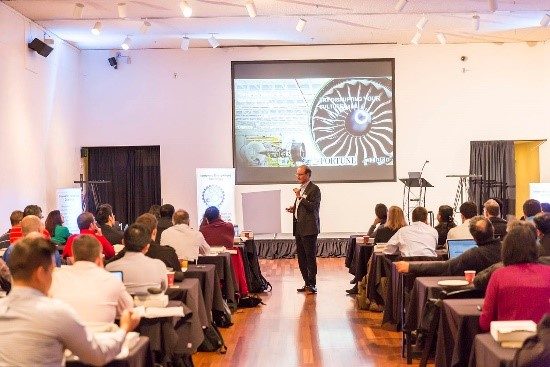 Experienced mentors and coaches will be more important than traditional managers in guiding innovative teams. Traditional managers often slow innovation by focusing on hierarchy, top-down decision making, rigid deadlines, and short-term outcomes. Coaches, however, accelerate development by focusing on collaboration, show the way forward, and clearing political or technical roadblocks. Then, like a well-oiled sports team where each player has a vital role, the turns it over to the team on the playing field.
 Cisco experience and research shows that inclusive and diverse teams are the second biggest factor—behind a digital infrastructure—in capturing the most value from the Internet of Things. Nothing profound will come from engineers working with other engineers unless they involve multiple functions to round out the solution. To create true breakthroughs, you need to eliminate business siloes, and form cross-functional teams where each member contributes value because of different skills, backgrounds, perspectives and approaches.
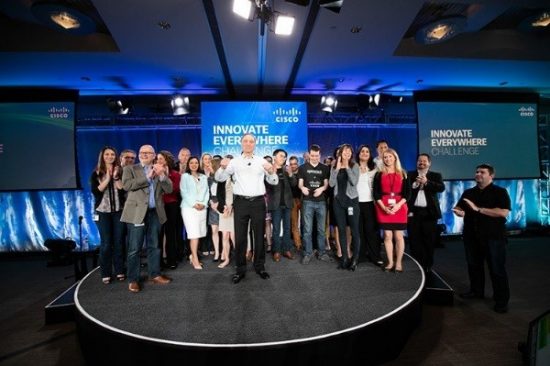 A growing number of companies will nourish lean startup methodologies to turn employees into entrepreneurs. For example, Cisco’s ongoing
  The opportunities presented by digitization and Internet of Things technologies are too big and complex for any single company to capture alone. Partner ecosystems of developers, startups, entrepreneurs, academia, government and others will grow exponentially around the major technology platforms. Solution providers, along with their partner ecosystems and customers, will increasingly co-innovate market-changers in more transparent and collaborative environments from conception to completion. We will see the growth of global
  Companies that cultivate innovation inside and outside their four walls will begin to cross-pollinate programs, strategies and methodologies. Innovative ideas and approaches from employees or from customers and partners will be shared to synergize creativity around mutual goals. Forward-leaning companies will encourage their in house innovators to study and adapt outside startup models, as well as reach out to external coaches, customers and partners to get fresh perspectives, validate and incubate their ideas.