Desde la introducción de Cisco Application Centric Infrastructure (ACI) por parte de Cisco al mercado, este ha recibido reconocimiento de analistas y profesionales de tecnología informática (TI). Entre un gran numero de galardones recibidos, fue eligido por IT Pros como la mejor solución de redes definidas por software (SDN). Además, su creciente ecosistema cuenta con mas de 65 integraciones con otros proveedores de tecnología. El mercado también lo demuestra. ACI hoy en día ha recibido preferencia de 2700+ clientes.
Para comenzar, por simplemente ser una solución brindado por una de las companias más grandes y sofisticadas en TI, Cisco tiene robusta cantidad de recursos para cuidar de todas las necesitades de sus clientes. Pero,
Existe 5 razones principlaes por las cuales Cisco ACI ha ganado la preferencia del público:
ACI brinda capabilidades automatización y solución completa.
Esto es gracias al modelo de representación de aplicaciones de ACI, que es la base principal de la automatización. Este modelo presenta una abstracción de las aplicaciones. En otras palabras, en vez de preocuparte en como configurar la red, solo tienes que determinar como quieres que las aplicaciones se comportan y funcionan, y ACI se encarga del resto. Porque si te preguntas, qué es lo más importante en un data center? Son las aplicaciones! Todo lo demás existe solo para apoyar a las funciones de las aplicaciones. De esta misma manera, ACI ayuda a reducir errores y acelera los despliegues de las aplicaciones de semanas a segundos.
ACI es una inversion inteligente
En este articulo de Network World, el autor ha colectado los resultados de varios clientes que han utilizado ACI. Por ejemplo, Symantec ha obtenido $145 millones en beneficios de negocios, un ciclo de desarrollo de aplicaciones que es 87% más rápido, y operaciones de red 83% más eficientes.
ACI simplifica el despliegue, administración y resolución de aplicaciónes.
ACI integra el controlador, la infraestructura, aplicaciones o instrumentos que tu prefieras, sea instrumentos de orquestación, o dispositivos de L4-L7. Esta manera, ACI te permite operar SDN fácilmente en cualquier ambiente de data center
ACI presenta flexibilidad a la hora de integrar con otros componentes y servicios:
Tienes accesso a un ecosistema de 65 socios, dándonte un espectro inmenso de funcionalidad, ya que ACI es diseñada como una architectura abierta. Esto significa que puedes aprovechar y extender tus inversiones y tecnologías existentes. Por eso, con ACI, tienes vasta cantidad de opciones de interoperabilidad, que te ayuda a reducir costos mientras que tú innovas.
ACI brinda una solución comprensiva e integrada sin importar el tipo de punto final (end-point)
El modelo de ACI apoya puntos finales que son heterogeneas, físicas o virtuales. Esto significa que no importa que política aplicas, ella funcionaria en los servidores físicas o virtuales en cualquier tipo de hipervisor o containers.
Para aprender de ACI con mayor detalle, a continuación te presentamos una serie de videos sobre el tema:
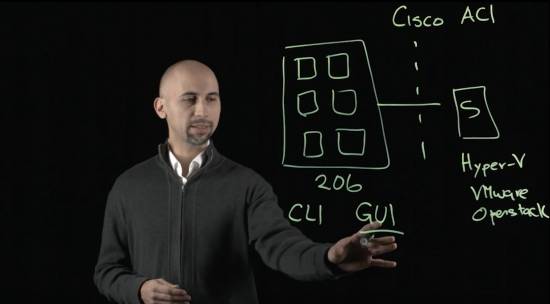
En este video, el experto Carlos Campos Torres, Arquitecto de soluciones para centros de datos para la región de Latinoamérica, te explica cómo incrementar la agilidad de tu negocio con la nueva red de Cisco.
Para saber cómo provisionar y operar redes físicas y virtuales de manera consistente y segura en cuestión de minutos. Haz click aquí para mostrarte cómo hacerlo fácilmente:
This post authored by David Maynor & Paul Rascagneres with the contribution of Alex McDonnell and Matthew Molyett
Overview
Talos has identified a malicious Microsoft Word document with several unusual features and an advanced workflow, performing reconnaissance on the targeted system to avoid sandbox detection and virtual analysis, as well as exploitation from a non-embedded Flash payload. This document targeted NATO members in a campaign during the Christmas and New Year holiday. Due to the file name, Talos researchers assume that the document targeted NATO members governments. This attack is also notable because the payload was swapped out with a large amount of junk data which was designed to create resource issues for some simplistic security devices.
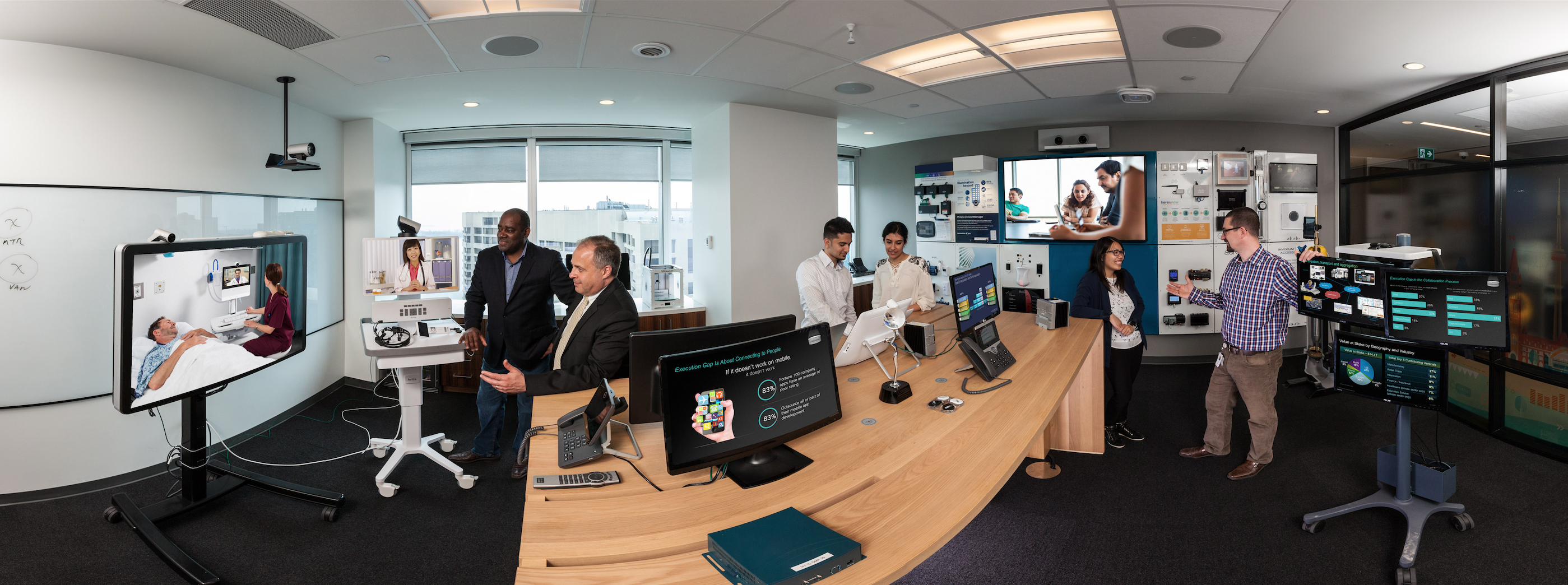
There has never been a better time to innovate together, and a tour of the Toronto Innovation Centre will prove just that. Currently the only Cisco Innovation Centre in North America out of the nine across the world, we have a lot of opportunities around us. We are showcasing what is possible with digital transformation and the IoT (Internet of Things). We are making even more possible by investing and partnering with startups, accelerators, and universities to build innovative solutions. Right now through early April, our healthcare solutions and partnerships are being showcased in a custom-built healthcare space, reminiscent of various clinical areas one would find in hospitals and out in the community.
To demonstrate our innovations in healthcare, we are bringing it all together with illustrations at multiple points of the care continuum. Three different vignettes share a patient’s story at three different parts of their healthcare journey.
Let us start in the hospital room of a typical patient. Beside the bed, there is a swing-arm or footwall monitor, or perhaps a tablet using the Cisco Patient Connect interface, a comprehensive platform for bedside infotainment and patient interaction. While the patient is resting in their bed, they can call their friends and family using HD video embedded in Patient Connect. This is also extremely advantageous with discharge planning so that family can be ‘virtually present’ and participate in all the necessary steps to discharge and recovery, without necessarily being physically present. Doctors and nurses can ‘prescribe’ videos to enhance patient education around new medications, body mechanics post-surgery, learning how to live with a new condition and more. With Cisco Patient Connect, educational videos can be available on demand right at the patient’s fingertips, and the care team can check in on the patient’s viewing progress on assigned videos. Our platform also empowers the patient by displaying their progress reports, care team names and pictures, as well as their daily schedule – all at the push of a button, eliminating ‘surprise’ visits from phlebotomy and physiotherapy!
And what about the bed itself? With our partnership with Hill-Rom, a smart bed is enabling enhanced care and physical security. The bed measures heart and respiratory rates, weighs the patient, and helps prevent falls by sounding an alarm when a falls-risk patient tries to get out of bed. The cost savings for falls reductions is in the millions of dollars and more importantly presents reduced health risks to patients who are now at lower risk for a fall.
Let us move to another crucial asset for care teams – the virtual patient observation medical cart. Hospitals have been looking for more cost-effective solutions to solve patient sitter costs while keeping patients at risk for elopement, falls, or patients who need to be closely watched such as neonates, safe. Dimension Data has developed the MONA [Mobile Observation Nursing Assistant] cart using much of Cisco’s technologies; these carts can be used to watch several patients at once by one patient sitter, all the while allowing for two-way communication between the sitter and patient. The top-mounted security camera enables pan-tilt-zoom for the sitter, and the DX70 allows for HD video interaction between the sitter and patient should the need arise. Powering it all is a 13 hour battery pack and a wireless access point on a four-caster pole, making the MONA cart truly mobile. The cart can be placed at the bedside to continually watch the patient, allowing one sitter to monitor multiple patients at once. Not only does this help the hospital realize dramatic cost savings and powerful falls prevention metrics, but it also streamlines their workflows by meeting the patients’ needs more quickly and effectively – for example, requests for blanketscan be routedto the appropriate care team member, enabling the team to practice at the top of their scope.
Let us take a step back from the hospital, and head into the office of a private practice. Our DX80, an all in one desktop collaboration tool with built in HD video, is sitting on the desk with diagnostic peripherals. With a remote care environment like this one, distance is no barrier and healthcare has no boundaries. The remote physician can consult with patients 5 or 5,000 kilometres away without a loss of quality, and without travel costs and time lost due to travel. Clinicians are able to see more patients and patients are able to access high quality care from anywhere, and on any device. The DX80 could not only be sitting on a physician’s desk, but also in a community health centre, a remote clinic, or even a patient’s home.
This is just a snapshot of what is possible with digital transformation and IoT in the healthcare industry. Are you going to visit the Toronto Innovation Centre to see it for yourself?
There’s never been a better time to empower healthcare innovation. #NeverBetter
“Today Cisco announced in special keynote Cisco Spark Board with All-in-one Device for Team Collaboration in the Meeting Room. All-in-one Capacitive multi-touch with 4k Display gives really an impressive experience. All integrated with Cisco Spark Applications for Desktop and Apple IOS devices as well.” (Read more..)
“Introducing the “Spark Board” a 55″ or 70″ device that you mount to the wall and do everything with – I mean everything. No more extra stuff, and everything works in a clean manner. This is a “huge iPad” type device for meeting rooms – and it is as intuitive to use – as a typical mobile tablet. No – it is easier than that. White boarding, video conferencing, screen sharing, calling, collaborating, it is all here. One device, simple design and dead simple interface.” (Read more..)
“That revolutionary experience, of course, is the Cisco Spark Board. Part whiteboard, part video endpoint, part large screen display, the Spark Board isn’t just going to change the way you meet, it’s going to change the way you work. The idea behind the Spark Board is simple – remove the barriers to effective communication by making meeting and collaboration easy. The minds at Cisco, and Rowan in particular, have correctly observed that there is tremendous room for improvement in the average meeting experience. Although there has been great penetration in the video conferencing space over the last couple of years, there remain a very large number of conference spaces in the world that never made the cut for infrastructure-intensive and expensive video systems. Worse still are the rooms that were over-“improved” with so many different complicated point solutions that only a single individual knows how to get a meeting started and pain is inflicted on all new comers. The Spark Board aims to simplify your meetings by eliminating conference room sprawl and replacing it with a single, intelligent Spark powered device.” (Read more..)
Creating customer loyalty is a race against time. It’s been said that after 90 days a business only has a 10% chance of making the customer loyal. Therefore, once that clock starts ticking, value realization must occur quickly or a high probability exists that you will lose the customer.
Gartner says that today, 89% of companies expect to compete mostly on the basis of customer experience, versus 36% four years ago. We see this in our personal lives as consumers and it is now showing up in our work lives. Many companies realize that driving customer health and loyalty is all about managing the entire lifecycle of customer experiences from onboarding to renewal.
Adoption as the Antidote for Customer Health
Just like your organization, Cisco is on its own journey to transformation. As we move from a sales strategy heavy on landing new logos or franchises in existing customers, to a full lifecycle approach, the focus has shifted to maximizing product utilization and expanding the footprint within the customer. Adoption services should be “job one” to help the customer get the value out of what they purchased. Implicit in any adoption practice is a significant opportunity to drive customer health and grow the relationship. The rewards of a lifecycle approach are undeniable: they include dramatic reductions in the cost to serve the customer and increases in recurring revenue.
How Do You Measure Success?
Data and analytics are the catalysts for building customer loyalty and understanding customer health. When you pave the way to understand what clients are experiencing, you can help them achieve their business goals and the outcomes they expect and deserve. As we shift strategy to focus on the lifecycle of customer experiences beyond the initial sale, our metrics have to change as well. This means that many of the old measures of bookings, revenue and customer satisfaction—often referred to as rear-view metrics—don’t work any more. These metrics tell you what’s happened in the past.
Instead, to get a good read on customer health and the likelihood of future renewal or additional wallet share, metrics should be built around recognizing what the customer will do in the future. This requires ongoing analysis of customer health and consistent monitoring of net promoter scores and other market-driven measures to understand what will be said about your company when you’re not there and if the customer will recommend you to others. These forward-looking or windshield metrics will also reveal future predictive buying decisions that your customers will make as a result of your relationship with them and will fuel effective customer engagement that will capture more expansion opportunities.
On-Demand Webinar: Delivering on the Promise of Customer Health
Cisco is committed to helping you deliver consistent customer engagement and the experiences customers want. The goal is simple: drive value realization and grow the relationship over time. Visit SuccessHub to learn more about how to digitize, automate and scale your own customer engagement practice with a focus on improving customer health.
One of the best things about working in the tech industry is the passion we feel about what we do. We create products that change the world and change how business is done. We tackle challenging problems, we make incredible breakthroughs, we market our new products, and we move on. It never stops. There is always another challenge, another breakthrough, another great thing you didn’t even know you needed that is going to change your life (and your company) for the better.
The problem with this however is that because we’re moving at such a fast pace, we sometimes forget that those outside our industry are on a different timeline and see things through a different lens.
Take cloud for instance. There are people in our industry that have been working on it in some form or another for ten years now—easily. Some developed the software that enabled it, others worked on the hardware that supported it, and still others provided the consultative services to help customers pull it together.
At this point it’s an established technology. For us anyway. Old news. We’ve moved on to the next round of challenges: enabling different PaaS layers to work on top of our clouds, integrating different storage solutions to work with them, making the most effective use of containers, and managing multi-cloud environments. We rarely talk about “The Benefits of the Cloud” on a general level anymore, instead delving into very technical descriptions of the latest cloud advancements. Our marketing materials, our webinars, our speeches, and our websites all moved on—in spite of anecdotal information that suggested many of our customers weren’t even ready for cloud yet. Or if they were ready intellectually, weren’t ready organizationally.
I suspect that this is still the case.
So today I’m here to say that if you’re feeling like the Cloud train has already rushed out of the station without you, you are not alone, and you should have no reservations about hauling it right back to the platform.
What do I mean?
Speak frankly with your sales representatives. Put them to work for you. It’s not your job to listen to pitches about products that don’t solve your problems or that are too far ahead of your roadmap. It’s their job to listen to you and find the very best ways to help you make measurable improvements. So back the train up. Re-frame the relationship. Start by telling them exactly what your IT challenges are, and push them to sort it out in a holistic way that will deliver a solid, long-term ROI.
Maybe the solution they come back with will involve cloud—maybe it won’t. Either way, it’s on us to explain the technology and the benefits to you again and again until you are completely clear on what we’ve got to offer. If you like it, buy it. If you don’t—at the very least you’ve used your leverage as a potential customer to gain a great deal of knowledge about what cloud technology can do for you at this particular point in time.
Best of luck! Most of you already have Cisco account managers, but if you need help connecting with a cloud expert, please contact me directly at aamagasu@cisco.com, and I’ll be happy to put you in touch with one.
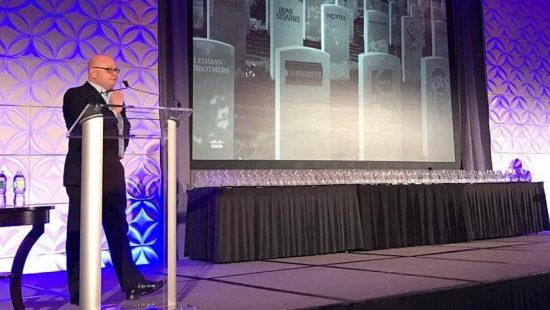
Last night, I had the honor of opening the 22nd annual Brandon Hall Group Excellence Awards ceremony in Palm Beach Gardens, Florida. I talked
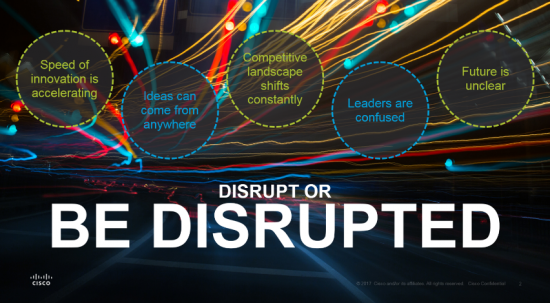
about “The Power of Disruptive Innovation to Ignite Talent” before hundreds of peers from companies who were there to be recognized for their innovative talent programs. I had the double honor of later accepting three Golds on behalf of my peers at Cisco for our first Innovate Everywhere Challenge last year companywide.
Alex Goryachev at Brandon Hall Group Excellence Awards ceremony this Thursday
We continue to re-innovate and advance our challenge in this—our second year. We’ve rolled out “My Innovation” – an even more personal, convenient and uniform way all our employees can engage with innovation. While we’re in the midst of My Innovation across all functions, I couldn’t help but emphasize yesterday that innovation is primarily driven by strong and passionate relationships. Relationships between individuals, teams, and organizations—both inside and outside the company.
In the spirit of such successful partnerships, I would like to share below an article that recently appeared in Adobe Conversations. Adobe Kickbox, and especially Adobe VP of Creativity Mark Randall contributed to the award-winning success of our inaugural innovation disruption at Cisco.
Creativity and innovation are critical skills to businesses today, but they must be developed, nurtured, and given space to emerge. So how do companies create a culture and process where employees both learn creativity, as well as feel empowered to experiment?
For Adobe, Cisco, and other companies, a big part of the answer is neatly packaged in Adobe Kickbox. It’s a flexible program that uses a self-contained kit to teach a proven innovation process. Anyone can use it to create and refine new ideas by working through six distinct levels with exercises, checklists, and scorecards. With a Kickbox, employees learn the process of innovation — generating ideas to solve problems they care about, turning the opportunity into a product or service, and then actually piloting the project with customers.
While the Kickbox program can be modified for different needs and company cultures, the chances of success are maximized by preserving the core drivers of the program:
Offer Kickbox to all employees in the organization — regardless of title or number of hours worked.
Employees should be free to conceive the idea that they pursue — projects dictated by management will have low employee engagement.
And, since testing a concept with end users requires money, employees should be given a small seed budget to spend testing their concept using whatever approaches they deem best. At Adobe, Kickbox teams are given a declining balance Visa card pre-loaded with $1,000. Any unused funds on expiration return to the innovation budget.
Previously, Adobe prototyped 12 to 24 products each year, but in the first year of Kickbox, Adobe tested nearly 1,000 ideas for less money than we used to spend on a dozen ideas.
Mark Randall, vice president of Creativity at Adobe says, “Kickbox has created a balance between telling employees what to do and employees being internally motivated to do the right things in alignment with the organization’s mission and customer’s needs.”
Word of our success with Kickbox spread, and other companies began asking about the methodology. When we saw how much interest there was in the Kickbox approach, we decided to open source Kickbox so any organization can adapt and deploy it for free.
“We wanted to share Kickbox instead of making it a trade secret because it really expresses our belief in the creative nature of people and how organizations can empower employees to make positive change in the world,” says Mark. Now companies in industries ranging from consumer goods, finance, aerospace, nonprofits, and educational institutions are benefiting from grassroots innovation.
Cisco Creates 1,110 New Ideas with the Help of Kickbox
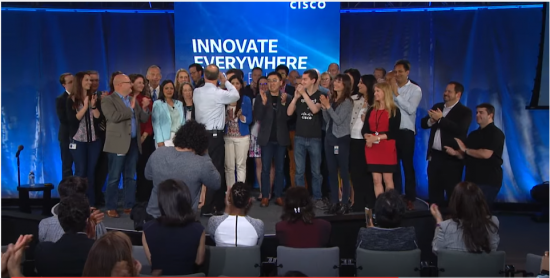
Last year’s winners from our Innovate Everywhere Challenge on the Live Finals
Cisco’s Innovate Everywhere Challenge has been one of the biggest success stories of programs inspired by Kickbox. The company adapted Kickbox to fit its culture and internal innovation program. Called Adventure Kits, these Kickbox-inspired tools enabled the company’s 72,000 employees to learn lean startup methodologies of ideation, investigation, funding and development.
As a result, nearly 50 percent of Cisco’s global workforce participated in the program, generating 1,100 new ideas. Alex Goryachev, senior director of Innovation Strategy & Programs in the Corporate Strategic Innovation Group at Cisco, says that the program was a natural fit for Cisco because the company understands the importance of innovation, as well as the fact that ideas can come from anywhere in the organization through collaborative effort. Instead of engineers innovating with other engineers, this challenge encouraged employees to team up across function, similar to what happens every day at a true startup.
“We wanted to focus on the innovator, not the innovation. Instead of saying ‘Let’s build a better, faster blinking router,’ we said ‘Let’s team up, disrupt and innovate solutions you are most passionate about building,’” says Alex.
Cisco employees reviewed, commented and voted on ideas from their peers throughout the Innovate Everywhere Challenge. Their votes helped influence which ideas were surfaced to the panel of industry experts who selected the three winning teams. Winning projects, which are now in various stages of piloting with customers, included: LifeChanger, which uses collaboration software to enable people with disabilities to work remotely; EVAR (Enterprise Virtual and Augmented Reality), a platform combining AR and VR with collaboration solutions to develop far-reaching apps in healthcare and other industries; and, Rainmaker, a deadline-driven, digital media logistics platform.
Alex says that there were a number of key factors that led to the program’s success at Cisco, which recently captured three 2016 Gold Excellence Awards from the Brandon Hall Group. Empowering employees to tap into their passions and experiment without judgement was perhaps the most important factor. “We created a grassroots movement, backed by executives all the way up to the CEO, which encouraged employees to take risks and learn from failure.
“Kickbox was a great companion in shaping our own innovation disruption,” says Alex. We helped people see the gaps and strengths in their particular skills, as well as showing the value of having diverse and inclusive teams,” says Alex. “During the program we discovered that mentors are more important than traditional managers. We built a community of mentors and coaches and a platform where teams can easily connect with them. The plan is to move forward, expand, and build on our network of both internal and external mentors to accelerate innovation across the entire company.”
Using Kickbox at Your Company
Ready to try Kickbox? Here are three tips to successfully implement the program:
Find support. It’s essential to have leadership support, and, if at all possible, have a peer at another team as a mentor. Someone who has been through incubating a new idea before can help you with your implementation. “I think it’s really important to build a support network of corporate entrepreneurs and executives across all business units when you are changing the culture around innovation,” says Alex.
Adapt Kickbox to your culture. The program will be a success if it feels authentic to your company, so it’s important to tailor Kickbox to fit into your culture. “Every company has a way it communicates with employees. Cisco kept the structure, but modified the language so that we talked about things in a way that would resonate with our employees.”
Keep the core principles. While adapting is an essential part of success, it is important to keep the core of the program. “If your program does not have the main elements [of being available to all employees, having no limits on projects pursued, and including a seed budget in advance of having ideas], then you just have some colored cards and a box, but you don’t have Kickbox. These elements reframe the context to ignite your employee base with the passion that makes magic happen,” says Mark.
It’s easy to talk about experimenting and taking risks, but through Kickbox, companies like Cisco are taking action. “A lot of companies talk about innovation, but we are actually giving people training, and resources while putting money where our mouth is. There is nothing worse than celebrating innovation but not doing anything about it,” says Alex. “If you are giving your employees a voice, then you have to empower them and help them to develop the best ideas.”
On a personal note, I am most passionate about disruptive innovation that leads to new business models in companies of all sizes and types. Don’t hesitate to contact me if you have questions, get stuck, or need an innovation therapist.
The way that people meet and collaborate changes constantly. Remote meetings are becoming ever more important. On January 24th, we announced our latest collaboration solutions, including the Cisco Spark Board. We’re ever-focused on solutions that change the game. We want to help you drive productivity, help teams be more effective, and enhance the value of meetings.
Attendees at the launch event queued to try the capabilities of the Cisco Spark Board. We received fantastic feedback. In particular, many highlighted the ability to capture and share ideas amongst a group using Cisco Spark.
Simplifying the Buying Experience
One very important aspect of a successful product is making it easy to buy.
IT managers need the ability to buy devices and enable their user communities with all the entitlements to use them easily and quickly. Technology deployment has undergone massive shifts from heavy premises-based investments to cloud. But you need the flexibility to choose the right path for your business. And you need simple and predictable pricing, as John Brigden describes in a recent blog post.
Tying Together Deployment Models Cisco Spark Flex Plan is a first-of-its-kind purchasing model. It offers both premises and cloud-based meeting, messaging, and call capabilities in a single subscription that includes technical support services.
The fact that the plan brings together cloud and on- premises simplifies transitioning users to cloud. You no longer need to time transitions to cloud services based on budget timetables. Users don’t need new licenses as they move to cloud. One subscription covers either deployment option. Specifically, it covers software, licensing, and technical support for Cisco Spark and Cisco WebEx, as well as Cisco Unified Communications Manager and Cisco Meeting Server services. Within that, there are two options:
Cisco Spark Flex Plan: Employee Countis a companywide subscription that provides a perfect way to enable every knowledge worker with message, meeting, and calling capabilities while including cloud and premises deployment options. —
Cisco Spark Flex Plan: Shared Meetings, a new option, helps users to start with video meetings. It offers a first step to the Employee Count option. It’s a pay-as-you-grow offer that adds the rich experience of Cisco Spark Advanced Meetings to conference room devices, including Cisco Spark Board.
Either option lets you choose from Cisco Spark cloud or on-premises services or a mix of the two.
Our goal is not only to develop solutions that help your business but make it easy for you to buy and implement those solutions – the way you need to do it.
As highlighted in IDC’s recent CloudView Survey post, almost 78% of organizations use some form of cloud today, yet only 3% of the companies IDC surveyed have optimized cloud strategies in place. The most mature cloud organizations are defined by their use of DevOps, hybrid and multi-provider clouds, micro-services, and containers, and they consume cloud-based Internet of Things (IoT) and security applications. In fact, greater cloud maturity leads to millions of dollars in annual benefits per cloud-based application. ($3M in additional revenue and $1M reduced costs.)
So, how can you get in on this action? Here are five reasons to assess your own organization’s Cloud Maturity:
#5. Ignore Individual point-products from Vendors, Think Holistically This seems counter-intuitive but, in reality, cloud technologies and the pace of innovation are growing exponentially. What worked well last year is often replaced by numerous mini improvements made by others running production workloads. The ability to start small, fail fast, learn and iterate is key. Managing application and infrastructure scalability issues are typically not the domain of any one individual person, product or vendor. The entire system needs to be architected for efficiency so, start from the ground up and think big.
#4. “Do… or Do Not! There is no try.” Brilliant advice from a 900 year old, Jedi master who didn’t write a single line of code in a galaxy far, far away. Thousands of hungry startups are eating your IT lunch (from a food truck) and disrupting the status-quo with dreams of creating the next big, must-have app. Their “Go Do” attitude is unfettered by legacy HW/SW issues, outdated IT policies and long alpha/beta development cycles. Failure is often a badge of honor. I witnessed this first-hand while helping many customers spin up and routinely destroy their cloud-native environments daily, if not hourly, at Rackspace. This entrepreneurial spirit is infectious and ultimately produces success. Is this the attitude in your IT shop?
#3. Public, Private, Hybrid, or Multi-Cloud? Yes. All of the above. Our IT industry has empowered so, many with easy access to raw compute power, open APIs, commoditized hardware and collective code libraries from successful developers to build a “perfect” cloud environment. But, that isn’t a business objective. Your cloud environment should enable your business to delight and service your customer in ways your competition can not. It only needs to be better than your competitors. But, what is the proper mix and how does one stitch all the pieces together? Who is your trusted advisor and are they still pitching products?
#2. Index Your Organization’s Cloud Maturity against Industry Peers. Step away from your daily IT grind to assess your own cloud maturity progress to date and how that compares with the IDC research participants. IDC defines five levels of cloud maturity as:
Ad Hoc. These organizations are beginning the process of increasing awareness of cloud technology options and are turning to cloud because of the immediacy of their need, often in an unauthorized manner.
Opportunistic. These organizations are experimenting with short-term improvements in access to IT resources through the cloud. They usually consider cloud for new solutions or isolated computing environments.
Repeatable. At this level, organizations are enabling more agile access to IT resources through standardization and implementation of best practices. They rely on self-service portals to access cloud services.
Managed. These organizations are implementing a consistent, enterprise-wide best practices approach to cloud and are orchestrating service delivery across an integrated set of resources.
Optimized. Optimized organizations are delivering innovative IT-enabled products and services from internal and external cloud providers and are driving business innovation through transparent access to IT capacity, based on the value to the business and transparent cost measures.
At what stage in cloud maturity is your organization? How does this level compare with your peers?
#1. Be the Disrupter A study from the John M. Olin School of Business at Washington University estimated that 40% of today’s Fortune 500 companies on the S&P 500 will no longer exist in 10 years. Those companies unable to keep pace with innovative technology advances in their industry will be tomorrow’s headline. The cloud assessment report provides a common baseline, a starting point, for having product agnostic conversations with your teams, trusted advisors and others who are tasked with modernizing your IT environments.
Remember, only 3% of the IDC survey participants claimed having an “Optimized” Cloud strategy in place. This simple fact confirms that, you are not alone in developing your own cloud transformation journey. You haven’t missed out on this wave of innovation.
Our goal at Cisco is to help our customers capitalize on these new opportunities as we enable their journey to the cloud and help them transition to a new IT model.












 “Today Cisco announced in special keynote Cisco Spark Board with All-in-one Device for Team Collaboration in the Meeting Room. All-in-one Capacitive multi-touch with 4k Display gives really an impressive experience. All integrated with Cisco Spark Applications for Desktop and Apple IOS devices as well.” (
 “Introducing the “Spark Board” a 55″ or 70″ device that you mount to the wall and do everything with – I mean everything. No more extra stuff, and everything works in a clean manner. This is a “huge iPad” type device for meeting rooms – and it is as intuitive to use – as a typical mobile tablet. No – it is easier than that. White boarding, video conferencing, screen sharing, calling, collaborating, it is all here. One device, simple design and dead simple interface.” (