
Avatar


This post comes from Cecilie Sindum, a co-founder of Orthodox Design. Based in Denmark, Orthodox Design is a homeware interior design studio for which she is also the creative director.

space


“If you wait for the perfect moment when all is safe and assured, it may never arrive. Mountains will not be climbed, races won or lasting happiness achieved.”
Maurice Chevalier, Parisian actor

That quote echoed through my mind when my husband and I decided to create Orthodox Design in 2014. After running a design studio for five years, we decided to launch a collection of designs from our own signature brand on the heels of having not one, but two sets of twins. Three years later, our schedules are chaos, but we’re living our dream, raising a big family and owning our business. We constantly need to be in two places at once, at home with our kids and out expanding our business. That’s where the Cisco Spark app comes into play.

https://youtu.be/93XW8U0rzq0

There’s a misconception that great design is about having an expensive car, fancy clothes, or a big house. We believe that it’s about surrounding yourself with the things that bring you joy. We make products for the home — glassware, vases, candle holders, lighting — that inject a bit of magic into people’s everyday life.

Given our time constraints, we needed a workstyle that was nimble and adaptive. There are so many details that need to be correct before a design goes into production. The design process develops over several overlapping phases. Keeping the latest changes up-to-date for everyone involved can be very challenging, especially when that work is spread across multiple applications.

By moving our work into Cisco Spark, we’ve increased the speed with which we can get a design to market. We go back and forth with manufacturers, making changes to prototypes and tweaking the design until it can finally go into production.

Email doesn’t allow for this kind of visual, 3D work. You need to actually see and understand the edits to communicate the vision of the design. By reviewing our edits live on a Cisco Spark Board over a video call, we’ve cut down miscommunication and wasted time. We can get on same page with manufacturers faster, speeding up production time. Another benefit? The final product reflects my original, hand-drawn design more closely.

All our whiteboard sketches are saved right in the Cisco Spark app, making it easy to pick up and start again. For example, we can send design edits in the evening, and a manufacturer can see them in the morning. By using one service we’re no longer juggling multiple tools or weeding through old emails. Everything is one place whether we’re on the road, at work, or at home.

To make our products unique and recognizable, everything we make has the Orthodox Design symbol imprinted in it. This symbol helps tell our story to your family, friends and community.

It’s our way of capturing the inspiration we felt during the product creation and passing that feeling along to future generations.

It’s a reminder to stop waiting for the “right time,” when your work and your personal life will calm down. When you’ll suddenly have enough time and space to follow your dreams. That day may never come. Find the work tools that fit your life, your family, your dreams.

Learn more about Cisco Spark and Cisco Spark Board.


Authors

Kim Austin

No Longer with Cisco

Avatar

International Women’s Day isn’t just a day to celebrate the many social, economic, cultural and political achievements of women; it’s an opportunity to be a global problem solver for women around the world.

On Wednesday, March 8, Cisco Corporate Social Responsibility (CSR) is embracing the theme of International Women’s Day, #BeBoldForChange, by hosting its first ever Social Sharing Campaign — a 24-hour Twitter event to raise up to $25,000 for three of our nonprofit partners.

How can I participate?

To join the Social Sharing Campaign, log on to Twitter at any time between midnight and midnight on International Women’s Day (Wednesday, March 8). Then, share any of Cisco CSR’s tweets around Opportunity International, Water for People, or TechBridge by retweeting the post. For every tweet shared during that timeframe, we will donate $1up to $25,000 to be divided among the three organizations.

Remember, the more a tweet is shared, the larger its audience. With the simple press of a button or tap of your phone’s screen, you can be a global problem solver for women around the world. One dollar can go a long way in empowering an entrepreneur, providing clean water to families, or bringing STEM education to classrooms.

Who am I helping?

Opportunity International

Opportunity International promotes financial inclusion—helping people become financially independent and economically self-sufficient—by providing access to affordable and relevant financial products and services. In many cases, this means more than helping those in poverty start their own business; they often need help providing food, housing, and healthcare for their families, as well as education for their children.

80% of the people Opportunity International reaches are women.

Cisco is working with Opportunity International to develop digitization solutions to increase efficiency and support the scale of financial services to more people, collect and evaluate data for improved decision making and better impact, and leverage technology to connect more people to resources, things, and other people.

Water for People

Water For People provides access to safe and reliable drinking water and sanitation, with a goal to secure permanent access to safe drinking water for 30 districts in nine countries by 2018. The organization empowers local governments, community members, and service providers to invest in the long-term solutions and systems that are right for them.

Women and girls often spend up to 6 hours each day collecting water. This reduces the time they can spend in school or working.

Cisco has supported the development of technology solutions to enable the collection and analysis of monitoring data from the field. These solutions promote transparency and accountability of organizations working to increase access to water and sanitation, while also increasing the organizations’ efficiency and effectiveness in bringing water to four million people.

TechBridge

TechBridge aims to increase the number of women and underrepresented minorities in science, technology, math, and engineering (STEM). The U.S. nonprofit’s after-school programs span three Bay Area, California school districts and provide training to bring STEM teaching to after-school and summer programs.

 98% of parents say that because of Techbridge, their daughters’ confidence in STEM has grown.

TechBridge’s “See It, Be It” digital career exploration tool connects girls across the United States to trained role models who engage and inspire them in STEM. Through Techbridge partners, programs, and collaborations—including 25 Girl Scout councils across the country—”See It, Be It” aims to inspire 100,000 girls to pursue STEM careers by 2017.

We hope you’ll join us in acting as global problem solvers for women. Follow Cisco CSR on Twitter and be sure to participate in the campaign on March 8, International Women’s Day!

Authors

Austin Belisle

No Longer with Cisco

Avatar

For your customers, their connected device has become the center of their world. A typical day might go something like this. Wake up and ask a virtual assistant for the weather. Video chat with colleagues in preparation for a meeting. Incorporate high-speed video to create a winning sales presentation. Order and pickup dinner on the way home. End the day by downloading a new virtual reality game and playing remotely with a friend.

Mobile connectivity has become an integral part of people’s lives. For service providers this is great news…and this is only the beginning. Modern 5G networks will unlock new opportunities for you to enable compelling experiences with greater agility and lower cost.

At Mobile World Congress 2017, we will begin to see the vision of 5G unfold.

CEOs from some of the world’s leading operators will discuss the short- and long-term challenges and opportunities facing the mobile industry and share insights on how the operator community in particular can continue to play a central role in supporting global economic growth and social capital.

But the reality is that service providers taking advantage of these new opportunities are becoming increasingly susceptible to targeted cyber-attacks. Sophisticated and financially motivated hackers are exploiting vulnerabilities in mobile devices, apps, and services, as well as risky user behavior, to launch new attacks. Until now, many service providers have lacked visibility across their network so they’re unable to identify and stop threats before they disrupt and negatively impact their networks and customers. As service providers transform their networks, security must be at the foundation – from the network to the cloud to the device.

Next-Generation Networks Under Attack

Advancements in the all-IP evolved packet core have left mobile networks, devices, and customers exposed to data breaches, internal attacks, DoS or DDoS, malware, and Botnet attacks. In the rush to deliver new services that incorporate small cells, VoLTE, and VoWiFi technologies, service providers must secure their network boundaries and critical “network edge” interfaces.

Unfortunately, traditional approaches to security are siloed and require service providers to deploy legacy point based security solutions from dozens of discrete vendors. Not only does this approach increase cost and complexity, but because these solutions can’t and don’t interoperate, it leads to gaps in threat defenses and security blind spots that hackers exploit. The industry average time between a compromise and the detection of a threat is between 100 to 200 days.

Securing 5G Network Transformation

Cisco Threat Centric security uses an innovative, architectural approach to allow service providers to protect themselves, protect their customers, and monetize new opportunities. This integrated, best-of-breed security solution works across the service provider’s environment to give unmatched visibility, more actionable insight through security analytics, and enforcement. Network and context information is automated through the use of shared telemetry and cloud-processing to lower the time to detect and respond in a way that others cannot match. With this unique approach, Cisco has successfully lowered the time to detection from the industry average of 100 to 200 days to as low as six hours.

With Cisco’s simple, open, and automated security architecture, mobile operators gain robust and effective security across the mobile packet core network. Our approach helps secure enterprise users, mobile subscriber data, and deliver new revenue-generating services. Cisco has the only threat-centric security solution on the market that provides comprehensive protection across the network, cloud, and device. With Cisco security as the foundation, you can transform your business with confidence, and deliver 5G networks that continue to transform your customers’ lives.

Visit the Cisco booth #3E30 in Hall 3 at Mobile World Congress to learn more about the key security announcements designed to accelerate secure network transformation for mobile operators.

Authors

Dr. Gee Rittenhouse

Senior Vice President and General Manager

Security Business Group

Avatar

The phrase “innovate or die” gets thrown around a lot these days, but building the capability for effective innovation takes far more than just a clever strategy or even great ideas. It requires a culture that embraces creativity, smart risking-taking, and experimentation.

Fortunately, there are plenty of opportunities to see this in action in today’s business world. In fact, one needs look no further than the thriving startup scenes in London, Berlin or San Francisco, to name just a few. But what is it about the mentality of startups that make them so effective at innovation, and why do larger organizations often struggle so much?

Leadership plays a significant role. Successful entrepreneurs tend to be natural risk takers that surround themselves with like-minded people. Their collective willingness to place lots of small bets, experiment rapidly, and pivot based on results is fundamental to survival in an environment where businesses live or die by their latest idea.

Unfortunately, the larger organizations become, the more risk averse they tend to also become. In some ways, it’s understandable. Bigger businesses depend on consistent results to pay salaries on time, please shareholders, and maintain operating margins. By contrast, innovation projects rarely come with a guarantee of success—and always carry a degree of inherent risk. On the face of it, the two don’t mix well together. As a result, senior leadership teams in growing organizations tend to pursue lower and lower risk projects over time, at the expense of genuinely innovative longer-term initiatives. Eventually, innovation is shelved altogether in favor of safe bets.

But to say that larger organizations don’t need or can’t afford to innovate would be extremely misguided—and even dangerous. Focusing exclusively on the here-and-now may preserve an organization’s present, but will eventually kill its future.  After all, we live in a world where disruption is around every corner, in every industry. Failure to prepare for the future today often means there won’t be one tomorrow and this is why effective innovation is so important.

The Answer is an Innovation Funding Board

Instilling entrepreneurial behavior throughout an organization requires strong leadership, combined with an approach similar to those inherent in the startup world. There’s usually no shortage of creative thinking and potential within most organizations.  What’s needed is a mechanism that will draw it out, encourage and nurture it at every level, instead of strangling it with an over emphasis on safe bets.

An Innovation Funding Board (IFB) is designed to do just that. Not only can it identify, encourage and incubate new innovation projects, but crucially, it can make independent funding decisions, setting any organization on a path towards long-term success. However, before an IFB can be implemented, there are key questions to address, functional issues to resolve, and funding discussions to be had.

This blog series introduces the concept and outlines how to successfully implement IFB within an organization. When done correctly, it can play a pivotal role in any strategy designed to foster a culture of innovation and pave the way for sustainable growth.

In my next blog in this series, I’ll look at the IFB concept in more detail, identify key questions to consider before implementation, and examine what can be learned from innovation leaders out there today.

Authors

Matt Asman

Innovation Manager

Services Innovation Excellence Center (SIEC)

Avatar

Global leaders in wireless are here in Barcelona for Mobile World Congress, the gathering place for top-of-mind topics like architecting and building cloud-based service and IoT offerings – all while positioning for the inevitable shift to 5G.

Cisco is here, showing off new technologies and solution capabilities, 5G offerings, demonstrations, and (my favorite part!) new customers.

It’s all about building a transformative architecture and strategy that makes it easy to simplify, automate and virtualize today’s dynamic workflows. And, even though full 5G standardization is probably a few years out, it makes sense to start getting ready now. It’s a to-do list that contains things like building a unified enablement platform that ties together access, transport, core, and services, with end-to-end open automation, management, orchestration, and security.

If that sounds like a mouthful, it is — and it’s just some of what we bring to the table for service providers, which  only Cisco can deliver.

If you’re at MWC, we’d love to show you around. We’ve organized everything into zones this year — from automating IP transport for 5G readiness, to creating IoT, mobile video and business services, and of course, securing it all.  You’ll also see transformative transportation, connected UX, and an immersive, smart city environment.

We’re in Hall 3, Zone 8 Booth #3 E30—Hope to see you!


Authors

Yvette Kanouff

Senior Vice President/General Manager

Service Provider Business

Avatar

Because business today is conducted anywhere, anytime, the mobile phone is quickly becoming the primary communications tool of professionals everywhere. While mobility is a great capability for the businessperson, it presents a host of challenges for the enterprise. How do I manage mobile usage, security and costs? How do I enable and enhance business collaboration when my employees are scattered across the map?

With today’s introduction of the Collaboration Mobile Convergence (CMC) solution, Cisco and Ericsson are introducing a set of tools that not only solves these problems for Enterprises, but also provides Service Providers with a robust portfolio of collaboration service capabilities.

CMC brings together Cisco’s business collaboration tools and Ericsson’s mobile communications technologies to enable the convergence of business services and network capabilities.

https://www.youtube.com/watch?v=VeVOcvP5lK0

Both Service Providers and Enterprises will benefit from CMC. Regardless if a service provider uses a Cisco Evolved Packet Core, an Ericsson or even a third-party one, CMC allows them to enable services like unified communications, messaging, and meetings across any device. And Enterprises can ensure consistent policy implementation across all calls, both mobile and fixed, while enjoying the cost savings resulting from free internal calling and converged billing.

As a result, mobile business people will enjoy enterprise-based unified communications features like hold, resume, and conference, along with unified business voice mail and HD voice – and all from native dialer.

Finally, users can take advantage of Cisco Spark features like messaging, in-line file sharing, and HD video conferencing across multiple devices; all managed from any mobile device with the ability to move calls seamlessly between devices with a simple swipe.

In summary, Collaboration Mobile Convergence turns the mobile phone into a powerful enterprise-connected device, and gives Service Providers the ability to deliver differentiated value-added services to their enterprise customers.

Stop by either the Cisco booth or the Ericsson booth at Mobile World Congress to see CMC in action.

Thanks for reading.

Authors

Doug Webster

Vice President

Avatar

It is a disruptive time for communications service providers, and more is coming along the way. So why not disrupt it ourselves?

Service providers must contend with rising costs due to applications’ explosive bandwidth consumption, commoditization and erosion of traditional business, new business models challenging existing operational processes, tough regulation, and increased competition from non-traditional players. While capital costs are a big item on the books, the operating expense can easily be 4-5X the capex spend.

In short: Network scale and bandwidth requirements are exploding.

And as we have seen over the past years, service providers have to focus on both – lowering cost and finding new sources of revenue growth at the same time.

So, where is the good news? Pervasive video, gaming, virtual reality, digitization, enterprise IT services and IoT offer great new opportunities. The foundation for succeeding in these new markets is speed and agility in operating all aspects of the network, cloud, applications and security with service delivery velocity.

Implementing a strategy for network automation that saves OPEX and enhances velocity is essential. We have seen several technologies maturing over the past years that provide the required agility into networks that are part of this strategy.

Software Defined Networking (SDN) and its associated SDN controllers bring advanced programmability into the network. However, the technical focus initially was all about a protocol. Now, as technology continues to evolve, the discussion is shifting to operations and automation.

One of the enabling technologies to support this shift is Network Function Virtualization (NFV). NFV separates the control and user plane and allows service providers to expand into automation and manage increased network flexibility and deployment options. If you thought a physical network was tricky, think about a virtual or hybrid network, where functions can spin up at any time anywhere in the network.

SDN and NFV can help combat cost challenges while rapidly delivering capabilities for new business opportunities. However, for a full automation of the network operations, more capabilities are needed.

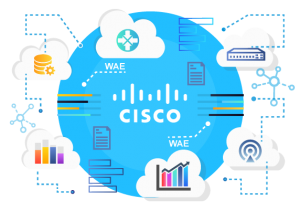
Cisco is complementing these technologies with Cloud Scale model-driven telemetry for real-time visibility into the network. WAN Automation Engine (WAE), Network Services Orchestrator (NSO) and EPN Manager (EPN-M) capabilities will take network automation to the next level. The foundation will be a modular software structure leveraging deep expertise in multi-domain networks to tailor technologies and drive tangible business outcomes that can be realized now. Innovation that leverages massive real-time visibility, and machine learning techniques will completely transform network operations from a descriptive to a proactive model.

However, the automation challenge will not be solved with modular integration alone. As service providers define their business cases, they will see a shift from developing and testing technology to driving integrated solutions with immediate, quantifiable business outcomes. Solutions like NFV Infrastructure (NFVI) and Management and Orchestration (MANO) automate the entire NFV stack. Virtual Managed Solutions enable service providers to deliver SD-WAN services to their enterprise customers faster. And solutions can include components from multiple vendors and best of breed open-source.

This is an exciting time, and we have many more solutions to come for network automation. Through implementing a comprehensive strategy, our customers’ network operations are experiencing a radical transformation – a transformation that can boost service velocity, with the potential to completely change the operating expense and balance sheet for a service provider now.

Service providers are seeing a tremendous opportunity to leverage and adapt their networks to serve as a digital innovation platform, building a business partner ecosystem that can deliver innovative and profitable services to their end consumers.

Cisco is the best partner in this digitization journey. By helping service providers build cloud-scale networks and services through intelligent automation, we are enabling them to create a new kind of network platform that can position them for success now and into the future.

Find more information on “The insider track for service providers” and “WAE 7.0

Authors

Sumeet Arora

SVP Engineering

Core Software Group - US

Avatar

If you love them, set them free…

…because if they love you, they’ll come back.

I’m sure most of us have seen this on a poster, as a meme, as a social media post, but may never have applied it to our businesses. However, the ability to easily leave a service is one of the key decision moments for subscribers, based on research by PayWizard, the latest vendor to be added to our list of technology partners integrated into our Infinite Video platform.

Paywizard use big data and analytics to identify decision moments around how and when users make purchasing decisions, and this analytical approach makes them an ideal partner for us. Paywizard complement our data driven approach, enhancing the rich data we gather, store and analyse to generate deep customer insight. At Cisco we know this is a challenging area given the exponential increase in the number of devices and platforms available to the consumer. And with an increasing number of services trying to grab their attention, more than ever some consumers know that being tied to a single service just isn’t for them. They need flexibility, and yes, sometimes, they need to take a break.

We know that customer retention is much more economical than customer acquisition, and that some demographics are very happy to switch between Service Providers, so being able to easily leave a service is one of the things that will encourage consumers to come back. They know they aren’t necessarily going to get tied into a long contract, and they value that. And, most importantly, they will pay for that.

For the Service Provider they need to be able to simplify their operations, to make sure that having flexible options doesn’t over-burden their business with new processes and technology. Whatever the Service Provider wants to offer, it all needs to come from one place, to be managed by one platform and be supported by one team.

This is what the Infinite Video platform is built to do – and is doing for many of our customers. By allowing the creation of multiple, flexible offers, and then changing them based on consumer and market feedback, our customers can stay ahead of their competition, and keep their consumers coming back for more.

So, if you don’t want to hear ‘It’s not me, it’s you’, make sure that your consumers have the opportunity to choose. Give them an alternative that better suits what they want, because that’s what will keep them coming back

To learn more about the Infinite Video Platform and our work with Paywizard, why not visit us at Mobile world Congress in Barcelona, from February 27th to March 2nd, or visit our new web site at cisco.com/go/infinitevideo.

Authors

Adam Davies

Technical Leader, Engineering

Service Provider, Video Solutions

Avatar

Cisco WAN Automation Engine (WAE) is enabling real-time network planning. WAE 7.0 is a game-changer release, and we are thrilled to announce its general availability.

You’re likely familiar with WAE Design application, which has been the market leader in network modeling and capacity planning for years. Now the WAE Design can address new demands from Service Providers and Enterprise customers that have a tremendous need to drive not only CapEx reduction through planning, but also OpEx reduction with real-time automation.

For this new release, we took an innovative approach to the challenge of evolving an offline planning tool to an online platform that can help operators automate network management.

First, we moved to a YANG-based infrastructure that can automatically generate APIs and CLIs to simplify the customer experience. To feed the YANG-based infrastructure in real-time, our collection framework is leveraging streaming protocols such as BGP-LS, PCEP, and streaming telemetry. This not only improves scalability and visibility, but also provides the reactivity important for an online tool. It was also very important for us to offer a solution that could support legacy and multi-vendor networks. In that respect, we have built modular collectors that can be configured to augment models with data obtained by traditional sources such SNMP, CLI, and NETCONF.

Second, we put substantial effort into simplifying installation and configuration. What does it really mean for you? The installer now downloads and installs in minutes. Configuration of network collection is equally simple. You only need to provide device credentials, enable the desired data streams, describe how the data sources should be combined, and WAE will dynamically build a network model that reacts to change. This is a major improvement you have been looking forward to for quite some time.

WAE has always provided a rich set of optimization algorithms, and we keep adding features. In release 6.4, WAE added segment routing algorithms to support latency, disjointedness, avoidance, and bandwidth optimization. In release 7.0, WAE adds simplified Python APIs for running these algorithms and for applying the results of these algorithms back into the network.

And there is more! By combining a reactive network model with a powerful set of algorithms and easy-to-use Python APIs, WAE is now an application development platform.

As part of WAE 7.0, you automatically get access to a sample application for tactical traffic engineering.

What are the benefits to you?

This application enables you to significantly increase the utilization of your network infrastructure in an automated manner resulting in both CapEx and OpEx savings.

How does it work in simple terms?

WAE monitors the network for topology changes. If a network event such as a link failure causes congestion in the network, WAE will compute a set of Label Service Paths (LSPs) to mitigate the congestion and then deploy the LSPs into the network. When the link recovers, WAE will re-run the optimization, see that the LSPs are no longer required, and remove them from the network.

Why should you give this application a try?

This application clearly exemplifies the combined use of several software innovations Cisco brought to market over the past 12 months:  model-driven telemetry, segment routing traffic matrix, segment routing capacity optimization algorithm, and LSP deployment in a closed-loop solution.

By innovating with a focus on the customer experience, we have evolved WAE 7.0 to an easy-to-install platform for network application development that is based on an easy-to-understand YANG networking model, a powerful set of algorithms, and well-designed Python APIs, helping you drive OpEx reduction through ruthless automation.

Find more information on “Network Intelligence

Authors

Sumeet Arora

SVP Engineering

Core Software Group - US