The Cybersecurity Executive Order that President Trump signed on May 11 shouldn’t tell you much that don’t already know about the importance of security to the Federal Government. However, there’s a sentence in it that should give every agency leader a fresh sense of urgency:
“The President will hold heads of executive departments and agencies (agency heads) accountable for managing cybersecurity risk to their enterprises.”
The president clearly means business on this. And if you think he won’t fire people, look no further than former FBI Director, James Comey. This one sentence is really the most substantial statement in the entire Executive Order. There is more there, though, and over the next several months I will try to peel apart the layers of the order in more detail.
But you already know, that you should be modernizing antiquated IT infrastructure for starters. And as products age out of support, it becomes impossible to patch known vulnerabilities, not to mention losing the efficiencies of more current solutions. If your modernization efforts currently includes threat intelligence products that can detect anomalous behavior at the network’s edge, you’re moving in the right direction to detect ever growing attacks against aging infrastructure (the new low-hanging fruit).
President Donald Trump signed an executive order urging a risk model for cybersecurity.
So now, the president has turned a commonly accepted practice in corporate America, namely executive accountability for cybersecurity incidents, into a defined directive for the entire Federal Government. And the president clearly doesn’t have any issues with holding leaders directly accountable for their inaction and has given clear indications of his expectations.
If you haven’t started already, you should immediately begin planning on phasing out all unsupported equipment and suspected grey market products to insure maximum ability to maintain a currently supported infrastructure capable of vulnerability maintenance.
The mandate has been provided in clear terms and nobody should be surprised if excuses are no longer accepted.
Design Considerations for Branch Virtualization with NFV
In the 1st blog on Enterprise NFV Design we discussed the concept of network function virtualization and its benefits, what are the foundation blocks when planning for branch virtualization with NFV?
Let’s look closely into each foundation block and the considerations depending on the use case.
Hardware Hosting Platform:
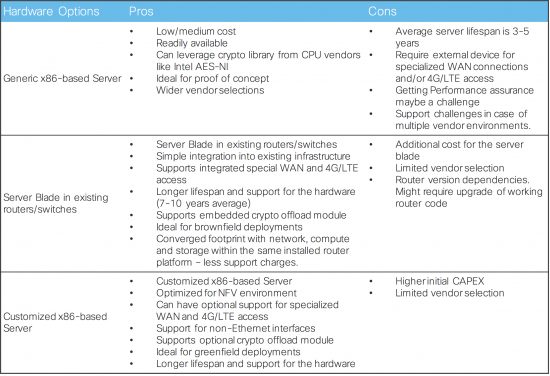
The hardware platform can be any x86-based server, a server blade that runs inside your existing routing platform, or a customized x86-based platform that provides options for specialized interfaces for WAN (T1, xDSL, Serial, etc.) and 4G/LTE access. It should be built for the Enterprise office environment – form factor, acoustics, multi-core capable, WAN/LAN ports with the option to support PoE, etc. Additionally, data encryption has become a mandatory requirement for providing data privacy and security. To ensure high performance encryption capability, one may want to consider a hardware platform that includes crypto offload module or CPU chipsets that include an enhanced crypto function such as the Advanced Encryption Standard New Instruction (AES-NI) library from Intel.
Hypervisor Platform for VNF elements:
A hypervisor is a function which abstracts – isolates – operating systems and applications from the underlying hardware. This abstraction allows the underlying hardware to independently operate one or more virtual machines as guests, allowing multiple guest VMs to effectively share the system’s physical compute resources, such as processor cycles, memory space, network bandwidth and so on.
There are two types of hypervisors. A type 1 hypervisor runs over bare-metal x86 hardware architecture, as an operating system does, but it also enables other operating systems to run on it. A type 2 hypervisor runs on an OS as a hosted environment. Type 1 hypervisors have direct access to hardware and, hence, provide better performance than type 2 hypervisors which run on an OS.
The common types of hypervisors in the market today are:
VMWare ESXi
KVM
Microsoft Hyper-V
Citrix XenServer
To successfully host network function virtualizations and meet the throughput and latency requirements of the hosted VNFs, there are considerations you have to factor in for hypervisor selection:
Data plane latency variation for VNFs
High performance network I/O for all packet sizes
High performance network I/O for all traffic types including rich media
Control plane timing variations and correctness for real-time VNFs
Inter-VNF communication
To that end, Single Root I/O Virtualization (SR-IOV) is a means to minimize latency for networking of virtual machines that are latency sensitive or require more CPU resources. To make use of SR-IOV, the hardware (PCIe devices), hypervisor platform, and VNF all have to support the capability.
Service chaining of virtual functions is a critical element of network function virtualization, this functionality helps with interconnecting virtual functions similar to how physical devices are deployed.
Orchestration Engine
Without a centralized orchestration engine today’s legacy networks are plagued with the following limitations:
The lack of network agility significantly limits IT agility
Traditional network management is done “box by box.” highly manual and repetitive process.
Human error is the largest cause of network downtime – we have recently learnt from the public cloud outage experience.
The majority of a company’s IT budget is used to maintain the status quo.
Lack of automation keeps total cost of ownership (TCO) high.
While considering a central automation engine the following features are highly critical
A virtual network function (or VNF) takes on the responsibility of handling specific network functions like Routing, Firewall, Application Optimization, Unified Communications (IP PBX, Session Border Controller, etc.) and Wireless LAN Controller. These individual network functions could be served by deploying their specific hardware appliances or can be virtual and connected or combined together as building blocks to offer a full-scale networking communication service. It is critical to deploy VNFs which support SR-IOV to achieve maximum throughput and performance.
Conclusion
Enterprise NFV enables agile, on-demand service and centralized orchestration for integrating the new service into the existing ones. Enterprises gain the ability to choose “best of breed” VNFs to implement a particular service. By using NFV, you can spawn virtual devices to scale to new feature requirements. For example, with your existing the branch router you have an option of inserting a server blade and spawn up a NFV element that provides additional security functionality or running multiple VNFs, service chained together for routing, security, wan optimization, unified communications, etc. Similarly, SDWAN can be deployed as an integral part of the routing VNF with a centrally automated and orchestrated management system.
Cisco DNA provides the hardware, software and management building blocks to achieve the simplicity and flexibility required by CIOs and IT managers in today’s digital business landscape – here is a whitepaper which delves deeper into this design guidance
In the next blog we will look at real life customer deployments who are leveraging the Cisco DNA architecture to build better customer experiences and differentiation for their businesses.Would love to hear from you on your experiences with Enterprise VNF designs and deployments.
How does innovation happen? People joke about an idea hitting them in the shower. Or it might be while on vacation, or walking the dog—any time your mind is free to wander into creativity. But developing that lone spark of an idea into an innovative solution is no vacation. It requires focus, radical collaboration, and hard work.
Innovation doesn’t happen in a vacuum. It emerges from the crucible of colliding ideas, false starts, new iterations, and starting over. It requires an ecosystem of co-innovators who offer contrasting viewpoints, diverse skillsets, and the ability to put ego aside to refine and build on each other’s ideas. And it needs a venue and structure to facilitate the process.
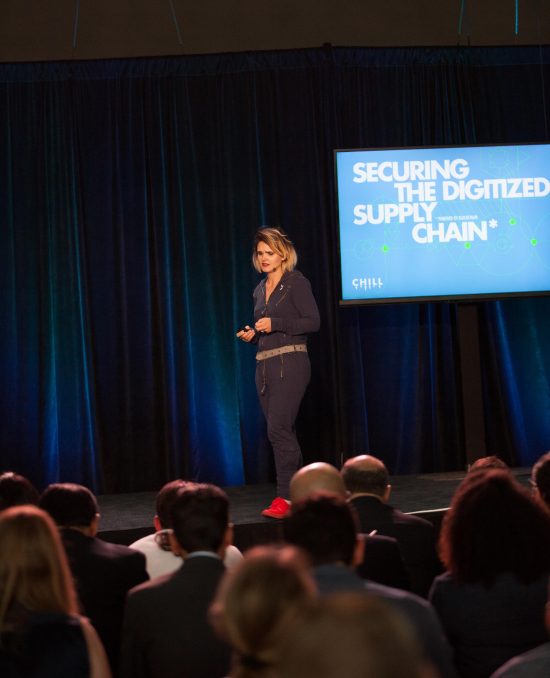
That’s why Cisco developed CHILL—Cisco Hyper-Innovation Living Labs.
CHILL is an intensely focused innovation experience that is turning the traditional innovation model on its head. It brings together a select group of customers, vendors, designers, and hackers to solve a common industry challenge.
So far this may sound familiar—many organizations sponsor weekend hackathons or innovation brainstorms. And many companies co-innovate jointly with customers. The difference is, with CHILL we co-innovate with many customers at once. CHILL tackles large industry problems with a cross-section of large industry players. And then builds a new start-up from scratch to take a winning idea to market.
I come to work every day excited to lead the CHILL program. In less than two years, we’ve hosted four “living labs” centered on opportunities in retail, adaptive supply chains, blockchain applications to secure digital supply chains, and healthcare. At each event, I’ve been amazed at the breadth and creativity of the solutions that diverse teams create, build, iterate, and pitch to investors over a two-day period. So far, about 75 percent of CHILL innovations have been funded and are moving toward commercialization. The adaptive supply chain lab alone produced internal projects, spinouts, and joint ventures that we expect will generate $6 billion in new revenue and save $3.4 billion in costs for participants over the next 10 years.
One of the reasons for this success is the thought and preparation behind each living lab event. The process starts by identifying the “focus zone” and selecting innovation partners based on alignment of goals, market power, and resources. We then zero in on a single problem and define specific opportunity areas to work on. Each participating organization comes to the two-day living lab event with high-level executives, subject matter experts, and decision makers who can make on-the-spot funding commitments. They work in teams of four or five participants, plus hackers and builders who create round after round of rapid prototypes. The process is completely customer-centric, with end-users providing feedback all along the way. Finally, at the end of the second day, each team pitches its concept and investors decide whether to carry it forward to market.
This kind of multi-party innovation is designed to attack big, industry-wide challenges. And maybe it won’t stop with industry. As Cisco CEO Chuck Robbins said at a recent CHILL event, “I get excited because I believe we not only can work on important topics like securing digitized supply chains, we can also leverage technology and innovation to solve the world’s biggest problems—like hunger and homelessness—and to create opportunity for people who’ve never had opportunity before.”
That big vision is why I am always looking for ways to promote this sort of industry-disrupting innovation. If you are planning to attend CiscoLive this month in Las Vegas, I hope you’ll join me on Wednesday, June 28, at 2:00 PM to learn more about how CHILL might work for your organization. You’ll hear the first-hand Lab experiences of four recent CHILL participants: Richard Ebach, CIO of DB Schenker, and Brad Haczynski Managing Director at Intel, will bring a corporate partner perspective; Ian Lee from Citi Ventures is from the venture capital side, and Mike Jordan, acting CEO of Myways, will share the experience of a startup born in a Living Lab.
Come CHILL with us! Hyper-innovation is no vacation—but you might just find it’s a lot of fun.
Many years ago, my family used to drive to our local community bank to cash checks, make deposits, and pay bills. My grandmother would wait in a longer line to see her favorite teller. My grandfather developed a close relationship with the loan officer, who also helped several family friends buy a car or a home. They didn’t visit the bank every day, but they were loyal customers most of their lives.
Today, things look a little different. Consumers are spending less time in physical bank branches—but they’re interacting more often with banking products and services. In fact, analyst firm IDC predicts that the number of bank-client interactions will increase by a factor of four in the next five years because of the Internet of Things (IoT) and the continued digitization of the consumer.1
Even though consumers may be using a smartphone instead of chatting with their favorite teller, they still expect a personalized banking experience. They’re looking for more convenient, timely, and digital-first online banking services. How can you meet those high expectations—for customers of all ages—in the digital era?
What recent shifts in digital behavior mean for banks
According to the IDC Financial Insights’ U.S. Consumer Channel Preference Survey2, over 64% of consumers are interacting with banks via online channels either on a weekly or daily basis. Although almost 64% of Americans still prefer to open an account in a branch, that number is down eight percent since 2015.
On the other hand, the number of Americans who prefer to open an account via mobile channels increased 67% between 2015 and 2016. Those who prefer online channels increased by 12% year to year.
The caveat is that it wasn’t Millennials driving these rising numbers. While the highest percentage of younger consumers continue their use of online and mobile channels, these segments have seen little growth. Actually, from 2014 to 2016, nearly twice as many banking consumers ages 45-65 increased their use of online banking at twice the rate of those ages 18-44 (11.2% vs. 6.3%)3. Consumers over age 65 increased their online banking usage by 17.6%–followed by 10.8% for ages 35-44, and 8.9% for ages 55-64. Consumers ages 18-34 held their usage relatively steady in comparison, with a growth in usage of 3.1-5.1%.
Older consumers’ rapid adoption of online banking indicates how integral digital is to both financial services and the American lifestyle. The chart below3 demonstrates that age groups are progressing closer to a state of equilibrium. Clearly, many older adults, like their younger counterparts, have made technology a part of their daily lives. More important, this progression may indicate that online banking technology is moving toward a plateau. Results from the same IDC survey show that younger consumers are less satisfied with online banking4. Combined, these trends signal new, approaching waves of digital disruption in retail banking.
Improve customer experience by adding 3 tactics to your strategic plan:
Empower IT with automation – Even the best-laid plans falter without first building a strong foundation. Service automation and self-learning systems serve as strategic guides through periods of technological change, improving IT agility. Agility increases your IT department’s productivity, reduces technology costs, and enables faster response times to customer needs. That means new user experiences, products, and services, as well as business process innovation and connectivity across the organization.
Design smart, intuitive customer experiences – Know what customers want, before they want it. With client-to-machine interaction in real time, you have the ability to understand the emotional state of the customer. You can also use these same insights to deliver targeted ads to meet their immediate needs on-site through digital signage or robo-advisory services. It’s important to interact with clients where they are at any given moment. Ensure your network is strong and secure enough to allow your workforce to engage with customers across all channels, from the phone to social media.
Optimize branches – New technology allows you to provide faster, targeted services to customers at cost savings to the branch. Hyper-beacons assess physical traffic flows and other metrics to create an optimal site design and maximize staffing, helping to speed customers through the banking process. Two-way video conferencing with on-demand experts inside the branch and at the drive-through frees up space inside the floorplan. Behavioral analytics can now review video to enhance security by predicting and preventing robberies before they happen, reducing onsite security costs.
What’s next?
We can count on change. The rapid evolution of the community-based branch banking model that my grandparents once knew to the mobile world of digital banking that I have grown accustomed to two generations later is only the beginning. Retail banking must be prepared for the next wave of digital disruption before it hits.
Retail banks around the world are disrupting traditional business models to become more agile and better respond to digital consumers’ changing needs. Find out how through case studies and industry research available in Cisco’s new white paper, Digital Transformation for the Retail Banking Industry.
Sources
IDC FI Survey 2004 and 2015, 2020 IDC Financial Insights estimates
How are copper spools, garbage bins, a cool wireless technology, and Cisco related?
Answer: Cisco’s LoRaWAN Solution 2.0! I know that may sound cryptic – let me explain this better.
The ability to track the location of things like copper spools, garbage bins etc., also called ‘Asset Tracking’ is important. Tracking the location of assets can help prevent thefts, retrieve stolen assets and make sure assets are used efficiently. Consider copper thefts – a single copper spool can sell for as much as $70,000. This makes stealing copper spools from utility substations, construction sites, or rail yards attractive to thieves. Consequently, copper theft is costing businesses in the U.S. some $1 billion a year. Or consider waste management – garbage trucks make millions of rounds gathering garbage from empty bins, inflating costs and unnecessarily impacting the environment.
How do you prevent this?
By installing location sensors for assets like copper spools to geo-fence them, i.e. restrict them to a certain location or site. Or by using sensors that transmit the location of waste bins which are full, to make garbage collection more efficient. But, sensors that use GPS technology to determine location are expensive. They also consume a lot of battery power and have to be charged often – in some cases weekly. This makes sensors using GPS suboptimal for usage in large scale, city wide IoT applications.
The answer: Cisco LoRaWAN solution 2.0
Cisco is releasing new capabilities for its LoRaWAN products to address problems such as the above. Support for native geolocation now allows Cisco’s LoRaWAN gateways to approximate a sensor’s location. Sensors using LoRaWAN are inherently more cost-effective as they no longer depend on a separate GPS subsystem. They consume only a fraction of the power, with batteries lasting years. As a result, sensing and location tracking becomes more cost-effective to deploy and more practical to operate.
At the same time, Cisco introduced new software that enables its LoRaWAN gateway to operate as a standalone unit. The standalone solution is designed for customers with existing access networks, whereas the Cisco IR809/IR829 gateway based solution provides optimal backhaul flexibility for new network buildouts. Further, Class B end-point support now allows gateways to poll sensors for information as and when needed. This provides the operator of the LoRaWAN network with the flexibility to control the polling of sensors to optimal durations as well as on-demand, and in order to manage communications and power consumption effectively. Lastly, Cisco added capabilities to group sensors and talk to each group separately to reduce communication time with sensors and make them more responsive.
“NNNCo is impressed with Cisco’s LoRaWAN solution” said Eric Hamilton, CTO at National Narrowband Network Communications. “It combines the classical Cisco environment with the cutting edge capabilities of LoRaWAN in a rugged, easy-to-install and manage environment. Cisco’s LoRaWAN Gateway is the flagship of our network – we rely on Cisco to provide us with a scalable solution that gives us computing power at the edge when our customers need it.” NNNCo is Australia’s LoRaWAN operator that offers an IoT end-to-end scalable service at low cost with a secure ecosystem.
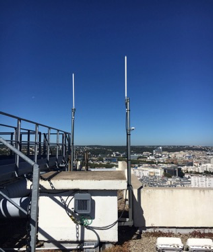
LoRaWAN is considered an LPWA (Low Power Wide Area) Wireless technology, and this technology category generally fills the gap between short-range wireless and cellular communication technologies and is purpose-designed for low power, low rate, long range data collection IoT use cases.
“LPWA technologies hold great appeal for lightweight, pervasive IoT applications”, said Carrie MacGillivray, Vice President for Mobility & Internet of Things at IDC. “Among them, LoRaWAN appears particularly promising due to its efficient usage of free spectrum, superior power efficiency, and strong multi-vendor support. As one of the founding members of LoRa Alliance, Cisco has played a pivotal role in pioneering LoRaWAN and taking it from concept to customer PoCs and success”.
The Cisco LoRaWAN solution 2.0 enables rapid deployment and accelerates time to value for new IoT applications. Adoption is underway in areas ranging from asset management in industrial areas to smart parking in cities to smart agriculture, and many more. The cost-effective, small form factor LoRaWAN gateway delivers the secure, carrier-grade, long range connectivity at the heart of Cisco’s new LoRaWAN solution 2.0. With new geolocation capabilities, the Cisco solution creates new market opportunities for both enterprises and services providers that can track assets to improve logistics, reduce congestion, prevent theft and enhance operational efficiency. LoRaWAN is an open standard and has a strong and growing eco-system to provide choice and investment protection.
Technical Description of New Capabilities
Geolocation support through Time Difference of Arrival (TDoA) and Received Signal Strength Indication (RSSI) for GPS-free end-point location tracking at lower power consumption levels
Listen Before Talk (LBT) compliance with Japan local regulation
Class B end-point support with scheduled receive slots for server-initiated end-point polling
New software for the Cisco IXM gateway to operate as a standalone unit or as an interface of the Cisco IR809/IR829 routers
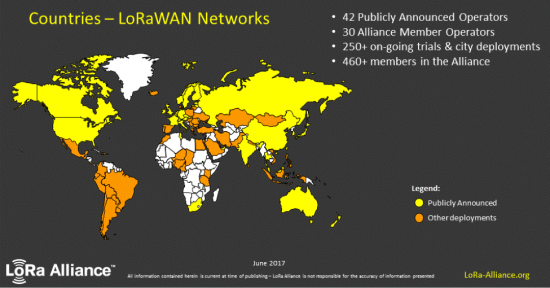
The LoRa Alliance is hosting its 8th LoRa Alliance meeting in Philadelphia, this week from June 12th-14th, 2017, where Cisco has a booth and will be presenting its Cisco LoRaWAN solution 2.0. The LoRa Alliance membership has grown to over 460 members worldwide with 250+ ongoing trials including city deployments, and has gained 200 new members since March 2016. LoRa Alliance also offers a certification program to guarantee interoperability worldwide.
Today, Talos is publishing a glimpse into the most prevalent threats we’ve observed between June 02 and June 09. As with previous round-ups, this post isn’t meant to be an in-depth analysis. Instead, this post will summarize the threats we’ve observed by highlighting key behavior characteristics, indicators of compromise, and how our customers are automatically protected from these threats.
As a reminder, the information provided for the following threats in this post is non-exhaustive and current as of date of publication. Detection and coverage for the following threats is subject to updates pending additional threat or vulnerability analysis. For the most current information, please refer to your Firepower Management Center, Snort.org, or ClamAV.net.
Picture this, by 2021, there will be 4.6 billion global Internet users, 27.1 billion networked devices and connections, and 82 percent of all IP traffic will be video, according to Cisco’s Visual Networking Index. What’s even more amazing is that more members of the global population (7.8 billion according to United Nations) will be using mobile phones (5.5 billion) than bank accounts (5.4 billion), running water (5.3 billion), or landlines (2.9 bilion). OK, the last one is probably not that surprising.
With the increase in mobile, IP, and video traffic over the next five years, service provider networks will continue to phase bandwidth challenges. To ensure continuous delivery of the best connected experience for their customers, leading service providers such as Vodafone Germany are innovating and transforming their network to support the next wave of innovation and traffic.
As one of the largest telecom operators in Germany delivering mobile, broadband and business services, Vodafone Germany understands the significance of network transformation to deliver new services as future innovations around 5G and IoT rise. This is why they made the decision to build a new core network grounded on the promises of software defined networking (SDN). Working in close partnership with Cisco, Vodafone will use segment routing to help enable increased network simplicity, scale, and programmability.
“With the capabilities of segment routing, Vodafone Germany will have a programmable network that will allow us to adapt easily to future customer needs and deliver new services faster, said Niels Hanke, Senior IP Design Engineer, Vodafone GmbH.” We are confident in our partnership with Cisco to evolve our network with segment routing in order to continue to offer quality connected experiences.”
Segment Routing Truly Makes Network Infrastructures SDN-Ready
With the network infrastructure facing an increase of expectations and workloads driven by the growth of devices and connections, networks need to scale in an unprecedented fashion. Segment routing brings together the best of distributed intelligence and centralized control in an innovative way, simplifying networks while delivering application relevance. This technology has emerged as an ideal design for SDN deployments.
Vodafone Germany went live with segment routing in August 2016 and the benefits were numerous such as:
Simplified operations – no specific protocol is required, it’s just simple extensions to current routing protocols. Cutting down on the number of protocols made network engineering simpler and less error-prone. Vodafone Germany could now remove the full mesh of RSVP-TE tunnels and simplify Fast ReRoute configuration by 80 percent.
Programmability and Scalability– sensitive traffic can be directed over paths that match certain latency requirements without having to maintain any state in the network fabric. Vodafone Germany is currently witnessing a 50 percent latency reduction, which is unprecedented at this level of scalability.
Increased network availability – the segment routing-based fast-reroute solution, TI-LFA, can provide per-destination sub-50msec protection upon any single link, node or SRLG failure regardless of the topology. Vodafone Germany was able to simplify their infrastructure by removing 19,000 legacy protection tunnels while offering a high-level of SLA.
We’re excited to be working with Vodafone Germany on this initiative as we are seeing wide industry support for its innovative capabilities. We are fundamentally changing the way applications and networks interact in a simple and scalable manner. In selecting Cisco’s segment routing technology, Vodafone Germany is bringing its core network infrastructure into the SDN realm while delivering high bandwidth and customer experience that defines the network of the future.
DNA with Integrated Security Keeps Government Data Safe
Every day there’s another story about hackers breaking into a branch of the government or political organization, or a data breach at a big company. The attacks are frequent and increasingly sophisticated. One of our Partner Plus partners, PTS Vietnam, helps customers keep their networks up to date, so attacks are less likely to become disasters.
One particular customer was having trouble with an outdated network and asked PTS Vietnam for help.
PTS Vietnam says…
There’s a province in South Vietnam, where government relies on the Dong Thap IT center to deliver civic services.
Recently, it was time for an upgrade— their aging network came from a mix of vendors. Hacker attacks were becoming more regular and risky, threatening to expose confidential government information to unauthorized eyes.
At PTS Vietnam, our engineers worked closely with Dong Thap to explain how Cisco DNA and security could help. And their IT team agreed.
The new system gives them everything they need to keep their network simple, automated, and secure. The foundation is a Cisco Catalyst network switch. Then a Cisco router ties it all together. And the Cisco ASA Firewall and services keeps everything safe.
Their new network was an instant hit. And the government is happy that their information stays shut safely away. So far, there are 90% fewer hacker attacks on the network.
Thanks PTS Vietnam!
90% fewer attacks? Make it hard and they look elsewhere. Nice work.
It may be “just a network,” but it’s the foundation of everything – your data center, security, collaboration tools. Everything depends on it. Make sure it’s safe.
The story doesn’t end there. Read more stories on what our customers and partners are doing all over the world.
And if you’re a partner with a midmarket business, check out Partner Plus. You’ll get access to Cisco sales engineers and guidance for new marketing campaigns. Plus, you earn rewards as your business grows. And the more you sell, the more we commit to helping you grow even faster.
Not everyone works at a hospital, but understanding how the IT department at London Health Sciences Centre and St. Joseph’s Health Care London in Ontario, Canada transformed their wireless network is important, no matter what industry you work in. The crux of the hospital’s problem was this: over 15,000 employees were having a difficult time connecting with each other.
Sound familiar?
Take Dr. Tom Janzen, as a physician and Chief Medical Information Officer, he wasn’t always in his office. Whether it was being asked to speak at a conference across the province or other pulls on his time, Dr. Janzen found it difficult balancing being accessible to his medical staff while at the same time delivering medical courses and speeches. Thanks to the Cisco Digital Network Architecture (DNA), that balance has returned.
Cisco DNA allows the hospital campuses act as a single entity, sharing real-time data securely and reliably. In other words, the entire medical staff is connected. Patient data is no longer hand written notes, the notes are done on mobile devices. The staff can view correct patient information on mobile devices too, they no longer have to hunt down a patient’s chart. And Janzen can use Cisco collaboration solutions allowing him to give a speech in Northern Ontario, while never leaving his office.
“I’m able to do two or three presentations on the same day, complete my clinical work and be home with my family in the evening,” Dr. Janzen said. “That would have been possible before.”
Dave Schned, Integrated Director of IT Infrastructure added that thanks to connected mobile workstations, the hospital has seen a 40 percent improvement in adverse medication events.
“In two years, we’ve grown from 2,000 mobile devices to 10,000,” Schned said. “Cisco DNA helps insure device growth drives innovation, not extra administration burdens.”
But how did London Health Science Centre and St. Josephs’ Heath Care get here? It begins with the proper infrastructure. A comprehensive WAN and LAN connect to Cisco Aironet 2600, 3600 and 3700 Series Access Points along with Cisco 5520 Wireless Controllers. Add to it the Cisco Catalyst 2900, 3500 and 6500 Series Switches and you have a fast and reliable connection between the seven hospitals.
Cisco DNA is not just about cutting-edge Wi-Fi, using Cisco Prime ups the network security for a place that truly needs it. Proactive monitoring is just one way that Cisco security not only finds the bad guys, but gets rid of them too.
“Our Cisco network brings it all together,” said Glen Kearns, Vice Present of Diagnostic Services and CIO. “Having a solid platform for digital healthcare is vital. We’re able to work more efficiently, flexibly and securely and deliver better patient outcomes and quality of care to our patients.”













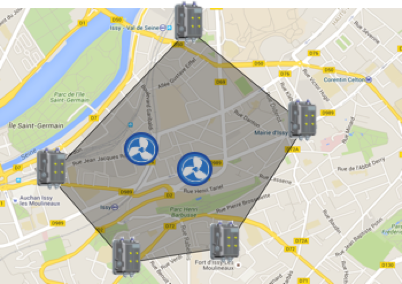 LoRaWAN is considered an LPWA (Low Power Wide Area) Wireless technology, and this technology category generally fills the gap between short-range wireless and cellular communication technologies and is purpose-designed for low power, low rate, long range data collection IoT use cases.