Avatar

Have you ever had to work with others to plan an event or manage a project?

From the expert project manager to the soccer mom trying to coordinate carpool, we’ve all done it in some form or another. But has it always been as easy as you’d like? Have you had the right technology at the right time to simplify the task?

The unfortunate answer is “no.” But there is a better way.

My previous posts offer a behind-the-scenes look at Operation Encore, a group of active-duty and retired U.S. service members who share their experiences through music. Now completing its second album, “Monuments,” the group is using Cisco Spark to connect and collaborate, from wherever the members happen to be around the world.

From a musical perspective, Spark Meetings has enabled the team to collaborate on songs and rehearse via video conferencing, which helped speed up song completion. Now, with the song edits finished, attention needs to shift to finalizing the CD artwork and coordinating logistics for the upcoming CD release event in November.

Coordinating 12 people scattered around the world can be a tall order – from travel arrangements to event details and promotions, not to mention rehearsing for the live performance.

Sure, there is a vast number of group messaging apps out there like GroupMe and Messenger. But without the added capabilities of file sharing or on-demand meetings, they fall short. The expanded functionality offered by Spark, helps them get more done:

  • Group messaging helps the Operation Encore founders manage event logistics and share updates with the full team
  • One-on-one messaging helps each musician coordinate travel plans and schedules with the event organizers
  • File sharing lets the team share CD artwork and promotional materials to gather feedback
  • Meetings with video enable song collaboration and rehearsals

“We’ve used apps like Messenger in the past, but we still had to rely on email for exchanging files, or Facetime for video calling. Cisco Spark is the first application we’ve found that does it all.” –Erik Brine, Operation Encore

Last week, some of the Operation Encore members were working to select artwork for the new CD cover. The group founders created a secure, virtual room via Cisco Spark to gather feedback. In the room, they shared two artwork options for the artists to comment on, ask questions, and vote.  Within two days, the team members had weighed in made their selection.

cdw-logoAs the launch event approaches, others have taken notice of Operation Encore and its mission to provide outreach to the military community through music created by veterans. As a result of sharing the Spark story, Cisco reseller CDW has come forward to offer its support. CDW – a leading employer of Veterans recognized as a top Best for Vets and Military Friendly Employer —  is now working with Operation Encore both as a launch event sponsor and a technology provider to offer ongoing support.

When I began this story, I hoped to share an in-progress look at how a group of collaborators can come together and do more with the right tools. And while the Operation Encore team may be unique, its challenges are not. A dispersed team. Many communication vehicles. An inefficient use of time. The need to get more done. Sound familiar?

I hope you’ve enjoyed this inside look at how Spark can make a difference – even for non-traditional working groups. Our world is changing both at work and beyond. Technology is everywhere. Are you making it work for you?

Download Cisco Spark for your team to see how it can help you connect and get more done. And follow Operation Encore on Facebook as it prepares for its November 12th CD Launch.

To close out this post, I’d like to highlight Rachel Harvey Hill, a U.S. Air Force spouse who has contributed songs to both Operation Encore CDs.

Inspired by her Kentucky roots, Rachel’s love for music began as a child. Through a great deal of support and encouragement, Rachel has developed into a talented vocalist and guitarist. Written as an anniversary present to her husband, “Another Trip Around the Sun,” from Operation Encore’s first CD, offers a glimpse into the emotional trials of loving someone who is deployed, while maintaining the optimism and  strength required for love to endure in a time of war.

https://www.youtube.com/watch?v=fZVctx8zEsA

Authors

Erin Broecker

No Longer with Cisco

Avatar

In early June – right in the middle of Q4 – I got one of the most earth shattering phone calls that a person could receive…my mother had passed away.

In a moment that is a complete blur, I had no words. There was no plan for this. I had no idea what to do. I just remember falling to the floor and sobbing uncontrollably.

It was one of the worst moments of my life, yet…it also reassured me that I was exactly where I was supposed to be in my life. Being a part of Cisco and the Global Virtual Sales (GVS) team played a huge role in this.

“Family” should be a relatively simple word, a word some may even take for granted.  For me, I can’t say I have ever truly understood the concept. My whole life my mother was an addict, and I don’t think she knew how to care for anything else but that.

This means that I grew up in trailers with the floors falling out, or even sometimes cars. I was orphaned at 13, put into the foster system, and then sent to a group home. But that didn’t last forever. When I was almost 16 the state decided to give me back to my mom, at which point she kicked me out, and I was on my own again.

MonicaCastillo

I have fought my whole life to have what people would call a family, but always stayed nipping at the heels of it. This “Family” concept always eluded me. Yet, still. Nothing can ever prepare you for the phone call that has Death on the other line.

I felt helpless. I knew this day would come. I just didn’t realize how soon it would come.

It dawned on me, in light of this phone call from Death that I needed to call family. That’s what you do when you receive this kind of news. But what was family to me?

I dialed a number and Heather Herring answered, my team lead. The second call was to my manager Francisco Cortes. Notice a theme here? 😉

The GVS team at Cisco had become the family I have been searching for so desperately. They surrounded me with love and warmth, and I knew I could seek comfort in their words and arms at any time. They came together to support me through every moment of my mother’s death. They saw me at my worst, and they made sure to lift me up higher than I ever had been before.

My whole life I was told I would amount to nothing, but it turns out – that’s not anywhere close to the truth.

Even though the past couple of months have been some of the hardest I’ve ever experienced, I’ve been able to realize all the love that surrounds me here at Cisco, and this helps me to persevere.

I feel my purpose in life is just beginning.  It has been a long road to getting here, but it was worth the wait. Now, I get to focus on things that I am passionate about and truly want to explore more in depth. I no longer need to focus on things I was forced into, but see a totally new light that leads me forward.

I don’t know that I could’ve done this without my Cisco Family. There are so many people here who really care, and who want you to become the best version of whoever you decide to be. It’s an empowering feeling, and one I am glad to have found and be a part of.


Want to join the Cisco Family? We’re hiring! Apply Now.

Authors

Monica Naim

Collaboration Regional Leader

Avatar

This post was authored by Warren Mercer & Edmund Brumaghin

Summary

We had .locky, we had .odin and then we had .zepto but today we hit rock bottom and we now have Locky using .shit as their encrypted file extension. In today’s latest wave of spam, Talos has observed three distinct spam campaigns distributing the newest version of Locky ransomware. This comes after a seeming vacation for Locky for around two weeks. Using the LockyDump utility that was previously released by Talos, we were able to determine that there are distinct differences in the characteristics of the malware campaigns that seem to correlate with the Affiliate ID associated with the Locky binaries that are delivered by each campaign.

The technical details associated with the Locky ransomware family itself has been extensively documented and reported on, so we won’t spend time providing an in-depth technical analysis of the ransomware family itself. This post highlights some of the distinct characteristics that we have observed for each campaign. We will summarize all Indicators of Compromise (IOCs) at the end of this post.

Read More >>

Authors

Talos Group

Talos Security Intelligence & Research Group

Avatar

Innovation is hard work. Even more so at large corporations where we face not only the intrinsic challenges of innovating, but also the pains that come with size. Entrenched silos. The challenge of aligning individual performance incentives and the organization’s overall direction. Focusing on making our quarterly numbers while building for the future. And then there’s branding. It hangs in the balance as an organization ventures into new territories.

Coming from a startup background, these challenges were an adjustment for me. I now embrace them. And in the first of a series of blog posts, I’ll share my experience of how we’re working to avoid these complications, including lessons learned and how to navigate in the future.

Fortunately for us, Cisco has an incredible innovation engine—powered by our build, buy, partner, invest, and co-develop pillars. With that said, this is not a “celebration lap” series of blog posts. We have made mistakes, we still do. We will make a lot more. We’re learning and we’ll always be learning. Accepting this is crucial for anyone who wishes to embark on an innovation journey.

When customers look to Cisco to deliver the most critical parts of their infrastructure and its security, we have to be optimized for predictability and reliability. We also have to focus on a relentless pursuit of innovation to better serve customers.

This balancing act sometimes gets internal innovators caught in the crossfire of these two priorities. Cisco recognizes this and is doing more and more to make it easier for innovators to create value. One example, among our many internal programs, is Startup//Cisco.

We have startup blood flowing through our veins. We were once a startup, and we have one of the most successful track records of acquiring and integrating startups.

Startup//Cisco is a grassroots effort, aspiring to accelerate that startup DNA. The program offers internal teams the startup innovation best practices they need to build the right thing, in less time, with fewer resources.

In one year, Startup//Cisco went from an idea (shared among colleagues from different functions) to the creation of an entire internal methodology. It leverages lean startup, design thinking, service design sprints, and more.

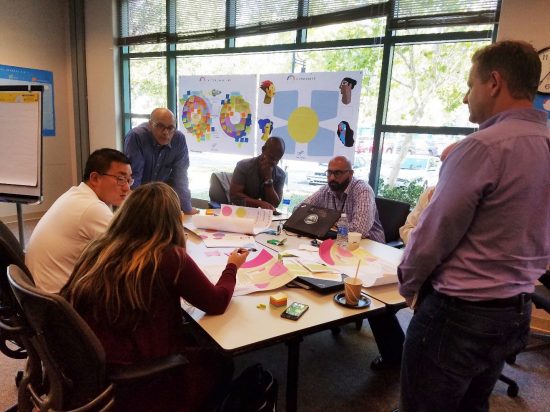
Image1

The program has become an enabler of innovation, including Cisco’s largely successful, award-winning Innovate Everywhere Challenge. As a result, we’re able to support dozens of teams’ ventures. And we’re doing it operating as closely as possible to an internal bootstrapped startup inside a corporation.

The Startup//Cisco program began with some guiding questions:

  • How does a corporation replicate the speed, agility and resourcefulness of a startup?
  • How does a corporation successfully leverage startup innovation best practices?
  • Is a grassroots effort enough, or does it have to come from the top down (or, perhaps, an evolution)?

The only way to know the answer to these and many other unknowns was to practice what we preach and get started. No over-analysis. We rolled up our sleeves to learn how to help our internal innovators be entrepreneurial and innovate like a startup.

Our journey has been exciting and insightful. Throughout the different engagements we’ve run, we’ve had very interesting projects with a very broad range. Here are a few:

  • 3D printing as a way to improve the SLA for replacement parts for key customers
  • A solution for oil and gas company security using predictive analytics
  • A Spark-based bot to support our sales force
  • A way to simplify how startups interact with Cisco.

As we continue our journey, we keep on getting things right, making mistakes, and, above all, learning about innovating at a large company. In my upcoming posts, I’ll share the first five steps we’ve identified to:

  1. Get the right people on the bus.
  2. Get the mindset right—thinking like a startup.
  3. Build the engine.
  4. Run, fall, get up, learn, and run again.
  5. Scale.

My next post will focus on steps No. 1 and 2.

Comment below about your innovation experience.

Authors

Oseas Ramirez Assad

Senior Manager, Business Development and Innovation Enablement

Strategic Innovation Group

Avatar

The Internet of Things (IoT) era is here: Nearly two-thirds of organizations currently collect data from equipment, devices or other connected endpoints and use it for a business purpose, according to survey findings from 451 Research. The most common sources of IoT data are equipment related to data center IT operations (as cited by 51 percent of companies), camera/surveillance needs (34 percent), data center facilities (33 percent) and smartphones/end-user devices (29 percent).

The insatiable demand for data is driven by efforts to propel efficiency, new capabilities and will fuel IoT growth, with estimates of 50 billion devices connected to the Internet by 2020.

At Cisco, we see this innovation occurring in every customer we touch. We realize that the IoT phenomenon is another chapter in the universal digitization of the enterprise. And, as with any new “thing,” there are reasonable concerns about protection of the information within: Security remains an IoT deployment impediment for 46 percent of the organizations taking part in the 451 Research survey. “The elephant in the room is, of course, security,” as one respondent stated. “I’m getting a lot of push back on my security requirements for all of these IoT projects. I’m not budging, and … I have the blessing of my CIO not to budge.”

Fortunately, if respondents like this one convince their companies to take the right path to IoT adoption, no one will have to budge. As we continue through National Cyber Security Awareness Month in the U.S. and European Cyber Security Month, I’ll weigh in on what the history of digitization can teach us as we navigate our continuously connected lives.

Through past digitization cycles, we learned that – regardless of whether we’re dealing with the cloud, mobility or any technology that connects to the network – we need complete visibility into the way technology interacts with our business. Too often, customers buy something and “plug it in” without considering what the device maker, cloud vendor or other outside party has done to ensure that it’s secure.

With visibility, however, we gain insights into all of a device’s behaviors so we can determine how it will affect our overall security posture. We identify the hidden risks within that could ultimately harm our data. In the process, we segue from implicit trust (“We believe the vendor when they say the product is vetted and safe.”) to explicit trust (“We have asked all the questions, received the answers required to understand and even quantify how the risk factors may impact us and how to reduce the risk, and are ready to move forward.”)

To reach a state of explicit trust, we can’t be bashful about asking vendors the right questions. For example, in setting up an enterprise-wide HVAC or lighting system that’s connected to our network and exterior systems, we come up with a long list of inquiries: Which of our systems and data will the device interact with? How will it interact? What can we control in terms of what it can and cannot access? What security layers have you put in place to protect this product, and our assets? Does the vendor use their own internet connectivity by using a mobile network?

In seeking good answers to these and additional questions, we drive toward explicit trust that’s earned, not assumed. IoT and other waves of digitization are proving themselves as mission-critical – organizations will lose competitive relevance if they choose to ignore them or resist them out of fear. With complete visibility, we can invest in connected machines with our eyes wide open, with absolute awareness about what the risks are – and how to mitigate them. Thus, we successfully complete this “chapter” of the book and look forward to the next; confident that turning the pages won’t compromise our data or systems.


Join the National Cyber Security Month conversation on Twitter @CiscoSecurity #CyberAware.

Authors

Anthony Grieco

SVP & Chief Security & Trust Officer

Security and Trust Organization

Avatar

You’re the head of IT facing the start of another week.   Another set of challenges.  Application teams going around IT.   Business teams expecting near-instant service.  Your company is growing fast.  Way beyond your ability to plan — let alone respond.

You may think this is far-fetched.  I speak with a lot of customers and this is anything but.  The question that follows is, “How do I move faster?”

In a recent study, IDC reports that 73% of organizations are evaluating or starting to deploy hybrid cloud. There are many benefits.  There are also many challenges.

Every company is different.  They have different processes, software, and ways of doing things.  But, a large number of hybrid cloud solutions take a cookie cutter approach. You have to fit into their journey.  Install all 10, 15, 20 components whether you want them or not.

Welcome to the next generation of hybrid cloud management.  Cisco ONE Enterprise Cloud Suite provides all the tools your business needs for hybrid cloud.  Watch this video to learn more.

https://youtu.be/PxhbI5QwSY0

Continue reading “Monday Morning Sure Looks Fine”

Authors

Joann Starke

No Longer with Cisco

Avatar

Is your healthcare organization planning to make a digital transformation?  Are you wondering what this means and what impact it might have on your established processes?  At Cisco, digitization means connecting people and things; and making sense of the data in a meaningful and secure way.  Using this definition, it is clear that digitization has the potential to affect every aspect of care delivery and operations for provider and payers.

Healthcare_DigitizationIn The Digitization of the Healthcare Industry, we have defined five digital imperatives that can make a profound difference when using technology to transform patient care and staff workflows:

  1. Making Your Business Interoperable
    The foundation of the healthcare digital transformation is an interoperable environment that enables the secure sharing of information across all levels. For example, the Cisco Converged Clinical Workflow family of solutions helps patients, clinicians, administrators, and families use data, voice, and video to collaborate more effectively to make better decisions, increase teamwork, boost productivity, and reduce costs.
  2. Securing Data and Systems
    To address new and continuing security challenges, digital transformation extends data and physical security across the system: to protect information and safeguard patients, and to help healthcare organizations manage financial, legal safety, quality, and compliance risk. As a world leader in network security, Cisco relies on an in-depth methodology that prevents, defends, and remedies problems across the entire network while meeting regulatory and compliance guidelines.
  3. Empowering a More Efficient Workforce
    Mobile devices, RFID tracking and location services, and relevant analytics can help make healthcare providers as productive as possible.  Collaboration solutions, such as video and web conferencing, allow the entire care team to quickly and securely share information.  Data gathered from traditional sources can be combined with data from new sources, such as mobile networks, in-camera video diagnostics, medical devices, equipment sensors, and even social media, to support real-time problem solving and to empower staff so they can spend more time caring for patients and less time chasing down the information they need.
  4. Creating an Environment to Support Innovative Decision Making
    Digital transformation moves patient care to a new level of intimacy and information.  By analyzing every piece of data across channels, operation, and patient outreach, you will be able to gather insights to make decisions that provide personalized care options. With the flexibility to adopt innovative approaches, healthcare organizations will be more responsive to market change, patient demands, and new approaches to care in order to develop an intimate, always-evolving relationship with the patient.
  5. Cultivating the Right Partners to Create New, Disruptive Processes
    Building the best network of vendors, partners, and contract workers is critical to an impactful digital business transformation. The best partners have deep, healthcare-specific expertise across analytics, security, and cloud, with the ability to provide not only IT services, but also strategic business consulting assistance.

DigitizationAt Cisco, we believe that the healthcare industry must embrace disruption and take a business outcome approach to achieving digitization. Providers and payers need to partner with companies who are able to clearly demonstrate how digital solutions align with their business goals.

Read more about how Cisco is positioned to guide and lead customers through the digital transformation by using technology to define, document, and measure outcomes in order to dramatically improve patient care.

Authors

Joyce Perrelli

Healthcare Program Manager

America’s Field Marketing

Avatar

When is the last time that you didn’t update the operating system on your phone? Or ignored those pop-up messages letting you know your software is out of date? Last week I was in Arizona with about 50 partner executives, a speaker from Talos asked us the same question. A small number of people raised their hand. Likely they were thinking why waste time? Learn new interfaces? Wait for my phone to restart?

Security updates are made for software or operating system updates. When you are using an older version, the potential for security vulnerabilities increases.

These don’t just increase for you, however. Think about how many companies – and people – are in your supply chain. How many individuals ultimately have access into your system? And are they all fully updated and protected?

As I mentioned in my before, during and after a security attack blog posts, there is no 100% guarantee that malware won’t get through. Just think of all of the potential threats in your supply chain! But you (and, of course, your customers) can breathe a little easier when you have an end-to-end solution that protects from any vulnerability in your supply chain. In fact, have you seen how Cisco compares to our competitors?

Beyond the feel-good news of security, partners selling security actually realize higher profit margins than average. The most successful partners have dedicated security sales resources, are committed to driving security enablement throughout their organization, and they are joining forces with others within the Cisco partner ecosystem to develop the most differentiated services on the market.

At the event in Arizona, our partners walked away with a better understanding of the opportunities provided by the depth of the Cisco security portfolio. And we’re committed to bringing more sales, technical enablement, programs, and promotions to our partners to maximize their profitability. We’ll update this blog in the very near future when those resources are up-and running.

As a stop on the supply chain, you aren’t on an island. Vulnerabilities exist within every connection in a digital business.

But at the same time, we’ll use those connections to not only make our partner ecosystem even stronger – we’ll use them to secure our world. Together.


******************

Footnote: Register for Virtual Partner Summit

Get the inside scoop on how to navigate the digital landscape and help your customers do the same. Hear about topics you care about from people you trust while getting ready for fiscal year planning. The fun starts on November 1st. Virtual Partner Summit is open to all of our registered partners around the world. Reserve your virtual seat now.

Authors

Shawn Yuskaitis

Director, Global Security Go-to-Market Strategy & Sales Acceleration

Global Partner & Routes to Market Sales