Avatar

Today, Cisco announced the close of our acquisition of Jasper, a leading IoT service platform provider that powers the IoT initiatives of more than 3,500 enterprises worldwide. With Jasper’s cloud-based platform, companies of all sizes – and in any industry – can rapidly and cost-effectively launch, manage and monetize IoT services on a global scale.

I sat down with Jahangir Mohammed, Founder and CEO of Jasper – and now GM of the newly-formed IoT Cloud Business Unit at Cisco – to discuss what this means for Cisco, our customers, our service provider partners, and IoT adoption as a whole.

RT: The response Jahangir and I have received since February’s announcement about the Jasper acquisition has been remarkable.  We’ve seen excitement across the board – from our enterprise customers, the service provider community and our ecosystem partners. Industry analysts, like the one below highlight broader industry recognition of the benefits of this partnership.

“IoT is a key piece of enabling Digital Transformation for today’s enterprises. Cisco already has the network equipment, cloud, analytics and security layers, and the addition of Jasper brings the critical IoT service platform layer needed to provide enterprises with a complete digitization strategy,” said Carrie MacGillivray, Vice President, Mobile & Internet of Things at IDC. “This acquisition provides value for both Cisco and Jasper’s enterprise customers, their service provider partners, and broader IoT ecosystem partners.”

JM: Our customers are enthusiastic about the combined value that Cisco and Jasper will bring to their businesses. These are industry leaders who are using IoT to drive business transformation and thrive on continuous innovation. They are always looking for ways to create new experiences for their customers and unlock new sources of revenue. A great example is Telular, a leading provider of solutions for commercial telematics, security, and bulk storage management. Telular’s TankLink business delivers information on temperature, liquid levels and geolocation for the oil and gas industry. Using the Jasper IoT service platform, TankLink remote inventory management solutions deliver the highly-accurate, 24/7 tank level information that is necessary for efficient and cost-saving replenishment decisions.

“As a Jasper customer for the past seven years, I am excited about the combined vision of Cisco and Jasper,” said Shawn Welsh, Senior Vice President of Product Line Management and Marketing at Telular. “This acquisition will help accelerate innovation in the IoT market, providing our business with new ways to grow by offering more differentiated services to our customers.”

RT: We brought Jasper into Cisco because the opportunities to build on Control Center and add value were obvious. In industries such as oil and gas, like the TankLink example, a major concern for customers lies in ensuring that IT solutions are validated according to stringent industry safety guidelines. On one side customers are looking to harvest benefits of IoT, but on the other they have to deal with the high risk on health, safety, and environment, if things go wrong. Cisco is removing roadblocks for IoT to be deployed in these industries by working on validated IoT designs that meet these safety requirements in collaboration with industry leaders such as Schneider Electric, Honeywell, Emerson, Rockwell, and others.  These relationships and validated designs will help Cisco will help extend the value of Jasper into wider areas of the oil & gas industry.

And this is just one industry example of the value Cisco and Jasper bring. We are thrilled to welcome Jasper to Cisco – and we’re even more excited to show you how we will transform IoT in the years to come.

Now that acquisition is complete, Jahangir and I are focused on executing against our shared vision, to accelerate IoT adoption and our customers’ IoT success, on a global scale. Digitization is creating a world where everything intelligent will be connected, and shaping a new, service-driven economy. Jasper’s IoT platform is just the beginning. Cisco’s IoT Cloud Business Unit will deliver comprehensive IoT solutions that make it easy for enterprise customers, service providers and ecosystem partners to capitalize on this business transformation.

JM: The IoT opportunity in front of us right now is enormous and immediate. Jasper and Cisco have the combined talent, technology, expertise and scale to help service providers, enterprise customers and ecosystem partners worldwide capture their share of the market today and innovate over time. With the IoT Cloud Business Unit, Cisco is moving up the stack to deliver a complete portfolio that simplifies the launch, management and monetization of IoT service for everyone.

RT: The growth we’ve seen in the sector over the past few years is just mind blowing – and it’s only going to accelerate. I’m super confident that no other company is better positioned to capitalize on this huge opportunity. I truly believe we are better together – Cisco and Jasper will transform the IoT market.

Authors

Rowan Trollope

Senior Vice President and General Manager

IoT and Collaboration Technology Group

Avatar

Whether it’s spring, summer, or fall, it’s always a good time to look for fresh ideas. Stocking up on inventory and designing visually compelling displays are important. Even more important is the technology you incorporate to engage with your employees and customers.

“The key to retail success is understanding the shopping journey. Customers buy whenever, wherever, and however they want,” says Dianne Lamendola, retail practice manager at Cisco. “What we call omnichannel, they just call shopping.”

“The critical thing is to deliver a truly integrated, consistent, compelling experience,” she says. “You can streamline and digitize every aspect of a store operation with video and mobile tools.”

“The real work of retailers is building a trustful and relevant relationship, creating a series of positive interactions with shoppers, and ultimately selling merchandise,” says Lamendola.

Employee engagement is critical to both the customer experience and retail success. The interactions that take place before, during, and after a sale, whether online or in a physical store, set top retailers apart. “Store associates ranked last on the list of trusted resources consumers access for product knowledge,” according to a recent Retailing Today article. “IBM views that as an opportunity for retailers to empower associations with tools to track inventory and offer promotions instead of focusing on general product information only.”

Use Video to Gain Trust and Loyalty
Start by looking at your digital approach. Personalize your business. Put a face to your name by creating a branded experience.

“In an always-on world, as much as 50% of sales are being influenced by digital interaction,” according to a Retail Touch Points Outlook Guide.

Start with employees by using video to connect with them face-to-face, for more personal interactions. Exchange ideas and offer live training. In turn, your customers will have a more memorable experience.

Specific benefits of video include:

  • Deeper Employee and Supplier Engagement: Video provides a face-to-face forum that brings teams together and fosters collaboration. For example, it’s an effective way to deliver customer-service training. Staff can visualize concepts, collectively express feedback, and be more engaged than with audio-only sessions. “Video builds stronger relationships between team members and improves quality of communications,” states Nick Parece, lead VoIP engineer, at Cimpress.
  • Faster Decision-making: Video reduces travel costs and provides staff across locations with the experience of being together. “Video collaboration changes the attitude of the business,” shares Rene Isip, Chief Operating Officer at John Eagle Auto Group. “People are more engaged, efficient, and accountable.”
  • Stronger Customer Relationships: Today’s shoppers use multiple channels to learn about your products and services. When considering a purchase they might research online, explore in stores, compare prices on mobile devices, and look to social media for reviews and ratings. “In addition to our team’s adoption of collaboration tools, we’re saving 7,000 euros a month,” says Paul Coby, CIO at John Lewis.

Three Ways to Get Started
Using video for retail employee and customer engagement doesn’t have to be a major shift. You can start with a few small changes and evaluate over time.

  • View your business as the window to shopper’s hearts. Get personal.  Use video to offer superior customer service, but don’t neglect your employees. Employees need the same level of engagement. Use video to connect, support, and create memorable experiences together.
  • Expand beyond traditional email and direct mail promotions.  These methods sometimes get lost or are never opened.  Engage in the here and now. Use video to put a face to your brand.  Create excitement while showing your merchandise in action or as part of your customers’ lifestyles.
  • Experience your brand through the eyes of shoppers. Design employee and vendor training programs that follow a buying journey. Use video to illustrate how engagement through social, mobile, and digital can be impactful.

Video adds personality to your brand. It adds a visual expression to your interactions. There’s no time like the present to try a fresh approach.

For more information on ways to improve your retail operations, check out Cisco’s collaboration resources for retail.

Authors

Sandra Acham

No Longer with Cisco

Avatar

Today’s financial institutions face an array of challenges — but many of these challenges are balanced by the exciting opportunities available to financial institutions that embrace digital business transformation, re-introducing human connectivity, and leveraging digitization as a competitive advantage. The ability to harness the data that is all around is just one of these opportunities. In fact, Digital Transformation in Financial Services represents a $1.3T value-at-stake for the industry.

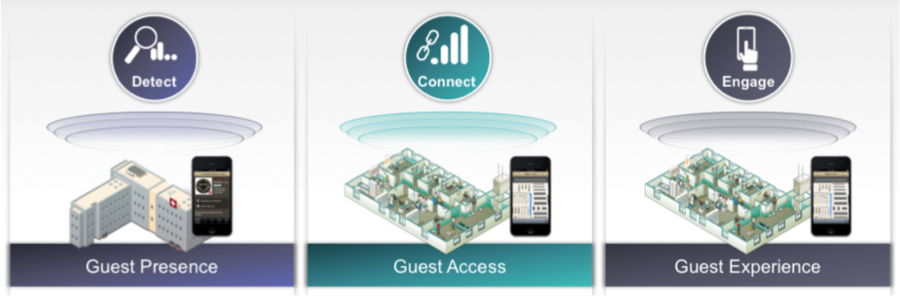
Leveraging the data that is all around us is critical for a retail bank to create a meaningful customer experience and optimize the investments made in the branch distribution channel. As mobile individuals become connected everywhere, banks can detect, connect and engage with those customers in highly relevant ways. And through this connection, banks can access and leverage new points of knowledge that can guide their customer interactions, mitigate threats, and optimize their distribution investments.

Jeff

This next-generation of customer experience analytics was on full display with Cisco’s participation in CBA LIVE 2016. Leveraging Cisco Meraki Connected Analytics, CBA LIVE attendees were able to see real-time diagnostics on WiFi enabled devices throughout the conference event. Information such as the number of devices, geographic density, metrics on presence, and other performance attributes were gathered on all devices with an active Wi-Fi signal.

Conference participants were excited to see such a concrete example of how harnessing information on customer behavior can help inform critical decisions related to branch design, collateral and signage placement, and staffing strategies. In addition to the excitement on how connected analytics impacts their distribution model, the participants also recognized the importance of having a “customer first” perspective, including respecting and managing individual preferences on privacy and anonymity. The real power of using data to transform the customer experience is to unify the capabilities of the technology, supported by a well-designed process, and leveraged by a digitally oriented workforce.

Digital transformation is at the heart of activities in retail banking. Aligning your institution’s culture with a dedicated agenda to transform your people, process and technology assets is critical to meeting the needs of your customers and the challenges of a contemporary retail banking business model.

CBA Live attendees can access the presentation material used during the “High Tech Branching” session here CBA Live or by requesting a copy by messaging jkasteli@cisco.com. Learn more on how Cisco is collaborating across the world to transform modern banking by following us on Twitter @CiscoFSI.


Authors

Jeff Kastelic

Practice Advisor

Financial Services, Business Transformation

Avatar

This post authored by Steve Poulson with contributions from Nick Biasini.

Exploit kits are constantly evolving and changing. We recently wrote about some subtle Angler changes but then Angler changed drastically on March 8. In this blog post, we will briefly cover these changes, examining different characteristics of the URL structure for Angler and the origins of the words being leveraged to create them.

New Angler
Beginning on March 8, Talos noticed some major changes to the URL structure for Angler. These changes were drastic and have altered every part of the URL for the landing pages. Let’s first look at the old syntax:
e.serenawilliamsbeauty.com/forum/view.php?forum_id=t4g&id=tnm9epz5bt3cua9snw8b1etdv2fd46zmo5-6s4n94yeh023g_y8ym2896c-0fnmmzxpec27qye_x2dswec8dgxxapds5ngbt3

Authors

Talos Group

Talos Security Intelligence & Research Group

Avatar

For many organizations – depending on the application, data management policies and use case(s) – deploying a private cloud environment for all their applications is not necessarily the best path.

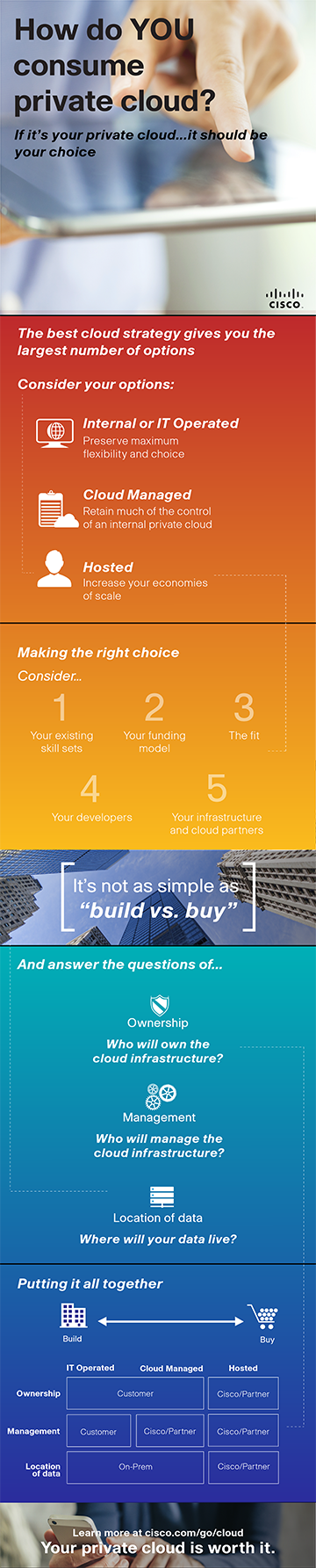
As outlined in my previous blog, the best cloud strategy gives you the largest number of options. Specifically, you will have to make decisions regarding (at least) three important elements:

(1) Do you need/want to retain ownership of the IT assets associated with your cloud project?

(2) Do you want your IT organization to manage your cloud environment?

(3) Do you prefer to keep the data and applications on-premises?

This infographic walks you through some of the key elements that you need to consider when you select your private cloud solutions. No matter what option you select, we can help you with your cloud journey.


2- Private Cloud infographic- final

Authors

Enrico Fuiano

Senior Solutions Marketing Manager

Cisco Cloud Marketing Team

Avatar

Many colleagues, customers, and Cisco partners have asked me, “Why isn’t Cisco AMP for Endpoints included in Gartner’s recent Magic Quadrant for Endpoint Protection Platforms (EPP)?” The answer to us is pretty simple. AMP was not categorized as a traditional “EPP,” and hence, was not included in the report.

According to Gartner, “Endpoint protection platforms form the basis of the enterprise’s toolset to provide anti-malware scanning along with many other endpoint security features.”[i] In their Magic Quadrant for EPP, they say, “the enterprise endpoint protection platform (EPP) is an integrated solution that has the following capabilities: anti-malware, personal firewall, port and device control.”[ii] In their category of “anti-malware scanning and protection”[iii], Gartner says that “signature detection”[iv] is a “required criteria for anti-malware scanning and protection.”[v] So to us, this means an EPP is primarily the definition of a preventative tool that performs endpoint antimalware scanning and relies heavily on signature-based detection methods – also known as antivirus (AV).

Cisco AMP for Endpoints goes beyond prevention, signature-based detection, and AV. Sure, AMP for Endpoints includes certain preventative capabilities, uses signature-based detection (among many other engines) when checking the disposition of files upon initial inspection, and will block malware in real-time. But the primary value of AMP for Endpoints is it provides deep visibility into file activity on your endpoints, detects malicious behavior that other security layers may miss, and gives you the control to stop it. At the end of the day, advanced malware can evade your front-line defenses (like antivirus, firewall, IPS) and get inside. You’ll never be able to prevent 100% of attacks. AMP for Endpoints gives you the visibility into executable and file activity that you need to quickly spot attacks that slip by your front-line defenses, and lets you remediate malware with a few clicks. Watch this demo to see what I mean.

AMP for Endpoints is comprised of four primary capabilities that give you that deep visibility and control:

  • Threat Intelligence: The Cisco Talos group analyzes millions of malware samples and terabytes of data per day, and pushes that intelligence to AMP for Endpoints so users are protected 24/7. Good threat intelligence lets you strengthen your front-line defenses.
  • Sandboxing: Advanced sandboxing capabilities, powered by the Threat Grid engine, perform automated static and dynamic analysis of files against 550+ behavioral indicators to uncover stealthy threats.
  • Point-in-Time Malware Detection and Blocking: Using one-to-one signature matching, machine learning, and fuzzy fingerprinting, AMP analyzes files at point of entry to catch and block known and unknown malware in real-time.
  • Continuous Analysis, Retrospective Security, Remediation: Once a file enters your network, AMP continues to watch, analyze, and record its activity, regardless of the file’s disposition. If malicious behavior is spotted later, AMP sends your security team a retrospective alert that contains the complete recorded history of the threat: where the malware came from, where it’s been, and what it’s doing. Then, AMP gives you the control to contain and remediate it with a few clicks.

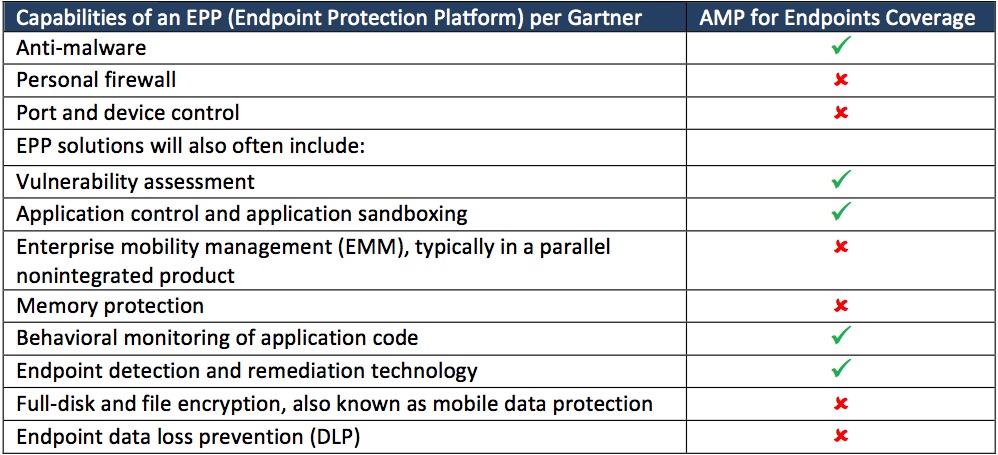
So given these capabilities, where do we think AMP for Endpoints falls in Gartner’s definitions and categories? AMP for Endpoints has some qualities of an EPP (as discussed above and see table below), but definitely most closely aligns to an EDR (Endpoint Detection & Response) solution. Gartner defines EDR solutions as having these four primary capabilities: detect security incidents; contain the incident at the endpoint, such that network traffic or process execution can be remotely controlled; investigate security incidents; and remediate endpoints to a pre-infection state.[vi] These are mostly response mechanisms, and yes, AMP for Endpoints surely hits 100% of these per the overview above. But AMP for Endpoints isn’t just about response, and goes further than that.  AMP does malware inspection, detection, and blocking on the front-end, provides preventative capabilities like vulnerability mapping and low prevalence executable identification, and includes built-in sandboxing to analyze unknown files at point-of-entry.

Although AMP for Endpoints is more likely a hybrid of an EDR, EPP, and Next Gen EPP solution, Cisco is included in Gartner’s Market Guide for EDR Solutions (published in December 2015) for its AMP for Endpoints solution. There is currently no magic quadrant published by Gartner on this category.  We look forward to further research in the future and hope to show AMP for Endpoints’ strength in each category of the security triad: prevention, detection and response.

But no matter what the parameters are for each category, EPP or EDR, an organization’s approach to finding the right endpoint security solution is still the same. Focus on the capabilities that your organization needs to effectively protect against threats. If you want to get the best threat intelligence to strengthen your defenses, sandboxing to uncover stealthy files, scanning of files at point of entry to detect and block malware in real time… and if advanced stealthy malware evades this and other front line defenses, the ability to continuously analyze file activity so you can quickly detect malicious behavior, see where malware came from, where it’s been, what it’s doing, and the ability to remediate malware with a few clicks… then AMP for Endpoints should be on your short list.

To learn more about AMP for Endpoints, visit www.cisco.com/go/ampendpoint

How AMP for Endpoints meets the EPP capabilities Gartner has noted these solutions will often include:

Capabilities of an EPP - endpoint protection platform - Gartner

How AMP for Endpoints meets the EDR solution capabilities as noted by Gartner:

Capabilities of an EDR (Endopint Detection and Response) Gartner


[i] “Evaluation Criteria for Endpoint Protection Platforms”, Gartner, Inc. Mario de Boer. March 24, 2015.

[ii] “Magic Quadrant for Endpoint Protection Platforms”, Gartner, Inc. Peter Firstbrook, Eric Ouellet. February 1, 2016.

[iii] “Evaluation Criteria for Endpoint Protection Platforms”, Gartner, Inc. Mario de Boer. March 24, 2015.

[iv] “Evaluation Criteria for Endpoint Protection Platforms”, Gartner, Inc. Mario de Boer. March 24, 2015.

[v] “Evaluation Criteria for Endpoint Protection Platforms”, Gartner, Inc. Mario de Boer. March 24, 2015.

[vi] “Market Guide for Endpoint Detection and Response Solutions,” Gartner, Inc. Peter Firstbrook, Neil MacDonald. December 16, 2015.

Authors

John Dominguez

Product Marketing

Cisco Security Business Group

Avatar
Icon_2_Data_StorytellersData Storytellers: Each month we’ll be highlighting experts and advocates to share their data stories, knowledge, and insights into the future of data and analytics. Subscribe to the RSS feed to get the latest updates.

In the article, Being a digital leader is not a role, it’s a competency, Ade McCormack outlines nine steps to revamp your business to compete in the digital economy. It’s not surprising that five of nine the steps involve IT.

The role of IT in digital transformation is to increase its span of influence beyond technology management to strategic partner. IT needs to provide access to information and collaboration among people, systems and processes.

AR53620 Access picFor the purposes of this post, I’ll focus on access to information. IT is increasingly faced with the challenges of managing complex data. There are more systems, sources and structures of data being introduced than ever before. Most IT organizations rely on central data warehouses, and use extract, transform and load (ETL) techniques to integrate data originating in multiple systems. Then Cloud came into the information architecture to further increase the complexity. All the while business analysts are clamoring for different cuts of data to make timely discoveries and decisions.

Now is the time for IT to shine

With the adoption of data virtualization, IT can become more agile in delivering required data to business users. Many companies have figured out the value of data virtualization. They rely on data virtualization as a single integration platform to query and access data across their network. This includes accessing data that resides in the cloud and on premise across various sources and systems.

Our data virtualization platform lets you query all types of data across the network as if it were in a single place. By providing business analysts with access to all the data, leaders can make better decisions, adapt to change more quickly, and reduce costs. And IT can enable this “universal access” environment without physically moving the data.

This streamlined approach to data integration helps IT deliver:

  • More insight from your data
  • Faster responses to ever changing analytics and BI needs
  • A flexible data management approach
  • Significant savings; 50-75% over data replication and consolidation.

It’s an exciting time to be in IT. Make the move from cost containment to top line revenue growth by delivering an agile data virtualization platform that can help to position you ahead of the competition.

See what customers are saying about Cisco Data Virtualization in the Forrester Total Economic Impact (TEI) Study. The report from Forrester evaluates the financial impact of investing in Cisco Data Virtualization and the potential return on investment (ROI) for the solution. In the report one Cisco Data Virtualization implementation had ROI of 346% in 8-9 Months. Seems like a viable alternative to ETL.

See customer stories and read the Forrester TEI study.


Join the Conversation

Follow @CiscoDataVirt and @CiscoAnalytics.

Learn More from My Colleagues

Check out the blogs of Mala AnandMike Flannagan, Kevin Ott and Bob Eve to learn more.

Authors

David Besemer

CTO

Data Virtualization

Avatar

10274_unmute_256

Since the release of the Cisco Aironet 2800 and 3800 Series Access Points is a big deal and can’t be confined to one 45-minute interview, “The No Strings Attached Show – Networking Without Strings” recorded a second podcast to further delve into the new products.

This second part of “The No Strings Attached Show” picks up from where Cisco Aironet 2800 Product Manager Brian Levin and Cisco Aironet 3800 Product Manger Mark Denny left off. Except it’s Cisco Tech Marketing Engineer Jim Florwick sitting on the hot seat, discussing Cisco’s newest products with podcast hosts Blake Krone and Samuel Clements. Florwick devotes a lot of the podcast to using these new products to design a state-of-the-art wireless network.

“This is such an interesting time,” Florwick said. “I’m pretty excited about [the products]. The 2800 and 3800 are real nice tools to have because it answers a lot of the challenges that we have every day.”

Florwick spoke passionately about every-day use cases and explained how organizations can benefit from the access points’ new features. He specifically spoke about how the Cisco Aironet 2800 and 3800 both supports 802.11ac Wave 2 with Multi-User MIMO, Flexible Radio Assignment and Smart Antenna Connector and how they can enhance a wireless network.

If you haven’t had a chance, listen to Part I by clicking here. To listen to Part II, click here.

Authors

Byron Magrane

Product Manager, Marketing