And that’s why they are attracted to public cloud.
Let’s face it, the developer experience with traditional IT is pretty miserable. When you have a request, IT needs to make sure they have the resources, then your request goes through the corporate approval process and (fingers crossed) it gets approved. This process presumes that no hardware needs to be purchased, racked and stacked and an operating system installed.
Developers want to focus on building and running applications. They don’t want to think about servers, networking, data centers or pipes. They just want it to work via self-service access through a dashboard or API.
From the perspective of IT, there is functionality that you provide that public clouds cannot such as visibility into and management of the full stack. This has been the hallmark of success for the central IT team. Continue reading “Bridging the Great Cloud Divide”
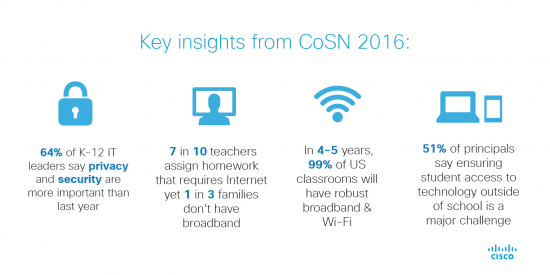
Last week, members of Cisco’s education team attended the CoSN 2016 Annual Conference in Washington, DC to engage with and learn from the country’s leading education experts.
The CoSN (Consortium for School Networking) conference provided an opportunity to discuss K-12 education technology and help school systems change their organizational culture to embrace digital and accelerate success.
Throughout the three-day conference, we were given the opportunity to hear inspirational speakers who are tirelessly working to digitize education – from policymakers and government officials to authors, philanthropists, and district technology leaders.
Here are some of the key things we learned from our speaker sessions:
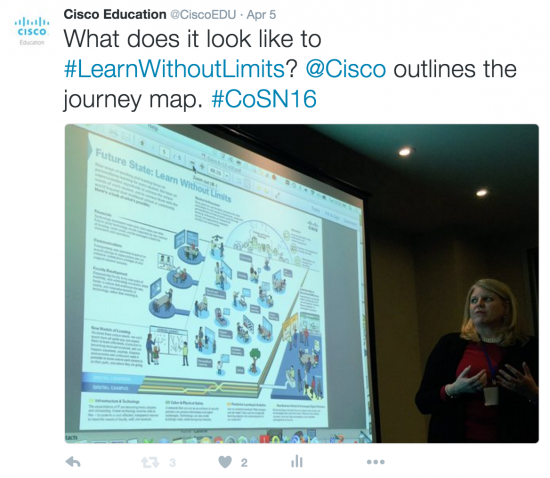
Our breakout session, “Imagine a Fully Digital School,” which was led by Mary Schlegelmilch (Business Development Manager) and Doug Walsten (Cisco Solutions Architect), took school district leaders through an interactive journey map to help them envision what their school district could look like with Cisco technology.
Throughout the conference, we were also stationed at the @InnovationCentral expo, where our team was able to meet with customers to discuss Cisco solutions in depth.
To see more from the CoSN conference, check out #CoSN16 on Twitter for a live feed from speakers and participants.
We look forward to the CoSN conference in Chicago, IL in 2017!
On April 12, 2016 the Samba.org project and Microsoft disclosed a vulnerability that is being referred to as Badlock. The Cisco Product Security Incident Response Team (PSIRT) is currently investigating the impacts of this vulnerability on Cisco products.
Based on our initial analysis of the vulnerability, we expect minimal impact to Cisco products. If any Cisco products are determine to be affected, we will disclose in accordance with our Security Vulnerability Policy.
Cisco customers running Microsoft products should review Microsoft’s guidance and take appropriate action.
Patch Tuesday for April has arrived with Microsoft releasing their latest monthly set of security bulletins to address security vulnerabilities in their products. This month’s release contains 13 bulletins relating to 31 vulnerabilities. Six bulletins address vulnerabilities rated as critical in Edge, Graphic Components, Internet Explorer, XML Core Service, Microsoft Office and Adobe Flash Player. The remaining seven bulletins address important vulnerabilities in Hyper-V, Microsoft Office and other Windows components.
Bulletins Rated Critical
Bulletins MS16-037 through MS16-040 and bulletins MS16-042, MS16-050 are rated as critical in this month’s release.
MS16-037 is related to six vulnerabilities in Internet Explorer. The most severe vulnerabilities allow an attacker to craft a website that executes arbitrary code on the victim’s device due to the memory corruption vulnerabilities in the browser. The attacker would be limited to executing code with same administrative rights as the current user, but with many users having full administrator rights, an attacker could use this to take full control of a device. To exploit the vulnerability the attacker must get the victim to view attacker controlled content. Previously, this has not proved a major limitation for attackers. Attackers have proved adept at sending spam messages, compromising legitimate websites and abusing web advertising networks to redirect users to malicious websites.
Guest Blog by Elizabeth Coyne, Managing Editor at Light Reading, who is responsible for driving the curriculum and direction of Upskill U.
There is no doubt that CSPs are facing a talent crunch as they transition from traditional networks to virtualized, software-based New IP networks. Others in the industry are also facing that same challenge, including suppliers, enterprises and even standards development organizations and open source groups. There just aren’t enough people with the right skillsets to go around.
The good news is that Light Reading and Cisco are doing something about it. Together we are launching Upskill U, a free online university aimed at upskilling and reskilling the communications industry on a variety of key topics essential to success in the virtualized, software-based future, including: network functions virtualization (NFV), the Internet of Things (IoT), cloud, telco data center, software-defined networking (SDN), open source, cyber security, 5G and more.
Upskill U’s goal is to educate business decision-makers around the industry on the latest technology changes impacting their businesses. But we are going beyond just acronyms like NFV, SDN, IoT, 5G and more, to offer insight and education on what these things are, what they mean for the industry and how businesses can leverage the changes to increase ROI.
Upskill U kicks into high gear with a module of four courses focused on virtualization. Roz Roseboro, senior analyst, Heavy Reading, will teach “Virtualization 101” on April 20 at 1 p.m. ET. She’ll tee up Josh Goodell, VP of Network on Demand & SVC Integration, AT&T, who is teaching a course on “Webifying the Network” on April 22, at 1 p.m. ET.
Upskill U courses are offered twice per week typically in the middle of the day so that North America and Latin America can “lunch and learn,” and folks in Europe can tune in at the end of their day. Courses are automatically archived so that they are available 24/7 for the rest of the world. All courses include an accompanying chat board where students can interact with each other and the lecturer – sharing experiences and knowledge – because upskilling in the industry today has to be a team effort.
Speaking of teams, Light Reading and Cisco have lined an exciting two weeks of initial courses, so hop on over to Upskill U and register today.
“Virtualization 101,” Wednesday, April 20, 1:00 p.m. ET: Roz Roseboro, Senior Analyst, Heavy Reading, covers all the important aspects of virtualization, including what it is, why it’s important, how it’s impacting the industry, the challenges and benefits and more.
“Virtualization: Webifying the Network,” Friday, April 22, 1:00 p.m. ET: Josh Goodell, Vice President, Network on Demand & SVC Integration, AT&T, focuses on the many facets of transformation, including provisioning and deploying services, cultural changes, DevOps and Agile methodology and new developments like IoT.
“Virtualization: Network Design & Infrastructure,” Monday, April 25, 12:45 p.m. ET: Nick Feamster, Acting Director, Center for Information Technology Policy, Princeton University, discusses the different approaches to building a virtualized, all-IP network, key goals and challenges.
“Virtualization: Automation,” Friday, April 29, 1:00 p.m. ET: Carl Moberg, Technology Director, Cisco, covers how service providers can benefit from automation for security, provision, cost-savings and more, and what a good automation strategy looks like.
To find out more about why Cisco and Light Reading teamed up for Upskill U and the need for education in the industry, keep your eye on Upskill U for a short video interview with Doug Webster, Vice President, Service Provider Marketing, Cisco, and Stephen Saunders, Founder and CEO, Light Reading.
When it comes to your customers, the solutions you sell may get your foot in the door, but let’s face it, it’s the relationships you build that elevate your business to “trusted advisor” status, which will lead to increases in retention and revenue over the long haul.
So how do you earn that trust and a reputation as more than just a technology provider?
Creating a Customer Value Exchange is an often-overlooked strategy for companies to grow customer satisfaction and achieve that “trusted advisor” status.
What is a customer value exchange? It’s a one-on-one meeting that starts with listening: It’s your chance to ask your customers to let you in on the state of their business—their goals, objectives, challenges and more. This is not the place to drill down on logistical issues, support tickets or other tactical details. Instead, it’s an opportunity to understand customer’s higher-level plans and the roadblocks they face, and how you and your team might play a role in addressing them.
By keeping the discussion at a strategic level, you can position yourself as a valuable resource—a business ally with the knowledge and expertise to help customers achieve their desired business outcomes. If a value exchange isn’t yet a part of your strategy, take a look at these six tips for getting the most out of your customer conversations:
Proactive planning: A customer value exchange allows you to discover previously unknown customer roadmap plans. For example, if the customer is adding to its product offerings or expanding into new markets, your discussion is the ideal time to review the associated IT service or support revenue implications—including factors which the customer may not have yet considered or fully fleshed out. By being a part of forward-looking strategic planning discussions, you can help them proactively prepare for these business changes in order to achieve success. The key is getting in on these plans early, and that’s what regularly scheduled discussions will allow you to do.
Raise your profile: In focusing on strategic plans, the customer value exchange will inevitably expose you to other more senior leaders within the customer organization. This presents an important opportunity to forge new alliances, and deepen or expand your understanding of your customer’s needs.
Be consultative: Exposure to the organization’s broad base of challenges gives you insight into the solutions that you can offer – not just to support customer’s needs today, but also over the long term as they work toward specific goals. What may be the best short-term IT solution may not be the right one for achieving goals over a longer period of time. In this way your strategic advice can have a powerful impact.
Talk trends: Your discussion with the customer should not be about self-serving sales pitches, new offerings or flashy demos. Instead, it’s a time to discuss the business challenges that are impacting your customers in the markets they serve. Whether they target local, regional or global customers, or operate in specific vertical industries or the SMB market, this is your opportunity to help them assess the top trends as well as the associated technology solutions that can give them a competitive edge.
Hits and misses: The customer value exchange is also an ideal time to bring up any lessons learned since your last conversation together. Come prepared with a report (an executive-level summary should be sufficient) to demonstrate IT and ticketing trends within the customer’s own business. Be ready to discuss—at a high level—what’s working well, what you might need to adjust, and the best practices that other clients are using that are making a difference.
It’s not all about you: During your discussion, take an outlook that some of the meeting issues may not fuel growth for your business at all. That’s quite OK, because the customer will recognize that you’re taking a selfless approach, and that means they will be more open to your advice and to placing increased trust in your partnership in the future.
Be proactive about having regular, consistent and valuable conversations with your customers. Sending meeting reminders and potential agenda topics in advance will keep you both on track. After a few of them go well, these discussions will become value-added, can’t miss meetings that your customers will prioritize.
Want to learn more about creating a customer value exchange?
Cloud is king, right? Democratizing IT to the masses. Speed, speed, speed. But wasn’t it supposed to simplify everything too?
With business convenience and agility came an IT spaghetti chart of systems. SaaS Silos. IaaS sprawl. Legacy data integration nightmares. Throw in some Big Data and Hybrid Cloud initiatives. Sound familiar? This spaghetti chart is the multi-cloud maze IT must navigate.
When chatting with customers, I usually ask, “How many Cloud Services are you using?” CIO’s, CTO’s and Architects usually always pause… rightfully so. Business groups and developers need to move faster than ever. Faster than IT has been able to react (nefarious “Shadow IT”).
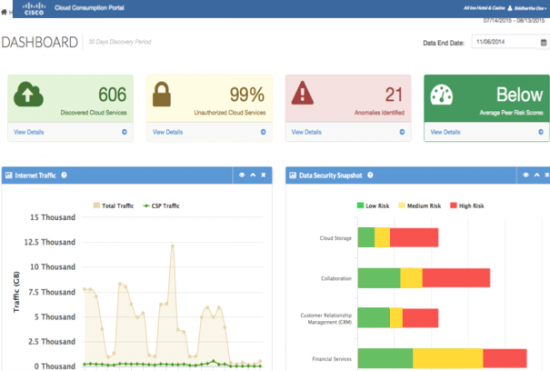
IT, across industries, on average discovers 1,220 cloud services! And that number is only accelerating!
The reality is IT faces a multi-cloud maze. A swelling population of SaaS apps. Various public cloud environments, some approved and many not (Shadow IT). What about a multi-environment data strategy? Compliance and Risk Management? Customer Data governance? All of these challenges add to the complexity of the multi-cloud maze.
Here are 3 Keys for IT to successfully navigate the multi-cloud maze:
1: Multi-cloud Governance
You can’t manage what you can’t see. How many public cloud services are your users accessing? What sensitive data is involved? What is your company really spending on cloud? I think we are compliant?
Ignorance is not bliss in a post-Snowden world. No company can be blind about its data and security controls. IT cannot be an ostrich with its head in the sand to both risk AND business demand. Governance gets a bad wrap. Yes, if done poorly it’s process overkill. If executed well, it mitigates risk and aligns IT with business strategy.
IT does not need to manage every cloud service they discover. However, they do need to own the multi-cloud governance strategy. IT needs to optimize across security risk, compliance, and business strategy.
Maybe Steph Curry can shoot blind. But CIOs need visibility into existing cloud usage before they can tackle multi-cloud governance. This snapshot of the existing cloud landscape will serve as the foundation for your multi-cloud governance strategy. With visibility comes enlightenment. With enlightenment comes the power to begin Data Governance, across clouds.
Cloud discovery tools such as Cisco Cloud Consumption Service simplify multi-cloud governance. The SaaS solution discovers and continually monitors network traffic across 150 risk parameters so that you can sleep a little bit easier at night. By conducting a Shadow IT audit, IT can accurately gain visibility into their existing risk profile. Based on the severity of data and criticality of operations impacted, an action plan can be built to address any major risks, demands, and cloud cost challenges.
2. Chief Integration Officer
Business demands are accelerating and IT budgets are shrinking. IT has more project requests than bandwidth or budget. Nothing new, but the pace is accelerating. Obviously IT can not do it all. Multi-cloud governance is not about handcuffing the business for going rogue. Instead, it’s about optimizing risks, costs, and strategy. However, this optimization must address the spaghetti chart of SaaS, IaaS, and legacy systems. This paradigm yields a new role for IT, Chief Integration Officer.
Certain legacy apps will never be re-written for the cloud. However, if ‘data is the new gold’, IT must connect and integrate data to unlock business value.
As Chief Integration offer, consolidating redundant IaaS can save millions
This involves connecting both systems of record (typically legacy and SaaS) and systems of engagement (SaaS). To be successful IT needs to consider a composable architecture of APIs and microservices. New business apps can be developed exposing data in legacy systems via APIs, creating endless possibilities for business innovation. With a composable API mindset, IT can integrate data across a plethora of SaaS apps as well. More importantly, this approach empowers IT to take on more projects AND deliver them more quickly.
In addition to integrating data resulting from cloud sprawl, IT can begin to align their capabilities and roadmap with business demand. One beautiful thing about cloud discovery tools such as Cloud Consumption Service, is that it provides visibility into the true needs of your users. With these insights, IT can begin a capabilities analysis of IT’s existing services. These can then be cross-referenced with business needs. This model enacts “IT as a Broker of Cloud Services”. IT can implement a single uniform catalog for users to choose from various approved cloud providers. For example, IT can consolidate multiple public cloud instances across the company, saving millions. Millions that can be reinvested into the business as new projects.
3. A Happy Hacker Strategy
Have you used a public cloud? The experience as a developer is amazing. Enter your credit card information and run. Need more resources? Click. Tear down a server and start over? Click. Want APIs for granular access to configure and automate every part of your deployments exactly the way you need them? No problem. Built-in integration with the modern tools? Of course.
Shadow IT is not the bubonic plague as some may say. Rather it’s the response of businesses needing to move faster than ever. It’s the response of employees who are at the heart of driving innovation in the business, ‘Developers, Developers, Developers’.
Developers want to move fast. They want to use their tools, now. So to truly have a multi-cloud strategy, IT needs to think through a Happy Hacker strategy. A strategy with developer speed and convenience at its heart.
By conducting a capabilities analysis of IT and user needs you can begin to shrink any gap. For example, we have customers who were blind to the true needs of their users. After gaining visibility into Shadow IT usage, they then sanctioned and consolidated public cloud instances ($$$). Additionally, they offered managed private clouds with PaaS integration such as Cisco Metapod for the ultimate agility. Developers are happy with modern tools and platforms and IT doesn’t have to undertake a complex cloud initiative solo.
So there are 3 keys to help navigate the multi-cloud maze: Multi-cloud governance, Chief Integration Officers, and a Happy Hacker strategy.
Let me know how your multi-cloud maze journey is going and safe travels!
Jamie Alfieri,
Twitter: AlfieriJamie
Want to Learn More?
If you would like to learn more cloud governance best practices, we invite you to join our free Webinar Series:
Multi-Cloud Governance Simplified: April 14 9AM PST / 12PM EST
The International Security Conference & Exhibition – also known as ISC West – is the largest physical
security industry conference in the U.S., covering Access Control, Alarms & Monitoring, Biometrics, IP Security, Video Surveillance / CCTV, Networked Security Products and more. At ISC West, held the week of April 4th, over 29,000 attendees discovered the newest security products and security technology from over 1000 international and domestic manufacturing and technology companies. ISC West is the only event that brings the entire security channel together in one place and conference attendees represent over $50 Billion in Buying Power. It provided a great venue for Cisco to promote our presence and solutions to the Safety and Security marketing place and discuss upcoming projects with customers and partners.
While at ISC West 2016, Cisco was able to highlight a number of our solutions and products and feature
several partners. Cisco’s Connected Safety and Security portfolio is delivering important capabilities to help protect the networks, devices, applications, users and data that make up the Internet of Things (IoT). Cisco solutions which where showcased included:
The most recent release of our Instant Connect software solution, which includes an integrated phone dialer and live video streaming client now available to customers. Cisco Instant Connect supports public safety, utilities, and industrial customer needs with multivendor, interoperable-broadband technologies and provide the ability to connect different systems that unify P25, LTE and public safety broadband technologies.
Keeping schools and students safe and secure is a priority. The Cisco Secure Public Places holistic approach to school safety and security integrates physical security devices with IT infrastructure to secure K – 12 environments and leverage Cisco’s board product portfolio to move security from a forensic tool to a preventative and automated solution.
Video Surveillance and analytics are key components of the safety and security of many organizations and Cisco’s Intelligent Video solutions use these elements to provide real-time monitoring of the environment, people and assets providing a recorded record for investigative purposes.
Connected Assets for Sites leverages Cisco’s fog computing, industrial router, IP cameras and management software to enable customers to gain visibility and remote management of unmanned assets. Business Intelligence (BI) insights allow optimize operations while improving efficiency and productivity.
Cisco Connected Transport is driving greater safety, efficiency and mobility by using Cisco converged networks which enable data sharing across all modes of transportation
Safe and Secure Campuses at colleges and universities help create environments where students can thrive. The Cisco holistic approach to safety and security integrates physical security devices with IT infrastructures.
We were also pleased to work with several partners at the show including:
In support of Cisco’s IoT strategy, we have teamed with Identiv for access control and identity management. Identiv brings significant experience and capabilities to the physical access control market, and has built up a reputation for open standards, high security and reliability.
iOmniscient talked about its IQ Smart Cities initiative and inclusion as a key component in Cisco ‘s Intelligent Video solution. iOmniscient’s focus is on making cities safe, smart and efficient by pulling together its capabilities in video, sound and smell analytics focused on behavior, license plate recognition and face recognition in a crowd.
Rollts Domino which allows users to wear a push to talk device connect via Bluetooth to the Cisco mobile client application. It is a complement to our Instant Connect solution.
Davra provides a customer premise or cloud based application enablement platform that takes critical data from the network and any connected devices or sensors and publishes it through an IOT open API making it easy to build and run IoT applications. Davra is an important part of our Connected Transportation solution.
azeti SonarWise Remote Site Asset Management maximizes the efficient usage of assets in large scale infrastructures. The combined Cisco/azeti solution provides organizations a comprehensive view of their physical assets, the operational performance, and their energy consumption. In addition, because all data is stored and processed locally at the edge, critical operational intelligence continues to be collected, even if the connection is lost.
As a follow up, Cisco is hosting an Unified Instant Communication webcast on April 19, 2016 at 11:00 am EDT US. Please join us to hear from experts on how the Cisco Instant Connect solution can help you connect sensors to the Internet, make your job easier and reduce cost as we cover:
Push to Talk and radio integration
Public Safety and Private LTE Devices & LTE Networks
Radio Migration to Converged all IP based P25 networks
“Support Automation” has been a promise for some time. We’re now living the reality. So real, that we often don’t even acknowledge how ubiquitous support automation has become in our personal lives, whether it is pre-filled online forms or customized recommendations automatically pushed to us based on previously expressed interests in our personal profiles.
Think back a few years and ask yourself, How much is this support website or mobile app automatically doing today that I used to do on my own? Chances are, quite a bit, especially if you’re using Cisco smart services to help keep your network running smoothly. But are you aware of all the Cisco automation tools available to you and/or are you optimizing their full utility?
Provided in the SlideShare below are a list of six of our most frequently used support automation tools and how they can help ensure network performance, even as they accelerate issue resolution. Best of all, the resources are all included standard with your Cisco support contract. Scan the list to make sure you’re taking full advantage of each. And then share them with your colleagues who might also benefit.
We are always percolating enhanced support ideas in close consultation with Cisco customers and partners, and stepping up automation across all digital channels – web, mobile, APIs, machine-to-machine, and others we are still exploring.
What’s on your wish list for a more streamlined, automated support experience? Please provide your ideas or comments below.












 2. Chief Integration Officer