OK, I accept it’s a poor pun, but there’s never been a better time to use it!
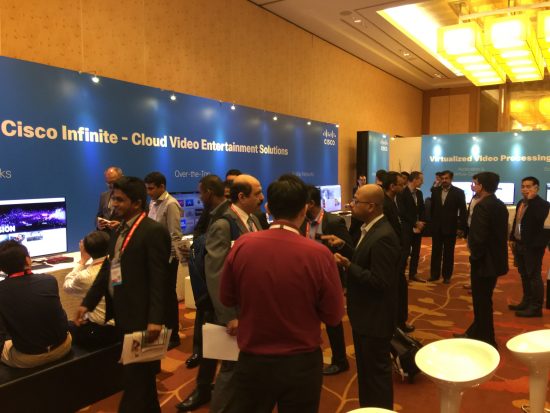
We are at ANGA COM this week, where we’ll be showing our Infinite Home and Infinite Video solutions on the Cisco stand. A few of us will also be speaking at the conference, one of the hot topics being the impact that cloud is having on video, and the entire delivery chain.
It’s an amazing time as we no longer need to evangelize the benefits of the cloud. The industry is hungrier than ever for cloud transformation, having seen the value it is bringing to early adopters. If you’re looking for evidence that we’ve hit, and passed, the pivot point from ‘should we’ to ‘how do we’, look no further than the session agenda in which ‘how to’ sessions feature prominently.
As our industry embraces the opportunities that the cloud brings to improve speed, reach and experience it’s time to start talking about the how, and not the why. Of course, there are still some challenges out there – how to differentiate your service in an increasingly crowded market place, how to ensure that your service is the one that consumers choose, and remain loyal to, and how to secure and protect your business.
And those are exactly the issues we, at Cisco, address. Because we’ve been leading in cloud transformation, we’re best placed to help you navigate the ‘what’ and the ‘how’ of cloud and OTT delivery. From catch-up to live, time-shift to VoD, across a whole range of devices, we’re helping our customers transform their business.
Come see us at ANGA, and don’t look back! You can find us in Hall 10.2, Stand H21. See you there!
As we know, there is no better way to compare performance than by using industry-standard benchmarks, and with Six new world record benchmark performance results Cisco has demonstrated Cisco Unified Computing System’s outstanding performance and IT productivity across key data center workloads. Check out the Performance Brief for additional information on the nine new Cisco UCS world record benchmarks. The detailed benchmark disclosure reports are available here.
Cisco’s results demonstrate the extent to which Cisco UCS servers with large memory configurations deliver the power of the new Intel Xeon processor E7 v4 family. Compared to Cisco’s previous-generation servers powered by the Intel Xeon processor E7 v3 family, Cisco’s new servers demonstrate dramatic improvements in raw CPU power as well as in business and parallelized application performance.
With performance improved by up to 39 percent since the last processor generation, the performance leadership across a wide range of workloads provided by Cisco UCS is validated by the six world records announced today summarized below:
SPECint_base2006=71.5 – Best 4-socket result with 10.8% improvement since the last processor generation
SPECfp_rate_base2006=2380 – Best 4-Socket result with 19% improvementsince the last processor generation
SPECompG_base2012=26 – Best 4-socket result with 25% improvement since the last processor generation
SPECompG_base2012=13.4 – Best 2-socket result with 29% improvement since the last processor generation
max-jOPS=189,334 critical-jOPS=128,990 – Best 4-socket result for critical jOPS with 29.4% improvement since the last processor generation
SAPS score=224,330; users=41,025 – Best 4-processor, 2-tier result on Microsoft Windows with 39.5% improvement since the last processor generation
It is interesting to note that although all vendors have access to same Intel processors, Cisco UCS unleashes their potential to deliver high performance to applications through the power of unification and performance optimization. Cisco UCS integrates industry-standard x86-architecture blade and rack servers with networking and storage access into a unified system. Automated server and network configuration let you quickly and easily deploy new applications, repurpose existing servers, and scale applications with configurations that are compliant with your IT standards.
The architectural advantages of a single cohesive system optimized for virtualized environments coupled with the industry leading benchmark performance results makes the Cisco Unified Computing System an “infrastructure platform of choice” to provide industry-leading performance in your data center. For additional information on Cisco UCS and Cisco UCS solutions please visit Cisco Unified Computing & Servers web page.
Disclosures
The integer processing performance improvement of 10.8 percent compared the SPECint_base2006 score of the Cisco UCS C460 M4 Rack Server with the previous-generation Cisco UCS C460 M4 Rack Server, a result that was available on May 5, 2015.
The floating-point throughput performance improvement of 19 percent compared the SPECfp_rate_base2006 score of the Cisco UCS C460 M4 Rack Server with the previous-generation Cisco UCS C460 M4 Rack Server, a result that was available on May 15, 2015.
The rack server parallel-processing performance improvement of 25 percent compared the SPECompG_base2012 score of the Cisco UCS C220 M4 Rack Server with the previous-generation Cisco UCS C460 M4 Blade Server, a result that was available on May 15, 2015.
The blade server parallel-processing performance improvement of 29 percent compared the SPECompG_base2012 score of the Cisco UCS B260 M4 Rack Server with the previous-generation Cisco UCS B260 M4 Blade Server, a result that was available on September 8, 2014.
The Java application performance improvement of 29.4 percent compared the SPECjbb2015- MultiJVM critical-jOPS score of the Cisco UCS C460 M4 Rack Server with the previous-generation Cisco UCS C460 M4 Rack Server, a result that was available on May 5, 2015.
SPEC, SPECfp, SPECint, SPECjbb, and SPEComp are registered trademarks of Standard Performance Evaluation Corporation. The benchmark results used to establish world-record status are based on those available at http://www.spec.org as of June 6, 2016.
Cybersecurity for the federal government is increasingly complex. More and more important data is being stored or shared using the Internet, and at the same time, hacks and other cyberattacks are becoming more sophisticated and frequent. Agencies need to stay on the cutting-edge of cyber solutions to ensure critical citizen data and military information are protected. Right now, federal agencies are moving away from point-in-time monitoring towards a more continuous approach to help fix our country’s critical cyber weaknesses.
The Department of Homeland Security (DHS) developed the Continuous Diagnostics and Mitigation (CDM) program to help agencies bolster their cyber defenses through continuous monitoring. Continuous monitoring – as opposed to point-in-time monitoring – improves response times, increases threat visibility and reduces down time. It allows for agencies to have adequate, risk-based and cost-effective cybersecurity and more efficiently allocate cybersecurity resources. The CDM program calls for agencies to deploy a variety of solutions across the attack continuum to expand their continuous diagnostic capabilities.
To fulfill the CDM mandate, federal agencies need to select a technology partner that can help them enhance their cybersecurity without increasing complexity. Here at Cisco, we think that means three things: integration, consolidation, and automation. So we developed cyber solutions that integrate seamlessly into agencies’ current infrastructure, share information in real-time, can be a service from the cloud, and automate workflow and threat-response whenever possible. Because they are integrated, consolidated, and automated, these solutions aren’t incredibly complicated to use, but they can greatly improve agencies’ cyber capabilities.
At Cisco, we have CDM solutions for policy and access, next-generation network security, advanced threat protection, and content security. All of our solutions can help federal agencies fulfill the CDM mandate, stay on the forefront of cybersecurity technology, and best protect their critical information – a win-win-win.
Our CDM solutions are well-respected by industry and government agencies alike. In fact, Cisco’s Peter Romness, the U.S. Public Sector Cybersecurity Solutions Lead, just spoke at a recent FCW event on CDM about how it is helping to enable digital government. Digitization represents a $19 trillion opportunity, but the federal government can’t tap into that opportunity without first ensuring the security of their data. Romness highlighted Cisco’s ability to provide protection across the entire attack continuum and across multiple threat vectors, and that Cisco turns that unmatched visibility into the best threat intelligence in the industry.
To hear Peter’s full speech on CDM and Cisco’s unparalleled security capabilities, click here. And you can check out our latest whitepaper to learn even more about Cisco’s cyber solutions for CDM and continuous monitoring.
When I was a girl, my parents taught me that anything was possible for me (besides being a singer…). Yet the majority of women continue to believe that they cannot pursue a successful career in science, technology, engineering, and math (what we now affectionately call STEM). They are all too often intimidated by these classes at a young age and do not believe that they are good enough for it. The number of female researchers, software developers, and technology entrepreneurs is growing, but it is still too low – around 20%. My peers consistently tell me that they want to help change this situation.
However, when looking for technology professionals, they still receive more resumes from men than women. These statistics, along with having two daughters of my own, keep me busy thinking about what we should be doing to make girls know that technology is not only fun and rewarding, but it is for everyone – not just the boys. I had two special opportunities in the last few weeks to explore these questions with others who share my passion and concern.
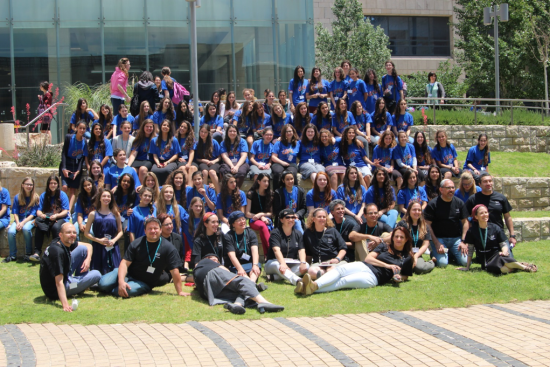
My daughter and I were invited to speak at a Girls Power Tech event hosted by Cisco in Jerusalem. This group is focused on encouraging high school girls to get involved in STEM. I was very proud to see my own daughter, who is not only bright and confident but is already engaged with technology, mentoring other young girls.
This generation of digital natives is fortunate to have grown up so connected. Navigating smart phone apps, talking to Apple’s Siri or Amazon’s Alexa, and having the opportunity to develop software in school makes technology second nature to them. But they still need active encouragement from adults to know that careers in technology offer great opportunities and are easily available to them – it’s not just to a boys’ club.
We must find ways to consistently promote technology-oriented books, toys, and discussions with girls at a very young age. If we wait until they are teenagers, it may be too late. Adults start asking children as young as two years old what they want to be when they grow up. We will have missed a big opportunity to shape their opinions about what type of career is achievable if we don’t talk and expose them to technology at a very young age. We need to make it natural and obvious to them.
I also participated in a panel on the same topic at the annual International Women’s Forum Cornerstone Conference. I shared the stage with four extraordinary women on a panel titled “Women in Tech: Leading the Future.” The session was filled with insightful discussion and heated debates about how to drive cultural shifts and create more role models for young girls. Jackie Glenn, VP and Global Chief Diversity Officer at EMC, shared how she didn’t think technology was for her when she began her career, but now she has excelled to become a senior-level executive at one of the industry’s leading companies.
Ruth Polacheck was so passionate about making programming fun that she founded She Codes, an organization where girls can explore their interests in a safe, supportive community. Anya Eldan is Program Director at the Technological Incubators Program Office for the Israel Ministry of Industry, Trade and Labor, serving as a role model for what is possible. Moderator Michal Divon, an anchor for i24 News, led the discussion which touched on the need for increased mentoring especially when women are early in their careers.
As a part of Cisco, I am privileged to work for a company that understands that diversity in the workforce leads to greater collaboration, ideas, and innovation. We have a large number of female executives and are always finding new ways to help young people grow their technology careers.
We recently launched Cisco IoT Pathfinder, a series of free training webinars designed for women, men, and students interested in expanding their skills for the growing IoT economy. Created in cooperation with Global Knowledge, an IoT Talent Consortium partner, IoT Pathfinder provided free training on cybersecurity, data and analytics, and cloud and fog to over 1,700 people. I’m encouraged that 77% of survey respondents said they want to pursue a career in IoT.
Looking back at all these activities, I cannot stop thinking, is that enough? Are we driving significant change, is it fast enough? There are so many organizations and groups who are very passionate, but are we too fragmented?
I believe that we need to do a better job in bringing all of these efforts closer together, so we can make a stronger impact. We also need to make it a leadership and boardroom initiative on a wider scale, and not leave it to women’s organizations alone. We can start small, bring all these initiatives under one web site, connect the dots, and leverage each other’s’ work. Or maybe there are better ways?
*#CiscoChat is a social chat series that brings technology and business experts together so you have an opportunity to engage, discuss, and ask questions in real time. The conversations will take place live on Twitter or Google+ Hangout On Air.
During the past few weeks, there’s been a lot of chatter regarding FCC 14-30. In early June 2016, the FCC published FCC 14-30 Order, which now allows the use of three additional channels (120, 124, and 128) as well as other power adjustment and updated DFS regulations. Cisco’s compliance with new rules requires the assignment of hardware to a regulatory domain, indicating which rules the device complies.
The new –B regulatory domain was designed to take the place of –A so that access points will be compliant with the FCC 14-30 Order. Per the FCC order, access points shipped before June 1, 2016 are grandfathered to adhere to –A requirements. Access points shipped after the June 1 date must meet the –B requirements. This includes changes in DFS detection requirements, which must re-certify according to the new rules.
I’ve been hearing from a lot of customers who don’t want to mix the two regulatory domains in their networks. But there simply is no reason not to do so.
You won’t get an argument from me, there are a few nice things in a –B access point that aren’t available in an –A access point. Things that we all want: more 5 GHz channels and more power in U-NII 1. However, other than those minor changes, the –B and –A access points are the same. There are absolutely no operational issues in running both –A and –B on the same controller or controllers.
For example, let’s say you’re adding some access points or building out a new area – and you mix –A and –B access points, what will happen in terms of operations?
If the new channels aren’t added to the DCA list—and by default, they are not—they will not be assigned to any of the –B capable access points. If the new channels are added to the DCA list, it will only be assigned to the –B access points. This won’t be a problem as the clients will still use 120, 124, 128 where it’s available.
I have been in this industry for a long time and I’m not aware of any clients that support U-NII 1, 2, 3 that have failed in these channels. If, for some reason this does happen, simply remove the channels. No harm, no foul.
That leaves different allowed transmit (TX) power. There will be no issues here either – since TPC still works the same as it always has. The Cisco access point product line still operates with a mix of allowed powers in the 5 GHz UNII bands under the –A rules. The Neighbor Discovery Protocol is normalized for this reason and Radio Resource Management (RRM) works just fine. There are no known issues with mixing –B and –A radios in the same air on the same controller. If a user wants to stay consistent about power implications, simply set TPC Max to enforce max power to –A globally and in RF Profiles when in use.
In the last sentence I talked about consistency, and there are a lot of customers—myself included—that just don’t like the idea of a mixing anything. I go so far as to stay away from milkshakes and just eat ice cream cones, when I want a cool treat. But the reality is this is not like mixing Cisco Aironet 1130 and Aironet 3700 Access Points in the same room. Once your –A and –B access points are plugged in and running no one would ever know that a mix existed.
We don’t have operational hiccups absorbing this change like some of our other competitors. At Cisco, we’ve been running mixed environments in Alpha production networks since the Cisco AP 1810 was in development—and that’s a fair amount of time to find irregularities and observe errors. Cisco Mobility Express is built on a –B access point, and supports the –A access points. These devices have been tested over thousands of hours and work as expected.
There is really no reason other than just the perception of a mix to be worried. With that being said, I’m heading down to the ice cream shop and enjoying a frosty milkshake. I hear that they’re really great!
To read the entire Product Bulletin, click here. To read the entirety of Cisco’s response, click here.
Forget trying to offer cost savings, you need to meet your customers where they are today, not where they were two years ago. And that means helping them solve a wider range of business problems.
Just a few years ago, cloud services were all about dollars and cents. Infrastructure-as-a-Service (IaaS) was the biggest demand from cloud service providers (CSP). Enterprise customers were focused on cutting capital and operational costs. My, how things have changed.
Today, IaaS margins are eroding as cloud infrastructure is commoditized. Enterprises view cost savings as a given for any cloud service. They are now asking their CSP partners tougher questions: How can you help me innovate? How will you help me expand into new markets faster? What can you give me to gain an edge on my competition?
Enterprise expects more from CSP
“Increasingly, users are demanding that their CSPs deliver enterprise-ready, value-added, easily scaled services with security baked deeply within,” says Katie Broderick, research director of 451 Research. “They want hosted cloud solutions that are deployed on demand, tuned to specific dynamic workloads, and easily cloud-interconnected in hybrid models. In other words, the hallmarks of cloud are now speed and agility, but most of all services.”
Customers are now consuming cloud services in new ways. This gives you the chance to offer unique value and grow your business. Or, you could get pushed out of the cloud services value chain. So how can you make sure your business ends up on the winning side?
The rise of cloud 2.0
According to a 451 Research survey, customer expectations for cloud services have transformed. So much so that the firm dubbed these services: ‘Cloud 2.0’.
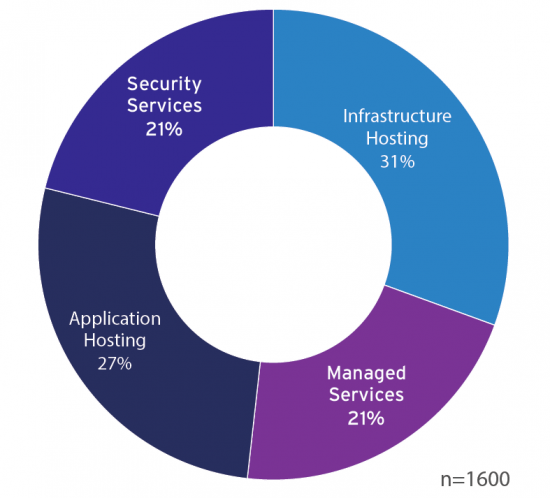
The first wave of cloud services offered a low-cost alternative to on-site infrastructure. But for the most part, these were one-size-fits-all solutions dominated by IaaS hosting. Today, nearly 70 per cent of the cloud business opportunity lies elsewhere [see Figure 1].
Figure 1. Cloud Services Opportunity, via 451 Research Hosting and Cloud Study, 2015
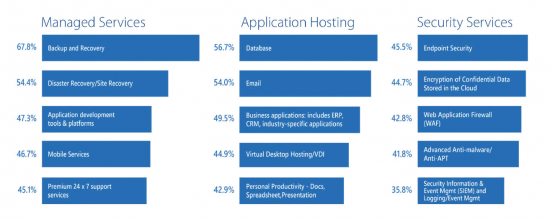
Customers are now in the driver’s seat. You must go beyond cost savings and help them solve a wide range of business problems to compete for their business. [see Figure 2]. You could provide enterprise-grade security services. You might offer managed backup and disaster recovery. You may help them with regulatory and data sovereignty compliance. Or you could manage their entire private or hybrid cloud.
Figure 2. IT Interest in Value-Added Services, via 451 Research Hosting and Cloud Study, 2015
The bottom line? Cloud 2.0 customers want value-added services. They demand the ability to implement what they need, order it through a self-service portal, and deploy it in minutes, not weeks. They want you to reduce their time to market, lower their risk, and help them be more agile and innovative.
Where can you add the most value?
There are ample opportunities for CSPs to stand out in the marketplace. But you need the infrastructure and vision to deliver cloud services in the ways your customers want to consume them. And there’s no single answer for every customer. Here are some options:
Software as a Service (SaaS): Many customers want SaaS applications but have strict security and compliance requirements. Can you deliver SaaS solutions with enterprise-grade security, data sovereignty, and reliability?
IT as a Service (ITaaS): Some IT customers want to act as cloud services brokers to their line-of-business (LoB) and development teams. But they don’t want to deal with a dozen different cloud providers individually. Can you aggregate everything they need into on-demand solutions, with guaranteed uptime under service-level agreements (SLAs)?
Application development: Some customers want to create their own new cloud-native apps. Can you combine application programming interfaces (APIs), developer tools, infrastructure, and Platform-as-a-Service (PaaS) capabilities into a single offer?
Managed private or hybrid cloud: Some customers want the speed and flexibility of the cloud, but prefer to outsource management. Can you assemble the right capabilities (on- or off-premises data storage, workload portability across clouds, multi-cloud policy control) to meet their needs?
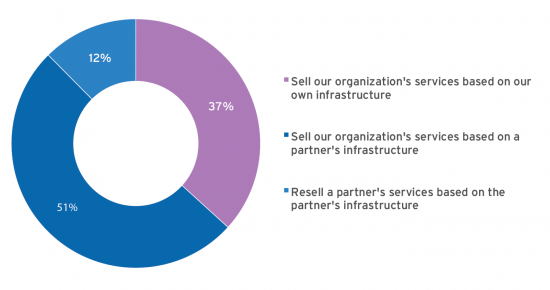
It’s a lot to consider. And you must be prepared to support different consumption models not just for individual customers but, potentially, individual workloads. This is a big ask. The most successful cloud solutions will be delivered through partnerships, where you provide customers with best-in-class cloud resources and applications in easy-to-consume packages [see Figure 3].
Figure 3. Projected CSP Revenue Breakdown, via 451 Research
The key is to build your business model around ‘strategic flexibility’. By working with more partners you can meet a greater range of unique customer demands. And you’ll have more options to grow where the opportunity takes you.
Cloud 2.0 in action
It may sound hard to adapt your business models and infrastructure to the new Cloud 2.0 but it’s not. Many CSPs have done it already.
TELUS delivers private and public cloud IT services, seamlessly moving workloads from one to the other as customers choose. Customers can select the best solution on an application-by-application, or even workload-by-workload basis. They can scale in the cloud while keeping data onsite. And they can ramp up new capabilities much faster.
Quest provides pre-integrated cloud solutions that combine Microsoft Exchange server, SQL, SharePoint, and other critical business services. They are available on demand, fully automated and self-service. Quest has cut through the complexity for its customers, and can deliver new managed services at scale, faster, and at a lower cost.
United Data Technologies (UDT) offers a full range of on-demand cloud services – SaaS, IaaS, PaaS; public, private, and hybrid cloud. Customers can bring up new locations in a few hours. They can activate pre-provisioned services with the click of a button. And they can retain local control over data and security.
Ready to get started?
Cloud 2.0 can be a huge boon for your business. To capitalize, you’ll need a technology base that can accommodate new services and consumption models. That implies an underlying services infrastructure that can work seamlessly across diverse hardware, applications, and clouds. It has to be designed for automation, so you can use simple, repeatable processes as you develop and deliver new services. And it should use software-defined networking (SDN) to simplify provisioning, accelerate rollouts, and reduce total cost of ownership (TCO).
A Cloud 2.0-ready infrastructure is just the beginning. You’ll face questions about whether to build, buy, or partner as you bring new services to market. But with sound planning and a versatile cloud foundation, you’ll have the flexibility to answer them on a service-by-service basis, with agility, transparency, and speed.
Miami-Dade County Public Schools (M-DCPS) wanted to cut costs and improve student results. Cisco Digital Ceiling is illuminating the way.
As the fourth largest municipal school district in the United States, M-DCPS in Miami, Florida has approximately 22,000 teachers and 350,000 students.
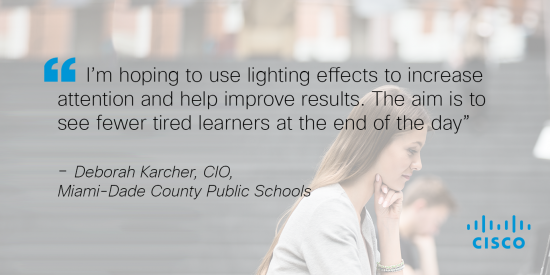
In the hopes of attracting and retaining more students and teachers to Miami-Dade County Public Schools, Deborah Karcher, Chief Information Officer, looked to Cisco’s Digital Ceiling solution for an innovative use of technology in her schools.
As a result of the solution, which controls lighting, air conditioning, and other building networks in one IP-based infrastructure, M-DCPS is seeing major returns on their investment.
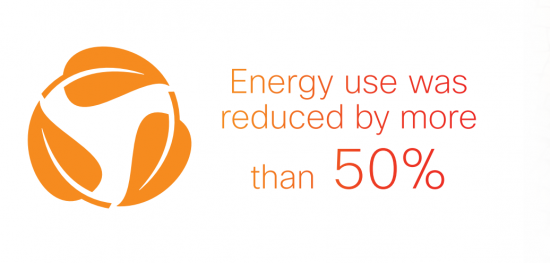
Javier Perez, Executive Director of Infrastructure and System Support said, “One classroom went from using 750 watts to 350 watts for a 50 percent saving in energy.”
To read more about the Digital Ceiling and Miami-Dade County Public Schools’ implementation of the solution, read the full case study or visit cisco.com/go/digitalceiling.
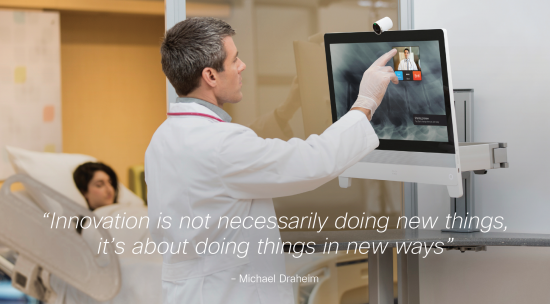
As part of Cisco Live Melbourne, the Health Innovation Roundtable was established to bring together representatives from more than 20 hospitals in Australia, drawing on a broad range of roles including board members, CIOs, clinicians and administrative leads.
The discussion was focused on the scale, pace and nature of innovation in the care delivery processes in Australian hospitals. In particular, it looked at a clear innovation paradox in healthcare, where rapidly escalating cost and demand have not had the transformational effect on process that has been observed in other industries. This is particularly puzzling in a space where innovation in pharmaceuticals, diagnostics and clinical techniques accelerates at a blinding pace.
The conversation centered around:
The recent acceleration in interest around innovation and the enablers that would lead to the sustained growth in innovation practice
The management of innovation
The importance of the information infrastructure in delivering the supporting capabilities for process innovation within healthcare
These topics were given context through examples of successful innovations from some of Australia’s leading healthcare innovators. Subsequent discussion among the participants expanded on the challenges they encountered and strategies they employed for success.
A central element of this discussion was the need to reduce the risk associated with innovation and shift to smaller more agile projects. These rapid cycle projects must, at the same time, fit as part of a transformational framework for major systems reform. This is the big challenge in healthcare innovation, which is to create a more incremental, lower risk and more affordable approach to major process reform.
The concluding discussion focused on the importance of the social aspect of change, the need to carefully manage their technological, organizational and human dimensions. It is critical to remember that healthcare process innovations are about people and the way they interact with technology; it is a human story that needs to be written in their language.
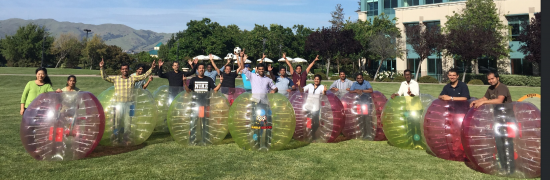
Recently my team in the Cisco Data Center Software Group got together for a game of bubble soccer.
“What is bubble soccer?” you ask. It’s only a game involving giant inflatable orbs of fun!
More specifically, it’s a combination between zorbing, a sport where a person rolls down the side of a hill in a giant plastic orb or ball, and soccer. In bubble soccer, you get into a plastic orb-like structure, which is constructed in a way that allows your legs to run freely while wearing it.
The objective is to score goals against the opponent and knock each other down. It’s a perfect recipe of competing and being silly. During the game, I got knocked over many times. The first few falls were surprising and took time to get up and get back on your feet. But as the game progressed it was fun to get down and we all learnt to recover quickly. While playing, I was reminded how falling can be fun and even more so when you are not alone!
This got me thinking, how at Cisco we do the same in our day-to-day life. We love to solve the most challenging and complex problems. Being the aspiring engineers we are, we set lofty goals.
Often times, when working on something new, you need to get your hands dirty, you take some risks, things may not go in the direction you initially planned on. In such projects, how you and your team adapts to failures can be the key to success. “Fail but fail fast, get up, recover and solve the problem” this is the mindset we are encouraged to have by our leaders, our peers and by our culture. This is one of the great things about working at Cisco.
You see, at Cisco, we’re allowed to fall and then we get back up. This environment gives us room to grow, to be flexible, to be more innovative and to have the will to take risks. We can make these failures stepping stones to success and win.
Team huddle.
Thinking back to the game, its insightful how simple game of bubble soccer can teach us teamwork and help develop strength in the face of failure. Successful teams are made by working together, collaborating and breaking boundaries. At the same time we also have fun in a healthy way! All in all, we had an awesome experience running around in plastic orbs. With this newfound perspective, I spent the rest of day pleased and happy with what I learnt and proud of the culture and environment that Cisco sets up for its people to innovate and rise up in face of any challenge.