Avatar

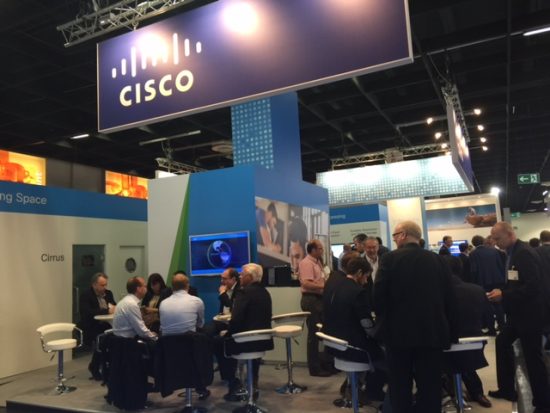
If you’ve been waiting for marketplace evidence of the implementation of DVB-CSA3 — also known as version 3 of the Common Scrambling Algorithm, and the most advanced encryption algorithm for broadcast in the DVB standard — it’s to be found in Cologne, Germany, at this week’s ANGA COM.

European service providers need DVB-CSA3 to curb piracy moving forward, with pirates constantly improving their capabilities. Commonly deployed versions of the DVB-CSA standard today have already been compromised: version 1 is commercially hacked and experts say version 2 will be hacked within a decade. And another important motivation for service providers — all major studios now require 128-bit encryption (a key part of DVB-CSA3) on their 4K/UltraHD assets.
IMG_0021

That’s why at Cisco we opted, a few years ago, to begin working proactively with set-top silicon providers for support of DVB-CSA3. The result, for our large installed base of customers using VideoGuard Everywhere conditional access, is that their boxes in the field are already DVB-CSA3-enabled.

And by the way, that’s not all we’ve been doing for advanced content protection. We’ve also been adding 128-bit encryption across our hardware and virtualized Cisco DCM video processing systems, enabling our customers to implement advanced security as they increasingly move to software-based systems.

Focusing on what matters to our customers means we always look for the best ways to support their requirements. Which is why we’re also taking an open and collaborative approach to supporting industry standards like DVB-CSA3 for end-to-end implementations. For us, it’s about helping our customers migrate to DVB-CSA3 much more easily and at lower cost when they’re ready.

At ANGA COM you can learn about our multi-vendor end-to-end implementation of DVB-CSA3 with Harmonic’s ProStream platform for video scrambling and multiplexing linked to and working with our VideoGuard Everywhere descrambling, access control and conditional access system.

So – if you’re in Cologne, looking to upgrade your video systems with the latest encryption standard, or you’re gearing up to offer a 4K/UHD offering and want to make sure the security aspects of it are up to snuff with content owners, come by and talk to us. We’re in stand H21, in Hall 10.2, and we’re ready to help you be ready!

Authors

Michal Brenner

Marketing Manager

Service Provider Video Marketing

Avatar

Written By Daniel Etman, Director, SP Segment, Infrastructure Groupdetman

It is ANGA COM time again; I always look forward to this gathering of industry experts where we are able to show the latest innovations that Cisco has to offer to the European Cable market. The ANGA COM is scheduled to run three days from June 7-9 in Cologne, Germany.

We’ll be there in stand H21, in Hall 10.2, key demonstrations this year will revolve around DOCSIS 3.1, Remote Phy, Software Defined Networking (SDN) and Network Function Virtualization (NFV).

I am going to lift the veil a bit on the solutions we will be showing at the ANGA COM this year. If you want to find our more, please come and visit us!

cBR-8-front-hi-res-KO47056

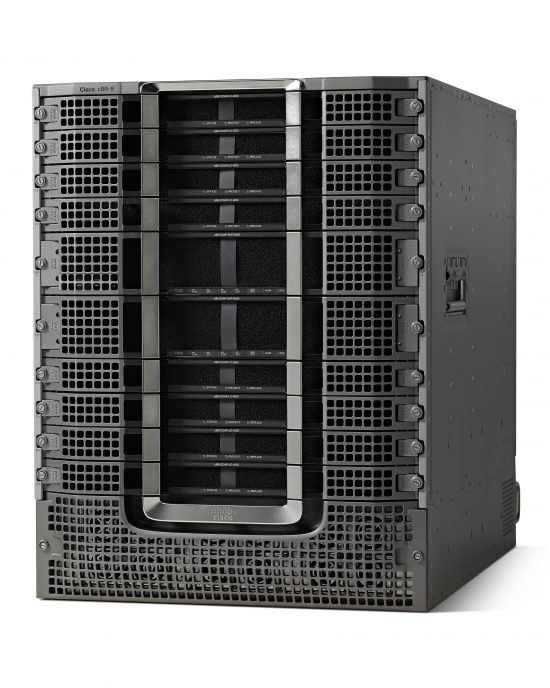
DOCSIS 3.1; There are multiple network components that come in to play when planning and designing a full DOCSIS 3.1 compliant solution. Our latest product additions to the Prisma II optical platform, the “Compact” product Amplifier and Node allow Cisco to offer a complete solution to support the Cable Operator in an HFC transition to DOCSIS 3.1. In addition to the HFC network components the CCAP plays a vital role in unlocking the fullest extent of DOCSIS 3.1. The cBR-8 is the only CCAP in the industry to offer hardware readiness for DOCSIS 3.1. Why is that important? By deploying the cBR-8 our customers are investing in a platform that will not require another CAPEX investment cycle when they want to deploy DOCSIS 3.1, a simple software upgrade will do, without any operational impact given the (In Service Software Upgrade) ISSU capabilities of the cBR-8. Where other vendors offer software capabilities on existing DOCSIS 3.0 cards, Cisco has hardware ready DOCSIS 3.1 line-cards that are much more scalable, designed specifically for DOCSIS 3.1 and in fact usable in a production environment. In fact, we are demonstrating running DOCSIS 3.0 and DOCSIS 3.1 CPE on the same line-card and segment, spanning bonding groups over DOCSIS 3.0 and DOCSIS 3.1 (4K QAM) carriers, a unique capability.

It is not only the question if you can do DOCSIS 3.1 on your CMTS that is important, the how is much more important, in the end, should it not all evolve around the Service provider’s ability to deploy a usable service?

Remote Phy; This invention by Cisco has taken the market by storm. Usable for both de-centralized deep fiber and hub-site consolidation strategies Cisco’s Remote Phy offers unique Total Cost of Ownership (TCO) advantages. Cisco will be demonstrating a European Compact Remote-Phy Node and Shelf using the cBR-8 as Remote Phy Core. All of the Remote Phy Devices Cisco is bringing to the market are full DOCSIS 3.1 hardware capable, offer low power consumption and are complaint to the Remote Phy specification. Remote Phy is the only distributed CCAP architecture that is CableLabs specified and as such an open standard. Cisco has also been a key driver in the Open Remote Phy Device project, this effort will drive increased interoperability between different vendors supporting Remote Phy and will also allow a larger community of vendors supporting Remote Phy, head here for more details;

Come and visit us to find more about these exciting technologies!

Authors

Greg Smith

Sr. Manager, Marketing

Cisco Solutions Marketing

Avatar

Kudos to the Cisco Hyperinnovation Living Labs (CHILL)! This cutting-edge group in Cisco Services took home the gold at the prestigious Edison Awards in the category of Collective Disruption. Established in 1987, the Edison Awards recognize and honor innovative products and business leaders.

CHILL was nominated for a unique program in which a group of customers with a common set of issues (such as connected supply chain) come together for an intense, 48-hour collaboration. The goal is to tackle some of their industry’s biggest challenges. In just two days, they co-innovate, develop solutions, rapidly prototype them, and test them with end users, live in the room.

CHILL compresses the development process while making significant leaps in innovation. The event culminates when participants present their solutions to a panel of Cisco executives who vote on whether to fund the ideas for further development.

This methodology captured the gold and was recognized as disruptive and innovative in its own right.

By changing the conversation with our customers, Cisco and CHILL are reimagining what innovation looks like. We are demonstrating firsthand the ability to move quickly and pivot as a large organization.

The team recently attended the gala ceremony held at New York’s Capitale. Our Executive Chairman, John Chambers, received a lifetime achievement award, placing him in the company of past leaders, such as Elon Musk. John applauded the CHILL team and their process: “CHILL highlights what’s possible when we work together with others to execute on new ideas and bring them to life.”

Congratulations to the CHILL team!

L to R: Tracey Hinkle, Global Interim Leader for CHILL; John Chambers, Cisco Executive Chairman; Alice Pollard, Innovation Architect

CHILL

To hear directly from our customers about how their organizations benefited from a CHILL Living Lab, please watch this video: https://www.youtube.com/watch?v=WTlLZfhscis


Authors

Joe Cozzolino

Senior Vice President

Cisco Services

Avatar

#CiscoChampion Radio is a podcast series by Cisco Champions as technologists. Today we’re discussing mGig Applications with Peter Jones.

Cisco Champion 2016Get the Podcast

  • Listen to this episode
  • Download this episode (right-click on the episode’s download button)
  • View this episode in iTunes

Cisco Guest
Peter Jones (@petergjones), Principal Engineer

Cisco Champion Hosts
Bill Carter (@CCIE5022), Senior Network Analyst
Stewart Goumans (@WirelessStew), Mobility Consultant

Moderator
Lauren Friedman (@lauren)

Continue reading “#CiscoChampion Radio, S3|Ep. 15: mGig Applications to Blow Your Mind”

Avatar

Recently, Network World said ACI is the market leader for number of SDN deployments. Let’s take a moment to consider what that means and why it’s the case. First, there is the obvious, in that over 1,800 customers have selected ACI as their Software Defined Network solution. But beyond that, what is it about ACI that is causing people to adopt it?

There is the standard generic, corporate Cisco stuff – a financially robust corporation, you know the company will be around, good overall support from the TAC, there’s a strong track record of Cisco taking care of its customers, etc.   I don’t mean to be flippant in my characterization of these items, because they are significant considerations and real differentiators. But lets discuss some of the key reasons for ACI specifically. If we look across multiple customers, we find some recurring themes regarding the things they find value in.

  1. ACI is a turnkey solution that simplifies deployment, management and troubleshooting.

The integration of the controller, infrastructure and third party elements – e.g. orchestration tools, L4-7 devices, etc. – provides a comprehensive system that ultimately simplifies rolling out and operating the customer’s SDN and overall data center/cloud environment.

  1. ACI has a large ecosystem of partners providing customer flexibility and choice.

There are currently over 50 ecosystem partners, providing a broad spectrum of functionality. This extensive integration delivers customer choice and interoperability, while decreasing costs and increasing innovation. Because ACI is designed as an open architecture, this means that customers can extend their existing IT investments. 

  1. ACI is a sound financial investment, providing rapid return via multiple metrics across many customers.

The Network World article, as well as the video referenced below highlight several of these including Symantec’s 11 month payback and Pulsant’s 85% reduction in staff time for provisioning. See more in the resources below.

  1. ACI provides a comprehensive, integrated approach regardless of endpoint type.

ACI’s policy model seamlessly supports heterogeneous physical and virtual endpoints. This means that any given policy will apply to bare metal servers, virtual servers on any hypervisor, or containers. ACI is pretty much endpoint agnostic.

  1. ACI provides strong automation capabilities.

The policy model is also at the foundation of ACI’s automation capabilities. The application based policy model drives speed through automation, reducing errors and accelerating application deployment and IT processes from weeks to minutes.

These 5 themes were covered in more detail across these 5 places (among others) in the past week or so:

The Network World article by Zeus Kerravala, industry analyst at ZK Research

Blog by Frank Palumbo, Cisco SVP of Global Data Center Sales (check out the video)

Press Release on Service Providers using Cisco ACI

Blog profiling Hutchinson Networks, Cisco ACI customer

Light Reading article by Mitch Wagner, West Coast Bureau Chief at Light Reading

If you’d like to see additional customer feedback regarding ACI, check out this blog.   The focus there was on how ACI delivers speed, simplicity and security. These elements map right into the 5 themes above and provide perspectives from another group of customers.

In any case, thanks for taking the time to read about 5 of the (many) reasons Cisco ACI is the market leader for SDN.

Image source: Pixabay

Authors

Craig Huitema

No Longer with Cisco

Avatar

This is a continuation of this blog on remote access.

Has your organization signed up for remote management of critical infrastructure without your knowledge of the details? Many customers I work with were not aware of the contractual obligations they agreed to regarding remote access. Many customers I work with were not aware of the contractual obligations that were agreed to regarding remote access. Many tell me there’s no way they would have agreed to the manufacturer’s conditions if they were present during negotiations.

Here’s what you need to do to keep yourself secure:

1. Start your organization’s risk assessment by reviewing your support contracts for critical operational assets from the perspective of remote access.

Ask Yourself:

  • Are the conditions for access aligned with your own standards or expectations?
  • Do you have internal guidelines at the ready?
  • Are you able to reference the guidelines during contract negotiation to assure security was properly addressed?

Let’s assume that this was done by the “other guy,” but someone has signed the contract and now your organization is at risk. So how do you react?

2. You should create a policy for the operations side of the house.

Your org needs a “run book” for remote access. The run book describes the well-defined process by which access to (or from) your operationally sensitive area is granted. It describes all cases where remote access is requested by either internal sponsors or vendors.

Someone in your organization grants approval and the requester and approver are authorized and authenticated to do exactly that. This access is conditional and finite meaning the conditions under which the access will take place such as time and means are spelled out and known. Your operations and communication teams in your factory have been trained on it.

3. Get ahead of any future vague contract references and take control of those in place.

Ensure that the infrastructure you want for remote access is sitting there ready to go and thus not waiting for a vendor to arrive and determine “what is required at the time of installation.”

You need to be ahead of the game. To do so I suggest you read the NIST recommendations and create appropriately unique conditions of your own. There is definitely an intermediary jump server at play and a third party PC should NEVER be allowed to connect directly into your network without a validation of its security state at the least. Perhaps you have already gone through the trouble of establishing a virtual desktop with all the tools needed for your expensive machines’ care. In your remote access run-book, the vendor is required to list all of those up front per your policy.

11 Feb 2013 --- Worker operating robotic machinery in factory --- Image by © Ian Lishman/Juice Images/Corbis

At Cisco we use TrustSec and ISE to make sure communications are secure on the remote access machine. Beyond the critical infrastructure, here are a few other preparations and policies we recommend:

  • Both entities will agree upfront regarding what can be done and what cannot be done and include “though shalt not” commandments as well.
  • Ensure you have the proper observation and recording tools. We can help put you in a position to VERIFY what is being done and by whom. Every command that is on the path to your devices will be recorded for later review. We don’t stop at verifying what is being done though… that is so after the fact, kind of like an autopsy.
  • Define a policy to ENFORCE allowable actions. We make sure your run book’s “thou shalt not” is backed by policies on your Industrial Security Appliance (ISA 3000) which sees the commands as they traverse the wire and then acts on them accordingly by alerting or blocking undesired actions.

With your contracts understood, your policies defined, and your tools at the ready, your exposure to loose remote access activity risks will be reduced significantly. I’m happy to answer any questions you have in the comments section below.

To receive future Manufacturing blogs straight to your inbox:

subscribe

Authors

Robert Albach

Sr. Product Line Manager

IoT Security

Avatar

In the hospitality industry, great service is a key differentiator. At the same time, digitization is changing the way that the industry does business in order to meet the demands of tech-savvy guests like you and me, who – let’s be honest, folks – are chained to our smartphones. So, great service today goes well beyond providing basic Wi-Fi to your hotel guests.

When I’m on business travel that takes me away from my family, I want a hotel experience that feels familiar, like a home away from home. It’s much warmer if hotel staff can provide personalized experiences such as customized offers based on my membership status and concierge or taxi request services via my mobile. Summer is almost here, and when I vacation with my rambunctious toddler, I appreciate convenient mobile services that simplify and enrich my experiences such as mobile check-in and family-friendly activity recommendations.

Ultimately, personalized services and experiences keep me lingering on the property longer, and usually that means I’ll spend more at the hotel restaurants, gift shops, and other on-site amenities. Over the long term, these positive experiences stay with me and I become a loyal repeat guest.

Can you imagine digital guest experiences such as these?
https://www.youtube.com/watch?v=-2XxT4vNpko&feature=youtu.be

On June 28, see how you can make this a reality for your hotel, resort, cruise line, or conference venue. Join us for a webinar to understand the hospitality industry’s technology challenges and priorities today. You will also learn how hospitality providers can gain a competitive edge with innovative mobility and wireless solutions to increase guest satisfaction, loyalty, and drive revenue. Register today for the webinar, and check out our Cisco’s Mobility in Hospitality website.

Authors

Jolene Tam

Product Marketing Manager

Security

Avatar

Earlier today, we released the 11th annual update to the Cisco Visual Networking Index (VNI) Complete Forecast, 2015 – 2020. This report represents the culmination of months of data gathering, analysis, due diligence and crosschecking with syndicated and direct data sources. After all these years, we still go into the project with open minds and no preconceived notions of expected results. Invariably, after completing our work, and sharing the top-line growth rates with a few of our colleagues, we sometimes hear a familiar refrain. “So what?” That question now brings a smile to my face.

Allow me a brief digression. I’m a jazz fan. One my favorite tunes is a Miles Davis composition titled “So What.” Legend has it that Davis named this tune based on conversations he had with the actor Dennis Hopper (now that’s a legendary duo). Allegedly, during intellectual exchanges between the two men, Hopper would often simply reply, “So what?” If you know anything about these two late great artists, you might imagine how intriguing (and perhaps incoherent) the exchanges might have been. In any case, their friendship and Hopper’s questioning produced a jazz classic (you can Google it).

So, back to the forecast… When we hear “so what?” it prompts us to dig deeper into the underlying trends that are driving traffic growth. We delve into the shifts that are happening within global device and connection segments. We compare how people (and things) are accessing and using the Internet and private networks differently than they did just a few years ago. Here are three important trends that might surprise you.

1. By 2020, smartphones will generate 30% of total IP traffic, while PC’s total IP traffic contribution will fall to 29%.
Smartphones are becoming mobile communications hubs that not only allow us to communicate 1-on-1, but 1-to-many via social media platforms. This device also allows us to monitor, manage and control a host of other resources and services remotely (PVR/DVR, connected home, navigation, et al.). We can also consume and share various forms of multimedia and pay for goods and services from this single device. It will be a major transition – smartphones drive more traffic than PCs.

vni1 Continue reading “Updated Cisco VNI Complete Forecast Released Today (So What?)”

Authors

Thomas Barnett, Jr.

Director, SP Thought Leadership

Worldwide Service Provider Marketing Group

Avatar

By Jan Bogaert, BDM, Service Provider Cable and Media, Cisco Services

Two important consumer trends that have a high impact on the way Content and Service Providers and Cable MSO’s need to manage the E2E Service experience of their customers are:

  1. Ever increasing media consumption on any device and any network
  2. Ability to communicate about their experience through social networks

1

The viewing lens for operators should not only show a real live E2E view – giving the exact same view what customers are experiencing, but also help identify issues pro-actively to avoid impact to a premium service.

Cisco is increasingly focusing on providing a solution which allows for E2E monitoring, analysis and predictive assessment. This solution should ideally:

  • Integrate easily with operators’ existing network, with minimal HW/SW additions
  • Give comprehensive insight into different networks and adapt to an ever changing environment
  • Be cost-efficient, leveraging best of breed available solutions and provide a view on ROI gains

As part of a broader Service Quality Management platform, Cisco is proud to introduce the first two steps into the journey of bringing this E2E multi-service quality monitoring and predictive management solution.

2

1. Cisco Proactive Network Maintenance as a Service (CPNM)

CPNM is a proactive approach to identify upstream and downstream impairments with DOCSIS footprint. It provides access into correlated data and device mapping via user friendly portal.

2. Cisco Video Quality Monitoring (VQM)

VQM is a real time service quality monitoring that enables operators to detect and isolate service degradations. It will also enable visibility into reports via real-time dashboards.

Both solutions have been established working closely together with best-of-breed partners like Skyline Communications and its Dataminer NMS platform, Mariner and its xVu portfolio of quality monitoring tools and NimbleThis’ industry leading PNM solution.

Through these partnerships, Cisco believes not only to stay closely aligned with a customer’s operational environment, but also on top of SP’s/MSO’s multidimensional need for proper qualitative monitoring and preventive analysis across networks.

Authors

George Tupy

Market Manager

Service Provider, Video Solutions