Greg Dorai is Senior Vice President and General Manager of Cisco’s Switching business, responsible for the overall strategy and success of the cloud and on-premises switching teams and portfolio. Delivering customer experiences that are seamless, secure, productive, and sustainable serves as the organization’s North Star.
Over nearly 10 years at Cisco, Greg has held leadership roles across Cisco’s networking business. Most recently, he led the Campus Connectivity business including the flagship Catalyst 9K switching product line, Cisco ISE, Cisco Spaces, and Catalyst Center. Prior to that, Greg was responsible for the Catalyst Access portfolio of products as well as Wireless Products for Cisco's Enterprise Wireless and Small business portfolio.
Before joining Cisco, Greg led product management and business development for AT&T’s Big Data monetization team in Atlanta. Before that, Greg was a principal with Bain & Company where he was a leader in their technology, media and telecom practice.
Greg earned an MBA with high honors (Siebel Scholar) from the Booth School of Business at the University of Chicago. He holds a master’s degree in engineering from the University of Illinois at Urbana Champaign and a bachelor’s degree in engineering from India.
At the Mobile World Congress (MWC), developers displayed devices with two new wireless technologies: 5G and Wi-Fi 6. Both technologies will help define the future of mobile broadband experiences.
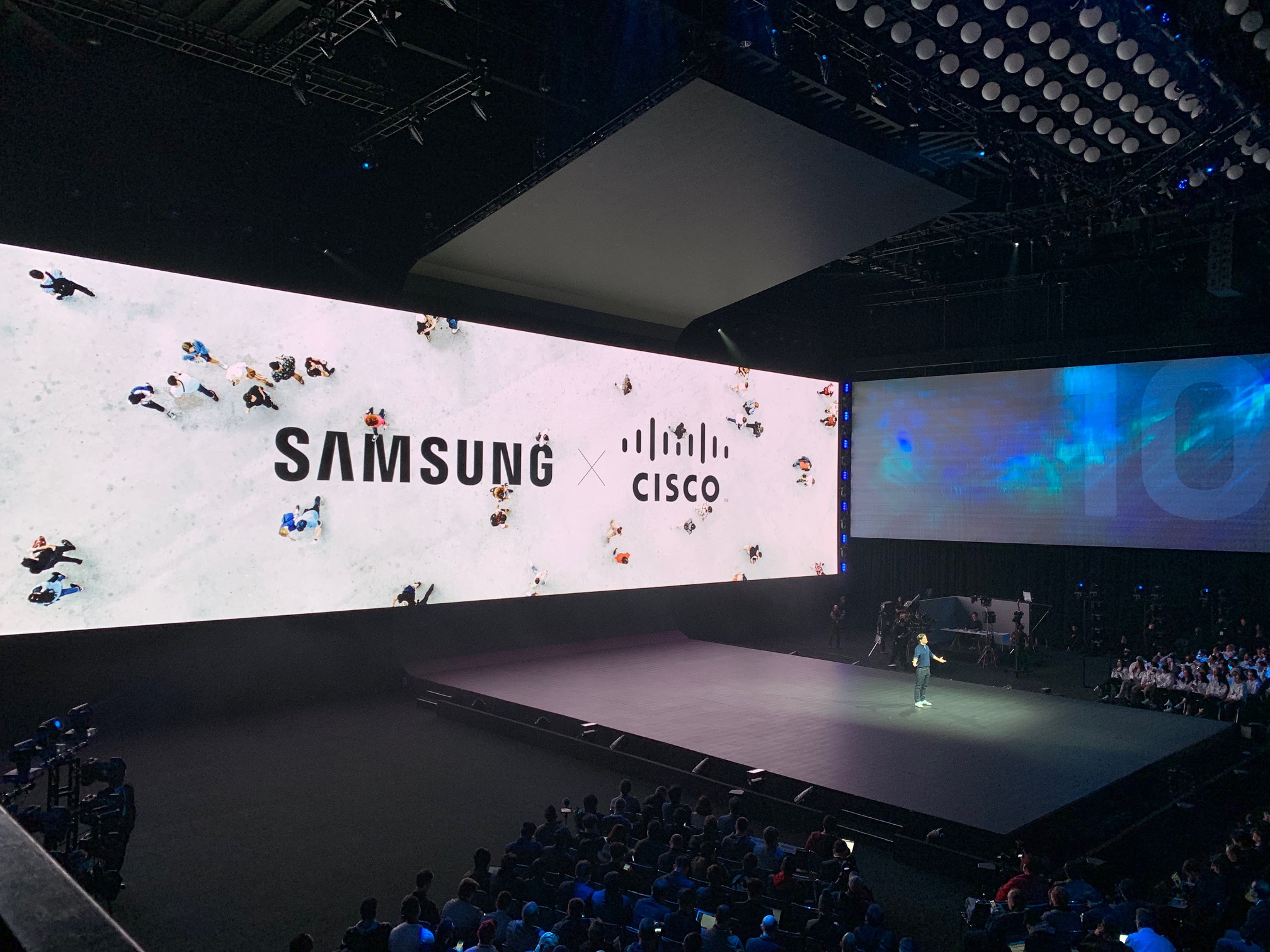
Wi-Fi 6 is the next-generation wireless standard, representing a massive leap forward for connectivity. Find out how Cisco has been working with Samsung behind the scenes to validate the optimal capabilities Wi-Fi 6 can deliver.
The ability to identify and recognize data patterns is crucial, especially in physical spaces. Introducing Cisco DNA Spaces, a powerful, indoor cloud platform that puts an end to blind spots.
Until Wi-Fi 6 / 802.11ax clients reach critical mass, the benefits of 11ax are minimal and will have low impact -- but Cisco will have the information you need until ten.
In a time where networks are growing exponentially thanks to new wireless devices connecting every day, it can feel as if keeping your network running is like shoveling sand against the tide with a tea spoon.