Avatar

In our previous blog posts about AMP and Threat Grid on Cisco Email Security, we have discussed the approach to email security, that organizations could take to protect themselves against advanced threats. We have as well discussed the components of the solution and how they work together to protect customers from the number one threat vector. As mentioned in Cisco’s 2017 Midyear Cybersecurity report, email continues to be a primary delivery method for ransomware and other malware, so defenders should stay focused on addressing this risk before it becomes impossible to manage.

In this blog post, we are going to dive deeper and explain the workflows of AMP and Threat Grid integration with Cisco Email Security (applies to both Cloud Email Security and on premise Email Security Appliance), as well as help administrators refine security posture in their organizations. Let’s start with a quick recap of how file reputation, file analysis and file retrospection work together in general.
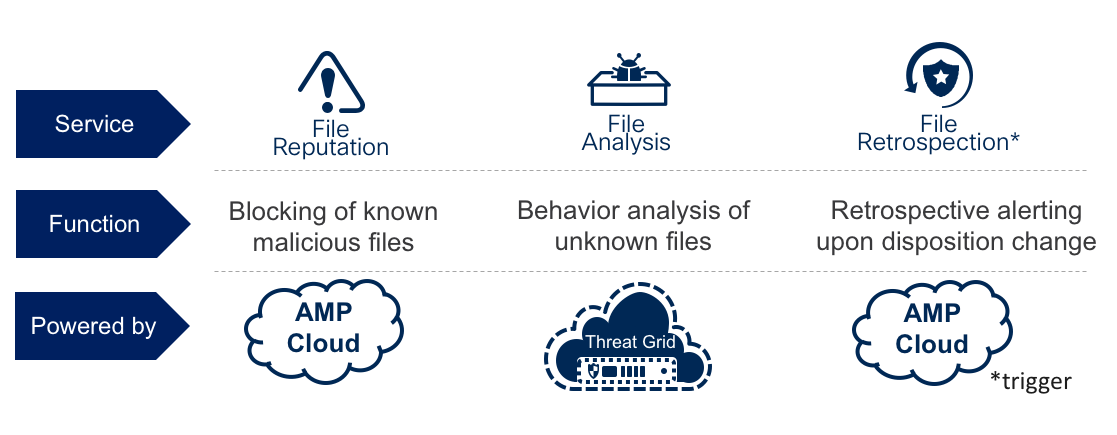
File Reputation service allows the ability capture a file on a network, email, web gateway or on the endpoint, calculate a hash and query the AMP cloud to receive a disposition back – either clean, malicious or unknown. Malicious and clean files are normally not a subject for additional investigations and a policy action can be taken accordingly. For unknown files, this is when we want to provide additional analysis – we can do so by taking the file out of the network and uploading it up to the File Analysis service – Threat Grid. Threat Grid applies both static and dynamic analysis techniques and records results of file execution into a human-readable analysis report. It also issues a threat score overall. The two together help determine how likely it is that the file is malicious. The AMP cloud may be updated with the analysis results from Threat Grid, which can lead to AMP cloud changing the disposition for a given file. Cisco Talos also constantly pushes intelligence about the files they analyze into the AMP cloud, which complements AMP’s global intelligence. This can trigger retrospective events, that help us notify our customers about all the locations where these files were seen on their network – whether it was seen by network or content gateway or the endpoint, depending on where you have deployed the AMP license. What’s important to remember is that the authoritative source to convict a file is the AMP cloud, not Threat Grid.

[Note: The following blog post describes AMP and Threat Grid integration with Cisco Email Security up to version 11.0, future versions may have notable workflow enhancements.]

Now let’s have a look at how we can apply the concepts, that we have just reviewed to Cisco Email Security solution (referred to as “ESA” further). AMP is a name of an add-on license for Cisco ESA, which brings:

  • capability to run file reputation queries on attachments against the AMP cloud
  • capability to submit unknown attachments that meet the criteria to Threat Grid
  • receive retrospective notifications from AMP, in case of a disposition change

So, where do those capabilities sit it in the ESA workqueue?
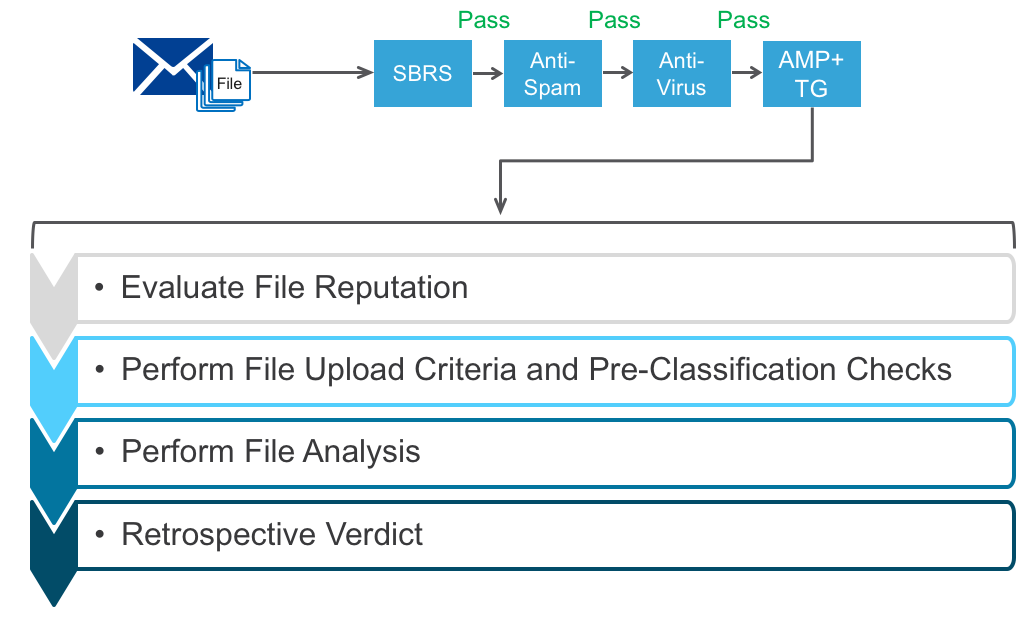
Assuming the message wasn’t blocked by the preceding ESA inspection layers, such as sender reputation, message filters, multiple anti-spam engines, multiple anti-virus engines – the message arrives to AMP and Threat Grid inspection point.

AMP File Reputation Workflow

In the first phase, ESA attempts to derive the disposition of the attachment from AMP, let’s break it down and review the exact steps taken by ESA in this phase.
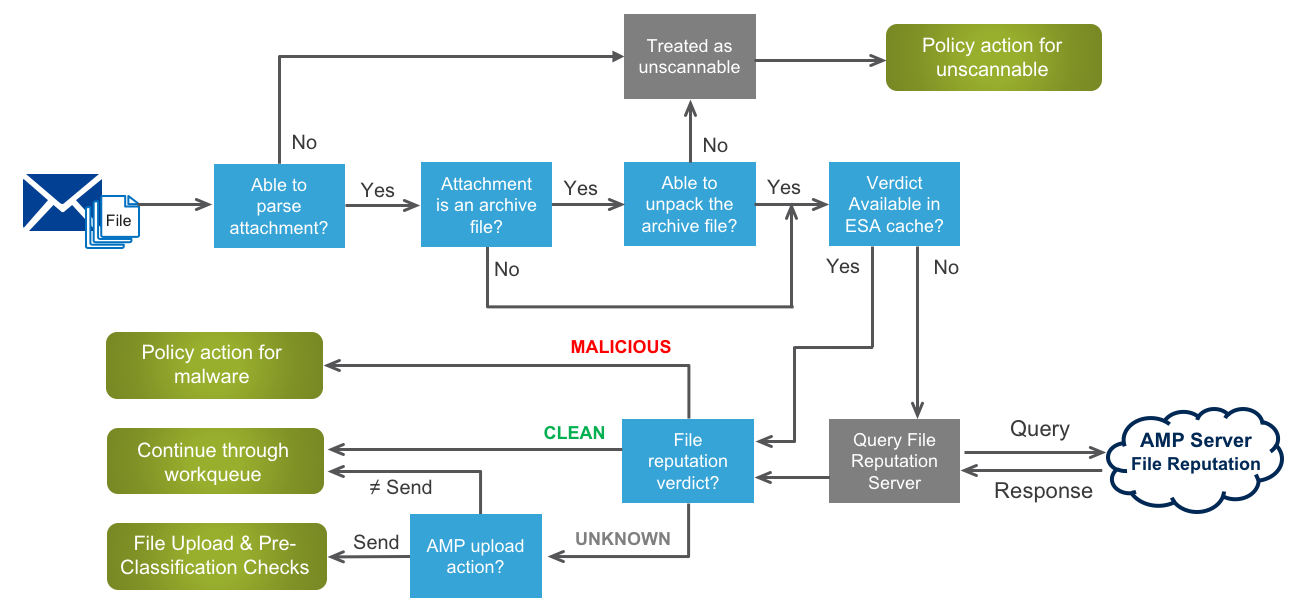
When a message with an attachment reaches AMP after anti-virus scanning, ESA attempts to parse the attachment from the message by checking the message headers (check for compliance with RFC 2045). Even if the message is not fully compliant, ESA still makes best effort to parse the attachment. The next step is to check whether an attachment is an archive file and if so – attempt to unpack it. If any of the above steps fail, due to for example format errors or file corruption, the configurable policy for unscannable attachments comes into effect.

The files (along with the original compressed archive, if applicable) are then sent to the next step – checking of the internal ESA AMP cache to understand whether a disposition of this file was already queried in the past and whether it could be now derived from cache. On a side note, a useful addition in ESA 11.0 is the ability to configure the file reputation cache time to live, giving administrators more granular control over the cache usage. If the cache doesn’t contain an entry for this file, ESA will communicate with the AMP Cloud (public or private) to query the file reputation, which will return back a verdict: either clean, malicious or unknown. Clean files continue through ESA workqueue to perform graymail detection, content filtering and outbreak filtering inspections, if configured to do so. Malicious files are processed according to the configured policy. It’s important to keep in mind that if an archive has multiple files inside – if even one is malicious then the entire archive and message will be seen as malicious. Attachments with unknown disposition are treated differently and they may be requested by the AMP Cloud for upload to Threat Grid – this may happen when file analysis results for a given attachment are not available in the AMP cloud, meaning they were not shared by Threat Grid in the past, likely because the attachment was not analysed in Threat Grid. Such files can proceed to the next phase. 

File Upload Criteria Workflow

In the second phase, ESA performs a couple of checks to see if the unknown file meets the upload criteria and if it contains suspicious content, that could likely show up as malicious.
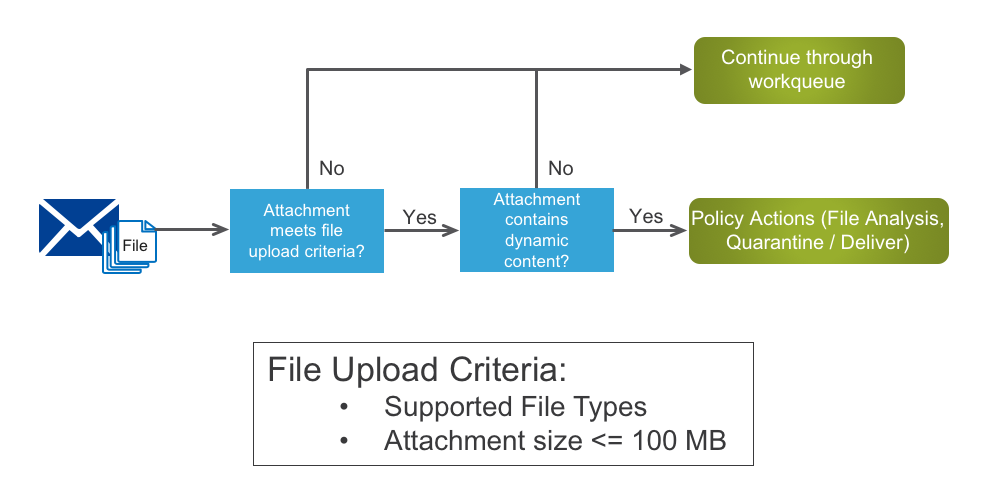
ESA first checks whether a file meets the following criteria:

  • supported file type – at the time of File Analysis configuration, ESA administrator can select the desired file types
  • does not exceed the file size threshold defined by Threat Grid

If the two criteria above are met, the attachment continues to the next step – ClamAV pre-classification check. This step helps determine whether there is dynamic content and object streams inside, such as macros, embedded EXE, flash, etc. This step is needed to ensure that only files that can possibly be malicious are uploaded to Threat Grid, and others that have no chance of being malicious are not uploaded and do not burn out file upload limits unnecessarily.

If either of those criteria are not met – the message continues through the workqueue without uploading the file to Threat Grid. Alternatively, if both criteria are met, ESA proceeds to the next phase.

Threat Grid File Analysis Workflow

In the third phase, more validations are performed before ESA finally uploads the attachment for analysis to Threat Grid. Let’s have a look at the workflow.
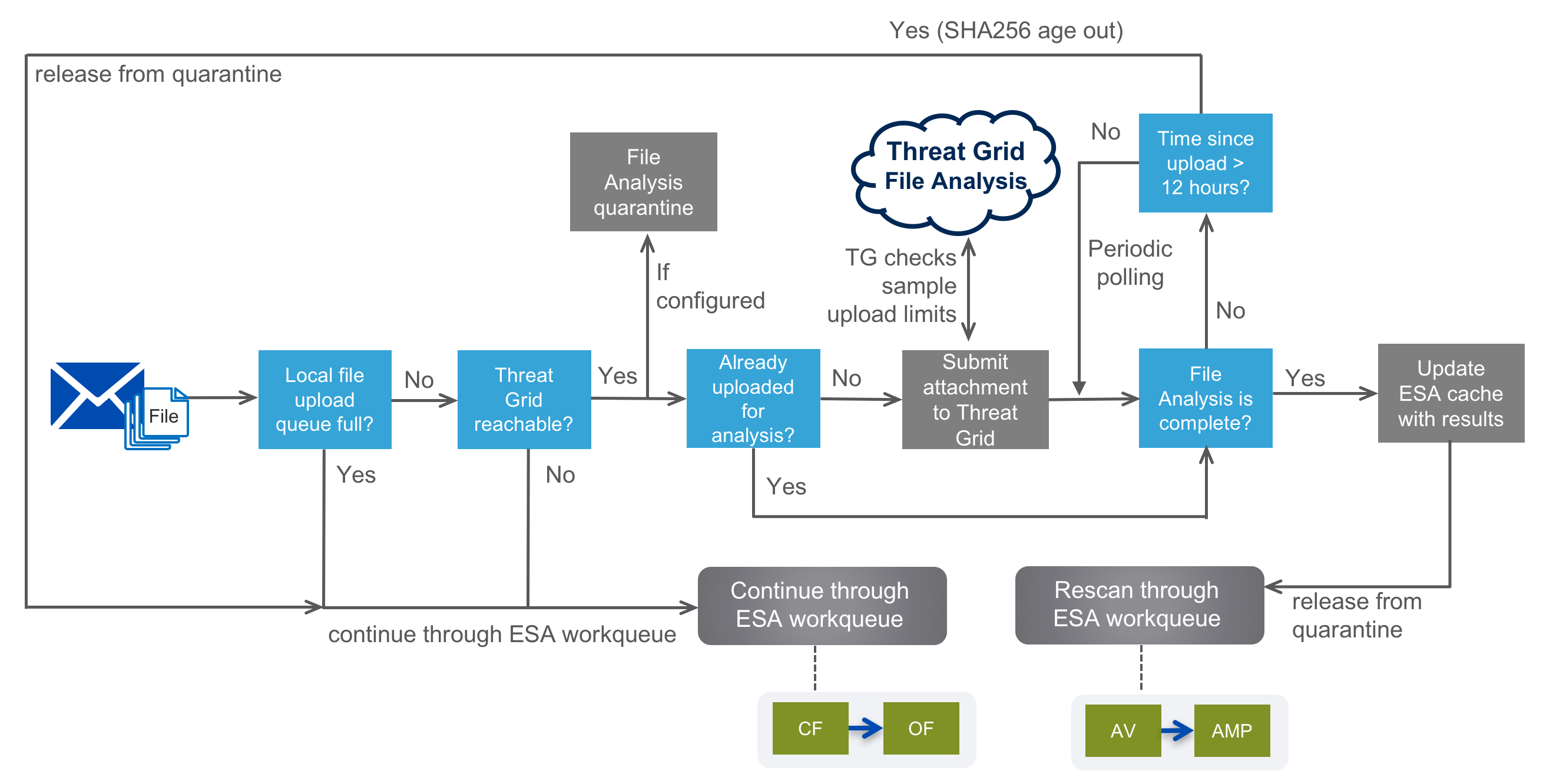
In this phase, the first couple of steps for ESA are to check whether the local file upload queue is full or not and whether Threat Grid (public or appliance) is reachable. If either of these conditions is not met, the attachment is not sent for analysis and the message continues through ESA workqueue (Content Filters and Outbreak Filters). Assuming the local upload queue is not full and Threat Grid is reachable, ESA proceeds by placing the associated message into File Analysis quarantine and by checking whether the attachment was already uploaded to Threat Grid by another device (for example, another ESA). If that’s the case, a duplicate will not be uploaded for analysis again. Alternatively, if the attachment is not yet known to Threat Grid, ESA would proceed and submit the file for analysis. This time it’s up to Threat Grid to check if the sample upload limit was reached. If that’s the case, Threat Grid discards the request and the associated message is released from quarantine. Customers can easily add more daily sample submissions to Threat Grid through Sample Packs or Premium subscription.

If the upload limit wasn’t reached, the file gets accepted and queued by Threat Grid. Simultaneously, ESA adds a record of the SHA256 of this file to its internal database (where it’s kept for up to 12 hours) and starts periodically querying if the analysis was complete, until it receives a positive response back from the File Analysis service. If there is no “file analysis complete” message from Threat Grid within 12 hours and if the File Analysis quarantine was configured to hold the message that long, the SHA256 ages out and ESA releases the message from quarantine to the workqueue. Alternatively, once Threat Grid analysis is complete, the results of this analysis are added to the AMP cache on ESA. At the same time, Threat Grid shares this information with the AMP cloud, so that other AMP and Threat Grid integrated devices on the network can take advantage of the new intelligence. Threat Grid cloud can share analysis results with AMP public cloud and Threat Grid appliance can share results with AMP private cloud, but not the other way around.

Along with the AMP cache update on ESA and the intelligence sharing between Threat Grid and AMP clouds, the associated message with an attachment is released from File Analysis quarantine. Further workqueue rescanning would skip the File Analysis workflow, since File Reputation query would use the updated AMP cache to derive a disposition for this file. Even if ESA still derives an ‘unknown’ disposition from cache, the upload to File Analysis service wouldn’t happen again, since the file is already known to Threat Grid.

It’s important to keep in mind, that either ESA or the AMP cloud can convict a file based on a threat score returned back after analysis. Threat Grid itself is not a solution to convict files or assign disposition to files directly, that’s also one of the reasons customers sometimes would see significant numbers of unknowns.

Retrospective Verdict

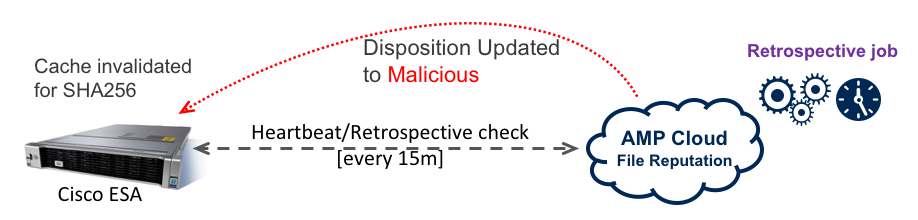
File verdicts can change as new information emerges – we’ve mentioned that AMP cloud can change file dispositions based on Talos analysis and based on Threat Grid analysis. Cisco ESA is constantly staying in touch with the AMP cloud by sending a periodic Heartbeat message, which also asks the cloud if there were any changes in dispositions of files, that were sent through ESA. If there was indeed a disposition change for a particular file that passed through AMP and Threat Grid inspection on ESA, the solution would alert the administrator, specifying the details necessary to go back and perform proper investigation. A notification includes information about the message and the attachment – such as subject, sender and recipient, file name and hash, and a new disposition.
The best way to track down how AMP and Threat Grid inspection works on your Cisco Email Security solution is to review the reports presented in the user interface, as well as to follow the traces in the AMP Engine logs. This information combined together will present a clear idea to the Email Security administrators about how File Reputation and File Analysis services work.

Securing your organization from advanced email-based threats is not an easy task and requires a multi-layered approach with all the inspection layers tightly working together and complementing each other. Make sure to always include Threat Grid Premium subscription with your AMP on Cisco Email Security evaluations to get access to Threat Grid cloud portal for manual file and URL uploads, extensive reporting, API for further integrations and premium threat intelligence feeds. To learn more about the integration of AMP and Threat Grid with Cisco Email Security solution, review the additional resources below:

AMP and Threat Grid Integrations with Email, Web and Endpoint Security – Cisco Live

Enabling AMP on Content Security products – Best Practices

AMP and Threat Grid on Cisco Email Security – Chalk Talk

AMP Engine Logs

Authors

Evgeny Mirolyubov

Technical Marketing Engineer, Advanced Threats Solutions at Security Business Group

Avatar

I recently returned from a study tour to Sweden and Israel with executives from one third of Australia’s universities. The purpose of the tour was simple: to understand two of the world’s most innovative economies and to identify what could be learned and applied in Australia (read the full study tour report here).

In Israel, the focus was on the start-up nation, driven substantially by the country’s global leadership in technology, cybersecurity and the mindset to think global first. In Sweden, the focus was innovation and digitization of its economy and entrepreneurship. This included the the incredible transformation of Stockholm, which has become one of the world’s most vibrant start-up scenes.

Israel and Sweden are two countries that realize that an entrepreneurial culture is only possible by embracing the opportunities of digitization. This was apparent through four main themes that arose during the tour.

People expect to create their own jobs

In both Israel and Sweden people spoke of the importance of a start-up mindset. Young people in both countries are increasingly expected to take control of their own economic future to a greater extent than generations before them. This was particularly true in Israel, where people spoke proudly of the importance of being fearless in developing and commercializing products and businesses.

Economic success is increasingly linked with emerging platform technologies and advanced cybersecurity capabilities

Sweden and Israel have identified specific platform technologies to anchor their innovation and entrepreneurship efforts. The focus on smart cities is an example of how nations, cities and campuses are using new technology to extract more value from existing infrastructure. This includes use of the Internet of Things, analytics, automation and blockchain technology to improve the efficiency and effectiveness of transport, lighting, energy and citizen-facing services.

The developments in 5G technology showcased by Ericsson on the tour provided a glimpse into the range of future ‘smart’ applications – many of them with the potential to transform the cost base and business models for universities and their campuses. Israel’s economic success is increasingly tied to its leadership in cybersecurity, which acts as a magnet for foreign investment, creates global opportunities for Israel’s top talent and drives commercialization of its IP.

Universities treating industry as investors, not donors

The relationship between multinationals and universities is changing. Cisco and Ericsson spoke of the shift towards fewer, yet deeper partnerships with universities. Trust, transparency and the capacity to be involved in a continuous conversation were critical with the acceleration in change.

Scale from the start

Israel and Sweden spoke of the imperative to think global from the start and configure business and operating models for scale and agility.

Australia’s challenge is to take the best elements of Israel and Sweden’s approaches and create our own scale-up nation. The National Innovation and Science Agenda (NISA) provides a framework for what is required to build Australia’s innovation capacity and output, including the role of universities. However, the study tour shed light on some of the ways in which universities will need to change beyond the NISA framework. This includes the role of universities in helping Australia create a truly innovative and entrepreneurial mindset so that we can capitalize on opportunities.

The benefits from digitization are immense but not evenly distributed. Israel and Sweden are examples of countries that have embraced digital and the need to constantly change.

Universities anchor the Israel and Sweden innovation systems but they, too, have been forced to change. Australian universities acknowledge they will have to do the same, and accelerate their efforts in equipping their students, researchers and own organizations for a digital world.

Authors

Reg Johnson

General Manager, Education

Cisco Australia and New Zealand

Avatar

If you have been to any of our recent Cisco Live events around the globe, you have undoubtedly experienced the engagement and energy that surrounds Cisco DevNet. Whether you are spending time in the DevNet Zone, workshops, break-out sessions or hands-on labs, you can’t help but leave a little smarter and a lot more energized about the exciting transitions that Cisco is leading in the industry.

DevOps, automation, process digitization and design thinking are more than just industry buzzwords – they are actionable opportunities to deliver real value to the companies that dive-in and embrace them. But how?

DevNet Express Cisco Live 2017

The DevNet Experience

DevNet is all about providing developers (you) with the tools, resources, and the code you need to build innovative, network-enabled solutions. Now, you might be thinking, “…but I’m not a developer…”. That’s ok; our Cisco SEs have gone through this transition as well. Today, the word developer is a broad term. It can refer to those who develop traditional applications and online services, and it can also refer to those who use a variety of programmatic tools to create, develop and deliver new outcomes.

Like networking engineers who are using APIs and modern scripting tools to automate deployments and routine operations tasks.

…or data center engineers who are creating and orchestrating fast and flexible public and private clouds.

…or collaboration engineers who are connecting people and systems to deliver compelling digitized processes.

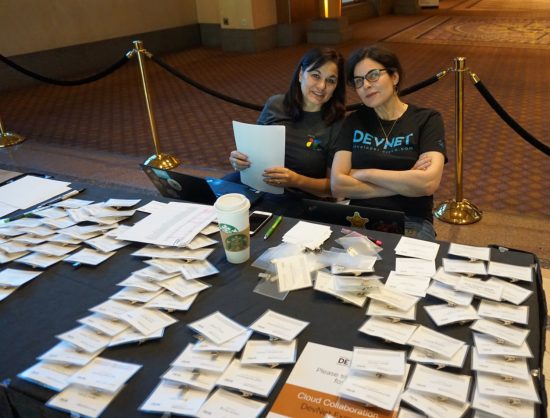
Cisco Experts at DevNet Express Partners and Systems Engineers

Cisco DevNet is here to help all of us in our individual digitization journeys. At an event (or available 24/7 at developer.cisco.com), Cisco DevNet helps you learn modern development tools and how to incorporate them into your toolbox of skills to enable you to become a “developer” of new outcomes and experiences for your company.

DevNet Express

We realize that not everyone can make it out to one of our Cisco Live events, and because we don’t want you to miss out on the experience, we created an internal partnership and joint-venture between the Cisco DevNet and Worldwide Systems Engineering organizations. Through this partnership, we are bringing the DevNet experience to your community through our workforce of expert Systems Engineers in an event format we call DevNet Express.

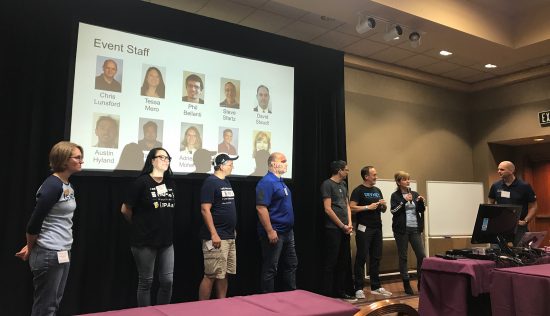
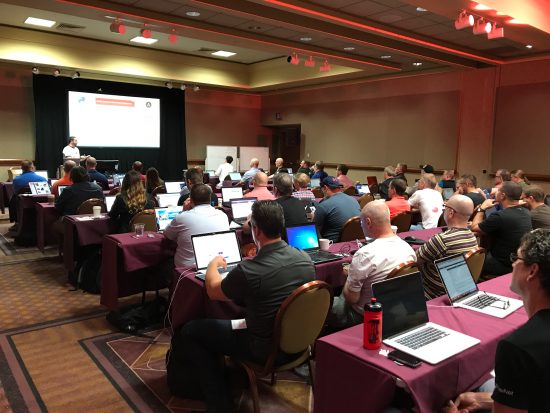
Cisco experts at DevNet Express

A DevNet Express event is a one to three-day event led by Cisco SEs where we provide you with the opportunity to “Listen, Learn and Put into Practice” these modern development and engineering skills. If you have never coded before (or perhaps not since your college days of punch cards, assembly or C++), don’t worry. We have you covered. We start off these events with foundational development skills training, to acclimate you to the latest languages and tools (and these aren’t the tools from your college days). Then, we dive into track or technology-specific modules, where you will apply your new skills in working with Cisco APIs to do some old and some new things. In all of this, you are in the driver’s seat. These are hands-on, guided-learning exercises with challenging missions that will get your started in the world of APIs and programmability.

Join Us

We have trained over 220 of our global Systems Engineers to deliver these DevNet Express events, and they are happening in cities and locations near you. In just eight months (from December 2016 to July 2017), our SEs have hosted 59 events in 25 countries getting almost 1,500 participants started with APIs and programmability. The energy has been amazing!

Cisco Engineers Developers DevNetExpress

See what your peers are saying about these events on social media by following #DEVNETexpress on Instagram, Facebook, Twitter, and LinkedIn, and then check out the list of upcoming events on the DevNet Events page and register for one near you.

-Michael Koons

P.S. – If per chance you don’t see an event near you, ask your local SE to host one. We’ll help him or her make it happen.

Stay connected with me on Twitter @KoonsCisco


We’d love to hear what you think. Ask a question or leave a comment below.
And stay connected with Cisco DevNet on social!

Twitter @CiscoDevNet | Facebook | LinkedIn

Visit the new Developer Video Channel

Authors

Michael Koons

Vice President, Global Systems Engineering and Technology

World Wide Sales

Avatar

Microsoft has released its monthly set of security advisories for vulnerabilities that have been identified and addressed in various products. This month’s advisory release addresses 48 new vulnerabilities with 25 of them rated critical, 21 rated important, and 2 rated moderate. These vulnerabilities impact Edge, Hyper-V, Internet Explorer, Remote Desktop Protocol, Sharepoint, SQL Server, the Windows Subsystem for Linux, and more. In addition, Microsoft is also releasing an update for Adobe Flash Player embedded in Edge and Internet Explorer.

Read more »

Authors

Talos Group

Talos Security Intelligence & Research Group

Avatar

Parser vulnerabilities in common software packages such as Adobe Acrobat Reader pose a significant security risk to large portions of the internet. The fact that these software packages typically have a large footprints often gives attackers a broad attack surface they can potentially leverage for malicious purposes. Thus, identifying vulnerabilities and responsibly disclosing them is critical to eliminating attack vectors that may otherwise be exploited.

Today, Talos is disclosing a vulnerability that has been identified in Adobe Acrobat Reader DC. The vulnerability, if exploited, could lead to arbitrary code execution on affected devices. As part of the coordinated effort to responsibly disclose the vulnerability, Adobe has released a software update that addresses the vulnerability. Additionally, Talos has developed Snort rules that detect attempts to exploit the flaw.

Read More >>

Authors

Talos Group

Talos Security Intelligence & Research Group

Avatar

Change can be daunting and smart city achievements are complex. Where does one even begin? Sometimes, it needs to be as simple as just getting started.

Earlier this summer, alongside 28,000 excited Cisco Live attendees, the City of Las Vegas proudly announced teaming up with networking giant Cisco to become a smart city. With the reality of unprecedented technology evolution and shifting urban dynamics settling in, new challenges present themselves each day. For Las Vegas, the foundational stepping stone on our journey to becoming a smart city was first, to identify the most pressing matters that needed to be solved for. And by seeking out the right alliances, like that with Cisco, the collective smart and digital agenda can help reach our desired outcomes. For the City of Las Vegas, collaboration with Cisco means creative technology solutions to help solve even the most difficult challenges. For our smart city goals, this amounts to data insights like never before.

https://www.youtube.com/watch?v=p0ry02Toiag

IT departments have tons of priorities. Some that may be more pressing than others on any given day, with each line item always competing to get on the agenda. For Las Vegas, the Internet of Things (IoT) is a major priority. IoT is and will continue to be a game changer, one that is creating new opportunities for investment and the local economy, for public service and for the community at large. For us, this will mean greater economic prosperity and an enviable community experience whether you live, work or visit the city.

Still, the City of Las Vegas, just like governments across the globe, must solve for security. As these networks of connected devices, things, people and processes grow, companies like Cisco help us deploy solutions that will enable us to roll out different technologies safely and confidently into the community. Our smart city approach considers security as embedded and an integral part of the business process.

In the digital world, we consider data as the key commodity, or the new oil so to speak. The City of Las Vegas not only needed to solve for the collection and management of the wealth of new data, we wanted to use that data to make our community a better place. Data continues to reveal how we can make better decisions on directing traffic, keeping people safe and maintaining an environmentally sustainable city. Las Vegas is proudly considered a leader in open data. The ability to also use data as an open resource can enable the community to make better decisions and drive new opportunities for economic prosperity.

Looking ahead, I am confident that these tremendous leaps will help Las Vegas build its smart city ecosystem, technology environment and economic growth that will effect change today and for decades to come.

Authors

Michael Sherwood

Director of Technology and Innovation

City of Las Vegas, Nevada

Avatar

In the past few years there have been all kinds of interesting crowdfunding projects – namely enlisting the masses to raise funds for new innovative ideas. In fact, this has been recognized as a powerful mechanism for launching new products.

One particularly unusual (not to say galling) crowdfunding project recently got my attention. The project was established to crowd-source the funds to pay off a legal settlement involving three sites-owners who’ve developed illegal add-ons for free viewing of premium content on the ‘Kodi’ platform.

In May 2017, three websites in Israel were sued by “Zira.” Zira is an industry copyright protection organization operating on behalf of content owners to protect their intellectual property. Before the cases went to court, all three reached a settlement with Zira and shut down. They also agreed to pay 50,000 NIS (approximately 14,100 USD) in damages to Zira. A few days later, a link appeared online in Kodi and streaming related communities directing people to a new crowdfunding project. This soon appeared all over the relevant social media circles, and was named “Protecting the defendants of Zira”.

Figure 1: Screenshot in Hebrew: heading states: “Protecting those Sued by Zira”


Michael Hayut, the project initiator, claims that all three authors of the illegal add-ons are victims and deserve protection. The crowdfunding was launched with a target of 30,000 NIS (approx. 8,450 USD) to help the three pay the sum agreed upon. Several hours later, they had raised over 50,000 NIS (approx. 14,100 USD), from 678 donors.

The message to Zira and authorities is clear – the Kodi add-ons provided an extremely popular service. The public seemed to be saying: “we love our pirates and we will protect them”.

This is a dangerous precedent. In many countries, video pirates are seen by the public as modern day Robin Hoods. Stealing from the “rich” broadcasters and providing the precious content to the masses for free. With this distorted perception, it is no wonder that illegal streaming providers feel so safe and act so brazenly. Even if they get caught, people will raise money for them. But are there really enough people out there willing to fund the pirates? Just as an example, according to this article from April 2017 almost five million Britons use pirated TV streaming services.

Let’s assume each of one them would be willing to donate a single pound to keep their favorite pirate providers safe. Imagine the incentive to illegal add-on developers who know they have 5 million pounds to back their activities.

Such crowdfunding projects seem to be turning into a trend.

Several weeks later, on June 13th, 2017, Zira shut down a website called “Torec” that had been providing copyrighted Hebrew-language subtitles for free – for over 12 years. The site had been making a significant profit from premium membership and advertisements. Despite this, people began a fundraising campaign for the site-owner through the same crowdsourcing platform.

The idea seems to be adopted on the other side of the ocean as well. In June 2017, TVAddons, widely considered the number one library for Kodi add-ons, was sued in the US and Canada. Soon after, the site shut down without explanation. Its Facebook page has also disappeared. On August 1st 2017, the site owner, Adam Lackman appeared back online with an ambitious crowdfunding project, attempting to raise 250,000 USD for a legal battle. In just two days, he already had 7% ($17,862) raised by 427 people! Three days later, the sum increased to 10% ($24,434) raised by 617 people.

Figure 2: Screenshot of TVAddons fundraising, taken on day 5.


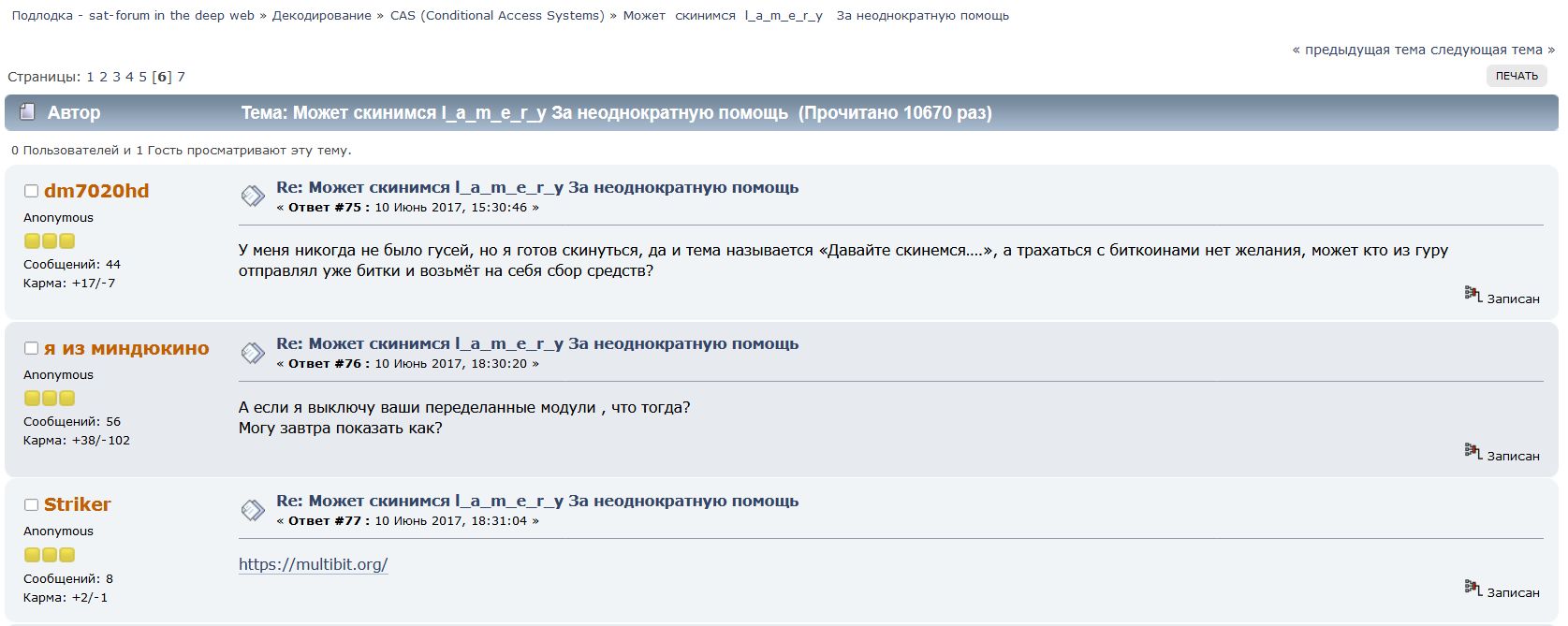
Similar crowdfunding projects are happening in other types of piracy as well. In July 2017, members of a Russian speaking forum called “sat-forum in the deep web” initiated a fundraising campaign to finance the hacking of a satellite broadcaster and its conditional access protection.

Figure 3: Screenshot of forum thread in Russian discussing Crowd-Source funding Piracy


When it comes to video piracy, the public’s perception of right and wrong is not so clear-cut. Those donating to the pirates are “normative” people; they would never consider shoplifting, yet feel at ease with theft of content that may have cost its rightful owners huge sums to produce or procure.

It appears pirates have discovered an unexpected tailwind to encourage them. Will crowdfunding piracy become a global phenomenon? Feel free to use the comment box below to share your thoughts with us.

For more on our piracy intelligence research findings, please see these related blog posts:

Authors

Miro Pinkas

Information Security Engineer and Analyst

Anti-Piracy at SPPA (Service Provider Platforms and Applications)

Avatar

There’s no denying it, sometimes your career path has a lot of twists, roadblocks, and detours. I’ve heard a lot of stories, so this is what I fully expected to experience. Due to past experiences, I know that this is not just a metaphor for one’s career journey – but also life in general.

I grew up in a low income home and was the first in my family to attend college. I started this adventure by taking a non-traditional path and went to community college first, where I also worked two jobs. This path allowed me to transfer to the University of California Berkeley after completing my two year degree – which gave me the opportunity to get a world class education and career.

Some people knock community college, but I’m here to tell you that it landed me exactly where I needed to be – here and now.

During my first semester at Berkeley, I decided to attend the career fair with one mission in mind – landing an internship. I began to converse with recruiter’s – most of whom focused on my non-traditional path to attend a university, but Cisco had a completely different approach! They surprised me and started our time together by getting to know me and tried to see what value I would add to Cisco as an individual. Only after this they began to ask me questions about my prior experience. This made me feel instantaneously connected to the company – instead of feeling overlooked!

After going through two rounds of interviews I eagerly waited for a callback – and that’s when the phone rang! I was chosen to be a part of the HRUP- Rotational Program Internship. Before I had even stepped foot into the Cisco world, I already loved it.

Here are my Top 4 reasons for loving Cisco so far:

1. Big Corporate Company, With Small Company Vibes: Those who recruited and interviewed me introduced me to this unique idea of Cisco as a big corporation that cares about each of their employees while promoting flexibility, innovative thinking, openness, and opportunity. The culture they described stuck with me, mostly because it fulfilled the values and wants I dreamed for my future career.

And as I finish my fourth week as an HR Intern, I can tell you that Cisco turned out to be everything I dreamed of and more. I am currently working with the Talent Brand team (follow our @WeAreCisco channels on social media to see what life at Cisco is all about!) which was chosen for me based on my skills, personality, and wants within HR.  I feel like a perfect match here, and am truly a valued member within this team.

2. A Cisco Internship is More Than Your Regular Internship: As an Intern at Cisco I am getting to work on projects that are important, challenging, strategic, and that make an impact within Cisco and my team. I have found that the managers, leadership, and employees truly care about each other and truly are all those qualities the recruiters and interviewers introduced me to – and so much more!

3. Loves vs. Loathes: One of my favorite tools that Cisco uses is a platform called TeamSpace where managers check in with their teams each week to ensure that each employee feels they add value, use their strengths, and love what they do in their roles. I also love how Cisco stresses the importance of your life by giving the best work/life balance opportunities – such as working remotely, and focusing on work you’re passionate or excited about.

4. Be you, with us: Within Cisco I have been challenged to develop my skills while being myself and I am encouraged to include my unique input. I am always asked to share my thoughts on projects or the strategy that will best help us achieve our goals. I am sometimes even pushed out of my comfort zone to work on new things, but I am constantly supported by my manger and team.

I am not a fan of the corporate cube environment so I was pleasantly surprised by Cisco’s revamp of their buildings to open work spaces. I love this because even though I am in a corporate environment I am allowed to bring my social personality to work. This has allowed me to build relationships with other employees within the office from different teams.

So perhaps all roads on your career path aren’t paved perfectly, but – perhaps, it is also possible to find your career and know where you are meant to be fairly early on. I hope, for me, that I get to take the scenic roads while here at Cisco and have an extended path for my career right here in San Jose.


Do you want to join a company that encourages you to be yourself? We’re hiring interns!


Authors

Janell Orozco

Intern

Human Resources - Talent Acquisition

Avatar

Really and seriously, and I mean it this time.

In my work in the last twenty years on IP communications, the holy grail of the industry was to enable solutions that provide true any-to-any communications. That is – in the workplace environment – it would be possible for any user in Company A to talk to any user in Company B. And when they communicate, have a perfect experience without loss of features or functionality (a.k.a. feature transparency).

In other words, users would have the same experience communicating with colleagues inside their company, as communicating with colleagues outside of their company. While we have yet to achieve this Nirvana state, the industry has been working toward this with a set of capabilities that generally go under the term federation.

Cisco Spark provides the next generation of B2B communications using a capability we call universal federation.

It turns out that solving this is way, way harder than it seems. And indeed, if we look at the history of IP communications in the enterprise, it has evolved through two phases over the last two decades.

Phase 1: No Federation

In the beginning, there was nothing. Company A and Company B would buy IP communications systems, but they couldn’t talk together. The only real way to exchange communications between companies was to rely on one of the two worldwide interconnection services: the Public Switched Telephone Network (PSTN) providing basic narrowband voice, or email. It wasn’t possible to connect systems for video, instant messaging, or content sharing (outside of email attachments). Largely this was due to lack of industry maturity and lack of industry standards.

Phase 2: Bilateral & Multilateral Federation

A baseline set of industry standards matured to the point where we could achieve bilateral federation — interoperable communication between companies for voice, video, basic meetings, and instant messaging. The latter was definitely still complex since no single standard won.

Executive bad communication. businessman don’t understand. talking confused. Executive explain to Businessman not clear. communicating a message.Different vendors continued to implement different variations. As a result, if Company A deployed Vendor A’s messaging product and Company B deployed Vendor B’s messaging product, you might be able to get them to work – but it required manual configuration of the connection by both companies. And when it was configured, it was sorely lacking in features, difficult to troubleshoot, and hard to use.

Worse still, because it had to be setup by IT ahead of time, it completely eliminated the ability for end users to opportunistically communicate with each other.  It also made it nearly impossible to communicate with consumers because they might not even have a paid collaboration product.

This was augmented by the arrival of federation clearinghouses which could provide multilateral federation – basically a star topology with the clearinghouse in the middle. This fixed some of the problems of bilateral federation – once you got interop working with the clearinghouse it would work with everyone connected to the clearinghouse. However, it still required configuration ahead of time, and did not provide the same set of collaboration features inside the company as outside the company. Today, most of the enterprise industry is stuck in phase 2 – bilateral federation. Business-to-business (B2B) collaboration remains a dark blemish on the success of the technology.

Fortunately, the consumer world began to explore a new model. Consumer tools did one thing really well: They enabled any user to talk to any other user. They did this by making it easy to invite people (through email or SMS), and making it easy to join (through a free app that a user could download, or use on the web). This enabled truly borderless communication. And it is why many of these modern consumer tools, like Facebook Messenger or WhatsApp, are now some of the largest communication fabrics on the planet.

With universal federation, a user of Cisco Spark in one company can communicate with anyone else, anywhere in the world.


Phase 3: Universal Federation

So, we at Cisco asked ourselves this question: Why can’t we take that same goodness and apply it to business communications? After many years of hard work, Cisco Spark provides the next generation of B2B communications using a capability we call universal federation.

Universal federation brings the goodness of consumer any-to-any communications to the workplace while providing the security and policy capabilities needed to make the tool suitable for business use. It improves on the prior generation of bilateral federation by providing three key things that weren’t there before:

  • Zero setup or configuration
  • Feature transparency
  • Ability to communicate with free/consumer users

With universal federation, a user of Cisco Spark in one company can communicate with anyone else, anywhere in the world. If users at different companies happen to be using Cisco Spark, there is nothing to do. The IT admins don’t need to set anything up. There are no bilateral-peering agreements. There is no need for clearinghouses.

Cisco Spark uses work email addresses to form a unique global namespace across all companies. A user in Company A only needs the email address of the other user to message with them in a Cisco Spark space, or to place a call to them — that’s it. They’re communicating in Cisco Spark.

Even better, universal federation gives both users feature transparency. Feature transparency means that there is no loss of functionality communicating outside the company, compared to inside. As an example, while bilateral federation would provide basic instant messaging, file transfer often would not work. Or, the solution inside of one enterprise would have photo sharing, while the solution inside of a different enterprise would not. Connect them together, and there would be no photo sharing.

With universal federation, feature transparency applies to every single feature Cisco Spark provides. That means voice calling, video calling, spaces, content sharing, group read notifications, message deletion, and so on. This is exactly what users experience with consumer products. When Facebook Messenger ships a new feature, everyone using the app gets it and can use it together. Now with Cisco Spark that’s true in the workplace too.

Finally, Cisco Spark’s universal federation enables communications between an employee and anyone else in the world, even if that other person is not a paid user of Cisco Spark. This includes free users who use it just for fun, consultants at small businesses using it for work, or a group of users in a large company trying it out. This is because Cisco Spark provides a free version of the app that anyone can access from mobile, web, or desktop.

A free version that is exactly the same as the paid product – and that anyone can download and use — is essential for any modern global communications service.

Because the same technology is used for free users as paid customers there is once again total feature transparency. Every feature provided by Cisco Spark works for both free users and paid users. A free version that is exactly the same as the paid product, which anyone can download and use, is essential for any modern global communications service.

We’re really proud of Universal Federation, and have already seen huge usage of it. As one example, the majority of Cisco sales teams use Cisco Spark to communicate and collaborate with their customers, showing off the power of this technology for connecting people across boundaries. Sales people have told me that it has strengthened their connection with their customers, making them more responsive and able to share information more easily.

And so, the 20-year journey of the IP telecommunications industry toward any-to-any communication is finally coming to a close. The technology changes enabled by modern cloud software allowed us to imagine a different solution – universal federation – and with it, finally provide end users and IT admins alike the tools they need to do their jobs most effectively.


Authors

Jonathan Rosenberg

Cisco Fellow and Vice President

CTO for Cisco's Collaboration Business