Avatar

Remember the lonely Maytag repairman, just sitting around waiting for something to break? Those days of break-fix service models are over. Today, technical and professional services have become central to every aspect of most companies’ operations. That’s because businesses today rely more and more on complex technologies that power digital transformation through every aspect of their operations—from supply chain and manufacturing to business operations and customer service. In fact, through 2020, half of IT services growth will come as a result of digital technologies.

As more and more devices and processes become digitized and connected, businesses are having a harder time finding skilled workers who can help move these digital changes forward. Organizations require new kinds of IT services to help them deal with 21st century complexity. They need help accelerating digital transformation and scaling it in their operations. And they need IT services to keep them operating efficiently, reliably, and securely.

When companies run on digital technology, they can’t afford system breakdowns. If the network goes down, their ability to conduct business comes to a halt. Remember the huge airline computer outage in May? It grounded flights and stranded passengers for two days.


That’s why the first “must” for 21st century services is to be proactive and predictive—heading off potential problems before they happen. Companies need the ability to sift through huge amounts of data, analyze patterns and behaviors, and make predictions about possible operational problems (or opportunities). With this capability, business leaders can make informed decisions and take timely action. Imagine the money, time, customer aggravation that could have been saved if the airline that had such a crushing outage in May had been able to see its system failure coming in time to prevent it.

Second, 21st century services must be able to manage complexity in a heterogeneous environment. Businesses need IT services that can bring together the many different architectures, vendors, tools, and technologies that have grown up across their organizations over time. For example, different lines of business within a company may have multiple cloud solutions supporting a variety of functions. Or an Internet of Things (IoT) deployment may connect everything from sensors running semi-proprietary protocols to operational networks, all the way to the enterprise data center and the cloud. And it all has to work together, seamlessly and reliably.

Finally, today’s IT services must provide a comprehensive, risk-based approach to security. By 2020, 60 percent of digital businesses will suffer a major service failure because their IT teams were not able to effectively manage digital risk. With increasingly sophisticated global attacks, security must be built into every aspect of digital and physical operations. While it is impossible to completely eliminate threats, we can mitigate their impact by actively managing security measures before, during, and after attacks. And while the network may widen the threat surface by connecting an ever-wider collection of devices, it can also act as a defense. In fact, Cisco’s built-in network security blocks 20 billion threats a day.

IT services have become central to digital business success, and I’m happy to say that Cisco Services is leading the field in 21st century services. And we don’t stop with these three “musts.” Customers in the 21st century also need help with automation, optimization, orchestration, and skilling workers. Unlike that Maytag repairman, we have plenty of work to do—helping customers create extraordinary results through our expertise, innovation, and solutions.

What are your company’s service needs for the 21st century?

Authors

Joe Cozzolino

Senior Vice President

Cisco Services

Avatar

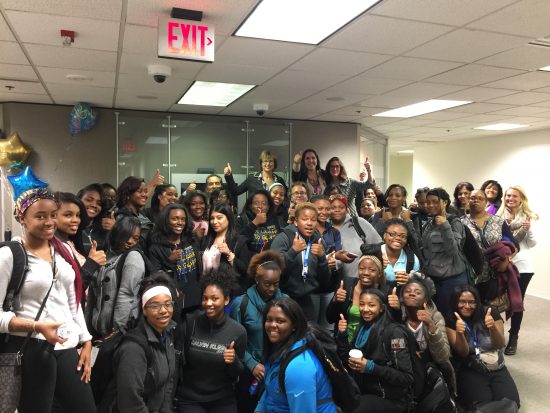
If you look around, there is a strong push for female recruitment and retention within technology companies. The problem that remains is having a large enough pool of seasoned women for these companies to do their recruiting and retention. Companies are starting to do their part, now we established women need to do our part by mentoring, sponsoring, and encouraging this career path for women as early as middle school. We don’t want the door to close before it is fully opened!

Here are some women I’ve had the pleasure of connecting with globally who are breaking down the doors to address this problem!

Oli Laurent has never seen herself as a conventional thinker. This has led her to uncover unforeseen opportunities and pursue success at no limitations. Being curious and creative with technology allows for her to have continuous progression that makes her a technical leader and trusted advisor to her customers. Oli says, “helping customers solve their most critical business challenges is the most rewarding aspect of being a Cisco Systems Engineer. When Oli isn’t winning medals in various athletic events she willingly gets roped into, she builds houses for Habitat for Humanity, works with St. Mary’s Food Bank, and inspires young girls into STEM career options by demonstrating the empowerment and innovation driven. Twitter: @OliLaurentSE 


Chara Kontaxi is a Systems Engineer Manager in Greece who started in the Cisco Sales Associate Program after college. Chara mentions she owes her CCIE to this successful training program and will go to great lengths to sponsor, support, and promote young talent in order to give back. She also supports multiple non-profit organizations and loves traveling, seeing new places, meeting people, and experiences different cultures. All her experiences have led her to believe that the Cisco family culture, its people, and leadership lure you in and make it hard to match! Chara says, “You simply know you belong and feel empowered to take up the next challenge; the average Cisco SE cannot survive without a good challenge, right?” Twitter: @Chara_Kontaxi 


Nicole Scheffler enjoys leveraging Cisco’s “give back mentality,” which allows her the opportunity to connect with many inspirational women and globally mentor. She even has her own women in tech podcast called Diva Tech Talk where she invites women from all technology backgrounds to discuss various career options.  When she isn’t being a Tech Diva, Nicole works with the Networking Academy, Women of Impact, and volunteers at Girls Power Tech Events. At Cisco, Nicole states, “we are always coming together in teams for the greater good for our customers and the world!” Twitter: @tech_NICOLE 


Francis Gotopo feels being a Cisco SE has been a great adventure! She adds that “being able to listen to our customers, be close to them, and work together to provide the best solution” that enables them to grow and transform their business is fascinating and keeps her growing professionally. Francis enjoys the ability to move across different countries and being involved in numerous activities such as promoting STEM programs to youth, FIRST Robotics, and Girls Inc. Apart from being a mom of two, she is co-founder of a non-profit organization that promotes Venezuelan Culture in Canada. “Never standing still and always moving forward to make a positive impact every day for my kids, family, customers, and the world! That is the mission!” Twitter: @fjgotopo


Purvi Bajaj reflects back on the advice she received early in her career that helped develop her tenacity and fierce thirst for excellence. “I met a dynamic woman who was a trainer within my organization. I was pretty awestruck by her. In an industry that was completely dominated by men, she was this beacon of everything I thought I should be.” Besides giving Purvi hope, Purvi was given advice that “our only earnings will be the respect we will earn for our technical prowess.” Another bit of guidance given was that “people buy from people, people don’t necessarily buy from organizations.” They might not buy from you, but they will never forget how you made them feel.” When Purvi isn’t mentoring and helping develop early in careers, she enjoys reading and putting on her dancing shoes!


Yewen Xi was once a member of the CSAP program and takes time to give back by mentoring new hires. She views her mentoring as “writing a letter to her younger self when first joining Cisco—sharing all I know to help them succeed.” Her curiosity to learn in a constantly changing industry keeps her going as she sees barriers as merely stepping stones to achieve greater heights. Yewen says, “seeing the solutions I presented on powerpoint implemented in production” is most fulfilling. “I am always surrounded by smart, inspiring Cisco SEs who constantly amaze me by their passion and ideas,” is why she loves being a #CiscoSE! Outside of work, Yewen loves cooking and trying new restaurants. Twitter: @XiXiCat312

These six women’s inspiring stories are wonderful examples of paying it forward!

Come celebrate with the amazing women in Systems Engineering by tuning into the Cisco DevNet Facebook Live #CiscoChat Sunday, August 20, 2017 4:00 – 7:00 PM PST!

Authors

Kristen Hale

Systems Engineer

Enterprise Sales

Avatar

I know a lot of bad words that begin with the letter “F,” but failure is NOT one of them. For sure, there do exist inexcusable failures in an organization: failure to meet your sales targets, production targets, operational expense targets, etc. It is easy for us to become so caught up in our search for success that we can forget how to fail.

At Cisco, we have thousands of Systems Engineers and Architects serving our valuable customers and it is widely understood in the industry that they are a formidable team. We have seen some tremendous successes over the last 30+ years. However, as we’ve grown, a new challenge has developed. How do you create agility in a large organization? This agility is more crucial now than it ever has been in my 2+ decade career at Cisco. Cisco’s transition to software and programmability is well documented and it has a tremendous impact on our Systems Engineers and Architects. Not only are we evolving our team with software skills in Networking, Security, IoT, AI and other areas, we are constantly evaluating the technology landscape and preparing for AR/VR, Blockchain solutions and many, many other impactful technologies. Rapidly developing technologies and rapidly shifting markets require us to be agile and rapidly adapt. How do we do that?

One part of creating an agile organization is experimentation, and with experimentation comes both successes and failures. We’re embracing both as we explore new ways to interact with our customers. Can we bring a new, rich experience to our customers that allows us to leverage our best experts virtually? Video has been an incredibly transformative technology for us, but we’d like to up our game.

We began experimenting with Virtual Reality a few months ago. Our hypothesis was that we could leverage the technology to have a realistic, life-like experience with our customers while embracing the productivity and agility of being remote. We deliberately used a very small budget and some very resourceful people to throw together an experiment. Leveraging a cinematic-quality VR camera, we captured recordings of SEs demonstrations and various other interactions.

In this photo (left to right): Jason Tamasese (Cisco), Aaron Jackson (camera man), Dave Wilson (Cisco)

What did we learn? For one, I learned I need to change my delivery when presenting to a VR camera. (Talk about failure!) More importantly than my ego, we learned that the technology isn’t quite ready for the experience we were hoping to develop, but we learned a great deal. From some initial small failures, we are now achieving great successes. Check out some of the great videos we created along the way below. The lessons we learned in the process are giving us new focus to our experimentation and new ideas for bringing value to our customers.

Here is to failure! May we fail fast and often.


Note to desktop users: We recommend using the latest version of the following browsers for the best video viewing experience: Chrome, Firefox, Opera, Edge.

Note to mobile users: For the full 360o video experience, please use the Vimeo app (iOS, Android) to view the following videos.

Select Video Quality: Also, for the best 360o experience, click the “HD” button (on the bottom right of each video clip) and select 1080p or 720p HD playback. Otherwise the video may appear blurry.


#CiscoSE Demo: Cisco SDA & ACI 


#CiscoSE Demo: Cisco Collaboration  


#CiscoSE Demo: Smart & Connected City 


Virtual Reality: #CiscoSE & Cisco DevNet


#CiscoSE Demo: Cisco Data Center


Virtual Reality Talk: Cisco Cybersecurity


#CiscoSE Demo: Cisco Spark Board


Virtual Reality Talk: The Cisco Meraki Story


Virtual Reality Talk: Cisco Emerge


Virtual Reality Talk: Cisco Meraki


Authors

Michael Koons

Vice President, Global Systems Engineering and Technology

World Wide Sales

Avatar

Students arrive in Baltimore, Md., wearing embroidered jackets with logos and names stitched in bright colors on their sleeves. They’re members of different teams, but this isn’t an athletic event. They’re together to compete in CyberPatriot’s National Youth Cyber Competition, the largest middle school and high school cyber defense competition in the United States.

The Air Force Association (AFA) created CyberPatriot’s National Youth Cyber Education Program in 2009 to inspire high school students to pursue careers in cybersecurity. The program has grown exponentially since then with more than 4400 teams taking part in the program last year. (The 2017 program kicks off in October.) At the center of CyberPatriot is the National Youth Cyber Defense Competition, which puts teams of middle school and high school students in the position of newly hired IT professionals tasked with managing the network of a small company. In the rounds of competition, teams are given a set of virtual images that represent operating systems. They have six hours to find cybersecurity vulnerabilities within the images and harden the system while maintaining critical services. Teams compete within their state and region, and the top teams in the nation earn all-expenses paid trips to the National Finals Competition where they can earn national recognition and scholarships.​

Bernie Skoch, CyberPatriot national commissioner, stresses the importance of cybersecurity training as the number of breaches become more common. “The annual worldwide loss to cyber crime is estimated at $600B,” he said. “We need an innate capability here in the United States where we create a cadre of cyber defenders.”

Teams compete in three divisions: Open (high schools), All Service (community service and citizenship programs, such as Junior ROTC), and Middle School. Results from preliminary rounds are recorded in the central CyberPatriot scoring system, and at the end of the semifinals, the top 30 teams are invited to the national competition. There, they compete face-to-face to defend virtual networks, reducing known vulnerabilities like weak passwords and firewall issues while protecting critical services such as email and web servers from attacks. CyberPatriot provides students with a practical application and experience, helping them understand how they can establish a career in cybersecurity and getting them excited about the field. One of the key takeaways from the CyberPatriot experience is that the camaraderie built within teams—and among competitors—also drives enthusiasm for STEM careers. Much like the real-world experiences of Cisco engineers who collaborate on major projects for customers, students experience success working together toward a common goal.

How Cisco Supports CyberPatriot
Cisco’s initial involvement in CyberPatriot began when volunteer engineers built a local area network for the CyberPatriot IV National Finals in March 2012. Based on that experience, Cisco approached AFA to suggest that while the desktop-based competition presented a good opportunity to expose students to broader challenges in the cyber world, as the number and variety of connected devices increases, so do the number of potential cyber threats.

Cisco asked to incorporate networking fundamentals into the competition to give students knowledge to protect desktop computers and newer mobile devices against cyber attacks. Being a career IT guy himself, Bernie Skoch was thrilled with the idea, and Cisco components were integrated into CyberPatriot. Cisco’s role and content has grown in subsequent competition seasons.

After the first exhibition, there was also tremendous enthusiasm for the Cisco curriculum, which leverages tools developed for the Cisco Networking Academy program. This enthusiasm was a springboard to establish the Cisco Networking Challenge as a key component of the National Finals, complete with trophies for the top teams.

CyberPatriot

Cisco also supports CyberPatriot by encouraging employees to volunteer, and then supporting them through Time2Give. Last year, more than 100 Cisco employees were involved with CyberPatriot, acting as mentors and teaching students about networking security skills both onsite at local middle schools and high schools and through Cisco WebEx. Cisco employees (or anyone interested in getting involved) can sign up as a CyberPatriot volunteer.

In a recent survey of CyberPatriot graduates by the AFA, 80 percent of respondents indicated they will pursue a two- or four-year degree and plan to study cybersecurity, computer science, or another STEM field; the national average is 13 percent. Cisco’s support and Cisco employee volunteers are helping CyberPatriot impact future generations, giving them valuable knowledge and tools that will prepare them to defend against the growing number of cyber threats.

Authors

Cindy DeCarlo

No Longer at Cisco

Avatar

It’s a scary time to be a retailer. Every day, new reports surface about another round of store closures. Or how the indoor shopping mall—once the epicenter of suburban society and early morning walks—has fallen out of favor. So how does today’s retailer stay relevant?

The secret is really no secret. You have to understand and connect with your consumers in ways that are relevant to their intentions. If your customer wants a high-touch sales interaction, you need to give them a high-touch sales interaction. If they prefer to be left alone to browse, you need to leave them alone. And, if they want four pairs of slacks in plaid, you better have four pairs of plaid slacks. And in their size. In short, you need to anticipate their needs and deliver in real time.

But, because clairvoyance tends to be in short supply, how do you read a shopper’s mind and fulfill their every wish?

Connected Mobile Experiences.

Okay. Disclaimer. Cisco Connected Mobile Experiences (or CMX) won’t make you clairvoyant. But it can help you better understand your shoppers and provide them with a more rewarding experience that will increase their loyalty and your revenues.

To help illustrate how CMX can transform the retail experience, we created a simple informational graphic that contrasts two shopping journeys—one at a store with CMX and one at a store without.

In the first retail journey, Mia, our fictional shopper, starts her shopping online, by researching a purchase. Her journey then transitions to the store. Through the entire experience, CMX is able to connect her intent, her actions, and her needs with relevant content. The store’s applications—powered by CMX—provide key information exactly when Mia is ready to make a decision. And, through integration with employee applications, CMX can help inform sales associates so they can anticipate and meet Mia’s needs.

Then the informational graphic contrasts Mia’s first journey with one not informed by CMX. We show how the store without CMX misses opportunities to understand and serve Mia, and leaves her with a bad experience. Worse, the lack of personal engagement causes her to question her desire to do business with the store in the future, losing her loyalty and future revenues

Click here to see our Tale of Two Shoppers. And see how CMX can make the difference.

Authors

Daryl Coon

Cisco Customer Solutions Marketing

Avatar

On May 30, 2017, Cisco and IBM Security announced a key relationship to address the rising tide of security threats and the need to respond rapidly. Cisco and IBM Security will work together to offer specific product integrations, a managed security service provider (MSSP) roadmap, and threat intelligence collaboration programs.

The relationship focuses on making security simpler and more effective and is a reflection of each company’s commitment to openness and interoperability. Together, Cisco and IBM are focused on reducing the time to detect and mitigate threats, giving you integrated tools to automate threat response with greater speed and accuracy.

What are the offerings?

Here’s a closer look at the three pillars of the relationship:

1. Product integrations

Both organizations are building integrations among the product portfolios. Cisco is building new apps for the IBM QRadar SIEM platform, which helps security teams understand and respond to advanced threats. A variety of Cisco® security solutions will increase the effectiveness of IBM QRadar® over time, with data from networks, endpoints and the cloud. On the other hand, IBM is building extensions into Resilient and X-Force Exchange to include Cisco products and intelligence data.

The first three apps focus on integrations with Cisco Firepower® technology, Cisco Threat Grid and Cisco Identity Services Engine (ISE), and will be available on the IBM Security App Exchange.

Meanwhile, IBM is building extensions into Resilient and X-Force Exchange to include Cisco products. Resilient and X-Force Exchange will be able to ingest Cisco Threat Grid content.

2. Services

The IBM End to End Outsourcing and Managed Security Services team is working with Cisco to deliver new services aimed at further reducing complexity. As enterprise customers manage their equipment on premise and in a datacenter, they are also looking to migrate their security infrastructure to public and private cloud providers. IBM Security will provide outsourcing and managed security services to support Cisco security platforms in leading public cloud services as well as legacy on premise and datacenter environments.

Cisco and IBM Security customers will be able to consume these solutions in a way that complements their existing architecture. Customers will be able to build and manage their own integration, working with a trusted channel partner common to both IBM and Cisco, as well as deploy a full turnkey managed solution supported by IBM Security Services.

3. X-Force and Talos research collaboration

We have also established a new relationship between the IBM X-Force and Cisco Talos security research teams, who now share threat intelligence research and coordinate around major cybersecurity incidents. Shared intelligence also means enhanced performance of security products, and richer outcomes such as reduced time to detect.

For example, Cisco and IBM threat research teams collaborated on defending against the WannaCry ransomware attack. IBM and Cisco researchers coordinated their actions and exchanged insights into how the malware was spreading. Afterward, they continued the joint investigation to provide clients and the industry with the most relevant information.

What’s new and what’s next?

Product integrations will become available in the coming weeks, starting with the Cisco Firepower NGIPS, NGFW and Threat Grid apps. The Cisco ISE app will follow in the late fall and additional apps will become available later in 2017 and beyond. We are excited that the IBM Security team is working closely with Cisco product teams, and we hope to highlight this collaboration in future promotions from both companies including blogs and webinars.

Another important announcement

Today, IBM announced its intention to stop selling its Intrusion Prevention System (IPS) solution, the IBM QRadar Network Security (XGS) product line. This decision will take effect on December 31, 2017. However, current customers will be supported for a full five years through December 31, 2022.

IBM’s decision was based on an analysis of market conditions, competitiveness, strategic fit and it also reflects IBM’s belief in the strength and value of our partnership. When IBM XGS customers look to refresh their network security defenses, IBM’s sales organizations will introduce Cisco’s Firepower NGIPS and Firepower NGFW solutions.

More information on the Cisco and IBM security alliance is coming soon.

Visit our Cisco Firepower page to learn more about Cisco’s industry leading NGIPS.


Authors

Dov Yoran

Sr. Director, Strategy & Business Development

Security Business Group Cisco Systems, Inc

Avatar

For decades, we have imagined the future through the eyes of comic book heroes — from boy-next-door Peter Parker’s Spiderman to Amazon princess Wonder Woman. So, as we approach our next Cisco Hyperinnovation Living Lab, focused on the future of work, I thought we might explore that part of our future in the same way.

Will intelligent robots take our jobs, or work alongside and assist human workers? How will workers find stability in the gig economy? Will drones make us safer, or destroy our privacy? Who are the superheroes (or villains) who will shape the future of work?

Join me over the next several weeks to look at these and other questions about the future of work in this new comic-book series “To Save Tomorrow”.


Authors

Kate O'Keeffe

Senior Director

Customer and Partner Innovation

Avatar

Miraculously, I lived through my entire undergraduate experience without a cell phone or a laptop*. I kept quarters in my purse in case I had to stop to use the phone and signed up for my first email address right before I graduated. Google was new and had not released their IPO. To write a research paper, I looked up my topic in the library’s catalog to check out books or used the microfiche machine to scroll through microfilm to find articles. Everyone typed papers in the numerous University desktop computer labs. My point? This was (truly!) not that long ago.

There were only 147 million people online at that time – less than 4% of the world’s population. According to the 12th annual Cisco Visual Networking Index complete forecast, 44% of the world’s population is using the internet today. That’s an 1100% growth in adoption rate in less than 20 years! By comparison, during this same period, the world’s population only grew at an average rate of 1.21%.

All of this exponential change in a relatively short time has affected other areas of our lives. Retail banking was one of the first industries to feel the impact of this rapid adoption. Personalization and digital innovation in consumer markets have influenced customer expectations. An explosion of advancements in fintech, insurtech, and regtech that leverage the internet of things, machine learning, automation, robotics and mobile technologies continue to disrupt the financial services industry. It’s hard to keep up and even harder to imagine, at this rate what banking will look like in 5 years.


https://www.slideshare.net/Cisco/what-will-banking-look-like-in-2021


Cisco’s best and brightest statisticians and data scientists have just released the 12th annual Cisco Visual Networking Index (VNI) Complete Forecast. This free report provides scientifically based predictions for what we think you can expect to see between 2016 and 2021 based on the rate of change during the past five years. A few of the most jaw-dropping facts include:

  • U.S. mobile data traffic in 2021 will be equivalent to 12 times the volume of the entire U.S. Internet in 2005. Note that this statistic only refers to mobile data traffic. It does not include everyone who works on laptops and desktops in their offices each day.
  • You better pop some popcorn and get comfortable because it would take more than five million years to watch the amount of video that will cross global networks each month by 2021. That equates to one million minutes of video content crossing the network each second.
  • Mobile data traffic will grow twice as fast as fixed (wired) traffic. Much of the increase in video consumption will be due to the amount of time that we will spend in our autonomous, driverless cars. With more time during our commutes to focus on our screens instead of the roads, we will be able to absorb a great deal of content.
  • Don’t touch the remote yet! In 2021, the equivalent in data of all movies ever made will cross the Internet each minute. That amount of internet traffic is equivalent to 59 billion DVDs per month, or 81 million DVDs per hour. Thank goodness for streaming services, because that’s a lot of movies to remember to return on time!

We created a presentation on the future of banking based on a few highlights from the VNI Forecast that are most relevant to the financial services industry. Visit the VNI Forecast interactive summary for more details from the extended report.

*To my Millennial friends: There is proof that life was still good. I have photographs of myself happy and dancing – even before the first iPhone. 


Authors

Kami Periman

Financial Services Subject Matter Expert

Marketing & Communications

Avatar

IT leaders of all stripes: This podcast is for you. Doesn’t matter what your title is or which industry you work in. If your job involves leading your company’s IT organization on any level—whether for a small line of business or for an entire Fortune 100 enterprise—you’ve got to tune in.

Why? Because our guest for this one was Randy Bias, VP of Technology and Strategy for the Cloud Software Group at Juniper Networks, and he’s one of the most knowledgeable people in the world when it comes to cloud. Really. He’s been involved in it from the very beginning, and is still right up in the heart of the action. He’s started cloud companies, served on boards, and spoken at conferences all over the world. He understands the technology and the organizational hurdles that IT leaders face as they strive to stay ahead of the curve. So he’s got a terrific perspective that allows him to see how things have developed so far, and where they’re going. And let me tell you—he’s got some very strong opinions about what today’s enterprises need to do if they’re going to succeed in the digital era (hint: it doesn’t involve doing things the old way). Specifically, he touches on:

  • Why Kubernetes is winning in the container space
  • What “Services as a Platform” means and why it is a far less constrained environment than Platform as a Service
  • The importance of “Continuous Response” as a DevOps discipline
  • Why “grinding out virtual machines on demand is useless”
  • The importance of being a technology company first, regardless of your specific industry
  • Which companies are successfully transforming their cultures to embrace DevOps and create web-scale cloud platforms
  • What he means by “assembly line IT” vs. “the robotics factory model of IT”

The things he says might freak you out, and they might make you uncomfortable, but they also might just help you save your job (or your company). So don’t miss this one!

See the video podcast on our YouTube page, or listen to the audio version on iTunes. And if you like what you hear, we invite you to subscribe to our channel so you don’t miss any of the other exciting podcasts we have scheduled over the next several months.

Authors

Ali Amagasu

Marketing Communications Manager