Avatar

It’s 2am. Four college students are huddled around a laptop and a whiteboard. Unfolded laundry is littered across the bed. A crumpled bag of chips lies face down on the desk, spilling salt across the scattered pages of a forgotten problem set. Speakers are humming lowly with the rhythms of the top 40 set to shuffle. From this fertile soil, the seed of innovation is about to sprout.

Hours of feverish mental activity and excited mutterings have coalesced into a crescendo of marker squeaks and keyboard clicks. The data’s crunched. The code is written. It’s time to execute the program – to feel destiny smile upon them… What’s this? “Network failure”? “Not enough bandwidth”?!

In neighboring rooms, fists are raised to shake at the heavens as streaming shows freeze and aspiring minds are plunged into intellectual darkness. There is weeping and gnashing of teeth.



The third-grader was almost finished with her game. A few problems left, and she could show her teacher her results! And then the bell rang. She would have to run to make the bus. And her assignment would remain unfinished, at least for another day.

As she carefully packed away her tablet, she thought ahead to the hour-and-a-half ride home. How she wished she could spend that time finishing the game and showing her teacher how well she’d done. And then, like the rest of the class, she could start the next level tomorrow, instead of falling behind.

On the bus, the terrain rolled by, obscured by the fog of familiarity. The fire of curiosity extinguished by the lethargic drizzle of boredom.



A frazzled math teacher tapped frenetically at his mouse clicker, like a boxer reeling off jabs to the face of his opponent. Implacable, the wheel of death spun on, its stare as blank, cold, and dispassionate. Soulless. There was no reasoning with such a foe. No appealing to logic or emotion or shared experience. Only despair.

The deadline for submitting grades was fading into the rearview mirror. The slow, endless spinning of the wheel was hypnotizing – a jarring contrast to the relentless buzzing of his mobile phone inching its way across his desk.

He didn’t have the heart to tell her he would be late, once again. A guttural growl was the only audible vestige of the crippling frustration reverberating through his body. The frenzied flurry of anxieties playing king of the hill in his mind faded into a single exasperated plea: “Why, oh why, can’t I do this from home?”



We’ve all experienced the unique brand of soul-crushing vexation that results from the failure of technology. From jammed printers to broken links, these failures have turned multitudes of hairs gray before their time. Of all such errors, network failures or limitations seem the most pitiless and monolithic. What can mere mortals do to sway the fates of this dispassionate deity?

As these vignettes illustrate, empowered teaching and learning requires an automated, secure, intelligent core network up to the task of handling increased traffic, supporting a range of users, scaling to continuously offer new services, monitoring internet and application usage, and protecting sensitive data from attackers.

Only atop a solid and secure network foundation can we support the wireless connectivity and mobility services that extend access to all students—at all times. On campus, on the bus, at home, or anywhere else.

Engagement, experience, and innovation are built upon the bedrock of access, and undisrupted connectivity is crucial in enabling opportunities for teachers and students to learn without limits.

To learn how Cisco Digital Network Architecture (DNA) for Education empowers learning opportunities, visit this infographic, or watch this video.


Authors

Rob Lothman

No Longer at Cisco

Avatar

In a world of scrolling through social media posts on our mobile devices, “thumb-stopping moments” are those that make you click with a purpose.

That was what an article from the Atlantic was for me three years ago, “The Confidence Gap” made me slow my scroll.

At the time, I was in the midst of an intense two-year leadership development program at Cisco. I had dreams of moving into a management role, and had the support of my manager and his manager to develop and take on this next step within my career.

Yet, I had repeatedly avoided opportunities to interview for promotions. The article was all about this – that women would often find reasons to not go for a job or promotion.

Doubts go through our minds – my mind – as women. “I’m not sure I know enough about that solution area” or “I just came back from maternity leave, maybe it’s not time for a promotion yet.” This article, and my experiences, told me I wasn’t alone.

When a job is posted, there is immediate interest from many people. But statistics show that men who are interested in the job might have 50% of the experience and qualifications listed, yet still think to themselves, “I’m gonna go for it!” Meanwhile, women interested in the same job, with 80% of the qualifications and experience, tend to think to themselves, “I don’t meet 100% of the qualifications, I guess I shouldn’t go for that job”.

Herein lies the Confidence Gap.

I realized it was holding me back too. That awareness helped me look at new opportunities in a different light, and also spurred me to approach my career in a more strategic way. After working for 10 years, I realized I hadn’t done any meaningful career planning since I was in college!

 The first step I took in my new approach was to write out my career goals and create a plan to address the education, experience, and exposure I needed in order to achieve my goals. While in college my career plan was to find a job where I could make enough money to support myself doing something vaguely related to my area of study.  My new career plan, however, delved into the things I loved doing like helping others to be successful and driving business strategy through executive conversations and relationships.

I wrote out what I saw myself doing in one year (manage a team), three years (lead managers) and five years (run the world, obviously.)  The plan I created around my goals detailed out the additional things I needed to study and experience, and the people I needed to meet in order to reach my goals.


I knew it would take self-confidence to tackle my aggressive plan.  As a woman, as a wife, as a mom with two young kids, there are plenty of moments to have self-doubt.  As a business person, having a plan gives you a guide where you can check things off along the way – and each time you do, you’re putting coins in your confidence bank.

Genuine confidence doesn’t just happen, it must be built and nurtured.

How can you close the confidence gap? Here are a few more strategies I’ve found success with ever since clicking that article link:

Find a great mentor, and become a mentor too. Having regular meetings with a mentor gives you the opportunity to ask questions of someone who is not your manager and gain outside perspective.  It gives you the chance to refine and validate your approach or solutions to challenges in the workplace, thereby building your confidence in your ability to address them.

Did you know? Cisco has a great culture of mentoring along with an HR supported process of matching mentees with mentors!

Build a Personal Board of Directors. Select 3-5 people who are at least one (but preferably two+) levels above you and work outside your direct team or organization. They should work in places that are related to your job or are in an organization you might be interested in going to. Ask if they’d be willing to dedicate one hour per quarter for the next year so that you can learn from them.

Identify your Accountability Partner. You know who your friends are at work and that they not only believe in your abilities, but will keep your conversations confidential. Ask one or two people from this inner circle to help you through particularly tough situations – let them know their job is to keep you on track!

When my Accountability Partners see me waiver with launching a tough conversation or going for an opportunity – they step in to keep me focused, and remind me of what I am capable of.  These folks are your personal cheerleaders in the workplace, and many of whom I’ve asked to be my Accountability Partner have circled back and asked me to do the same for them – which has helped us to build a sense of community.

Finally, mindfully quiet that inner voice that kills your confidence. In other words, stop trash talking yourself! This will take time, but building your confidence will ultimately quiet that voice that drains you and keeps you from going out for new opportunities!  You can mindfully build towards that by becoming aware of how often you vocalize self-doubt.

What you say out loud impacts how you feel about yourself, so if you keep expressing why you shouldn’t go for a promotion – that is what you will ultimately believe. Focus on the positives and all the amazing skills you have over ones you still have to work on!

As women, we need to start with the awareness that many of us are struggling with confidence, and work towards the steps of closing that gap.


Want to work for a company that encourages you to grow? We’re hiring!


Authors

Isabella Yani

Chief of Staff

Global Sales

Avatar

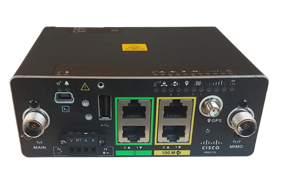
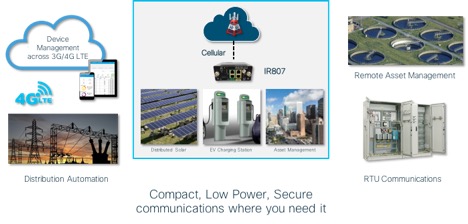
The spotlight at the European Utility Week conference is focused on the newest member of the Cisco 800 Series Industrial Router family. The Cisco 807 Industrial Integrated Services Router fits in space constrained areas and consumes minimal power while delivering high performance secure connectivity over LTE networks. For utilities this means pushing grid reliability and power optimization initiatives to areas previously out of reach. Within the extended enterprise, customers can now securely connect and manage power and space constrained remote assets such as ticketing machines and kiosks.

Cisco 807 Industrial Integrated Services Router

Early adoption of the new offering has been with utility distribution automation programs seeking to extend the reach of fault location, isolation and restoration systems by capitalizing on the Cisco 807’s support for IEC 61850-3 and IEEE 1613 compliance and simple integration with SCADA systems. Extending power optimization programs such as Volt-VAR optimization for driving grid efficiency in previously unaddressed areas has been another natural fit for the Cisco 807 in ruggedized, space constrained areas.

“The low power consumption and compact form factor of the Cisco IR 807 provides an excellent solution for our distribution automation and IoT initiatives at Innogy. The secure connectivity for mission critical data delivery helps us continue to drive operational efficiency improvement,” noted Dr. Juergen Tusch, Head of Telecommunications at Innogy.

Pushing the envelope to new areas of grid management with utilities has been an essential element of the overall Cisco IoT networking portfolio. The introduction of the Cisco 807 complements a broad array of solutions offering near term impact with grid reliability and operational efficiency. These include:

  • Distributed fog applications executing on the Cisco 829 enabled by IOx
  • Fleet management secure connectivity with the dual LTE Cisco 829
  • Critical infrastructure protection, compliance and application visibility with the ISA 3000

The Cisco IoT portfolio has helped customers across the energy industry meet the challenges presented by increasing adoption of distributed energy generation and increased demands for grid reliability in the face of climate change. The Cisco 807 further extends the reach of the Cisco IoT networking portfolio to help meet these realities.


Check out more photos and EUW conference updates by following @Cisco_IoT on Twitter. Learn more about the latest developments with Cisco IoT at Cisco.com/go/iot.


Authors

John Reno

Marketing Manager

Avatar

Customers want it fast. They don’t want to wait for human intervention to get what they want, when they want it. They want resolution at the click of a button. The pace of change is increasing and customer behavior is pushing significant transformation in business models. 10 years ago, who would have imagined that Amazon (once the biggest online bookseller) and Google (once the biggest search engine) would be among the top the online IT providers? When Amazon launched the AWS EC2 cloud computing service back in 2006, per-hour billing was a big deal. A few years ago Google upped the ante with per minute. And just a few days ago, Amazon announced that they will be charging per second. Things are moving faster and faster, due in part to how fast services can be delivered.

McKinsey recently conducted a study on the worldwide potential of automation. The study cites that the daily work activities of everyone — from auto mechanics, to farmers, to customer service rep, to burger flippers will be changed by automation. The study focused on (1) whether a previously manual job function could be automated and if it can, (2) how much work would it take to automate it? Every industry is looking at how automation can help them drive digital transformation and innovate.

Solutions like Cisco’s Network Services Orchestrator (NSO) are helping Cisco customers address transformation for the reality they are facing today — which is typically a combination of multi-vendor, multicloud, legacy, physical, and virtual. NSO brings in automation and commonality, allowing IT to define new services, regardless of the type of equipment in the background. It creates a well-defined API layer between the customer-facing views like a portal or ordering/billing system and the supporting infrastructure. Innovations in virtualization and the ability to use common server hardware to perform many networking functions enable service providers and enterprises alike, to move at the speed of software (not hardware) to deliver services and improve customer experience faster than ever before.

At Cisco, we know that many companies are hybrid, with environments that combine new technology with 20 year old optical routers and boxes that are 5 years old. That is a reality for a lot of businesses. Cisco knows those environments and we are all about helping our customers achieve digital transformation and deliver business outcomes through automation and simplified operations, regardless of where their journey begins.

How is automation impacting your business?

For more information:

Authors

Kip Compton

No longer with Cisco

Avatar

I wanted to share some exciting news from our friends at the Tolly Group. Our Cisco RV340 Dual WAN VPN Security Router Tolly Report has been downloaded more than any other report in September! Here is the Tolly Report.

Launched earlier this year, the RV340, along with the other models including the RV340W, RV345, and RV345P continue to become more popular and the product of choice. Both end-users and partners are raving about the performance, features, ease of use and configuration, and overall quality. These four models provide options for port count, wireless, and PoE. And all of them are supported by the Cisco FindIT Monitoring and Management Platform.

We are proud this success as it is an indicator that our premise of what a Small Business owner and/or Channel Partner would choose for the Small Business Network. Remember, no matter the size of the business or enterprise, the value of the network is the same. Mission-Critical is one way to describe it.

Right?

We will have some exciting Cisco FindIT news coming. Our team will be at Kaseya Connect in Amsterdam next week. And we will be reporting from SpiceWorld 2017 in Austin. So please stay with us for updates.

Marc and the Cisco Small Business Team.

RV Series Routing/110-550X Switching/WAP Wireless Access Points


Authors

Marc Nagao

Product Manager

Small Business RV Series Routers

Avatar

Greetings and welcome to the Customer Stories Blog! This is our first post and we hope you join us back here each week as we try our best to educate and entertain you with stories and topics that we think you may care about.

At the core of Cisco, we are a technology company and we know that our products and solutions are important to talk about. But alongside the technology, we want to share stories of how people just like you are using it to transform their business and benefit their customers. Who knows, maybe you’ll want to join us to share your story as well.

Now that we have our blog introduction out of the way- let’s get to why you really clicked on the post: Why is Titanic (one of) the most watched movies of all time?

Maybe because scenes like…

Jack: Winning that ticket, Rose, was the best thing that ever happened to me… it brought me to you. And I’m thankful for that, Rose. I’m thankful. You must do me this honor. Promise me you’ll survive. That you won’t give up, no matter what happens, no matter how hopeless. Promise me now, Rose, and never let go of that promise.

Rose: I promise.

Jack: Never let go.

Rose: I’ll never let go, Jack. I’ll never let go. I promise.

Still bring a tear to your eye…

This movie, created in 1997, has been around for 20 years. In these two decades, it held the record for box office gross sales for twelve years. When released to DVD in 1999, it became the best-selling DVD and first ever to sell one million copies. As of September 2017, it still holds positions three and two for Top 100 movies of All-Time for Domestic (US) sales and Top 100 movies All-Time Worldwide Gross Sales.

Why? It’s because (in our opinion), it’s a story that resonates.

Within this story of survival, there is hope. In this story of searching, there is vulnerability. And in this story of love, there is sacrifice.

There are people who are rich and poor. Selfish and selfless. There are topdogs and underdogs.

But in the end, the story was about a promise to never let go.

While technology stories may not be as intense or dramatic as Rose and Jack’s love, we know they are important. And as you reach for the proverbial “Heart of the Ocean” that will take your business to the next level, we want to share stories in a way that resonate with you.

Thanks for reading our blog. We can’t always promise you epic drama, but maybe (like the free ticket) it will be the best thing that ever happened to you.


Sources:

(September, 2017). All-Time Box Office Top 100. Retrieved from http://www.filmsite.org/boxoffice.html

Cameron, J. (Director). (1997). Titanic. [Motion Picture]. United States: Twentieth Century Fox Film Corporation.

Graser, Mark. (August 25, 1999). Titanic DVD ‘Sinks’ Record. Variety. Retrieved from http://variety.com/1999/film/news/titanic-dvd-sinks-record-1117750778/


Authors

Jillian Zimmerman

Marketer

Customer Stories @ Cisco

Avatar

Itential Pronghorn Platform Extends Cisco Network Services Orchestrator’s Automation

Service providers seeking to reduce costs and improve revenue know that increasing network automation and orchestration brings significant benefits. Traditional telco operations support systems (OSS) have tended to focus on point solutions that provide specific functions in their own attempt to automate networks. However, this approach has often failed to live up to its promise. The result is pockets of automation that engineers must “swivel chair” between to perform their jobs. The promise of automation is “zero touch”, but the traditional approach just doesn’t deliver on this promise.  The time for change is now.

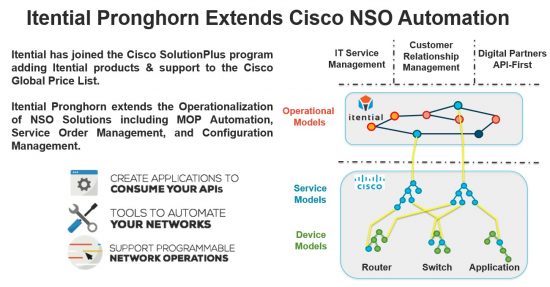
Cisco and Itential have a solution to this challenge!  We are pleased to announce that Itential, a software company focused on improving the efficiency of network operations, has joined the Cisco SolutionPlus program adding Itential products & support to the Cisco Global price list.

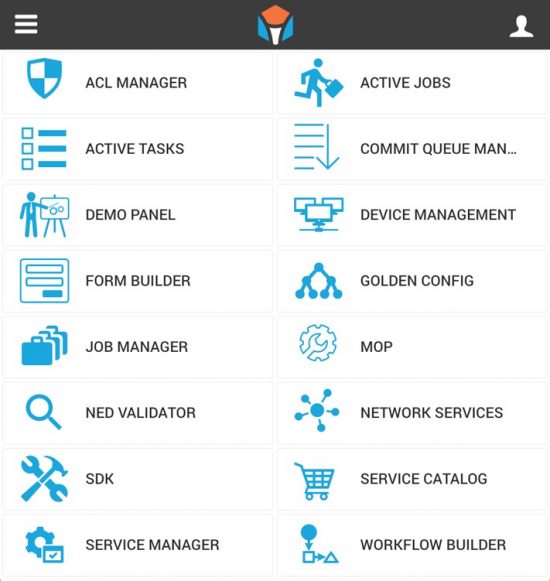
Itential’s Pronghorn solution, available with Cisco Network Services Orchestrator (NSO) enables Service Providers to automate provisioning, operational, and maintenance activities in their networks while providing a single pane of glass interface across their support systems.   Itential Pronghorn complements Cisco NSO in delivering a model-based automation approach to its customers and leverages open standards, open source software, and industry best practices to deliver solutions that drive success for both service provider and enterprise environments.

There are a variety of use cases where Itential Pronghorn with Cisco NSO can help your organization meet its business objectives. Among these scenarios, it can also be used to automate maintenance tasks, enable zero-touch provisioning, and modernize configuration management of devices.

                                    Itential Pronghorn’s User Interface Portal

“According to Chris Wade, CTO of Itential, “The adoption of orchestration is key to supporting an API & model-first automation strategy.  Itential is focused on driving automation capabilities utilizing programmable network concepts and NSO as a foundational orchestration platform.”

Chris Wade, CTO of Itential

Join our upcoming Cisco Knowledge Network Session to learn more.  The session will include a demo of the Pronghorn Application Platform with NSO, including Itential’s robust workflow capabilities and real world use case examples.  Attendees will gain an understanding of the network management and service development challenges posed by automation and virtualization.  They will additionally learn why choosing the right orchestration solution is crucial to maximizing on these technologies

Register to attend the Cisco Knowledge Network Session October 3rd at 8 am-9am PST here.   The session will be also recorded and all content will be available for on-demand replay after the live webinar from the Cisco Knowledge Network Site.

Authors

John Malzahn

Senior Marketing Manager

Service Provider Cloud Solutions

Avatar

Media broadcasters are increasingly using network technology to offer cloud-based, multiscreen services. An integrated approach to security is essential if they are to make the most of this opportunity

It’s an exciting time in the broadcast media industry.

Film production is growing fast. Creative artists are linking together through powerful networks across multiple studios. Making it easier to shoot, produce, edit, and deliver video.

Production companies can then use cloud and over-the-top (OTT) technologies to deliver this content directly to viewers, on virtually any device.

Viewing habits are changing, too. People are consuming more content online, on a growing number of different devices, whether they’re at home or out and about. They want to be able to catch up on programmes that they’ve missed in the past weeks and months. To pause a show at home and restart watching it on their phone, in the same place, the next day. And to stream major events like sports matches, wherever they are.

Increased security risk

These changes bring boundless business opportunities. But linking film production with entertainment delivery also presents big security challenges.

Video content and your viewers’ personal data are now stored together inside your media data centres. The boundaries that used to exist around data are disappearing – making it easier for hackers to get hold of your content, adapt it and distribute it.

Attacks are increasing in sophistication. And it’s getting harder for media providers to identify and stop them before they impact their business. Today, it typically takes organisations between 100 to 200 days to discover that an attack has taken place.

Sometimes hackers can bring down a whole business. In 2015, the French TV network TVMonde5 was taken offline for approximately 20 hours  by hackers that took control of 12 live broadcast channels and displayed malicious content. The attackers used seven different points of entry, and targeted hardware that was connected to the internet with malicious software. TVMonde5’s director-general Yves Bigot said that he had “absolutely no idea” why it had been targeted.

The group of Russian hackers thought to have carried out this attack were also thwarted in their plans to attack UK broadcasters in the run up to the country’s general election in 2015.

Fight back with an integrated, threat-centric approach

In this tough environment, media companies need to rethink their security across the entire content delivery chain. They need a holistic approach that enables greater visibility and enforcement.

This is where Cisco can help. Why? Because firstly, we’ve invested in the best security products we can find. And secondly, we know how to combine them into a comprehensive security system that works for you.

Our best of breed, architectural approach enables media providers to deploy multi-layered security to protect your media data centre and production environment. So you can ensure that your content, services, and business are protected from advanced threats across the attack continuum: before, during and after an attack.

And thanks to Talos, our industry-leading global research team of security experts, we’re constantly updating these with the latest threat intelligence, to make sure they’re working as hard as they can to protect you.

An Olympian achievement

Supported by Cisco, NBC Olympics streamed billions of minutes of content from the Rio Olympics last year to an audience demanding the agility of modern video delivery services.

NBC deployed Cisco Media Blueprint with premium network protection to ensure their on-line staff, content and live feeds that were sent from Rio remained unaffected by cyber attacks. The technology included Cisco ASA Firewall with Virtual Private Network services (VPN), Firepower Next-Generation Intrusion Prevention (NGIPS) and Advanced Malware Protection (AMP) with Stealthwatch network flow analysis.

It’s important to invest in world class technology like this. But it’s also essential to make sure that it’s all working together to keep your business resilient against a wide range of threats.

With Cisco, you can do both. We’ll help you create an integrated, best of breed architecture that reduces complexity, to help you manage security effectively and efficiently – before, during and after an attack.

Find out more about how Cisco’s cybersecurity solutions can enable the media production and broadcasting services of the future.

Authors

Yves Padrines

Vice President, EMEAR Sales

Global Service Provider

Avatar

Last year at Strata New York, we spoke about the first truly connected Olympics. This year we’ve chosen an equally interesting topic: the impact of technological innovation on our cities.

The technology landscape is changing faster than ever. What’s more, access to the technology is becoming far more widespread, almost universal. Take smartphones for example (defined as a mobile communications device that can also run general purpose applications): introduced just over ten years ago, there are now more smartphone users in India and China alone than the entire adult population of the United States.

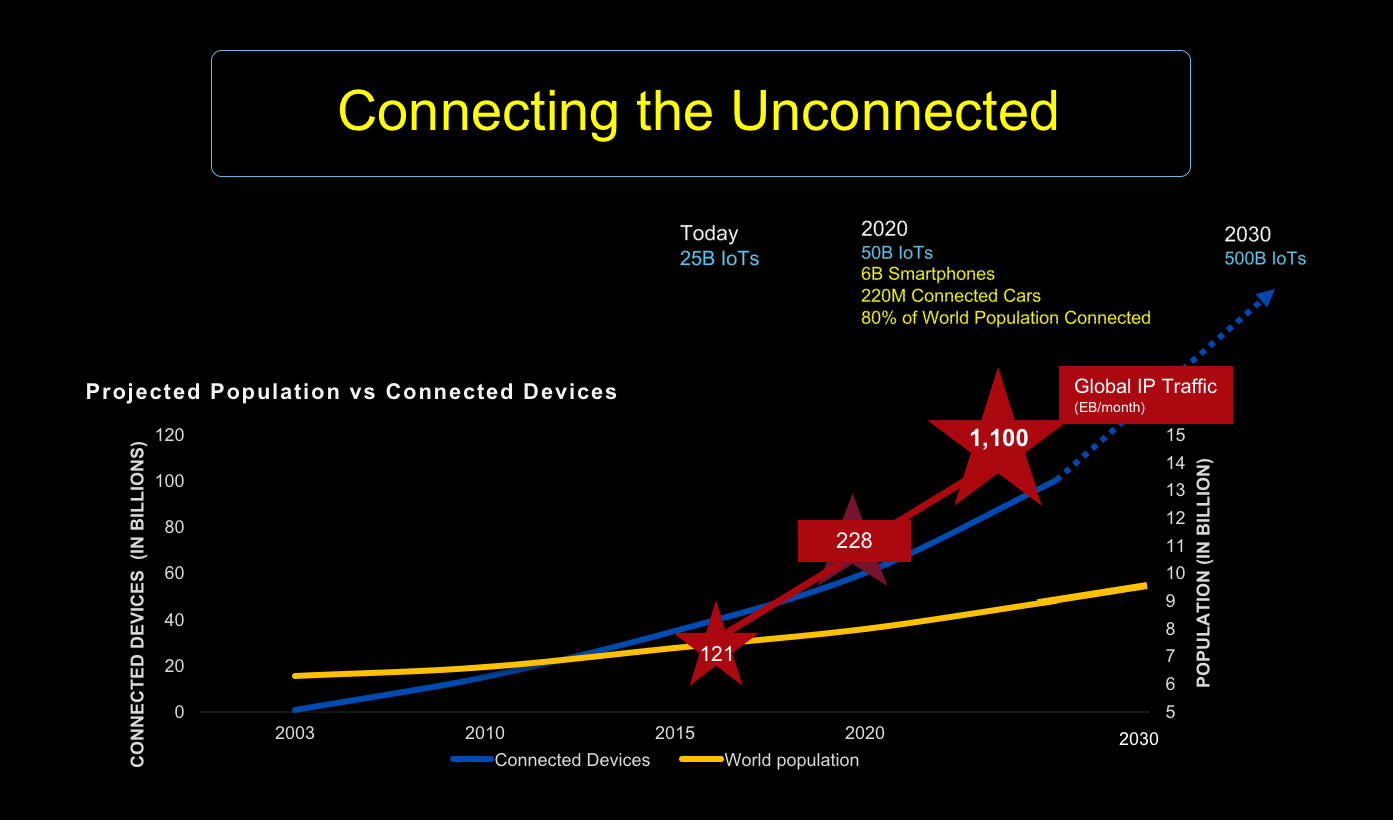
Let’s take a closer look at the year 2020; this will be a year of milestones. Today we have 25 billion connected devices. By 2020, that number will double to 50 billion – we’re adding 25 billion devices in just two years! In 2020, there will be over six billion smart phones in use and 220 million connected cars; and the global IP traffic will reach about 100TB per second. 80% of the world’s population will be connected to the internet.

The possibilities are endless. Imagine all the knowledge of the entire human race available to everyone – we are clearly heading down this path. It’s not at all difficult to imagine every student in the world having access to educational resources like the Khan Academy, Wikipedia and YouTube. Or access to eDX whose mission is “Quality education for everyone, everywhere,” or the Digital Universal Library, or the Million Book Project with a vision to provide access to “all human knowledge, anytime, anywhere.”

It’s not just education, opportunity is everywhere. e-health is becoming a reality with initiatives like Last Mile Health, providing healthcare to the world’s most remote communities. Smart grids and smart meters are transforming the energy sector, benefiting both providers and consumers. Innovation through connected technology is transforming transportation (think Uber and Lyft), and Industry 4.0 is bringing the power of connected computing to manufacturing.

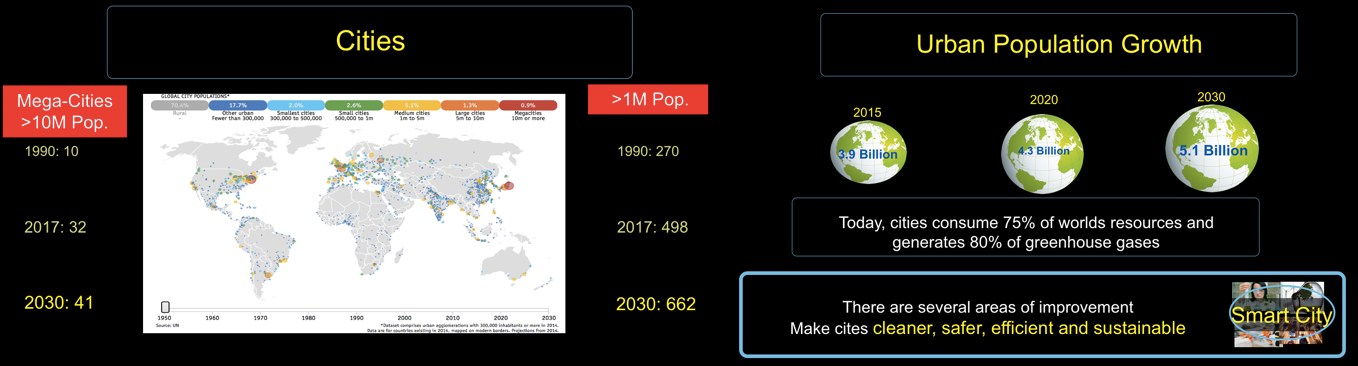
Let’s not stop there. Let’s focus on our everyday lives. What about cities? Most of us live in cities; some of us live in mega-cities. Living in a city offers many benefits of proximity and diversity: food, entertainment, shopping, social events, sports and medical care. But it comes at a price. Cities consume 75% of the world’s resources and generate 80% of the greenhouse gases; and our cities are growing. By 2030, the urban population will exceed five billion people across thousands of cities. About 40 of these will be mega-cities with populations in excess of 10 million people; and about 500 will have populations greater than one million.
This is clearly an area to focus on and one where technology can make significant improvements. I see tremendous potential to transform our cities using the IoT and analytics to tackle issues like our ever-growing demand for transportation, improving energy efficiency, and making our cities cleaner and safer.

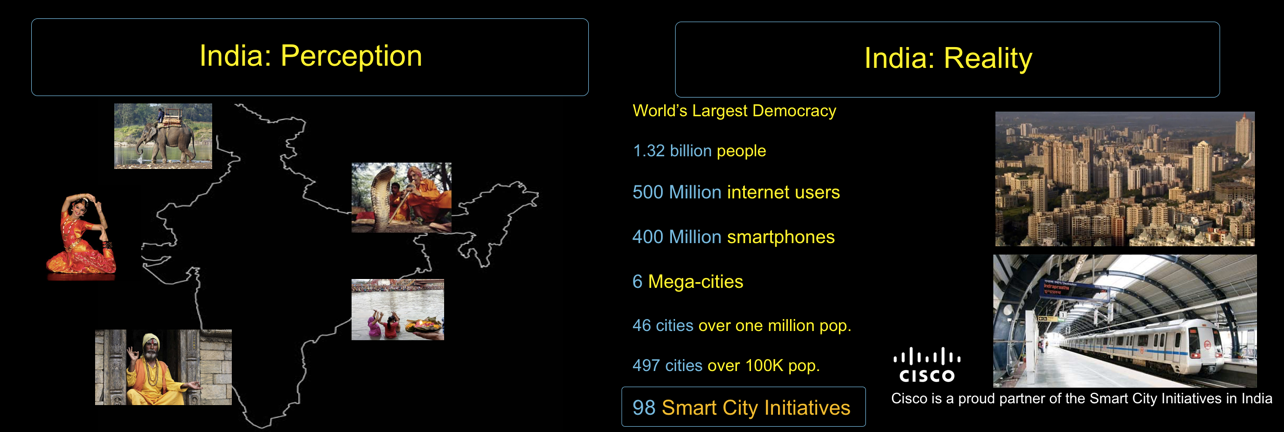
There are many smart city initiatives around the world. Let’s look at India by way of example. When people think of India, they picture elephants, tigers, snake charmers, yogi’s and holy rivers.

The reality of India is quite different (well, except for the elephants). Today’s India is the world’s largest democracy. It has more internet users than the entire population of the United States. There are 300 million smartphone subscribers, and by 2020, India will account for 36% of new mobile subscribers worldwide.

There are six mega-cities (that’s one-quarter of all mega-cities in the world) and more than 50 cities over one million population. Each of these cities has its own unique story. There are also 98 Smart City initiatives – let me take you to one of those cities.

Jaipur, India is one of the most beautiful cities in the world. It’s the 10th largest city in India with a population of 3.6 million. Known as the City of Palaces, Jaipur hosts 40 million tourists every year.

Jaipur’s smart city vision is to use technology and analytics to enhance the quality of life for its citizen while leveraging its heritage. Jaipur’s main business is tourism and a primary goal of their smart city initiatives is to increase the average number of days a visitor spends in Jaipur. Can you think of a better key performance indicator than that? Their target is to increase this metric from 2.8 days to 3.5 days. The specific projects aim to provide seamless access to information, make it easy to move about the city and create a safe environment. There is a smart mobility project to promote the use of non-motorized vehicles and increase the share of public transportation to 45%, as well as investments in smart and sustainable civic Infrastructure, smart metering in utilities, and smart waste management – all through the use of the Internet of Things and analytics.
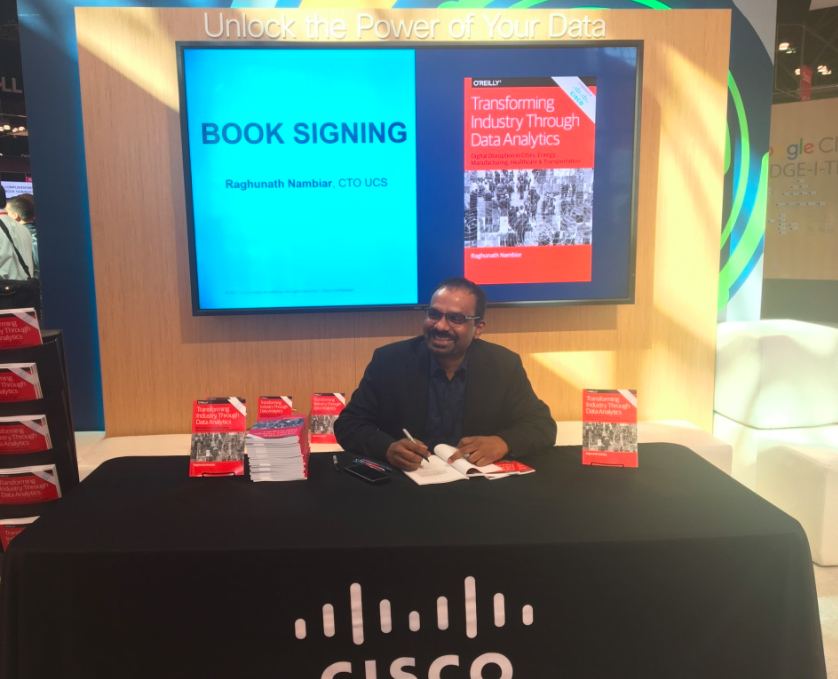
Connected Cities are just one example of the digital transformation being brought on by the explosion of data and connected devices. In my most recent book, “Transforming Industry Through Data Analytics” I discuss the risks and the opportunities of a truly connected world, with a particular emphasis on cities, energy, manufacturing, healthcare, and transportation. Available here.


Authors

Raghunath Nambiar

No Longer with Cisco