Avatar

We’re really excited about the new Cisco Spark Board and the collaboration experiences it will bring to teams. Of course, a key part of that experience is the interactive digital white-boarding capability that allows both Cisco Spark Board and Cisco Spark application users to view and cooperatively draw together.

When we started working on this capability over a year ago, we looked at what makes a regular analog whiteboard so effective. One of the things we identified is that anyone can use it. You can walk into any conference room, walk up to a whiteboard, and use it. It doesn’t matter whether it is yours, or someone else’s. It doesn’t matter whether it’s in a conference room or a personal office. It doesn’t even matter whether it’s in your company or one you’re visiting for the day. The whiteboard is there, it’s easy to use, and easy to make your own. Recent digital whiteboard attempts in the market have failed to meet the same standard for ease of use. We knew we had to do better.

We also realized that a great white-boarding experience requires the content to be accessible after the meeting is over. In fact, if you look at common practice today, users will draw on a traditional whiteboard with a marker, and then take a snapshot of the whiteboard with their mobile phone to access it later. The problem with taking a picture of the whiteboard is that it represents a point in time. If you want to continue the drawing later, you can’t really do that – the whiteboard is now a static image. For interactive white-boarding to really go mainstream, we needed a solution that allows you to save the whiteboard, then pick up where you left off at any time.

Lastly, we had to think differently about how to save the whiteboard. The easy solution would be to take a JPEG snapshot and email it or post it into a Cisco Spark Space, much like a user would do with a smartphone camera. There are two problems with saving the whiteboard in this way:

  • First, it means there is now a copy of the whiteboard stored somewhere else. If you then start editing it again, you’re back to the versioning challenge we’ve all experienced with Word and PowerPoint files.
  • Second, and most importantly, we realized we had a really, really big security problem on our hands. Whiteboard content often contains some of the most sensitive and important information a company creates. Consequently, we needed to develop an extremely secure way of both saving and controlling access to whiteboard content.

To solve all of this, we developed an innovative solution for white boarding that is always yours, always live, and always encrypted.

Cisco Spark Board…always yours

You can walk up to any Cisco Spark Board in the world – whether it is in your company or not — and associate it with one of your Cisco Spark Spaces. Yup, any Cisco Spark Board in the world: the one in your office, in the conference room down the hall, in the other building. Even one in another company.  Just by standing in front of it and using it with your Cisco Spark app, you can make it your own and fill it with the content you need to get your work done. You can display your files, you can create new content and save it to your Cisco Spark room, or you can join a meeting.

The content on the board – the files it shows, the whiteboards it renders – is stored in the cloud, never on the device itself. Every time the Cisco Spark Board shows a whiteboard, or the Cisco Spark apps show a whiteboard, they are not just rendering a file stored on the hard drive. No. What they are doing is connecting to the cloud, and subscribing to the whiteboard service. It is completely unprecedented in the industry. Because the Cisco Spark Board is connected to the Cisco Spark cloud, we are creating a global, worldwide network of workspaces that you can access anywhere using Cisco Spark.

Cisco Spark Board… always live

So, let’s get into how it works. Let’s say Alice is standing in front of a Cisco Spark Board, having a whiteboard session with Bob who is utilizing his Cisco Spark for Windows application.Slide1
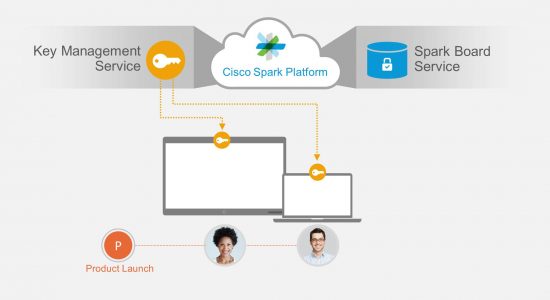
  • Whenever Alice draws a stroke on the Cisco Spark Board, the board creates a vector object that represents the stroke, and then encrypts it. It sends this encrypted stroke to the cloud. The cloud stores this encrypted stroke and sends it to all other participants — in this case, Bob. Bob’s client receives the encrypted stroke, retrieves the encryption key, decrypts it, and renders it.Slide2
  • Now consider Carol joins their whiteboard session. Her client will query the cloud and download all of the encrypted strokes used in Alice’s whiteboard since the beginning of time. The cloud delivers these to Carol’s client, in addition to any new strokes as they’re added. Carol’s client retrieves the key used to encrypt this whiteboard content, decrypts all the strokes, and then renders them all.Slide3
  • Finally, let’s say Bob uses the eraser tool and wipes away something he drew previously. His client will create a deletion stroke indicating the part of the board that he has cleared, encrypt it, and send it to the cloud too as just another stroke to render.
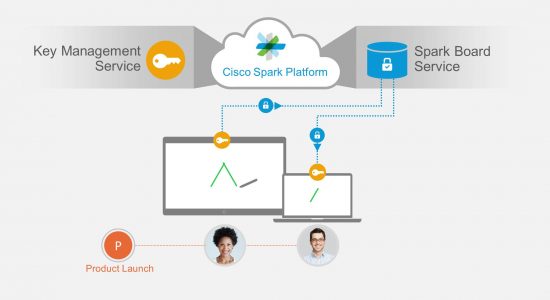
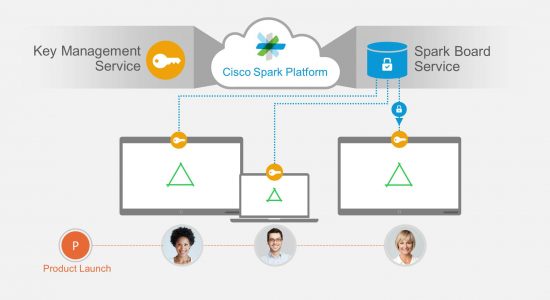
Consequently, the Cisco Spark cloud doesn’t actually store the current whiteboard! Instead, the board is stored as a time series of encrypted strokes. In order to enable previews of the board content in the app, the clients themselves periodically compute a JPG for the board, encrypt it, and then upload it to the cloud. These are used just for thumbnail previews, not for the editable board. This means that when a client views the whiteboard, it views the one and only copy of it, and can continue to edit it by adding another encrypted stroke to the database. Anyone else viewing that whiteboard will see the changes in real-time, much like users utilizing a Google Doc.

Cisco Spark Board…always secure

Because each stroke and the preview is individually encrypted using our end-to-end encryption technology our cloud never “sees” your whiteboard content.

  • Should an attacker compromise our database that contains the strokes – he gets nothing.
  • Should a rogue employee run away with the hard drive – she gets nothing.
  • Should a developer accidentally log the contents of every web transaction it receives – the logs contain nothing useful.

This provides an unprecedented level of security. It goes well beyond just encryption at rest and in-transit, which are nowhere near enough to protect this important content.

To ensure secure access to this content, each whiteboard is associated with a Cisco Spark Space, and that space has a set of participants who constitute the access control list (ACL) of users allowed to retrieve the keys used to decrypt the whiteboard content. Utilizing a Cisco Spark Space to hold the board instance also means that Cisco Spark Space security features – such as room locking, moderation, kicking users, and message deletion – provide additional layers of protection for your content.

We’re really excited about the Cisco Spark Board, and equally proud of the amazing technology that powers it. It’s white boarding that is always yours, always live, and always secure.

For more information, check out Cisco Spark Board product information. To dig deeper into the security aspects, read our white paper on Cisco Spark encryption.


Get perspective from more of the Collaboration leaders in their posts.

Authors

Jonathan Rosenberg

Cisco Fellow and Vice President

CTO for Cisco's Collaboration Business

Avatar

We are excited to be launching a magical experience with our Cisco Spark apps, the Cisco Spark Board, and the Cisco Spark cloud platform. It’s an experience that I believe will truly change the way people meet.

That’s because innovation doesn’t just happen at “9 a.m. next Tuesday.” Ideas are unpredictable. And with fast-changing markets, CEOs are worried about keeping their organizations relevant. So many companies are disrupting markets — or trying to — that every company urgently needs both to create new ideas and get things done fast. Do is the new disrupt.

But you need the right tools to speed innovation. Tools that inspire and engage teams. When was the last time you had an amazing experience with technology? You probably remember because it doesn’t happen very often. For me, it was when I first used Uber. More recently, it was the Oculus Touch. That’s a five-year gap, but we’re closing it with Cisco Spark Board.

https://youtu.be/aSkjoX_N1dY

The Un-Technology
Combining a great cloud platform with amazing software and beautiful hardware makes a magical experience. But the real secret is incredibly advanced technology that is entirely natural for people to use.

That means taking away the stuff that interrupts the innovation process or slows people down from getting things done. And that is before, during, and after a meeting.

With the Cisco Spark app, you can send messages and set up persistent team spaces where you can share files and whiteboard. Maybe that gets the job done. Perfect, the Cisco Spark app took away the need for a meeting.

But when you do need a meeting, you’ll want the Spark Board. It’s an all-in-one team tablet on the wall. Think of it as a physical extension of Cisco Spark. It brings together a stunning wireless display, interactive whiteboard, and industry-best conferencing system. And like a tablet, it has apps and a home button so everyone already knows how to use it.

Just Get On with It
I was fortunate to work with the team responsible for developing the Cisco Spark Board. We made it our mission to cut the clutter that keeps people from getting things done.

The typical conference room is full of disconnected tools, such as a conference phone, a projector/display, video system, old-school whiteboard, and flip chart. Wires and remotes are everywhere make some people even afraid to turn on the equipment. Connecting a computer to the display can take 10 minutes. Remote attendees can’t see or engage with a flip chart. And at the end of a meeting, someone takes a photo of the board, but often never sends it out.

conf room before and after
From chaos to clean…

All these things are obstacles to creating and getting things done fast. We realized that they had to go. So, we changed the story:

  • We took away the disconnected tools and replaced them with the Cisco Spark Board. Now you have white-boarding, presentation-sharing, and conferencing all in one device. The wires and remotes are gone, along with the intimidation factor.
  • We did hundreds of iterations to get the right feeling when a pen hits the coating on the whiteboard’s touch screen. We’ve hidden the digital technology so that it feels and sounds like a marker in the analog world.
  • We’ve taken away the camera’s moving parts to help people forget they are on video. At the same time, we’ve implemented one of the best cameras on the market.
  • We’ve totally revolutionized audio — one of the most important aspects of a conference call. In doing so, we took away the table mics that can pick up the rustling paper or laptop noise that destroys attention.

In short, we’ve hidden the technology so you can just get on with what you need to do.


Less Clutter, More Creation
With these innovations, we have cleaned the clutter from meeting rooms. Allowing people to create content rather than looking for a marker that works. Allowing people to focus on ideas rather than being distracted by technology.

Help your teams focus on innovation instead of meeting tools. Learn more about Cisco Spark Board or watch the replay of our launch event to see more Cisco Spark innovations.


Get perspective from more of the Collaboration leaders in their posts.


Authors

OJ Winge

Senior Vice President & General Manager

Team Collaboration Group

Avatar

Fundamentally, collaboration is about people coming together to innovate. Not once or twice, but ongoing. The best kind of collaboration is continuous.

Continuous collaboration means enabling teams to innovate before, during, and after meetings. Collaboration isn’t a series of discrete, unconnected events (like meetings), or one-off conversations (like phone calls), or even string of discussions in email. You have to have one continuous, robust workstream.

We designed Cisco Spark for continuous collaboration.

We’ve brought together every aspect of collaboration that you could possibly want in a single, consistent, integrated experience that embraces continuous collaboration. From business messaging to calling to video. From integrated meetings to extending into physical space with Cisco Spark Board, the Cisco Spark collaboration suite is the only tool that enables continuous, seamless collaboration. Jens - spark app1

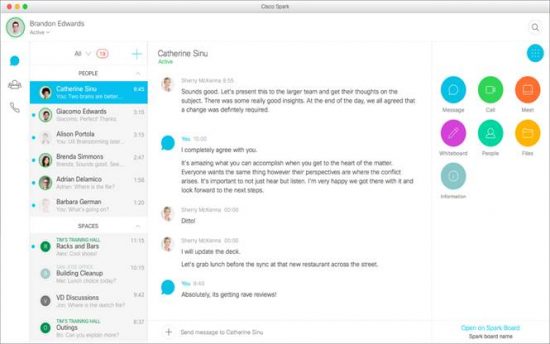
First things first: When you open your Cisco Spark app today, you’ll see the new look and feel. We spent a year creating a more intuitive user interface that is clean, modern, and easy to use. The new activities “dashboard” includes message, meet, call, whiteboard, files, and people. Whiteboard is the newest addition. Now you can collaborate spontaneously within the app, using the same software that powers the Cisco Spark Board. The new interface gives you everything in one place.

What else is new?
Cisco Spark call interface
Until now, you had to leave the application to start a meeting. Today, you can start meetings from directly within Cisco Spark by simply clicking on the URL. Know who’s attending and use meeting control tools like mute/unmute. Share content from right within the app — or seamlessly push it to a Cisco Spark Board — simply by accessing your files in Cisco Spark and sharing your screen.

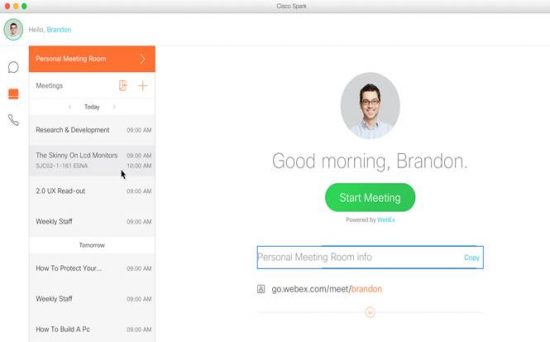
We’re taking the best workflows from WebEx and integrating them with Cisco Spark. In March, you’ll be able to schedule, start, join, and host a meeting from within the Cisco Spark app using the same interface you know and love with WebEx. And the most popular feature of WebEx, the Personal Meeting Room, will be a prominent feature in Spark.

In March, we’re also adding a Meetings tab so you can see upcoming meetings, schedule new meetings, and jump into your personal meeting room – all directly from within Cisco Spark!spark welcome window

All this makes Cisco Spark more robust than ever before, with one, continuous workstream designed from the ground up to foster continuous collaboration.

Today we’re announcing more than new features of Cisco Spark. We’re announcing the industry’s most advanced Collaboration Suite that will enable you, your teams, and your company to innovate – collaboratively and continuously.

To learn more about today’s announcements, watch the launch announcement replay and visit the Cisco Spark site.

Get perspective from more of the Collaboration leaders in their posts.

https://youtu.be/OavRKkN8ir4


Authors

Jens Meggers

No Longer with Cisco

Avatar

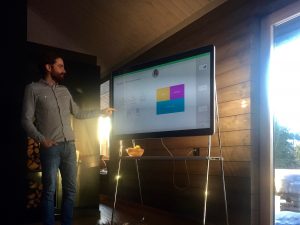
spark-board-cabinA few weeks ago I invited my team to a cabin in the mountains to prep for launch. This was in Norway and it’s how we get stuff done. I plugged in a Cisco Spark Board and we were off. The Cisco Spark Board was really the only tool we needed to get work done right there and to bring in remote team members for discussions.

The Cisco Spark Board is a team tablet for your wall. It works with the Cisco Spark cloud platform. You can think about it as a physical extension of Cisco Spark into conference rooms and huddle spaces (and cabins).

There’s a lot of advanced technology behind the scenes, but for the accountant, web designer, or executive in the meeting, it works a lot like their personal tablets. Hardware, software, and apps come together in one tool that is second nature to use.

All-in-One Gets It Done
The Cisco Spark Board combines three core capabilities into an amazing meeting experience. We picked the three most typical needs in a conference room. And were very clear on the order of priority as we were developing the product: first, the presentation screen and whiteboard, then a conferencing device. This mirrors how frequently people use the equipment in meeting rooms.

I’ve been in video conferencing for a long time, so it surprised me that this is how I use the Cisco Spark Board as well. I have a Spark Board in my office. Someone will walk into my office, we talk, look at a presentation, and white board our thoughts. Then this white board drawing is there in our 1:1 Cisco space to continue work or look back to refresh memories. No video required.

Here is a quick tour of the all-in-one capabilities:

Wireless presentation device: Showcase presentations, documents and drawings in your Spark room on a stunning 55-inch (or 70-inch coming soon), 4K UHD screen. You can share your presentations directly from the cloud or wirelessly. Or with a cable if you must.spark-board-wireless-preso

A whiteboard like no other: Create, draw, and white board on a beautiful blank canvas. Team members can edit at the same time even from a mobile device or their own tablet. Cisco Spark instantly saves content to the whiteboard tab in your persistent team space.

The 4k super-bright optically bonded touch panel provides lifelike feeling. Seriously, the digital pen skates across the surface with a tactile experience that feels like a whiteboard marker, only better. It´s also just as simple and easy to use as the old faithful analog whiteboards (one with a pristinely clean surface) and a few marker colors. Everyone can just walk up to it and get going.cisco-spark-board-penBest audio and video conferencing: Presenting and white boarding are just as useful when everyone is in the same room as when they are not. Bring people in via an HD voice or video call in an instant. The non-intrusive fixed-lens camera has 4k resolution and is the best on the market. Cisco Spark Board adjusts to people’s volume and position in the room for a superior meeting experience. That’s because there is a revolutionary new mic array tracking voices. Audio will never be the same.spark-board-in-room

The Extraordinary
I’ve grown very fond of my Cisco Spark Board. I look forward to walking into my office and having it wake from sleep and greet me by my name as I walk into the room.  That feels like magic to me.

There are many other extraordinary things about Cisco Spark Board, including:

  • It’s not just the Cisco Spark Board in my office that knows me. I can walk up to any Cisco Spark Board in the world and it will instantly recognize and welcome me. Cisco’s unique ultrasound pairing technology at work means I get instant access to my team spaces and the presentations and whiteboards within them.
  • A full 90% of us admit to daydreaming in a meeting. And I may have been guilty of that once or twice. But it’s hard not to stay engaged when I’m drawing on a whiteboard at the same time as everyone else in a meeting. Whether I am sitting in an airport with my tablet, at the same table with my laptop, or standing at the Cisco Spark Board, I’m part of the conversation.
  • I’ve heard a lot of excitement from people about the ability to click on a green button to call out to everyone in a Cisco Spark space. Our customers see it as a big advantage in scrum rooms, classrooms, and of course emergency operations centers. Personally, I like it because it makes sure that planned meetings start on time.

No Spark Is an Island
A key value of the Cisco Spark cloud platform is the seamless integration of apps and bots. The platform is open and extensible so you can use your own custom solutions and services, or take advantage of off-the-shelf integrations and bots in the Cisco Spark Depot.

Given my history with video, I can’t wrap up this post without mentioning that many of our customers have video deployed in some of their conference rooms. The Cisco portfolio of video systems registers to the Cisco Spark platform and soon Cisco Spark Board will be able to act as a companion within the same meeting room.

From Cabin to Conference Room
Cisco Spark Board is one of those tools that is equally at home in a mountain cabin, community space, or conference room. Installation is so simpIe that it takes just minutes to set up. So help your workspace live up to its potential.spark-board-boardroom

Learn more about Cisco Spark Board or watch the replay of our launch event to see all the latest Cisco Spark innovations.

https://youtu.be/aSkjoX_N1dY

Get perspective from more of the Collaboration leaders in their posts.


Authors

Tormod Ree

Senior Director and General Manager

Avatar

Since its introduction in 2015, pxGrid has provided you an open, automated, and effective way for your disparate security technologies to work together.  In just two years we’ve added 50 separate products that you can integrate to see and stop threats faster, and demonstrate compliance.

And we’re bringing on board a mix of new technology partners to expand the diversity of your integrated defense.

Why pxGrid?cisco-pxGrid

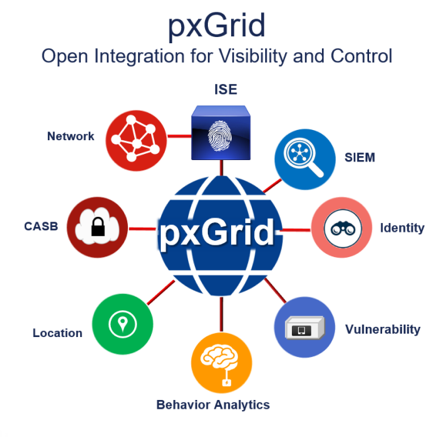
Chances are you’re using multiple security products for different purposes – to identify devices and users, to detect vulnerabilities, to spot malware, to monitor behavior, to secure endpoints, to ensure compliance, to know and show your security posture, and to physically identify and locate things (IoT).

And chances are these products don’t work together; but that doesn’t stop you from adding more products to the mix.

You have to admit, you’d have a more efficient operation and lethal defense if you could share data between your mix of products.  But one-to-one API integrations are too limited in a world where dozens of technologies need to share data.

pxGrid is the answer.  It provides a single, open interface to integrate virtually all your security products so they can share data with any other product on the pxGrid.  This allows you to get answers and find threats faster.

You can also have a universal means to stop any vulnerability or threat and contain attacks. Using any pxGrid partners’ product and the network as an enforcer, your defense is more effective against hackers and malware.  You can have a single means to see and control any device, anywhere in the network and cloud. This capability will become even more critical as the IoT expands and your existing solutions aren’t able to control the growing multitude of devices connecting to your network.

Here is an introduction to our new partners and their integration with Cisco pxGrid.

Application Protection

arxanIoT devices and gateways are a hacker’s stepping stone to the data you need to protect.  The Arxan and Cisco pxGrid integrated solution enables applications to encrypt, self-protect, detect attacks, and trigger Rapid Threat Containment to isolate infected devices and threats.  Read their press release!

User and Entity Behavior Analytics

exabeamExabeam is an intelligence platform that helps make your current defense smarter.  It can use pxGrid to help ingest data from multiple sources, including ISE, model behaviors, identify anomalies, and then share its risk intelligence where it’s needed, such as SIEM and Analytics and also stop attacks using Rapid Threat Containment.  Check out their blog!

GreenlightGreenlight helps know who is accessing critical data and what they are doing with it.  Together with user, device and location data from ISE via pxGrid, Greenlight‘s application monitoring expands your visibility to root-out business activities that put your crown jewels at risk and take action using Rapid Threat Containment.  Check out their blog!

SIEM and Analytics

HanSightHanSight uses the contextual identity information collected from ISE via pxGrid add clarity to its big data analytic products to detect cyber breaches, financial fraud and targeted advanced persistent threats (APT) with greater accuracy. Check out their blog!

Deception

illusive networksillusive networks’ deception-based cybersecurity creates a deceptive layer across the entire network to detect, disrupt, provide real-time forensics, and contain attacks using Rapid Threat Containment without disrupting your business operations.  See their web site!

Threat Intelligence

infocyteInfocyte’s ability to conduct agentless malware and threat detection is integrated with ISE via pxGrid to allow you to identify advanced persistent threats as users connect to ISE and take remediation actions using Rapid Threat Containment.  See their web site!

Regulatory and Compliance

ark nssArk NSS’ ASSET automatically collects data from ISE, pxGrid partners and other sources and gives you the continuous visibility you need to ensure your people, process, data, and technology assets are always compliant and secure.  So you get an internally focused, real-time risk score and a constantly updated stream of recommended controls ranked and rated by users.  Check out their use case!

Vulnerability Management

tripwireTripwire’s IP360 uses ISE authentication messages to trigger real-time vulnerability asset scans to fix or contain vulnerabilities.  Additionally, Tripwire Logcenter’s SIEM improves visibility using contextual data from ISE and their Tripwire Enterprise Forensics and IR leverages Rapid Threat Containment to take immediate action to stop threats.  See their web site!

To get more information on the ISE pxGrid technology partners and how they can improve your defenses go to www.cisco.com/go/csta (Cisco Security Technical Alliance).  For more information on pxGrid go to www.cisco.com/go/pxgrid.  To learn more about Rapid Threat Containment go to www.cisco.com/go/rtc.

And if your favorite security products are not on the list ask your vendor to visit Cisco DevNet and consider joining pxGrid.  It’s being built to comply with developing IETF standards, making it an ecosystem that works and will last.

Authors

Andrew Peters

Senior Manager for Product Marketing

Avatar

A recent episode of CBS 60-minutes highlighted the U.S. military’s research and development around drone swarms and mission-centric self-converging fleets. Seeing these futuristic maneuvers of tiny drones, many of us might wonder about the future of commercial drones in year 2017 and beyond.

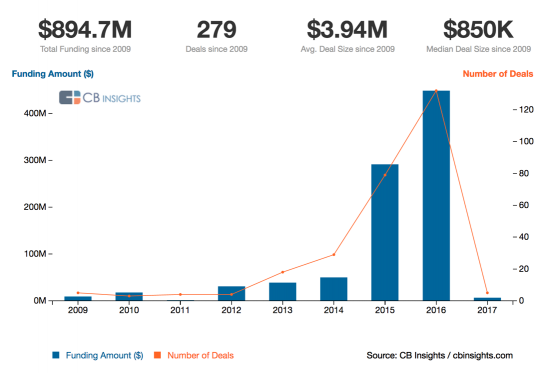
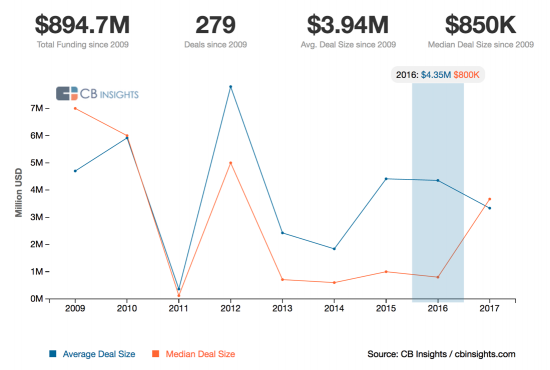
If we look at the investment landscape, the picture might not seem as glamorous as it once did. As per the venture data reported by CB Insights, 2016 was yet another record-breaking year for the number of deals in the drone segment. However, upon closer look many smaller deals are happening instead of few larger ones.

The number of deals in 2016 skyrocketed.
Average deal size is on a downward trajectory.

Do these charts mean that the commercial drone industry is losing its altitude? A recent Bloomberg article titled “The Drone Industry Crashes to Earth” certainly seems to indicate that. Plus, there are data points around layoffs at Parrot SA and a pivot of 3D Robotics away from the drone hardware business. Also, there’s no doubt in the industry about DJI’s supremacy in the consumer drone market, forcing many other players (CyPhy Works LVL1, GoPro Karma and others) out of the market before even entering.

Should we take these factual data points at their face value? Absolutely NOT.

How the drone market is analyzed is characterized by two crucial flaws. First, there’s very little, if any, distinction between commercial drone operations as opposed to mostly recreational use of drones. Second, and even more critical, is overlooking the software and platform pieces of the puzzle.

Hardware-Centric Analysis is Flawed

The first phenomenon about hardware-centric and mostly-recreational use drones is very easy to understand as we have seen a race to the bottom played out in consumer TVs, smartphones, and many other industries. Most of the drone segment investment analysis is inadvertently including either hardware or a monolithic end-to-end solution, including both software and hardware in the mix.

If the common component in the mix is pivoting in one way, naturally the entire analysis is going to be flawed. And we’re already seeing hardware getting increasingly commoditized over the past decade or so. Winning purely or primarily based on hardware is becoming a far-fetched dream.

Is a Platform Approach the Answer?

The second phenomenon of software, and more importantly the platform-oriented view, is a bit debatable for consumer industry pundits. For many years in the VC industry, “platform” has been generally considered a dreaded word and rightfully so, given the fact it’s extremely difficult to monetize platforms without the support of applications riding on top of them. However, without having a powerful platform in existence in the first place, applications won’t come forward. The result is the classic chicken-or-egg problem. Well, not always.

Although there are many more failures to quote on the platform approach, there are many success stories as well. Think Apple, Google, Facebook, LinkedIn, and Visa. Looking specifically at the drone industry, the conceptual alignment with the platform approach is much greater than the alignment without the platform approach. If we think of drones as mobile IoT devices mounted with various kinds of sensors for data collection, all the benefits of IoT platforms suddenly jump out in front of us.

Beware of a big trap, though! A lot of times, we make the blunder of calling our rigid, monolithic implementation of hardware and software a “platform” just to capitalize on the positive sentiments. Unless key attributes of a platform—openness, API-capabilities, loose coupling, and security—are present, it’s unfair to call anything a real platform.

So what’s the answer? The Commercial UAV Expo team, in their report 7 Commercial Drone Predictions for 2017  has brought forward a pragmatic perspective on where the commercial drone industry is headed in 2017.

Irrespective of the terminology debate, it reports that companies planning to focus on business-value and ROI-centric opportunities in the drone ecosystem—offering platform capabilities without fanatically binding themselves with commoditizing hardware—might have higher chances of success. Until then, we’re going to see more victims falling apart and more convergence among like-minded players—all signs of gaining better control and direction of the overall ecosystem.

Let’s navigate these uncertainties together. Are you ready for the wild ride?

PS: Macro influence factors of aviation regulations, compliance, safety, etc. are deliberately kept out of this post to focus primarily on the platform topic.

Authors

Biren Gandhi

Head of Drone Business & Distinguished Strategist

Corporate Strategy Office

Avatar

By Serhii Konovalov with Jon Judson and Julie Fink-White

With almost a month behind us now into 2017, we are seeing the usual flurry of predictions and “What to Expect in the Oil & Gas Industry” articles across industry blogs and publications. With the shifting geo-political tides across the globe numerous theories abound. So in the spirit of total participation, let me share a few thoughts to cut through the noise on what is ahead for the technological landscape.

oil_rig_blog

I recently represented Cisco at the IHS O&G Digital Oil Field of the Future event in Houston, Texas, where Oil & Gas leaders convened for a lively and spirited dialog. Common threads across the diverse attendees including corporate leaders, technology vendors, and analysts were:

  • Price declines have forced the industry to critically evaluate spending – not just where to cut, but where to invest. Organizations have had to make tough choices as they allocate budgets and make strategic choices.
  • Prioritization initiatives have ushered in a new era focused on digital transformation and investment in technologies.
  • Supported by IHS findings in a recent study, upstream oil and gas organizations have prioritized budget decisions in favor of digital technologies, increasing investments in digital sensing, automation, robots and drones, oilfield mobility and connectivity, data-driven analytics, and AI. “Digital” is now the domain to build and enhance competitive capabilities.

In our own Cisco customer engagements, we’re seeing unprecedented collaboration between oil company operational leaders and information technology teams (OT and IT) like never before. Where embedded silos existed in the past, we’re seeing growth in joint planning and investment to achieve competitive advantage in the marketplace, workforce efficiency, and new levels of safety and compliance.

One of the driving factors we’re watching is the continued deployment of the Internet of Things. As this rolls out, IT and OT integration becomes a critical component, especially when deploying cybersecurity and data platform architectures for distributed applications. Cisco has made this easier with a range of Industry Validated Designs (IVD/CVD) in partnership with the industrial automation community such as the Smart Connected Pipeline strategic alliance with Schneider Electric.

oil_rig_blog_2

The push for the Internet of Things also belies the need for better data management and the intelligent use of it. Distributed execution of analytics leveraging Fog Computing technologies such as IOx, allow O&G organizations to make operational and safety decisions in the right places at the right time, working around bandwidth constraints and latencies in the oilfield.

The industry’s ongoing adoption of IoT has been incredibly positive. We’re seeing projects ranging from advanced “Rig-of-the-Future” designs that further enhance integrated operations and simplify remote infrastructures. Projects are going towards on-shore digital oilfield projects to optimize electrical submersible pump operation and improving wrench time for contracted workforces.

To learn more about how Cisco innovates and enhances O&G Digital Capabilities to advance the industry in a low-oil-price cycle, please visit:

page-cta-2-5


Authors

Sergey Konovalov

Head of Business Development, Blockchain

Corporate Strategic Innovations Group

Avatar

Visibility doesn’t just mean seeing data move within the network – it also means seeing who and what is on the network. Trends like the Internet of Things (IoT) and Enterprise Mobility – that will result in tens of billions of connected devices and users – are fundamentally changing the enterprise networking environment. Not knowing who or what is generating traffic is no longer an option.

But what’s the use of visibility without control? Companies, unable to dynamically segment their network, can’t contain lateral movement fast enough once they realize they’ve been breached. Attackers are taking advantage of this and costing organizations millions.

In an effort to help, governments and industries are stepping in so that companies follow best-practices, such as segmentation, and mandating stringent rules and regulations. But compliance using traditional segmentation methods means organizations spend approximately $4M on average yearly, on incremental expenses like IT operational costs and network downtime.

Given this environment, I am proud to announce that we’re launching version 2.2 of the Cisco Identity Services Engine, or ISE. ISE gives you the visibility and control you need to defend the network from an ever-increasing number of attack vectors, contain advanced persistent threats, and secure access across today’s distributed networks. And it does this without sacrificing operational efficiency by providing advanced technology to …

See and Share Rich User and Device Details

  • Get additional user and endpoint visibility that spans from guest users in the network down to endpoint application details.
  • Remove deployment complexity particularly in “monitor” stage with the Cisco AnyConnect agent in stealth-mode for always-on endpoint security and visibility.

See how ISE can take your network visibility to the next-level:

Control All Access throughout the Network

  • Introducing greater control for endpoints. Coupled with much richer endpoint and application visibility, Cisco ISE can now enforce very granular user behavior and device compliance. Major improvements to architecture and functionality provide even greater access control including additional AnyConnect distribution options, more robust deployment resiliency, and the ability to support more posture functionality with non-Cisco network access devices.
  • The new, built-in ISE Setup tool makes it easier and faster than ever to get started with enterprise-grade network access security. This includes out-of-the-box wireless setup for secure access, guest services, and BYOD in as little as 10 minutes with Cisco Wireless LAN Controllers!
  • Customers of any size can now take advantage of efficient and scalable role-based segmentation through a TrustSec-enabled border router such as the Cisco ASR 1000.
  • ISE Device Administration is better than ever with the addition of features Cisco ACS customers enjoy. And migrating from ACS to ISE has been streamlined with new migration tools and resources. With the recent announcement of the ACS End-of-Sale (EoS) as well as the ACS-to-ISE Migration Program, there’s never been a better time to deploy device administration with Cisco ISE.
  • Separate administrative domains for differentiated control based on flexible criteria such as place in network, geographical location, or role and responsibilities, using multiple TrustSec matrixes.

Stop and Contain Threats

  • Don’t just block bad devices from entering your network, get deep visibility at the application-level so you can set policy based on what the user is doing.
  • Quickly raise the drawbridges and effectively wall off your crown jewels from threats with simplified and agile threat responsiveness. Develop a next-level segmentation strategy with ISE DEFCON. Set multiple policy scenarios pre-defined within multiple TrustSec matrixes for software-defined segmentation that can be dynamically deployed immediately based on an organization’s threat climate.
  • Stop malicious devices before they connect to your network by consuming more Indications of Compromise (IoCs) from your vulnerability assessment and threat incident intelligence solutions such as Tenable, Cisco Cognitive Threat Analytics (CTA) and Rapid7. We call this new layer of posture assessment Threat-Centric NAC.

Such deep visibility enables granular access control so that users and devices are granted the right level of network privilege.  And through the sharing of vital contextual data with technology partner integrations via pxGrid and the implementation of Cisco TrustSec software-defined segmentation, Cisco ISE can transform the network from simply a conduit for data into a security sensor and enforcer that accelerates the time-to-detection and time-to-resolution of threats.

Learn more about ISE 2.2 by going to www.cisco.com/go/ise.

Authors

Dan Stotts

Former Product Marketing Manager, Cisco

Security Product Marketing Organization

Avatar

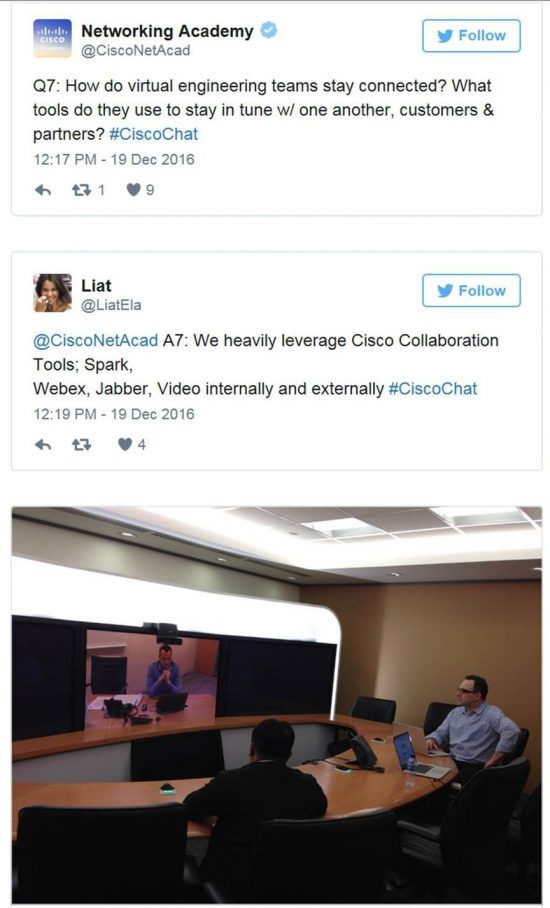
About one month ago, the Global Virtual Engineering (GVE) team within Cisco’s Sales organization ran their first #CiscoSE #CiscoChat in partnership with our friends at the Cisco Networking Academy.

GVE2

Continue reading “Congratulations to Cisco’s Global Virtual Engineering (GVE) team for closing the 2016 year with #CiscoChat!”

Authors

Greg Hamilton

Program Manager

#Cisco Chat & Cisco Digital Training and Certification