Avatar

Written by Tim Brophy, Product Manager Cable Access Business UnitIMG_2409 oval

In a recent blog, we discussed Fiber Deep (FD) architectures and their place in the end-to-end network. We emphasized there that the physical topology is geared toward balancing the number of subscribers per service group, and that the capacity of each service group increases by the reduced number of subscribers served. Today, we want to explore the benefits of FD that illustrate the importance of the centrally located FD Node.

As we said, the physical location of the FD node creates RF node ports that serve approximately the same number of subscribers, but it also links the past and the future of the architectures. By this we mean that it leverages the existing HFC plant topology (the past) and prepares it for many more years of profitable service deployments (future). Operators and subscribers alike get multiple benefits from the centrally located smaller serving area of the FD node. The particular value depends on the details of deployments and service offerings, but all benefit from a reduction in failure group size and the reliability improvements associated with fewer active elements in the plant. The reduction in users sharing a common node does imply smaller statistical multiplexing gains, but this is more than offset by the increased cumulative capacity to which each user has access. The net result is an improved customer experience, reduced churn and improved competitive offerings.

We detail here some additional specific benefits:

  • In legacy plants, the FD node provides a logical location for separation of QAM and linear downstream signals and the combination of upstream signals for port and digital return efficiencies
  • In an R-PHY scenario (to be discussed in detail in a future post), FD nodes are ideally located for the digital-to-analog conversion function. They continue to derive value from the coax plant, while preparing the way for the future benefits of digital transport
  • The locations of FD nodes are close enough to each other that service groups can be combined at CMTS ports until market demands require complete segmentation; this will save cost for initial deployments. The proximity also means that operators can take advantage of digital multiplexing and provide path redundancy between nodes, thereby improving system reliability.
  • Flexibility of capacity is enhanced: once end-to-end connectivity is established, total capacity is controlled at the EDGES of the system (operators need ONLY touch the end points of their networks); if subscriber gear is self-installed, then only core access is required.
  • System administration is unified: control and management become a part of, and an extension to, the layer 2 control at the data center; packet optical protocols are now available end-to-end in both transport AND distribution networks.
  • Provisioning is simplified: the “touchless” addition of services, applications, and content provides rapid configuration to capture dynamic changes in demand and localization (e.g., local events, interest, or advertising domains)
    • Simplified provisioning provides an opportunity to establish capacity-based billing, or
    • Can be used to create separation among classes of service: incremental deployments for security-sensitive businesses or for “rogue” high-data volume consumers.
  • Smaller and common service group sizes ease the barriers to combining traditional CATV access plant with the Metro-E services, allowing for flexibility in physical plant, content-oriented provisioning, or connection-oriented links
  • Defines a logical and physical aggregation/furcation point for residential subscribers when franchise or demand-pull dictates a FTTH solution.
  • Establishes the launching point for future fiber to the curb, home, or business services.

The above benefits show the importance of the fiber deep node not only as hardware element itself, but also as an architectural element with topological significance. The well-chosen architectural location optimizes connectivity, powering, and anticipates future growth. The advantages are extended even further when the tie between fiber deep architectures and remote PHY is established. We’ll detail that in future blog, but in the meantime, consider the powerful combination of the above benefits with the watershed event defined by a move to an R-PHY node. This node is not just the end of a digital fiber link, but is established as a Network Element, replete with IP stack, signal grooming and new, intelligent methods of control, monitoring, and signal processing. As always, your Cisco account rep stands ready to help find the solution that works best for your network.

Save

Authors

Daniel Etman

Product Marketing Director

Cisco's Cable Access Business

Avatar

Since its launch earlier this year, Cisco’s Toronto Innovation Centre has become a busy place! It’s where we come together with partners and customers to discuss challenges19, explore possibilities and imagine the future today through digital transformation. The Innovation Centre is also a place of experimentation and inspiration. That was demonstrated in spades on the weekend of Nov 18-20 when, together with our innovation partner TD, we co-hosted FINHACKs – an IoT hackathon for FinTech – and 150 post-secondary students came together for a weekend of big thinking and to compete for $10,000 in prizes. Their mission: to devise and create software and hardware solutions that enhances customer experiences and facilitates financial transactions, by merging IoT and financial technologies.
Students from Canadian post-secondary institutions including University of Waterloo, University of Toronto, Ryerson and University of British Columbia, collaborated in teams to deliver a working Minimal Viable Product (MVP) prototype, under the following mandates:

  • To help customers make better everyday purchases and/or longer term financial decisions;
  • To bridge customers’ financial worlds with the expanding network of connected devices at home, in transit, and at work; and,
  • To better service customers in digital and physical domains.

file-20161202115220-3753

28 teams registered on Friday night, and after almost 40 hours of intense work, 10 finalist groups presented their solutions Sunday morning to a panel of judges: Paul Semak, vice-president of Central Canada Sales for Cisco; Helen Kontozopoulos, director and co-founder of Global Smartweek and the University of Toronto Computer Science Innovation Lab; and Jeff Martin, senior vice-president and chief technology officer at TD.

After much consideration, the Top 3 winners were announced:

  • 1stPlace: University of Waterloo/Queen’s University – TD Strip: an Internet connected device that connects to a bank account and visually displays, through a series of lights, how close someone is to their savings goal. The benefits of motivating children to save, in particular, helped propel this idea to the top of the list.
  • 2ndPlace: Sheridan College – Dept. of Missing Semicolons: a proximity-based person-to-person payment app which makes it easy for people to send each other small transaction amounts.
  • 3rdPlace: University of Waterloo/Conestoga College – NanoHack: a tool using Physical Web and Web Bluetooth technologies to make banking at physical branches more convenient by offering proximity-driven apps to reduce wait time, attract new customers and incentivize feedback of service quality.

For me, it was fascinating to witness first-hand future experts demonstrating what they’re capable of with limited resources (and time). It’s an eye-opening experience and I encourage my industry colleagues to attend a hackathon not only to see some

impressive skills at work, but also to interact with the future drivers of digital transformation.

Thanks to our partners TD and Hackworks! And congratulations to the winners and to everyone who participated in FINHACKs – the future is in great hands!


Authors

Wayne Cuervo

Director of Innovation

Cisco Canada

Avatar

With the big game coming up millions of viewers are gearing up to catch all the sporting action on the field. The scale of the actual game day as an event is staggering and yet, with every passing year, the kind of technology that goes into powering the game and beaming it live to audiences across the country gets increasingly more sophisticated. Let’s delve into one such aspect: The game is typically covered by over 100 cameras, 250 microphones and a dozen outdoor broadcasting trucks. Capturing, bundling and transmitting all that audio-visual magic to our television and digital screens requires incredibly powerful yet easy-to-use systems.

Denver Broncos-September 05, 2013 of the NFL game against the Baltimore Ravens on Thursday Sept. 5, 2013 at Sports Authority Field at Mile High in Denver, Colorado.
(Photo by: Gabriel Christus)

At Cisco we strongly believe that simplicity is key to making advanced technology easily deployable and useful to the world. This is enabled by two key technologies that we have been working on – Professional Media Network (PMN) and Audio Video Bridging (AVB). These technologies were developed in close collaboration with the media and entertainment industry who are looking to extend and upgrade their current technology to Ethernet and IP technologies. Besides providing functionality such as low latency, zero packet loss, low jitter and high security, PMN and AVB together provide Software Defined Networking (SDN) APIs for monitoring, analyzing and troubleshooting.  These network extensions allow the media and live entertainment industry to take their current technology setup, irrespective of how it may have been implemented, and manage and expand it in a fashion that has never been available before.

The drive to 4K, 8K and HDR (High Dynamic Range) is forcing broadcasters to transform the traditional Serial Digital Interface to IP protocol to increase agility and reduce capital and operational expenses. The new Ethernet and IP base preserves the existing media workflows ensuring existing applications work seamlessly while meeting performance and scale standards. As an added bonus, very little retraining is required for production staff.

AVB Blog1These media innovations are also transforming the use of A/V technology in enterprises by providing a seamless plug-n-play of AV endpoints, better video experience and significantly improved audio quality in large conference rooms and auditoriums. New use cases like reducing noise in open work spaces (like synchronized audio delivery of a performance in a stadium) are also enabled by these changes.
The applications of these innovations are immense. From televised mega shows and live entertainment events, to simple video conferencing, users can now enjoy a much more immersive experience including functionality that was previously unavailable. Whether a highly-publicized sporting event like the big game or the magic of a live musical concert, Cisco is the dependable infrastructure powering it all. This, to me, is technology innovation within core networking with an eye to the future.

Please do share your thoughts in the comments section below or @aoswal1234.


Authors

Anand Oswal

No Longer with Cisco

Avatar

Cisco has made deployment, provisioning and expansion of data center workloads running on Cisco HyperFlex™ and Cisco UCS™ up to 90% faster and much easier by delivering private Infrastructure as-a-Service (IaaS) with UCS Director.

Continue reading “Automating Your Data Center With HyperFlex and UCS Director”

Authors

Ken Spear

Sr. Marketing Manager, Automation

UCS Solution Marketing

Avatar

Many businesses are looking to reap the benefits of digital transformation, evolving new services that provide value to and forge closer relationships with partners and customers.

Trust and responsible information management practices are becoming business differentiators as consumers become more aware of the impact of data breaches and the potential for misuse of personal information.  With the proliferation of the Internet of Things, increasing quantities of personal or sensitive information are being collected through a wider variety of distributed devices.  Digital transformation is leading to that information becoming a commodity. As that information is processed by more complex interconnected technology architectures and shared through a variety of channels, there is greater potential for impacts to the data subjects themselves.

Regulators around the world and sector-specific governance bodies are enacting increasingly stringent measures that require more mature and verifiable programs to protect personal information.  For example, with the enactment of the European General Data Protection Regulation (GDPR), requirements to implement and demonstrate effective information management practices are becoming more stringent and accompanied by significant penalties (of up to 4% of Global Turnover).  Other regions, countries, states and even some industries are implementing their own rules, making the compliance landscape appear to be a complex and sometimes seemingly contradictory minefield.

For an effective privacy plan in today’s cybersecurity environment, we need to think differently about information management practices:

  • Consider the controls over the business processes themselves, not just the systems that manage the data records.
    Many privacy practice requirements address the need to provide transparency to the data subject, processing for legitimate purposes, access and recourse.
  • Understand that information assets have different meanings, purposes and potential uses as they cross business process and organizational boundaries.
    For example, the same information record may be used for order fulfillment, billing, warranty, supply chain management, product research, behavioral analysis for recommendations for other products and market research. Our medical information may be used for treatment, billing, insurance payments, epidemiology studies, research and even to obtain incentives through a health management program.
  • Evolve from being data controllers or processors to information service managers.
    Users may request the sharing of personal information in order to efficiently obtain other services (such as opening financial records to tax preparers or fitness data to obtain health evaluations or the payment of health incentives).

This change in perspective requires a focus on the information assets themselves, an understanding of the information lifecycle and permitted uses as they cross existing business and technology boundaries.  The flow of information assets may follow a lengthy chain that crosses a number of technology domains that may include:

  • Collection by smart devices (including embedded processors or smart phones)
  • Transport via a number of different networking technologies
  • Processing on premise or in the cloud
  • Aggregation or enrichment by other sources
  • Integration with business partners’ systems
  • Sharing with third parties

The traditional security model that many organizations have adopted – focused on the security of the individual systems, networks and applications – may not be able to meet the full requirements of this new focus on information assets.  Consideration must be given to:

  • Ensuring that that same level of protection is provided to the information assets throughout their lifecycle, requiring consistent protection across a number of different technology domains, development practices and ownership.
  • Considering access management that includes, in addition to the established subject and object rules, the legitimate purpose for access and the consents provided. Access management models need to be much more closely aligned to the information management practices of the information custodians required by the privacy program.
  • Augmenting accountability and logging to align the business rules that are derived from privacy policies.
  • Expanding the System Development Lifecycle to include consideration of privacy requirements in application design, protection profiles and access models.
  • Including tests to demonstrate traceability of privacy obligations into effective operational practices, as a way for the assurance function of an organization to respond to a greater emphasis by the regulators on proving compliance.

In my role on the Cisco Security Services team, I work with clients to improve their security, privacy, and cybersecurity management solutions. As our team has worked with organizations to establish or evolve successful privacy programs, we have learned that there are a number activities that will help you form a flexible privacy program and are critical to the quality of the outcome:

1. Gain a clear understanding of the drivers for the program:

  • Obligations that arise, not only from regulations, but also from published policies, internal standards and agreements with other parties
  • Data lifecycle, including information assets, flows, collection, use and sharing
  • Business purposes or use cases for the information assets and how they align with published legitimate scenarios
  • Technical architecture and the domains that handle information assets

2. Select an effective framework to manage the program that:

  • Maps to foundational principles and existing regulations
  • Addresses the needs of your business model
  • Is flexible enough to accommodate growth
  • Decouples the requirements from the tools to achieve them
  • Provide traceability from requirements, through implementation to assurance

3. Prioritize activities based on consideration of the obligations and business model. Accept that this is an evolving program, not a point in time compliance project and there is no ‘single standard solution’  that fits all cases:

  • Select framework element and maturity goals that are realistic to meet the organization’s specific needs and obligations
  • Identify the most essential elements of the framework to address identified obligations
  • Consider the goals of the program against current and future business models
  • Objectively understand gaps in maturity to prioritize an improvement roadmap
  • Include measurement (assurance) and traceability at the earliest possible stage
  • Develop an effective end state vision and roadmap

4. Establish effective program governance:

  • Establish clear roles and responsibilities, along with education & training
  • Mandate traceability and assurance measurement into program activities to establish an ongoing, ‘audit ready’, assessment of program effectiveness against identified goals
  • Manage changes as regulations, business models, operating geographies and use of technology evolve

5. Develop solutions at a strategic level:

  • Develop protection standards that are independent of technology and implement these standards uniformly across in-scope technology domains
  • Build and implement an access management model that respects both the nature of the information assets and the agreed purposes for use
  • Define and implement, where possible, process controls at a global level for consistency, traceability and efficiency
  • Include metrics and assurance testing into each control and process

With the deluge of data breaches, effective information management programs are becoming foundational in establishing trust with customers and consumers, demonstrating compliance with applicable regulations as well as reducing the likelihood or impact of an incident.  Establishing a program for responsible information management can build reputations and levels of confidence that can be a both a differentiator and business enabler, balancing creativity and trustworthiness.

If you are not sure your organizations’ privacy program is effective or flexible to meet your business and customer requirements, enlist help from experts like the Cisco Security Services team.  Our security advisors will work with you to understand your unique requirements, assess your current capabilities and develop a custom framework for evolving the privacy function.  Our aim is to help you create a privacy program that will maintain customer trust and evolve with your business as it moves to a digital business foundation influenced by the Internet of Things.

Cisco is a Champion Sponsor of Data Privacy Day which will be recognized on Thursday, January 26, with a daylong event live from Twitter in San Francisco, CA, featuring exciting TED-style talks, segments and interviews focusing on the latest privacy issues for consumers and business. The event will be available online for the world to watch on Livestream, Periscope and Facebook Live. Learn more and register to watch the event live here.

Read “Privacy is a Basic Human Right and it’s Good for Business Too” by Michelle Dennedy, Chief Privacy Officer, Cisco.

Authors

Steven Ransom-Jones

Practice Manager

Risk and Advisory Services

Avatar

We recently had a very big day in the world of Cisco Spark. We announced enhancements to the base platform and interface, a new endpoint in the form of Cisco Spark Board, and more. In a development environment in which we’re constantly iterating and improving our products, it’s exciting when we have so much to say that we need to proclaim it from the mountaintop. (Or, in this case, a historic hilltop in San Francisco.)

In case you missed anything, or want to dig deeper, here’s an overview of “all the stuff about Cisco Spark” we released yesterday – from blog posts to videos and product information. And if you want to get a sense of what it was like to be there with us, watch the announcement replay to see Rowan Trollope dump a wheelbarrow of antiquated (as of yesterday) conference room equipment on the stage. Oh, and demonstrate the latest and greatest Cisco Spark enhancements and the Cisco Spark Board – including a quick musical ditty from a high school choir in Oklahoma.

The Blog Posts

AV31050Rowan Trollope on The Best Meeting Never Ends: Today, Cisco took a huge leap forward in fixing the meeting problem. We launched Cisco Spark Board and Cisco Spark Meetings new hardware and software that make in-person meetings more productive, allow high-quality face-to-face meetings to extend beyond the conference room, and let teams maintain close connections when they’re not “meeting.” Spark Board and Spark Meetings are affordable, too. Our aim is for teams to have better connections and for some of those 82 million who don’t like their jobs to like them a lot more.
Rowan is SVP and GM of Cisco’s IoT and Collaboration Technology Group

Slide2Jonathan Rosenberg on White Boarding in Cisco Spark: Always Yours, Always Live, Always Secure: When we started working on the Cisco Spark Board over a year ago, we looked at what makes a regular analog whiteboard so effective. One thing we identified is that anyone can use it. You can walk into any conference room, walk up to a whiteboard, and use it. The whiteboard is there, it’s easy to use, and easy to make your own. But recent digital whiteboard attempts by others have failed to meet the same standard for ease of use. We knew we had to do better.
Jonathan is a Cisco Fellow and VP, CTO for Cisco’s collaboration business

spark welcome windowJens Meggers on Continuous Collaboration: Continuous collaboration means enabling teams to innovate before, during, and after meetings. Collaboration isn’t a series of discrete, unconnected events (like meetings), or one-off conversations (like phone calls), or even string of discussions in email. You have to have one continuous, robust workstream. We designed Cisco Spark for continuous collaboration. We’ve brought together every aspect of collaboration that you could possibly want in a single, consistent, integrated experience that embraces continuous collaboration.
Jens is SVP and GM of the Cloud Collaboration Technology Group (CCTG)

cisco spark board in workspaceOJ Winge on You Can’t Schedule Innovation: Innovation doesn’t just happen at “9 a.m. next Tuesday.” Ideas are unpredictable. And with fast-changing markets, CEOs are worried about keeping their organizations relevant. So many companies are disrupting markets that every company urgently needs both to create new ideas and get things done fast. Do is the new disrupt. But you need the right tools to speed innovation, inspire collaboration, and engage teams. We are excited to be launching a magical experience with our Cisco Spark apps, the Cisco Spark Board, and the Cisco Spark cloud platform. It’s an experience that I believe will truly change the way people meet.
OJ is SVP of the Collaboration Video Technology Group

spark-board-team-meetingTormod Ree on How Cisco Spark Board Enables Create-and-Do: A few weeks ago I invited my team to a cabin in the mountains for a work project. This is how we get stuff done in Norway. I plugged in a Cisco Spark Board and we were off. The Cisco Spark Board was really the only tool we needed to get work done right there and to bring in remote team members. The Cisco Spark Board is a team tablet for your wall. Think about it as a physical extension of Cisco Spark into conference rooms and huddle spaces (and cabins). There’s a lot of advanced technology behind the scenes, but it works a lot like a personal tablet. Hardware, software, and apps in one tool that is second-nature to use.
Tormod is Senior Director and GM of the Cisco Spark Device Experiences group

Gary Wolfson provides prospective for partners in The Future Is Now: Since we set out on this journey – three years ago – to make revolutionary collaboration affordable and available to everyone, we’ve been working hard to prepare you for the cloud collaboration opportunity. This past November at Partner Summit, everything started to come together as we accelerated “full speed” to cloud with the announcement of Cisco Spark Flex Plan, that bridge to the cloud and recurring revenue. Now, all of the pieces are in place.
Gary heads the Global Collaboration Partner Organization


Overview, pricing, ordering, and download information for the Cisco Spark app and meeting, messaging, and calling services.

Product information, data sheets, and more for Cisco Spark Board.


Cisco Spark Media Event – Jan. 24, 2017

https://youtu.be/tReIkUMTZQY

Getting Started with Cisco Spark

https://youtu.be/OavRKkN8ir4

Experience the Cisco Spark Board

https://youtu.be/aSkjoX_N1dY


Authors

Kim Austin

No Longer with Cisco

Avatar

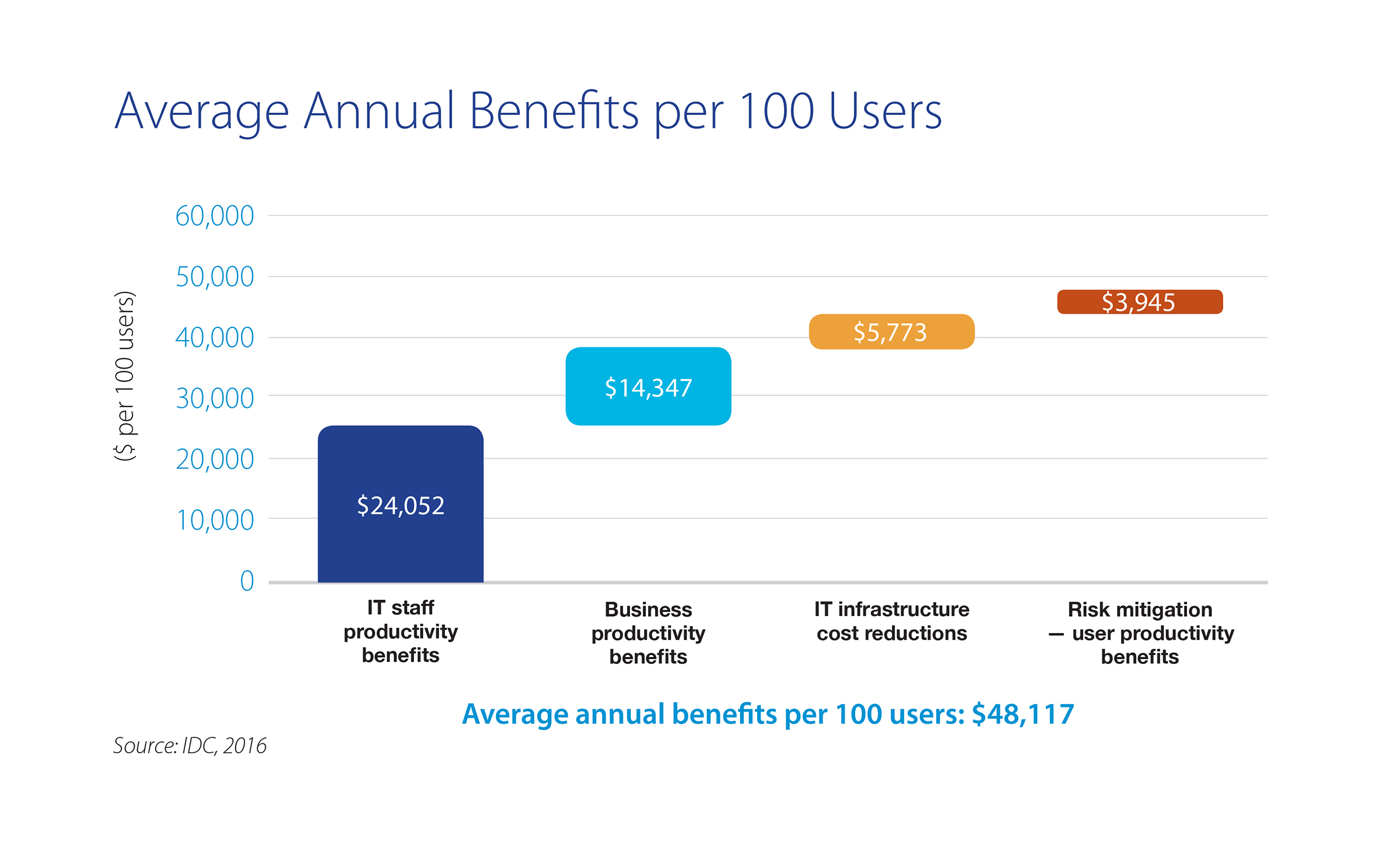
IDC analysis shows that organizations deploying digital network technologies receive over $48K annual benefits per 100 employees with a 9-month payback.

Meeting with IT leaders always fascinates—and often challenges—me. There is always some new insight or perspective I take away from these encounters. Over the past year, I’ve met with an increasing numbers of IT leaders who voice their frustration. Why? Because they realize that legacy approaches to networking will be a major impediment for their digital initiatives, but they struggle to make the business case to modernize their infrastructure.

Often times when you hit a wall with business leaders, you need to translate your vision into financial benefits. Speak their language. After all, hard numbers talk louder than a million network diagrams.

We decided to find a way to help. We put IDC in touch with eight trailblazers who are using Cisco DNA to transform their business. The goal was to unearth the business and IT benefits they were experiencing — then help quantify the benefits of a digital-ready network to their business.

I won’t go into any length about the research and results—you can read the full report for yourself here —but I do want to share some of my favorite highlights:

Picture3

  • The Network has broad business impact: The network touches everything. Likewise, the business impact of the network—especially as we enter the digital era—is incredibly broad. The customers IDC spoke to identified benefits from deploying Cisco DNA solutions that spanned IT staff productivity, business productivity, IT infrastructure costs and risk mitigation.
  • $48,117 in annual benefits: When we add up the benefits across all of those areas, the figures are remarkable. Specifically, IDC discovered that on average, these organizations were realizing $48,117 in annual benefits per 100 users, with a nine-month payback. How is that for a head turning statistic to add to your business case?fig2
  • Network operations productivity increased by 28%: Network automation results in dramatically more efficient network operations, but that’s just the very beginning. There are many as yet unrealized benefits. But, an initial 28% productivity gain is nothing to shake your head at, and as they say, the self-driving car wasn’t built in a day.
  • IT productivity extends to application development too: While network automation results in more efficient network operations, customers are also experiencing speedier and more effective application development and roll out. On average, IDC found that customers were able to shave 17% off of the time it takes to deliver new applications. As one customer put it, “The legacy network couldn’t address the many applications that we are seeing or needing to be able to support…. This is why we created and are extending the DNA network.”
  • Digitizing the Network can lead to better security: We all know that cybersecurity concerns are on everyone’s mind. A major breach can quickly wipe out any ROI benefits, and fear of a breach is often responsible for slowing down progress on digital initiatives. Cisco DNA solutions can dramatically reduce the scope of breaches — how many clients or machines are compromised — while shrinking the time to detection of breaches. Digitization dramatically increases the attack surface as more and more things are connected to the network requiring a fundamentally different approach then legacy security appliance only approaches.

Quantifying Your Vision

In my experience, IT leaders typically recognize that their current network model, while still manageable, is not sustainable. Getting business leaders to understand—and ultimately invest in— network transformation is the challenge. The findings from the IDC analysis provide IT leaders with data to help frame the business benefits that can be achieved by building a digital-ready network.

Armed with this information, a business case can be made to drive investment in networking infrastructure. From there, the discussion can move to the fun part: aligning IT and business strategies to drive innovation across the organization.

All around the world, companies in every industry are struggling with the complexity of digital transformation. The majority of IT leaders realize that the network will either be the hero or the villain in your digital adventure. If you’re trying to determine the best way to make a business case for networking transformation in your organization, this report is a must read.

Authors

Scott Harrell

Senior Vice President and General Manager

Enterprise Networking Business

Avatar

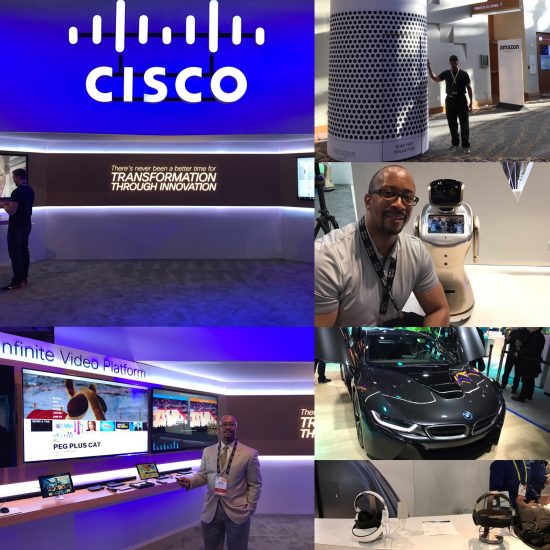
Of course, I’m talking about that incredible annual event known as CES.  For those of us who are passionate about technology impacting the Consumer Electronics space, CES is magical…and this year’s show did not disappoint.  From the continued emergence of intelligent personal assistants, to the potential future impact of self-driving vehicles, CES 2017 let us examine what innovations in technology will mean for our industries…and to the world.  Here are a few highlights:

IMG_0147

The “Age of Alexa” has arrived:

Intelligent personal assistants, leveraging voice commands, continue to increase in popularity… and everyone wants to take advantage.  Amazon appears to have captured significant mindshare, offering multiple options for integrating Alexa (Amazon’s voice-based personal assistant) into existing and emerging technology.  While they haven’t released specific numbers, analysts estimate that Amazon has shipped more than 10 million Alexa-enabled Echo and Echo Dot devices.  Apple certainly has a commanding lead with more than 1 billion devices using Siri, but Amazon is making it easy for Alexa to work outside its own ecosystem.  Multiple vendors demonstrated Alexa powering items from automobiles to automatons (robots), and controlling appliances ranging from vacuum cleaners to refrigerators.  Consider the potential impact that will have on Amazon’s leverage of big data…and how every voice-based search means that people are not using traditional browser/app-based search.  While privacy concerns are always an issue, and the use of personal information is uncertain (it will rely on user opt-in), there is no doubt that voice-based, automated personal assistants are gaining traction.  Thus, it’s easy to see why Google (Google Assistant/Google Home) and Microsoft (Cortana) are working so hard to catch up.

We’re being “driven” to even greater heights:

The race towards self-driving vehicles will generate a tremendous amount of additional bandwidth usage.  Vehicle cameras and geo-positioning technologies will rely on low latency systems, and leverage hybrid-cloud environments, along with 5G mobile networks, to truly transform connected cities and the way people commute.  We met with teams from Intel (which showcased the self-driving concept, featuring the beautiful BMW i8), and Qualcomm.  Both companies highlighted the additional processing requirements that are driving innovations for next-generation chipsets… and both are forecasting that self-driving vehicles will “drive” significant increases in the use of mobile broadband and cloud.

It’s virtually time to begin augmenting our reality:

There are numerous companies experimenting in the enablement and delivery of virtual and augmented experiences.  We saw virtual theaters delivered to stand-alone headsets…and advanced applications designed to leverage mobile phones in integrated VR headsets.  However, while there was a fair amount of buzz around VR and AR experiences, we did not see anything that seemed to significantly move the needle forward.  There continue to be advances related to both the medical industry and training applications…along with next-gen entertainment and gaming experiences (check out what HoloLamp is doing with AR image projection and manipulation via a PS4 controller).  But, outside of gaming, VR and AR still do not appear ready for mass consumption, as monetization models were widely discussed…but no consensus has been reached.

There’s never been a better time for transformation through innovation:

Seeing the various technologies at this year’s CES makes me even more excited about Cisco’s portfolio.  During the show, via our Infinite Video Platform (IVP), we demonstrated how we’ve been working with various partners to make voice search ubiquitous for navigating entertainment options.  Additionally, by leveraging network intelligence, analytics, integrated third-party recommendations and partner developed chatbots, we showcased how our customers can position compelling video content…and how easily their subscribers can discover it.  We highlighted how our holistic, end-to-end security solutions are designed to protect the entire enterprise, from the data center, through the core of the network, to the video content being streamed to consumers.  We launched IVP Labs, which allows participating customers to test new features with users, before making them generally available…and thus enable faster innovation at a much lower cost.  In the field of IoT, it is noteworthy that Hyundai announced their collaboration with Cisco, around the future of connected vehicles.  Our hybrid-cloud strategy offers companies the freedom to choose the best environments and consumption models for their traditional and new cloud-native applications.  And, of course, helping customers manage an ever-growing need for additional bandwidth is at the core of the value we bring to the market.  Overall, CES provided a great start to 2017, and we’re anxiously looking forward to the opportunities the new year will bring.

You can learn more about Cisco’s Infinite Video Platform through our press release and IVP page.  Feel free to reach out via social media, with questions or comments about any of the technology that Cisco showcased in Las Vegas.  And, I invite you to share your own thoughts about interesting technology introduced and/or demonstrated at this year’s CES.  As always, the show was far too large for me to see everything, myself.

Authors

Daren J. Mallard

Sr. Manager - Marketing Strategy

Global Logistics, Cisco Supply Chain Operations

Avatar

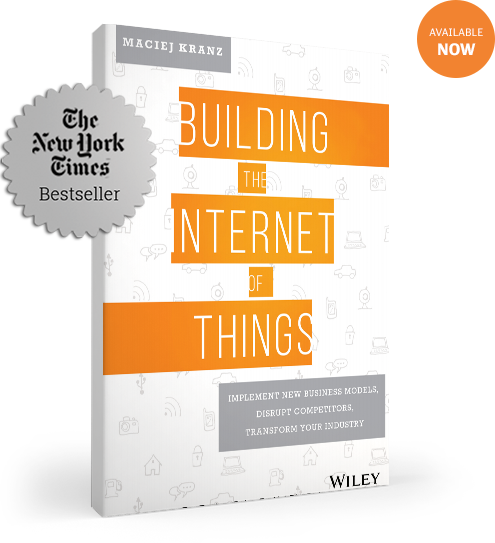
As part of this series introducing concepts from my book, Building the Internet of Things, I am taking a short break from my “Recipe for IoT Success” to offer a short excerpt from the book:

Governments around the world are beginning to realize that IoT adoption will be one of the key factors defining the competitiveness of their cities, provinces, countries, or regions and that IoT can help solve many of the chronic problems plaguing their economies and their environments. Thus, governments at various levels have a number of key roles to play:

  • Regulators. There will be competition for bandwidth and other resources; there will be ideas that may conflict with public policy; and there will be IoT-based ideas that need to be regulated to ensure public safety and privacy. Think drones. In these and other ways, government regulations can help direct and align the industry. Here are a few examples of U.S. legislations and the impact of each:
    • The Energy Act drove the need for energy monitoring, including smart meters.
    • The Rail Safety Improvement Act specified the requirements and the deadline (since extended) for adoption of Positive Train Control on main U.S. railways.
    • The Food Safety Modernization Act drove the requirements for IoT-based systems, including quality control and source tracking, across the food supply chain to prevent food safety issues.
    • Most recently, the Drug Quality and Security Act requires the adoption of a system to identify and trace prescription drugs.
  • Bulding_the_Internet_of_Things_cover4_BSAgenda setters. Who represents the public’s interests in the rush to IoT? Say the government decides it has a vested interest in getting private cars off the road to reduce congestion, save energy, and lower pollution. It must, in turn, encourage the development of autonomous vehicles and other energy-saving initiatives. We’ve seen plenty of positive examples of government involvement in such efforts, including co-funding autonomous car research and industry test beds as well as issuing new policies aimed at accelerating the adoption of such vehicles. Another example is privacy, where governments help explore various models, boundaries, and best practices associated with sharing customer data, as well as with customers’ control over their data. The January 2015 Federal Trade Commission (FTC) Staff Report on the Internet of Things, Privacy, and Security in the Connected World, recommended that the U.S. Congress “enact broad-based (as opposed to IoT-specific) privacy Such legislation should be flexible and technology-neutral, while also providing clear rules of the road for companies about such issues as how to provide choices to consumers about data collection and use practices.” Similarly, governments are increasingly advocating for public health. Because IoT has the potential to monitor individuals’ health through a variety of wearables, the government—in conjunction with hospitals and a variety of healthcare providers and insurers—clearly has the public’s interests in mind with these types of efforts.

  • Adopters. Through their spending power, governments can drive the focus and accelerate the adoption of IoT technologies and solutions. In aggregate, governments represent a huge global market. Their priorities, what they choose to buy, and what problems they choose to address can drive the roadmaps of IoT technology and solution providers. Military requirements, for example, have accelerated the technology development and adoption of drones, wearables, sensors (especially bio-sensors), and many IoT communication technologies.

Other government roles include:

  • Supporting training and education
  • Supporting development of startup ecosystems
  • Supporting standards efforts
  • Supporting basic research and development
  • Enabling competitiveness and openness of the country’s markets
  • Promoting best practices and modern business models

Globally_Globally, governments are already becoming involved. In Germany, Industry 4.0 implementation is addressing intelligent manufacturing; that is, applying the tools of information technology to production. In the German context, this primarily means using IoT to connect small and midsize companies more efficiently in global production and innovation networks so they can not only more efficiently engage in mass production but just as easily and efficiently customize products. Similar initiatives sprang up in many countries, from Made in China 2025 to Turkey 2023. We also increasingly see private companies and governments forming private/public partnerships. Country digitization initiatives, such as those signed by Cisco and the governments of several countries in Europe, are good examples.

Private enterprise, driven by market needs, is certainly in the best position to spearhead the development of IoT and the continuing innovation that will be required as it evolves and changes. But governments and public interest groups have a valid place in the development and adoption of IoT, too. Let’s welcome that.

Next week I’ll finish up the “Recipe for IoT Success” series with Ingredient #8, transform company culture along with technology.

Authors

Maciej Kranz

Vice President and General Manager

Corporate Strategic Innovation Group