Avatar

The excitement, the energy, the sore feet once again engulfed us in the beautiful city of Barcelona for arguably the greatest show on Earth – Mobile World Congress.  Well, for those of us in networking, anyway. The theme for Mobile World Congress 2017 is: The Next Element.

Upon reading “The Next Element” for the first time, I immediately thought of a 1997 science fiction film by Luc Besson – The Fifth Element.  The film borrowed an idea from Plato.  That idea was taking the four classical elements – earth, water, wind, and fire – and combining them to make a fifth – life.

But hold that thought for a moment.

What does “The Next Element” mean?  Let’s see what the Mobile World Congress website has to say: “It’s [Mobile] a phenomenon at the heart of everything we do. It’s fundamental to our everyday lives. It’s the force behind every emerging innovation, every forward-thinking idea.  How do we describe the role of mobile in today’s world?

“Elemental!”

If I’m running a business, I’m dealing with many business applications and customers to whom I need to deliver a good experience.   These are the things I need to focus on.   Yet, critical to me is the network and its services.  But as a business executive, I should not have to worry about the details and complexities of any networking.  I don’t want to worry about details of mobile or fixed or whatever.  My customers increasingly want to access my applications through mobile devices. They should be able to interact with my business where and when they want. I simply want my customers to have a great experience along with my employees and partners.

I want the network to be secure and elemental!

But what does this mean more specifically?  We contracted a survey of small, medium and large businesses across all major world regions.  This is what they said they value in regard to network services:

  • Personalize our experience – make it friendly to regular human beings
  • Protect our stuff – the services, applications and most important, the data!
  • Let us self-serve for network services – as easy as buying on Amazon.
  • Give us on-demand network services – turn up/down, scale up/down, as needed
  • Bill for what we consume – no waste due to idle services or capacity

Elemental, aren’t they?

We have taken these to be elemental to what we need to do to help those businesses and you, the service providers, who serve them.

In the Cisco booth at MWC, we built a zone called, “Create Business Services”. What attendees learned here is our perspective on the digitalization trend that’s affecting every business in every industry. We also showed how and what this means to any service provider. Simply put, it is a large and transformational opportunity.  However, capturing this opportunity comes with a condition – to change and conduct your business differently.  Your business customers are very open to engage with you to help them with their IT needs. They want to focus on their core business needs.   But you need to deliver on the elemental promises above.

Now let’s keep in mind your needs too:

  • reduce network complexity
  • automate services and assurance
  • protect yourself and your customers
  • get insights and experiences to easily stay on top of what is going on in your operations.

All together, these are required to drive profitable business outcomes while you deliver that which business customers fundamentally need.

We are in the unique position because of our presence in enterprise, commercial and public sector markets. We can bring the insights and needs of your business customers to you. With our multi-directional perspective, we have created solutions that will work for you and your business customers.  But more than that, help you capture more of the opportunity presented by the industrial digitalization happening right now.

To demonstrate some of this unique position and to give you some ideas, we put together the following demonstrations:

  1. Collaboration Mobile Convergence – A joint proposition with Ericsson and featuring Cisco Spark, this shows how you can provide a differentiated and secure user experience to brainstorm, call, meet, message and share. Your business customers do these daily.
  2. Cloud Branch Services – This showcases how to solve business branch networking with virtualization and SD-WAN.  Featuring our Virtual Managed Services portfolio, you see how to improve application performance and ensure security over any connection.
  3. Cloud Managed Services – Featuring our popular Meraki services and access points, this showcases how you can grow wallet share in enterprise, small-medium business and public sector markets through superior mobility solutions that are secure and easy to use.
  4. Ngena -The shared Network – This is a joint showcase with our partner ngena, Next Generation Enterprise Network Alliance.  See the power of ngena’s global offering using Cisco technology, and witness the benefits of being part of the alliance.

But that’s not all. The companion zones, Security and IOT, are also very relevant to your business customers.  These zones continued the theme of delivering to what your business customers need and delivering an uncompromised human experience.   Read more about these in blogs by my colleagues, Brian Walsh and Sam Rastogi.

Remember Plato and “The Fifth Element”?

Just like Plato’s concept of the four classical elements combining to make a fifth – life, so we can combine “The Next Element, Mobile” with the other elemental technologies such as protection, automation and on-demand, to make a genuinely positive human experience.

Let’s together put the human back in networking. Let’s make networks adapt to human needs not the other way around!

Not enough time at MWC to spend with us?  Not to worry, for more information, visit us here.    And you can take a look at our Cloud and Network Services or Cisco Spark websites for more information.

Authors

Wayne Cullen

Senior Manager, Service Provider Architectures

Avatar

I began this series on building the Internet of Things (IoT) about four months ago with a promise to unpack the hype and dig deep into the real factors you’ll need to consider on your road to IoT success. Along the way, I’ve shared insights I’ve gained over the past decade or so from working with the countless people who actually have been building IoT in their organizations—the people I call Generation IoT.

They are customers, partners, vendors, integrators, startups—innovators and change agents of every kind—who realize the disruptive and transformative power of IoT. They also know that no one company can do it alone. They are seeking out new ecosystems of partners, combining their skills, talents, and resources for anything from a one-off project to ongoing strategic partnerships. They are building new business models, new value propositions, revitalizing and redefining old industries, and creating completely new business categories.

Today, the “state of the IoT union” is a mixed bag. Even though we’ve come a long way on our collective IoT journey, for most of us, we’ve just begun. Here’s a snapshot:

  • IoT is gaining traction across many market segments. Most of the initial IoT deployments are focused on efficiency, productivity, and improving existing processes.
  • Security has emerged as a top concern for customers—and one of the top opportunities for vendors. Last fall’s IoT DDoS attacks served as a wake-up call for the industry, demanding more investment and a complete shift in mindset. Security is everybody’s job: vendors, businesses, users and employees.
  • Standards are more important than ever, and the industry is working overtime to keep up with fast-evolving IoT technologies in horizontal standards bodies (evolving existing standards to meet IoT requirements), vertical standard bodies (moving traditional technologies to open standards) and consortia (driving frameworks, priorities and interoperability). The newly released OpenFog Reference Architecture is just one example.
  • The IoT integration channel has matured (at least in some geographies), enabling even small and medium enterprises to begin their IoT journeys.
  • Service providers have matured their IoT strategies and are becoming more relevant in the IoT ecosystem.
  • IT/OT integration is progressing in many organizations, but they are still in the minority.
  • Many companies—especially in certain industries and geographies—are still bogged down in 20th century business structures, moving unevenly to the open systems and collaborative partnerships required for effective IoT adoption.

So where do we go from here?

I believe that a decade from now, we won’t even be talking about IoT—because IoT will be an implicit part of everything we do. It will become the foundation of digital transformation. New value propositions, such as mass-customization, will be routine. In 10 years, IoT will have transformed company cultures; business models; jobs and work roles; organizational structures; and relationships with customers, vendors, suppliers, and partners—redefining entire industries in the process.

Just look at the auto industry, which is rapidly merging with the technology industry. Cars are essentially becoming datacenters and smartphones on wheels, and manufacturers are installing standards-based high speed deterministic networks to connect subsystems within vehicles. Banking, finance, and technology industries converged decades ago. Now manufacturing, transportation, retail, healthcare, oil & gas, agriculture and even mining are doing the same. Every industry is becoming a technology industry and IoT is behind all of this.

In short, IoT is bringing about a new economy—a co-economy that is completely digitized and connected. In this new economy,

  • People and organizations collaborate in different and deeper ways
  • All devices are connected and generating data
  • Data collected from devices is analyzed on the spot to produce real-time insights and better, faster decision-making
  • Openness rules
  • Proprietary is temporary; standards are the default

In this new economy, traditional roles will evolve from buyers and sellers to co-creators; from competitors to collaborators, from technology providers to business value creators, from resellers to solution integrators. We’ll all be part of multiple ecosystems, because we’ll all play multiple roles among multiple partners.

Does it sound a little overwhelming?

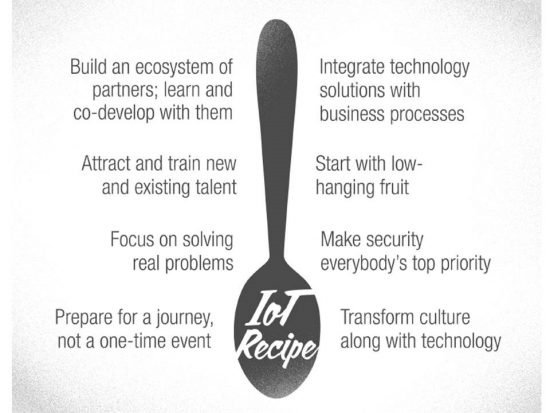
Don’t worry. You can keep your bearings by holding to a few basic principles: Begin your IoT journey with one of the four well-proven fast-paths to IoT payback, learn from the mistakes of your peers who have done it before you, and internalize and integrate my IoT recipe for success.

I firmly believe that for many of us, IoT represents a once-in-a-lifetime opportunity to redefine our industries, organizations, and jobs. Are you ready to begin? Good. Welcome to Generation IoT.

This is the conclusion of a 17-part series based on Maciej Kranz’s book, Building the Internet of Things,” a practical guide on how to implement and capture the value of IoT.

Authors

Maciej Kranz

Vice President and General Manager

Corporate Strategic Innovation Group

Avatar

Even as technology offerings improve at light speed, customers’ needs to improve their bottom-line remain largely the same. They want results, and a healthy return on the investments they’ve made. As we’ve built out our customer success organization, and taken our partners along with us on our journey, we’ve found that nothing drives customer value realization like effective adoption. And that’s how Cisco’s Annual Adoption Workshops (also known as our “Adopt Shops”) got started.

https://www.youtube.com/watch?v=oBC0OeNTMlM

At its core Adopt Shop is all about keeping customer satisfaction and frictionless renewals at an all-time high, and it’s fast becoming one of our most popular partner events at Cisco. We just wrapped up our third annual gathering in San Jose last month, and it’s clear that momentum is building as more and more partners establish adoption practices and hire adoption specialists within their organizations.

The base of partners building adoption practices is getting bigger and bigger, and new partner adoption specialists focused on software and security are also emerging.

In San Jose, it was also clear that the next evolution of customer success is upon us. With a concentrated group of more than 50 partners in attendance, it was great to see so many familiar friends in the audience—people we’ve worked with for years. But we also saw a lot of new faces, including new adoption specialists focused on software and security. The base of partners embracing adoption is getting bigger and bigger, and at the same time Cisco is continuously adding new offers to our adoption portfolio.

What really excites me is the underlying analytics and telemetry that we provide our partners to execute on value realization. We’re now able to deliver information specific to offers in our software, security and services portfolio and provide partners with the insight needed to take action when a customer hits an adoption barrier—such as an incomplete deployment or low feature usage.

The workshops have featured inspirational guest speakers (i.e. CEO of GainSight) who provide use cases and practical advice for moving customers forward on their adoption journeys. During the events we also share updates to our VALUE framework and the latest news surrounding Lifecycle Advisor, Lifecycle Advantage and other Cisco programs designed to provide everything a partner needs to build a more robust adoption practice.

It’s easy to see why adoption is so critical to a customer’s success. But what does it mean for partners? It’s been said that if a customer doesn’t see value within 90 days, there’s only a 10% chance they’ll remain loyal. Adopt Shop is all about positioning partners to ensure value and gain customer loyalty within those 90 days—and ultimately, to create customers for life.

To find out if Adopt Shop is a fit for you and your business, watch this video for a deeper dive into what was discussed at our San Jose workshop.

Authors

Jeff McEachern

Senior Manager

Global Virtual Sales & Customer Success

Avatar

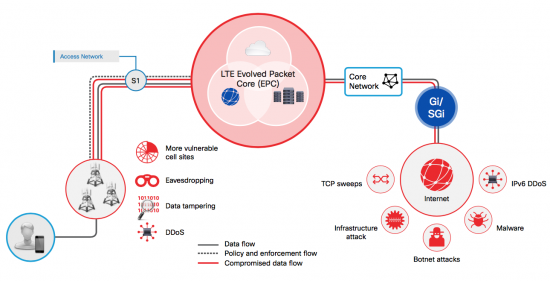
With the evolution of LTE, LTE-Advanced, and 5G, mobile network architectures are becoming more IP-based. While these new technologies push the performance of wireless cellular networks to new levels, they also increase the attack surface, opening mobile networks, devices, and customers to a host of sophisticated threats. Adding to the challenge, recent innovations including VoLTE and VoWiFi combined with the business imperative to deliver services rapidly, accelerate the need to secure critical “network edge” interfaces and protect the Evolved Packet Core (EPC).

  • To protect against increasing risks and new vulnerabilities from cyber-attacks, mobile operators can deploy comprehensive mobile network solutions to secure their Gi/SGi (internet edge) as well Security Gateway (SecGW) to protect the perimeter between the RAN and the EPC.

Next-Generation Security Gateway solutions for secure mobile backhaul

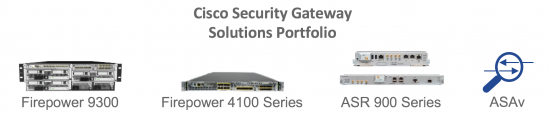
Cisco is introducing Security Gateway (SecGW) solutions for secure mobile backhaul across physical and virtual environments. Building upon earlier Cisco SecGW offerings, Cisco now offers new SecGW capabilities on physical appliances including Firepower™ 9300, Firepower 4100 Series, ASR 900 Series, as well as virtual form factors on ASAv.

As Mobile Service Providers evolve their macro networks, they also increase the attack surface, specifically:

  • Unsecured backhaul is a primary vector for the risk, but your data has the potential to be compromised at any stage in transmission between the mobile device and EPC.
  • The proliferation of cell towers present an explosion in the number of staging points malicious actors can use to bring down your network.

To protect against these types of threats, mobile operators need a SecGW solution that authenticates and encrypts traffic from the node to protect the EPC and reduce the potential for network disruption and traffic interception.

With Cisco SecGW solutions service providers get the following unique capabilities and benefits:

  • Clustering technology on Firepower enables mobile operators to scale high-throughput IPsec and security gateway functionality across multiple processing modules on Firepower 9300 or across multiple Firepower 4100 Series platforms as needed, to predictably scale as your networks grow
  • Optimized security gateway performance reduces rack space, power, and cooling costs.

Gi/SGi Next-Generation Firewall to secure the internet edge

IP-based elements of your mobile network leave you exposed to a wide range of IP-based attacks. Cisco is offering a new approach to security to combat these threats, protecting data flows and workloads with a consistent security policy for physical and virtualized infrastructures. It includes Cisco’s carrier-class threat defense services together with complementary, tightly integrated services, like DDoS mitigation.

Our next-generation Gi/SGi Firewall solution, on Cisco Firepower 9300 and Firepower 4100 Series, are threat-centric solutions purpose-built to evolve with your network.

Gi/SGi Firewall capabilities include:

  • Software-Defined Networking (SDN)

Stateful firewall:

  • Comprehensive Layer 3 and 4 infrastructure protection
  • Carrier-grade NAT
  • General Packet Radio Service (GPRS) Tunneling Protocol version 2 (GTPv2) inspection
  • Stream Control Transmission Protocol (SCTP) inspection
  • Diameter application inspection

Cluster up to 5 Firepower 9300 chassis or up to 16 Firepower 4100 series chassis to scale performance of both the control-plane as well as the data-plane.

Come to the Cisco booth #3E30 in Hall 3 at Mobile World Congress to learn more about how these two network security solutions can enable you to move down the road to 5G with confidence.

Authors

Sam Rastogi

Senior Product & Solutions Marketing Manager

Avatar

There has been lots of discussion on why cities are looking to embrace digital solutions to make them smarter. As smart city technologies and their related business models mature, cities are increasingly looking to deploy and scale multiple solutions across the city. This creates a really interesting opportunity for telecommunications service providers (SPs) based on their relationships and existing footprints by way of their fiber, wireless and wired network investments. They also have a legacy of providing both consumer- and enterprise-related network services with proven reliability and can extend this skill set to include a broader range of smart services. Let’s look at some recent examples of where this is happening:

In Copenhagen, an early adopter of smart technologies and a city intent on eliminating its carbon footprint by 2025, TDC and Cisco have joined forces to provide the networking infrastructure, platform and solutions framework to deploy an array of smart city solutions (see more details). TDC, Denmark’s largest SP, helped initialize these efforts by providing access to key city decision makers and local business and community leaders and will be delivering the ongoing connectivity and support for these solutions.

Similarly, in Kansas City, Missouri, in the US, Sprint and Cisco have partnered to enable and deploy a diverse and powerful portfolio of interconnected smart city solutions (more details here). Interconnectivity is really the power of smart city initiatives—not just in making a single system or city industry more efficient, but in generating and securely sharing data from each set of systems and domains across many city agencies, communities and businesses to provide new insights for decision making. And because SPs are the local hubs for connectivity—their role is especially critical in galvanizing and maintaining interconnectedness. As we outlined in an earlier blog post, it takes an interconnected ecosystem of partners to make the smart city vision a reality.

Cisco brings 30 years of networking expertise to bear on the challenges of deploying and supporting smart city solutions with its Smart+Connected Digital Platform. When it comes to strong integration, the Connected Digital Platform offers an application-enabled data aggregation layer that delivers services to cities, citizens and businesses (watch video). It securely connects systems and enables cities to turn gathered data into action across various agencies and sectors to optimize city services, enhance citizen engagement and improve the day-to-day quality of life. It allows service providers with cross-domain expertise to manage systems and extend decision support horizontally to their customers.

One of our newest SP-aided deployments is in the city of Bucharest with Deutsche Telekom (DT), where a set of smart solutions will be integrated over the Connected Digital Platform. Speaking about the project, Daniel Baluta, Mayor of District 4 in Bucharest was enthusiastic: “We are delighted to be partnering with DT and Cisco on the Tineretului Park smart city project. Residents of District 4 will be the first to enjoy free Wi-Fi, and video monitoring will aid people in distress and help stop vandalism. We will have a smart parking mobile application, and the smart lighting solution will decrease our energy costs.” The mayor sees the partnership as a way for Bucharest to reach a higher level of development and be a model of other cities.

George Nistor, Senior ICT Sales and Business Development for Deutsche Telekom AG, concurs with Mayor Baluta. “The pilot will make coming to the park more enjoyable and safer and it also brings benefits to the city by improving its ability to manage public spaces, lighting, and safety more effectively at lower costs.” George added, “We are proud of our implementation of the first integrated smart city concept in District 4 Bucharest, for the great collaboration with City Hall and for the strong 10-year relationship with Cisco.” George noted that out that these cutting-edge technologies—including analytics, artificial intelligence and other key applications—will support Bucharest on its digitalization journey and they also fortify DT’s strong position as an integrated ITC provider.

As we enter a new phase of smart city maturity in terms of city readiness, technology advancement and ecosystem cohesion, it is an exciting time for SPs to realize new opportunities to build on their unique role in cities and broaden their service offerings.

“Service providers can generate new revenue streams while helping cities achieve operational efficiency,” observed Peter Karlstromer, Cisco Senior Vice President for Service Provider activities in Europe, the Middle East, Africa and Russia (EMEAR). He noted that Cisco’s network experience, partnerships and platform technology can enable SPs to be ready to address this very large opportunity. “We’ve had great success with TDC, Sprint and DT, and we look forward to partnering with SPs in other markets to help scale smart city adoption worldwide.”

I agree with Peter. I’m confident that our SP relationships will continue to be an important part of our partner ecosystem and will be instrumental in extending the number and range of smart city deployments in more cities and communities across the globe.


Authors

Arvind Satyam

Managing Director, Global Business Development

Smart+Connected Communities

Avatar

It’s like the scene in a movie when the good guy pulls out a knife thinking he has the upper hand over the villain…. and out of nowhere the bad guy pulls out an AR-15 automatic rifle!  Fight over. Good guy goes down and loses.  Welcome to cybersecurity in Public Sector.  Agencies in Public Sector (good guys) are fighting a losing battle at every level (e.g. Federal, State, and local) using a silo based security strategy focused on “buying top quadrant ranked security devices” in a world of automation, analytics, and global zero day threats.  These security devices create mountains of log data which contain clues to potential attacks as well as tons of false positives. An extremely competitive cybersecurity job market adds additional risk and stress to executives managing environments in public sector.

To address these needs, Cisco combined two of our strong brands – Active Threat Analytics (ATA) and Classified Network Services (CNS) – into an offering that is now available to Public Sector customers. Cisco Active Threat Analytics provides 24×7 continuous monitoring and advanced analytics capabilities combined with industry-leading threat intelligence and expert investigators to rapidly detect advanced threats.  Classified Network Services provides enhanced delivery of services —from highly secure and cleared US-based facilities—staffed by US citizens—with strict data storage and access controls in place.  All staff, facilities, and technology comply with the appropriate regulations necessary to deliver “services at classification” to meet the unique data protection requirements of your customers.

These services help customers improve their security strategy and threat coverage as they grow, enabling the safe and confident adoption of disruptive technologies that open new revenue streams, improve employee and user experiences, and transform operational models to deliver increased value. The service identifies incidents quickly and provides actionable recommendations for remediating risks and security events in-house security to focus on core initiatives or special projects.

Want to learn more? Check out Cybersecurity for Government.

Authors

Gerald C Alston

Director, Managed Security Services Classified Network Services US Public Sector Advanced Services

AS, CNS, MSS

Avatar

Extended sailing is often described as “days of boredom punctuated by moments of sheer terror.” As a sailor, I can tell you that those boring times give you a lot of time to think. In fact, if you ever find yourself crossing the Atlantic Ocean in your own 40-foot boat, you will have approximately 25 days of thinking. You’ll even have time to reflect on those moments of terror that took you away from your blissful boredom.

Jennifer and Connected Women
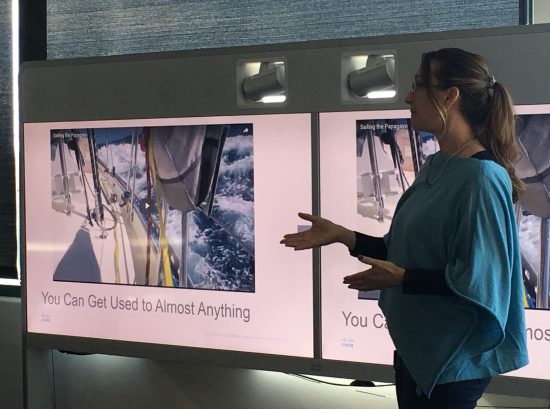
After presenting these tips to the Connected Women group in San Jose – #LoveWhereYouWork!

In 2014 and 2015 I took a 2-year sabbatical from Cisco and sailed 16,000 nautical miles, or about halfway around the world, from San Francisco to Europe, on our sailboat with my husband and young son. And what I discovered in all of that time to think is that life at sea has a lot of lessons for life on land and back at your desk.

Let’s set aside the obvious lessons, such that having washing machine is super awesome and your dermatologist will thank you for using SPF 30. The hard-won lessons I learned from my adventure are things I constantly remind myself about while back to work at Cisco:

  1. The secret to achieving your dreams is through planning (spreadsheets!)

It’s not like my husb and and I have a charmed life or are just lucky. We spent five years planning and preparing for our two-year voyage. We have spreadsheets outlining what medications we needed to take, what spare parts we had on board, our son’s homeschool curriculum and about a dozen other plans. If you want something, make it happen. I recommend Excel.

  1. A sailor’s plans are written in the sand at low tide (a.k.a. things change)

Always keep one eye on the conditions and adjust accordingly. As my husband likes to say, “Keep your head out of the cockpit.” Why not do this in life? Life is not meant to be navigated on auto pilot.

  1. Adapt

Some of my friends were aghast that my “closet” for two years consisted of two small shelves. It turns out I only needed one. Give me just a few fast-drying, water-wicking, sun-shielding, wrinkle-resistant outfits from Athleta and I will wear them over and over again. What I learned is that what you want isn’t always what you actually need.

  1. Don’t always follow the instructions

I had to homeschool my son for 4th and 5th grade. It’s fair to say he may have taught me more than I taught him. One day we sat and played with Legos together. My creation was awful and his was amazing. I used to get angry when I’d buy him a $100 Lego set and he’d build it, then immediately take it apart. What he was actually doing was creating more amazing things, using the catalog of Lego parts in his brain. Ever since, I’ve never given him grief for taking his Legos apart. Being creative takes effort; don’t always do what you’re told.

Massaro presenting
Presenting my learnings.
  1. You can get used to almost anything

You might think that it would be awful to spend days at a time at a 15 degree angle, pitching up and down and always having to hold on to something with one hand lest you hurl across the boat and hurt yourself. And it is. But only for about the first three days. Things become normal after a while, even when they’re not comfortable. You can handle a lot more than you think you can.


  1. Consider the source, trust yourself

We got a lot of “advice” from other sailors. “You can’t sail from Panama to Jamaica at this time of year! The waves in the Caribbean are different from the ones in the Pacific!” What we found is that people like to project their own fears on to you. Do your homework and know what you’re capable of. Don’t let anyone else tell you what you can’t do. (For the record, waves are the same everywhere.)

  1. The only way to expand your comfort zone is to get outside of it

Easier said than done. I know. I get it. The thing I was most afraid of before leaving on our trip was getting into bad weather. There were about a dozen situations that I would have been petrified had I known I was going to encounter them. But guess what? After having gone through some sketchy situations, they are the things I’m most proud of dealing with.

  1. We often worry about the wrong things, so try not to worry

I spent about 493 hours worrying about crossing the Atlantic Ocean. Halfway across the Atlantic I sprouted the first gray hair on my head. True story. Yet our Atlantic crossing was mild and we had some amazing experiences. Now, I try not to worry about all the time I wasted worrying.

  1. Courage is doing it anyway, even when you are scared

My husband would ask our son, “Who’s braver? Daddy who’s not too scared? Or Mommy, who is scared and does it anyway? Mom.” This was nice reassurance when I felt like the biggest scardey-cat in the world. Face your fears. Trust me, you will be proud of yourself. You may not feel brave, but you are.

  1. Understand the difference between dangerous and uncomfortable

50+ mph winds and 15 foot seas? Sound dangerous? Actually, it depends. You need to be logical and evaluate: are we really in danger or does it just seem like we are? There were only a small handful of situations when we were potentially in danger. The rest was just uncomfortable. Don’t let your limbic system rule you, use logic. In some uncomfortable moments I would tell myself that I’d give anything to be sitting in an office and just dealing with politics. After all, I wouldn’t feel like my life was in danger. And then I’d remind myself that it just *seemed* like my life was in danger. Keep your perspective.

  1. You appreciate more what you earn 

    Massaro on the boat
    Learning lessons at sea.

We were crossing the Gulf of Genoa off the coast of Italy, and the forecast called for less than 10 mph of wind. We had 40. Fortunately the crossing was only 12 hours. After, we anchored off of the amazingly beautiful town of Portofino. The glass of wine in the cockpit that evening was delicious. Somehow, I don’t think it would have tasted as good if the wind was less than 10 miles on our crossing.

  1. Humor helps; panic doesn’t

There is a saying that there are “two kinds of sailors, those who have run aground and those who haven’t yet.” In the summer of 2015 we went from the first group to the second. It could have been catastrophic, but instead I’m really proud of the way we handled this emergency because we didn’t panic. I even tossed around a few jokes, even though I was stressed on the inside. We got floating again and we made friends in the process. And I’m not embarrassed about how it all went down. Take a deep breath when you think disaster strikes and let stress bring out the best in you, not the worst.

  1. YOU are never done

I thought I had learned all of these lessons from my trip and that they were part of me forever. It turns out that I need to constantly remind myself about them. It’s so easy to get back into a routine. It’s so easy to stop noticing and appreciating the world around you. It takes work. The minute you go on auto pilot is the minute you stop growing.

I’m still a little gob-smacked that Cisco let me take two years off to take a crazy sailing trip, and then hired me back at the end of my trip. In the end I think Cisco is better off because I get to apply all these lessons I learned at work. Every day.


Put these tips to use as a Cisco employee! View open opportunities here.

Authors

Jennifer Massaro

Senior Communications Manager

Global Corporate Communications

Avatar

Have you ever wondered why some organizations are more successful in delivering services and applications with serious resource constraints to its every increasing distributed workforce? Chances are the IT teams are using some variation of cloud computing to solve these and other modern day IT challenges. Private cloud serves as an enabler for organizations to deliver IT as a service (ITaaS). This makes organizations more agile and efficient through reduction of cost, economies of scale and increased efficiency. Cisco uses its innovative cloud platform to facilitate automation, virtualization and simplification to increase business value whilst reducing total cost of ownership (TCO). Cisco cloud services can be delivered using three methods: first, there is the Cisco private cloud (through internally hosted or owned infrastructure), second, through public cloud (cloud provider delivers services) and finally, a hybrid model (a mix of the previous two).

Cloud services grew out of large service providers implementing highly automated management systems to manage their infrastructure. It was not long before enterprise IT leaders recognized that they could capitalize on cost efficiencies, agility and simplification benefits in their own environment. Enterprises IT leaders now find themselves competing with cloud service providers. This has significantly led to the push for more cost effective on premise or private cloud infrastructure. Current day IT departments are reanalyzing how resources are pooled across business units for increased efficiency. This has now positioned these IT departments to become internal service providers to deliver IT as a service to its business units and users.

At the heart of Cisco’s private cloud is the Unified Data Center, which serves as a unified platform for networking, compute, storage, security and management. This platform facilitates provisioning of cloud resources from a shared pool of virtual or physical resources. The overall datacenter approach provides simplicity and efficiency while private cloud services become more tightly integrated. Virtualization technologies also helped propel private cloud computing by abstracting and aggregating data center resources so that all application loads can share it. At the core of the Unified Data Center is Cisco Unified Computing Systems (Cisco UCS). The UCS platform integrates x86 servers, storage network and unified management for scalability and ease of management. Ease of management is achieved through elimination of multiple redundant devices that is at the center of traditional blade server systems.

The scalability and possibilities with Cisco UCS is almost limitless since it can scale to match almost any workload, all with a single point of management and connectivity through Cisco UCS Manager. Cisco UCS infrastructure provides the ideal platform for building your private cloud infrastructure. It facilitates reduced capital expenditure (CapEx), decreased operating expenses (OpEx) while freeing up your staff from tedious work when deploying a new infrastructure or platform.

Cisco private cloud offerings today provide self-service and metering capabilities along with automation features that provide a use-based pay-as-you-go model. This works similarly to a utility company, other than the fact that your organization manages the data and costs. IT services are provisioned here as an on-demand offering where an end user or business unit initiates a service request. Users and business units request usage of the infrastructure without having to understand the complexities of networking, storage or servers. Since there is no intermediary between the users and the private cloud on-demand model, your internal customer only pays for what it needs reducing the core structure. This significant reduction allows your users and business to do more with less, significantly drives productivity, and improve time to market.

The Cisco Unified Computing System helps to connect silos in enterprise data centers to make for better utilization of infrastructure in a virtualized environment. It utilizes industry standards to provide for full interoperability, compatibility, return on investment and investment protection. It unites computing, storage and network into a unified architecture managed through a single system with the Cisco UCS Manager. Cisco UCS Manager in turn helps to automate provisioning of resources to enterprise customers to facilitate application provision in a matter of minutes. Integrated at the core of private cloud is Cisco UCS, which facilitates enterprises with a cost effective, reliable and simplified on demand service with a unified management whilst keeping cloud computing under the control of enterprise IT.


Opinions expressed here and in any corresponding comments are the personal opinions of the original authors, not those of Cisco.


Authors

Donald S Bacha

Network Administrator with the Cardiovascular Research Foundation, NYC; VMware IT Academy Instructor with PCAge, NJ

Avatar

With Continuous Network Improvements In 2016, XL Lays Foundation for Stronger 2017

XL Axiata is one of the largest cellular operators in Indonesia for consumer and machine-to-machine (M2M) services. Their subscriber base now totals more than 45M subscribers just having added more than 1M customers in Q4 2016.

For XL Axiata, the growth of smartphones continues to drive increased data adoption in Indonesia with a 64% YoY increase from the same period a year ago. The growth in smartphone customers is meaningful as the increased sophistication of XL’s smartphone customers is driving up usage on XL’s 4G-LTE network traffic increasing by almost 30x since the commercial launch of 4G services in November 2015. Total traffic across XL’s networks, which has seen a 162% YoY increase in FY 16 compared to the same period previous year mainly driven by growth in Data traffic. XL’s subscriber base continues to grow with the addition of 1 million subs this quarter taking the total to 45.0m which is 8% higher than the subscriber base a year ago.

To handle this deluge of devices and data, operators like Axiata are quickly evolving their mobile cores from traditional centralized to distributed Evolved Packet Core (EPC) Architectures, leading to a virtual EPC or vEPC. XL Axiata announced at MWC 2015 that they had chosen the Cisco Ultra Packet Core to transition from their centralized EPC to their vPC platform. Now with more than 7M Indonesians traversing the Cisco UPC, XL Axiata continues to invest in their network and migrate new subscribers onto their new mobile core. With their continued infrastructure innovation they have turned into one of the largest live vPC’s in the world.

Recently President Director/CEO of XL, Dian Siswarini stated in her company report: “In 2016, our main focus was improving coverage and quality of our Data network as part of the transformation strategy to build a more Data centric business. In addition, with the completion of our Balance Sheet Management Initiatives and the realization of cost efficiencies, we have built the foundations in 2016 that will lead to a better 2017 performance. It is clear that the 3R (Revamp, Rise, Reinvent ) Strategy is the right one to build a more sustainable and profitable XL.”

For Cisco, our partnership with XL Axiata and the almost 80 other Ultra Packet Core Customers, the move to a virtualized mobile core infrastructure keeps us engaged and investing in what our customers want and need. At MWC 2017 Cisco will show our CUPS solution showing the tremendous architectural flexibility to support Mobile Edge Computing (MEC). With CUPS the edge user planes can be deployed at the cell site with benefits that were previously unavailable. We will also be showing our complete Ultra Services Platform with Deployment Automation Services, our Cloud Based Mobile Solution.

So if you are at MWC 2017, stop by and see us at the Cisco Booth 3E30, Hall 3.

Authors

Jim O'Leary

Sr. Manager Mobile Solutions Marketing