Avatar

What’s a girl with a head full of purple hair to do when she’s fiercely passionate about fighting children’s cancer with the St. Baldrick’s Foundation? Well, for this girl with purple hair – she signs up to shave it all off. Yep, you read that right. This time, next year, I’ll be bald.

This promise has been a long time coming — made back in 2012, weeks before purple dye ever thought to touch my head for the very first time. I had just completed photographing my second St. Baldrick’s event on Florida’s Space Coast, when I walked up to our event organizer and made the proclamation, “My hair is yours.” His eyes lit up – he still had clippers at the ready – “No, no. Not THIS year….the year after I’m married.” He smiled and accepted the agreement – neither of us knew how long this journey might take.

Five years and 11 months later, Sean proposed. So, it seems, the countdown is on for me to go bald and I can’t tell you how ready I am to be amongst those who help our kids realize that bald is beautiful while continuing to fund the life-saving research they need.
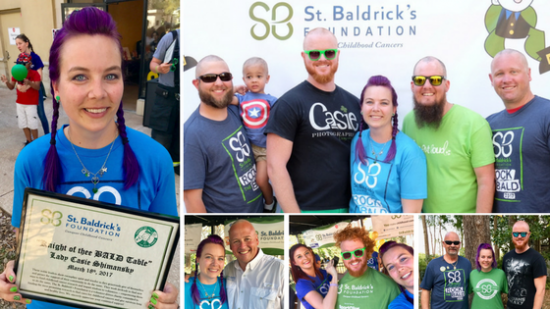
A look at the St. Baldrick’s event that Casie photographs in Florida.

I started with St. Baldrick’s in 2011 – just a kid with her camera off to photograph a charity event. That day changed my life. In 2012, the promise was made, and in 2013 we started a St. Baldrick’s team – Team Live Out Loud – in memory of my younger sister, Kellie, who passed away unexpectedly in 2004 at 18 from unknown causes. Knowing that level of loss, my family has been a force in giving back – especially to organizations that help kids live long, healthy lives with their families.

My dad and Sean both signed up on the spot to go bald, and our tiny team has gone on to raise $27,000+ in five years for children’s cancer research. I love that we’re in this fight together, and that we get to carry Kellie’s legacy on in a way that I know she’d be proud.

2017 was the year of the knight for me! Those who’ve been with St. Baldrick’s for seven years are knighted by the foundation for their dedication to conquering kid’s cancer. Being a Knight of the BALD table is an incredible honor. And as I looked out over the crowd, I couldn’t help but think back on the past seven years — on what this community has accomplished in those years together.

Our event has raised over $1.5 MILLION dollars for children’s cancer research and we’ve often been in the Top 10 of St. Baldrick’s events worldwide. That’s proof of what can be done when we all come together. It’s proof that when we say “every dollar counts” – we mean it. It’s proof that we can turn something as heartbreaking as kid’s cancer into hope – that, together, we can actually be the change we wish to seek in this crazy world.

So, imagine how excited I was when I stumbled upon an Instagram post made by a fellow Cisconian that said there was a St. Baldrick’s event being planned this year at Cisco’s RTP campus. I reached out immediately to see how I could help.
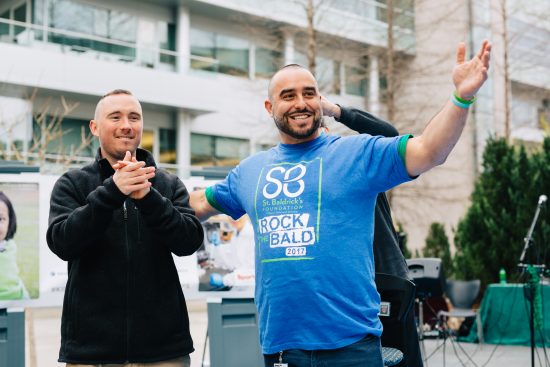
Cisco RTP Braves the Shave!

Andres Marquez and Andrea Roach welcomed me with arms wide open (as true Cisconians do, of course!) and we got to work discussing what they imagined for the RTP event and where we’d like to take St. Baldrick’s events at Cisco in the future.

It was here in this meeting that I learned Andrea’s cousin, Aaron, battled a rare form of bone cancer, Osteosarcoma. At the age of 14, he had a majority of his leg amputated. Initially, he beat Osteosarcoma, but Aaron passed away at the age of 22 due to a brain tumor that had been caused by the chemotherapy treatments he endured. It’s something most don’t realize about kid’s cancer – most of the kids are treated with adult chemo and radiation. It’s too much for their growing bodies, and many of them go on to fight other battles with different cancers or long-term/fatal effects.

This is what the St. Baldrick’s Foundation is working on to change. A cure would be amazing, but we also want better and safer treatments for these kids too.
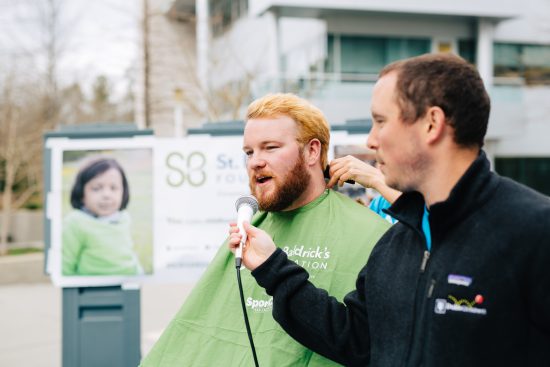
RTP Top Fundraiser, Brendan Higgins said he would bleach his hair before the big shave if he reached his goal of $3,000 — he thought it was unattainable. His family, friends, and Cisco co-workers made it happen!

What does a St. Baldrick’s event consist of? Events around the world vary – but it comes down to this: volunteers sign up to BRAVE the SHAVE and GO BALD in solidarity against children’s cancer. Leading up to the event, Shavees (those volunteering to go bald) and other event volunteers will raise funds for St. Baldrick’s and children’s cancer research. J

The RTP St. Baldrick’s event was an amazing success! They surpassed their original fund raising goal and have already raised nearly $15,000 – and that’s WITHOUT the Cisco match for their efforts!

Andrea shared how amazing it was to see other Cisco employees come out and support St. Baldrick’s, “Cisco holds many events but this one was truly unique. It’s inspiring to see those you work with fully get behind an issue that is so close to your heart and for such an amazing cause…It made me realize how truly blessed I am to work with such an incredible group of people with such great hearts.”

After our events were over, Andres wondered, “How big can we make this? I think other Cisco employees are going to be excited to joins us! From Bangalore and our teams in EMEAR, to Mexico City, Canada, and SAN JOSE! I see a lot of bald heads in our future…”

I love that Cisconians throughout RTP (and, beyond!) are starting to BRAVE the SHAVE for these kids and this amazing cause that I’ve loved for so long. Our goal for next year is to have other Cisconians around the world join us in giving back with St. Baldrick’s. Will you be one of them?
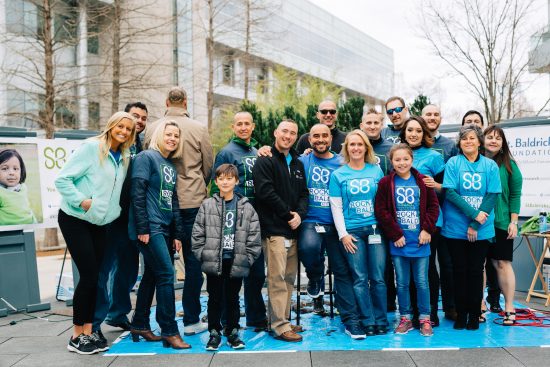
St. Baldrick’s RTP photos by Ileana Cates.

During my first event with St. Baldrick’s, strangers became friends and seven years later – those strangers are my family in this crusade to conquer kid’s cancer. That family now includes my Cisco family and there aren’t words to tell you how proud that makes me.

When you’re passionate about something, there’s no other word for it. I’ve tried to find one, and – there just isn’t anything that yields the same emotion of the fiercely lit fire inside of you. Why let a sad thing continue, when you can effectively CHANGE its course? That, for me, is what keeps me going…that is what will have me going BALD next March. Anyone care to join me? 😉


Want to join a company that’s dedicated to giving back? We’re hiring.

Interested in learning more about the St. Baldrick’s Foundation or want to join us? Check out their website here, or reach out to Casie, Andres, and or Andrea for more details on how YOU can BRAVE the SHAVE! If you’d like to donate, our Cisco fundraising page can be found here – and Casie’s page is here — don’t forget to request a Cisco Match!


Authors

Casie Shimansky

Content Strategist | Provider of Pixie Dust

Employee Storytelling

Avatar

In today’s episode, I’m pleased to share that Cisco received the Best of Enterprise Connect 2017 for Cisco Spark Board.

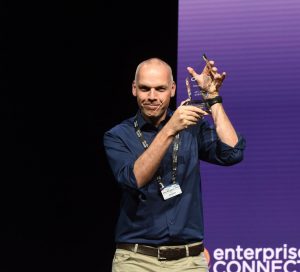
Jens Meggers at EC17
Photo courtesy of Enterprise Connect 2017.

This morning’s general session started off on a very positive note when Jens Meggers was invited to the stage to accept the Best of Enterprise Connect 2017 for Cisco Spark Board.

Having watched the recent Academy Awards, Meggers thought it best to confirm with Enterprise Connect program co-chair Beth Schultz that she did indeed have the right envelope. Unfortunately, her mic didn’t pick up his question. 🙂

Afterward, he said “Cisco is proud to accept this award from Enterprise Connect today. We have received tremendous response for Cisco Spark Board’s innovation and design and we are very excited to be honored for our efforts.”

More about the award:
Read the NoJitter article or Angie Mistretta’s post. It’s the talk of the town.

Is Team Collaboration “All That”? (Hint: Yes.)

Cisco’s Richard Townhill joined peers from Atlassian, Microsoft, RingCentral, and Unify on the panel for “Messaging & Team Collaboration: Overhyped or Next Platform?” While panelists agreed on some points, there were definitely divergent opinions on others. At Cisco, we obviously have a strong perspective on team collaboration and the Cisco Spark platform.

Part of what our technology teams do is to look at the different types of interactions people have throughout their work day. Using that information, they look to support simplicity – so that people can focus on the interaction with other people, instead of having to focus on the tools and technology they’re using to interact.

“We all use multiple technologies. What distinguishes you is the experience that you wrap around the technologies,” Townhill explained. “We see team collaboration as one long stream of engagement” that encompasses the interactions experiences that people use every day.

One of the moderator’s questions was interesting. She asked, “For team collaboration, is it about the user experience or the team experience?” Maybe I’ve been immersed in the Cisco Collaboration culture too long, but the answer seemed obvious. I wasn’t surprised with Townhill’s response: “Teams are made up of people.”

Quote of the Day
Just because you can create it, doesn’t mean you should. No one wants a toaster-fridge.
–Richard Townhill, Cisco

Update to yesterday’s not-so-secret secret: I came clean with our technical marketing engineers (TMEs). They know I’ve been using my blog posts to advocate the placing of fingerprints on the demo hardware. The TMEs are the logo t-shirted individuals who spend their time running through the demos in the booth. They’re an amazing team of people who can answer nearly any question you aim in their direction – and walk you through how the products work. Thankfully, they even let me join their table after the exhibit hall closed – and didn’t hand me the check.

On Tap for Thursday Morning

The exhibits finished today and the conference program closes tomorrow. But there are a few more things left you might want to include on your agenda.

  • 8:00a ET: Get perspective from Cisco’s Tod Famous on the panel for “Bots, AI and IoT: Will They Transform Customer Care?” moderated by Sheila McGee-Smith.
  • 9:00a ET: Cisco’s John Elliott joins in what sounds like an interesting conversation around “IoT & UC: Connecting Things to People in Your Enterprise.”
  • 11:15a ET: It’s time to give the analysts and consultants the whole stage for the “Town Hall” session to close out the conference.

After the final session, it will be time to remove that jingly badge that sounds like labrador retriever’s collar, reflect on the week’s experiences, and head on home.

Authors

Kim Austin

No Longer with Cisco

Avatar

iCAM (Intelligent CAM) is Cisco’s breakthrough innovation that provides traffic analytics, per-feature hardware usage, recommendations and more, natively on the switch/router.

So why is this important?   In today’s datacenter network, customers lack visibility into traffic patterns inside and outside the company. Whether it’s heavy internal application traffic between departments (e.g. HR, Finance), or it is external to the public cloud, how do you get visibility into your network switch, and the internal hardware tables.  And that’s   where you can truly start to profile your traffic, visualize specific application traffic patterns and understand which water marks are being reached.

Imagine a system where customers

  1. Get visibility about traffic patterns.
  2. Get info about which subnets and L4 ports are hitting top x % of the traffic
  3. Get deep analysis of how their hardware is being used. How much of each hardware table is being used by each feature.
  4. Get recommendation from the network equipment. Eg, if they have reached some high watermarks and are at risk due to scale. Or recommendation to make a configuration change to allow for higher scale or make other tradeoffs.
  5. Can automatically eliminate redundant configurations. Eg, ACL entries that have not been hit in 2 years, but are hogging the precious TCAM space.
  6. and so on..

Our patent pending technologies, allow all of this to be natively done in the switch/router.

There is no solution today which can do all of the above.

Using iCAM, customer can enjoy:

  • CAPEX savings: Using iCAM, customers have to buy exactly what they need. Network design becomes a science and not an art.
  • OPEX savings: Makes it very easy for sales teams, services teams, troubleshooting teams.
  • 10x Higher availability of IT infrastructure

iCAM is a revolutionary technology that addresses the new trends in Cloud, Inter-cloud, fog computing, Fabric based solutions, NFV (Network Function Virtualization), SDN (Software defined Networking), DCI(Data Center Interconnect), Telemetry/Analytics, EaaS (Everything as a Service), IoE (Internet of Everything), VXLAN,  collaboration, etc.

Almost all customers of IT equipment would be interested in deploying iCAM.

We are creating more videos, blogs etc as of this writing. There is a fantastic GUI which is available too.


For more information, please send email to nxos-icam@cisco.com

Authors

Samar Sharma

Intelligent Traffic Director for Nexus 9k/7k/6k/5k

Avatar

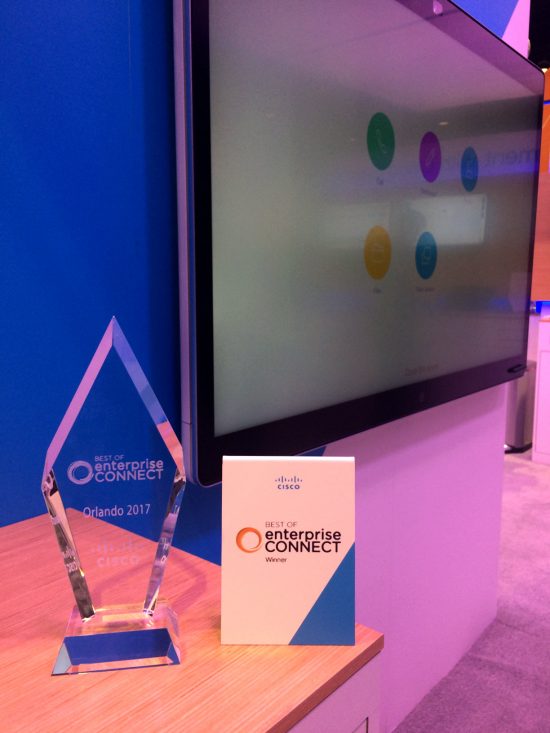
One of the highlights of my career was being part of the evolution and launch of the Cisco Spark Board. I almost felt the industry come alive with excitement when we introduced this revolutionary all-in-one collaboration device in January. Two months later, the excitement lives on as the Cisco Spark Board receives the award for Best of Enterprise Connect 2017.Best of EC17 Trophy

Within Cisco, we affectionately code-named the board “Darling” during development. We painstakingly worked to carry out our vision of the ultimate meeting room collaboration device. Our Darling does everything you need for effective collaboration in a meeting room: present wirelessly, whiteboard, and conference with audio and video. But Cisco Spark takes it beyond the physical meeting to connect people and teams before, during, and after meetings.

Innovation doesn’t always happen at a specific time in a specific meeting room. The time before and after a meeting is just as important for magical collaboration. That magic lies in the power of the Cisco Spark cloud-based platform. In my opinion, this award should go to the Cisco Spark Board and the Cisco Spark platform.

The Best of Enterprise Connect “recognizes exhibitors who have made significant technological advancements within the enterprise communications and collaboration industry.” We certainly feel the Cisco Spark Board lives up to the recognition based on the feedback we’re getting from customers and industry watchers.

We’re planning to do even more to make Cisco Spark Board experience even more magical and effortless to use. And we’ve still yet to feel the true impact of this incredible product in all the meeting rooms around the world.

Thank you, Enterprise Connect, for validating our vision.


Authors

Angie Mistretta

Chief Marketing Officer, AppDynamics

AppDynamics

Avatar

ICYMI:

This year, thousands of people met us at Cisco Live in Berlin and Melbourne to enjoy multiple days of education, networking and fun. The overarching theme – Your Time is Now – called attention to the immediacy of digital transformation. The innovation talks, various learning paths, seminars and demo zones all focused on tools that will enable the sustainable growth and prosperity of those who embrace the innovative changes needed to succeed in the digital era.

From IoT to Virtual Reality and Artificial Intelligence, the world of technology continues to evolve at a ground-breaking pace, with each new advancement promising to transform organizations. Sounds great, where do we sign up? First, it’s important to understand where to begin, what steps can and should be taken, how to manage the change, and goals now and for the future. Ruba Borno, Vice President of Growth Initiatives and Chief of Staff to the Office of the CEO, delivered the European event’s opening keynote, in which she addressed exactly this with Cisco’s vision, making clear that the secure network is the future-proof solution for digital transformation.

The Future Unfolds with Digital Transformation:

It is not only businesses that feed off of and contribute to the digital transformation engine; public sector entities also innovate by introducing new approaches to better respond to society’s needs. Important to this is the collaboration between public and private organizations at central, state and local levels.

The closing segment of Berlin’s keynote featured an important mash-up of Cisco, Deutsche Bahn, Charité and SAVD efforts of taking public mobility services to a new level with the medibus. Since launching last year, one medibus is in use 6 days a week to deliver health services to rural regions and underserved populations in northern Germany. Just last month, an elderly woman living in a small remote village and challenged with her ability to travel for healthcare needs received treatment for chronic diseases from arthritis to diabetes. Lacking a permanent local option, and if not for the medibus, this woman would’ve likely had to leave her family and relocate to an assistance home in the city. And a larger version of the medibus is the backbone of a large vaccination campaign of the medical center Charité in Berlin. It has enabled thousands of medical screenings and vaccinations in a few months with its highly productive medical office workflow and realtime VR translators in 70 languages.

https://youtu.be/Hwo1fBYzl4c

On stage with Ruba was key architect behind the medibus concept and Deutsche Bahn Chief Medical Officer, Dr. Christian Gravert, who was asked how this model can evolve in the future. Although Dr. Gravert did a magnificent job covering the vision and potential for reiterations of the medibus, we would like to re-address this important prompt to consider the larger picture. There is so much opportunity for this kind of mobile public service delivery platform that is worth ongoing thought and discussion.

Across the globe, we are seeing large population and demographic shifts that increasingly affect how governments, health facilities, and educators deliver imperative services. As seen in rural Germany in the medibus example above, many professionals in remote regions are also aging or migrating to urban centers, too, creating a vacuum to meet local public service needs. Truly smart, connected and secure innovations, like the medibus, will continue to help overcome these challenges.

Let’s first consider the possibilities for local government and citizen participation. For those who cannot manage travel or may not be able to afford the option to lose out on paid hours of work, the mobility services model of the medibus could be converted to a use case to enable alternative voting location options for popular elections.

We’ve already seen some of what this kind of innovation can bring to the field of health and wellness, but what about a step further? Health specialists can be hard to access and difficult to afford, perhaps the future of the medibus could be used to create affordable and more readily available delivery of specialist services like for family planning and mental health.

And possibly primary education school buses can have dual functions, both for student transport and for after-hours tutoring sessions to help those children that may need more attention.

There’s an endless stream of possibility; especially as we dive further and further into the world of digital transformation. We’ve only just begun to scratch the surface.

What’s On:

Follow us here and at @CiscoGovt for more exciting news and updates from upcoming Cisco Live activities in Las Vegas.

And for more information, check out our Cisco.com pages for smart cities, government, education and healthcare.

Authors

Cecile Willems

Director, Global Public Sector

Global Sales Organization

Avatar

Co-authored with Ali Sajassi, Distinguished Engineer, Engineering.

Ethernet VPN (EVPN) may be considered by some as the new kid on the block in VPN protocols. It is dubbed as next-generation all-in-one VPN technology that provides a wide of range of services such as E-LAN, E-Line, E-TREE, L3VPN, DCI, DC-Overlay, IRB, … These services were previously provided by different and disjoint VPN technologies such as VPWS, VPLS, SPB/TRILL and L3VPN.

Simplification comes to mind when you think about EVPN – indeed, EVPN is largely considered as a unified control plane solution that applies to many data-plane encapsulations (e.g. MPLS, Segment Routing, VxLAN, NvGRE, …)

In that respect, we are currently witnessing a strong traction for this technology in many market segments – Data Centers, Enterprise and Service Providers.

Although having a single control-plane protocol based on BGP that does the job of several different VPN protocols can be a compelling driver, it may not be the only reason why so many major networking vendors and customers are currently embracing EVPN.

So, why should you care about EVPN?

It’s simple – EVPN not only does the job of many legacy VPN technologies but it does it better than each one of them in a one-to-one comparison. In other words,


The whole is greater than the sum of its parts


Let’s see why EVPN makes a difference compared to other legacy solutions.

E-LAN services

VPLS has been the VPN technology of choice for delivering E-LAN services but had some limitations from day one.

EVPN has some noteworthy benefits over VPLS (be it tLDP or BGP):

  • It provides All-Active multi-homing (and not just dual-homing). Prior to EVPN, different vendors where using proprietary solutions for multi-chassis LAG to provide All-Active dual-homing. All these proprietary solutions required dedicated inter-chassis links which translated into additional links and thus line cards (e.g. increase in CAPEX). EVPN not only provides such solution without the use of inter-chassis links but it also provides it with unparalleled flexibility where a multi-homed device can be connected to N number of PE devices and a PE device can participate in dual-homing, triple-homing, quad-homing, … simultaneously!
  • Prevents loop for both All-Active & Single-Active redundancy even in transient states
  • Ease of use – ability to auto-sense what kind of access device or network is attached (e.g., LACP, MSTP, G.8032, REP, …) and auto-discover all other PE devices that attached to the same access device/network. Then perform Designated Forwarder (DF) election procedure to elect a DF for BUM traffic (Layer 2 broadcast, unknown unicast, and multicast) to/from the access device/network.

For further information, refer to RFC 7432, RFC 7623, and draft-ietf-bess-evpn-overlay-07.txt.

Layer2/Layer3 Overlay in Data Centers

EVPN not only does the job of 802.1Q, 802.1aq or FabricPath, but does even better by providing the following additional functionalities:

  • Maximizing bi-sectional bandwidth utilization in data center fabric by performing per-flow load-balancing to all multi-homing PE devices, even if a specific MAC/IP address is learned by only one of the multi-homing PEs! This is referred to Aliasing in EVPN lingo.
  • Fast convergence upon link/node failure by withdrawing a single route associated with each failed Ethernet Segment regardless of number of MAC/IP addresses sitting behind it (e.g., there can be 10K or 100K MACs). Withdrawing these routes results in remote PE devices to switch to other PEs in the redundancy group. This feature is referred to mass-withdraw in EVPN lingo.
  • Providing optimum forwarding within fabric for both intra-subnet and inter-subnet traffic simultaneously to avoid tromboning of traffic in DC. Intra-subnet forwarding is done via Ethernet switching therefore supporting all IP and non-IP applications in data centers and inter-subnet forwarding is done via IP switching to provide optimum forwarding among different IP subnets of a given tenant. This service is provided over a single virtual interface (attachment circuit) to the host/tenant and L2/L3 forwarding decision is made on a packet by packet basis.
  • Providing distributed Anycast gateway functionality
  • Flexible workload placement – e.g. VMs can be placed anywhere within the DC without constraints of rack boundary
  • Seamless workload mobility
  • Per flow active/active redundancy for dually attached servers using MC-LAG
  • Support for both IP and MPLS fabric

For further information, refer to RFC 7432, draft-ietf-bess-evpn-overlay-07.txt, draft-ietf-bess-evpn-inter-subnet-forwarding.txt, draft-ietf-bess-evpn-prefix-advertisements.txt.

E-Line services

EVPN not only does the job of traditional VPWS (either tLDP or BGP), but it also provides the following additional functionalities:

  • Support of segmented service tunnel across multiple domains with ease
  • Support of P2P service between a pair of CE devices that are multi-homed to a set of PE devices and operating in All-Active mode. Prior to EVPN, such service was simply not possible!
  • Providing auto-discovery & signaling via single protocol (based on BGP)
  • Providing local switching with All-Active multi-homing w/ optimum forwarding
  • Providing new services such as Flexible Cross Connect services

For further information, refer to draft-ietf-bess-evpn-vpws-09.txt and draft-sajassi-bess-evpn-vpws-fxc-01.txt

E-TREE services

Compared to VPLS, EVPN delivers E-TREE service with the following additional functionalities:

  • Very efficient filtering – when a traffic is originated from a leaf and destined to a leaf, it is dropped right away at ingress PE
  • Flexible support of leaf/root site connectivity where root/leaf designation can be attachment circuit or per MAC address.

For further information, refer to draft-ietf-bess-evpn-etree-09.txt.

Layer3 VPN services

EVPN complements existing IP VPN solutions by providing the following additional functionalities:

  • Ability to provide multi-homing service to a CE device while only a single IP peering session is maintained from the CE device
  • Ability to provide rapid failure detection, minimal fail-over time, and make-before-break paradigm for maintenance for such multi-homing scenario

EVPN brings availability and resiliency of IP VPN services to the next level.

For further information, refer to draft-sajassi-bess-evpn-l3vpn-multihoming-01.txt.

If you’ve missed my previous blog on EVPN, have a look at it.

Authors

Frederic Trate

Marketing Manager

Service Provider Business Architecture, France

Avatar

It can be tough for small and medium-sized businesses (SMB). They need to compete with the deep pockets of bigger organizations who can provide top-notch wireless access to customers, vendors and employees alike. But finding cutting-edge wireless network solutions that won’t break the bank, are easy-to-deploy and don’t take up a lot of space can seem impossible.

It can feel as if the playing fields aren’t level.

Now Cisco is stepping up to help. Today, Cisco released a new suite of products that will make small businesses and mid-market customers very happy with a new wireless network—and its price tag.

Management made easy
It all starts with an updated version of Cisco Mobility Express — the easy-to-use management software for Cisco wireless products. With Mobility Express organizations can quickly deploy a low-cost, high-performance solution. That sounds great, but what does it mean?

Mobility Express now supports up to 100 access points and can be configured in under 10 minutes, without any IT experience. Affordable for any sized business, Mobility Express has embedded the intelligence features of a Cisco WLAN controller into the Access Points. This means you get Enterprise-class wireless features without having to manage another network appliance. High-performance means that Mobility Express supports the latest 802.11ac Wave 2 standards and other features previously available only in high performance standalone WLAN Controllers. A small or medium-sized business will now be able to offer the same high-speed, feature laden network that larger organizations use.

What features? Check these out:
• Optimized Wi-Fi Connectivity and Prioritized Business apps: Through collaboration between Apple and Cisco, these innovations automatically turn on fast and efficient roaming for iPhone and iPad on your Cisco wireless network. It also enables a “fast lane” giving IT control to easily prioritize those apps that are most important for your business. The benefits of this collaboration are quantifiable too, as tested in this Cisco office:

o 100% decrease in disconnected calls.
o 86% reduction in loss of video.
o 50% reduction in major audio/video issues.

• Presence Analytics: Our Connected Mobile Experience (CMX) Cloud solution allows you to connect with your customers in a way that you’ve never been able to before. Whether it’s making Wi-Fi guest access simpler through easy guest onboarding, analyzing visitor behavior through presence analytics or engaging with your customers and offering a better personal experience while delivering them relevant content, you’ll be able to do it with CMX.

• Application Visibility and Control: You can’t control what you can’t see. Now you can get complete understanding of exactly what applications are running on your network.

Consider the playing field levelled.

Indoor and outdoor
Cisco has also released two new wireless access points (APs) that are both 802.11ac Wave 2 compliant. The Cisco Aironet 1815 Series Access Point is for indoor use while the Aironet 1540 Series are for extending your network outside.

The 1815 Access Point series is made up of four, low-cost, sleek devices, which are easy-to-deploy and manage thanks to Mobility Express. These access points are perfect for retail, educational organizations, those in the hospitality world and for tele-workers.

The four access points are:

• 1815i provides enterprise-class connectivity at a small business price point.
• 1815t is designed specifically for teleworkers and micro-branch deployments.
• 1815w is created to be mounted to walls and is perfect for hotels, residential halls or other multi-dwelling units.
• 1815m is ideal for budget-conscious organizations, this access point is more powerful and covers larger areas.

While possessing similar functions to the indoor access points, the 1540 Series APs are made specifically for the outdoors. With its favorable price-point, ability to support 802.11ac Wave 2 standards and Mobility Express deployment, the Aironet 1540 is also tough enough to withstand the wilds of nature. The outdoor access points are perfect to provide extended access whether in outdoor shopping malls, truck stops or spreading your wireless network to the rest of your outdoor campus.

Growing with you
When your business inevitably grows, you’re going to want to take your network with you. The best way to do that is by investing in another newly announced product: the Cisco 3504 Wireless LAN Controller.

The 3504 can support more access points (up to 150) and more clients (up to 3000). This means that your growing business can keep the Cisco products already deployed in your infrastructure. Just launch the controller and add additional access points when needed. As you get more traffic on your network, the 3504 can keep up because it is designed to handle 802.11ac Wave 2, high-bandwidth traffic through its Multigigabit Ethernet ports. It’s not just more support and larger bandwidth, the 3504 comes complete with a rich feature set that provides more control and gives greater visibility into your network.

It’s easy to see why the 3504 controller is going to be the top choice for organizations with growth on their mind.

We know that running a business is tough. We’re hoping that these new wireless products from Cisco will help make things a little easier. To learn more, click here.

Authors

Prashanth Shenoy

Vice President of Marketing

Enterprise Networking and Mobility

Avatar

In today’s episode, it’s really all about the Cisco keynote presentation from Jens Meggers and some pretty cool demos. If you missed yesterday’s post, check it out here.

First off, thanks to everyone who followed my advice in yesterday’s post and visited the Cisco booth. From what I witnessed, you all did a very good job of getting fingerprints on the Cisco Spark Boards in the demo space. Nicely done, everyone! (See secret footnote below…)

Today was the first day of main stage keynotes with Cisco, Twilio, and Amazon Web Services on the morning agenda. It was an interesting morning with three very different presentations. I’ll focus on the first one since it had the better slides (IMHO) and required two overflow rooms to accommodate people who didn’t fit in the main venue.

I asked people in the hallways and at lunch for their impressions about the keynotes. There were two consistent threads in comments about the Cisco presentation: First, Jens Meggers looks like he’s having fun when he’s talking about Cisco Spark. Second, the demos of the new and “coming soon” innovations were really cool. I’ll agree on both points.

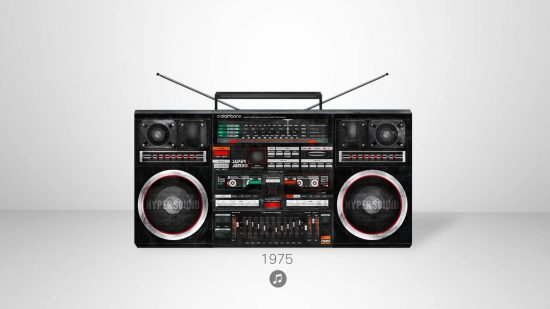
Boombox, circa 1975
Boombox, circa 1975

Jens focused on the theme of experiences from two anglesCisco develops technology based on experiences, and technology is changing how we experience things. Like music. It’s a great example.

The boombox introduced us to the concept of portable music in 1975. Today, we can stream music from the cloud today — without the need for a couple of pounds of short-lived D-cell batteries. The technology behind the scenes is essentially invisible. Once upon a time, it was eight-track or cassette tape. Now it’s not even a decision of file type.  Pick the song you want, press play.

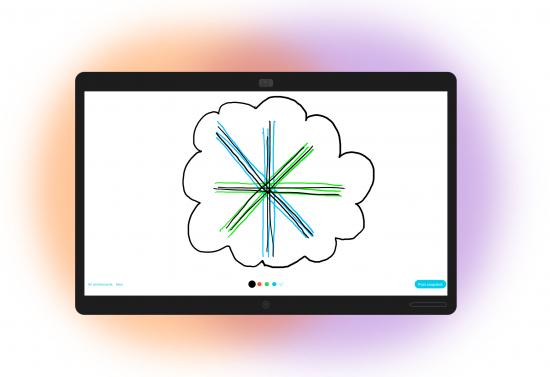
An advantage of presenting about collaboration technology has to be the fact that you can actually use the products as part of your presentation. He used the Cisco Spark Board to tell the story of how our engineering teams brought “the best stuff together” to create one experience: Cisco Spark. And the sketch – all those pieces overlapping. One of the engineers called it: “the da Vinci Code of Cisco Spark collaboration.”

You’ve heard enough from me today. I’ll leave you with two things: A quote and an opportunity to push play. Here’s the quote.

If a picture is worth a thousand words, then a video is worth a million.
Nothing has as much impact as the moving image.

—Barry Levinson
Academy Award-winning director, screenwriter, and producer

I could write a thousand words about the keynote, but I’ll give you a million instead. Watch the keynote and let me know what you think in the comments below. Here’s the opportunity to push play:

https://youtu.be/P8sbBeCrYEI


On Tap for Wednesday

  • 9:05a ET: See what Cisco’s Richard Townhill has to say on the general session panel “Messaging & Team Collaboration: Overhyped or Next Platform?”
  • 11:30a-4:00p ET: It’s the last day for the exhibit hall. Don’t miss your chance to catch the Cisco demos, now is your chance.
  • All day: Get highlights from @CiscoCollab. Follow me at @ciscokima for live-tweeting and random observations – conference wireless willing… Sigh.

Not-so-Secret Footnote: Our technical marketing engineers probably appreciate that today’s attendee lunch involved silverware, leaving cleaner prints than yesterday’s box-lunch sandwiches. Honestly, I didn’t ask them if they did. I didn’t want to tip them off. No one needs to tell them that I’m encouraging the whole “fingerprints on the demo equipment” routine. Shh…


Authors

Kim Austin

No Longer with Cisco

Avatar

April showers brings May flowers but if you are in Germany in late April, Hannover Messe is the breeding ground for innovation in the global manufacturing industry. HM is the largest Manufacturing show in Europe and due to the advancements that are being made with Industrie 4.0 and Industrial IoT around the world, this is the show to learn where the industry is heading.

This year Cisco will have a large presence at Hannover Messe 2017 and we invite you to see how we are helping customers in the manufacturing industry and working with leading partners to deliver real business outcomes.

We will be highlighting how ‘There’s never been a better time to securely digitize manufacturing’ and the key pieces on how to do it:

  1. Secure Connected Factory: how to enable a Digital Factory and how we help customers move data from sensors to data analytics areas so they are able to convert the data into intelligence.
  2. Secure Connected Assets and Supply Chain: how to integrate islands of automation including better managing energy consumption in factories. You can react to trends and manage your overall operations where we are developing supply chain hubs and interaction points to ensure communications are available across a supply chain.
  3. Secure Connected Worker: how to leverage communications, Collaboration, and our industry leading communications platform to allow industrial customers to react and collaborate when needs occur.

We will be working with our industry partners Rockwell Automation, Intel, Panduit, and NetApp, as well as many others to highlight that Industrie 4.0 is not something that can be achieved with one vendor, but with multiple partners that cross both the operational technology and typical IT departments as well.

I look forward to seeing you in Hannover as we work through digital transformation together at our booth located in Hall 8.0, Stand C13.

For more details, check out our event site here.


Authors

Martin Dube

Managing Director, Sales

Digital Transformation Group, Manufacturing