Avatar

Our 4th Annual CSO Women’s Professional Development Day, hosted by Cisco’s Corporate Strategy Office, was held in San Jose last week. Aimed at providing education, development and inspiration to employees from Cisco, customers and partners, this year’s event was incredibly well received, with over 450 attendees from 11 locations across the U.S.

Events such as CSO Women’s Day are a vital forum to put topics such as diversity and inclusion out there that we all – regardless of gender — have a stake in addressing. Creating a ‘safe space’ to have the conversation and share our stories is a great way to drive empowerment, inclusion and change.

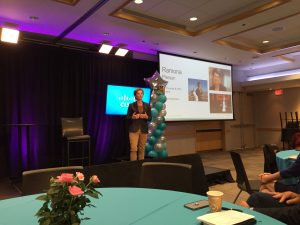
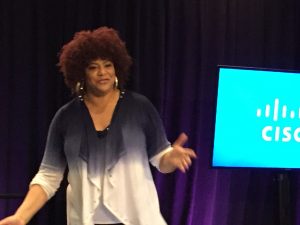
The speaker line-up for CSO Women’s Day was incredible – beginning with hilarious and thoughtful advice from actress Kim Coles, a powerfully motivating talk from Declara founder Ramona Pierson, a Ted Talk panel with Tea Collection founder Emily Meyer, Apple VP Isabel Mahe, Scale Venture partner Kate Mitchell and Coursera COO Lila Ibrahim, to a genuine and thought-provoking speech from Recode editor Kara Swisher. We closed the day with a fun and interactive session with Stand and Deliver’s Michelle Johnson to learn high-performing communication in leadership.

Our event theme was originality, however, there are a few key learnings that I think of when considering diversity, inclusion and leadership….

  • Walk through the door with your whole self. It makes you, your team and those around you better.
  • Talk about the tough issues you face. Don’t be afraid to share and discuss things in the workplace that may be uncomfortable.
  • Bring the people behind you along on the journey. Share the richness of your experience so the next generation can succeed.

I’d like to hear from you what steps you take to foster diversity and inclusion in your workplace. Join the conversation on Twitter using #CSOWomen #WeAreCisco

IMG_2608

IMG_2604

IMG_2605

Authors

Hilton Romanski

No Longer with Cisco

Avatar

I grew up playing the violin. My teacher always asked “If you can’t hum the melody for the song you’re playing, how can you expect to play the song well?”

I’ve found that the same goes for the business world. If you don’t innately understand the products you’re selling, you can’t be completely successful. So it’s no surprise that we’re heavy users of our own stuff in the Cisco Collaboration business. And today, the tools we’re using seem to be more and more team-focused. No, not a group of people in a directory structure, but myriad small groups–from inside and outside the company–that form quickly and move even faster.

Yet, no matter how well you understand your products and their benefits, you sometimes need a little external validation to make sure you’re not just drinking your own champagne. Sure, sales data and analyst reports are important barometers, but there’s nothing like good old-fashioned research.

So we sponsored a report by Harvard Business Review Analytic Services to test a hypothesis: Are other businesses encountering the same collaboration paradigm shift? What are they doing about it?

The report, based on survey responses from more than 300 executives from midsize to large enterprises from around the world, begins by uncovering the key drivers to business success today. The results point to a heavy emphasis on the structure, speed, and nature of teamwork:

  • Over the past two years, nearly 3 of every 4 respondents say that effective team communication has become the most important aspect of collaboration that successfully enables key business imperatives.
  • Meanwhile, the idea of team has morphed to include both internal and external participants, comprising partners, suppliers, topical experts, and customers.

The report continues with a series of insights and recommendations on what business leaders should prioritize to foster optimal collaboration solutions for their teams:

  • Avoid the things that hamper collaboration solution effectiveness, including these top three:
    • Lack of use
    • Lack of integration with business processes
    • Lack of alignment with user workstyles and preferences
  • Seek solutions that are:
    • More efficient, in that they consolidate the most effective solutions and are easy to use
    • Integrated with business processes that coincide with top business imperatives
    • Optimized for mobile devices and work

In addition to survey data, the paper also includes unique first-hand insights. Robert Cross, a management professor at the University of Virginia, shares several anecdotes and perspectives on what can help us make collaboration more efficient. For example:

“High-value workers are very quick to switch to the collaboration tool that’s most effective for the task at hand.”—Robert Cross

The report will help you understand why Cross asserts this point, as well as how other experts and organizations believe collaboration solutions are changing to better serve today’s agile, digital teams.

To net it out:

  • There’s a shift to new types of teams of people inside and outside your organization.
  • These groups are unequivocally critical to your organization’s success.
  • And they are seeking new solutions to keep up.

What do you think about this? Old hat? News? Or perhaps it validates a hunch and now you can learn what to do about it.

Regardless of where you stand, I encourage you to read the report and let us know what you think. There’s no doubt that teams are the lifeblood of your business and are critical to achieving desired business imperatives and staying ahead of your competition. But do your teams have the tools they need to hum to the new tune of modern collaboration?

Download the report and let us know what you think.


Cisco Spark is built for today’s “digital teams” that need to connect, create, and share with anyone, anywhere, anytime. Have you tried Cisco Spark yet?

Authors

Jeff Marusak

Sr. Manager

Global Service Provider

Avatar

When it comes to learning, particularly at the organizational level, one of the major problems we run into is this sort of “evolve or die” mentality.

We live in a world that seems almost predisposed to tell us where we are weak. When you ask most people to point out their weaknesses, the answer comes rather easily. Ask them about their strengths and that tends to be harder for most people to detect. In fact, for most individuals, they aren’t likely to recognize their own strengths unless someone else points it out to them.

In their 2003 research paper, “Investing in Strengths,” Donald O. Clifton and James K. Harder of the Gallup Foundation put forth the idea that our talents are our greatest opportunities for success. This wasn’t a new idea at the time, and it isn’t a radically new idea now. However, when you really look at the structure of most learning programs and organizations, it becomes pretty obvious that time and investment is being placed on weaknesses rather than strengths.

At the childhood level, certainly more emphasis must be placed on weaknesses. It’s important for students who struggle with reading, for instance, get extra help and encouragement in this area. However, when it comes to most corporate learning environments, that mentality seems to continue. The focus tends to be on building upon people’s weaknesses rather than investing in developing employees’ strengths.

(Rock and Wasp)Shutterstock
Photo via Shutterstock

A few years ago, Pew Research conducted a study examining this situation. Researchers decided to look at two groups of people: 100 slow-to-medium readers and 100 high-performance readers. Both groups were sent to a speed reading course.

Perhaps unsurprisingly, those in the lower group saw an average of 150 percent improvement.

What was less expected was that the high performers saw an average of 700 percent improvement. In other words, their strengths were multiplied by seven times!

According to Clifton and Harder, “When people become aware of their talents, through measurement and feedback, they have a strong position from which to view their potential. They can then begin to integrate their awareness of their talents with knowledge and skills to develop strengths.”

This provides organizations and individuals with huge opportunity. People who use their strengths every day are six times more likely to be engaged on the job, according to Gallup’s State of the American Workplace Report.

Truly good managers will work to ensure that teams have a mix of strengths and weaknesses. In a collaborative environment, everyone is able to build together and ultimately achieve more. A team with a mix of talents harnesses the power of togetherness to learn to build upon strengths, not just shore up resources. The aforementioned Gallup report found that when managers focused on their employees’ strengths, active disengagement fell dramatically, to about 1 percent. Imagine if this could be applied to all workplaces – productivity would soar.

Organizations must work to help individuals identify their strengths, and provide access to the people, communities, courses and other tools needed to build on these strengths. In other words, companies shouldn’t be focusing on the idea that they must evolve or die; the key to truly succeeding is through collaboration and harnessing the power of individuals’ strengths. That’s why Cisco created the Collaborative Knowledge platform.

To learn more about how this platform helps organizations and their employees identify strengths and access knowledge and resources in real-time, anyplace and anywhere, visit: https://collaborativeknowledge.cisco.com/index.html

Authors

Ryan Rose

Director of Product Management for Skills & Certifications

Cisco Learning & Certifications

Avatar

Today wireless is taking on a new role for retailers, hoteliers, and sports venues to engage with their customers. No longer just a tool for the supply chain, the intimacy of Wi-Fi provides new opportunities to build customer loyalty, increase engagement, and gather metrics that help you understand your consumers better. For this reason, about half of all large stores now have some sort of Wi-Fi implementation (Retail Research Systems, 2015).

However, such services also create new deployment challenges. Store designs, fixtures, and layouts can inhibit your ability to capture detailed shopper data by interfering with the signal. With Wi-Fi emerging as the foundation of in-store analytics, you need to incorporate new considerations into property designs, layouts, fixture selection, and merchandising strategy. In other words, you need to design your space to achieve an optimal connection with your customers.

Of course, no one expects retailers to create site designs just to accommodate the technology – that would be impossible. Brand and merchandising requirements are and will remain paramount. However, I’m seeing that operators need to be more aware of the impact design and layout can have on their ability to cost-effectively leverage Wi-Fi networking. The more interference in the store design, the more expensive it can be to deliver a robust customer engagement. Some examples include:

  • Fixture Design: Each fixture’s height, material, and density can affect location capabilities. Especially, material and density can affect accuracy as the fixture reflects and weaken the wireless signal. Mirrors and metal have the greatest impact on your ability to capture precise information. Wood and clear glass, on the other hand, have a fairly nominal impact.
  • Ceiling Height: If the ceiling is too high, the coverage area becomes widespread, signal gets weaker, and the device will not have enough precision.
  • Building Materials: I’ve seen instances where back rooms and fitting rooms are surrounded by concrete and metal.  This not only impacts location but any wireless technology, limiting shopper access to guest Wi-Fi or associates’ ability to leverage their mobile productivity tools.

How do you address these issues?

You can’t change the laws of physics, but you can work with them. First, be sure you have a technology services partner experienced in how to survey and assess your space for optimal data-gathering. This will give you an accurate picture  of how your property’s design can enable the Wi-Fi signal, when you need to reconsider fixtures or displays, and where additional access points, cameras, or sensors should be installed.

Second, be sure the platform you select can support both today’s needs and tomorrow’s forward-looking capabilities. This will protect your investment as well as position you to design unique new environments to make your property an exciting destination.

For example, you can create mobile zones that vary across your site: Using mobile phones, AppleWatches, or other devices, guests respond in real time to product information, displays, or departments depending on their location. A stadium may make the food court an interactive gaming area that lets guests play for prizes on an opt-in app. Shoppers can select the music video being broadcast in each store department, and insert their selfie or social post into the broadcast. Hotel guests can get a unique online training from a workout coach based on where they are in the gym.

On the operations side, look at site designs that make your business more cost-efficient. For example, some retailers are building foil curtains to create priority zones where they have the ability to track the most precise analytics. Zoning the back room, the receiving area, and the “front of the house” allows them to better manage stock in real time, and assure that staffers are more responsive to shoppers.

With layouts designed to optimize the Wi-Fi network, you can use it to capture the precise location of mobile devices. You can perform path analysis, in which the network helps track customer behavior including location, routing, and dwell times. You can also do advanced conversion analysis to determine how many customers are actually entering the space, venturing into specific departments, and ultimately making purchases. Such metrics help to determine the effectiveness of marketing efforts, point of purchase and merchandising, and customer support.

This level of information will become more important as shoppers, associates, and operations teams turn to mobile technology for outstanding service and brand experiences. As you consider how to deploy the powers of wireless, think not only about how to build Wi-Fi considerations into your change process, but also about how to use them to reimagine your property and improve your business.

What has your experience been? Follow us at @ciscoretail, follow me @paloaltoed.

Authors

Ed Jimenez

Business Transformation Lead

Retail & Hospitality

Avatar

KR03016

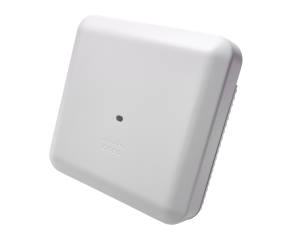
It’s a question that needs to be asked: when you’re looking to upgrade your network, why wouldn’t you immediately choose Cisco? For the second straight year, Cisco 802.11ac Wave 2 Access Points crushed their competitors in an independent test.

Miercom, a nonpartisan testing lab, recently pit the Cisco Aironet 2800 and 3800 Access Points against the Aruba AP-335 APs to see which company has the better 802.11ac Wave 2 device. The answer: it’s not even close.

When testing, Miercom focused on five distinctive areas:

• Throughput with up to 150 clients
• Maximum video-streaming clients
• Multi User-Multi Input, Multi-Output (MU-MIMO) support
• Auto radio frequency assignment abilities
• Ability to assess and adjust to interference

The Cisco Aironet 2800 and 3800 proved that it was the right access points for all of these jobs. The Aruba AP-335 wasn’t anywhere near the Aironet 3800 in terms of maximum AP throughput. In its dual-band mode, the Cisco Aironet 3800 measured 1014 Mbps of throughput compared to 717 Mbps for Aruba. When both radios supported a 5GHz band, the Aironet 3800 “achieved an impressive 1,688 Mbps throughput with two 5GHz clients,” the report stated.

In testing geared to supporting 150 clients, the Aironet 2800 trounced the AP-335. The Cisco AP’s aggregate throughput was 807.5 running on dual 5GHz radios and 558 running on dual 2.4/5GHz. The Aruba throughput was 484.5 running on dual 2.4/5GHz, the Aruba throughput was limited because Aruba APs do not support both radios operating in 5GHz.

Unwanted interference can greatly harm the quality of the Wi-Fi network. Out of four non-Wi-Fi interference sources, Aruba only identified two. The Cisco Aironet 2800 found all four sources, and adjusted the channel accordingly to avoid to the interferer.

When it came to assessing and adjusting for unwanted Wi-Fi interference aka excessive coverage, Miercom stated, “Only Cisco’s dual-band Cisco Aironet AP can dynamically reconfigure its 2.4GHz radio to be a 5GHz radio and run both simultaneously, significantly increasing channels and 5GHz device throughput.”

Aruba’s Adaptive Radio Management (ARM) doesn’t come close to matching the awesomeness that is Cisco’s Flexible Radio Assignment (FRA). Miercom reported that Aruba’s distributed ARM produced “inconsistent results”. Using FRA, Cisco found additional channels by automatically switching radios from 2.4GHz to 5Ghz. Also, each access point makes Aruba’s ARM decisions, while Cisco’s FRA decisions are made at the Wireless LAN Controller. This resulted in “a more stable set of channel choices across all six cooperating APs.”

Even when Aruba holds the edge, Miercom concluded that it wasn’t a big deal. For instance, the Aruba AP-335 supports four MU-MIMO spatial streams to the Cisco Aironet 2800 Access Point. But Miercom said, “this [feature] offers no advantage over the Cisco 2800 AP.”

Last year Miercom found that the Cisco Aironet 1830 and 1850 Access Points were demonstratively better than the Aruba and Ruckus access points.

To read about this year’s results, please click here to visit Miercom’s site and download the report for yourself.

Authors

Byron Magrane

Product Manager, Marketing

Avatar

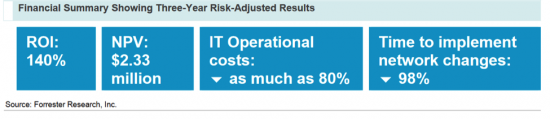
Forrester Consulting recently conducted an analysis of customers using TrustSec software-defined segmentation in production networks and deduced the following:

Forrester2

This matters today as network segmentation in the branch, campus and data center is a critical foundation for any network defense. Effective segmentation helps protect key assets and data while preventing the dangerous lateral movements of hackers and ransomware. But the use of VLAN or firewalls is complicated, human resource intensive and not precise enough to provide the micro segmentation and control you need to separate and protect IoT, BYOD, and guest devices.

TrustSec software-defined segmentation is a micro segmentation technology embedded and available in most Cisco network devices shipping today so your costs to use it are relatively negligible. Since it obeys software-driven policies that are managed in ISE (Identity Services Engine) it’s easy to create precise rules to separate device classifications, such as BYOD, Guest, lighting systems, and video surveillance into separate segments across your branch, campus, and data center networks. Because you can control lateral movements as well as protocols between peers in a micro segment, such as ICMP, you can effectively stop the target discovery and takeover of hackers and malware using your network as an enforcer. TrustSec security inside the network complements next generation firewalls that provide perimeter protection and even improve firewall operations by dramatically simplifying firewall rule management.

“With TrustSec, you have no bandwidth restrictions versus the firewall approach. So we have less investment risk with TrustSec. And from an operational cost point of view, TrustSec is quite inexpensive.”

Head of network services, organization interviewed by Forrester.

Here is a list of ways TrustSec is saving customers:

  • Faster time to market for project roll outs
  • Simplified and automated firewall rule management plus associated operational savings
  • Improved regulatory compliance
  • Consistent and effective network segmentation
  • Simplified security engineering with simplification of security policy
  • Improved agility and ability to scale security policy
  • Increased security posture for the network

Get the full September 2016 commissioned study, The Total Economic Impact™ Of Cisco TrustSec, conducted by Forrester Consulting on behalf of Cisco, here.

For more information on Cisco Trustsec go to: www.cisco.com/go/trustsec.

Authors

Andrew Peters

Senior Manager for Product Marketing

Avatar

Have you ever imagined what your car, phone, laptop, or anything you own for that matter, would say if it could speak? I think my phone would tell me to stop dropping it.  My car would beg me to get it washed.

What if the routers that have been powering your branch network all these years could talk?  What if they could talk to each other?  Something like this might happen:

https://youtu.be/pFYpslma8A0

In order for your organization to move faster, more efficiently, and more securely, your network needs to transform.  And since the branch is where 80% of your employees and customers are served, the branch needs a solid network foundation.

The Cisco ISR 4000 Series is built on the Cisco Digital Network Architecture its features deliver the network requirements for the digital organization.

  • Insights and Experiences: Visibility and real-time analytics to ensure application experience
  • Automation and Assurance: Automated provisioning for faster SD-WAN deployments
  • Security and Compliance: Industry-leading threat defense and secure WAN
  • Virtualization: Simplified operations and deployment of virtual network services

So what should you do?  Read this guide on how the ISR 4000 series stacks up against its predecessor.  Use the Router Selector to help you choose the right router for your branch or store – whether you are acquiring a new router or upgrading an old one.

Please do let me know what your router says the next time you see him (or her).


Authors

Allison Park

Product Marketing Manager

Enterprise Networks

Avatar

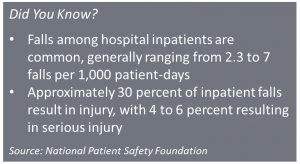
Studies show that up to 15% of patients may fall one or more times during their hospital stay – with some incurring a serious injury. Traditionally, 1/1 patient sitters have been used to help prevent falls and alleviate the risk of patient roaming.  While this is a viable, albeit costly, solution, it is fraught with staffing, reimbursement, and efficiency challenges.

Cisco Virtual Patient ObservationFall Stats (VPO) is a video-enabled approach to patient sitting that leverages your hospital’s existing network. With VPO, a single well-trained observer can watch 8 or more patients at the same time from a centralized control room.  This modern approach brings a new level of efficiency to patient observation enabling you to free up staff, save time, and better utilize funds. And since VPO runs on your hospital’s existing network, it minimizes your IT costs.

You might be skeptical, and you might wonder how a remote patient sitter can respond quickly. In this video, you can see how VPO is already making a difference in the telemetry unit for North Suburban Medical Center in Colorado by providing a safe environment for patients, easing workflows for nurses, and providing efficiencies and cost savings for the hospital.


Some of the benefits of Cisco VPO for you and your healthcare organization are:

  • Observe more patients with fewer sitters
  • Improve efficiency and workflow
  • Minimize patient sitter scheduling challenges
  • Reduce unreimbursed patient sitter expenses
  • Enable staff to operate at the top of their license, improving job satisfaction

There are also significant benefits for patients and their families:

  • Ensures at-risk patients aren’t left alone
  • Assures family members that their loved ones are safe and well cared for
  • Provides less-intrusive observation
  • Relieves family member responsibility to watch over loved ones

To find out if Cisco VPO can make a difference for your organization, contact a VPO Specialist or your Cisco account team now.


Authors

Joyce Perrelli

Healthcare Program Manager

America’s Field Marketing

Avatar

I just wrapped up an incredible three days at the National Association of State CIO’s (NASCIO) Annual Conference. The event is the largest gathering of state government IT in the country. I loved getting to hear best practices, discuss challenges, and swap stories with the best and brightest minds across all 50 states. I know not everyone was as lucky as I was to travel to Orlando for the conference this year, but I wanted to share some of my takeaways from the speakers, sessions, and networking I partook in.

One thing I can’t stress enough is the importance of the CIO. For those of us on the industry, nonprofit, or academic side, NASCIO’s Annual Conference gives us a peek into the life of a state government CIO. They are the ones driving real transformation across all departments and are the unsung heroes of government digital transformation. These CIOs are navigating a very complex environment, having to support such diverse businesses as Health and Human Services, Natural Resources and Transportation. As the former Colorado State CIO, the benefits these CIOs have been able to realize through digital transformation, even in the complex environment they are in, is incredible!

Another big trend that I heard over and over in Orlando is that states are accelerating their shift from the traditional model where they provide all services to a facilitator model – that is, “IT as a Broker”. The new thought process is to stick with what they do well – supporting all of their different lines of business – while using a combination of shared services, cloud and managed services from the private sector when an industry partner is more efficient at providing them.

I think it will come as no surprise that cybersecurity was a big topic of conversation at NASCIO 2016. In the NASCIO survey, “The Adaptable State CIO”, 83% of CIOs responded that only 1-2% of their IT workforce is focused on cybersecurity, which is an increasing concern at all levels of government. While most state government officials are more aware of the risks posed by cyber threats than in the past, there is significant competition for tight budget dollars and unfortunately, funding IT often takes a back seat.  This is an opportunity to educate key decision makers in the legislature and executive branch on the importance of cyber and for industry to play a key role in combating these threats.

Many CIOs are also concerned with some of the more government-focused parts of their roles – in particular, procurement and budgets. State CIOs have made significant progress is moving IT from the backroom to the boardroom over the past five years. Now, the next drive is to bring it to the capitol and work with legislators who prepare the budget for the city or state. Educating these elected officials on the importance of digital transformation in government is critical if the budgets for protecting state assets and data is to be funded.

Lastly, while cities have been adopting IoT rapidly, most states are just beginning to investigate how IoT will impact state processes, infrastructure and cybersecurity practices. This is a particularly exciting time, and I look forward to seeing how states implement some of these digital government tools on a larger scale for even greater impact.

Overall, I had a great time learning from state and local government experts and am already looking forward to next year’s NASICO Annual Conference! You can see more highlights from the event on my Twitter account, @LeahELewis, or on Cisco’s U.S. State & Local Government Twitter account, @CiscoStateLocal.

Authors

Leah Lewis

Director

Public Sector Consulting Services