Avatar

By Sean Welch, vice president and general manager, Cable Access BU, Cisco

It wouldn’t be a Cable-Tec Expo without our own Ron Hranac parading a convention badge with a trail of award ribbons cascading nearly to his knees. After all, he’s been a (very) active SCTE member since 1979, and is a self-diagnosed RF junkie.
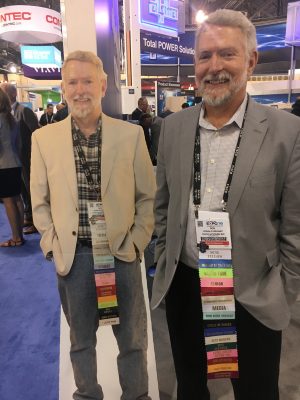
ronThis year, Ron picks up another accolade — and a big one — in the Society’s Excellence in Standards award. It’s safe to say that since he became part of the prestigious SCTE Engineering Committee, as chair of the Network Operations Subcommittee and Network Operations Subcommittee Working Group #1, he’s left his fingerprints on 30+ technical standards and operational practices.

It’s a well-known fact, in standards circles, that Ron rather enjoys being an “editing pest,” going through standards proposals with a fine-tooth comb … especially glossaries and abbreviations. (A word to the wise: Make sure you’re actually talking about an “acronym,” and not an “initialism,” around Ron … found that out. 😉

As one of his nominators said: “He’s very attentive to the details of our new standards and operational practices, offering a seemingly unending list of ways to improve them, from grammar and format, to technical methods and terminology.”

Because he’s naturally fascinated with RF in general, and HFC (hybrid fiber coax) in particular, he tends to go above and beyond any variation of “business as usual.”

When lots of us were starting to examine the threat of LTE-U to Wi-Fi throughput, Ron was out in the field, investigating claims by mobile carriers that cable signal egress was interfering with the traffic being received by their LTE towers. He and the NOS WG1 team subsequently published a technical report and operational practices to help service providers deal with the interference complaints, going so far as to work with ComSonics to build an iPhone app for it. (!)

We wholeheartedly agree with the choice to award Ron’s efforts. His work to develop and publish operational practices and technical reports about UHF signal leakage, ingress, and direct pickup interference — not to mention serving as lead editor of the SCTE/ISBE’s Journal of Network Operations — is both substantial and far-reaching.

Naturally, we here at Cisco are feeling grateful and proud to count Ron Hranac as a member of our team. Plus, it’s just always great to see a good person get well-deserved recognition!

He’ll receive the award at the Wednesday luncheon. For those of you who won’t be there, I’ll make a solid wager that his response will reflect the spotlight onto his standards-setting colleagues, both in the NOS working group and the SCTE at large. He’s very much a “standards and specs are a team effort” and “no one person does it all” kind of guy.

And if you’re wondering (we were!), the answer is no: We’re told there’s no ribbon associated with the Excellence in Standards award. But if this year is like years past, upwards of 15 ribbons will be fluttering off his Expo badge. Be sure to give him a high-five!


Authors

Greg Smith

Sr. Manager, Marketing

Cisco Solutions Marketing

Avatar

detman-1-e1474315967305By Daniel Etman, Director of Product Management, Cable Access Business, Cisco


Cisco is leading the discussion about virtualizing network functions this week at the SCTE event in Philadelphia. By providing an open and programmable software-based platform that can support both data and video processing in headends and data centers, cable operators can simplify and automate their operations enabling them to deliver scalable services at web velocity.

As Cisco was executing on its virtualization strategy for its routing and mobility portfolios we started designing the building blocks for virtualizing the CCAP and moving it into the cloud. Our engineering teams started working on a solution with improved efficiencies at several levels compared with a traditional CMTS solution:

  • Easier scaling of CMTS processing power – simply add more cloud resources when needed
  • Reduced power, cooling and physical footprint at the hub as functions are moved outside the hub
  • Optimization through scale: if one hub is idle and another is busy the cloud resources can be shifted as needed
  • Breaking the confines of embedded programming associated with purpose-built hardware based platforms. In an embedded environment there can be CPU and memory bottlenecks and there are limited development tools

This virtual CCAP solution will bring full feature parity with the existing installed base of cBR8’s and offers the fastest time to deploy a mature, feature-complete CMTS.

scte

Orchestration is a key part of deploying these virtualized services as a virtualized product is only a very small part of the total solution enabling virtualized services. Automation and service assurance go hand in hand with orchestration driving down network complexities and reducing TCO. Cisco is building an end-to-end solution to cross orchestrate the data center, remote phy device (RPD) and the network in between. This solution is micro-services based, open, and built to integrate with legacy network management components.

While virtualization certainly brings benefits, it also creates new challenges that do not exist in a hardware-based platform. In fact, based on our research and development Cisco was granted a patent in June of this year on the architecture enabling a “Virtual cable modem termination system”.

Find Out More at SCTE in Philadelphia

Want to see it in action? Come by booth #648 at the SCTE Cable-Tech Expo this week, or contact your Cisco account team for a personal demonstration.

Authors

Greg Smith

Sr. Manager, Marketing

Cisco Solutions Marketing

Avatar

In this exciting election year, we at Cisco are very proud to have supported the first Presidential Debate held on September 26th at Hofstra University.

Although Hofstra has hosted past Presidential debates in 2008 and 2012, this year they had less than nine weeks to design and deliver a secure and operational network to meet the standards of the Commission on Presidential Debates. As Hofstra is a technologically forward-thinking institution, they knew they needed to align with a trusted partner to help them meet the very tight time lines. Hofstra knew that the Cisco and Presidio teams were up to the challenge.

hoftstradebate2

The Cisco team designed an end-to-end Cisco architected network that was leveraged during the events and activities leading up to, during and after the debate. This network – which was segmented from their production network – consisted of access switching, wireless controllers and APs, Unified Communications equipment and Cisco’s NGFW security solution. Presidio focused on the foundational network supporting over 5,000 media personnel and the Cisco Advanced Services team focused on wireless network overlay. Additionally, Hofstra used 6x 1Gbps Internet connections and 500s phone from Verizon.

The entire team’s resourcefulness, tireless effort under time constraints, and painstaking attention to detail led to the successful implementation of this highly visible, nationally televised and globally covered event. We are proud to have been a part of it!

Authors

Anuja Singh

Manager, Systems Engineering

Sales

Avatar

The recent Olympic games in Brazil didn’t just set new athletic records. For Cisco, the company behind the scenes operating both the media delivery and underlying network, it also set a record for hours of streaming content watched. Over a 3.5 billion video views and a petabit of data was delivered via service providers all over the world in the most digitally transformed Olympics to date.

Unfortunately, not everyone has a positive interest in the games. Thousands of security attacks were both recorded – and thwarted – each day.

As the network becomes more critical – with the latest Cisco VNI showing a jump from 16 billion connected devices today to 26 billion by 2020 – it becomes subject to greater threats than ever before:

  • DDoS attacks are expected to increase 2.7 times to 17 million attacks by 2020, according to Cisco’s Visual Networking Index
  • 3 percent of “known bad” malware uses the Domain Name Service to gain command and control, exfiltrate data, or redirect traffic – Cisco Annual Security Report 2016
  • The average total cost of a data breach is estimated to be $4 million in “2016 Cost of Data Breach Study: Global Analysis”, IBM and Ponemon Institute

Screen Shot 2016-09-23 at 1.23.19 PMCisco Threat Centric security works together as an architecture solution to deliver effective security that is simple, open and automated. This protects the service provider business and their customers from advanced cyber threats before, during and after an attack.

Threat Centric Security is open with seamless integration across Cisco and third party solutions, and automated through the use of shared telemetry and cloud-processing to lower the time to detection and response in a way that others cannot match. In fact, according to our 2016 mid year security report, the time it takes organizations to discover previously unknown attacks is between 100 to 200 days. We have been able to reduce the time to detect and mitigate threats down to 13 hours!

Our architectural approach for security incorporates best of breed products. Our Next-Generation Firewall (NGFW) with Application Visibility and Control, URL Filtering, and Next-Generation Intrusion Protection can easily add Advanced Malware Protection with a simple license – no need to buy an additional appliance.

We have recently extended our NGFW-class protection by launching an upgrade to our AnyConnect VPN client to ensure it provides protection for roaming users even when they are off the corporate network.

In addition, service providers gain greater visibility and control with deep integration from Cisco Stealthwatch and Cisco Identity Services Engine to quickly detect and mitigate against threats across distributed networks.

This is all possible due to our open approach, together with the support of Talos, the largest security research team on the planet! Talos partners with Cisco and with service providers to help clean up the malicious segments of the Internet infrastructure.

For a little humor about why today’s 75% secure solutions are not enough, watch this video.

https://www.youtube.com/watch?v=5T90nYEQGPw

Clearly, there’s never been a better time to transform with Cisco Threat Centric security architecture that enables Service Providers to effectively protect their business, protect their customer, and monetize new opportunities.

Stay tuned for more announcements in this important area!

Save

Save

Save

Save

Authors

Marc E. Aldrich

Senior Vice President

GSP Americas

Avatar

The finish line is now coming into view!Innovation Grand Challenge_Ski Solution

After launching our third annual Innovation Grand Challenge in May, today I have the utmost pleasure to unveil the 15 semifinalists.

Identified below, these digital disruptors emerged as the frontrunners in a global field of more than 5,500 participants.

That amounts to nearly twice as many submissions as last year and more than a fivefold boom compared to our inaugural competition in 2014. We also received entries from more than 150 countries, and received entries from every continent except Antarctica.

Continue reading “15 Digital Disruptors: Announcing this year’s Innovation Grand Challenge Semifinalists”

Authors

Alex Goryachev

Senior Director, Innovation Strategy & Programs

Corporate Strategic Innovation Group

Avatar

This blog was authored by Ben Baker, Edmund Brumaghin, and Jonah Samost.

Executive Summary

GozNym is the combination of features from two previously identified families of malware, Gozi and Nymaim. Gozi was a widely distributed banking trojan with a known Domain Generation Algorithm (DGA) and also contained the ability to install a Master Boot Record (MBR) rootkit. Nymaim emerged in 2013 as malware which was used to deliver ransomware and was previously distributed by the Black Hole exploit kit. The code had various anti-analysis techniques, such as the obfuscation of Win32 API calls.

There have been multiple instances in which the source code of the Gozi trojan has been leaked. Due to these leaks it was possible for the GozNym authors to make use of the ‘best of breed’ methodologies incorporated into Gozi and create a significantly more robust piece of malware which was now capable of utilizing strengthened persistence methods and ultimately becoming a powerful banking trojan.

Given the recent success of the GozNym trojan and the number of targeted attacks seeking to infect victims with this malware, Talos decided to take a deep look at the inner workings of this particular malware family. Talos started by examining the binaries associated with GozNym as well as the distribution mechanisms. Additionally, we were able to successfully reverse engineer the DGA associated with a GozNym command and control (C2) infrastructure and sinkhole that botnet. This gave Talos great visibility into the size and scope of this threat and the number of infected systems beaconing to C2 servers under adversarial control.

Read More >>

Authors

Talos Group

Talos Security Intelligence & Research Group

Avatar

The numbers are in. According to a 2016 IDC study – spanning over 6,100 organizations and 31 countries – the ‘second wave of cloud adoption’ continues to advance with almost 68% of organizations using some form of cloud.

Private cloud deployments remain an essential part of the mix: 54% of organizations surveyed are in fact adopting private cloud and 52% are adopting public cloud. And private cloud adoption shows no signs of slowing down … organizations expect to increase on-premises private cloud spending by 40% over the next two years. Not surprisingly, we live in a hybrid cloud world with 73% of cloud adopters reporting that they have some form of hybrid cloud strategy in place today, even if – as always – there are various interpretations regarding what hybrid cloud actually is.

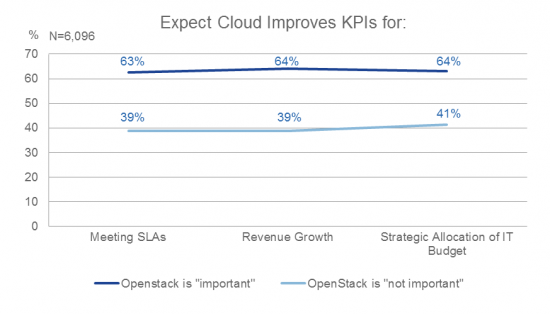
OpenStack remains top of mind for many of the organizations that IDC surveyed – 59% of cloud adopters view OpenStack as an important part of their cloud strategy (via open source and/or commercial distributions). Respondents for whom OpenStack is a more important part of their cloud strategy had higher expectations for cloud to improve strategic key performance indicators than those for whom OpenStack was less important.

OpenStack 2016

Source: IDC InfoBrief, sponsored by Cisco, Cloud Going Mainstream. All Are Trying, Some Are Benefiting; Few Are Maximizing Value. September 2016

This signals that there is a continued appetite for OpenStack-based private clouds as a viable alternative to other options that can be perceived as being more proprietary in nature. Nonetheless, as we recently commented in a CIOReview article, the challenge is to ‘mold the collective creativity of the open source community into enterprise-class, consumable, well-supported software packages that can function flawlessly across heterogeneous IT environments.’ And this is precisely why we continue to work with the community and our technology partners to provide our customers with choice.

We are well positioned to capitalize on these trends. We take a comprehensive approach, including products, services and tools to bring to our clients a rich set of solutions:

  • With Cisco Metapod we provide a ‘Private Cloud as a Service’ offering powered by OpenStack. This is a complete solution inclusive of hardware, software and expertise delivered in a data center of your choice. This ‘hybrid-ready’ private cloud solution will allow you to accelerate your digital transformation strategies while reducing costs and mitigating risks associated with ‘Shadow IT’.
  • We have also recently introduced new cloud acceleration services that can significantly reduce the design and deployment times of both traditional private clouds and cloud-native solutions such as OpenStack and Platform as a Service (PaaS).
  • We are also making available to you an online quick self-assessment tool (the Cisco BCA Adoption Report) that based on a brief survey allows you to receive a personalized review of your current cloud adoption along with benchmarking information and preliminary vendor agnostic guidance enabled by IDC. We are localizing the tool in multiple languages and making it available worldwide to our business partners as well.

These offerings will help organizations bridge the skillset gaps that they may be facing as they accelerate their digital transformation strategies while adopting DevOps methodologies and abating organizational silos to foster OpenStack-based cloud native initiatives.

If you want to learn more about any of these topics please visit:

Authors

Enrico Fuiano

Senior Solutions Marketing Manager

Cisco Cloud Marketing Team

Avatar

As a founding member of the NBASE-T Alliance℠, Cisco is proud to celebrate IEEE’s approval of IEEE 802.3bzTM (2.5G/5G BASE-T) as a new Ethernet standard. From the start we saw the issue, understood the opportunity and realized the value to customers. Some of our most talented engineers are investing their time and energy in the alliance. Today, Cisco engineers such as Peter Jones hold key leadership positions within the Alliance. We have been a driving force behind the industry momentum that has led to IEEE ratification in less than two years.

And we’re not just committed to the concept, we’re committed to driving adoption. Over these last two years we have shown our leadership by introducing the industry’s first NBASE-T technology in our Cisco Catalyst Portfolio and we continue to expand our support in across our enterprise networking and Meraki solutions. (Want more details? Expanding Your Network, Creating More Bandwidth, NBASE-T and Wave 2 Just Make Sense, Multigigabit and Wave 2 Wi-Fi )

More and More. Faster and Faster.
InstalledOutlets
As new 802.11ac Wave 2 wireless technology is being deployed the need to offload more and more data at higher and higher speeds from the wireless to the wired network has never been so critical.

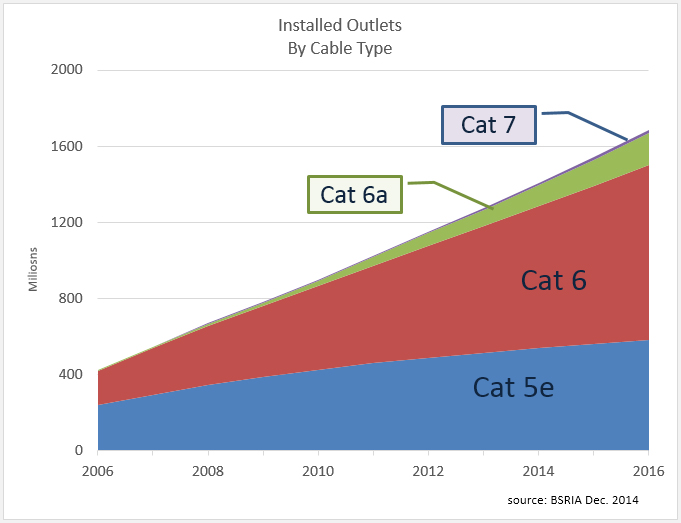
Going beyond 1 Gb/s with existing Cat5e and Cat6 cables was little more than a talking point two years ago. But now with NBASE-T, we have the ability to extend the life of an enormous asset —your wired network. The Cat5e and Cat6 installed in just the last 15 years now exceeds an estimated 70 billion meters of cabling.

Costly. Painful. Sometimes just not doable.
For some, a re-cabling isn’t even possible. For others, unfeasible.  For the rest, re-cabling is just costly and disruptive.  It is easy to imagine the value of delivering multi-gigabit speeds to the more than 1.3 billion Cat 5e/6 outlets worldwide if it doesn’t require the huge head-ache and expense of a major cable replacement. The promise of NBASE-T has to have nearly every CFO, CTO, building manager and IT group breathing a huge sigh of relief.

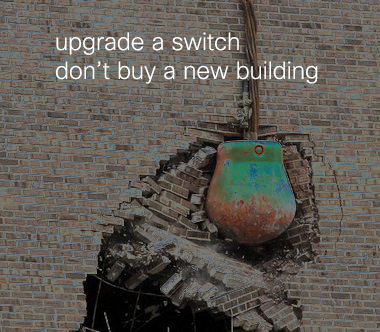
wreckingSolving the Problem – upgrade a switch
Taking lessons learned from a now mature 10GBASE-T technology, NBASE-T uses a type of signaling that boosts data throughput over twisted pair copper cable and takes us beyond previous limitations (up to 100 meters of Cat 5e/6).  So by upgrading the networking equipment, you can dramatically boost your network performance whether it’s an enterprise, service provider or home network.


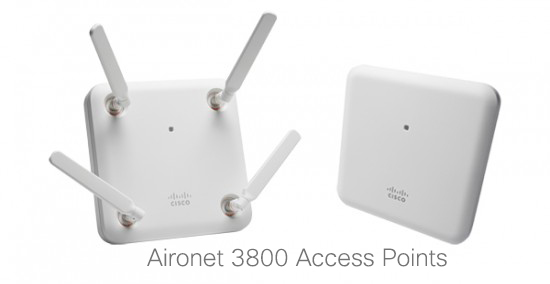
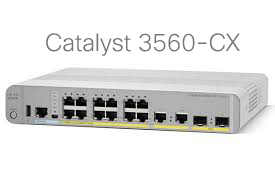
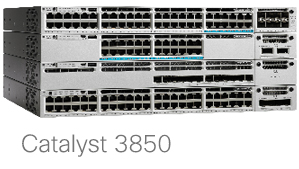
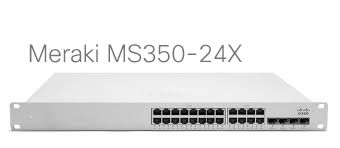
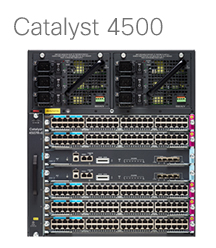
Cisco devices supporting NBASE-T are:


A3800_2_link

cat3560-cx_link


cat3850_link


MS350-24x_link

Cat4500e_link

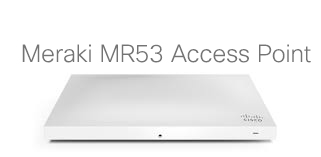
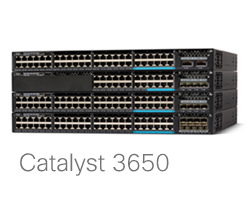
MR53-AP_linkcat3650_2_link

Cisco has been a key driving force behind the IEEE 802.3bz standard definition and the growth of the industry eco-system.  As part of the NBASE-T Alliance℠, Cisco is focused on promoting and advancing 2.5GBASE-T/5GBASE-T as well as insuring the success of testing and interoperability events to facilitate the development and deployment of interoperable products.

Want to learn more?

Review this content on TechWiseTV:

Cisco Live Ethernet Evolving – Ethernet at New Speeds…
Removing the Wireless and Wired Bottleneck with NBASE-T

Tech Field Day Peter Jones

Follow:

Related Alliance Blogs

Authors

Sachin Gupta

Senior Vice President, Product Management

Cisco Intent-Based Networking Group

Avatar

There are a lot of reasons to work at Cisco, but one of the best reasons I’ve found is because the best people work here.

After being at Cisco for a year, I really felt I was part of the Cisco Capital team, achieving personal and professional goals, but still new to North Carolina and finding my bearings.

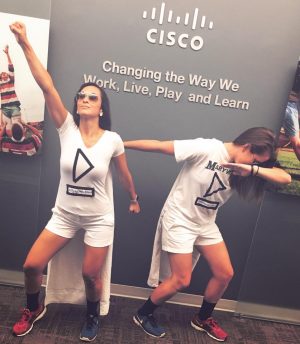
Dynamic Duo of FinanceThank goodness I met my Cisco match. My future best friend, “work wife”, and a profound role model in my life. Linda Villarreal graduated from the LiFT program (Leaders in Finance and Technology, previously known of as the FRP program, Finance Rotation Program) in September, 2015. She joined our team after graduating and there was no turning back. We just clicked from the start. I could only hope everyone has a chance to experience that in their lifetime.
Picture the scene from the iconic movie Stepbrothers. We had that “did we just become best friends?” moment. It was clear that we were meant to be friends. Our paths crossed for a reason. Our manager, Ana Maria Castillo, could not deny this instant connection. Within days of Linda joining our team, Ana paired us together. Together, we tackled the Mid-Atlantic and New York Territory with a team of 3 sales people. We worked seamlessly overcoming new situations, training new hires, and overall satisfying our customers/partners. And if a problem came up, we creatively developed a solution together. Things seemed to fall into place.

On days when she was out of the office, peers told me I “wasn’t myself”, but I knew when she was back, we’d be planning a reunion lunch at our favorite place, Taziki’s.

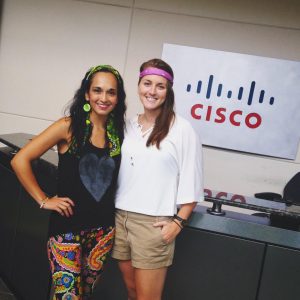
Dynamic Duo of FinanceSee, she brings out the best in me. She pushes me to achieve more, be more, do more. Linda introduced me to new ERO groups (Employee Resource Organizations) and connections she made during her time in the LiFT program. I never thought I’d be able to work with one of my best friends, and it is one of the many things I love about Cisco. Soon the title “Dynamic Duo” trended around the office. We became the Dynamic Duo of Capital. Recently for year-end, Capital organized themed days like “Decade Wednesday” and “Superhero Friday.” While everyone sported their Superman, Wonder Woman, or Spiderman shirt, we created our own costumes… “The Dynamic Duo of Finance.”

Maybe I’m biased, but Linda has a personality and the knowledge that any manager would be lucky to have on their team. I can’t thank her enough for supporting me not only in my professional life, but personal. She frequently attends my Rugby matches and cheers on her “Mambo No. 5” as she calls me.

However, life is about change, and Linda’s life changed to bring her husband a new job in a new state. My bestie is moving, and moving on. But that’s the great thing about Cisco, her Cisco family supports her decisions and still thinks of her as a part of our team, and she can grow in a new Cisco team that allows her to work from her new location. We are still the dynamic duo, just in a different way. I wanted to honor her and thank her for all the accomplishments she has brought to Cisco Capital, but on a personal note, all the happiness she has brought me.

What I’ve learned within my 2 years at Cisco is that Cisco encourages its employees to be authentic and be true to themselves. I’m inspired every day to work with genuine and motivational colleagues like Linda who make me more myself. I recently heard a quote from Selisse Berry that stayed with me. “I believe that no one should ever have to choose between a career we love and living our lives with authenticity and integrity.” I feel lucky that I do not have to choose. The Dynamic Duo wants to be an example to other Cisco employees that every day, when you’re authentic, it’s an opportunity to learn something new, meet someone new, inspire someone, or simply make someone’s day. As Linda says, with her Colombian accent and in her best Shia LaBeouf Voice: “Just do it.”

Authors

Brielle Mayle

Global Financial Operations Leader

Cisco Capital