Fun at work? For me, it’s making stuff customers need.
I admit that I have long been a skeptic of the “Fun at Work” movement. It’s not that I don’t like to have fun at work, but “the movement” seemed so shamelessly upbeat and forced. This fun was not natural for me. I was vigorously nodding my head when this New York Times editorial appeared. I identified as a curmudgeon with regard to “Fun at Work.”
However, I do find it fun to create products that solve real business problems or answer customer questions. It’s fun to hear from partners and customers that we did something useful, or even that we missed the mark or didn’t do enough — especially before we launch a product or feature. Really.
Taking hard feedback, realizing that it’s right, and going back to the drawing board. Painful as it can be, it energizes me to improve. It often takes someone outside the lab to provide perspective and the reality of how people will really use something.
For the past year or so, I have been working with Cisco’s Customer Care development teams to invest and innovate with cloud-based customer care. We’re having a lot of fun in the process. We’re building, experimenting, and sharing what we do with product and feature launches, partner trials, storyboards, and customer interviews. We’re taking the knowledge that we have from 20+ years of delivering products to explore new ways to help you prepare for next 20 years. Many things are the same, but some significant things are different. For instance: How should we treat persistent messaging in a customer care environment?
If you are interested in hearing more about cloud customer care from Cisco and the fun that we are having, please join me, Gary Olmsted, and Brent Rindal at Cisco Live US, for the “Cloud Customer Care” session.
Our goal is to present what is available now, what we are working on, and where we are going next. We are also planning to incorporate some audience participation (but only for those who volunteer, so you quieter folks are safe to attend too).
We’ll fill the session with Cisco Spark Call and Care demonstrations ,where you can ask questions and get answers, like:
Can I set up a small internal help group if I have deployed Spark Message?
Can I access the experts in my organization using Spark Message without making them Contact Center Enterprise or Express agents?
Can I set up a call flow that directs and informs customers of things like my open hours if I have deployed Spark Call?
Yes, you can do all of these things – and more (of course). Come to this session to find out how.
We will also demonstrate what is coming next, including integration between Facebook Messenger and Care Assistant, a feature of Spark Message. And you’ll find out how you can get more engaged in our product direction and development practice.
Bring on the Cisco logo-ed beach balls, the Nerf guns, the hoverboards, and indoor mini-golf. Let’s have some fun.
Data is massive, messy and everywhere. Data is always on the move, coming from every imaginable source from data centers, branches, mobile devices to sensors. Who’s not struggling with how to make sense of data and use it to their advantage, all in real time?
The ability to secure, aggregate, automate, and draw insights from your own data – with speed – now – will define value for your business. Specifically for financial services institutions, that’s always having reliable data that’s relevant to your business, at your fingertips.
And it’s not just minimum visibility; it’s total visibility into all the data that’s needed. And it’s not just data. There is an imminent need within the data center to understand application behavior, its dependencies and enforcing consistent white-list policy to build a more secure environment.
The Public Technology Institute (PTI) is looking for contributors for its latest e-book on education, The Digital Journey in K-12 Education. You might remember PTI’s previous e-book, The Digital Revolution in Higher Education, which featured contributions from education innovators, faculty, administrators, and students at leading universities. Drawing on that book’s success, PTI is looking for contributors to its latest book, which is being published thanks to a grant from Cisco.
The book will focus on overcoming roadblocks and embracing innovation in K-12 education, and will be edited by Alan Shark, the Executive Director and CEO of PTI. Chapters need not be long and typically range between 3,500 and 5,000 words, not counting charts and illustrations. Some suggestions of topics are the impact of digitization on your district, school, or classroom; how you are using technology to engage students; the ways you are connecting your campus to improve efficiency; best practices in protecting critical student data and information, and more.
If you’d like to be a part of this great project, submit a one-page proposal on your idea for your chapter, an outline of what you are proposing, and a short bio about yourself. Proposals are due by June 30, 2016. Go to PTI’s website to learn more about how to submit your chapter proposals.
Mobile has fast become the consumer’s first device. We wake up in the morning and turn off our alarm clock app on it. We then check our emails, our Facebook accounts, then news on our mobile device, all before we get out of bed. So it comes as no surprise that mobile video is quickly growing as yet another service on our mobile smartphones.
Today however consumers pay significant premiums for video viewing on mobile networks compared to more traditional channels, unless operators or content providers implement pricing initiatives to help make it more affordable. In a recent study, analysts from Analysis Mason found that, depending on the country, it costs consumers anywhere between 16 and 180 times more to watch 30 minutes of video on their smartphones using mobile data, than on pay-TV and fixed broadband services. When price differences are so large, it is not surprising that consumers are reluctant to view video content on mobile networks.
“Most successful organizations fail to look for new things their customers want because they’re afraid to hurt their core businesses. Companies rarely die from moving too fast, and they frequently die from moving too slowly.” – Reed Hastings, CEO of Netflix
Carriers are struggling to increase services revenue due to the ongoing pricing war and slowing number of phone net additions. Conversely, equipment revenue growth is decelerating due to the adoption of leasing programs and customers upgrading their devices less frequently. Mobile Video will help operators bolster revenue growth as the market for traditional wireless services continues to saturate. Network densification will be essential for operators to support increased data traffic from mobile video streaming. Carriers are pursuing partnerships to enhance wireless coverage and mobile video offerings.
Dynamically allocating resources to align to the fluctuating mobile traffic patterns is crucial to mobile operator success. Come hear our experts discuss dynamic resource allocation, orchestration, and enabling features to answer this question:
Tuesday, June 28, 2016 11:00 AM – 12:00 PM Eastern Time (GMT-5) 8:00 AM – 9:00 AM Pacific Time (GMT-8)
Speakers: Dave Clough, Cisco Sr. Solutions Architect, Biju Kachappilly, Cisco Sr. Mobile Product Manager, and Adam Davies, Cisco Sr. Video Solutions Manager
Host: Jim O’Leary, Cisco Sr. Mobile Solutions Marketing Manager
In this session you will learn how to:
See how T-Mobile Binge On, Verizon Go90, and other operators handle Mobile Video
Create new mobile service offerings profitably
Make your Mobile Packet Core more dynamic
Improve the customer quality of experience by working together with content providers, not against them
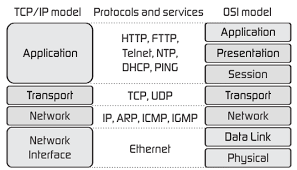
Networking has been a foundational component of our economy since the Internet days. In the early days, defining protocols and standards for how to connect, route, and interoperate local, metro, and wide area networks was critical to the businesses strategy. The computer networking exports with their TCP/IP computer centric view of the stack went head to head with the telecommunications giants and their more traditional telephony driven model of switching, FCAPS (Fault, Configurations, Accounting, Performance, and Security management), and OSI Model. As is often the case in these debates, both sides have good architecture and design principles and in the end, while TCP/IP one the war, very important concepts were adopted into the network model to account for Quality of Service (QoS), traffic engineering, segmentation of network traffic for control and data plane, and hierarchy of the network Simply stated, a flat network with no segmentation or hierarchy from the network stack on the computer though the Internet would cause fault, configuration performance, and security issues. This was understood largely by all in the industry and IT.
TCP/IP Model Versus OSI Model
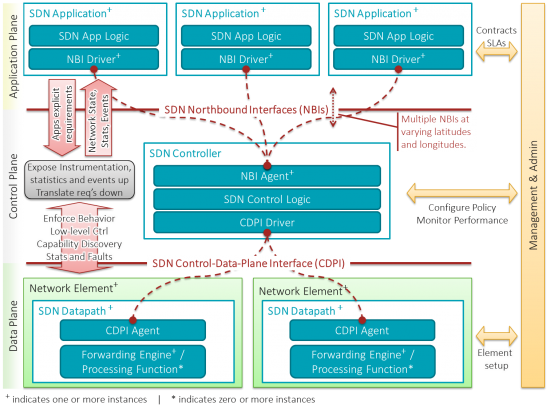
In the past several years as the need to agility and driving time to market down, there has been a major mind shift that I have noticed in the largest of companies. Networking, with all its complexity in configuration, routing and segmentation, was causing major delays in delivering the true speed and agility required by the business. There have been several attempts to address these using technologies like VPN, NAT, and predefined network blocks per deployment region. These solutions are static in nature and the speed at which technologies mature and innovation happens, these solutions were very limiting. In the industry, we have looked at automating and orchestrating the network parameters with an API and called this Software Defined Networking. SDN is definitely a step in the right direction; however it geared towards Network Administrators and not business owners or developers. Wikipedia has a good explanation of SDN and this simple diagram:
SDN Overview
While SDN is a great step forward – programmable APIs to the network, this is way too complex for the business owner or developer to program against (not in developer language and not written in a developer model) and most importantly, it does not solve the issues of complexity and ease of configuration in a rapidly changing and software centric world.
As cloud computing use increased in the public cloud, the abstraction of the underlying network became an important driver in adoption. No longer is defining or understanding the network important. As the industry moves to containers, the desire to simply and flatten the network is rapidly becoming the new standard for cloud native and container networking, orchestration, and microservices architecture.
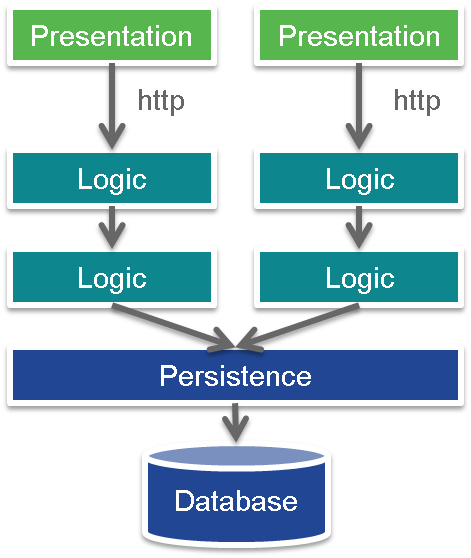
While this may appear to be the right direction to take the least path of resistance, the network matters more today than it ever has before. Why you ask, let’s look at the tradition application architecture.
N-Tiered Application Model
In this model, you have the following build in networking parameters:
Presentation – On Isolated Network with NAT/PAT, firewall, and Logical separation of traffic onto a VLAN that is for just web traffic. The control (routing) traffic is on a separate network from the web (data) traffic
Logic – On a separated network isolated behind a firewall on a separate VLAN than the web traffic. The control (routing) traffic is on a separate network from the application logic (data) traffic
Database – On a separate isolated network behind a firewall on a separate VLAN than the web and application logic traffic. The control (routing) traffic is on a separate network from the database (data) traffic
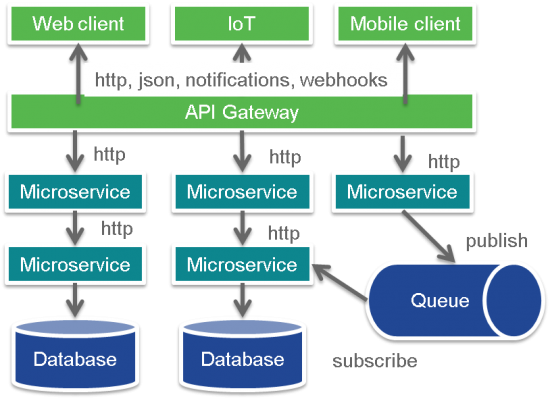
Now let’s compare this to the cloud native architecture:
Cloud Native Application Model
In this new architecture, all traffic is on a common network with no isolation, no segmentation of control and data traffic, and leveraging the Linux kernel networking stack – which is another blog on why that is a very bad idea if you care about performance and scale. With the move to APIs and Rest interface, there is an added level of very chatty API traffic running over the very same network. All the complexity of the application architecture is handled by the network which makes the network more critical today than ever before.
Now, I’m not saying, it’s all about the network. As with all things in life, balance and focusing on what matters most is the best path to take (although it’s the path less traveled) What I propose is that the intelligence can be built into the network. I like the analogy that everyone uses for cloud native with Pets versus Cattle. My network analogy is that cattle need isolation, direction, and fences! How can we as an industry move to more agile cloud native architecture and still corral the cattle? The answer comes from looking at this from 2 separate but equally important perspectives.
From a top down (application developer) perspective, the network requirements need to be represented as business intent with constraints that the business understands like latency, priority, security, and performance. If we enable a simple definition that is focused on the application’s business objectives, that will make it easy for the business to define what they care about.
From a bottom up (network administrator) perspective, the network administrators understand how to address business objectives and can easily programmatically define network and network security policies to meet the requirements. This will requires extending SDN capabilities to understand application policy and network specification to be created to support cloud native architectures, but these patterns are well known in the networking world today. The next step will be to use data generated by the application, services, and components to enable analytics to address performance, security, reliability, and latency issues in real or almost real time.
As an industry, we need to start addressing the needs of networking in cloud native. I would like to invite you to the discussion. I’m at Dockercon and would love to discuss further and even show you some open source innovations we are working on in mantl.io, contiv.io, and fd.io. In addition, you can see application intent in action! I’ll be at the Cisco booth during the breaks or you can DM me for a specific time.
In addition, I’ll be on a pancake breakfast podcast panel discussion hosted by the NewStack Monday morning on “What is the New Stack of Networking”. It starts at 8am and for every question you ask, you will get a Mantl pancake from the #pancakerobotoverlord. Please register here to attend the free event.
Recently I was giving the option of choosing between an Apple TV and a drone – and I happily chose a drone. But, I got asked more than a couple of times if it was a gift for my husband, even by people that know I am an engineer!
That is why I am here, writing my first blog inspired by Girls in ICT Day, to say YES, women/girls might love technology, drones and geek things as much as men/boys do!
I am an electronic engineer, and trying to remember the spark that got me into this path. I look back, and being a child of a biology & chemical professor (my mom) and an electronic engineer (my dad) definitely had a lot to do with it.
I remember always having Legos to build houses for my dolls, to have cars to take them for rides (not always pink ones), and that a microscope and an electronic board to experiment were also toys. I grew up encouraged to explore and discover, my mom would take advantage of every trip and contact with the nature we had to show me the wonders of nature, adding “field explorations” to our beach trips to discover different types of seaweeds and shells, or in our forest/garden hiking to look for the different types of insects, flowers, plants, fungus. With my dad, always a technology lover, I got exposure to the “latest” gear available: from our Commodore 64 to my (his) first laptop, BetaMax to DVD, fixed phone to cellphone, and he always got me involved in the setup as soon as his “toys” arrived and is funny now is the other way around. In case you already started to count years back, Yes! I was part of that lucky generation that got to see the fascinating change of our world from analog to digital right in front of our eyes, (lucky me! ;-)).
Both of my parents were great inspiration and from their amazing stories of life (that I would leave to another blog), I got the empowerment and sense that I could definitely do whatever I wanted to, but that I needed to work hard, enjoy it and try to do it right and better (my Dad’s mantra).
And here I am, with 15 years being an engineer, living abroad my born country thanks to my career, with one daughter and another one just born, still loving what I do, fascinated about technology, dance and my family (yes not all is tech 😉 ), sharing my story to encourage and help girls to explore this path.
The last couple of years I participated in Cisco’s Girls Power Tech initiative, and every year it was a great experience. At each event you could sense the grade of fascination and potential of the girls in the room when you share how is like to be a systems engineer and how we are helping digitize the world. This year I couldn’t be there (did I already mention I have a new baby?) but I was still there in spirit.
I am here to invite you to talk to your daughters, nieces, friends and share something about your experience in STEM, to encourage you to invite them to develop other skills and explore tech camps and activities like: Cisco IoE for Kids, FIRST Robotics, Girls Learning Code camps, and a bunch of other activities available for them to enjoy and explore the fun of STEM.
Be their role model! Be their inspiration! Spark their natural curiosity! And please never be surprised if they prefer a robot over a doll, even more ask them! Don’t assume a pink toy is always the right answer ;-).
Our hearts and prayers are with Orlando. At a time when we come together to celebrate our pride season, we’re instead faced with the grief and horror of the deadliest mass shooting targeting the LGBT+ community and its allies in our history.
As a gay man, I’m furious to once again see our community targeted by senseless violence—especially as we begin to see the names and young faces of those lives that were cut too short. As a Cisco employee, I fear for the safety and well-being of those in our extended Cisco family. As a new parent and citizen of the world, I’m troubled to see these senseless acts becoming more and more commonplace.
Let’s acknowledge the ultimate goal of this form of terrorism and hate—to use fear and anger to divide us. For that reason, it is more important than ever that we come together as a community with our friends and allies and boldly celebrate our uniqueness this pride season.
As the global co-lead for Cisco’s PRIDE employee resource organization, I’m proud that Cisco seeks to unite all people. We celebrate diversity. We believe that diversity leads to innovation, better collaboration, and a vibrant culture where everyone feels welcomed, respected, valued, and heard. In that spirit, we stand in solidarity with the victims in Orlando, their families, friends and entire community.
For those who would like to support the victims of the Orlando Pulse shooting, one way to do so is through the National Compassion Fund. Cisco is matching employee donations to this organization.
Let’s all come together and unite for a safe and celebratory pride season.
Today we’re talking with John Stone, Cisco Senior Manager, Digital Experience & Analytics, about the importance of Customer Lifecycle Management (CLM). Beyond unlocking margin potential for partners, John says CLM is the key to creating customers for life. As one of Cisco’s top post-sale engagement experts, John has some valuable insight to offer about what partners can do to leverage CLM practices and automation to address install base refresh opportunities.
Q: John, why should partners care about customer lifecycle management?
John: It’s important for partners to understand that each milestone in the customer journey, no matter how small, represents a chance to start a conversation, whether online or offline. And client conversations often lead to revenue. That’s one big reason partners should care. But the truth is, helping customers mitigate risk, improve performance and grow their top line – throughout the entire customer lifecycle – is what separates good partners from great partners.
In addition, things are changing rapidly in our industry. In today’s competitive subscription economy, customers who do not see value from their solutions quickly switch technology providers when it’s time to refresh their equipment. Continued success for partners now depends on how well their customers’ technology investments contribute to business outcomes.
To help drive customer retention, Cisco is focused on helping partners deliver on the full potential of their Cisco offers. Along the way, we’re also helping partners promote product and service adoption, simplify software and service renewals, and nurture install base refreshes. All of this is being achieved through a combination of people, process, analytics and automation – the core pillars of our customer lifecycle management approach at Cisco.
Q: Why is customer adoption so important for partners as a part of Customer Lifecycle Management?
John: Successful adoption drives customer loyalty and sales expansion—and experts say it should be the guiding force behind each and every customer engagement. That’s why it is essential today for partners to have a clear methodology in place to simplify and encourage the effective deployment and use of Cisco products and services with customers.
Taking it even further, many experts agree that adoption should be treated as a core pillar of business—a practice that requires the entire company working towards achieving a goal of successful implementation and value realization for every customer.
Q: How is Cisco working with partners to ensure effective adoption?
John: Customer insight, customer health metrics and measurement are key for bringing about effective adoption. As the saying goes, you cannot manage what you cannot measure. Fortunately, the digital economy has enabled us to gain a window into the world of how and when customers are using products/software/services, and the degree to which adoption is unfolding. How many times has customer XYZ logged in this month? Which features do they use the most? Is it time for a technology refresh?
Having a pulse on customer adoption behaviors gives partners an opportunity to not only assess customer health, but also extend the value that they provide. Through data insights, predictive analytics and more, it is now possible to monitor adoption patterns and address what we can and should do next for the customer—both immediately and well into the future. Gaining insights into customer health and adoption metrics allows partners to reach out at the right time to clients to drive value realization, install base refresh opportunities, and ultimately, customer retention.
Q: What can partners do to build their businesses around Customer Lifecycle Management?
John: As the digital transformation takes shape, it’s clear that all of us must move beyond talking to customers about transactions. As our leader Scott Brown said in his recent blog post, “outcome engineering” cultivates customer retention. Today, it’s far less effective for a partner to call a customer with an offer to sell something than it is to start a conversation about how they can shore up a security risk, improve speed and per user costs, or increase productivity and profit margins. These business outcome conversations will accurately address client pain points and challenges throughout the customer lifecycle and fuel stronger customer relationships. Meaningful touch points also lend stickiness that allows sales teams to uncover new opportunities for install base refresh, or to sell professional services or advanced services. The use of Cisco’s data-driven partner enablement tools, such as Lifecycle Advantage, can drive expand selling and even serve to automate low- and high-touch offers with precision and accuracy. These tools can also give partners a better understanding of the customer’s objectives, which ultimately, leads to better business outcomes. Lifecycle Advantage was recently honored by Frost & Sullivan with a Manufacturing Leadership Award for Customer Value Leadership. Cisco also accepted the distinguished vendor award for Supply Chain Leadership.
Q: What is the best part about playing a leading role in Cisco’s Customer Lifecycle Management initiatives?
John: When we see partners grow, succeed and excel at what they do it is incredibly gratifying. Our partners’ success is, of course, core to our business at Cisco, and CLM is one of the most important ways we’re driving partner success.
In the film Limitless, the main character Eddie finds himself able to learn and analyze information at a superhuman rate. He temporarily has the ability to instantly and meaningfully cross-correlate all of the previously forgotten experiences from his past (1) and assess multiple scenarios in the future. He does this simply by taking a pill.
I don’t have a pill for you, and I’m not going to claim any product can make you Limitless. However, I will say Cisco Tetration Analytics comes closer than anything in the industry to delivering similar capabilities!
What Is Tetration Analytics?
“You know how they say we can only access 20 percent of our brain? This lets you access all of it.” (2)
Cisco Tetration Analytics provides pervasive and unprecedented visibility across the data center, via a mix of network/hardware sensors that monitor every single packet at line rate and server/software sensors with very low overhead (<1% CPU). The sensors work with an analytics engine that operates in real time, presenting actionable insights with easy to understand visuals. Additionally, it provides application dependencies, automated white-list policy recommendations, policy impact analysis, detection of policy deviation and network flow forensics. That’s a mouthful, but the essence of it is Tetration Analytics is as close as you’re going to get to becoming Limitless in your data center.
What Problems Does Tetration Analytics Address?
“I was blind but now I see.” (2)
You know the trends, so I won’t babble incessantly about them here. The bottom line is that running a data center is increasingly challenging, with tons of apps, as well as dynamic traffic patterns, workloads and consumption models… all of which lead to seemingly infinite complexity. This leads to numerous challenges:
You want to migrate applications, but you can’t. This may mean moving applications from your local data center to a public cloud, moving from one data center to another, moving from a traditional network to ACI or some other programmable infrastructure, or it may mean setting up a disaster recovery site. However, without visibility into your applications, the dependencies between them, and the traffic flows associated with them, you cannot do this effectively, with precision or speed. We’ve talked with many customers who’ve spent enormous amounts of time/money and endured seemingly endless frustration to understand how apps communicate and are dependent on one another.
You want a zero trust model, but lack information and resources to implement or maintain it. You want to migrate from blacklist to whitelist security to shrink the attack surface. In a traditional blacklist model, everything can talk with everything else by default, then we create Access Control Lists (ACLs) or firewall rules that deny exceptions. However, as these ACL’s have grown, sometimes to thousands of lines, it has become nearly impossible to accurately maintain them or to do so with any semblance of agility or accuracy. Gut instinct and empirical data both validate that A LOT of delays and outages result from configuration errors. (3) Admins are left wondering if they delete something, will it create a hole, and if they add something, what might break? With a white list policy nothing talks until it is explicitly allowed, and is thus more secure, prescriptive and accurate.
You find it’s impossible to know exactly what’s happening on – or even what’s in – your infrastructure, because you don’t have complete visibility into traffic flows or application behaviors. This results in operational problems and security challenges. This lack of visibility is not unlike crawling around in the dark. About a dozen or so years ago there was a band I really liked called Hoobastank. Yeah, I know, strange name. Anyhow, they had a song that quite accurately reflected the dilemma most folks running a data center have today. It was perhaps – unbeknownst to them – the data center manager’s anthem. The song was called ‘Crawling In The Dark’ and said:
Show me what it’s for
Make me understand it
I’ve been crawling in the dark
Looking for the answer
Is there something more
Than what I’ve been handed?
Yep, there is more than what you’ve been handed, that will provide answers to these problems and help you understand. But it’s not a pill. It’s a time machine for your data center that lets you easily replay the past, reveal the present, and plan for the future. It’s called Tetration Analytics.
How Does Tetration Analytics Address These Problems & How Does It Help You?
“I see every scenario…It puts me 50 moves ahead of you.” (2)
In a perfect world, we would be able to rewind what has happened in the past, view what is happening in the present in realtime, and model what could happen in the future. H.G. Wells foretold of this capability back in 1895 when he wrote The Time Machine. Granted, he probably wasn’t thinking about data centers when he wrote it, but if he had, the storyline may have gone something like this:
What if you had complete visibility into everything, in real-time?
What if you had a time machine for your data center?
You could look at the past and replay events in real time.
You could plan for the future, and see the consequences of a new policy before you commit to it.
It’s not a ‘what if.’ It’s called Cisco Tetration Analytics, and it’s unlike anything you’ve ever seen.
You can see this storyline brought alive in a very cool video. It’s only 2 minutes – check it out!
Tetration Analytics is able to address the problems above and provide these new capabilities because it allows you to do things you previously could not. You can:
Search billions of flows in less than a second (every packet, every flow, every speed).
Do real-time and historical policy analysis, essentially replaying what happened in the network at any time.
Continuously monitor application behavior and quickly identify anomalous patterns for compliance exceptions.
Validate a change before it’s executed by showing the change’s impact on applications – meaning you can get predictable outcomes.
After the change is implemented, you can then validate that policy changes have actually been applied and taken full effect.
Get complete knowledge of interactions and dependencies in the data center, bringing greater reliability to data center operations.
So, as I said up front, I don’t have a pill for you. However, I can offer you Tetration Analytics. And though I can’t say your powers will be Limitless, I can say that Tetration Analytics will give you the best semblance of a Time Machine for your Data Center the industry has ever seen.
74 percent of respondents took days or weeks to implement security device updates from request all the way through to production implementation.
43 percent of respondents reported a configuration error over the last 12 months that led to a security vulnerability, performance problem, or service interruption.
Of those, 87 percent reported multiple service outages over the last 12 months due to technical error with changing or configuring networks.









 Carriers are struggling to increase services revenue due to the ongoing pricing war and slowing number of phone net additions. Conversely, equipment revenue growth is decelerating due to the adoption of leasing programs and customers upgrading their devices less frequently. Mobile Video will help operators bolster revenue growth as the market for traditional wireless services continues to saturate. Network densification will be essential for operators to support increased data traffic from mobile video streaming. Carriers are pursuing partnerships to enhance wireless coverage and mobile video offerings.