Avatar

Just a month ago, I was at OpenStack summit Austin presenting Cisco technologies to our valuable customers. To me it was quite obvious that OpenStack has hit mainstream, particularly after listening to Gartner’s keynote. The keynote emphasized how customers are adopting Cloud and OpenStack operationally. I also observed that there was great interest among customers and operators in OpenStack use cases like NFV, private and public cloud. Containers, in particular, were a hot topic, and it came as no surprise given the mode1-mode2 transition evident in many enterprises.

moscone

Time flies fast and Red Hat summit 2016, San Francisco, is fast approaching.  I will be carrying pleasant memories and experiences from OpenStack summit to this event looking for a synergistic continuation of the excitement and learning. So what is Cisco doing at Red Hat 2016? I am pleased to inform you that Cisco has several key insertions from keynotes to breakouts and theater sessions featuring ACI, UCSO/Metapod and NFVI technologies at the Red Hat summit.

Cisco CTO David Ward will discuss in his keynote, the key shifts and importance of open source, open communities and collaborative development in building out the next generation of data centers. From investments in open source foundations and in projects hosted on GitHub, Dave will dive into the ones he sees as leading the forefront of innovation – and why these technologies need to be built in the open for a better, more effective data center.

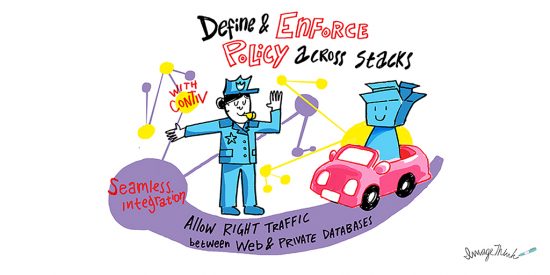
Following Dave’s keynote are the breakouts, and our breakout sessions at the summit are meticulously aligned with current trends and customer care-abouts in the context of Red Hat OpenStack. Infrastructure managers are constantly asked to push the envelope in how they deliver cloud environments. In addition to speed, scale, and flexibility, they are increasingly focused on both security and operational management and visibility as adoption increases within their Organizations. Mike Cohen, an industry-recognized open source contributor and Networking expert, brings valuable insights via his breakout session titled “Running A policy-based cloud with Cisco Application Centric Infrastructure, Red Hat OpenStack, and Project Contiv.”  The session covers how Cisco and Red Hat are partnering together to deliver policy-based cloud solutions to address the afore-mentioned challenges.
Cisco-OpenStacksInfographic-DefinePolicy-050616-ImageThink

Mike will discuss how Cisco and Red Hat are collaborating in the open source community and building products that serve as proof-points for this collaboration. It will cover topics including:

* Group-Based Policy for OpenStack

* Cisco Application Centric Infrastructure (ACI) with Red Hat OpenStack

* Project Contiv and its integration with Cisco ACI

Please mark Mike’s session as a must-attend, slated for June 29, 4.45 PM. We have a double-treat for you with another great speaker, Duane DeCapite, ready to delight you with “Hot topics in Containers, OpenStack and Hadoop”, June 28, 10.15 AM. This session will highlight hot topics related to the convergence of containers and OpenStack, including projects Magnum, Kolla, and Calico. Join us and learn about new communities and products, including Open Container Initiative (OCI), Cloud Native Computing Foundation (CNCF), Cisco NFVI, and related topics.

We also have Cisco Theater presentations that run every 20 minutes on ACI, UCS and Cloud topics in the context of OpenStack. They will run Tuesday-Thursday. By attending these sessions, you can gain critical insights into private and public cloud architectures, and the mechanics behind building massively scalable and modern infrastructure, while maintaining increased security and control.

For a full agenda of all the excitement at Red Hat summit, visit the Cisco Red Hat Summit experience.


 

Authors

Ravi Balakrishnan

Senior Product Marketing Manager

Datacenter Solutions

Avatar

Mobile has fast become the consumer’s first device, they wake up in the morning and check their mobile smartphone for the time, email, daily schedule, news, messages, and so it comes as no surprise that mobile video is growing quickly as another service on their devices.

Today however consumers pay significant premiums for video viewing on mobile networks compared to more traditional channels, unless operators or content providers implement pricing initiatives to help make it more affordable. In a recent study, analysts from Analysis Mason found that, depending on the country, it costs consumers anywhere between 16 and 180 times more to watch 30 minutes of video on their smartphones using mobile data, than on pay-TV and fixed broadband services. When price differences are so large, it is not surprising that consumers are reluctant to view video content on mobile networks.

infographic-main-highres-971a9d4ff3bafff6525f3f85cf90da36

So What’s Changed?

“Most successful organizations fail to look for new things their customers want because they’re afraid to hurt their core businesses. Companies rarely die from moving too fast, and they frequently die from moving too slowly.” – Reed Hastings, CEO of Netflix

Carriers are struggling to increase services revenue due to the ongoing pricing war and slowing number of phone net additions. Conversely, equipment revenue growth is decelerating due to the adoption of leasing programs and customers upgrading their devices less frequently. Mobile Video will help operators bolster revenue growth as the market for traditional wireless services continues to saturate. Network densification will be essential for operators to support increased data traffic from mobile video streaming. Carriers are pursuing partnerships to enhance wireless coverage and mobile video offerings.

The popularity of mobile video is evident all around us – in people watching YouTube, Netflix, T-Mobile’s Binge On, Verizon’s Go90 and other content on their smartphones and tablets. This phenomenon is booming as a result of broad support across the mobile ecosystem, including among devices, networks and services. It shows no signs of slowing, and it has crucial implications for how mobile operators direct their infrastructure investments and strategies.

Swisscom, T-Mobile USA and Zain in Saudi Arabia, and other operators have also adopted the zero-rating approach to mobile video. Consumers can view content by certain providers without affecting their mobile data allowances. These providers may need to fulfill certain requirements; in the case of T-Mobile’s Binge On, they need to satisfy certain technical specifications related to video resolution. Customers, on the other hand, may need to purchase services to qualify for zero-rated mobile video, such as a particular allowance for mobile data or a pay-TV subscription.

In China, Spain, and Turkey, some operators provide data allowances dedicated only to mobile TV and video, in addition to normal mobile service plans according to Analysis Mason. These are available to all subscribers for reasonable monthly fees, and streaming is generally limited to the operators’ own video platforms. Somewhere between zero-rating and dedicated data allowances lies the subscription model. This is used by, for instance, StarHub in Singapore, which provides customers with unlimited mobile video streaming for a monthly fee.

So what else can a Mobile Operator do?

For more details download and read our white paper A New Approach for Mobile Video Services

Attend our June 28th Cisco Knowledge Network Session at 11:00am ET entitled, How Does a Mobile Operator Manage Video Traffic and Make Money at It?” register at http://bit.ly/1Ud6JlL

Read the latest Cisco Visual Networking Index.

And watch this space for a series of blogs on Mobile Video

Authors

Jim O'Leary

Sr. Manager Mobile Solutions Marketing

Avatar

Dockercon is here again. It again promises to be bigger and to bring lots of the container and microservices enthusiasts to Seattle next week.  I am personally looking forward to my 3rd Dockercon (including the Dockercon EU in Barcelona).  Even more so because I am excited to be speaking and sharing information about our open source project Contiv. This short video provides an overview of Contiv.

Containers are being considered by many organizations large and small. But in order for there to be wider adoption, challenges remain. Unlike server virtualization, container adoption may take longer..  Three  major challenges exist for containers to reach maturity.

  1. Complex Transition: Container based applications are not a 1:1 transition from an existing VM or bare metal as was the case with server virtualization transition. In many cases, only new applications are considered for containers while the existing applications will remain in their current form. This makes the transition to containers slower than in the case of server virtualization.
  2. New Framework: Developing applications in a microservices architecture requires the developers to adopt new processes as well as new technology. While forwarding leaning organizations are making the transition to new structures, it is far from being a done deal. People and process are in the way.
  3. Operational Issues: Last but not the least is the current container based solutions are really not ready to support production grade containerized applications and the requirements for shared   The IT teams are not ready with solutions that in most cases needs to be automated for achieving the benefits of true containerization of the applications

Understanding the Requirements

So what are some of the production grade containerized applications deployment requirements that are unmet?

  • Automated cluster management – the ability to automate node lifecycle management including managing the control software lifecycle.
  • Differentiated performance for various production grade and development/test mode applications .
  • Predictable performance for the applications with no noisy neighbor problems.
  • Flexible connectivity between microservices via IP per container or overlay and integration to existing networks through Layer 2 or Layer 3 networks.
  • Flexible network isolation for applications, regardless of network or subnet.
  • Scalable security policies for applications groups with support for microservices auto scaling.
  • Mixed mode applications – the ability to manage requirements of applications that are made up of container, non-container workloads or databases as a single application.
  • Differentiated storage performance for containers requiring varied IOPS as well as distributed persistent storage for stateful containers.
  • Telemetry and monitoring of the applications and a real-time view of interactions of the various microservices for identifying bottle neck services and troubleshooting,

Also, all of these requirements needs to be delivered in an automated, scalable and consistent/reliable fashion.  The container stack and the underlying infrastructure needs to communicate in an automated and scalablemanner. We believe Contiv is the right solution for solving these challenges in deploying containerized applications in production.

If you are curious and want to learn more, please attend my session at Dockercon’16.

If you want to learn more about Contiv which is an open source project available for anyone to try and contribute code to at contiv.github.io

Authors

Balaji Sivasubramanian

Director, Product Management

UCS

Avatar

According to IDC, 41% of executives say digital disruption increases risk of being put out of business. In this context, it is not surprising that every business, country and city is on a journey to become digital. But, no one company can deliver these digital solutions alone. That’s why Cisco takes an ecosystem approach and why we believe that digital transformation is powered by partnerships.

Delivering solutions and services for digital business creates new opportunities for partners to reach new buying centers and allows them to help their customers stand out, remain relevant, and grow. How can you capitalize on this opportunity?

The answer is Partnerships.

Cisco and Microsoft have developed integrated solutions to help customers harness their data and deliver hybrid cloud environments. Through the Cisco Partner Ecosystem, Microsoft channel partners and System Integrators can forge partner-to-partner relationships with Cisco channel partners to extend these solution capabilities and grow their business.awd

The Microsoft Worldwide Partner Conference (WPC) is the perfect opportunity to learn how to capitalize on the Cisco and Microsoft partnership. I’m looking forward to joining the Cisco Partner Ecosystem team in Toronto, July 10 – 14, for WPC.  If you’re attending WPC, make plans to drop by the Cisco booth. We have an action packed agenda of theater sessions on partner programs and UCS solutions for hybrid-cloud and SQL Server. Our Service Provider team will also be on hand to discuss the Cisco Cloud Architecture for the Microsoft Cloud Platform.

Mark your calendar for July 12th at Noon, for the Cisco session in the Partner Theater in The Commons. Bryan McCarthy will be presenting on Microsoft and Cisco: Leading the Digital Future with Cloud and the Transformed Data Center. You’ll want to catch this session to learn how Cisco & Microsoft are working together to architect innovative solutions for our customer & partners that leverages the cloud, transformed data center, security, & management.

Partnerships are more important now than ever. That’s why we’re especially honored to be recognized by the International Association for Microsoft Channel Partners (IAMCP), with a Finalist spot in the 2016 IAMCP Member Awards. This award recognizes excellence in partner-to-partner (P2P) programs that drive strong customer outcomes. We appreciate the recognition and congratulation the other finalists.

If you’re attending WPC, we invite you to schedule a 1-1 meeting with Cisco partner leaders from around the world by emailing a meeting request to wpcmeetings@cisco.com.  Also, make sure to follow the Cisco team (@CiscoPartners; @CiscoDC and @CiscoCloud) for live updates from Microsoft WPC, and join the conversation via the #WPC16 and #CiscoPartners hashtags.

Even if you’re not attending WPC, Cisco channel partners can capitalize on the Cisco and Microsoft partnership to deliver and drive demand for integrated solutions that deliver the business outcomes our customers are seeking. You can learn more about Cisco solutions for Microsoft applications at cisco.com/go/Microsoft. Also take advantage of partner ready marketing campaign resources. Login into Partner Marketing Central (PMC) to access the Cisco partner campaigns for Microsoft Private Cloud, SQL Server and Cisco Cloud Architecture.

Digital disruption is reshaping the partner business landscape. Together, we’ll capitalize on this digital transformation opportunity.  We’re looking forward to forging these new partner-to-partner connections.

Authors

Gary Serda

Senior Strategic Partner Marketing Manager

Global Partner Marketing

Avatar

10270_Transportation_256

For a small to medium sized business owners, the thought of creating a wireless network can be a bit daunting. Now add a security deployment on top of that and a daunting task quickly turns into Mission: Impossible.

Many business owners share these feelings of technology dread and in their worry two things tend to happen:

1. Without a wireless network a lot of money is left on the table. Their competitors are jumping into the wireless world with both feet and are offering customers services that network-less businesses don’t have.
2. Without the proper security, their data is defenseless. More than anything, a business’ data is the most important thing it owns. Material items can be replaced, storefronts can be rebuilt, but once your data is stolen, you can’t get all of it back. And customer trust is hard to restore.

Luckily, there’s a solution. Cisco Mobility Express and the Cisco Identity Service Engine (ISE), which now offers the ISE Express License Bundle, are specifically tailored for the small- to medium-sized business who want to have an enterprise-class solution like the bigger companies but doesn’t have the space, money or technical expertise. The good news is that Mobility Express and ISE Express are low-cost and compact enough to put anywhere and you don’t need to be a PHD to set up the network and deploy the security software—and they have all of the Enterprise features that Cisco is famous for.

Cisco ISE Express is a licensing bundle specifically tailored to get guest services up and running quickly and easily. This comprehensive licensing bundle offers enterprise-level guest services at a fraction of the cost. What that means is your small- to medium-sized business will have the same security as the larger enterprise-level organizations. Cisco’s security solution encompasses: hotspot, sponsored and self-registration portals as well as RADIUS authentication, authorization and accounting for 150 end points. ISE Express also comes with a virtual machine license and unlimited access to the ISE portal builder

Cisco Mobility Express is a deployment solution designed to bring enterprise-class wireless access to small- and medium-sized networks. Cisco Mobility Express can be deployed in less than ten minutes and has a virtualized control function on a master access point. This means that no physical WLAN controller appliance is required, with up to 24 802.11ac Wave 2-supporting access points serving as subordinates.

With ISE Express and Mobility Express, you truly get the best of both worlds: a state-of-the-art wireless network and equally modern security product to safeguard it. Note: Actual integration of Mobility Express + ISE is planned in 2018. Currently, the two solutions are managed separately.

To read more about Cisco Mobility Express, click here. To read more about Cisco ISE Express, click here.

Authors

Dan Stotts

Former Product Marketing Manager, Cisco

Security Product Marketing Organization

Avatar

Each week, our public sector government counterparts are posting a new #TransformationThursday blog, where they will discuss digital transformation in cities, detailing storylines and examples with various social, environmental and economic outcomes. We encourage you to join in the conversation as they take a candid look at digitization, capturing best practices and solutions to common challenges while preserving an approach that addresses each community’s specific wants and needs.

Today’s #TransformationThursday topic will feature community health and wellness, told by a truly passionate advocate for enabling the betterment of society through technology innovation. For healthcare it’s all about the end user – the patient, the care provider or the facility administrator – not the technology. An important truism that is nowhere clearer than it is in the convergence of technology innovation and health and wellness. This is not only because health is a part of everyone’s lives, but also advocacy and care for one’s own health – physical, mental, spiritual and beyond – is probably the most personal aspect of each individual’s life.

ft. image option 2

However, the fact remains that our lives have been forever transformed through digital technology innovation. Radically transformed and creatively disrupted. In terms of our health, that means we can remotely and dynamically monitor things like heart rate, blood pressure readings, body temperature, glucose, and brain activity. Really, like never before in our human history, allowing us to improve how we ensure our communities survive and thrive.

To read more inspirational stories of those who are using technology in new and imaginative ways to help fix large-scale, global issues by enabling humans to act humanely, go here.

Authors

Alexia Crossman

Senior Cross-Portfolio Messaging Manager

Cisco Marketing

Avatar

Technology for the People:

Being a German native and given my personal and professional commitment to helping those who commit their lives to public service, this particular topic of innovation is near and dear to my heart.

It’s all about the end user – the patient, the care provider or the facility administrator – not the technology. An important truism that is nowhere clearer than it is in the convergence of technology innovation and health and wellness. This is not only because health is a part of everyone’s lives, not just early adopters of technology. But also advocacy and care for one’s own health – physical, mental, spiritual and beyond – is probably the most personal aspect of each individual’s life.

However, the fact remains that our lives have been forever transformed through digital technology innovation. Radically transformed and creatively disrupted. In terms of our health, that means we can remotely and dynamically monitor things like heart rate, blood pressure readings, body temperature, glucose, and brain activity. Really like never before in our human history, allowing us to improve how we ensure our communities survive and thrive.

Success Stories:

Today’s narrative frequently gives technology a bad name, blaming it for less human interaction and face-to-face contact. However, there are so many inspirational stories of those who are using technology in new and imaginative ways to help fix large-scale, global issues by enabling humans to act, well, humanely.

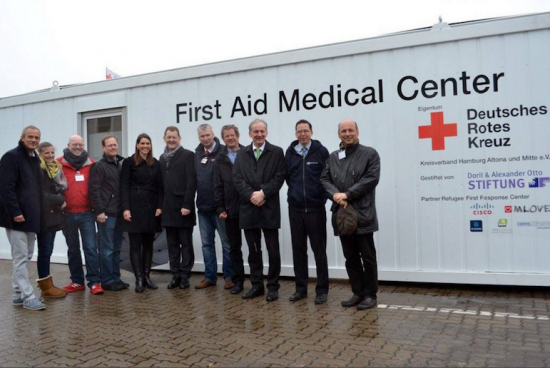
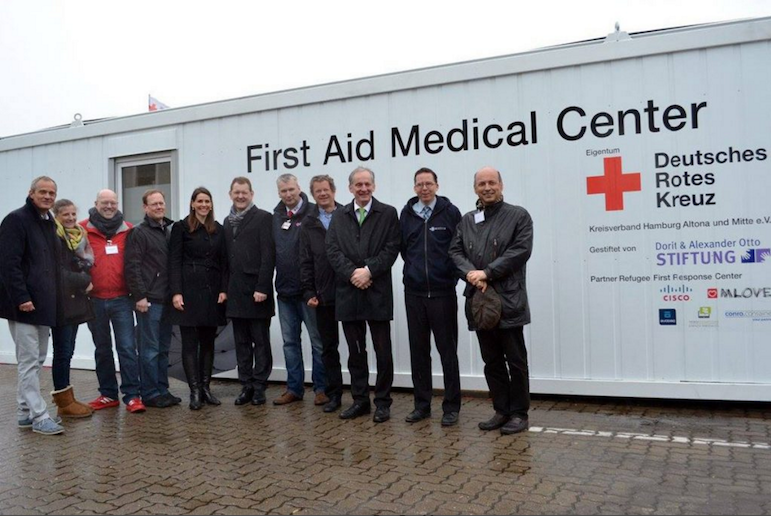
As seen briefly in the video, innovative problem-solving and committed partnership paved the way for development of the Refugee First Response Center, which is bringing emergency medical and translation services to the community of Hamburg in light of the current refugee crisis.

Continue reading “#TransformationThursday: Smarter Solutions for Healthier Communities”

Authors

Cecile Willems

Director, Global Public Sector

Global Sales Organization

Avatar

Mobile Security Made Simple, Cisco AnyConnect 4.3 is Now Available

Mobile workers are expected to account for nearly three quarters of the total U.S. workforce by 2020 (1) –that’s more than 105 million people. And nearly every one of them uses multiple devices to connect to the network. Each of these endpoints provides one more opportunity for hackers and insider threats to wreak havoc. It’s no surprise then that 50 percent of organizations (2) surveyed by Cisco think they are at high risk for a security breach by the use of mobility.

To support mobile workers, enterprises need VPNs, which are a proven model for secure and private connections to corporate networks. VPN services need to be easy to use, particularly from employee-owned devices. But that’s just the beginning. Organizations need even more visibility and control over endpoints to reduce risk. Piling more point solutions onto an expanding arsenal of security tools only compounds the complexity, fragmentation, and inefficiencies you’re already facing. That’s why Cisco continues to build-in more functionality to the AnyConnect Secure Mobility Client to deliver better protection that’s also simple to use and manage.

Going beyond VPN, Cisco AnyConnect provides additional context and easier control helping organizations to not only prevent rogue devices from connecting to corporate resources, but also identify suspicious behavior on or off-premise.

The new Cisco AnyConnect 4.3 delivers even greater endpoint visibility, monitoring, and protection in a single, easy-to-manage VPN mobile security solution.

Secure Access: Keep malware and other potential threats from entering the corporate network via always-on VPN services. Utilizing functionality such as auto reconnect and per-app VPN, enterprises have a lightweight and transparent way to provide BYOD protection.

Network and Data Visibility: Check the security posture of endpoints and get valuable user, device, application, and location data from devices, on or off-premise, with the Network Visibility Module. With Cisco Stealthwatch, or with solutions from technology partners – Live Action, Splunk, and IBM – you can monitor and evaluate endpoint behavior to detect, investigate, and defend against potential threats.

Threat Defense: Extend endpoint threat protection to any device that is using Cisco AnyConnect by turning on advanced malware protection (AMP) for Endpoints.

Simple and Effective: Cisco AnyConnect is part of Cisco’s Integrated Threat Defense architecture that combines simplicity with security effectiveness. It helps you stop more threats from mobile devices and reduce security risk by compressing the time to detect and remediate threats inside the network.

Learn more at www.cisco.com/go/anyconnect.

(1)- IDC, U.S. Mobile Worker Forecast, 2015-2020

(2)-Cisco 2016 Annual Security Report

Authors

Casey Ulaky

Product Marketing Manager

Security Product Marketing

Avatar

Yesterday Cisco announced Tetration Analytics, a platform designed to help customers gain complete visibility across their data centers in real time. These posts, Data Center Visibility on a Whole New Scale and A Limitless Time Machine For Your Data Center, provide context and a high level overview of the new platform. This post will provide more insight into the problems Tetration Analytics solves, what it is, and how it works. This is the first of a two part series.

Challenges

Current tools don’t  comprehensively address problems like defining app communication and dependencies, providing requisite info needed to move to a zero trust model, or assessing realtime behavior deviation.  Nor to they provide complete visibility.  Identifying what apps are in the data center, as well as understanding what each of them depend on and talk to is critical, but often times difficult.

These things are important to understand if you are trying move apps from an existing environment to a new one – whether that be a private cloud, e.g. ACI, or a public cloud, or a DR site, or a new data center, etc.   They are equally important as you try to build more secure environments and reduce the attack surface.

One customer gave the example of taking down an app to move without clearly understanding all the literally dozens of other apps depending on it. Some broke. This happened even though there was a small army of people sitting in multiple meetings discussing the planned outage. But they still missed things that resulted in unplanned outages.

I spoke with a CTO of a very large organization who told me they spent several years working on understanding these types of things and got maybe 60% through their DC’s.   At which point, most of what had been collected was invalid anyhow.

I had another customer conversation where they spent $30 million on a major DC move. About $6 million of the $30 million was spent analyzing and trying to understand what was there so they could move it.

These are big problems. This opaque visibility and dearth of cohesive tools often times results in a sense of ‘crawling in the dark, looking for answers’ (from what I deem to be the DC managers anthem).

Why? Let’s consider a few key reasons:

  • Insufficient granularity of realtime telemetry data collected at scale. Existing tools don’t have the ability to see every packet and every flow across the DC infrastructure. Application behaviors are complex and dynamic, resulting in the need for pervasive visibility. However, if you sample, you’re going to miss things. If you don’t sample, you have too much data to get through at today’s DC speeds.
  • Lack of ability to analyze data in realtime. Most of today’s tools do not have the ability to analyze large volumes of data in real time and address operational issues comprehensively. As a result, administrators cannot respond to issues in real time and are forced to interpret or project (that’s a polite way of saying “guess”) about relationships, leading to costly and time consuming errors.
  • Today’s tools cost too much: The gaps in today’s capabilities cost excessive amounts of time, money and lost opportunity. Some customers spend months, or even years trying to identify what apps they have, how they’re related and what their dependencies are…often times with marginal results.

Solution Overview

Cisco Tetration Analytics is designed to address these, and other, challenges through rich traffic telemetry collection and by performing advanced analytics at datacenter scale. This platform uses an algorithmic approach including unsupervised machine-learning techniques and behavioral analysis, to provide a turnkey solution.

The words in the paragraph above, while accurate, hmm, are a bit foreign sounding to somebody like me that was brought up with concepts like subnet masks, Area 0, route redistribution, and the like. Or maybe the words just have too many syllables for me. In any case, lets unpack what they mean below.

 Components

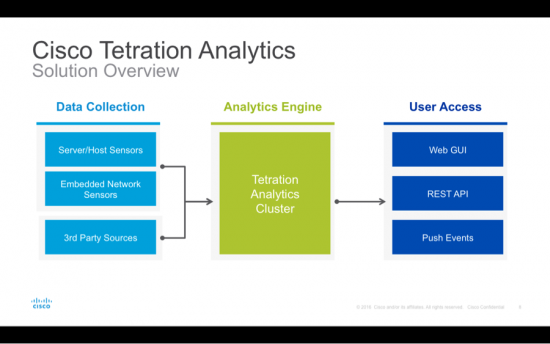
Tetration is comprised of 3 fundamental elements:

  • Data Collection
  • Analytics Engine
  • User Access and Visualization

Tetra components

Data Collection

Data is collected with sensors, of which there are basically 2 types:

  • Software or Host sensors: These can be installed on any end host (virtualized or bare metal) servers.
  • Hardware sensors: These are embedded in Cisco Nexus 92160YC-X, Cisco Nexus 93180YC-EX and Cisco Nexus 93108TC-EX Switches.

Both sensor types reside outside the data path and do not affect application performance. The software sensor uses an average of 0.5% CPU utilization, based on our current experience. The sensor is also configurable, so you can limit the max CPU Utilization.

The hardware sensor adds less than 1% of bandwidth overhead and does not impact the switch CPU at all.

Sensors do not process any information from payloads, and no sampling is performed. Sensors are designed to monitor every packet and every flow. In addition to the sensors, data collection can be done via third-party sources, such as load balancers, DNS server mappings, etc., to collect configuration information.

Analytics Engine:

Data from the sensors is sent to the Tetration Analytics platform, which is the brain that performs all the analysis. This UCS based big data platform processes the information from the sensors and uses unsupervised machine learning, behavior analysis, and intelligent algorithms to provide a turnkey experience for the use cases we’ll discuss tomorrow.

This means that the platform listens and learns what is out there, then identifies who is talking to who, when, where, and for how long. It then builds an understanding of how all these elements behave. Once it has a baseline for their behavior, much can be done. This includes: Replay past events like a DVR for your DC. Alert you to deviations of normal behavior. Tell you what policies will get the objective you want. Predict the impact of what will happen if you change a policy. And much more – all without the need for any fancy data scientists to manage heavy duty big data stuff.

User Access, or Visualization:

Tetration Analytics translates all of this data into useful information through an easy-to-navigate web GUI interface and REST APIs. It also provides a notification interface that northbound systems can subscribe to and receive notifications about traffic flows, policy compliance, etc.

A number of key partnerships will leverage the APIs, complementing the overall functionality of Tetration Analytics and adding value for our joint customers. For more information on these partnerships – who they are and what we’re doing together – please see these quotes from our partners.

Tomorrow, in part 2 of this blog, we’ll cover Use Cases and Benefits, as well as provide additional resources.

Authors

Craig Huitema

No Longer with Cisco