Avatar

Cisco has a broad spectrum of customers across a wide range of markets and geographies. These customers have a diverse set of requirements, operational models and use cases, meaning that a one size fits all SDN strategy does not fit all our customers. As a result, we made a series of announcements earlier this summer (at Cisco Live San Diego) that continued to showcase how our SDN strategy provides customers with a high degree of choice and flexibility. This blog will review key elements of the strategy, as well as provide a bit of background and context around them.
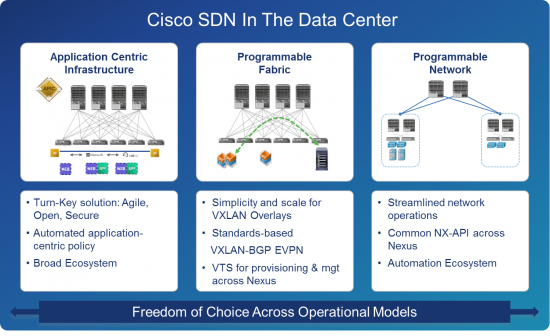
Cisco SDN in the DC

Cisco’s SDN strategy for the Data Center is built on 3 key pillars:

  • Application Centric Infrastructure (ACI)
  • Programmable Fabric
  • Programmable Network

This approach enables our customers to choose the implementation option that best meets their IT and business goals by extending the benefits of programmability and automation across the entire Nexus switching portfolio. Let’s consider each of these pillars.

ACI

A lot has been said and written about ACI already, so I’ll keep this section on ACI brief. ACI is Cisco’s flagship SDN offering. It offers the most comprehensive SDN solution in the industry. Based on an application centric policy model, ACI provides automated, integrated provisioning of both underlay and overlay networks, L4-7 services provisioning across a broad set of ecosystem partners, and extensive telemetry for application level health monitoring. These comprehensive capabilities deliver a solution that is agile, open, and secure, offering customers benefits no other SDN solution can.

I know the paragraph above was a bit of a mouthful. For a quick snapshot of what that all translates to in terms of actually helping a customer, check out this report from IDC.   If you want to learn more about ACI, go here.

Programmable Fabric

This pillar is all about providing scale and simplicity to VXLAN Overlays. Beyond that, it provides a clear path forward for the overall Nexus portfolio to participate in and derive the benefits of SDN.

VXLAN has gained huge momentum across the industry for a wide variety of reasons that, in many cases, involve improvements over traditional technologies such as VLANs and Spanning Tree. These involve attributes such as more efficient bandwidth use via Equal Cost Multi Pathing (ECMP), higher theoretical scalability with 16 million segments, and more flexibility through use of an overlay model upon which multi tenant cloud networks can be built. As momentum for VXLAN networks grows, so does the demand for 2 key things:

  • A standards based approach to scale out VXLANs, and
  • Simplified provisioning and management of them.

Regarding a standards based approach to scale out VXLANs, Cisco is now supporting “Multipoint BGP EVPN Control Plane” on Nexus switches. Why does this matter? Well, the original VXLAN spec (RFC 7348) relied on a multicast based flood-and-learn mechanism without a control plane for certain key functions (e.g. VTEP peer discovery and remote end host reachability). This is a suboptimal approach. To overcome the limitations inherent with this approach, the IETF developed MP BGP EVPN Control Plane as a standards-based control plane for VXLAN overlays. This reduces traffic flooding on the overlay network, yielding a more efficient and more scalable approach.

As far as the second item, simplified provisioning and management, Cisco announced an overlay management and provisioning system. This new solution, called Virtual Topology System (VTS), automates provisioning of the overlay network, so as to enhance the deployment of cloud based services. Through an automated overlay provisioning model and tight integration with 3rd party orchestration tools such as OpenStack and VMWare VCenter, VTS simplifies overlay provisioning and management for both physical and virtual workloads by eliminating manually intensive network configuration tasks. These whiteboard sessions provide an overview and also a bit more technical detail, if you’re interested.

Programmable Network

Infrastructure programmability is a big deal because it drives automation, which drives speed, which is an obvious prerequisite for the success of just about any business dealing with digital disruption. As programmability evolves, Cisco continues to roll out more and more capabilities across the Nexus portfolio. We have a broad range of features in this space including things such as Programmable Open APIs, integration with 3rd party DevOps and Automation tools, Custom App Development, and Bash shell commands. This set of capabilities within NX-OS facilitates the concept of the Programmable Network pillar.   Let’s consider how this may be useful for you.

A while ago, a small number of customers with very large networks started shifting the way they operated. Their networks were growing very large because (not too surprisingly) the number of users, thus servers, was growing very large. As the number of servers grew larger and faster, they realized they had a choice:

  • Hire a zillion new sys admins, or
  • Brutally overwork their existing sys admins, or
  • Deploy and manage servers in new and different ways.

The last option won out (in many cases, anyhow), and the revelation was automation. That is, tools that automated server deployment and management helped these sys admins and their employer’s scale the business. In the process, they paid close attention to metrics like the number of servers a given admin was managing. These “device to admin” ratios went up a lot…like in some cases orders of magnitude. With automation tools and other changes (to culture, process, etc.), some companies saw admins managing not 10’s or 100’s of servers, but 1000’s of servers. They also started experimenting with and employing DevOps – a term that at this point has a multitude of meanings, but is defined here in simple English.

As these elements have converged, people across different silos have started to collaborate a bit more, and as a result, tips, tricks and tools have started to spill across the silos. So, for example, as sys admins saw efficiency gains from using tools like Puppet and Chef to automate tasks on their servers, there was a desire to use the same tools on networks. In other cases, someone who was comfortable with Linux and wanted to work from a Bash shell wanted to use those commands for configuration and troubleshooting on the network as well as servers. Others wanted APIs that would allow extraction of all sorts of arcane box info to be massaged and acted upon by scripts and other tools.

Essentially, there was a need for more elements of the box to be more accessible and programmable in a wide variety of ways. It’s worth noting that although these trends started with a small subset of customers, many of the elements are working their way out to a much broader, more diverse cross section of customers. As this evolution has occurred, Cisco has been adding more programmability to the Nexus switches. This paper provides a more detailed view of various use cases and the functionality Nexus provides.

In summary, these 3 pillars of ACI, Programmable Fabric and Programmable Network provide a wide range of capabilities to help our customers across the broad spectrum of challenges they have. In the coming weeks and months, we’ll provide more information – here, as well as other venues – to help you better understand the strategy and its components. If this blog was too geeky and you’re looking for upleveled info, we’ll have that.  If this was too fluffy, and you want more technical depth, we’ll have that as well.  To punctuate this point, I’ll be hosting a webinar on September 15 that will cover the above in more detail. You can register here.


Authors

Craig Huitema

No Longer with Cisco

Avatar

Can you place phone calls over Wi-Fi to save roaming costs when you travel abroad? Is there an easy solution for making phone calls despite poor indoor cellular coverage?

The answer is Yes! You can do all of the above using a new solution adopted by service providers and cell phone vendors known as Wi-Fi calling. The most compelling aspect of the solution is its non-intrusive nature. You don’t need to install any apps or change your directory; it’s all tightly integrated and built into the phone itself.

Vowifi

Mobile Service Providers (MSP’s) are extensively using Wi-Fi to offload data to meet the ever-increasing demands of mobile device users. In the next phase of Mobile-Offloading MSP’s are now supporting Voice over Wi-Fi (and refer to it as Wi-Fi calling).

iOS and Android devices support it today. Apple’s supports Wi-Fi calling with newer phones along with iOS8, whereas on the Android front, Wi-Fi source code is publicly available, and is being supported on almost 30+ phones.

Services providers are embracing Wi-Fi calling throughout the world. As Sprint and T-Mobile are leading the way in the US; EE in UK and 3, SmarTone are early adopters in Asia. Wi-Fi calling is expected to be supported by larger variety of mobile devices and offered on more MSPs by the end of 2015. AT&T has already enabled this service in the latest version of iOS 9 beta.

Challenges in enabling Wi-Fi calling on IT managed Enterprise Wi-Fi Networks

Continue reading “Cellular Calls on your nearest Wi-Fi AP”

Authors

Damodar Banodkar

Technical Marketing Engineer

Cisco's Wireless Networking Group

Avatar

Co-authored with Dani Schrakamp

Citizen-centric Services in the Digital Era

Governments today face a challenging and rapidly changing environment. Ambitious reforms and revenue generating operations are taking precedence, even while a trend of cost cutting and budget tightening is taking effect. This is presenting a re-envisioned opportunity to truly bring public service to the 21st century. And these transformative efforts are coalescing around governments embracing the digital age.

The oncoming future of citizen services is less and less in the hands of governments alone. The onslaught of digital technologies has empowered the evolution of long-held government practices. The move to citizen-centered services that have been redesigned around the needs of the community user is upon us.

https://www.youtube.com/watch?v=klZCkxEQfIs

Continue reading “#WednesdayWalkabout Series: Appointment Day with the CIO”

Authors

Cliff Thomas

SVP and General Manager, Global Enterprise Segment, Americas

Avatar

While digital disruption is overturning incumbents faster than just about any force in history, many business leaders are not getting the memo.
As I wrote in my previous blog, our recent “Digital Vortex” research found that nearly four in 10 top incumbents will be displaced in each industry due to digital disruption over the next five years. Nevertheless, 45 percent of companies don’t consider digital disruption a board-level concern.

MikeRiegelDigitalVortexPart2Pic1 Continue reading “Digital Business Transformation Starts with Five Key Leadership Questions”

Authors

Michael Riegel

Vice President

Industries, Platforms, and Services Marketing

Avatar

Save Some Money! As a Scot, I have a natural predisposition – almost a gene – for money saving initiatives!  As I’ve been researching new initiatives in my work for Cisco Services over the past few months, I’ve become aware of – for the first time I am ashamed to say in some cases – some huge sinks of your cash in today’s data centers.  In this blog, over 2 parts, I’ll share these with you, with the aim of encouraging you to invest in these money saving activities, with the aim of freeing up investment funds to subsequently modernize your data center, transform your end user experience and improve your asset utilization financial metrics.  In fact, you could create your own “Save to Invest” program by following the 5 tips below.  And while you’re reading this, put on your headphones, turn up the volume, and listen to my “theme tune” for this article, “Money!” 🙂


https://www.youtube.com/watch?v=WTakEzu4QiU


This week I’ll discuss ….

(1) Identify, Turn Off and Remove Idle Servers

(2) Identify Un-used Enterprise Software Applications: Reduce Your Software Costs

(3) Get Rid of Dead Weight – Execute a Server Refresh

Continue reading “Why not Initiate a “Save to Invest” Program for your Data Center? (Part 1)”

Authors

Stephen Speirs

No Longer at Cisco

Avatar

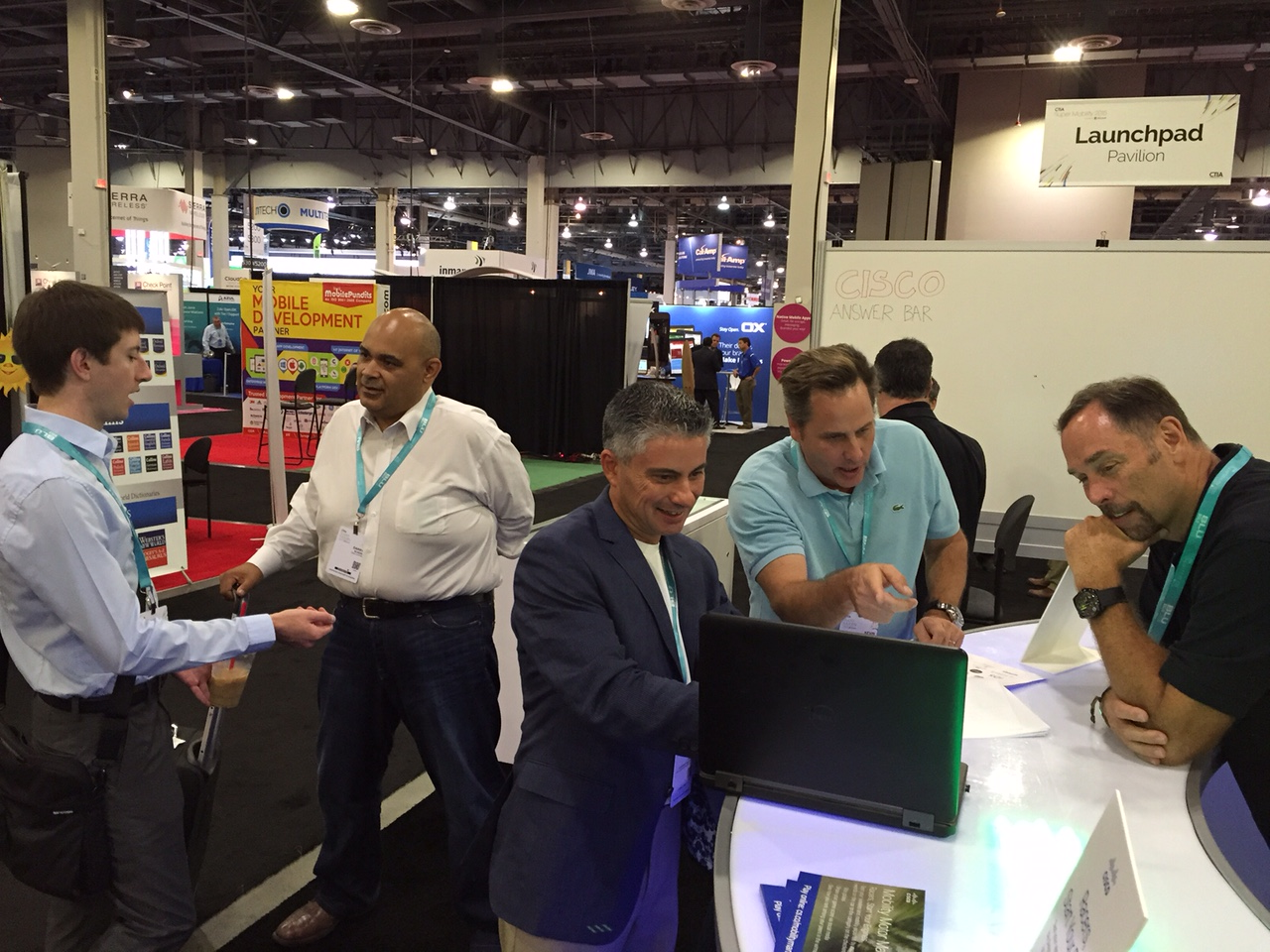
Join us in Vegas this week at CTIA Super Mobility 2015, one of the biggest mobility shows in the country. We’re in the MobilCON space, the premier destination at CTIA where the best minds in business and enterprise IT converge to transform their organizations in this digital, connected era.

CTIA4

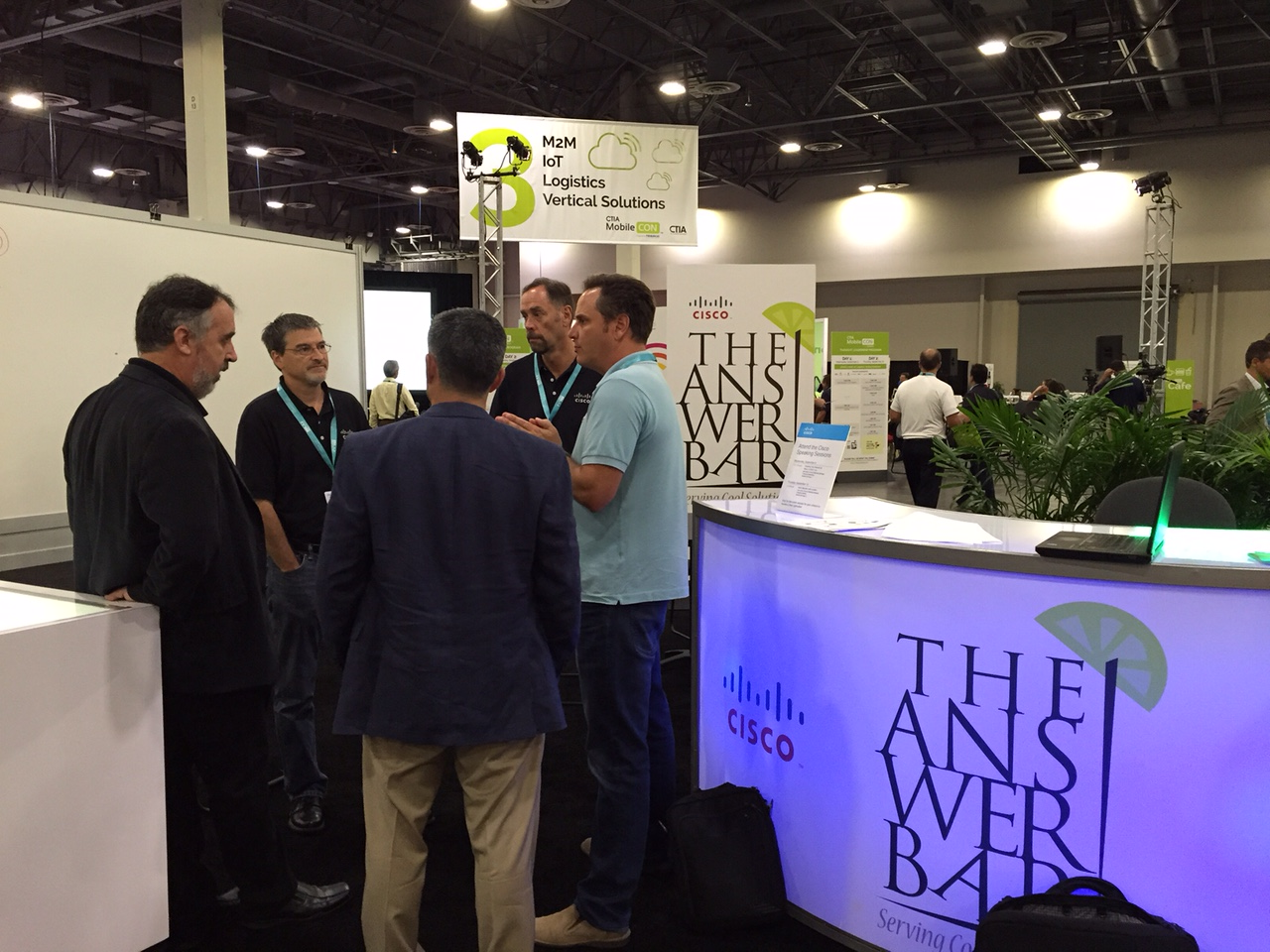
You have questions? We have Answers…at the Bar. We are THE sponsor of the Answer Bar, stationed between Stage 1 and 3. Despite its name, our Cisco experts won’t be slinging cocktails but they will be slinging mobility and wireless know-how.

Check out our live demos, Cisco Connected Mobile Experiences (CMX) and Enterprise Mobility Services Platform (EMSP). In the demos, see how you can gain valuable customer insights and personalize customer mobile experiences by leveraging your Wi-Fi network.

We’ll also have a portfolio of Cisco wireless products on display, including one of our new Wave 2 access points – the Aironet 1850 – as well as our award-winning Hyperlocation Solution.

CTIA5

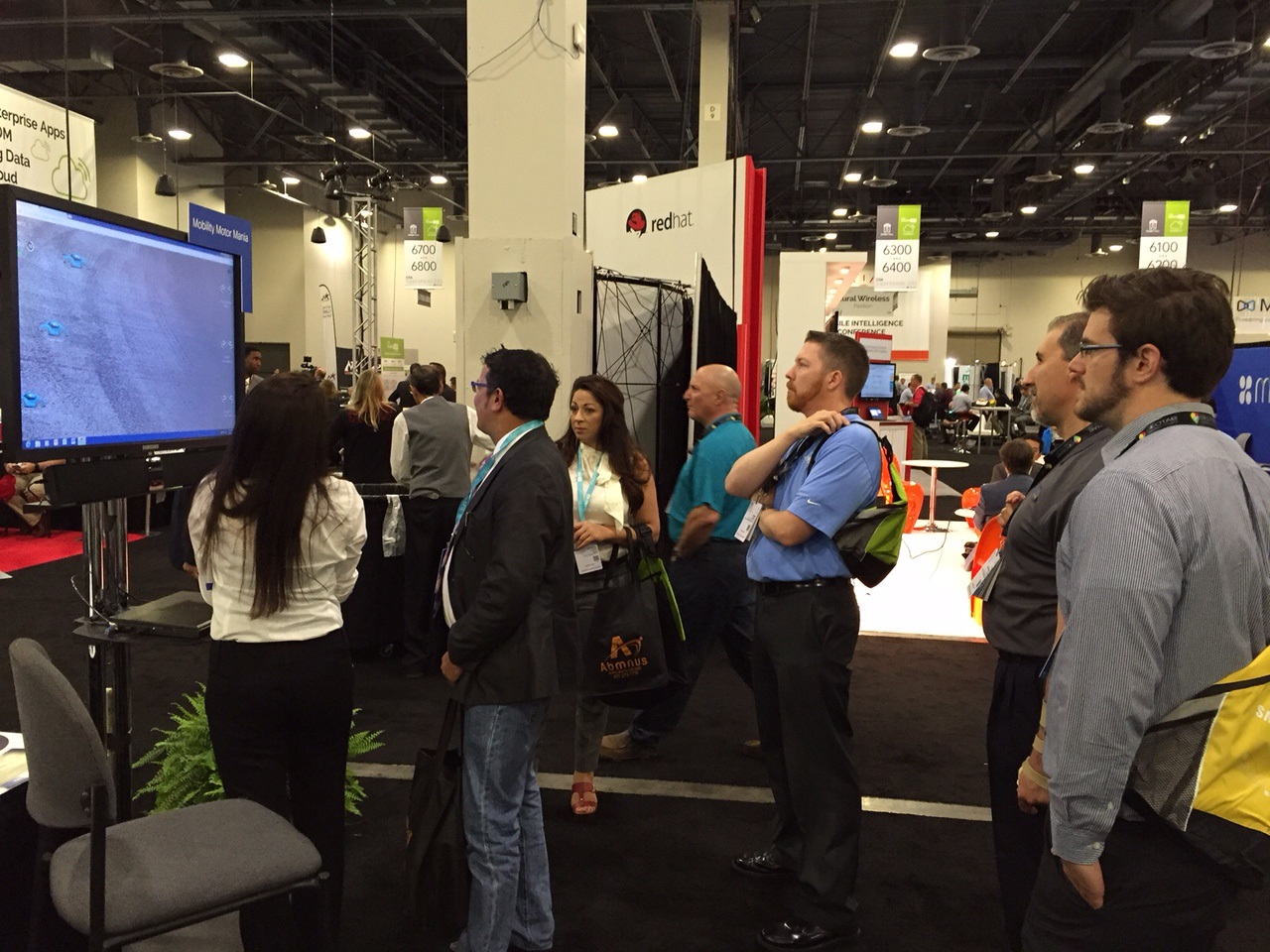
Racers, start your engines! In other exciting news, the official launch of our new Mobility Motor Mania game is happening right here at CTIA MobileCON. Come to the Answer Bar, put on your (virtual) racing helmet, and show off your mobility and wireless geekiness on the big screen for a chance to win an Amazon gift card. (The online launch is tomorrow, September 10, so check back on Twitter @Cisco_Mobility – play at home to see how well you stack up against your fellow mobility geeks.)

MMM at CTIA

Earn a lightsaber and be a Cisco Jedi this week. Watch our Continue reading “Cisco Mobility Has Answers to Your Mobile IT Questions at CTIA MobileCON”

Authors

Jolene Tam

Product Marketing Manager

Security

Avatar
Obstacle Race
Deidra competing in the Rugged Maniac obstacle race in Atlanta.

If you think running a 5K race is challenge enough, try throwing a few daunting obstacles on the course. Cisco Network Consulting Engineer Deidra Brown has faced that challenge, and has overcome it.

A few years ago, Deidra wouldn’t have even considered a physical challenge. She had struggled with weight issues and never thought it possible. However, she set her mind to getting healthy (helped along by some Cisco health incentives) and lost the weight. That sparked the need to give herself a new challenge.

“I wanted to celebrate hitting my 40th birthday and the new me by running an obstacle course race,” she says. “I wanted to know just how far I could push myself.”

And push herself she did, completing the Rugged Maniac Race in Atlanta. Deidra came away from that finish with a new sense of herself, and new self-awareness to share to help others.

“It translates into fearlessness,” she explains. “What’s the worst that could happen? Transforming physically caused me to realize that your brain can transform, too. So you start to say, ‘Why not?’”

Deidra wants to inspire others to be fearless, too. As a co-lead for the Atlanta Chapter of Cisco’s Connected Black Professionals ERO (Employee Resource Organization) and a member of Cisco’s Connected Women ERO, she’s coming out of her shell and inspiring young women in technology to start saying “why not?”

“That’s what I love about Cisco,” she said. “Cisco allows you to be your whole self. You can absolutely change the world, but in a way that’s important to you. Before I came here, I never would have been out of my comfort zone to stand in front of a room and speak. But now I’m speaking to young women, and interacting with executives. It never would’ve happened without changing my point of view and with Cisco behind me.”

Deidra and her Connected Black Professionals Group
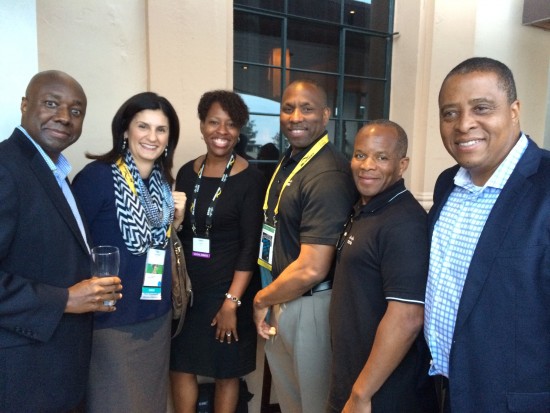
Deidra (that’s her in the middle with Chief People Officer Fran Katsoudas) at Cisco Live with her Connected Black Professionals Group.

This year, Deidra helped put on a week-long STEM (science, technology, engineering and math) camp for young women at the Cisco campus in Lawrenceville, GA.

“We wowed them with the best Cisco had to offer, and students have been emailing me ever since!” she says. “The students are amazed. We show them the future, and their jaws drop.”

She has also worked with Cisco’s Girls Power Tech Day, along with career development days. She does it to bring future women into the technology arena (where she has been her whole career, after getting a degree in Computer Information Systems from Florida A&M), but also to inspire her own daughter.

“Before these events, my daughter couldn’t translate in her mind what I did,” she says. “Now, she understands, and even sees the future opportunities for herself.”

That’s what Deidra now champions as she talks to women in technology today.

“So much of what happens is just saying ‘I’ll do it.’” she says. “The world just opens up! Rather than talking yourself out of something, and realizing a ‘no’ won’t kill you.”

“Be Fearless.”

Bring your aspirations to Cisco – apply for open jobs here.

Authors

Carmen Shirkey Collins

Social Media Manager

Talent Brand and Enablement Team, HR

Avatar

Two things happened this year that give me a reason to stay up past 11:30 p.m.: I had a second baby and Cisco started a new partnership with Jimmy Kimmel Live.  Usually, I catch clips of late-night shows on YouTube. But when we partnered with the Jimmy Kimmel Live team to reimagine the fan experience, I knew I would have some great TV to watch while up with my newborn.

IMG_2959What they’ve accomplished with the Wall of America, powered by Cisco video conferencing, has been truly amazing. It brings a new and different dynamic to broadcast television. Sure, video conferencing on television isn’t new. The difference is video conferencing at this scale and quality!

The show’s team had a vision to not only create a virtual audience during live broadcasts, but also to have the ability to interact with the virtual audience in meaningful (and often very funny) ways. Whether home viewers connect to participate in a funny game, or talk “in person” with celebrities, the segments never disappoint.

Things I’ve learned since the Wall’s debut: Continue reading “Behind the Scenes at Jimmy Kimmel Live’s “Wall of America””

Authors

Angie Mistretta

Chief Marketing Officer, AppDynamics

AppDynamics

Avatar

VortexAt least 40% of businesses will fail at staying digitally agile.

Among 941 business leaders in 12 industries surveyed, 43% percent confirms that they “either do not acknowledge the risk of digital disruption, or have not addressed it sufficiently.” This disquieting statistic is accompanied by another finding: in each industry, four out of ten (40%) incumbents surveyed, whose market shares are dominant today, will be displaced by the digital disruption within five years (Digital Vortex, Global Center for Digital Business Transformation. June 2015). Yet, only 25% says they’re actively pursuing a solution or willing to disrupt themselves in order to stay competitive.

For further reading about this Digital Vortex study, check out my colleagues’ blog: At the Center of the Digital Vortex – Chaos, Disruption, and Opportunity.

In this blog, I’m not going to discuss the study or its methodology with you. Instead, I will talk about the one common denominator that all businesses across industries have – the WAN – the savior for those 40% at risk of being displaced. Continue reading “Digital Vortex: How Not to Be the 40% That Will Fail!”

Authors

Hugo Vliegen

VP of Product Management and Technical Marketing

Enterprise Routing and SD-WAN