Avatar

Co-authored with Dani Schrakamp

Cybersecurity for all

October is #CyberAware month. This year marks the 12th anniversary of this national cybersecurity awareness campaign, with it bringing a hot topic of discussion. In the digital age, increasing amounts of data are being shared in new and often unanticipated ways. This ever-growing abundance of data, devices and connections brings a set of new security threats. And increasingly, governments are feeling the heat. In fact, cyber attacks on United States government agencies increased 782 percent from 2006 to 2012 (source: GAO-13-187).

Just like private businesses, governments want to take advantage of the opportunities offered by new technologies. However, the stakes do not just hold financial or competitive ramifications. Governments at each level hold large amounts of citizen information and sensitive intelligence. It has become more imperative, yet more difficult, to secure and protect critical information and infrastructure, government assets, and citizens. Recent data breaches and cyber attacks targeting companies and government services have not only fostered public fear, but have also dramatically changed the security landscape making personal digital protection as important as physical protection. Individual technology users are taking on greater responsibility for understanding potential threats, to self-educate, and take the proper steps toward protecting themselves online.

With this serious cybersecurity situation urgently requiring the attention of public sector leaders, network security intelligence—the ability to predict, identify and react to potential threats—is taking on a new importance.

https://www.youtube.com/watch?v=RjPB__9BIww

Protect your community against cybercriminals

Today our citizen is a cybersecurity warrior both at work and at home. After a cup of coffee and a quick perusal of the local newspaper, it’s time for work, where our digital citizen is a government leader charged with protecting citizen data, critical infrastructure, and strategic government information.

First on the agenda is a summit meeting of local and national cybersecurity leaders. The venue’s network simply has to work. It has to be secure. And for a cost-effective implementation, it needs a set-up that can be re-used elsewhere for future gatherings. As the organizer, our digital citizen takes a page from the Dutch Ministry of Foreign Affairs and their successful hosting of the 2014 Nuclear Security Summit in the Hague.

Our citizen is now rushing to make a meeting with the community public service administrators. In the face of dwindling budgets, the group is set to discuss how to cost-effectively deliver secure, streamlined services to its widely dispersed population of more than two million residents. Like the government of Castilla-La Mancha in Spain, our citizen recommends a robust web security solution that can also meet identity and access policy requirements. Our citizen also referenced Florida’s Pinellas County, which has seen great success in securely expanding and improving services and convenience for its residents and employees.

cyber

After a quick lunch on the go, it’s time for the digital citizen to meet with the community’s Fire Chief. The fire service has over 100 branch offices, which presents a significant security challenge at the edge. End users also rely on a wide range of mobile devices—including smartphones, tablets, and laptops—and require different access levels. The Chief requests extreme reliability that their caliber of work demands, as well as improved security, scalability, and manageability. Like the New South Wales Rural Fire Service, the community’s emergency services network has to be ready to respond to any circumstance, 24/7, 365 days a year.

Ordinary civilians, meanwhile, face new urban threats in the form of Internet fraud and identity theft. You wouldn’t leave your house unlocked, accept gifts from a stranger, or leave the keys to your car in the ignition. So why is a digital security solution less obvious?

The workday is over and our citizen is now at home. Recognizing that as the line between our digital and physical worlds become increasingly blurred, it’s more important for owning personal online presence. Our citizen has taken some preemptive steps to staying safe and secure online. Especially as a government employee, it is the citizen’s responsibility to implement best practices at home and the workplace.

First, the digital citizen takes time to understand the cyber players for consideration—both inside and out. Not only are hackers a threat to personal and professional information, but benign, insider activity can also expose vulnerabilities to malicious actors. That is why our citizen teaches their entire family about protecting themselves online. In fact, with the growing trend of youth cyber awareness and education programs, the digital citizen’s children are encouraged to learn about cybersecurity through camps, classes, and after-school programs. Finally, our citizen uses simple practices that can easily be implemented such as, changing passwords regularly, and avoiding using the same or simple passwords across personal and professional accounts. The citizen also makes a point to ensure Internet-connected devices, like laptops, phones and tablets, don’t fall victim to malware by keeping software of operating systems up-to-date. On the use of social media, our citizen recommends checking privacy settings, recognizing that hackers can take advantage of public information to draft targeted emails for phishing.

The concepts of smart cities and digital government are revolutionizing the way in which everything is managed and delivered in the public sector. At the same time, a growing dependence on digital technology to deliver everyday services brings with it new vulnerabilities. Our citizen displays an important takeaway. From the workplace to the home, everyone is responsible for cybersecurity and needs to be proactive in maintaining security standards in all aspects of our increasingly digital world.

Next Stop

Stay tuned for next Wednesday’s post from #MOTM2015. And be sure to check back each week as we explore new themes, challenges and observations.
Series Image (1)

Additionally, you can click here and register now to get your questions answered on how to become the next digital community. Finally, we invite you to be a part of the conversation by using the hashtag #WednesdayWalkabout and by following @CiscoGovt on Twitter. For more information and additional examples, visit our Smart+Connected Communities page and our Government page on Cisco.com. Enjoy the Wednesday walkabout!


 

Authors

Peter Romness

Cybersecurity Principal, US Public Sector CTO Office

Avatar

Take A Stand on Private Cloud

The cloud has become inescapable. Email about it clutters your IN box, headlines about it adorn your magazines, colleagues chatter about its merits in the hallways, and meeting after meeting is held to determine just what—if anything—should be done about it at your company. Should you be using public cloud? Building a private one? Going hybrid? What workloads are best for the cloud? And how is the company really going to benefit from using it anyway?

If you’re tired of wrestling with these issues and ready to take a stand, I encourage you (or someone who will take good notes for you), to attend our upcoming webinar about Cisco Metapod.

A core component of Cisco’s cloud portfolio, Metapod is a fully-managed, on-premises, OpenStack-based private cloud. It delivers the ease-of-use that has made public cloud so popular, in addition to security, performance, and cost-savings advantages that public cloud can’t begin to touch. Our world-class team of OpenStack experts builds, monitors, operates, and upgrades the cloud for you—so you don’t have to worry about hiring a team, training them, and wondering whether or not the cloud they build will meet your availability requirements. You simply use Cisco Metapod—just like you’d use public cloud—and reap the very real benefits associated with it. Best of all—we can have a production ready cloud up and running for you in about two weeks.

Ready to learn more? Sign up to attend the webinar on Tuesday, October 20th at 9AM Pacific. No salespeople, no pressure—just a chance to sit back in the comfort of your own office, listen to the value proposition (as well as an explanation of how it all works) and figure out whether or not Metapod is the right private cloud for you.

Register here to reserve your spot!

Authors

Ali Amagasu

Marketing Communications Manager

Avatar

Worries about diminished GDP growth, a shrinking middle class and rising geopolitical conflicts are rampant. Many may be concerned about the direction our world is headed in, but complete disruption of the ways our cities and countries operate is key to turning it around.

Digitization will impact productivity like no other disruptive trend being discussed right now – tapping into the 50 billion devices that will come online over the next five years – this will have 5 to 10 times the impact the Internet has had on our lives so far. This will be key to how countries maintain global competitiveness, increase GDP growth, foster innovation and create new jobs.

A great example is France. Government leaders clearly understand the importance of digital transformation and are taking the digitization process a step further by building an ecosystem that will grow innovation power. Collaboration between corporations and startups will be key to maintaining international competitiveness across Europe. I traveled to France last week for the opening of the Paris Innovation and Research Center, which will bring together government, companies like Cisco, startups, universities, developers, researchers, and the venture capital community to ensure continuous innovation and accelerate of France’s digital transformation. With tools like a floor to ceiling interactive video wall, groups from around the world can collaborate seamlessly. Through the right infrastructure and resources, France will be able to build an environment that supports new ideas to improve the citizen experience and transform the way the country operates. Over the next 10 years digitization could help France generate $101 billion contribution to GDP, 1.1 million jobs, and $51 billion in value from a sustainable innovation network.

While people question whether economic slowdown in emerging markets is an ongoing trend, India has laid the groundwork for prosperity. I sat down with Prime Minister Narendra Modi on his trip last month to Silicon Valley. As the first Indian head of state to visit California in three decades, he sent a clear message about his commitment to partnering with industry on projects for his Digital India initiative. One key area that this will impact greatly is a highly skilled workforce – we’re already seeing this in the ICT industry, a frontrunner in creating a talent pool ready for jobs of the future. Additionally, Modi has set a vision for India to be a key manufacturing hub for the world, which will enable local innovation, jobs creation and increase India’s global competitiveness. Finally, with the Startup India initiative Modi has shown full support for creating an environment that is conducive to next generation companies. With the right technological investments, and partners, India can completely change how citizens, businesses and the government interact, potentially adding $224 billion in economic value for the country over the next decade.

I believe the time is now for industry and government to take the initiative on transformational projects to harness the power of digitization. We must take advantage of the $4.6 trillion public-sector opportunity the next phase of the Internet holds. Through training programs for the workforce of the future, harnessing an innovation ecosystem, leveraging the power of partnerships, and building a secure digital infrastructure with the ability to scale, countries can not only survive, but will thrive in this new Digital Age, unlocking new economic growth.


Authors

John Chambers

No Longer with Cisco

Avatar

Igor-Dayen1-150x150Written By Igor Dayen, SP Product and Solutions Marketing

A year ago, SK Broadband announced the world’s first 10 Gbps Internet service at the 2014 ITU Plenipotentiary Conference. This innovative new service was 100 times faster than existing services, which routinely deliver download speeds of 100 Mbps.

Today SK Broadband continues to break new ground.   Just in time for the SCTE Cable-Tec Expo 2015, SK Broadband announced that they will deploy Cisco’s next-generation converged cable access platform (CCAP) across their national footprint. SK broadband chose Cisco’s cBR-8 as the platform to improve the user experience for their 4.7 M subscribers. In addition to supporting the rollout of multi-gigabit services the Cisco cBR-8 platform is a key part of SK Broadband‘s new network architecture.

cbr8

As part of Cisco’s Evolved Programmable Network (EPN), the Cisco cBR-8 Continue reading “South Korea’s SK Broadband Improving the User Experience with Cisco cBR-8”

Authors

Greg Smith

Sr. Manager, Marketing

Cisco Solutions Marketing

Avatar

flexpod_logo


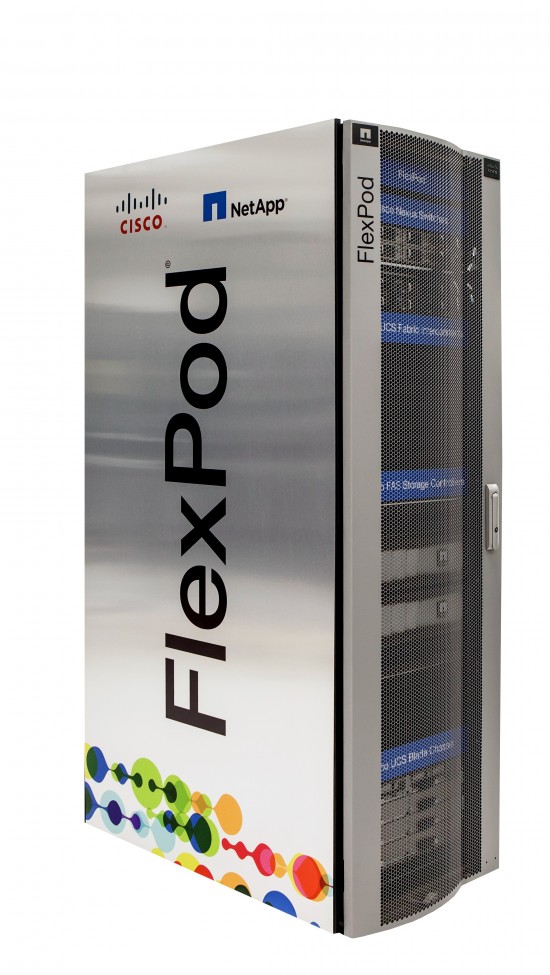
Five years ago, Cisco and NetApp released FlexPod, combining Cisco UCS integrated infrastructure and NetApp storage, with the goal of increasing IT responsiveness to business demands while reducing cost and risk. We started with solutions focused on virtualized infrastructure and desktop virtualization and experienced great success. We have continued to integrate new technologies and expand the solution portfolio to include cloud solutions, enterprise applications, and analytics from the data center to the edge.flexpod_server

In the last five years, FlexPod has created outstanding momentum with customers and partners. In this short period of time we have:

  • Generated shared revenues of 5.6 billion
  • Over 6300 customers in 100 plus countries
  • Collaborated on more than 100 validated application and infrastructure designs
  • Created a strong partner ecosystem with greater than 1100 partners

We would like to thank our technology partners – VMware, Citrix, SAP, Oracle, Microsoft, and Red Hat – for their collaboration and support.

We are very proud of our success but also realize that supporting the business from an IT perspective is getting more complex as users require performance and flexibility but also want a simpler approach to deploying and managing infrastructure that better optimizes costs and existing staff resources.

Together, Cisco and NetApp, with our partners, continue to expand FlexPod capabilities to address evolving business requirements. Cisco and Netapp have released new FlexPod solutions to help application run at their best. FlexPod solutions with Cisco UCS, NetApp All Flash FAS and Cisco ACI deliver incredible new levels of performance.  FlexPod with Cisco ACI for Microsoft and SAP applications offers a simple, policy-based approach to application deployments.

Continue reading “Celebrating Five Years of FlexPod Success and Innovation”

Authors

Jim McHugh

Vice President, Product and Solutions Marketing

Unified Computing Systems

Avatar

It’s time to face the facts. Unlike fashion trends, which come and go at a rate nearly impossible to keep up with, cloud computing is sticking around—for good.

Cloud is no longer considered a possible solution for your infrastructure needs; it’s a necessity. More companies are transitioning to a cloud platform for improved cash flow, higher efficiency, and an environment that supports growing business demands. You’ll just need to keep up.

Consider your workloads functioning similar to the Internet. Just as data is made accessible between systems, your workloads would move seamlessly and securely between clouds, giving you the flexibility to work from anywhere and the capability to expand your data center. Utilizing our large network of partners, we are able to make this a reality. We call it Intercloud—a globally connected network of clouds.

Making decisions around—and the actual transition to—the cloud can be intimidating, to say the least. We certainly don’t expect you to have to take it on alone. Cisco Powered partners are industry-leading cloud providers that, together, create a team of professional, trusted companies who can help you from initial planning stages, through implementation, and onward with continued management. Our unique partnerships make opportunities readily available to you that are tailored to your specific needs.

Read more about our partnerships, the Intercloud, and other Cisco cloud services in our newly released edition of Unleashing IT. You’ll find proof of the solidity of cloud, and why it’s putting companies much like yours at an advantage.

Here are just a couple of stories featured in this edition: Continue reading “A New Type of Networking: Cisco Powered Cloud Partnerships”

Authors

Adrian den Hartog

Senior Marketing Manager

Field Marketing US Commercial

Avatar

Written By Todd McCrum, Director, Product Management, Cable Access business unit, Cisco

By now, the SCTE Cable-Tec Expo is in full swing, and, as (widely!) expected, the matter of DOCSIS 3.1 — the latest iteration of the Data Over Cable Service Interface Spec — is a front-of-mind topic for pretty much everyone here.

1

Why: Because it’s the next step, and a major one, for all multichannel video providers needing to stay ahead of the 50+ percent year-over-year growth in broadband consumption. (Which is everyone.) We’ve said it before, we’ll say it again: Nothing, in the history of consumable goods, has g Continue reading “An Update On the Best Ever Bandwidth Balm: DOCSIS 3.1”

Authors

David Yates

as Director of Service Provider Video Marketing at Cisco

SP360

Avatar

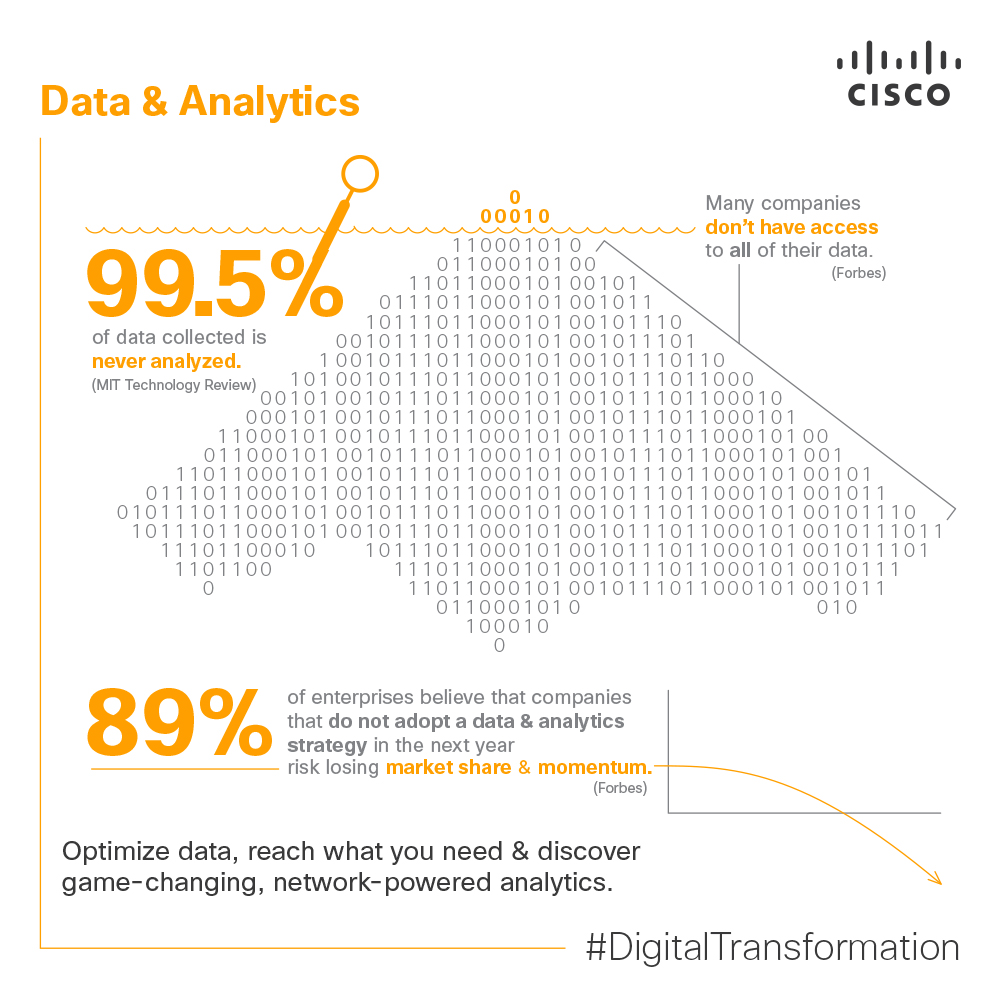
The exciting trend of digital transformation has accelerated the demands on IT leaders to help their business counterparts get value out of data. The large majority of data companies collect is never analyzed. In the quest to find untapped efficiencies, achieve competitive differentiation, and accelerate innovation, companies need all of their data to work for them. The focus needs to be on a holistic, shared digital vision that brings together strategy, people, and processes. As organizations take new steps to becoming more analytically minded, the lines of communication between IT and Lines of Business often become dysfunctional. Recently at a client meeting, IT and business managers focused on analytics were introducing themselves to each other for the first time, in front of us. Throughout my years of helping organizations transform their businesses, I found some common barriers to progress. Below are some considerations – often overlooked – that I hope will help guide a productive conversation between IT and the Business:

  1. Data and technology are just a part of the solution.

While data grows and technology advances, both organizational processes and talent struggle to keep pace. When companies commit to becoming data centric, the risk is to get blinded by the technology promises of data-driven insights that deliver business transformation. Businesses can’t transform with data and technology alone, it takes the right people and processes to make a successful transformation.

The most practical approach to becoming a data-driven company is to take the time necessary to focus on the exact business problem and to ask the right questions. Those include for example:

  • What business (or customer) problem are we try to answer and why?
  • What kind of information do we need exactly?
  • Where does the data to get to that information reside and what are the gaps?
  • Do we therefore need more data and if so, how will we get it?

Cisco_DigitalBusiness Analytics Infographic

Focus next on your organization’s internal data, then external data, then, what new skills are needed and how to acquire them (through people working for us, or with us?).

In particular, ask yourself:

Continue reading “Digitizing the Business: Three Tips for IT and Business Leaders”

Authors

Nicola Villa

Managing Director, Global Analytics Practice

Cisco Consulting Services

Avatar

At Cisco, we want our employees to be at their best, and that means we need to bring the best to them.

This is why we launched Our People Deal, which is centered around unleashing every employee’s potential by connecting everything, innovating everywhere and benefiting everyone. Our People Deal is simple: an understanding of what Cisco can do for our people and what we expect in return. It is the foundation in providing an unmatched employee experience.

We are personally very proud of the culture we continue to build together and creating a community of 70,000+ people. Our people are our No. 1 commitment and we want them to be proud to be a part of Cisco.

I am pleased to share several updates that highlight how we are living Our People Deal.

Today we were recognized as one of the top 25 companies on The Great Place to Work® Best Multinational Workplaces list. Two-thirds of the score is comprised of employees’ responses representing 45 countries. Being part of this prestigious list tells us that Our People Deal is being felt among our global teams and that they trust our leadership team and believe in our vision and strategy.

We were also ranked No. 26 by LinkedIn as one of the Top Most InDemand Employers in North America. This is very exciting for us, as these rankings are based on the billions of interactions from LinkedIn’s 380 million members and the innovative approach companies are taking to enable their employees and followers to be passionate advocates. We not only talk about Cisco in social media, but encourage our employees to share their experiences.

To help our employees have the best experience, we know that one of the most important things we can do for them is to offer them access to quality care, manageable medical spend and holistic health care. Last week we celebrated the opening of our new LifeConnections Health Center facility at our Research Triangle Park campus in North Carolina, one of three state-of-the-art facilities we have at our largest campuses. While our employees and families can get primary and family medical care from the best healthcare providers, they also can get other personalized care through chiropractic, acupuncture, physical therapy, health coaching and counseling services. Need glasses? Visit the optometry care center for your check up and then buy your glasses or lenses. Need real time with your doctor if you are at home sick? You can do that through Cisco TelePresence, digital media and mobile devices. When you just need a bit of relaxation, there also is the massage room (one of my favorite rooms to visit!)

From healthcare options, to your birthday off, to paid family time off to performance management focused on development, we are seeing Our People Deal manifest in everything we do across Cisco. We want to enable our people to have impact. We want them to be part of the most incredible and inclusive teams.

This means as a company Cisco emphasizes a culture that provides our employees with the most innovative experience, where they continuously learn, live their passions and can be their best selves.

It is an exciting time at Cisco and together we are building our next chapter. #WeAreCisco #gladtobehere

Authors

Francine Katsoudas

Executive Vice President

Chief People, Policy & Purpose Officer