Avatar

The move to cloud can be daunting.  In their blog, Overcoming the Organizational Challenges of Moving to Cloud, Presidio describes one of the barriers organizations face when transitioning to cloud.  Building a hybrid cloud – one based on private on-premises resources extended through the public cloud network – requires many shifts in thinking for IT.

In short, IT is becoming the cloud services broker within their own company.  This means IT is less about building out infrastructure than it is brokering cloud-based services and applications. To achieve this, IT needs to be able to provide services tailored to their user base.  In turn, IT needs to be able to access flexible services designed to meet their specific requirements.

Another important shift in thinking for IT is to realize that the cloud is a doorway to more than just virtual servers.  It is a portal to new applications and new ways of doing business so you can act upon emerging opportunities quickly.  It is an assurance that you can have the performance you need to follow through on these opportunities.  And it is a direct connection to ongoing innovation, enabling your organization to seamlessly access leading technology without extensive capital investment.

Cloud providers like Presidio understand this dual role of cloud, to help manage costs today while enabling unrestricted expansion into the future.  And, with their Cisco Powered services, Presidio offers a cloud that is also built for reliability, security, and scalability.

Learn more about how Presidio’s Hybrid Cloud and Cisco Powered cloud and managed services can transform your business.

Authors

Xander Uyleman

Senior Manager

Global Partner Marketing

Avatar

Let’s start this blog with a hypothetical scenario. Suppose you’re the CIO and you’ve committed to your CEO and the Board of Directors that your company will execute an innovative new strategy to delight your customers directly through their mobile devices  and leverage the cloud to service them at scale.  You are 90% complete in your development and you just need to complete your final beta and production readiness testing to roll it out to production when you learn your leading competitor is going to beat you to the market with their own application next month.

Is your cloud infrastructure really as agile as you believe? Will the physical infrastructure scale with the load?  Will you be able to secure your application and data from threats?  Can you rapidly deploy a production application across servers, networks, and storage infrastructure securely?

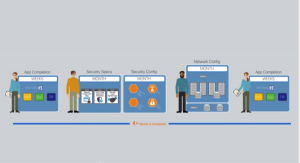
During Cisco’s Data Center webcast Jan 13, we’ll walk through the hypothetical use case above and then see how Day 1 operations for configuration and deployment can be addressed in real life by customers and enabling vendors.

Episode 1: An Impossible Deadline

day1 (click to play)

We’ll look at Day 2 operations and learn how important application visibility across physical and virtual infrastructure is to meet the most stringent uptime requirements.

Episode 2: The Needle in the Haystack

day2

 (click to play)

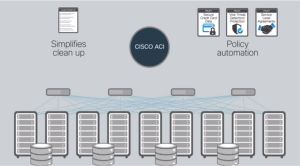
Finally, we examine the challenges of de-commissioning applications securely while maintaining compliance.

Episode  3: Operation Clean Up

day3

 (click to play)

DCJoin us during the webcast as we hear from ACI customers who will share their production experiences with ACI and  how it impacts their day 1 and day 2 operations.  Hear ACI ecosystem partners who will share how they collaborate through ACI’s open policy model to simplify application delivery, security and orchestrate open clouds.

Make a note on your calendar for January 13th at 9 AM PST/ 12 EST  and see  Is your Data Center Ready for the Application Economy? (Register Here!).

The video on demand will be accessible through this same link.


If you are traveling to Cisco Live in Milan, Italy; please come to my session  PSODCT-2455 “Simplify Day 0, 1, and 2 Operations in Application Centric Data Centers” on Jan 29th from 1:15PM — 2:15PM to learn how operations like tenant on-boarding, creating applications containers and self-service catalogs, application monitoring and troubleshooting can all be simplified with application policy driven automation.

Authors

Harry Petty

Director

Data Center and Cloud Marketing

Avatar

It’s NRF time again! NRF, the retail industry’s biggest conference, is back in NYC this week. Big data and analytics are still top of mind this year in retail, but the hot topic added to the mix is the use of beacons powered by Bluetooth low energy (BLE), enriching your engagement with customers and helping you make smarter business decisions.

Once again, Cisco Connected Mobile Experiences (CMX) is here at NRF this year. We’re ready to show you how you can leverage real-time analytics, location innovations (including BLE technology), and our app development platform to optimize operations, boost customer satisfaction, and increase revenue.

https://www.youtube.com/watch?v=JyWiMhjbTvM

If you’re coming to NRF this week, check out our demos at Booth 2052 and learn how Cisco CMX can transform your retail business.


Authors

Jolene Tam

Product Marketing Manager

Security

Avatar

Today’s retailers face a rising tide of change, disruption, and challenges, all driven by technology. As their business landscape is upended, many are struggling to adapt to changing consumer behaviors, competition from disruptive innovators, and exponentially increasing complexity.

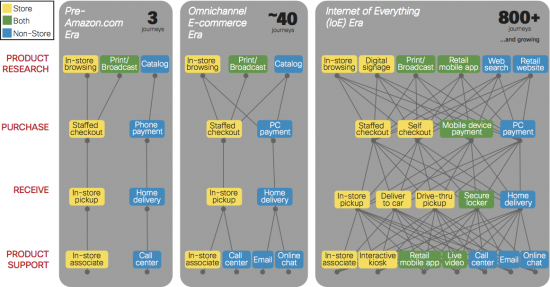
The source of much of this disruption is the Internet of Everything (IoE). IoE is the networked connection of people, process, data, and things, and Cisco projects these connections to surge from 13 billion today to 50 billion in the next decade. For retailers, that means a sharp increase in the potential channels, devices, and shopping journeys that are available to consumers. Increasingly, retailers must meet new demands for relevant, efficient, and convenient shopping experiences, whether in-store or out.

IoE_Retail_Figure_Journey_3-2

But for traditional retailers, IoE also presents tremendous opportunities. At the National Retail Federation’s “Big Show” in New York this week, I have seen a great openness to change and innovation. As I see it, traditional retailers are ready to step into the IoE era, but they will need the right ecosystem of partners to guide them through the transformation and help them make the right investments.

To better understand these opportunities and the changing competitive dynamics in retail, Cisco recently undertook a comprehensive, three-pronged study consisting of original research, economic analysis, and interviews with retail industry thought leaders. Released this week, the first wave of primary research findings includes 1240 consumer responses from the United States and the United Kingdom.

A key theme that emerged from the research was that today’s consumers demand new kinds of digital experiences, both in-store and out. In our survey, we presented respondents with 19 concept tests — everything from digital signage and same-day delivery to mobile payments and augmented reality. Above all, we found that shoppers seek a hyper-relevant experience — more so than a hyper-personalized one. In short, efficiency and savings are more important to them than personal engagement.

In our survey, 38 percent of respondents identified greater efficiency in the shopping process (e.g., ensuring items are in stock, speeding checkout times) as the area retailers most need to improve. By contrast, 13 percent sought improvements that would lead to a more personalized shopping experience. Continue reading “In Retail, Insight Is Currency, and Context Is King”

Authors

Joseph M. Bradley

Global Vice President

Digital & IoT Advanced Services

Avatar

Cisco will be featured in two Big Idea sessions at this year’s NRF conference starting tomorrow, and I’m happy to introduce guest blogger Lisa Fretwell, who will be leading one of these two seminars. Lisa is the Managing Director of Retail at Cisco Consulting Services, specializing in the Internet of Everything and analytics, and how these new capabilities can transform and differentiate retail and consumer product businesses:

In today’s digital era, stores are clearly challenged in terms of sales and profitable growth. Every retailer is faced with needing to change and innovate their store to deliver results.

Overall, the majority of stores across all categories are demonstrating flat or declining like for like, exacerbated by price deflation. Cisco’s recently concluded annual survey on shopper behavior of 10,000 shoppers highlights the ongoing shift away from the store to online. Twenty percent of consumers now make more than 50% of their purchases online, and this number is expected to continue to grow.

However, when you dig down into the data, you may be surprised by some of the changes. As just one example, we asked shoppers which categories they had significantly moved from store to online. We learned that 41% of the consumers surveyed have somewhat or significantly increased their online purchases of apparel in the last two years – clothing, shoes, and accessories. Traditionally, these products are the life blood of why shoppers go to a store – to touch, feel, try on.

So is it all doom and gloom for shops? No, not if you’re up for innovation and change. There are still significant reasons for shoppers to visit stores. Our research highlights some key insights that retailers must leverage to drive healthy results and make the store experience hyper-relevant.

Our experience from retail engagements suggests the answer lies in two areas: being able to deliver dynamic experiences, and to improve ways of working. From instant response to customer needs to improved process digitization, we are seeing that retailers are increasingly relying on a combination of sensors, analytics, automation, cloud, and edge computing.

If we apply this model to a $20 billion turnover retailer with 900 stores, Cisco estimates that there is $312 million of incremental benefit to be had: $170 million from digitizing ways of working: staffing optimization, store routine digitization, and colleague collaboration; plus $142 million from improved customer conversion through insight, digital offers and loyalty, service, and cross-channel selling. We believe this approach offers the next much-needed step change in store economics.

To learn more, please join us at NRF on Sunday for Cisco’s Big Idea sessions:

  • The first, at 10:15 am in Room 4 of the Expo Hall, covers more on our annual survey results. It is led by Cisco Vice President Joe Bradley (replacing Anabelle Pinto due to a family emergency).
  • Then, at 2:00 pm in Room 4, Cisco’s Shaun Kirby and I will discuss how retailers are taking advantage of the “Internet of Everything: New Horizons in Retail.”

We look forward to seeing you there!

Authors

Dianne Lamendola

Senior Practice Advisor

Avatar

Shopping centres have been around for thousands of years, supposedly starting in Ancient Rome. The basic concept of a shopping centre has not changed much since then; a large building, or multiple buildings connected, which contain a variety of retail stores, services and restaurants. However, we at Land Securities, a commercial property group based in the UK, are changing the way customers experience shopping with our newest shopping centre, Trinity Leeds, “the mall of the future.” Continue reading “How Trinity Leeds is changing the future of retail with IoE”

Authors

Craig O'Donnell

Head of Information Systems

Land Securities

Avatar

This is my first blog post within the Data Center and Cloud technology area. I recently joined the Openstack@Cisco team under Lew Tucker focusing on advanced OpenStack System research as a Cloud Architect. As part of this role I performed a gap analysis on the functionality (or the lack thereof) of multicast within an OpenStack based private Cloud. Coming from Advanced Services I have seen multicast as a critical component of many datacenters providing group based access to data (streaming content, video conferencing, etc.) . Within a Cloud environment this requirement is almost if not more as critical as it is for enterprise data centers.

This blog will be the first in a series highlighting the current state of multicast capabilities within OpenStack. Here, I focused the analysis on OpenStack Icehouse running on top of Redhat 7 with OVS and a VLAN based network environment. I would like to thank the OpenStack Systems Engineering team for their great work on lying the foundation for this effort (preliminary tests on Ubuntu and Havana).

I used a virtual traffic generator called TeraVM to generate multicast based video traffic allowing for Mean Opinion Score calculation. The Mean Opinion Score or MOS is a calculated value showing the quality of video traffic based on latency, jitter, out of order packets and other network statistics. Historically, the MOS value was based on human perception of the quality of voice calls, hence the word opinion. Since then it has developed to an industry standardized way of measuring the quality of video and audio in networks. It is therefore a good way to objectively measure the performance of multicast on an OpenStack based Cloud. The MOS value ranges from 1 (very poor) to 5 (excellent). Anything above ~4.2 is typically acceptable for Service Provider grade video transmission.

I performed the multicast testing on a basic controller/compute node OpenStack environment, with neutron handling network traffic. In this blog, I focus my analysis solely on opensource components of OpenStack with Cisco products (CSR and N1K) being discussed in a follow-up blog. The tenant/provider networks are separated using VLANs. A Nexus 3064-X is used as the top of rack switch providing physical connectivity between the compute nodes. The nodes are based on UCS-C servers.

Continue reading “Investigating OpenStacks Multicast capabilities (Part 1 of 3)”

Authors

Dr. Sebastian Jeuk

Lead Test Architect

Solution Validation Services, CX

Avatar

Over the past quarter century, industry standard bodies like the TPC and SPEC have developed several standards for performance benchmarking, which have been a significant driving force behind the development of faster, less expensive, and more energy efficient systems. The two most influential database benchmark standards have been TPC-C ( industry standard for benchmarking transaction processing systems) and TPC-D and its successor TPC-H (industry standards for benchmarking decision support systems). The first TPC-C result1 was published in 1992 and the first TPC-D result2 was published in 1997, both by IBM. 1000+ combined publications and hundreds of research papers ever since that drove several innovations in relational database management systems.

The industry and technology landscapes have changed. IT is being extended far beyond traditional transaction processing and data warehousing to big data and analytics. Foreseeing the industry transition the TPC has developed TPC Express Benchmark HS (TPCx-HS) – industry’s first (and so far the only) standard for benchmarking big data systems to provide the industry with verifiable performance, price-performance and availability metrics of hardware and software systems dealing with Big Data. This benchmark can be used to asses a broad range of system topologies and implementation of Hadoop systems in a technically rigorous and directly comparable, in a vendor-neutral manner.

It’s my great pleasure to announce industry’s first ever TPC Express Benchmark HS result. We published not one but three results at 1TB, 3TB and 10TB Scale Factors today demonstrating the performance and scaling of Cisco UCS Integrated Infrastructure for Big Data:

[HSph = a composite metric representing the processing power. $/HSph=price-performance]. The results were audited by TPC certified auditor.

The benchmark configuration consists of Cisco UCS Integrated Infrastructure for Big Data  (Cisco UCS CPA v2) with two redundant active-active Cisco UCS 6296 Fabric Interconnects running Cisco UCS Manager version 2.2, 16 Cisco UCS C240 M3 Servers running Red Hat Enterprise Linux Server 6.4 and MapR Distribution including Apache Hadoop.

Additional Information
Cisco UCS Performance Brief
TPC Express Benchmark HS Official Site
TPC Press Release on TPC Express Benchmark HS
Partner Blog

154 tpmC, $188,562/tpmC, 12/1995, IBM
284 QthD, $52,170/QphD, IBM, 09/1992, IBM

Authors

Raghunath Nambiar

No Longer with Cisco

Avatar

As a Senior Network Engineer I’ve seen many end-user issues that look like big problems but are actually very simple. The difficulty lies in a lack of understanding between end users and IT teams who support them. In this article, I want to give some advice to improve communications and relationships between these two groups.

Maher Abdelshkour article image Continue reading “IT professionals and end users. Cui Bono?”

Authors

Maher Abdelshkour

Sr. Network Engineer

Information Security Analyst III