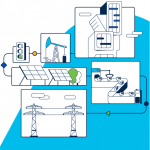
Industrial operations are the backbone of our modern world, powering everything from manufacturing plants to critical infrastructure. However, as these environments become more connected, they also become more vulnerable to cyber threats.
Unlike traditional IT attacks, a cyberattack on Operational Technology (OT) system can have far more serious consequences: production shutdowns, equipment damage, safety hazards, and even environmental impact. For many organizations, the question isn’t if an attack will happen, but when. So, where do you begin to protect these critical industrial networks?
Securing complex industrial environments can seem overwhelming. However, by adopting a structured, step-by-step approach, you can build a strong defense. Read on to learn the 5-step framework to help you improve your industrial cybersecurity practices:
-
See everything on your industrial network
You can’t protect what you can’t see. Industrial networks often grow organically, with new devices added and old ones forgotten, creating blind spots and a sprawling attack surface. Without a real-time and automated way of building a comprehensive and detailed asset inventory, you won’t know which devices have vulnerabilities to patch or can be accessed from the internet by bad actors.
Cisco Cyber Vision is a software feature built in to switches and routers to transform the network into a sensor to automatically discover all connected OT assets, map their communication flows, and identify vulnerabilities. This provides a clear, real-time view of your entire OT environment without disrupting operations, enabling you to identify risks early and build a strong defense.
-
Segment your network into smaller zones of trust
Over time, industrial networks tend to grow organically and often haphazardly, as new devices and connections are added to support evolving operational needs. Without proper segmentation between your operational zones, a bad actor can move freely across the entire network, spreading threats laterally and causing widespread disruption.
Network segmentation divides your industrial network into smaller, isolated zones, each containing specific devices or processes. Strict policies control communication between zones, containing any breach to a limited area.
Cisco Cyber Vision’s AI-powered segmentation helps organizations make sense of these sprawling environments. Cyber Vision automatically discovers all connected OT assets, maps their communication flows, and intelligently groups devices into logical zones that match your operational processes.
Cisco Cyber Vision integrates with Cisco Identity Services Engine (ISE) and Cisco Secure Firewall to apply adaptive segmentation policies and tightly control communication between zones. By containing any breach to a limited area, you can minimize the impact of cyber threats and prevent them from spreading across your industrial network.
-
Implement Secure Remote Access
Remote access is vital for modern industrial operations, enabling troubleshooting and maintenance from anywhere. However, unsecured remote access can be a major attack vector.
Cisco Cyber Vision’s Cisco Secure Equipment Access offers zero-trust network access (ZTNA) capabilities designed specifically for OT workflows. It makes it simple to configure and manage least-privilege remote access policies, enforce strong authentication, and record sessions, helping you control risks from remote users and drive compliance. Its self-service portal enables OT teams to manage remote access themselves as needed to run operations, while complying with security policies defined by IT.
-
Establish a baseline for normal activity
How do you know if something is wrong if you don’t know what “right” looks like? Unlike IT networks, industrial networks typically exhibit predictable communication patterns. Understanding what “normal” looks like is essential to detect anomalies that may indicate cyber threats.
Cisco Cyber Vision continuously monitors these normal behaviors, automatically highlighting deviations. This empowers OT teams to quickly identify suspicious activity without needing deep security expertise.
-
Detect threats across IT and OT domains
Whether you have a dedicated security operations center (SOC) for your industrial networks, or one for the entire organization, you need to look at both IT and OT security events to detect threats. Cisco Cyber Vision works hand in hand with Splunk, enabling security teams to correlate industrial events and alerts with broader IT security data. This unified approach gives you a comprehensive view of threats, even those traversing the IT and OT environments, allowing for faster detection, investigation, and response.
By leveraging Cisco’s deep visibility into industrial assets and Splunk’s powerful analytics and security orchestration capabilities, organizations can break down silos, streamline incident response, and strengthen their overall security posture. This partnership ensures that security teams are equipped to tackle threats wherever they emerge—across the entire enterprise and industrial landscape.
Your journey to a more secure future
Protecting your industrial operations from cyber threats is an ongoing journey. By implementing these five foundational steps—gaining full visibility, segmenting your network, securing remote access, baselining normal activity, and unify IT/OT visibility to detect threats traversing domains—you can significantly strengthen your cybersecurity posture.
Starting with these practical steps will help you defend against current threats and build a resilient foundation for the evolving challenges of industrial cybersecurity. Take control and secure your operational future with Cisco’s comprehensive OT security solutions, fused into the network.