11/1/2017 Update: Pleased to share that the acquisition of Perspica is complete!
Earlier this year, Cisco announced the acquisition of AppDynamics – uniquely positioning Cisco to enable enterprises to accelerate their digital transformations by actively monitoring, analyzing and optimizing complex application environments at scale. Today, we are excited to announce the intent to acquire Perspica, the first acquisition to support and accelerate the AppDynamics vision.
In our experience working with the world’s largest companies, we know that machine learning is only as good as the data it ingests; only as relevant as the data’s timeliness; and only as valuable as the data’s business context. Cisco’s AppDynamics data sets span wherever the application components are deployed, and there is a massive opportunity to correlate this with user experience and business context.
With the addition of Perspica to our AppDynamics capabilities, customers will be able to further take advantage of machine learning capabilities to analyze large amounts of application-related data, in real time and with business context, including when an application is deployed in a company’s public, private and multiple cloud environments. Together, AppDynamics and Perspica can provide enterprises with a way to filter crucial signals from the noise and drive their growth based on the digital streaming insights of their businesses.
Since the AppDynamics acquisition, our teams have been focused on accelerating the core AppDynamics business. The broader architecture and value proposition has received tremendous reception by customers. The teams are working on several joint offers involving Cisco and AppDynamics products, and we are starting to see some positive synergies on the go-to-market side as well.
The Perspica acquisition is another example of bringing the power of Cisco to accelerate AppDynamics’ vision. AppDynamics can now benefit from the same approach to innovation that has helped accelerate so many of Cisco’s other businesses. In fact, this acquisition will mark a significant Cisco milestone – our 200th acquisition. Throughout the years we have used acquisitions in concert with our internal research and development engine and they continue to be a part of our build, buy, partner, invest and co-develop approach to innovation.
Today’s announcement is an exciting step in our machine learning capabilities, and allows us to continue to deliver our vision for helping companies with the future of digital business. The Perspica team will join Cisco’s AppDynamics group led by Senior Vice President and General Manager David Wadhwani within the Applications Group. We anticipate the acquisition will close in the second quarter of Cisco’s fiscal year 2018, following the customary closing conditions. You can learn more about how the technology will integrate with AppDynamics in this blog by Bhaskar Sunkara, VP Engineering.
Time. Everyone is always wondering how to get more of it, or how other people are effectively managing it! How do people have the time to wake up, make something for breakfast, drop the kids off at school, look presentable for an 8am meeting, work all day, eat lunch, pick the kids back up, make dinner, clean the house, walk the dog, and on top of that, have a fit and healthy life style?
Having a full-time job can be an easy way to dodge working out or going for a walk. Yes, our work does take up a lot of time, and at the end of many days we might even be really tired. But, I’ve found that being a Cisco employee actually helps you to MAKE the time to stay fit – and we’re encouraged to do so!
As an early in career employee, accepting a full-time job was scary. You see, I love to run, and it is what propels me to be the best I can be. Running challenges me and takes me out of my comfort zone. If I don’t run, I feel like something in me is missing – and I was scared that by taking a full time job, I’d have to give my passion up to sit in an office all day.
However, I took the risk and found that Cisco didn’t want me to give up running either! In fact, they only encouraged me to pursue it further, and this has given me the chance to achieve so many goals I never thought possible!
Here’s How Cisco Keeps Me Running:
1. Cisco’s Gym Facility = Amazing! I can find all the equipment I need to stay on top of my training schedule right here on the Cisco campus. At the Fitness Center, there’s always a friendly staff member who’s ready to help answer any questions I may have or provide advice. I can even visit my doctor, Matt just a few steps from my desk! This comes in handy when running injuries pop up and I need to schedule a PT appointment.
2. Cisco Fitness Rewards! Not only does Cisco provide us with an incredible facility to get a great workout in, they also reward us for making the time to stay healthy! By logging our physical activities on the online portal, we can actually get monetary rewards for being active!3. CommunityFitness Events & Giving Back – These events make me feel good about my commitment to my health and my Cisco family. In fact, there is an annual 5K where all employees are encouraged to participate. All donations go to our annual Be the Bridge Campaign with an aim to make an impact in the world. This year I had the honor to take the Overall Female award, which was an amazing experience!
4. That Cisco Family Support! As a marathoner, training can be very time consuming and it can also socially inhibit you – but there’s nothing like the support that comes from the spectators at each race! At Cisco, that’s exactly what my Cisco family is like – they know my running schedule sometimes better than I do! They know what race I have coming up, what race I just had, and they even know the name of my best friend who I usually run with, Carrie. Knowing they are cheering me on means the world to me!
5. Vacation Time! At some companies, traveling for marathons is really tough to do. However, Cisco actually encourages me to take PTO to go visit amazing cities while running! So far, I have been able to run Raleigh, Disney with some of my Cisco friends, Chicago, and Richmond all on PTO! Next year I will be setting my out-of-office for Boston and New York City! Oh, and if something urgently comes up, I can always hop on Cisco’s collaboration tools to chat with co-workers no matter where I am to get our tasks accomplished!
Thanks to my Cisco family and Cisco’s dedication to its employees overall success – I have been able to excel in my athletic career as well as my professional career. Without the support, encouragement, and motivation of the Cisco community I would not have been able to make my Boston Marathon dreams a reality.
It’s tough to manage all of the requirements life has for us within a single day and not drop the ball sometimes. But, the reality here is also that we all get 24 hours in a day. A person is not more successful than you because they’ve figured out how to get a 25th hour in their day. They’re achieving their goals because they’ve MADE the time and prioritized accordingly.I now know that being a full-time employee is the reason, not the excuse to be the fittest I can be!
Want to join a company that encourages you to pursue your dreams?We’re hiring!
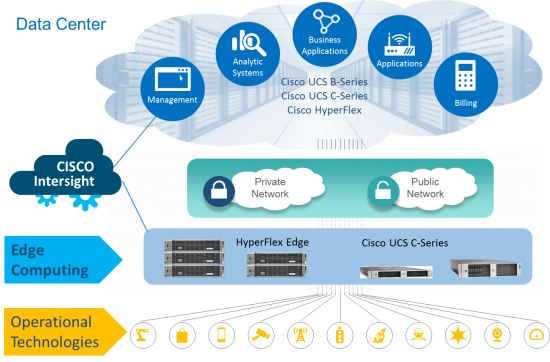
The requirement for Edge Computing is increasing as enterprises transition to cloud-native applications and implement IoT initiatives. Cisco Intersight is an excellent platform for addressing the management requirements of core data center infrastructure as well as Edge Computing environments.
Driven by Customer Requirements
Cisco started development of Cisco Intersight more than 18 months ago. This strategic initiative, internally referred to as Project Starship, was driven by customer requirements that emerged from our market research, customer surveys, and Customer Advisory Boards (CABs). Based on this input we realized that customers required a greater level of “pervasive simplicity”, as Gautham Ravi, director of UCS product management, described in a previous blog in this series.
Spanning the Worlds of IT and OT
Based on our research, we also realized that enterprises are pursuing a tiered application strategy with an increasing dependence on cloud-native applications. According to a recent Cap Gemini survey, 15% of new enterprise applications are currently cloud native with the adoption more than doubling to 32% by 2020. One of the market forces driving the development of cloud-native applications is the implementation of Internet of Things (IoT) projects.
IoT solutions link operational technologies (OT) with information technologies (IT). OT consists of sensors, systems and software technologies that detect and/or create change by the direct monitoring and/or control of physical devices, processes, and events. IT includes communications technologies, software, hardware, and related services to provide business services. IT applications mostly operate out of a centralized datacenter and branch offices for information aggregation, processing, and dissemination. Historically OT and IT have been different environments.
Edge and Fog Computing
Edge computing is a bit different than Fog Computing. Fog refers to the network connections between edge devices and the cloud. Edge refers more specifically to the computational processes being done close to the edge devices. Edge Computing is an important means of bridging the worlds of IT and OT. It allows data produced by OT sensors and devices to be processed closer to where it is created, instead of sending it across long routes to data centers or clouds. Doing the computing closer to the edge of the network also lets organizations analyze data in near real-time.
Distributed applications run in the cloud, the data center and at the Edge. Edge Computing can include remote and branch locations. It also goes beyond these environments to factory floors, ships at sea, and other locations where OT is deployed. IT organizations need a consistent and simplified way of managing Edge Computing systems. They want to bring the Edge under corporate-wide processes, policies, procedures, and service levels.
Transforming Beyond the Data Center
As Cisco evaluated the product strategy for our UCS and HyperFlex management portfolio, we realized the existing on premise architecture designed primarily for the data center was not going to adequately address the requirements of distributed applications to support systems in the data center as well at the Edge. A cloud-based systems management platform was necessary. By offering a Software as a Service (SaaS) platform, we could provide unified management that would scale seamlessly and was easy to continuously update and maintain. It also provides a means of delivering enhanced operational analytics, machine learning, improved support and other advantages.
According to a recent IDC report,
Enterprise customers are becoming more and more comfortable with SaaS-delivered cloud management solutions and are seeking management platforms that support unified, API-based integrations across monitoring, analytics, governance, reporting, and automation. (“Worldwide Cloud Systems Management Software Market Shares, 2016: Year of Monitoring and Analytics Growth”, July 2017, IDC #US41375617e)
The UCS management architects realized this new SaaS approach would be transformational for the management of core data center systems as well Edge computing environments. They needed to preserve the policy-driven element management of our existing tools, while allowing for the advantages offered by Cisco Intersight. They understood this change must be implemented in an evolutionary manner, as I explained in a previous blog post.
IDC analyst, Ashish Nadkarni, has provided significant thought leadership in the areas of cloud-based systems management and Edge Computing. In a recent report entitled, “Software-Defined OT: Deploying Converged IT/OT Edge Systems Accelerates IoT Readiness”, Jun 2017, Doc #US42811517, Ashish explains,
Moving OT functions onto a converged tier requires making much of it software defined. Software defined OT (SD-OT) moves OT functions into software running on industry-standard hardware, which can access or even host OT control systems. Alternatively, OT-related control and data acquisition functions are network-based and can be performed from the Core or anywhere in the Edge. With SDOT, the OT software, like IT software, can run on bare-metal on virtual machines and increasingly inside application containers.
Our customers enjoy the ease of management we offer with HyperFlex, our portfolio of hyperconverged systems. They indicated they wanted to use HyperFlex as their converged tier for running OT and IT applications outside of the data center. Based on these requirements, we introduced the HyperFlex Edge line of products earlier this year to address the unique requirements of Edge Computing. We made it easy to deploy HyperFlex Clusters by including the HyperFlex Installer in all Editions of Cisco Intersight.
Customers also want to run their cloud-native applications using containers on bare metal, so they are using our Cisco UCS C-Series servers. They like the flexibility and ease of rapidly and consistently deploying infrastructure resources using only one management platform. Customers want to treat these Edge computing systems as if they were located in a remote “datacenter” governed by the same set of policies, processes and governance mechanisms.
Cisco Intersight provides policy-based configuration with Service Profiles to UCS C-Series rack servers. This allows IT organizations to extend their Data Governance, Risk Management, and Compliance (GRC) policies to the Edge environments as well as simplifying their systems management. These are just some of the benefits of cloud-based systems management.
Ashish Nadkarni of IDC spoke with Todd Brannon, director of UCS product marketing, at Cisco Live regarding the some of the important issues customers should consider when evaluating cloud-based systems management.
Cisco Intersight is designed for pervasive simplicity. It is a cloud-based platform that delivers a wide range of customer benefits for managing systems in Edge environments as well as the datacenter.
We know that nearly $4 billion in E-rate funding is available for Funding Year 2018, and that most schools and libraries are entitled to some support. However, we also understand that E-rate applications—particularly for Category Two funding, which helps pay for managed Wi-Fi, internal connectivity, and basic maintenance—have been on the decline and are down by 29 percent since 2015. (For more interesting facts about E-rate and tips on how to make the most of your E-rate dollars, click here.)
The reasons for this decrease in applications aren’t clear. But if a school or library is reluctant to apply for E-rate because of the program’s complexity, the eSchool News special report can be a helpful source of information. The report discusses the importance of a robust infrastructure to digital transformation and shares insights into how schools and libraries can assess their individual requirements and leverage partnerships to realize the greatest benefit from the E-rate program. The report also provides compelling examples of two schools—Wayne Highland School District in Wayne County, Pa., and El Centro Elementary School District in Calif.—who have used E-rate with great success.
Finally, the report talks about the Cisco Digital Education Platform and the ways Cisco solutions can enable and support a school’s or library’s digital journey. To learn more about E-rate and how Cisco can help, visit www.cisco.com/go/erate.
CiscoChampion Radio is a podcast series by technologists for technologists. In this episode we’re talking about the Cisco Spark Depot with Cisco’s Chloe Kauffman.
The Cisco Spark Innovation Fund Update: The fund is a $150 million initiative to enable exceptional startups, developers, and ISVs to create new solutions to improve the Cisco Spark experience.
Cisco Spark care is a digital customer care solution for help desks and small teams of up to about 20 users.
Interoperation of two leading security integration frameworks delivers unprecedented breadth in multi-vendor collaboration. Simplifies security vendor integration for customers.
There is strength in numbers. Here the strength is in the number 2, because it equals almost 100. Funny math you say? Well let me explain.
Here the “2” is Cisco and McAfee, two leaders in cybersecurity. Our respective leadership areas in the industry are attributable in no small part to our openness to integration with 3rd party security platforms. We have each forged a broad path for cross-vendor integration via our respective security fabrics, Cisco pxGrid and McAfee OpenDXL. As cybersecurity industry analyst Eric Parizo of IT analyst firm GlobalData (formerly Current Analysis) put it in his report on Security Product Integration Frameworks, “Security product integration frameworks (SPIF) have the potential to change the game.” He has also intimated throughout his research that cybersecurity practitioners would be best served if Cisco and McAfee would just work together on this stuff. This is where the “100” comes in.
Cisco and McAfee agree with GlobalData, and the joint customers who have told us the same… that we should enable pxGrid and OpenDXL to interoperate so we can better solve cybersecurity issues they face. A key component of that is enabling the components of multi-vendor security networks to coordinate their information sharing and threat response. Interoperation of pxGrid and OpenDXL provides a hefty down payment on that by bringing together our respective cybersecurity ecosystems. And that is where “100” comes in. Because the collaboration of “2” with Cisco and McAfee delivers just shy of 100 (98 at last count) pxGrid and OpenDXL partner products that can interoperate via each framework.
While we think bringing pxGrid and OpenDXL together enables material long-term impact on cybersecurity operations and effectiveness, it also has immediate positive impact. Here’s what it does today:
Employ a Vendor Ecosystem for Threat Response
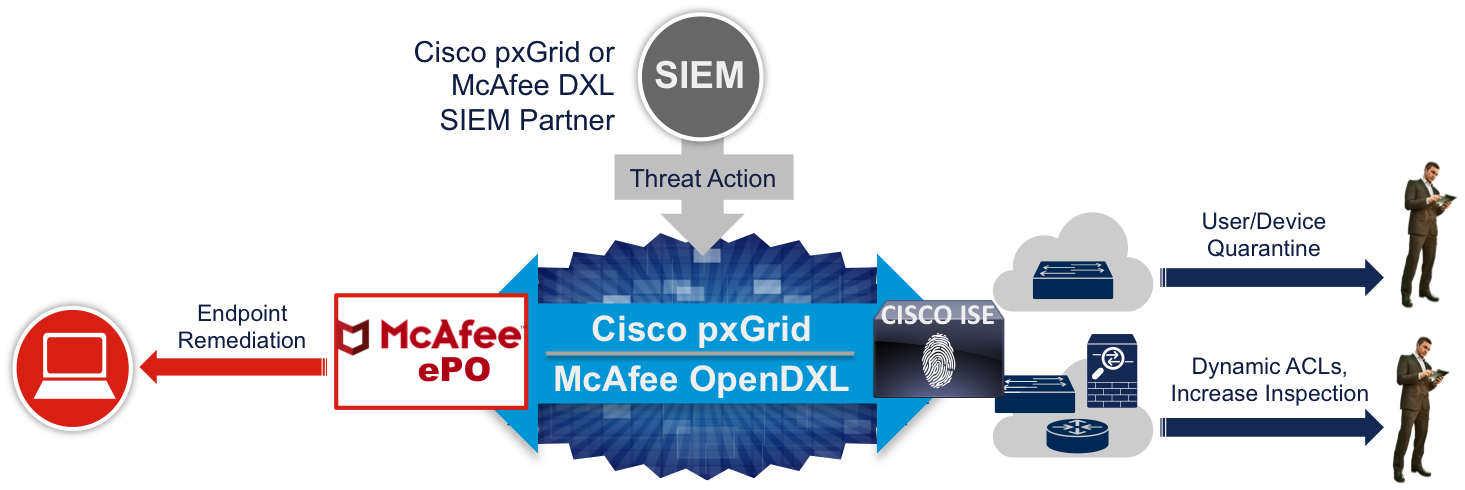
The “100” can be put to work today on network and endpoint threat response. Integration between pxGrid and OpenDXL enables our respective threat response ecosystems to collaborate via Cisco® Identity Services Engine (ISE) and McAfee® ePolicy Orchestrator® (ePO). When a threat response partner takes an automated or manual threat response action via pxGrid or OpenDXL, that response is captured and relayed between ISE and ePO for appropriate Rapid Threat Containment action on the Cisco network or remediation at the McAfee ePO-managed endpoint. This enables a broad threat response ecosystem composed of almost 100 vendors from every type of security technology.
A common use-case for this is threat response from a SIEM console. A security analyst decides that a threat event in her SIEM requires immediate action. If that SIEM vendor is either a pxGrid or DXL partner (pretty much all are), a threat mitigation or investigation action can be launched directly from the SIEM console and executed on both the network via Cisco ISE and on the endpoint via McAfee ePO. Pretty powerful.
SIEM partner using pxGrid/DXL interoperability to execute threat response actions.
Integration of Cisco ISE and McAfee ePO for Threat Response
Similar to above, ISE and ePO can directly collaborate on threat response by informing each other when one has taken a threat response action so that the other can take an appropriate action according to its respective policy. This delivers more effective threat response by allowing the endpoint and network to take automated or manual actions as appropriate for the threat conditions.
Consistent Network Access and Endpoint Control Policy with Cisco ISE and McAfee ePO
Collaboration between ISE and ePO also enables comprehensive network-attached endpoint visibility and network access policy. ISE, by serving as a gatekeeper for every user/device trying to access the network, possesses a wealth of user identity, endpoint device and network context. ISE can share via pxGrid its network-attached endpoint session inventory with McAfee OpenDXL, which then relays the information to McAfee ePO. This provides ePO with visibility to endpoints that it may not know about thus allowing ePO to make determinations about whether or not to bring those newly discovered endpoints under management. Similarly, Cisco ISE can detect whether an endpoint has McAfee ePO installed and create network access policy based on its presence.
Looking more broadly beyond these specific integrations, Cisco continues to be active in the IETF Security Automation and Continuous Monitoring (SACM) and Managed Incident Lightweight Exchange (MILE) workgroups to drive standardized methods of enabling exchange of monitoring telemetry between security platforms. Furthermore Cisco continues to drive a “simple, open, automated” approach to security by implementing integrations based on pxGrid and other methods within the Cisco Security portfolio. Coordinated threat detection, investigation and containment are enabled through Cisco architectural integrations like Talos threat intelligence leveraged across our portfolio, system-wide malware protection with AMP Everywhere, Umbrella Enforcement from the cloud, and Cisco’s own Rapid Threat Containment solutions–between ISE, Firepower NGFW, Stealthwatch, and AMP.
Cross-platform integration is critical to securing the networks that run our schools, businesses, government…our world. Whether you are a customer deploying security platforms, a vendor partner or start-up integrating security platforms, or a services integration partner building unique security service offerings an open integration environment is a necessity. Collaboration between Cisco pxGrid and McAfee OpenDXL helps toward those ends.
Back in May this year at the ANGA.COM we announced the availability of our Infinite Broadband solution, introducing Remote PHY to the market as the leading Distributed Access Architecture (DAA).
The Infinite Broadband solution now includes everything you need to make Remote PHY a reality:
CCAP RPHY Core capability with the Cisco cBR8,
Full DAA transformation with the Cisco Smart PHY iNode Remote Phy Device (RPD),
Hub site consolidation capabilities with the Cisco Smart PHY Compact RPHY Shelf,
Automation with the Cisco Smart PHY Automation application, able to automate all OpenRPD based RPD’s and RPHY compliant RPD’s.
The solution is based on Cablelabs open source OpenRPD, of which Cisco is a founding member. OpenRPD has created an environment where multiple vendors are working together advancing Remote PHY as part of an Ecosystem where interoperability is a given due to the use of a common code base. OpenRPD is a market enabler that ensures Remote PHY product development is open to all equipment vendors, not being limited by a possible lack of a software development background. It also allows Cable Operators to continue to build on their existing vendor relationships in the HFC market segment.
At the SCTE Cable Expo of 2017, booth #987, we will be showing multiple OpenRPD Remote PHY Nodes connected with the Cisco cBR8 CCAP Core. In addition to that we have been working with Arris to show Remote PHY is indeed the only industry wide supported DAA. We will demonstrate Remote PHY interoperability between Arris and Cisco:
The Arris CCAP Core – Cisco Smart PHY Node
The Cisco cBR8 CCAP Core – Arris RPHY Node.
This is an unprecedented show of collaboration between the market leaders of the Cable Access Networking market segment, with both vendors making a clear statement about the maturity of RPHY and the need to interoperability.
An industry wide standard is critical to the success of Remote PHY. Standards drive innovation and competition, and Cablelabs standards have allowed the market to compete effectively with other Access Network architectures (DSL, Fiber).
With Vendors moving expediency to bring to market RPD’s in multiple guises and support from silicon manufacturers engaged in the standards and product initiatives, the momentum for Remote PHY as a DAA architecture of choice is overwhelming. In parallel MSO’s are adapting strategies to leverage the deep fibre Remote Phy deployment to augment current capacity needs as well as a springboard to future “Virtualisation of the Core CCAP elements.
DAA is all about achieving scale, performance, and flexibility and Cisco’s Cloud Native CCAP development underscores these objectives. Our strategy to implement DOCSIS processing in software, leveraging the latest developments in software architectures, enable us to provide a solution for any standardized DAA architecture.
We look forward to seeing you the 2017 SCTE-ISBE Cable-Tec Expo in Denver, Colorado. Have questions and comments, Tweet us @CiscoSP360.
You already know how awesome the Cisco Aironet Access Points (AP) are. But what if there was some way to make them even better with more intent-based networking? Imagine bringing the newest generation, virtual BLE, IoT technologies into the mix and future-proofing your wireless network somehow?
Today’s your lucky day, as Cisco announces two new solutions that will bring added value to your Cisco Aironet Access Points-deployed wireless network.
The two products are:
Aironet Developer Platform, a third-party developer platform for Aironet APs
Beacon Point Module, a vBLE product for Aironet 3800 Series APs
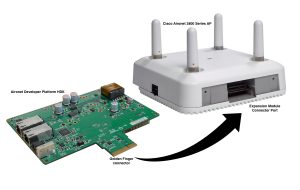
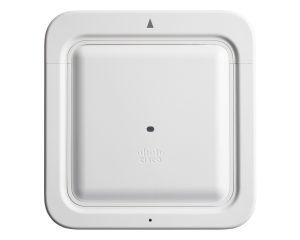
The Aironet Developer Platform (ADP) is a programmable application development platform that’s designed for quick prototyping and on-boarding to Cisco DevNet and its marketplace. Paired with the Cisco Aironet 3800 Series Access Point, the developer platform allows you to develop third-party applications and technology that you can place on a generic Aironet 3800 module for internal use or commercialization through DevNet. Or to put it another way; if you can imagine it, you can do it.
Thanks to applications that you design yourself, or ones that come from a third-party, your wireless network is poised to be a more powerful tool by leveraging the AP itself to host third-party application or technology. No longer a device that just provides cutting-edge Wi-Fi, your access point is now a development platform. Whether it’s creating applications that allow you to interact with customers on a more granular level, or real-time monitoring of product inventory in a warehouse, there are thousands of uses for the ADP framework that can be tailored to a customer’s wishes.
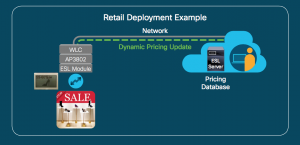
From IoT to healthcare to retail, there are many use cases being developed with the ADP. In one potential retail use case, a partner can leverage ADP to develop an application that dynamically changes product prices in stores via a centralized server. This saves retailers both time and money as workers no longer have to spend time walking up and down long aisles and changing individual price tags. The price change application can be detailed enough so that the prices of specific items will be updated. That means these prices can be raised or lowered via a few clicks whenever a sale is occurring. Also, by utilizing the existing Cisco infrastructure, a dedicated Ethernet drop for this solution is not necessary.
So, you can put that pricing gun right back in its holster.
Not only that but ADP addresses the challenges of mobility and Internet of Things (IoT) convergence. The explosive growth in IoT-based devices has amplified the need for a converged wireless connectivity solution. With ADP, you now have the framework to deliver intent-based networking at the edge.
Cisco won’t let you go this alone. When you start developing on the ADP framework, you are able to take advantage of the DevNet community. This is a space where you can sandbox ideas, get additional inspiration and answers to programming questions.
The Beacon Point module uses this modular Aironet approach to more cost-effectively deliver virtual BLE beacons. The new module joins our Cisco Virtual Beacon Solution announced last year. The original Beacon Point is a standalone appliance that works in conjunction with our Beacon Center to deploy and manage virtual BLE beacons. The new module provides the same capabilities but does so without requiring a separate Ethernet cable pull. Simply connect and wrap the module around the perimeter of an Aironet 3800.
For more information about the Cisco Virtual Beacon Solution, including the benefits of virtual vs. physical beacons, visit here.
To learn more about this announcement, please point your browser here.
I was lucky enough to hit Stockholm for the NordicAPI Platform Summit at the beginning of last week. It’s one of only a few all-API focused events held internationally, so given a (probably unhealthy) chunk of my life has been about APIs and all that comes with them, I was geekily excited about it.
If you don’t know, NordicAPIs is a community that was formed a few years back in 2013, to help businesses understand APIs and how they can help organisations achieve more in all manner of ways from integration efficiencies to fast innovations.
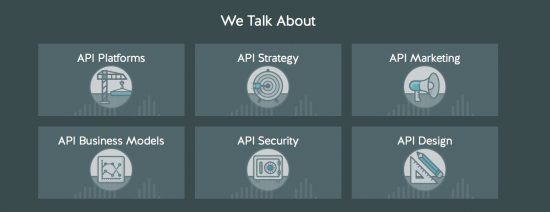
It’s a two day event, with a third workshop-based day tacked on for good measure. The format was, let’s say, intense, with all talks pretty much lightning-format (20 mins in length) and bundled into tracks, which ran in parallel – two or three at a time. The tracks follow the ‘insights’ that NordicAPI cover, namely platform, strategy, marketing, business, security, design.
https://nordicapis.com
So, you can imagine it was pretty tough to negotiate every session you wanted to hit. But, it did provide bang for your buck, given the amount of speakers available to listen, chat to and gain insight from.
Here are the general take-aways that I … um, well … took away:
Designing and using APIs at scale is becoming more challenging. The actual theme of the summit this year was ‘scaling’ and for good reason. With microservices as a design and implementation pattern becoming ever more popular and with the advent of serverless and the new architectural solutions being created to take advantage of those technologies, the number of API and API endpoints is going to be increasing and dramatically…
API Security is top of mind. Now, this could be somewhat to do with Curity organising the event (It’s one of their key focusses), but I believe it really is top of mind. DevNet Sandbox is building out our API at the moment and it certainly is for me. What are your flows to be? What’s the technology that’s best for you? How can these apply to an area like IoT? There were some really cool presentations and conversations on OAUTH2, OpenID Connect, JOSE, JWT, SCIM…the list goes on. I hit a workshop on some of these topics the day before the conference and what was most interesting was the number of flows that need to be thought about, from standard new client flows, to legacy app inclusion, to en mass dynamic client registration. It’s a fascinating and incredibly important area to delve further into when you come to build out your APIs!
Manchester United are playing a little too defensively in some games this season. That take away has probably got less to do with APIs, granted. I’ll move on.
Serverless architectures are becoming mainstream and this is affecting API strategy and implementation. I got into serverless a few years back and understood the changes it would bring the app architecture immediately. For example, many more API endpoints and a huge need to be able to handle a new dimension API scale and versioning. There was quite a number of serverless talks and I think that reflects in how the serverless and API community are starting to come together to form best practices about how to build architectures in this new model. Fascinating area.
GraphQL is a hot topic. There were a bunch of talks on GraphQL. Starting my career as a PL/SQL fiend, I’m all for some query language love in the API space. GraphQL deserves a separate blog in honesty and I’m sure there’s plenty of words on it out there already, but essentially, it provides an alternative to REST, based on the concepts of querying an API data model and obtaining the same data in one call that could only be obtained through multiple calls using traditional REST principles. Also, you only get back the data you ask for and not a whole bunch of additional pieces that the end point might want to return to you. This makes it awesome for front end developers especially, but there will be other areas it can serve a great purpose, too.
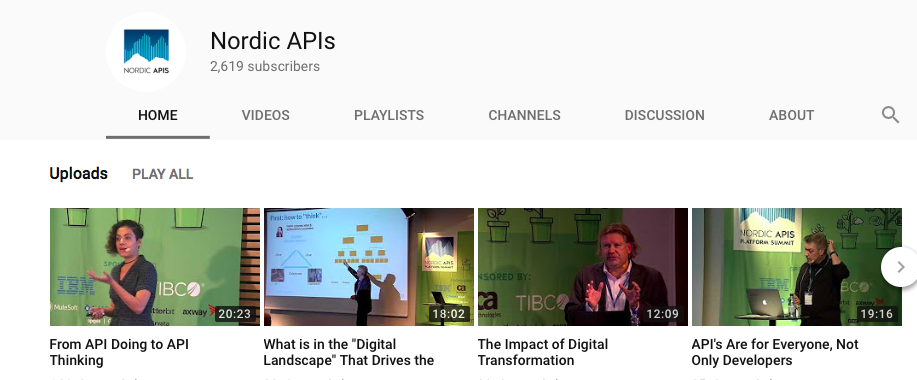
It was a fun summit and I look forward to more insights from this community. A great crowd and some superb talks that I recommend hitting the recordings on the YouTube channel, for sure.
https://www.youtube.com/user/nordicapis
I’ll be folding some of the insights and thoughts I gained back into the Cisco fold as we move forward with our own API strategy. Some of these trends are incredibly important to the shape of the future, making it an incredibly fun time to be focussed on this space. They’ll certainly help refine and improve what we do at Cisco, too!
We’d love to hear what you think. Ask a question or leave a comment below.
And stay connected with Cisco DevNet on social!






 3. Community Fitness Events & Giving Back – These events make me feel good about my commitment to my health and my Cisco family. In fact, there is an annual 5K where all employees are encouraged to participate. All donations go to our annual
  5. Vacation Time! At some companies, traveling for marathons is really tough to do. However, Cisco actually encourages me to take PTO to go visit amazing cities while running! So far, I have been able to run
  I now know that being a full-time employee is the reason, not the excuse to be the fittest I can be!