Avatar

We recently launched the Network. Intuitive. campaign to introduce an entirely new era of secure networking. Cisco is recognized worldwide for its decades-long leadership in networking infrastructure. And now, we’ve upped the ante with the intent-based Cisco Digital Network Architecture, or DNA.

Waves of people are moving to urban areas, creating a complex set of challenges and introducing an evolving series of change. Digital infrastructure is becoming any city’s most powerful tool in creating a place people want to live and businesses come to grow. Cisco DNA for Cities provides the digital backbone for cities and communities to thrive. With secure connectivity, cities can deliver effective public services, share meaningful interactions with constituents, keep people safer and data protected, innovate faster, and unlock unique opportunities for revenue generation.

https://www.youtube.com/watch?v=6hmxjmVBHus

Our recent Digital Value at Stake research – which looks at the key areas driving cost savings, efficiencies and revenue generation – finds that cities have an unprecedented $2.3 trillion opportunity over the next half-decade. As important as technology innovation will be to gain higher efficiency and more productivity, benefitting people should be the main driver and the X-factor for pursuing digital transformation. Today, residents, visitors, and employees expect to engage and interact digitally. And when it comes to creating sustainable cities, there’s really no greater task than building smarter communities for people to enjoy and flourish.

Places like Greater Manchester in the United Kingdom exemplify the outstanding possibilities with 128 smart city use cases built on top of one secure network infrastructure. Using data produced by air quality and mobility sensors, people with respiratory issues can share more information with clinicians to receive personalized health and wellness care.

In India, the Jaipur Development Authority considers their intent-based network the foundation of their ‘Digital Rajasthan’ agenda that will transform how they deliver public services to make lives better. As a popular tourist destination attracting over 40 million people each year, Jaipur focuses considerable efforts toward safety, access to information, and engagement experiences for residents and visitors alike.

Facing ongoing safety issues in the eastern part of the state, where the mountainous region causes the rapid development of fog conditions, Tennessee Department of Transportation is using secure, ruggedized networking capabilities to keep roadways safer.

We are more committed than ever to securely connecting everything to make anything possible. Cisco is changing the way people live, work, play, and learn in 120 cities around the world. Visit our digital transformation map to see the showcase of inspiring success stories.


Authors

Brenda Germundson

Global Industry Marketing Leader

Revenue Marketing

Avatar

IDEALondon was thrilled to welcome new Innovation partner, EDF Energy to our partnership.  Innovation does not happen in a vacuum: together with University College London, EDF Energy and our cohort of start-up companies, Cisco teams up, disrupts, innovates and continues to pave the way in Country Digitisation.

Read the full article Raising a glass to new partnerships at the IDEALondon summer party

Authors

Katherine Hannah

Head of Customer Engagement and Partnerships, Cisco Innovation UK and Ireland

Corporate Strategic Innovation Group

Avatar

Get ready to take some serious notes! Cisco’s Higher Education experts have a lot to share when they meet you in person at EDUCAUSE.

1. A new view of Higher Education.

The Network. Intuitive. Make decisions faster, mitigate more security threats, and manage the unprecedented scale of connected devices on your campus more easily. Visit our booth to learn how Cisco Digital Network Architecture (DNA) turns administration intent into student success.

2. Most dangerous threats are the ones you can’t see.

Learn from Cisco security experts how to simplify cybersecurity and keep your university more secure. See how our security products work together to deliver effective network security, incident response, and heightened IT productivity through automation.

3. Common-sense cybersecurity vision from the University of Oklahoma.

Discover the five actions OU is taking to improve cybersecurity and educate users across campus about the importance of being smart online.

4. Give your students a new point of view—and offer a better student experience.

Visit our Spark demo and we’ll show you how to give students and faculty a simple, secure space to create, share and work together to discover great things. Then, try out the Cisco Spark Board. Experience what your students will see as you wirelessly present, white board, and video or audio conference.

5. Look into data-informed decision-making.

Make your university data work for students, researchers, faculty and administration. Stop by our data and analytics demos to learn how we can help you boost productivity, improve big data and analytics solution performance and drive efficiencies in IT operations.

6. Insight into the Apple and Cisco Partnership.

See the latest capabilities for the digital campus, including Apple and Cisco application prioritization with Fast Lane; security, visibility and privacy for iOS; new Wi-Fi analytics; and deep integration between Cisco Spark collaboration and Apple mobility. An Apple representative will be with us in the Cisco booth to answer your questions.

7. Keep your eye on great prizes (with a few strings attached)!

Enter drawings to win a new Apple Watch Series 3 and Apple TV 4K. Follow us on Twitter and Facebook to learn more.

8. Real-life use cases from higher education innovators.

Your university peers are doing amazing things. Attend one of our three speaking sessions and hear first-hand how they’re innovating with technology, what’s working and what’s not, and what they’ve learned that they didn’t expect. You’ll see how:

    • University of Wisconsin-Whitewater and Mid-State Technical College are piloting collaboration with Cisco Spark and Spark Board.
    • The George Washington University is empowering users to make security a priority and leveraging alternative approaches to cloud security
    • Montana State University is collaborating with many leading research institutions on implementation strategies for deployment of interoperable Science DMZ at a national scale

Excited yet? Us too.

https://giphy.com/gifs/saved-by-the-bell-reunion-mark-paul-gosselaar-8Nr2sk9ok2oda

Questions? Feel free to reach out via @CiscoEDU. See you in Philly!


Avatar

We often hear of the many challenges of the industrial revolution, but one of the scourges of this time period that often goes unmentioned was mass fires. To the people of the time, great fires threatened the very viability of industrialization. The number of fires bearing the moniker ‘great’ helps prove this point: The 1835 Great Fire of New York, The Great Fire of Pittsburgh, and The Great Chicago Fire are just a few examples.

There are some parallels between these fires and the great breaches we are experiencing in the information age. We see many of the same dramatic reactions, but the ultimate solution proves to be much more practical. Let’s look at a specific example to understand this relationship:

The Great Chicago Fire of 1871, in particular, left a deep scar on the American spirit. The fire started at night in a small barn. Aided by high winds, the fire spread from building to building until one third of the city was destroyed. Chicago was America’s fastest growing city at the time, and the inferno received widespread attention. Large-scale fires would continue to plague urban centers throughout the 19th century.

In response, many people criticized the rush to industrialize or blamed the conflagration on divine retribution. Despite the panic, the ultimate solution to the problem was constructing buildings a little farther from each other, utilizing flame-resistant materials and implementing quick response to fires. This was the birth of fire codes, which helped create an environment resistant to the spread of fire and ultimately lead to a reduction in major urban fires.

This concept is equally as effective when applied to the network to help reduce the spread and damage of a breach.

In many networks, there is little stopping an attacker from accessing everything once they are inside. Like a fire, they spread from area to area until nothing is left and all of the data is compromised. Network segmentation brings your network up to code. Separating users and network resources into separate zones can slow the spread of a compromise. And just as automatic sprinkler systems and quick response systems helped contain fires, effective incident response processes and tools can keep a compromise from becoming a massive data breach.

Segmentation: the digital fire code

In an unsegmented network, everyone can access everything with few exceptions. Marketing can access proprietary intellectual property, engineers can obtain sensitive financial documents, and contractors and third-party vendors have enough access privilege to cripple the company’s digital infrastructure. While this may be convenient from an employee standpoint, it is a nightmare for security teams. An attacker can compromise a single user, through phishing or other means, and they have access to all of the company’s sensitive resources.

Network segmentation helps address this problem by giving employees access to only the resources they need to perform their job. It operates under the principle of least privilege and has been around for years. But there are some challenges that often prevented organizations from effectively implementing segmentation policies.

Historically, network segmentation was dependent on access control lists (ACLs), which had to be maintained individually across every point of enforcement. As networks became bigger, ACLs ballooned to thousands of individual rules, and making changes was a painful, time-consuming process. In addition, mistakes in segmentation policies could prevent employees from legitimately accessing a necessary resource, which could impact productivity and the company’s bottom line.

But there is an answer that relegates many of these challenges to past: software-defined segmentation.

A new era of segmentation

Software-defined segmentation helps address the challenges of traditional segmentation largely by centralizing and simplifying management. Cisco enables software-define segmentation via Cisco Identity Services Engine (ISE) and Cisco TrustSec technology.

Using this solution, network administrators can design policies that assign users and devices into logical groupings, called security group tags (SGT). Policies define what groups can communicate with each other, and what groups are restricted. These policies are then enforced across every TrustSec-enabled device on the network.

These policies are created and managed from a centralized console, which pushes out updates to the entire network at the same time. This makes adjusting segmentation policy a simple and quick process. In fact, customers who implemented TrustSec technology saw as much as an 80 percent decrease in their IT operational costs, according to The Total Economic Impact of Cisco TrustSec by Forrester.

New segmentation needs new methodology

Even with the advantages of software-defined segmentation, there still exists the challenges of crafting policies that are effective and do not impede legitimate access. Many network administrators do not know what every role within a company does and what network assets they need to perform their job. To solve this problem, you need a way to see what network traffic exists today and the ability to model policies without enforcing them to assess their accuracy.

Cisco Stealthwatch Enterprise delivers complete visibility into all network traffic. This allows you to:

  • Inventory network assets and classify them based on role or function
  • Gain insight into user behavior and interactions on the network

Using this information, you can intelligently design segmentation based on activity that is taking place on your network. And to ensure you aren’t disrupting critical business activities, using host group policies with Stealthwatch Enterprise, you can model proposed segmentation policies – without enforcing them yet. This allows you to identify what activity would be prevented if your policies were fully implemented. Then you can decide if that traffic is legitimate, and adjust your policies accordingly, or determine it is inappropriate activity.

Stealthwatch Enterprise can also help you evaluate the effectiveness of your segmentation policies. You can configure custom alarms to trigger if any there is any traffic taking place that should be forbidden by segmentation policies. This helps you identify segmentation policies that are not configured or implemented properly.

Don’t forget incident response

Segmentation is great for limiting the reach of an attacker and the scale of a breach, but it doesn’t prevent compromises in the first place. Just as fires still require firefighters to prevent further damage, compromise requires strong incident response to prevent a breach.

Fortunately, Stealthwatch Enterprise can help detect threat activity early. Through a combination of advanced behavioral analysis and machine learning, Stealthwatch Enterprise can detect early indicators of compromise such as command-and-control communication, connections to servers in unusual geographies, and network scanning. It also provides all of the information you need to identify the source of the incident in minutes.

Through integration with ISE, you can quarantine affected hosts with a single button-click inside the Stealthwatch Enterprise management console. This prevents the host from communicating on the network and spreading the infection while you remediate the device.

Bring your network up to code

As the threat landscape continues to evolve, security personnel need to give themselves as much leeway as possible. Similar to modern fire prevention, you cannot stop an event from ever happening, but the right amount of preparation can keep a small fire from burning down the rest of the city.

Network segmentation has always been an important defensive measure, but it wasn’t until recent technologies were developed that it could be effectively deployed in large enterprise networks. Just as fire codes help prevent catastrophes, software-defined segmentation can severely limit the reach of a breach and improve an organization’s security posture.

To learn more about how Cisco can help you segment your network, read our eBook Segment Your Network for Stronger Security.

Authors

Andrew Akers

Product Marketing Manager

Security Product Marketing

Avatar

You may have heard of Forward Error Correction (FEC), since it’s used in many forms of data communication. You’ll find it in wireless networks, space communication, undersea fiber optic networks, bar code scanners, and your CD player (if you still have one). We’ll talk more about FEC in a subsequent post, but in this post we’re showing how it enables longer reach in a new pluggable optical transceiver that Cisco released in September, called QSFP100 “ER4-Lite”. It’s a new addition to the Cisco “QSFP100” product family, as it’s in a QSFP28 form factor, and is great for data center interconnects up to 40km reach without optical amplification.

You might also be wondering why we need a “Lite” version, when we already have a 40km IEEE standardized “100GBASE-ER4” transceiver. It turns out the laser power and receiver sensitivity required by the IEEE standard make it more expensive and require the larger CFP form factor. In contrast, QSFP100 ER4-Lite uses components with relaxed specifications and consumes less power, so it can fit in a QSFP28 form factor. This is a much better size for high density data center applications. And it can still support 40km reach as long as the host platforms at both ends encode and decode FEC.

FEC on host platforms is not that new. It’s actually required by IEEE 100GBASE-SR4 and other non-IEEE optical interface standards such as the CWDM4 MSA and the PSM4 MSA. So all Cisco switches and routers with QSFP28 ports have it.

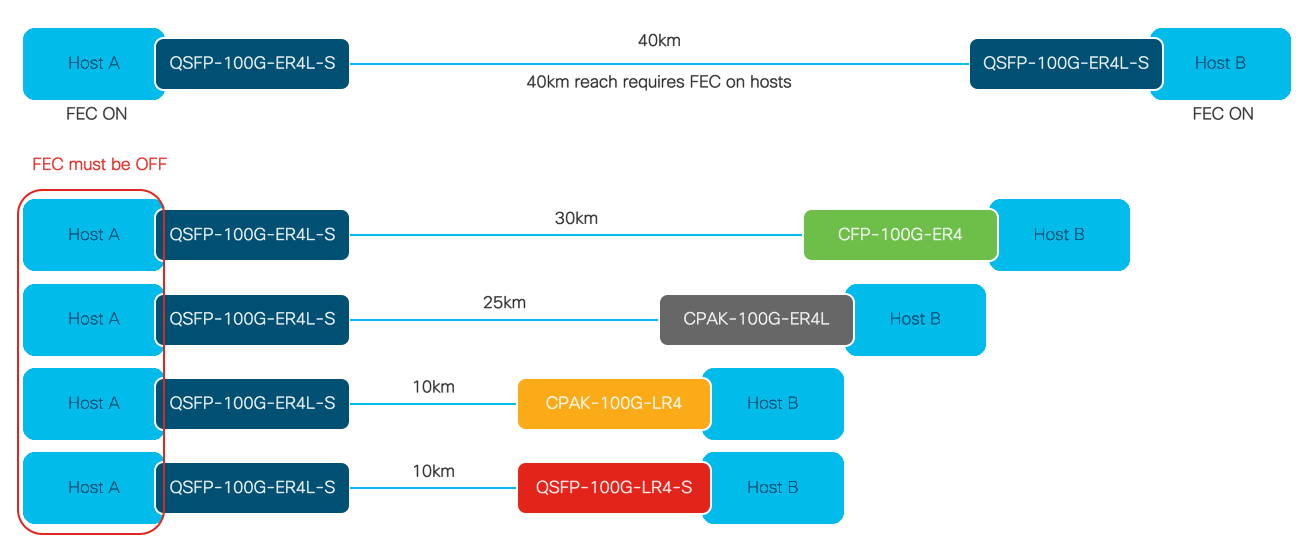
For those who need to link to other systems already in place, the QSFP100 ER4-Lite interoperates with CPAK ER4-Lite, IEEE 100GBASE-ER4, and IEEE 100GBASE-LR4 at reaches identified in the figure below. These don’t use FEC, so make sure to have it turned off at both ends.

More information on Cisco’s QSFP100 ER4-Lite transceiver module is available on the QSFP100 product family data sheet.

Authors

Pat Chou

Product Manager

Service Provider - Transceiver Modules Group

Avatar

At Cisco, we’ve enjoyed a long relationship with Commvault, working together to combine expertise and provide better, smarter solutions to customer data protection challenges. We collaborate closely to help organizations ensure business continuity and uninterrupted operations more simply, more effectively, and more cost-efficiently.

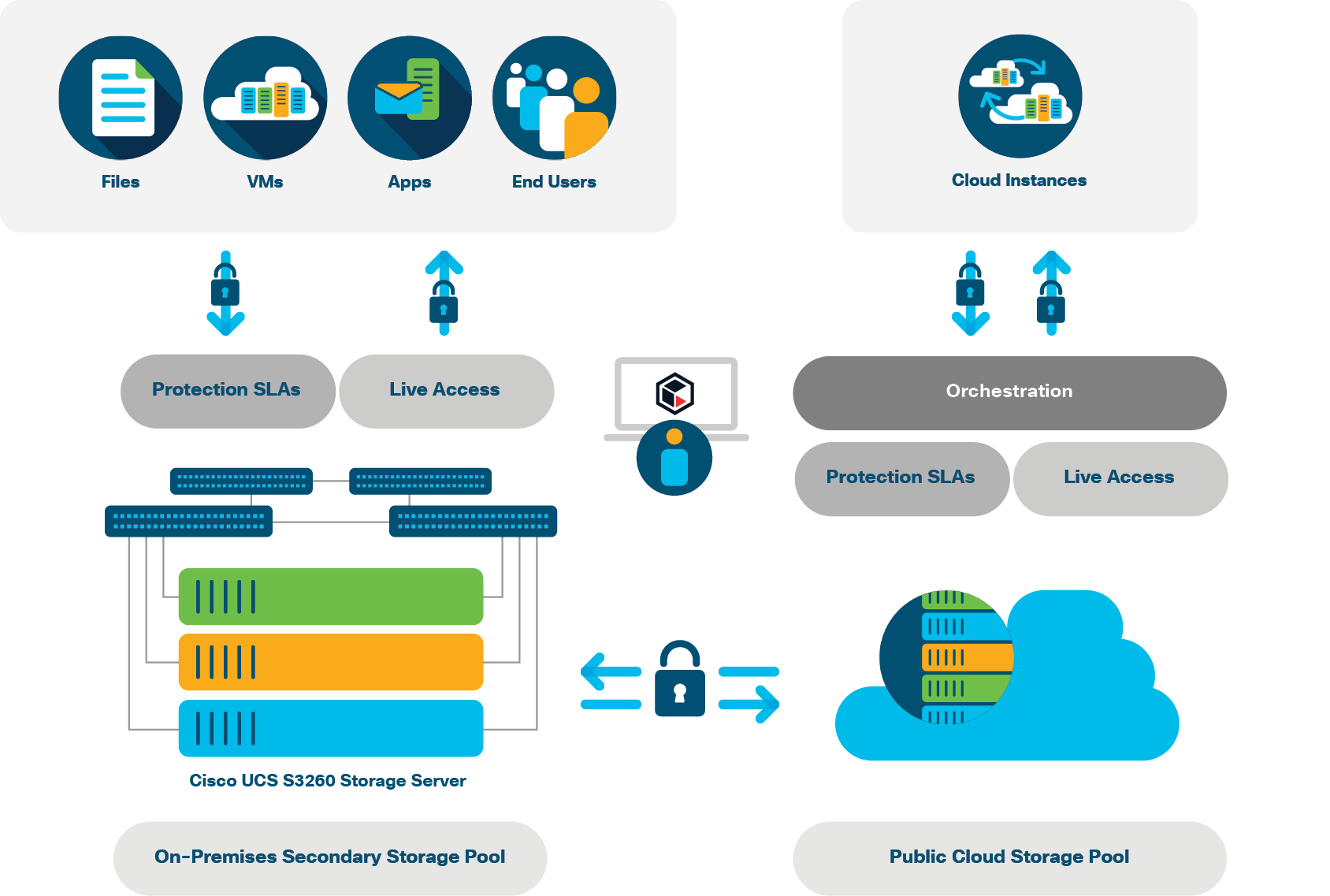
Our latest solution is called ScaleProtect with Cisco UCS: It’s a new combination of Commvault HyperScale Software running on Cisco UCS hardware, built to address the growing concerns of unprecedented data growth and secondary-but-critical workloads such as analytics, compliance, business intelligence, archiving, and more. You can learn more about the new Commvault data platform here.

Combining high-performance storage with a powerful data management platform, ScaleProtect with Cisco UCS offers a lot of unique value for secondary storage workload needs:

  • Reduce data footprint by up to 60% by breaking down data silos and delivering scalable data protection
  • Simplify data ecosystems and help organizations more easily extract value from data
  • Optimize environments for flexibility, and bring cloud economics to on-premises environments, complete with deep hybrid cloud integration
  • Reduce costs and accelerate performance—on average, it costs 65% less than competitive solutions and performs 30% faster

If you’re curious about what you can use this solution for—the answer is a lot. It’s agnostic to legacy storage/appliance refresh cycles. But here are just a few use case examples:

Infrastructure modernization: It’s a great fit for your digital transformation initiatives. ScaleProtect with Cisco UCS can help ensure the move to next-generation IT isn’t hindered by overwhelming complexity or soaring secondary storage costs.

Application protection: Whether you need to ensure performance or modernize your applications for cloud, ScaleProtect with Cisco UCS can help. It’s also a great fit for remedying underperforming backup windows or managing copy data/multiple snapshots.

Development and testing: With optimized performance and flexible data management, this solution can simplify and accelerate your entire development lifecycle. It helps ensure developers can always get the data they need, when they need it—helping make them more agile and productive.

ScaleProtect with Cisco UCS runs on Cisco UCS S3260 hardware to enable a global view of all your data, with complete data portability and robust automation and orchestration features that help reduce operational complexity.

In closing: We couldn’t be more excited about ScaleProtect with Cisco UCS. It’s a solution that puts you back in control of your data with highly elastic, rapidly scalable secondary data protection—plus a unique and proven architecture that provides copious advantages over existing solutions.

We’ll soon share more about how this solution can help you remove data silos, increase data visibility, and enhance cloud integration at significantly lower costs.

Be sure to visit the Cisco team during Commvault GO at booth 18 to learn more about our partnership and solutions.

You can also learn more about ScaleProtect with Cisco UCS today, and register for our ScaleProtect with Cisco UCS webinar.

@FrancoiseBRees

Authors

Francoise Rees

Marketing Manager

Customer Solution Marketing, Cisco Intersight

Avatar

Public cloud has been around for about a decade; during that time we’ve gone through a very rapid evolution from skepticism, to experimentation, to a great debate about private versus public cloud and which is best. Through this debate, it’s become evident that the vast majority of enterprises will use private and public clouds together to enable their business. As simplistic as that sounds, managing a hybrid cloud environment can be costly and complex. Today, hybrid cloud is here to stay and almost every organization and cloud player realizes it’s all about the right workload in the right environment whether that is a private or public cloud.

While hybrid is here to stay, that’s not to say that it’s easy. There are significant differences between public and private clouds, and it’s hard to write applications that can move easily between these environments, let alone provide a consistent experience for developers. Developers want to be able to develop in the public cloud and deploy in the private cloud, for instance. While just about everyone knows that they need hybrid cloud capabilities, it’s not been easy, especially for organizations who want an open approach that can extend to work with multiple public clouds.

We have seen a natural distribution of existing applications, some that belong on-premises, and some that belong in public cloud. The challenge — and the magic — is in getting those applications to all work together. In essence, allowing applications to extend across environments where they can take advantage of applications and services residing in other data centers and clouds.

One of the things that makes hybrid hard is that while cloud generally abstracts underlying hardware and resources, these abstractions are different in various clouds. It’s actually a good thing – enabling the rapid innovation and expansion of cloud platform capabilities that we’ve seen over the last several years – but those differences can become a real hindrance for enterprises implementing hybrid cloud.

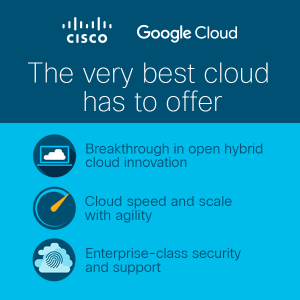
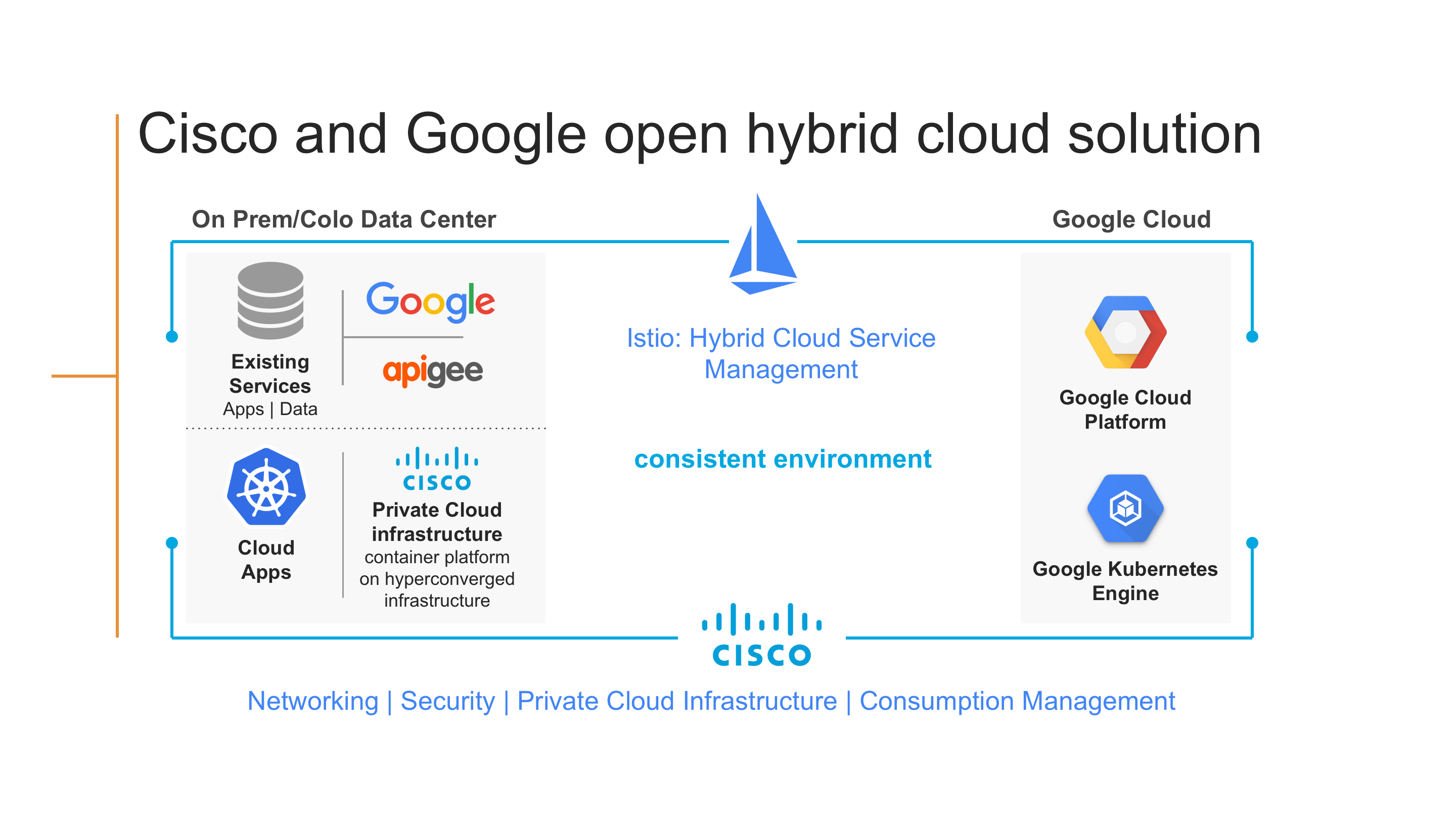
It’s with these challenges in mind that engineering teams from Cisco and Google Cloud started working together on a new solution. We wanted to enable applications to take advantage of the best of the cloud, and seamlessly integrate with existing IT assets on-premises. We wanted to ultimately offer a consistent environment on-premises and in the cloud so developers could develop wherever they want, and deploy wherever they want. We wanted to do it in a modern way that would enable continuous rapid innovation. The result is a solution that will deliver cloud agility and scale, coupled with enterprise-class security and support.

Our joint work led us to the new Google Cloud and Cisco strategic partnership announced today. We’re really excited about what our teams have come up with, and believe we will be able to help enterprises navigate this critical but complex space with more speed, agility, and confidence. Our solution abstracts the various capabilities in environments – including on-premises and in the cloud – enabling applications to connect with the native capabilities in whatever environment they are run in. This means developers can build modern applications wherever they want and deploy wherever they want, unlocking tremendous developer productivity. It also means that applications in the cloud can take advantage of on-premises capabilities (including existing IT systems), and applications on-premises can take advantage of new cloud capabilities. Now, you don’t need to “lift and shift” to get cloud speed and agility.

And of course, all of our teams’ innovation wouldn’t matter for enterprises if it wasn’t integrated with enterprise-grade security, networking, and infrastructure capabilities, with enterprise-grade support, all things that enterprises have come to expect from Cisco.

This partnership will enable applications to seamlessly span premises and cloud-based environments so customers can have cloud speed and scale where they need it.

We hope you are as excited about this new strategic alliance as we are. We have a lot to share with you and can’t wait to tell you more. Look for more from Cisco in the coming weeks and months. If you are a developer, be sure to check out more information on our solution components at the DevNet links below. And take a look at the blog from my colleague Nan Boden, Head of Global Technology Partners, Google Cloud.

So what do you think about the Cisco and Google open hybrid cloud solution? We’d love to see your comments.

For more information:


Authors

Kip Compton

No longer with Cisco

Avatar

Today, knowing who is using your network is table stakes. What’s essential is knowing how the network is being accessed, what applications are being used, when they are used and most importantly, whether or not those applications are safe enough and compliant with your organization’s policies.

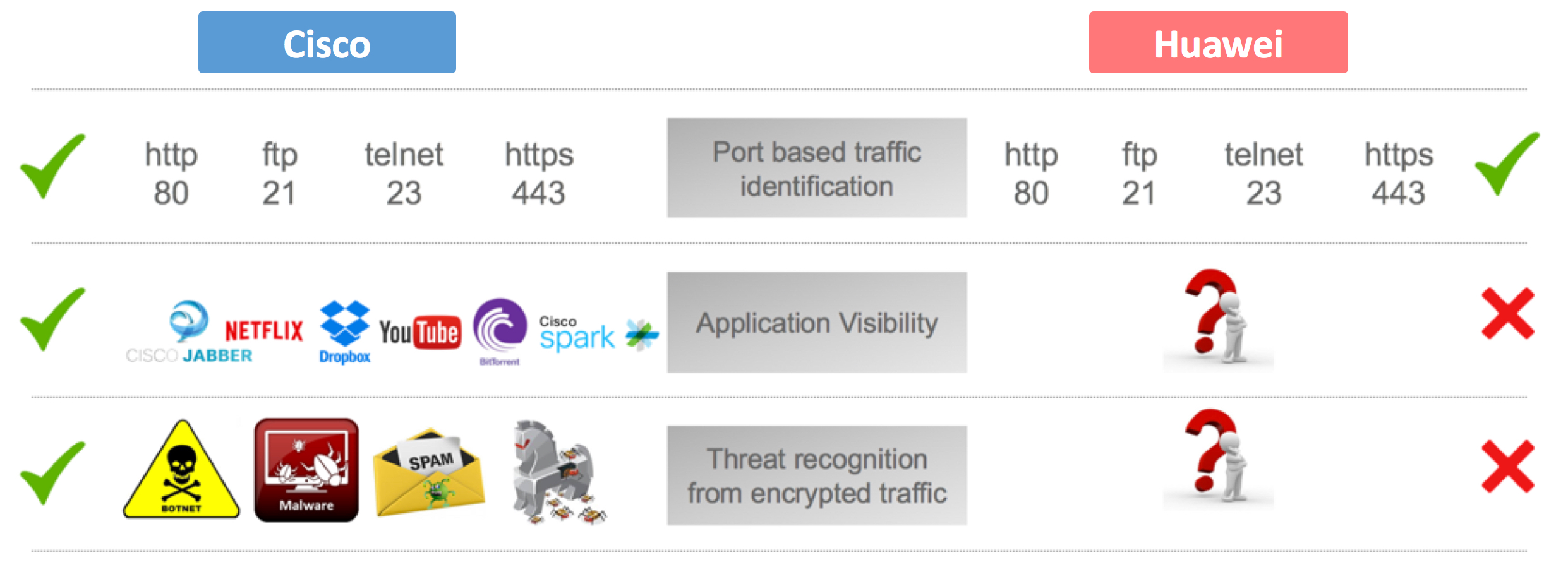
Independent testing company Miercom recently carried out a comprehensive set of tests to evaluate traffic analysis capabilities of Cisco’s Digital Network Architecture & Huawei’s Agile Solution along with a few other test areas.

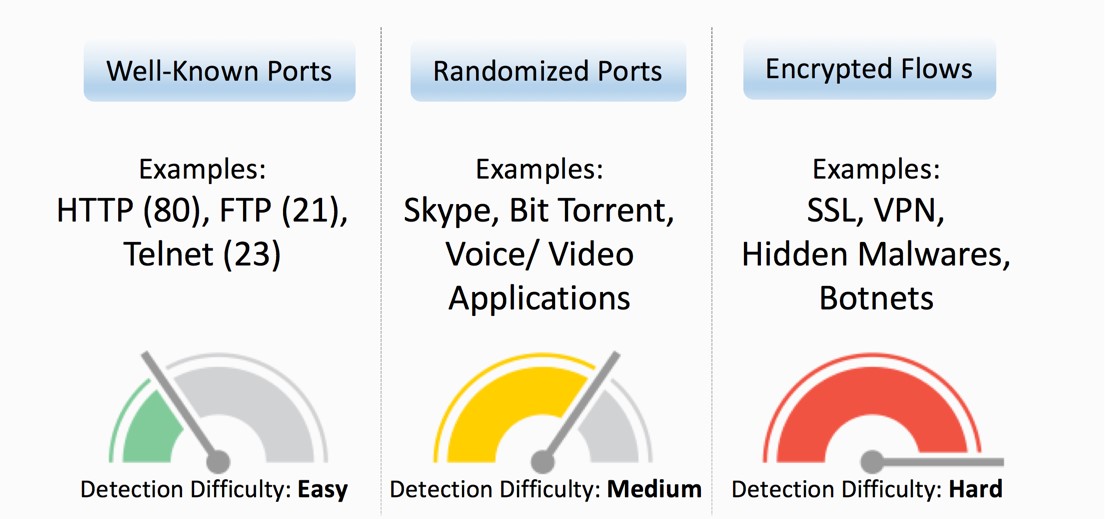
Application types on the network today:

All major products in the networking business identify the basic flows of the packets based on IP, port number etc. to show information about traffic and determine whether the flow is based on http (port 80), https (port 443), ftp (port 21) etc. It’s very easy to identify and classify traffic based on these standard port numbers. However, nowadays, applications are evolving beyond this, using non-standard ports to using randomized ports. This makes it difficult to identify and classify flows based on HTTP and HTTPS. For example: A Skype call uses random higher order ports. Similarly, Bit Torrent uses randomized ports for every transaction. To identify such traffic, Cisco uses a deep packet inspection algorithm with its Application Visibility & Control (AVC) feature. Cisco AVC is based on NBAR2, which enables consistent visibility and control across its switching, wireless & routing platforms and offers granular and accurate application detection and control.

What about encrypted flows? More and more traffic is being encrypted. It’s difficult to have visibility into encrypted traffic because network devices cannot see inside because of technical issues or privacy concerns. Meanwhile, attackers are becoming more sophisticated and have started taking advantage of the opportunity by injecting malware or ransomware inside encrypted traffic. This leaves the network administrator completely blind to encrypted traffic that could potentially have malware or botnets hidden inside.

Cisco took an innovative approach to identify threats inside encrypted traffic with its latest network security innovation –Encrypted Traffic Analytics (ETA). ETA can be enabled with Cisco’s Catalyst 9000 switches and Cisco Stealthwatch.

ETA classifies & mitigates threats inside encrypted traffic without decrypting the packets, ensuring data privacy. Encrypted Traffic Analytics technology is enabled by the Catalyst 9000 switches and Cisco Stealthwatch, which uses the power of multi-layer machine learning to detect threats in encrypted traffic without any decryption.

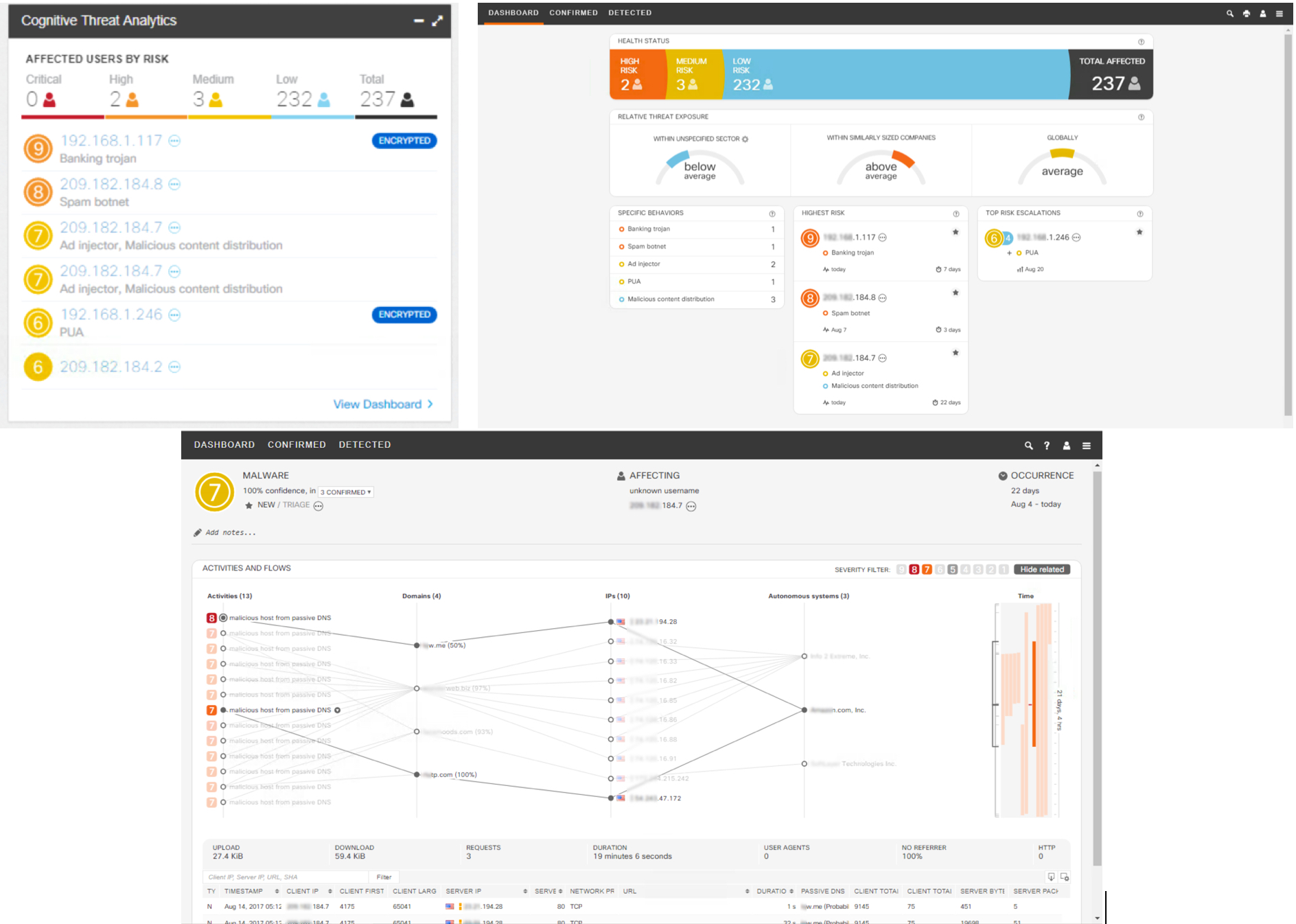
Cisco Stealthwatch with Cognitive Analytics allows an organization to see the number of malicious applications and activities on the network and provides a mechanism to quarantine such users from the network. ETA leverages innovative techniques such as sequence of packet length, timing, and initial data packets to detect malicious traffic using a cloud-based threat signature repository in order to keep up-to-date with the latest threats in the world.

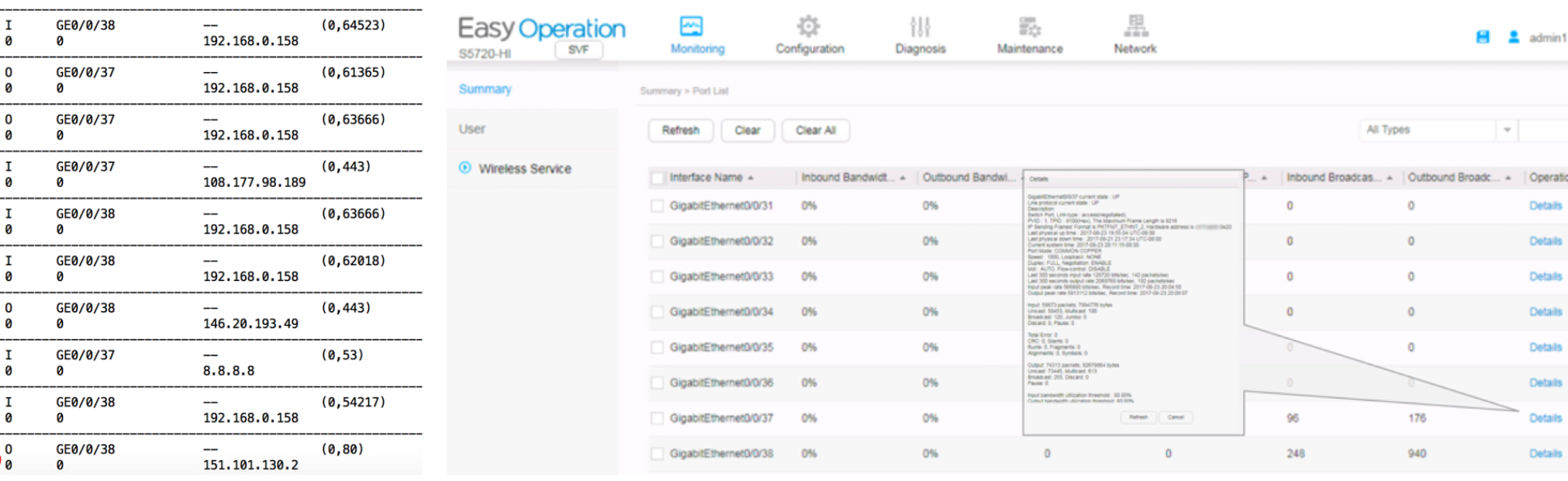
Miercom found out that Huawei’s networking products and features are still living in the 19th century with limited visibility of IP address & port numbers versus true application recognition. Huawei’s NetStream technology (the company’s version of Cisco’s NetFlow) running on Huawei’s ENP (Ethernet Networking Processor) -based switches showcased a lack of recognition, resulting in poor visibility on an active network. Huawei also lacks the capability to detect any new or next-generation of threats which have begun to surface in the form of encrypted traffic.

Miercom evaluated both Huawei and Cisco based on three stages of traffic analysis-

  1. Basic port based identification
  2. Application level visibility
  3. Threat detection in encrypted traffic

In all three test cases Huawei was only able to showcased IP address and port number on its CLI output. No useful information could be seen on the web interface.

On contrary Cisco showed comprehensive output at every stage of the test, especially during stage 2 & 3.

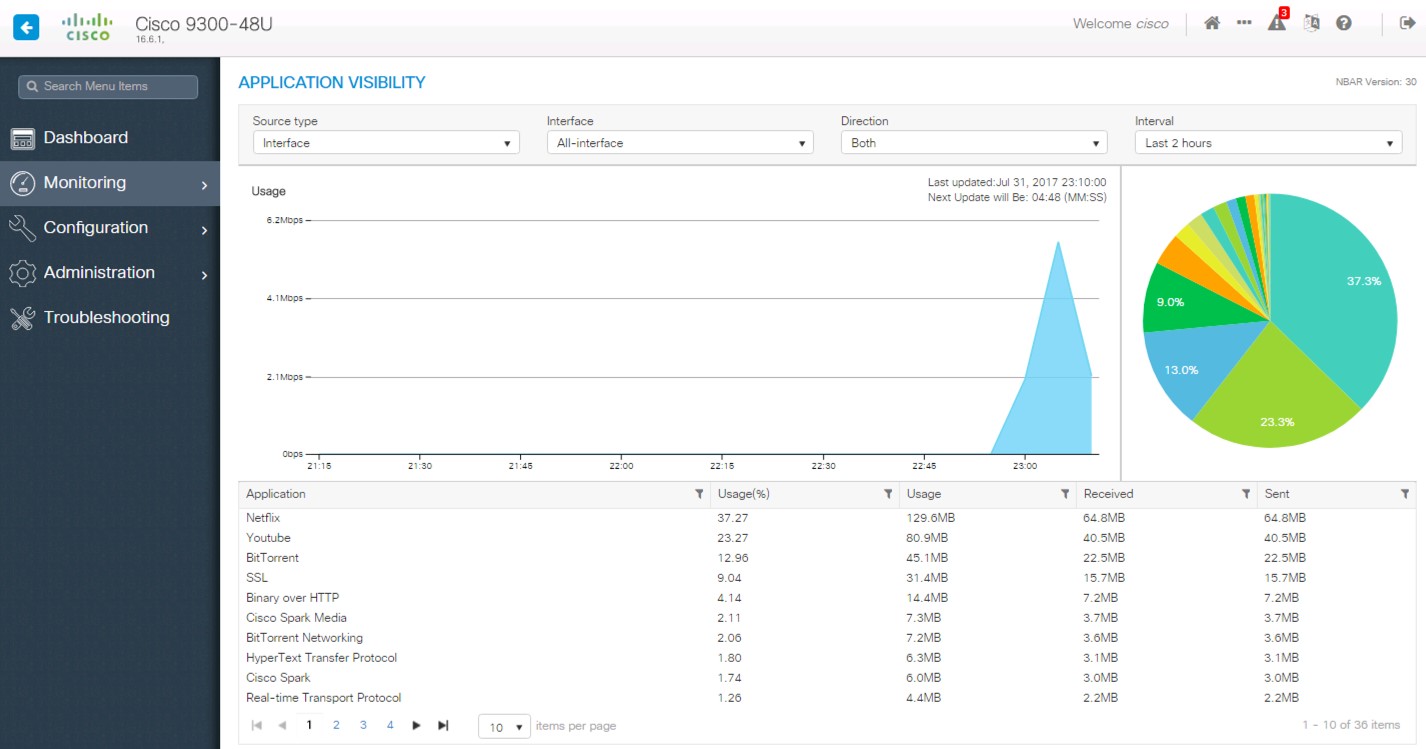
Cisco AVC accurately identified the applications running on the network, along with the amount of bandwidth they were consuming. Moreover,  collaboration applications like Spark were even classified at the sub-flow level to monitor audio/video call, messaging etc. Such granularity empowers the administrator to apply granular policies based on application usage.

Miercom was impressed with Cisco Stealthwatch’s detection of a variety of malicious activities in the network that were completely missed by the Huawei infrastructure. Now, administrators using the Cisco solution can immediately respond to threats by taking corrective action to secure the network infrastructure and its users.

Summary
Huawei is trying to sell bare metal boxes which are not smart enough to offer the level of network visibility required to operate today’s and tomorrow’s networks. Cisco’s products and services not only offer a strong foundation for your enterprise infrastructure but also prepare organizations for hidden threats now and in the future to help prevent security breaches and save time and money.

Download the complete Miercom report here


Authors

Kshitij Mahant

Technical Marketing Engineer

Enterprise Networking Group

Avatar

Note: This blog post discusses active research by Talos into a new threat. This information should be considered preliminary and will be updated as research continues.

On October 24, 2017, Cisco Talos was alerted to a widescale ransomware campaign affecting organizations across eastern Europe and Russia. As was the case in previous situations, we quickly mobilized to assess the situation and ensure that customers remain protected from this and other threats as they emerge across the threat landscape.

There have been several large scale ransomware campaigns over the last several months. This appears to have some similarities to Nyetya in that it is also based on Petya ransomware. Major portions of the code appear to have been rewritten. The distribution does not appear to have the sophistication of the supply chain attacks we have seen recently.

Read More >>

Authors

Talos Group

Talos Security Intelligence & Research Group