Avatar

By 2022 the number of 5G subscribers will be big… and growing fast. Are you ready for the next revolution?

Multiple industry reports, including Cisco Visual Networking Index, highlights the growth of 5G technology, and how it will transform the way we use the internet. On average we expect there will be half a billion people worldwide subscribing to a 5G service.

Globally, that figure is a modest 15 per cent of the population. But users of 5G will include the world’s most cutting edge companies and consumers at the forefront of future trends.

And the direction of travel is clear. By the same year, a quarter of all mobile subscriptions in North America are forecast to be 5G connections.

These numbers are only going to get higher. And the new possibilities enabled by the technology will have big implications for service providers that don’t want to get left behind. For example, 5G will:

  • Free people to watch even more video, wherever they are – including more ultra-high definition 4K content, and more live streaming.
  • Fuel the growth of the Internet of Things (IoT).
  • Power innovative apps that push the boundaries of augmented and virtual reality.

The impact of 5G on service providers

Service providers will be among the first to notice how the capabilities of 5G create new expectations among businesses and consumers.

As bandwidth demand skyrockets, for example, the most obvious effect will be that networks need to supply a huge amount of extra capacity.

But succeeding in the world of 5G will not just be about supplying more of the same. There will also be a need for other attributes like low latency, high reliability, and increased data throughput.

Equally, the demands of distributing network capacity, managing traffic, and optimising operations will be considerable.

There’s no doubt that building networks with the scale, efficiency and agility to support 5G is a challenge for service providers. And unless they think hard about how to do it, there’s a real risk they won’t be able to cope.

On the other hand, there are rich opportunities for those that get it right.

A cost-effective approach through new technology

If service providers try to meet the growing need for more bandwidth by adding infrastructure to their existing network, it will quickly become very expensive.

That’s why Cisco has been at the forefront of new developments in networking technology that enable a more cost-effective approach to boosting capacity.

We’ve created a streamlined router that integrates the IP and optical layers in the aggregation part of the network.

It’s small enough to fit in your laptop bag and works using simple plug-in technology. But it makes a big difference. The router enables service providers to send different wavelengths along the same fibre using coherent dense wavelength division multiplexing (DWDM). So their fibres can support up to 20 times more traffic.

This groundbreaking way of adding extra capacity means that service providers will be able to cater for rapidly increasing demand in future. What’s more, it means that deploying programmability across the whole network becomes a real possibility.

5G presents service providers with a huge challenge and a huge opportunity. We’ll help them scale up, optimise and automate their networks to lay the foundations for success in a fast-changing world.


Do you want to find out more about how Cisco technology can prepare you for the demands of 5G? Have a look at this infographic.

 

Authors

Ben Colling

Manager, Sales

Global Service Provider, EMEAR

Avatar

Over the past three decades, industry standard bodies like the TPC and SPEC have developed several standards for performance benchmarking. These standards have been a significant driving force behind the development of faster, less expensive, and more energy efficient systems. The two most influential database benchmark standards have been: TPC-C, the industry standard for benchmarking transaction processing systems, and TPC-D and its successor TPC-H, the industry standard for benchmarking decision support systems. The first TPC-C resultwas published in 1992 and the first TPC-D resultwas published in 1997, both by IBM; the first TPC-H result was published in 1999 by Sun.  Since then, over thousand publications and hundreds of research papers have helped to drive continuous innovation in relational database management systems, following Moore’s postulation.

The industry and technology landscapes have changed, and IT has moved far beyond traditional transaction processing and data warehousing to big data and analytics. In response, the TPC created TPCx-HS, the industry’s first standard for benchmarking big data systems. If you haven’t been following the activities in the database world then you might think that the first TPCx-HS result was published by one of the traditional vendors. It wasn’t. Cisco published the first TPCx-HS result4 in 2015, demonstrating their leadership in the big data analytics space with the Cisco UCS platform.

With the advent of the Internet of Things (IoT), the world is getting more and more connected. The IoT touches everything: from large scale industries and businesses down to the everyday lives of individuals. There has been a lot of confusion around the capabilities of IoT platforms. In order to help standardize the systems in a controlled, disciplined way, the TPC developed TPCx-IoT, the industry’s first standard for benchmarking IoT gateway systems.

I am proud to announce the publication of the first-ever TPCx-IoT result. The tested platform consists of the Cisco UCS Mini, a platform designed for IoT gateways and branch offices, and four Cisco B200 blades. Read the full report here. This first-ever TPCx-IoT result is another demonstration of Cisco’s commitment to industry standards, enabling fair competition and stimulating the creation of innovative solutions.

1First: 54 tpmC, $188,562/tpmC, 12/1995, IBM. Fastest as of today: 30,249,688 tpmC, $1.01/tpmC, 12/2010, Oracle 
2First: 84 QthD, $52,170/QphD, IBM, 09/1992, IBM
3First: 1,280 QthH, $816/QphD, @100GB, Sun, 09/1999, Sun. Fastest as of today: 11,612,395 QphH, $0.37/QphH @100TB, 9/2014, Dell
4First: 5.07 HSph,$121,231.76/HSph @1TB, 1/2015, Cisco. Fastest as of today: 23.42 HSph, $36,800/HSph @30TB, 10/2015, Cisco

Authors

Raghunath Nambiar

No Longer with Cisco

Avatar

As part of my more than 20 years with Cisco, my family and I were fortunate to spend three years on assignment in Singapore. When we relocated back to the U.S. in 2016, we had an immediate need to purchase two cars. Without a specific vehicle preference in mind, we relied heavily on the recommendation of friends who had recently navigated the hurried car-buying experience upon their return to the States. Our friends enjoyed such a positive experience with a local BMW dealership that my wife and I purchased the exact same two cars from the same dealer – a testament to the power of customer satisfaction and advocacy.

After we drove away with our cars, the dealership went above and beyond to ensure our happiness and success. First, we both received welcome emails with tips on how to use various car features. A few days later we were contacted via phone by a “BMW Genius” to schedule a personal walk-through at the dealership, where our questions were answered and we were taught about a range of features, buttons and services that we hadn’t yet used.

Since then, our post-sale digital journey has continued with tips on features we haven’t activated and other personalized opportunities that have created greater stickiness in our relationship with the dealer. The value and utility of the cars has far surpassed our expectations, and our customer experience has been five-star well beyond the initial point of purchase.

Join me on November 28 at 2 p.m. ET for my webinar, Why Invest in Customer Success

Our B2C service experience is anecdotal of what also happens in the B2B world when a company makes customer success a priority. For me, it served as a reminder that those organizations that invest in helping customers succeed will come out on top. Here’s why:

  1. Customers Derive Value from Service Utilization – It’s important to invest just as much (and arguably even more) in helping customers utilize a service as in attracting and closing new business. In fact, it’s now essential to create touches immediately after the land phase to steer customers towards critical features that encourage service adoption. Also, the insights that you can glean throughout the entire lifecycle will allow you to ensure customer health, better personalize their experience, and deliver ongoing value realization. 
  2. Value Delivered Breeds Loyalty – When customer success is an organizational priority, every motion a company makes is with intent to deliver value to the customer. And when done right, a company is rewarded with a customer’s loyalty (case in point: my personal experience with BMW). Investments in customer success will permeate everything that influences the customer’s experience, enhancing ease of use, personalization, and responsiveness (particularly when problem resolution is required). Collectively, these improved characteristics will serve to build even stronger, more profitable relationships between you and your customers.
  3. Customer Success Translates to Business Growth – According to a recent report by McKinsey, high growth requires an appropriate level of investment in customer success. New customer acquisition will always be an important part of the revenue growth equation, but the less obvious and equally critical growth driver lies in a company’s commitment to customer success. Investments in customer success can translate to higher customer retention and renewal rates, as well as greater levels of customer advocacy.

As the subscription economy makes it necessary for all of us to pivot towards more customer-centric operations, Cisco partners have a distinct advantage. We have made strategic investments in the programs, tools, insights and methodologies that our partners need to embrace customer success. I hope you’ll join me on November 28 at 2 p.m. ET for my webinar, Why Invest in Customer Success, where we’ll focus on customer-centric culture and the many enablement resources available to drive growth for you as a Cisco partner.

Authors

Scott Brown

Senior Vice President

Global Virtual Sales & Customer Success

Avatar

In my previous blog, I introduced the concept of Five to Thrive. These leadership tips can help you navigate a world of astounding change and mind-boggling opportunities. And, hopefully, avoid the risks and threats hiding around every corner.

To learn about the first three—Recognize the Source of Value, Take Action Against Blind Spots, and Stop Failing Fast—visit my previous blog. Today, I’m sharing No’s. 4 and 5 in Five to Thrive: Close the Loop on Technology Investments and Build a Listening Infrastructure.

To innovate, and ultimately succeed, we need to pay particular attention to how we innovate, not the tools we use to innovate. You might think this runs a bit counterintuitive from an IT perspective. But not so. Our world has changed so much—and so fast—that the how should always come first.

No. 4: Close the Loop on Technology Investments

Technology investments begin and end with people.  For instance, you start by identifying a problem that impacts people–your customers, partners, suppliers, or employees. Then you identify a dark asset. A thing you want to connect that’s not physically connected today. The next step is to extract data from that asset, and apply analytics to impact business process. So far we have People, Things, and Data. Many tech leaders stop at this point without closing the loop by fundamentally providing a connection back to people, which results in a new action being taken and value recognized.

It’s amazing how many leaders stop short of closing this loop.

Here’s an example. A supermarket wants to shorten checkout lines, because when people perceive or see a long line they abandon their carts. So enter a dark asset—a shopping cart or parking lot. Once connected, it lets the store know how many people are in the store, entering the store, and where they are in the store. They also have data to determine when customers were headed to the checkout line, so they could call for more cashiers. Perfect, right!

Problem is, they didn’t close the technology loop. They stopped at things and data. The manager would announce when more checkers were needed. Customers would hear the announcement that lines were long and abandon their carts. Hence, eliminating all value from the IoT solution.

Closing the loop on that last mile is critical. Notifying the checkers through a connection that a particular checkout line is long without announcing it to all the customers closes the loop. You have to close the loop with people.

No. 5: Build a Listening Infrastructure

Insight has become the currency of the 21st century. If you want to make clear sense of all of the tools available, and truly begin to innovate, take data and move it to insight. You do this by building a listening infrastructure.

When most people make decisions, they only use one or two sources at best. You may start with your own intuition, your gut, and you may refer to an expert or friend you know, someone that you’re close to in the organization before you make that decision.

Next time you need to make an important decision, write down who your listening sources are. You may find you’re making a financial decision and you’re not talking to anyone in finance, let alone the CFO. Use this exercise to find your listening gaps. It could be data from your organization’s ERP system, economic indicators, social media, or even naysayers. Don’t be afraid to hear all sides before deciding.

If you want better outcomes, and we all do, be vigilant. We’re living in a highly innovation environment, where changes comes fast and failure can come even faster. Make Five to Thrive part of your leadership toolkit, and watch innovation come to life.


Authors

Joseph M. Bradley

Global Vice President

Digital & IoT Advanced Services

Avatar

As the Internet of Things gains steam and continues to develop, so are adversaries and the threats affecting these systems. Companies throughout the world are busy deploying low cost Internet-connected computing devices (aka the Internet of Things) to solve business problems and improve our lives. In tandem, criminals are developing their methods for abusing and compromising vulnerable and poorly defended IoT devices.

Read More >>

Authors

Talos Group

Talos Security Intelligence & Research Group

Avatar

Venture capitalists terrify me.

I know I’m painting a large and probably diverse population with an awfully broad brush stroke, but really, can you think of a more intimidating group? Brilliant, competitive, comfortable with extraordinary levels of risk, and capable of surviving in what has regularly been reported to be a cutthroat work environment?

I respect that kind of person. I love any opportunities I get to learn from that kind of person. I may even wish I had the fortitude to be that kind of person. But I definitely don’t think of them as people I’d like to hang out with. I imagine them always on and off their phones while in your presence. Always mentally calculating the ROI of the time they’re spending with you. Polite, of course, but also impossibly stressed because at any given time they’ve got millions of dollars invested in a bunch of small companies and they’ve got to make sure it all works out. These companies need to either IPO or get acquired, and their investors need to get paid.

It just doesn’t seem like it’s a lifestyle that lends itself to friendly, chatty downtime or outstanding non-work relationships.

One big exception to that whole “VCs-aren’t-fun-or-friendly” scenario though is Mr. Ryan Floyd. A founding partner of Storm Ventures, Ryan has found fabulous success over the past 17 years by investing early and often in promising young tech companies like Appcelerator, Metacloud, Sandforce, Crowdfactory, Kidaro, and XDN. And those are just companies where he’s had successful exits. He’s currently invested in a number of other promising tech startups like SwiftStack, Workato, AtScale, Honeycomb, and Gather Technologies among others.

And yet, he IS in fact the kind of person that is totally pleasant to hang out with. He’s passionate about tech, thoughtful about life, and seemingly unburdened by the enormous responsibilities that come with his line of work.

On this week’s episode of Cloud Unfiltered, Ryan was kind enough to sit down with us to talk about what the technology industry in general and cloud in particular look like from an investor’s point of view. Specifically he touched on:

  • How he transitioned from an Earth Systems major with a future as a park ranger to a career in venture capital
  • What he and his firm look for in an investment opportunity
  • Which established tech companies have transitioned well and are ready to compete for the next decade
  • Why great code doesn’t stand on its own anymore when you’re trying to launch a startup
  • Where he sees AI taking hold over the next few years
  • What he does when he needs a little “digital detox” time

See the video podcast on our YouTube page, or listen to the audio version on iTunes. And if you like what you hear, we invite you to subscribe to our channel so you don’t miss any of the other exciting podcasts we have scheduled over the next several months.

Authors

Ali Amagasu

Marketing Communications Manager

Avatar

This blog post was guest-written by Faith Lin, Community Relations Manager at Cisco

Here at Cisco, we value social impact and making a difference in our own communities. Often times, we do so by volunteering with local nonprofits. Other times, we use our passion, creativity, and talent to empower these non-profits with new tools and solutions.

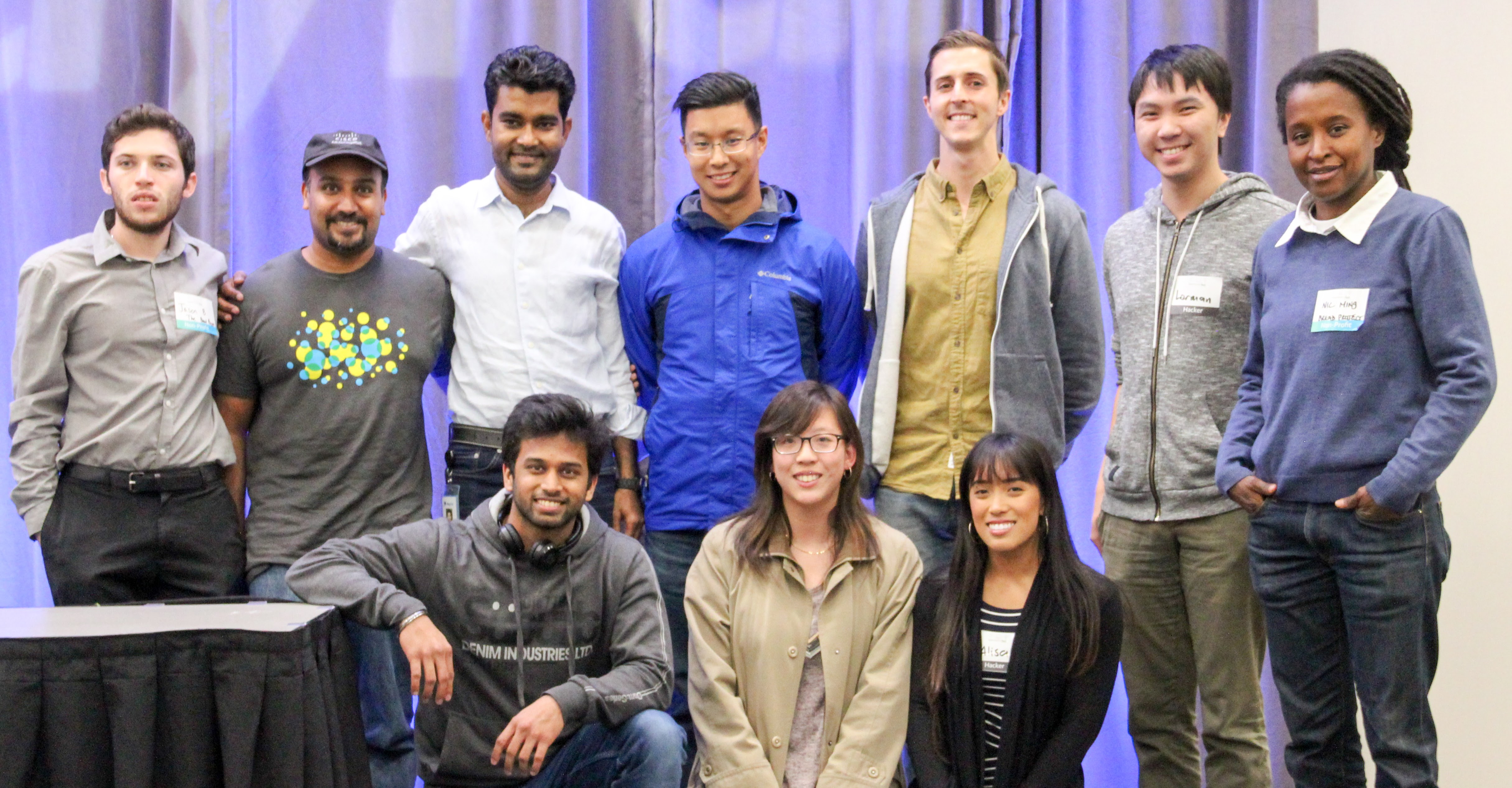
From October 28 to November 3, Cisco, in partnership with PayPal, Intuit, and Coding Dojo, sponsored the 5th annual Opportunity Hack. The hackathon gave employees the chance to network, share ideas, and build solutions that enable change and social innovation for non-profits.

We worked closely with organizations and community partners to create fun and challenging problem statements that could lead to solutions that someday create a lasting impact within our communities.

Sometimes, nonprofits don’t have access to the technological or business expertise that we and our partnering companies leverage daily. But in just 48 hours, our employee participants developed and implemented real technological improvements to help them operate more efficiently, and potentially, scale their impact.

This is what makes Opportunity Hack so powerful–not only are we bridging the gap between technology and social change, but we are doing so in a fast-paced and exciting environment.

This year’s participating organizations and nonprofits included Citizen Schools, The Bread Project, Give Light Foundation, Food Craft Institute, EARN Inc, the City of San Jose, and Ushahidi. Their projects and assignments ranged from mobile apps and e-commerce platforms to chatbots and real-time status trackers.

Over the course of the first weekend, participants divided themselves into teams and hacked through the nigh before demoing their progress on Sunday. Then, the following Friday, after teams presented their ideas to a panel of esteemed judges, the winners were finally announced.


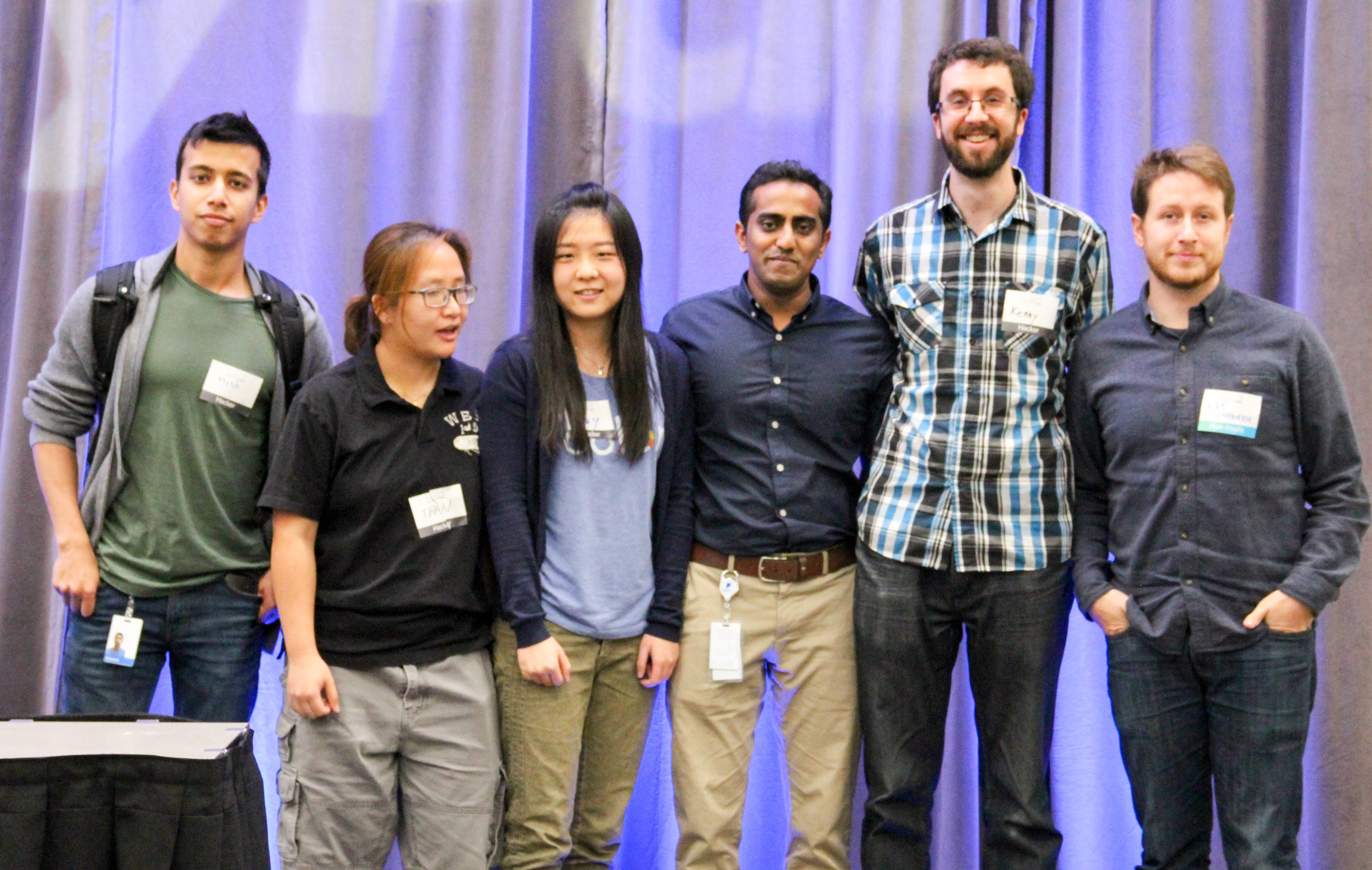
Team Plato, which included our very own Tran Tu and Joy Dai, won first place

We want to thank the many Cisco employees who dedicated their time to this great cause. Among the judges was our very own Harbrinder Kang, VP of Cisco Corporate Affairs, who gave his time on Friday to listen to and evaluate all of the presentations.

We are also very proud of Tran Tu and Joy Dai, who were part of the 1st place team, Plato! They worked with Ushahidi, a Cisco Foundation grantee, to develop a chatbot for crisis response and human rights reporting.

“We created a solution for Ushahidi, which is a crowdsourcing platform for people to report crises and human rights violations,” Tran and Joy said. “It has been deployed in over 160 countries.”

We also want to thank Ajith Chandran for participating as a mentor and helping The Bread Project win the People’s Choice Award. Finally, we want to give a shout-out to Raghu Murugesan, Tejas Ravindranath Gujjar, and Yashas Malleshappa, who worked with Give Light Foundation.

Thanks to our very own Ajith Chandran for helping The Bread Project win People’s Choice Award.

Thank you all so much for your talent, passion, and hard work! Visit the results page to view all of the teams and their submissions.


We hope to continue expanding our outreach, working with more nonprofits, and welcoming even more participants. Keep an eye out for the next Opportunity Hack; until then, learn more about all of Cisco’s community partners.

Authors

Austin Belisle

No Longer with Cisco

Avatar

If you’re on the fence about whether to purchase (or renew) Cisco Support Services, I’ve got a story for you. I recently met with a group of Cisco Account Managers to better understand what customers are looking for in a protection policy.

As the team began to whiteboard all the reasons, I saw a pattern emerge. Every customer claim was about avoiding or reducing risk.

Lightbulb moment: In an industry fraught with network-related uncertainties and security vulnerabilities, I realized customers are relying on Cisco Support Services to regain control of their IT resources and sidestep a whole lot of unnecessary risk.

I know you’ll want to drill into the answers I collected. So here are the top five reasons customers rely on Cisco Support Services:

1.“We can’t afford downtime.”

That’s not surprising. Who can? But how much does downtime actually cost? I found a way to help you arrive at a rough answer. Use Forrester’s independent study on Cisco Smart Net Total Care to estimate how much downtime could set you back, as well as the value of services, like Smart Net Total Care.

Also, just to put things in perspective, I heard that some customers who initially declined coverage found that the cost of one Cisco service call was roughly equivalent to the price for the entire contract. So not only is having a services plan helping customers reduce downtime, it’s saving them money, too.

2.“We need access to Cisco experts.”

With the vast number of systems, solutions, and applications in today’s IT mix, an in-house team can’t possibly reach expert status on any one thing. So it makes sense that customers would prefer a direct line to techs with a strict Cisco-focus should something go wrong.

And, it doesn’t hurt that this on-demand pool of industry and technology experts have been awarded eleven J.D. Power Certifications in a row—something that no one else can claim. We’re talking a team of 12,000 Cisco Services experts and over 3,000 Cisco Technical Assistance Center (TAC) engineers operating out of more than 35 Cisco TAC sites worldwide.

Again, we’re ultimately talking about ways to reduce risk, but in this instance, customers are also benefitting from increased operational efficiency.

3.“Warranties don’t cover human errors.”

It’s true. Warranties are great, but they naturally only cover product defects and things within Cisco’s control. On the other hand, a support contract is like insurance for those unpredictable IT moments. That’s when you want access to Cisco engineers, replacement parts in as little as two hours, OS updates and upgrades, proactive diagnostic assistance, and the Cisco.com Knowledge Base.

Given that 95% of Cisco TAC service requests have nothing to do with equipment failures, savvy customers are all but banking on human error being an issue at some point.

4.“We have to be ready for what’s next.”

Technology used to change every six months. Now it’s more like once a month. So, many customers are relying on Cisco Technical Services to keep their OS up to date with the latest versions. Yes, this helps enhance functionality and performance, but staying current with releases lessens their exposure to risks in the form of vulnerabilities and threats.

Plus, Cisco is always innovating, whether it be maintenance-related, completely new releases—minor and major—or simple bug fixes. There’s usually no additional charge for updates if your product remains under the Cisco Services agreement.

5.“OS variability is top of mind.”

This is smart and forward-thinking. What’s working well today could be a problem tomorrow.

For example, if your team suddenly needs to support a new technology, you have to be able to predict how that variability will impact your systems. If you can’t, we can. Our engineers have seen just about everything. That’s why so many customers lean on our expertise to keep their operations running smoothly—now and in the future.

I started down this road to better understand the mindset and needs of customers who purchase Cisco Smart Net Total Care. That happened—but now I can’t help but think, “Why would anyone in IT knowingly bypass this level of protection and leave their organization open to so much unnecessary risk?” It seems like a solid no-brainer.

Anyway, I hope this is helpful. If you’re still not sure about Cisco Technical Services, please call your Cisco Account Manager or certified Cisco partner. Don’t be afraid to ask the hard questions. We want you to have all the facts when it comes to the real value of Cisco Services.

Authors

Scott Schell

Senior Manager

CX Americas

Avatar

I awoke to the news that Mammoth Mountain received six feet of snow overnight. Well ahead of the calendar schedule for snowfall, this first major storm of the year certainly gets folks excited to get up to the mountains! Especially those in my house-hold. Our last trip was the week of July 4th! Think of that my friends..

Courtesy Mammoth Mountain

In other news, our team recently had fantastic engagements with our friends in Latin America. We have engagements with our own internal regional teams and partners including Chile, Peru, Argentina, Brazil, Costa Rica, Panama, Mexico, Venezuela and more. We certainly look to for more engagements in the next few weeks.

Esperamos con interés más compromisos en el futuro! No hay límite para lo que podemos hacer.

Next week I will be in Mexico City! I will take some pictures to post here.

As a side note, if you are a partner or a end-user and have a question, please feel free to send us a note at ask-smallbusiness@cisco.com.

More big news this week is the completion of our new Cisco FindIT Networking Video. The short video explains what FindIT is, but more importantly explains why it is important to you. It truly is a big shift in the way Small Businesses can benefit from this new platform. A very big shout out to Dr. Paul and Team for the outstanding job. The Product Team certainly looking forward to the next videos.

Lastly, we have made some updates to our SG/SF Switch models. New features and new pricing are a major part of the updates, please contact your local Cisco Partner, or feel free (again) to send us a note.

Did you know our products have lifetime support, free software upgrades for the life of the product, regional phone support in multiple languages and one of the industry’s best support communities? You do now!

We celebrated two Birthdays recently – Happy Belated Birthdays to Chris and Victor!

From our team to yours, have a great week, for those in the US, Happy Thanksgiving.

Marc and the rest of the Cisco Small Business Team.

Authors

Marc Nagao

Product Manager

Small Business RV Series Routers