Daft Punk’s lyrics are more than catchy; they have a ring of truth that resonates now more than ever. There’s a constant need to thrive and drive growth in today’s corporate world. Whether that’s to provide a better customer experience or to beat the competition, second place is not an option. So the question becomes, how? How does a company deliver high growth at an efficient cost?
SMB research specialist Techaisle compared strategies across small and midmarket businesses and found one of the keys to succeeding is video.
In the digital age, staying connected is critical to success. Whether with customers, partners or employees, face-to-face connection can prove invaluable. According to the study, 71% of high-growth organizations prefer to meet face-to-face whenever possible. These face-to-face experiences lead to five meaningful benefits:
Faster decision making
Improved employee productivity
More personal interaction experience
Seamless exchange of ideas
Better teamwork
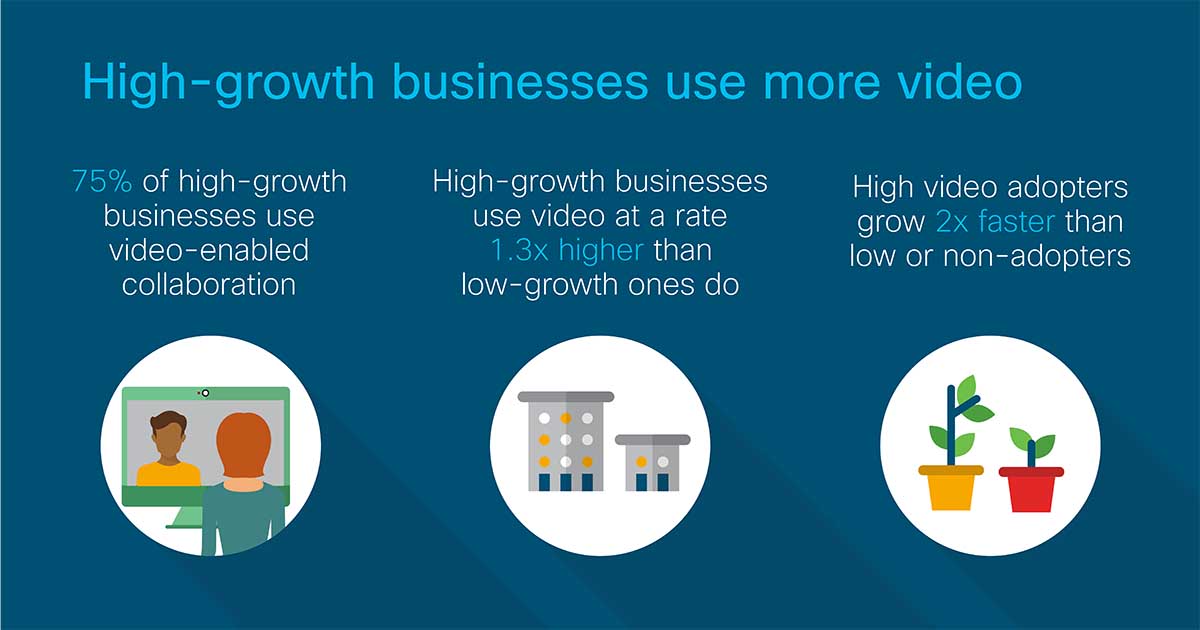
Video adoption is proven to be a savvy strategy for businesses, especially those that want to rise to the category of high-growth. In TechAisle’s report, 75% of high-growth businesses use video-enabled collaboration. However, deploying technology doesn’t automatically equate to growth. You must actually adopt and use the tools to reap the benefits: High video adopters grow two times faster than low or non-adopters.
One such high adopter is Explorer Pipeline. As a key player in the oil and gas industry, Explorer Pipeline moves fuel over a 1,830-mile span and its several hundred employees stretch just as far. With headquarters located in Tulsa, Oklahoma, Explorer faced the challenge of how to connect its workers. The organization wanted a solution that would empower and engage the employees wherever they were located; whether at a regional office or one of many remote sites.
Explorer also has a mission to expand the company and needed a more efficient way to interview job candidates. “Traditional communications didn’t allow us to leverage the diversity within our organization and bring everyone together,” says Todd Golla, director of Explorer Pipeline IT. “We wanted to make employee communication more of a conversation, instead of a one-way broadcast.”
Explorer found all it was looking for, and more, through Cisco Business Edition 6000. The results were evident in increased productivity and reduced travel costs.
“The telephone is not the same as face-to-face collaboration,” says Golla. “Our employees benefit from a more personal connection, and we can solve problems quickly without flying people around.”
Being able to make real-time decisions, or share critical information, shouldn’t be constrained by the locations of employees. With the integration of Cisco collaboration tools, employees can schedule and execute meetings and connections with just a few clicks. “People are discovering the power of collaboration,” says Golla. “It’s changing behavior, increasing engagement, and saving time and money.”
“More than ever Hour after Our work is Never over.”
–Daft Punk
Our business environments no longer adhere to the 9-5, so why should a business use the typical collaboration software? By implementing Cisco unified communications technology, you’ll build a stronger business, and you’ll find yourself working better and faster, but not harder.
Introduction: Splunk was an inaugural ACI partner and inaugural participant in the Cisco ACI App Center. Both at Cisco Live Berlin and at a recent Insieme organized Customer Advisory Board (CAB) meeting, I’ve seen customers evince keen interest in leveraging Splunk software in their Cisco ACI environments. It is no surprise to me that Cisco recently named Splunk as a Global ISV Partner of the Year … for the second year in a row.
ACI App for Splunk Enterprise Key value-props: Deploying Splunk in a Cisco ACI environment enables centralized monitoring, root cause analysis, compliance/audit and risk analysis, and distributed cross-tier visibility. With these capabilities, our customers can gain insights into ACI health. Our joint customers also get operational analytics via the customizable dashboards of Cisco ACI App for Splunk Enterprise. Our App collects various metrics that can be used for meeting SLA compliance and audits. The Splunk platform enables users to correlate data between multiple technology tiers for cross-tier visibility, which reduces the number of monitoring tools and shortens time to value.
Many ACI customers have been excited to learn about the robust, free and fully customizable Cisco ACI App for Splunk Enterprise. I will take you on a quick tour of recent innovations on the Cisco ACI App for Splunk, key use cases, and how the combination of Splunk and Cisco ACI addressed data center operations related painpoints.
The Cisco ACI App for Splunk uses Cisco’s open API framework to collect APIC events, health scores and inventory data into the Splunk platform. Using this data, the Splunk platform delivers centralized, real-time visibility for applications and ACI infrastructures across bare metal and virtualized environments. Ultimately, the Cisco ACI App for Splunk offers offers a flexible approach to monitoring Cisco ACI and all other elements of your technology stack.
How does the ACI App work with Splunk Enterprise?
The Add-on is the back-end of the app.
Scripts are run at regular intervals to fetch and index data into Splunk
REST api request are sent to the APIC securely (via SSL)
APIC responds with the data in JSON format and Splunk indexes the incoming data with correct metadata
The App references the indexer and populates the dashboards
The Cisco ACI App for Splunk collects faults, performance and inventory data. Syslog messages are pushed from APIC controller to Splunk Indexers. Syslog messages include user information such as authentication logins and changes made to the environment for audit purposes. Performance metrics and inventory data are sent through API calls executed against APIC API.
New Innovations in the ACI App
Now, let us look at the new innovations that have been added recently to the Cisco ACI App for Splunk to cover advanced use-cases. These features work with Splunk version 6.3 and above and APIC version 1.3/2.0/2.1 respectively.
Multi-pod for distributed fabric visibility
Micro segmentation for risk analysis
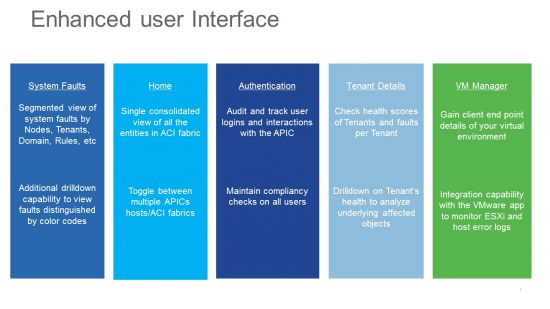
Enhanced user interface (system faults view, home dashboard)
App Center Integration
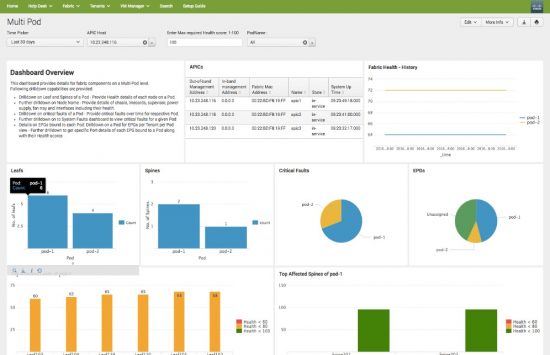
Multi-pod for distributed fabric visibility: This feature enables an overview of the complete fabric segmented by multiple Pods and drilldown to a specific Pod to gain health and statistical information. Data center administrators can gain segmented visibility across interconnected separate ACI fabrics, known as Pods and utilize information in the Cisco ACI app for Splunk to gain knowledge about entities relating to various pods.
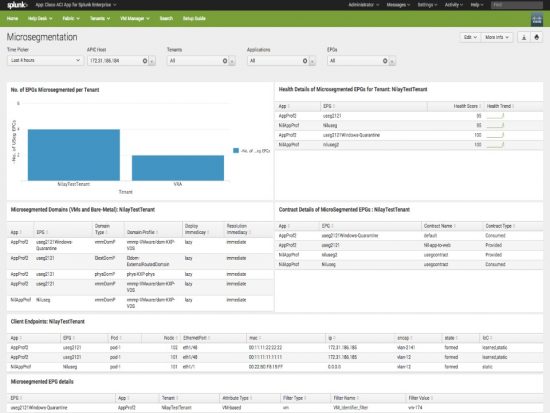
Micro segmentation for risk analysis: Monitor and get details of uEPGs and uEPGs that are quarantined or are restricted communication between end-points by applied filters. Micro-segmentation feature in the app allows users to view granular information on endpoints defined in a logical security zone, known as EPGs. Check on isolated endpoints, contracts associated between EPGs along with the health scores.
Correlate this information with established security policies to monitor east-west traffic within the data center.
Key dashboards features that cater to the use cases:
Enhanced user interface:
The easy to use, easy to understand user interface helps navigating and monitoring entities within the app with better time-to-value resolution for your use case. Dashboards are laid out in the form of single value entities, graphical representations and statistical tables. The user interacts with the app by using drilldown capabilities on the representations to gain further details.
App center integration: CiscoSplunkConnector App
Using the Cisco ACI App for Splunk enables customers to achieve operational efficiency through proactive real-time monitoring, analytics, compliance capabilities powered by the Splunk platform. Data Center admins get better visibility to enterprise-wide data and correlate with ACI infrastructure, with a single click app download.
Conclusion:
With the expansion of data center virtualization, insight into both virtual and physical network connectivity is critical for root-cause analysis of problems in virtual environments. Because Splunk Enterprise can harness machine data from any technology, it offers single-console visibility across multiple technology tiers, even bridging virtual and physical domains. As ACI and Splunk initiatives expand, customers can leverage cutting-edge innovations to address newer challenges in the area of operational analytics and incident management, and meet their compliance, audit and stringent security requirements.
Better yet, join us June 25-29 at Cisco Live Las Vegas where you can chose from more than 70 sessions about Cisco ACI and learn from Splunk and Cisco experts how we’ve partnered to deliver analytics-driven insights across Cisco’s industry-leading security, networking, wireless, data center and collaboration portfolios.
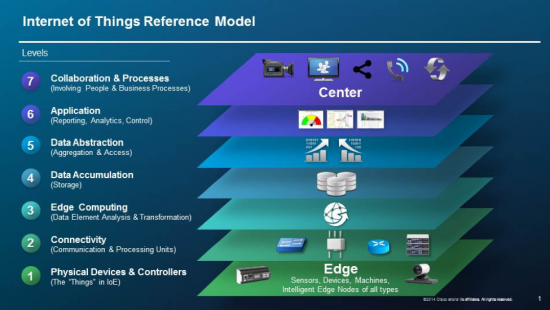
As the digital world accelerates and companies embrace digital transformation, we need to learn how to effectively bring to market and sell collections of hardware, software and services from numerous companies that are integrated into complex IOT solutions. Each of the layers in the Internet of Things Reference Model (above and bottom of this blog) can contain components from one or more companies that when combined create an IOT solution.
These multi-company IOT solutions bring many benefits, but they are also accompanied by their own go to market and sales challenges. The key questions is: How do we overcome the challenges to accelerate these IOT solutions to market and sell them?
Following is part one of a two-part blog that squarely defines and then answers these challenges.
Companies will either digitally transform or become irrelevant or even non-existent. Across the globe in every industry, companies are being challenged by industry peers and others outside their industry. These challenges are coming from large enterprises, medium sized companies and even small start-ups.
For Cisco and our partners, the question is: how do we support our customers to successfully transform their companies? First, we must recognize that the digital transformation of a company means that they have to do things differently – very differently – and that there will be implications.
A good place for them to start is by clearly defining their vision of the future. This usually includes their approach to improving customer service, or their focus on reducing costs by optimizing operational efficiencies, or by implementing innovative new business models. Some companies might even elect to address more than one of these areas at the same time.
Whatever alternative they elect, we can be sure of one thing. Customers, in order to transform quickly, are seeking to acquire specific business outcomes – not hardware, software nor services. This invariability leads them to purchasing or subscribing to specific hybrid offers or IOT solutions – combinations of any digital products and services that deliver relevant business outcomes. They could be predictive maintenance solutions for manufacturing, patient monitoring solutions for healthcare, POS solutions for retail, personal funds transfer solutions for finance, or big data solutions across all industries. They could be structured or unstructured solutions, and they could be created by Cisco or by a Cisco partner. This means that if we continue to only sell individual products and services, we are likely to be replaced by others who are selling solutions.
However, whichever solution or whatever the source, there is one thing that most of these IOT solutions will have in common. They will be hybrid offers composed of hardware, software and services from multiple companies, and they will be somewhat customizable to fit the customer’s specific digital transformation objectives. These can be called multi-party, multi-company, or multi-partner hybrid offers or solutions.
The Value (and Risks) of a Multi-Partner Approach
Why multi-partner hybrid offers or solutions? Because the days of building monolithic, large, vertically integrated solutions are mostly gone. The reason is simple – the cost and time required to create these solutions is excessive, There is no time for lengthy development cylces, due to the accelerating pace of change in the marketplace and the digital transformation happening every 18 to 24 months that require companies to be agile and stay ahead of the digitization curve for their industries.
The benefits of multi-company solutions are clear:
Hybrid offers can be quickly created with the simple integration of proven components
Companies can leverage the investments of other companies
They can can capitalize on the marketplace branding of the solution components
They can employ the go-to-market capabilities of other companies, and/or partner in several other ways that drives joint success.
If managed properly, these benefits can be powerful. But, as with any set of benefits – like any medicine – there are side effects that need to be overcome.
Here’s an example:
If we collaborate with several companies to “integrate” a solution composed of products and services from those companies, then we have to not only assemble the solution, test it and document it, but we also have to successfully bring it to market together Many times, companies are good at assembling or creating a solution made of component parts because they have previously developed processes and approaches to build these types of solutions.
However, they frequently overlook the go-to-market piece. Solution creation can be so challenging, arduous and time constrained that many companies simply do not spend the time to adequately prepare their solutions for sale. This is particularly true for multi-partner solutions since it can be much harder to orchestrate all of the partners who are part of these solutions. Most importantly, there is typically a lack of a repeatable proven methodology to take these multi-partner IOT solutions to market.
The outcome is that these multi-party solutions are frequently “thrown over the wall” to sales. They assume that sales knows how to sell the solutions. But, this is simply not true – especially if a company’s sales teams have historically sold individual products and services as opposed to solutions, let alone multi-party IOT solutions. The result is poor absorption or sales of these solutions.
Examples of these solutions might be a private cloud IOT offering composed of products and services from six different companies. Or a security solution from four different companies. Or a predictive maintenance solution from three companies. These solutions could include components from Cisco, plus a value added reseller, one or more independent software vendors, a system integrator, a storage provider, a co-location supplier, a consultant, and others.
If you have tried to sell a multi-partner IOT solution, then you have experienced the challenges of aligning numerous people from several partners. In absence of a well thought-out go-to-market multi-partner methodology, you may have created your approach on the fly. You have likely even found that a joint IOT solution was missing critical go-to-market components, that the partners have not worked together in the past, that there were competitive overlaps between the partners, and that there was no agreed upon approach to sell or support the solution.
Accelerating Cisco Ecosystem Sales – ACES:
The above challenges led Cisco to develop “Accelerating Cisco Ecosystem Sales” or ACES. ACES helps you answer questions such as:
Is my IOT solution ready to go to market?
How do I get all of the IOT solution partners aligned?
Why should the IOT solution partners work with me?
Which partners should I engage in my accounts?
How do I drive accountability?
What role does each IOT solution partner play in the sales process?
How do we structure the IOT solution deal?
How do we get started?
In part two of this blog, I will introduce ACES, describe how it works, provide proof points from actual ACES engagements, and explain how you can get started today to answer the above questions.
We should all be looking ahead in life, chasing our next goal. Sometimes the path is straight, and sometimes, it throws us a lot of curves.
For example, I was born and raised a Kansas boy. If it’s Kansas sports (Jayhawks, Chiefs, Royals) I’m a fan. I made a plan to join the United States Army, and in February 2008 I enlisted, and became part of the 25th Infantry Division (“Tropic Lightning”). In less than a year I was deployed to Iraq. My role in the military, even then, was called “forward observer.” This meant that I would go on patrols or to observation points, find targets, and call in action on those targets. I received a qualification to also work with the Air Force on air strikes.
Now the curve in the path comes.
During my deployment to Iraq, the vehicle I was in was struck by an IED. The force of the blast from the 100 pounds of homemade explosive rattled the walls at our base 5 miles away. I received a traumatic brain injury (TBI) that developed into a seizure disorder, which was not formally diagnosed until about a year later. Daily headaches (some days are worse than others) significant memory loss and the aforementioned seizure disorder are the long-term results of my injuries.
In 2012, I received a medical discharge from the Army, and started working on building back my memory just to retain knowledge. After a year of hard work, I was on to my next goal and I was given the okay to enroll in college. My path at this point took me back home to Kansas, where I enrolled with Kansas Wesleyan University.
I started by studying business. One semester in, I knew it wasn’t for me. “Maybe my path would be as a teacher,” I thought, and switched to Secondary Education with an emphasis in History, because I loved studying WWII history. Still not the right path.
That’s when the road opened up, and I found my passion. I started studying Computer Science and Computer Information Systems as dual majors. I studied Python, C++, HTML and others, including courses in networking, which were through Cisco’s Net Academy program. I graduated in December of 2016!
Thanks to my work through Cisco’s Net Academy, I was contacted shortly before graduation and asked to interview. This is where my path ticked up in the cool factor. I never applied for a position at Cisco, but of course I said YES! My first interview was via Webex, and then I was flown to San Jose’s headquarters for Cisco Day. I had an offer in-hand the next week. My professor told me he would flunk me if I didn’t take the job (half-kidding, I’m sure) and I was ecstatic.
I’m a new Cisconian, a Customer Support Engineer, as of January of 2017. In March, I cleared another hurdle and passed my CCNA R&S. Testing for me since my injury has been tough. I know the information, but when it comes to testing I draw blanks, but I did it. It feels great to now say, I’ve got my CCNA.
My path at Cisco is wide open. It’s a great place to work, and I’m certainly impressed by their commitment to recruiting military vets like me. Who knows, maybe one day I’ll head back to school as a lecturer!
But for now, I’m planning out my next goal. I know now I can make it happen. How about you?
Looking for your own path to Cisco? Visit Cisco Careers to see the many options and apply!
Our engineers are on the leading edge of new capabilities – security, cloud, automation, you name it. With more than 50 million network installations, we have deeper insight into the network than anyone. That innovation and expertise is built in across our entire lifecycle of IT services to help customers capture value in a digital world. It gives us an edge—an edge our customers appreciate.
One Cisco executive just told me about his recent visit with a client CIO. That client made him wait because he wanted more time with one of our Solution Integration Architects. That’s an awesome testament to our value.
I talk with customers all the time, and I hear it myself, too. The global head of IT Infrastructure at an investment management firm said her Cisco services engineer is like a part of their in-house team. She also loved that he’s a passionate advocate for their needs back into Cisco. It’s a two-way street.
We built a similar relationship with AoK Nordost, a German health insurer responsible for about 1/3 of the region’s population. We helped them see what’s possible from a “digital” modernization of their business – for subscribers, sales, marketing and internal administration. Together we developed both a top-down digital strategy and a bottoms-up IT platform to serve their millions of subscribers better.
While they were building for the future, they also needed to deploy solutions quickly to make their customers’ lives better right away. They turned to Cisco technologies like telepresence, video communication, Wi-Fi, contact center and telephone communications. We also helped them to innovate.
Together we developed their popular new “Fit mit AOK” fitness application. We cut their time to market dramatically; we went from start to market in about 4 months. And while we made patient data more accessible to caregivers and patients, we also ensured that data was more secure.
I’m proud of the team and our work with AOK Nordost.
I also believe in the power of teaching people to fish.
Cisco’s certified community of IT professionals is THREE MILLION strong. That’s a powerful ecosystem of networking and IT specialists.
And CCIEs are considered the Jedis of the networking world — comprising less than three percent of all Cisco-certified individuals around the world. Jiaqi Xu is among the best of the best of this group. That’s because he’s one of only 16 individuals worldwide with not one, not two, but seven different CCIE certifications.
Our learning curriculum is continually being updated. We recently refreshed our certifications to include updated skills for digital transformation in such key areas as network programmability, security, IoT, network design, data center, and data analytics. And we created specialized certifications for deeper expertise in cybersecurity, cloud, network programmability, and overall IT business acumen. We have a full suite of learning tools and resources—online and in person—to help people build, deploy and manage their own digitally transformed environments.
Our learning services continue to set the industry benchmark. Perhaps because our certifications are always evolving, based on changing roles and skills needed to make sure talent is ready for the new digital economy.
Fish or fisherman, we’ve got you covered. How can we help your team?
We started the journey of Cisco LaunchPad with the vision of creating an ecosystem to deliver end-to-end digital solutions for customers. Cisco LaunchPad is an ecosystem of startups, technology leaders, partners, and developers.
It was very gratifying to have the first startup cohort of Cisco LaunchPad graduate in January 2017. For startups, Cisco LaunchPad has been a rigorous yet rewarding program: starting off with an immersive bootcamp, monthly reviews with Cisco leadership and external advisors, deep interactions with Cisco technology mentors and go-to-market teams.
Now, after a thorough selection process by a panel of Cisco Engineering leaders, Cisco LaunchPad kicks off its second cohort of eight startups shortlisted from a number of applications spanning the Cisco portfolio from IoT to Security to AR/VR. The panel sees high potential for several of these startups to collaborate with Cisco on technology integration as well as joint go-to-market.
Please join me in welcoming Cisco LaunchPad Cohort 2:
Appknox:
Detects and addresses security vulnerabilities in mobile apps, enabling users to achieve faster time to market and higher productivity.
Mishipay:
The App allows shoppers to self-scan any item in the store, pay and simply walk out with it (Scan-Pay-Go).
Dataglen:
A highly configurable end-to-end IoT platform for monitoring and optimizing the operations and maintenance of industrial assets via remote cloud based solutions.
Pickcel:
A leading cloud based digital signage solution provider for advertising, public communication for government, on-premise marketing communication and smart city monitoring.
Entrib:
An industrial IoT offering (ShopWorx) for real time monitoring, communication, automated reporting and real time analysis of the manufacturing shop floor.
Pycno:
An integrated agri-IoT platform with wireless sensors that plug into the soil and provide users with real time critical information of the soil and air from remote locations.
Imaginate:
An augmented reality (AR) and virtual reality (VR) technology-based enterprise, offering innovative visualization products and services in the collaboration space.
Spectral Insights:
An integrated Digital Pathology system with high resolution spectral camera imaging along with analytics modules leading to better productivity at lower cost.
Please stay connected with us on this initiative. Join us on Facebook and Twitter, @CiscoLaunchPad. Do visit our website to find out more about Cisco LaunchPad, opportunities to refer potential startups or to apply to this program.
Visualize the last puzzle you worked on. Now, remember how good it felt when you snapped a key piece into place. The fit was snug, it completed a strategic section, and opened up new areas to be assembled. This is how I feel about Cisco’s plan to acquire Viptela—a company that delivers cloud-based Software-Defined Wide Area Networking (SD-WAN) solutions.
Our job is to empower our customers’ digital transformations with the right networking solution that gives them with the best choice for their business model, talent and needs. From a solution perspective, Viptela extends Cisco’s SD networking strategy into the WAN environment in a significant way. It does this by combining Viptela’s cloud-first network management, orchestration, and overlay technologies with Cisco’s industry-leading routing platforms, services, and SD-WAN capabilities. For customers, the acquisition simplifies management, increases digital business agility, and reduces costs.
From my perspective as Cisco’s Chief Digital Officer (CDO), Viptela is also a great fit because the company and its people bring us closer to achieving our vision of delivering recurring value to our customers and the ability to consume that value on a subscription basis.
Much of Viptela’s revenue is subscription based. This means the acquisition will increase the percentage of recurring revenue for Cisco. Further, the SD-WAN market opportunity is projected to reach $6 billion by 2020 at a compound annual growth rate (CAGR) of 76%. * As we increase our share of the SD-WAN market, our recurring revenue will also increase.
Press and analysts like the acquisition. A TechCrunch article stated, “[The acquisition] fits with the service-oriented focus of [Cisco’s] recent purchases, enabling the company to switch from a pure network hardware business, which has been its bread and butter to a services revenue based on the subscription model.”
Per my last blog, we’re not there yet, but we’re one puzzle-piece closer to transforming our business model. Let me know what you think about Cisco’s latest strategic acquisition and our digital business transformation.
An undeniable trend in the storage industry is what one might refer to as the democratization of all-flash storage as the technology becomes more economical and, therefore, more relevant for most use cases. Indeed, flash storage remains critical for Tier 0/Tier 1 applications such as enterprise databases, and its growing popularity to support broader sets of workloads has industry experts estimating that virtually the entire market will be based on flash-based technologies over the next 10 years.
Dell EMC has been ahead of the trend curve with strategic storage introductions to meet customer requirements of all scope and size. This includes the introduction of the VMAX 250F last fall, a smaller, powerhouse of a system that can still scale impressively to more than 1 million IOPS and 1PB of capacity fully loaded.
Today, Dell EMC is addressing the higher end of the solution spectrum with the introduction of the VMAX 950F all-flash storage array as the newest member of its premier enterprise offering. The VMAX 950F scales significantly in both capacity and performance, and has set a new industry benchmark for enterprise storage array performance. Dell EMC ‘s All Flash Portfolio delivers mission-critical availability while offering a wealth of data services that help customers to scale without compromising performance or availability.
Why VMAX 950F and the Cisco MDS
To enable the optimal storage network for this system, Cisco has worked closely with Dell EMC to integrate Cisco MDS 9000 platform with all Dell EMC flash storage offerings to provide customers a choice of industry-leading architectures that simplify, automate, and transform IT – while helping customers accelerate the journey to the cloud. To better serve the new application requirements, Cisco recently introduced a New high-performance Analytics ready 32G Fibre Channel Module and NVMe over Fibre Channel support enabling customers to scale flash deployments efficiently.
The VMAX 950F is ideal for mission-critical applications that demand the performance of flash and 24×7 (continuous) availability – such as core banking, credit card processing, electronic billing, or electronic hospital record systems. The VMAX 950F, with its advanced data services, is ideal for consolidating multiple, diverse workloads and delivers an unparalleled architecture able to scale up performance and scale out capacity. It is also versatile with support for mixed data formats (open systems, mainframe, IBM i, block/file), which are commonly found in any enterprise today. The VMAX 950F also launches with the benefit of DELL EMC’s trusted reputation and vast experience in consolidating mission-critical operations on single platforms.
In addition to the VMAX 950F, DELL EMC also introduced updates to its HYPERMAX OS, which allows customers to deploy flash storage and manage data efficiently. Some notable new features include,
Encryption External Key Manager for centralized key management,
Secure Snapshots for internal governace and enhanced protection against intentional or accidental deletion of snapshots,
VMAX NDM with SRDF/S, RecoverPoint for VMAX and ProtectPoint for Microsoft SQL Server and Exchange.
The Cisco MDS is an optimal storage director companion to Dell EMC’s VMAX 950F by integrating flash storage into a cohesive storage networking infrastructure that can be managed and scaled. The Cisco MDS is an open, flexible, and standards-based platform that integrates well with a wide variety of storage systems. The MDS offers a combination of performance, non-stop operations, investment protection and flexibility that makes it an ideal complement to the capabilities of the VMAX 950F. The combination of the Cisco MDS and the VMAX 950F is the latest success in a long line of game-changing successes from Dell EMC, the storage industry leader, and Cisco, the leader in data center networking.
For more information, please visit Cisco Storage Networking and IP Storage Networking site
EMC PR: https://www.emc.com/about/news/press/2017/20170508-05.htm
Tony Antony
Sr Marketing Manager
DC Products and Solutions
I’m thoroughly enjoying the NBA playoffs again this year, in large part because my favorite team is once again in contention for the championship (go Golden State Warriors!).
I’ve watched most of their games this season and relish the entertainment the team provides. After many hours of viewership, it’s no surprise that I’ve internalized this season’s marketing tagline: the very clever, “A Great Time Out!”
I find this tagline clever because this single phrase effectively communicates multiple messages with just a few high-impact words.
For instance:
The purist basketball definition of “time out,” as in a stoppage in play, nicely associates the tagline with the subject matter at the surface level.
Further unpacking reveals a location-oriented message emphasizing the word “out,” as in going “out on the town.” This second meaning subliminally differentiates the greater value of buying an expensive ticket to attend the live game relative to watching from home.
And more introspection reveals a third, aspirational message that emphasizes the “great time” one will have by attending a game.
The multiple messages of the Warriors’ tagline came to life for me at the Cisco Data Virtualization Customer Advisory Program regional workshops we held in Washington D.C., New York City and Boston during the last week of April*. But before I explain how, let me first set the stage with a general definition of this program and these meetings.
Cisco Data Virtualization Customer Advisory Program at a Glance
Toronto, Ontario, Canada | August 19, 2015
Customer success matters! Since our initial Customer Advisory meeting in New York City 12 years ago, advancing Cisco Data Virtualization products & services offerings, and our customers’ successful deployment of them, has been the mission of this program. Today, this mission continues to guide our greatly expanded program.
Alongside Cisco Data Virtualization Product Management, R&D, Advanced Services, and Support staff, Cisco Data Virtualization customers and partners participate in this exclusive community via a variety of online and face-to-face activities. This 360° x 365-day approach to engagement delivers the shared insights and resources critical to mutual success.
Regional Workshops
As part of the program, we host 12-15 Regional Customer Workshops per year. These half-day events are typically held at a Cisco office, offering customers a place to meet face-to-face to share plans, insights, use cases, and more. Bookending the formal meeting is lunch to open the day, and cocktails to close.
Why “A Great Time Out”
San Jose, California, U.S.A. | April 7, 2015
From the “stoppage of play” point of view, these meetings allow our customers to call a time out on all their other responsibilities so they can invest precious hours on how to optimize their Cisco Information Server implementations.
Supporting this goal, agenda topics for our latest East Coast road trip included:
A deep dive into strategies and options for row- and column-based security, as well as column masking.
Best practices around LDAP and Kerberos.
Next generation UI requirements and roadmap timeframes for upcoming releases.
Ad hoc discussions on these and myriad other topics that arose.
Having some time out of the office was a great way to meet other customers and Cisco staff, share experiences, and, see the wide world of data virtualization from a broader, more external perspective.
And these meetings truly were a great time. Where else can you spend quality time and build personal relationships with data virtualization’s vanguard of industry leaders, including recent Washington, New York, and Boston participants Allegis, Carfax, E-Trade, Fidelity, JPMC, Morgan Stanley, State Street, The Hartford, and World Bank to name a few?
Houston, Texas, U.S.A. | May 6, 2015
How You Can Have a Great Time Out
As a Cisco Information Server customer, you can participate in regional workshops, as well as all the other activities associated with the Cisco Data Virtualization Customer Advisory Program.
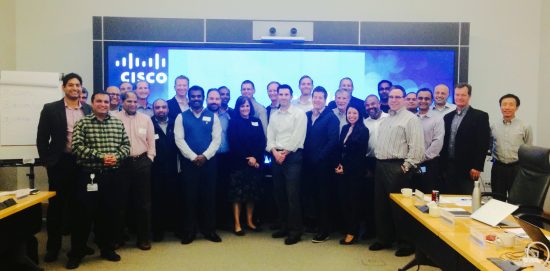
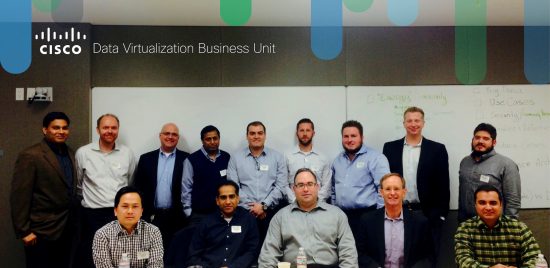
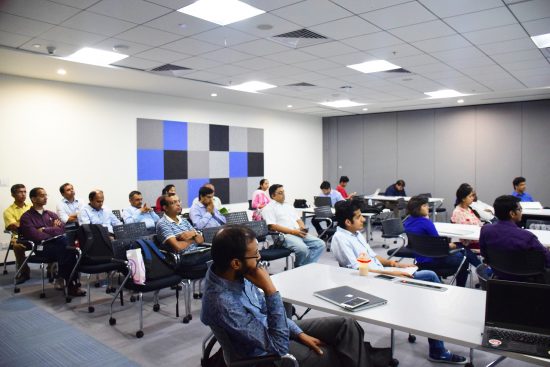
*Unfortunately, we did not capture pictures at our latest meetings, but we hope you enjoy the Toronto, San Jose, and Houston shots from the last few years.














 Please join me in welcoming Cisco LaunchPad Cohort 2: