This is the third blog in a series on the management and orchestration ACI ecosystem partners that use the open northbound interface of the APIC. It is easier to see how partners that deliver application management enable businesses to become digital enterprises since a major element of digital strategies is delivered by the business applications.
On March 1, Cisco announced the intent to acquire CliQr Technologies to manage the entire application lifecycle across hybrid IT environments. And last year at Cisco Live US, they announced their integration with Cisco ACI so that model driven application management and policy driven Application Centric Infrastructure can be combined to deliver the full power of software defined networking (Figure 1). The model driven approach is incredibly efficient. After you create one blueprint of the application to model deployment and the run-time requirements, it just takes “one-click” to deploy an application end to end automating the configuration of infrastructure, application components, and network security. Continue reading “Profile Once, Deploy Anywhere”
As we like to do on TechWiseTV we got a chance to pick and choose among our favorite technologies being featured in this launch focus on the Digital Network Architecture. So as to avoid burying the lead, you will get a chance to experience Enterprise Network Function Virtualization (E-NFV), APIC-EM updates and demonstration, the network as a security sensor with a little Lancope update, changes to CMXnow in a ‘cloud’ version, and end to end quality control for applications like Jabber…end to end QoS.
Coverage for all the recent Digital Network Architecture announcements could only be covered in two shows.
Quick hits:
Part 1 focused on the DESIGN:
https://www.youtube.com/watch?v=R_8EMM7Tt6I
Part 2 focused on the Security and Application SERVICES:
https://www.youtube.com/watch?v=j3w78nF28KI
In a broader sense, our original focus was to illustrate a service-centric approach that enabled IT to focus on outcomes.
This approach would be accomplished through 3 areas you should see represented:
Insights that leverage network data and analytics for new business innovation and improved user experience.
Automation that simplified the network and sped up IT operations. Real-time network events that would drive changes to meet service level expectations
Security embedded everywhere with real-time threat detection and quick remediation to reduce risks.
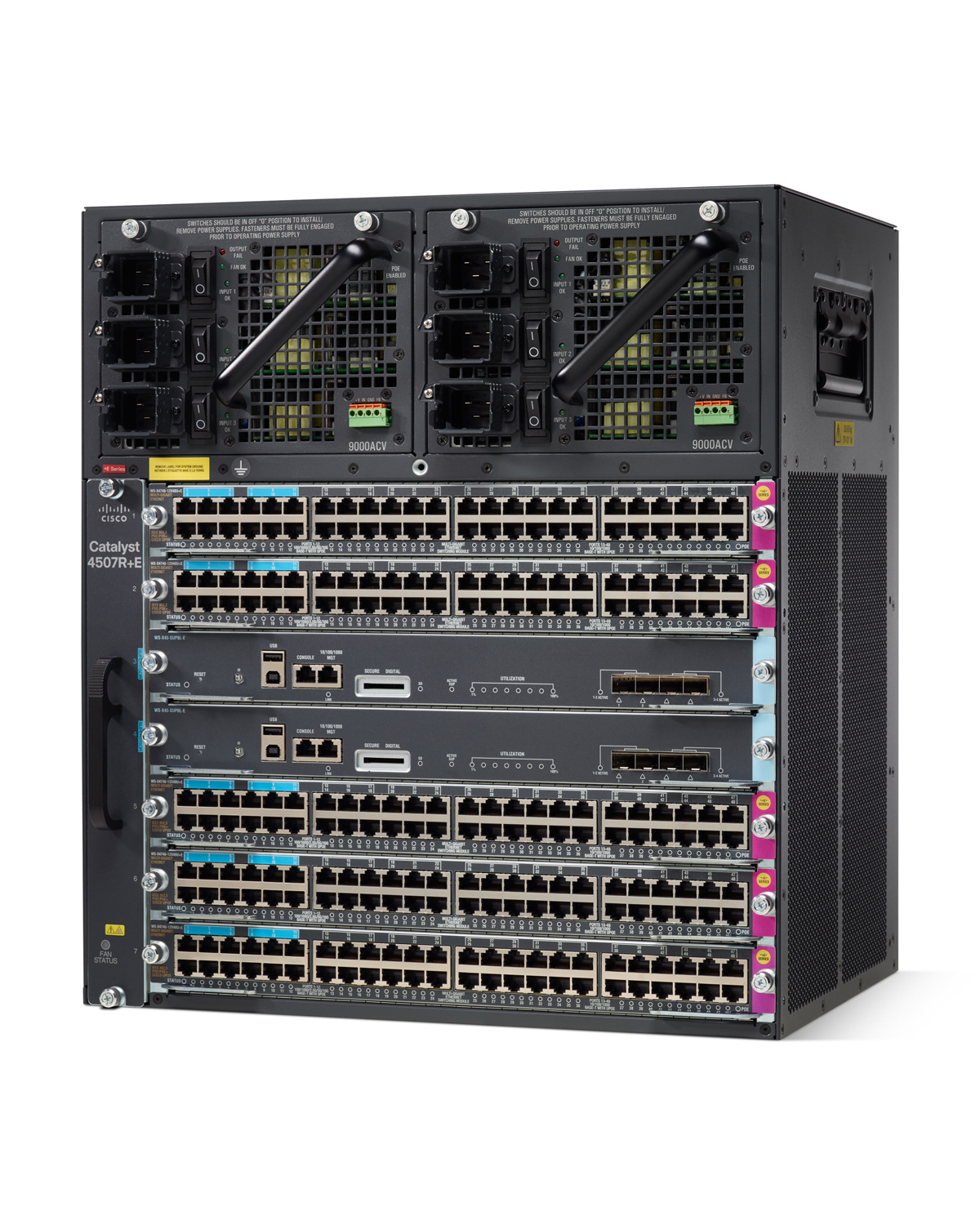
Cisco recently launched the latest generation of low-scale supervisors for the industry-leading Cisco Catalyst 4500E modular access platform: the Cisco Catalyst 4500E Supervisor8L-E.
https://youtu.be/a_pzsWGBjEY
Based on the best-in-class, high-performance Cisco Catalyst 4500E Supervisor8-E, the Cisco Catalyst 4500E Supervisor8L-E gives customers the same high availability, IT simplicity, security and other cutting edge features for low-scale deployments. Supervisor8-E and Supervisor8L-E will also work with the same IOS XE software for maximum operational simplicity and flexibility.
The Cisco Catalyst 4500E Supervisor8L-E supports Cisco Multigigabit Ethernet, a key Cisco innovation that enables customers to migrate to 802.11ac Wave 2 without having to rewire their access points to their Cisco Catalyst 4500E switches. The WS-X4748-12X48U line card on Cisco Catalyst 4500E, supported with Supervisor8L-E, is a 48 port line card with 12 Multigigabit Ethernet ports. The Multigigabit Ethernet ports are 10GBASE-T ports that can auto negotiate down to 5Gbps, 2.5Gbps or 1Gbps based on the connected host/access point capability, the type of cable used and the length of the cable. By connecting Cisco 802.11ac Wave 2 supported access points to Multigigabit Ethernet ports on the Cisco Catalyst 4500E, customers can get up to 5Gbps on existing Cat5e cables or up to 10Gbps on Cat6a cables.
Multigigabit Ethernet saves customers significant expenses by avoiding re-cabling access points to Catalyst 4500E switches with Cat6a cables or running two Cat5e cables between them to get higher speeds. By standardizing on the Cisco Multigigabit line cards on Cisco Catalyst 4500E, customers get maximum investment protection for whenever their wireless networks transition to 802.11ac Wave 2.
The Cisco Catalyst 4500E Supervisor8L-E is also fully integrated with Cisco APIC-EM and Cisco Prime Infrastructure for IT Simplicity. The Plug and Play (PnP) app on APIC-EM can be used to simplify deployment across multiple remote sites, saving enterprise IT teams time and money. With PnP, the Cisco Catalyst 4500E switches with Supervisor8L-E can be pre-provisioned and shipped to branches or other remote locations. Once the Cisco Catalyst 4500E switch with Supervisor8L-E is plugged in, the image and configuration are automatically downloaded and installed on it via the APIC-EM PnP server. The IT admin can monitor the status of the installs over multiple sites remotely.
The path trace app on APIC-EM also enables detailed flow-based visibility and troubleshooting by tracing a path between two hosts. It further provides in depth information about the nature of each hop, including information such as whether the path segment is Layer 2 or Layer 3 and which protocols are running on it.
In addition to these cutting edge features, the Cisco Catalyst 4500E Supervisor8L-E also supports all other Catalyst 4500E high availability, security and IT simplicity features. With Stateful Switchover (SSO) and In Service Software Upgrade (ISSU), customers can get supervisor redundancy on the C4507R+E chassis. The Supervisor8L-E also supports Virtual Switching System (VSS) for dual homing and inter-chassis redundancy in aggregation deployments. It also supports Network as a Sensor and Network as an Enforcer capabilities with Cisco TrustSec, Flexible Netflow, embedded Wireshark and MACSec encryption.
A number of customers across different verticals such as finance, health care, and education are already beginning to standardize on Catalyst 4500E with Supervisor8-E or Supervisor8L-E. For high scale deployments, the Cisco Catalyst 4500E Supervisor8-E continues to provide industry leading modular access performance for customers.
To learn more about how Catalyst 4500E Supervisor8-E and Supervisor8L-E can provide industry leaving modular access in your Enterprise, click here.
This blog has been developed in collaboration with Citrix. Primary Author – Steve Shah, VP Product Management. Secondary Author – Ravi Balakrishnan, storyboard, blog style and content adaptation.
Bring out your dead!
This, among many other quotable lines from Monty Python and the Holy Grail, was wafting through my home last weekend as we introduced the kids to it. However, unlike the many other irreverent lines from the movie, I’ve found myself repeating this one a lot lately when I talk to my customers about their datacenter planning. If you’re buying new, why are you buying anything that isn’t SDN-ready? The former generation of infrastructure may as well be filed with quotes from The Walking Dead.
Citrix has worked closely with the Cisco ACI team since the Insieme days. We had the pleasure of working closely with the ACI team to help define use cases that needed to be focused on, expanding the scope from just trivial load balancing to complete ADC functional coverage with production customers.
So we’re coming up on 3 years since we started this effort. Three years and three takeaways on making the transition to the automated datacenter with SDN at the ground floor:
1.Plan big, but start small.
You really need to have a clear strategy up front for your end to end SDN vision. This will serve as your guiding principle. That said, set your expectations in line – you’re not going to swallow that change all in one go. In fact, for that first step you’ll want to start small. It’s not whether the technology works – we are well past that point of needing proving out – it’s a matter of getting your team over the transition to grasp all the conceptual changes happening.
This includes L4-7. Plan your L4-7 strategy for datacenter-wide automation, but setting up trivial load balancing to start with is a good place to start. You can add the rest of the ADC feature set over time.
2. Start Clean.
Legacy. We all have it, and it powers our current production network. Mess it up and badness will befall you. So pro-tip: don’t. The most successful rollouts we are seeing start with a clean slate. The hardware may only be a rack apart but they may as well be a world apart as the L2-3 domains don’t touch. Gateways (firewalls, load balancers, proxy servers, etc) stand between the old and the new which allows network architects to take the lessons of years past and apply them in a pure / tidy environment free of the incremental hacks that make up our current networks like coronary plaque.
It’s not just the L2-3 domains that are getting a clean start, L4-7 infrastructure are getting a fresh look too. Many of our customers wiped away any assumptions they had about the state of load balancing and took a fresh look at the market to find that their incumbent was no longer meeting the bar.
The common theme for L4-7 is software. For a L4-7 vendor to boast about their latest big iron chassis is absurd in this day and age. This transformation has led many customers to look to NetScaler for their solution to transition from hardware to software without having to retrain their teams, learn new APIs, or re-architect.
3. One Step at a Time
So we have a clean slate, a sound strategy, and a small start… When do we go big? Well hold on there.
Your architect who has been immersing herself in SDN for the last several years groks it. The leadership that traveled to vendor-land and attending executive briefings understand it. But what about the rest of the team? The bulk of the team is seeing a lot of stuff for the first time. If your job is maintaining uptime, the last thing you want is to wake up and find yourself surrounded by some infrastructure designed in an ivory tower. That is revolt material right there.
You can see where this is going. If education wasn’t in your plan already, add it. Like learning how to configure a large scale BGP network wasn’t a training room skill and required some on the job time, learning a real SDN like ACI isn’t something that is casually picked up. In particular, the change of expectations in datacenter automation and DevOps orientation take some time to understand.
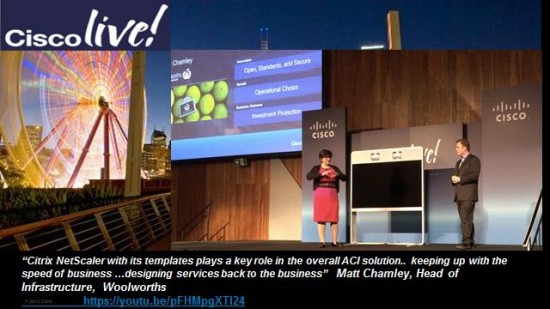
Several NetScaler customers found themselves relearning how configuration would work in an ACI world. It wasn’t a small change and the start slow helped, but at some point understanding how to go hands off on the NetScaler and manage by way of ACI was a hard fought skill. Take Woolworths Australia as an example where ACI and NetScaler is deployed.
When they started down the path of datacenter automation, they started with smaller projects that could essentially “fit in a rack”. That became an environment where the team could find out what they didn’t know about operationalizing the new architecture. As the team’s skills grew, their overall confidence grew, and the adoption of the new architecture grew with it. They are now well on their way to broad based deployment.
So what’s next?
When ACI and NetScaler first integrated, SDN itself was at the bleeding edge of technology. Today, it has reached a level of maturity for broad based adoption. So what’s the next big thing?
With a framework for a highly malleable network in place, we are now able to really move to a far more flexible applications environment. Microservices will be a key dimension of that with containerized infrastructure for L4-7 becoming part of the norm. NetScaler has introduced the NetScaler CPX which is a Docker container and early customer engagements have been very exciting as we’re watching hyper-scale hit the Enterprise.
As container based infrastructure evolves, the value of ACI’s single pane of glass evolves with it. Using an application oriented view of the network as opposed to an infrastructure-centric view, ACI + NetScaler will be able to help abstract away the transition from hardware to software. This will maximize the value of the existing infrastructure our customers have already invested in while enabling them to gradually move towards the next-generation.
Successful innovators can sneak up on you. Apple’s iPhone actually followed a string of other smart phones from competitors like Nokia, Microsoft and Research in Motion (Blackberry). Nor were Google, Facebook or Netflix the first movers in their markets- or Henry Ford if you want to go further back. There were already competitors in each of these markets. What they did was create a much better mousetrap that met their customer’s specific needs- and then executed brilliantly. Continue reading “Reinventing the Data Center for a Digital World: Cisco HyperFlex Systems”
We are pleased to congratulate our industry partner Rockwell Automation for having won, for the third year in a row, the Control Engineering 2016 Engineers’ Choice Award in the Network Integration – Ethernet hardware Products category.
This year, the voting session saw more than 140,000 industrial engineers responsible for automation, control, and instrumentation technologies.
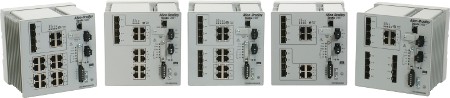
The Allen-Bradley Stratix 5400 Industrial Ethernet switch is one of the new flagship product lines of the Stratix product portfolio.
It was launched last spring, as part of the Stratix EtherNet/IP Network portfolio which enables manufacturers, and other industrial customers to converge their network infrastructure and tightly integrate technical and business systems using IP-based networks like EtherNet/IP. The portfolio includes many other products utilizing Cisco technologies that have won previous year’s awards, in particular:
This series of achievements recognize the value of Rockwell Automation and Cisco partnership on products, services and educational resources leveraging the technology and expertise from each company throughout the offerings. Together, enabling both information technology (IT) and operations technology (OT) teams to build secure, converged network architectures to meet the needs throughout the Enterprise.
You can find more info on the Rockwell Automation and Cisco partnership here.
A year ago, we launched Cisco ONE Software, to give customers a simpler and more valuable way to consume Cisco’s software capabilities for their infrastructure. This approach was radically different than previous models, which tightly linked the software features to the underlying hardware. The new model would need to better support evolving customer preferences, including cloud, virtualization, and SDN.
Cisco ONE Software introduced a set of software suites designed to address the most relevant customer use cases. The software was made persistent by granting customers “license portability” – the right to transfer that software to future generations of Cisco devices (with a software maintenance contract). Over time, we expanded the capabilities of these software suites, including ACI, Intercloud Fabric, APIC-EM IWAN, etc.
We never removed the traditional way to purchase Cisco’s software, so there has always been choice. Customers voted with their feet, and within a year of the launch, over 7,000 customers purchased Cisco ONE Software. In fact, 76% of the Fortune 100 companies have Cisco ONE Software today. Cisco’s latest technologies including the Nexus 9k, ISR 4k, Enterprise Cloud Suite, and the new 8540/5520 wireless controllers are seeing the most dramatic shift to the Cisco ONE Software model.
What’s driving customers to choose Cisco ONE Software? It’s quite simple:
Software suites based on customer use cases
Attractive pricing for the software included
Investment protection through license portability
Access to the latest technology
At Cisco’s Partner Summit 2016, we made several announcements on how Cisco ONE Software is getting even better! We launched the Digital Network Architecture (DNA), which is an open, extensible and software driven architecture for digital business. This includes new capabilities like Enterprise NFV and CMX Cloud. How do you get access to DNA? Through Cisco ONE Software, of course.
We also announced the availability of the Enterprise Cloud Suite as a software subscription for pilot customers. This is the first offer within Cisco ONE Software that will be available entirely as a subscription service. It’s tailored for customers who would prefer to pay for their software over time. We’re working on subscription offers across the entire portfolio.
If you haven’t had a chance to be briefed on Cisco ONE Software, I’d recommend connecting with your Cisco account team or partner, to see if you could benefit from this new model. I’d appreciate any questions or feedback in the Comments section below.
Each week, we’ll highlight the most important Cisco Partner Ecosystem news and stories, as well as point you to important, Cisco-related partner content you may have missed along the way. Here’s what you might have missed this week:
Off the Top
Happy Friday all. We’re still getting back into the groove of things around here after Cisco Partner Summit 2016.
Hard to believe, but we haven’t really done too many video blogs, or ‘Vlogs’ as the cool kids call them. I was happy to see marketing director Kelly Crothers send one my way for this week.
Kelly uses the video to tell partners how they can use ‘Expand Selling’ to capture new revenue. Watch Kelly in action to learn more.
Be sure to let her know what you think in the comment section of her vlog. Thanks Kelly!
In the News
CRN shares 15 scenes from Cisco Partner Summit you need to see
The End of Support (EOS) for Microsoft SQL Server 2005 is upon all of us. In April of this year, Microsoft will no longer support SQL Server 2005. Some companies have chosen to stand pat while others are researching and making decisions to upgrade to SQL Server 2014 or the recently announced SQL Server 2016. When this migration and upgrade occurs, another decision is having to be made. Since the latest version of SQL Server requires more compute power than it did for 2005, the server platform utilized for the migration must also be upgraded. So does the server platform for this migration really make a difference?
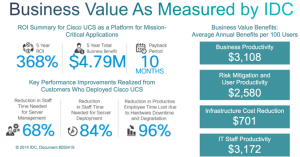
Let me provide a few facts from an independent study done by the analyst firm IDC. Installing mission-critical applications on Cisco UCS provides the following benefits
In addition, Cisco UCS provides the same or better performance than any other server platform.
So going back to the original question. Does is make a difference what server platform you choose when considering the migration path for your Microsoft SQL server. The answer is a resounding yes. Only Cisco can provide the operational efficiencies listed above as well as the performance you desire in your data center.
SQL Saturdays are free 1-day training events for SQL Server professionals that focus on local speakers, providing a variety of high-quality technical sessions. Cisco is a sponsor of multiple SQL Saturdays and have several venues that are right around the corner.
During these training events you will gather information about how your peers are moving to the latest versions of SQL Server and why choosing the right platform for this migration matters.