Avatar

Hello there, I’m John Sayer. I work in Cisco’s Cloud Collaboration Technology Group as the Lead Cisco Spark Adoption Specialist for our Customer Success team. Over the last year, I’ve been spreading the good word of how great Cisco Spark is to anyone who’ll listen!

Cisco Spark is Cisco’s next-generation collaboration platform. More simply, it’s a place where teams get stuff done!

I get a lot of questions about Cisco Spark and how to get the most from it. Here are some of the most frequent and how I answer them.

How do you use Cisco Spark in your own work? I travel frequently and work with people all over the planet on a daily basis. Beyond other Cisco employees, many of the people I work with are often Cisco partners or customers. Spark gives me a single space to keep all my projects, workstreams, and conversations. It keeps me connected to everyone I work with and has the tools I need to get my work done.

What’s your favorite part of Cisco Spark? Cisco Spark is the only place I need to be to get work done. The integrations are great. For example, if I’m working on a particular project, in just a glance I can:

  • See the latest updates from my task management integration
  • Query my to-do list from a bot
  • Re-assign a task to someone else with the bot
  • Then, update my project tracking sheet.

From that same space, I’m able to chat with my team, share the latest files, and pop right into a video meeting with them. All  from a single app.

That’s cool, but I already have Jabber, WebEx, and email. Why should I use Cisco Spark? Good question. It helps me streamline my workload so that everything is one place.

You may have heard Rowan Trollope, our senior vice president, mention that he’s reduced his email by 80%. That’s not an exaggeration. I’ve experienced the same, and there’s a lot less noise for me to wade through every morning.

Through Cisco Spark, I’ve unified the communication streams I use on a daily basis. Think of Cisco Spark like a toolbox: Each app or tool you use is all connected in one place. When I first started using Cisco Spark, I was resistant to fully convert. It felt like it would be just another place for me to check for notifications. But, I soon realized that I could make Cisco Spark work for me, rather than the other way around. By starting to work almost exclusively in Cisco Spark, I drastically reduced the number of emails I received. Spark gave me one place to work with my various teams and projects.

Alright, I’m interested in Cisco Spark. How would I use Cisco Spark in my day to day work? It’s only a slight exaggeration to say that Cisco Spark can do anything. So the first thing I reply with when asked this question is this: What do you do every day? And what do you use to do it?

Speaking with one of my friends in a tech-support group, his answer was “incident management.” His tools are ticketing systems, analytics tools, email, and paging systems. So how do we improve this workflow with this product? Easy enough. First, we connect each of these isolated systems. One of his team’s main complaints is that the systems don’t talk well to each other and slow email causes inefficiencies in time to resolution. So we connect all the tools using Cisco Spark APIs and integrations, letting bots automate parts of the process. Now the workflow looks like this:

  • The analytics tool detects an outage and creates a ticket for tracking, then automatically creates a Cisco Spark room with the on-duty technicians and adds the logs and data needed to start remediation.
  • A Tropo integration also pings the techs with an automated SMS in case they’re away from their screens.
  • Now all of the techs are in the same collaboration space, on the same page, with the tools they need to get things fixed.
  • They communicate and share files in the room as they address the ticket.
  • Once the fire’s out, a bot archives the room contents for record keeping.

I always like to say that the goal is that you forget you’re working in Cisco Spark — you’re just working.

What’s your best advice for using Cisco Spark? My best advice is to jump in with both feet. Cisco Spark’s real power is that it’s a platform. It works well as a business messaging client or as a meeting application. But where it really shines is having all those collaboration tools in one place — and being able to connect into all the tools you use every day.

Download Cisco Spark and try using it as the primary tool for one of your teams or projects. I believe you’ll soon see how Spark helps teams get things done!

Authors

John Sayer

No Longer with Cisco

Avatar

October was National Cyber Security Awareness month and there’s been a lot of talk about how organizations should be doing more to protect their networks. One of the current trends in cyber security is that organizations are increasingly turning to trusted partners like Cisco for some or all of their incident response capability.

As a member of Cisco’s Incident Response Services team, I am regularly called upon by our customers to provide incident response (IR) expertise ranging from assessing a current IR process, building an IR program from the ground up, or assisting the customer in responding to a cyber incident from initial identification right through to remediation. When our team works with a customer on an active incident, we employ not only highly trained and experienced responders, but also all the gear that they need to get the job done.

A “go-bag” is a term used in a number of professions where unscheduled or last minute travel is common. While the contents may vary, the general idea is that a go-bag should be pre-packed with all the items necessary for a person in that profession to work away from their “normal office” for a number of days.  For the Cisco Security Incident Response team, go-bags consist of all the tools required to land at a customer’s site within 24 hours of an urgent call-out.

At the core of our Cisco IR go-bag is a custom-built laptop to handle simultaneous data collection and analysis. The laptop is a little “chunkier” than most laptops found at a computer or electronic store. For starters, it has multiple solid state hard drives (SSDs) which run faster and more efficiently than traditional hard drives with no moving parts.  This gives the laptops the ability to read, write and store large amounts of data very quickly.

In addition, the IR laptop has approximately four times the amount of Random Access Memory (RAM) that a system sold at a big box electronic store would. RAM holds data in current use “in memory” so that it doesn’t have to be constantly pulled from the physical SSD storage each time it is needed. RAM is volatile which means the data is only held as long as the computer has power. The more RAM, the faster a computer can process data.

Lastly, the Cisco IR laptop has a quad-core processor. The processor is the brain of a computer, and the more cores, the more activities the computer can accomplish at the same time.  All these pieces together ensure the laptops that Cisco IR Analysts carry are more than powerful enough to collect and analyze data while in the field.

The next essential pieces of the IR go-bag speak to the ability to collect data from a customer’s environment in a manner that is considered “forensically sound”. This means that the data collected is unchanged from the original media (hard drive, USB, CD, etc.) from which it was sourced, and is accomplished using a device called a “write-blocker”.  The write-blocker is deployed between the original media and the IR laptop during the data collection task, and, as the name implies, ensure that no changes are written back to the original media.

This provides a perfect segue to the next item. If the laptop is the media on which the copy of the data is stored, and the write-blocker ensures that there are no changes to the original media during the collection, how or what does the actual collection? And how do we ensure the copy is exactly the same as the original?

Cisco IR analysts are equipped with licensed forensic software that accomplishes both collecting the data, and ensuring the data is what was expected. Collecting the data via forensic software usually means creating a bit-for-bit copy of the original media. After the copy is complete, the forensic software takes the additional step of creating a hash of the original and the copy, and comparing them. A hash is a one-way cryptographic function that creates a fixed-length sequence from a variable-length string. It is essentially a digital fingerprint. If the copy is even one bit different from the original media, the hashes will not match. This is important to be able to prove, perhaps in a court of law, that the integrity of the image collected is intact from the time of collection through to completion of analysis.

Depending on the analyst, the rest of the go-bag may include various boot disks, an array of cables, small toolkits, cameras, anti-static bags, labels and multiple external storage drives to ensure all data can be collected.

Last but certainly not least, the bag itself is very important. A go-bag must be able to fit all the gear required and perform well over many miles and several years. A go-bag should have:

  • one or more padded sleeves for laptops,
  • enough main storage for write-blockers, power packs and cables,
  • secure compartments for fragile items like hard drives and,
  • plenty of small pockets for items like pens, batteries, phones and sticky notes.

Going on-site to assist a customer with an incident means sometimes meeting them for the first time on what could be the worst day in the history of their business.  A fully-stocked and functional go-bag means the Cisco IR team can hit the ground running, and goes a long way to helping that “worst day” be the first step toward a better year.

And while this blog describes the contents of Cisco IR’s go-bags, your organization may want to consider building your own go-bag. The items you need may be the same or completely different, but being prepared will help make your response to any incident faster and more efficient.

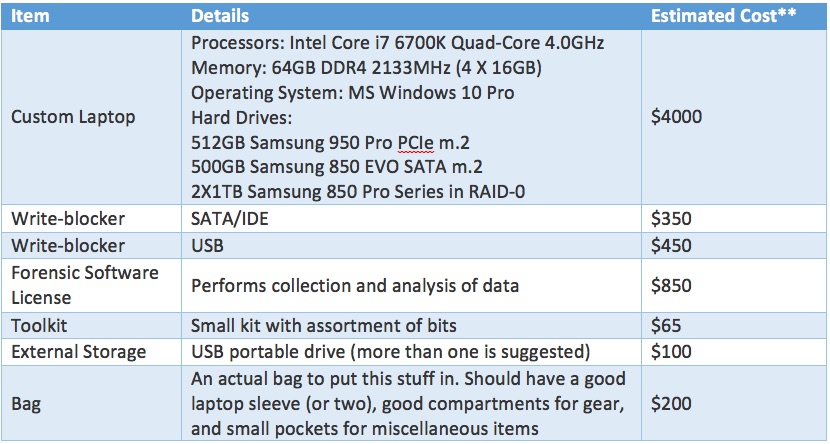
If your organization is considering putting together a go-bag, use the table below as a base for what you might need:

chart-go-bag

**All prices are estimates in USD and will depend on actual specifications and brands**

When responding to a cyber security incident, preparation goes a long way toward decreasing time to detection and resolution of an incident.  In addition to building out your go-bag, this white paper provides additional insight into how you might build out your own incident response capabilities.  And, of course, consider engaging with our Cisco Incident Response Services.  We’ll help you prepare and respond to incidents, and our go-bags are already packed.

Authors

Shelly Giesbrecht

Senior Incident Responder

Security Incident Response Services

Avatar

There have been many conversations about the impact of technology on individual schools, but much less about the impact on entire education systems. To address this, Cisco staged five roundtable discussions in Australia to investigate the opportunities presented by digitization.

K-12 education has never been more important, or challenging. There is an expectation that people in a digital world are able to problem-solve, collaborate, and think critically, as well as be technically competent in areas such as science, technology, engineering and math (STEM).

While technology disruption has been immense, we are in the early stages of even more profound change. The Internet of Things is being thought of as the second-generation Internet, or “Industrial Internet.” If the Internet was about connecting people, IoT is about connecting people to machines and machines to machines.  As a consequence, there is likely to be more change in learning in the next five years than there has been since Gutenberg. Why? Because we are at a tipping point where new technologies can engage more students, render learning more relevant, contain costs, and enhance equity. 

Consider, for example, the technology disruption occurring in our general lives, and inevitably in our schools. Advances related to mobility, digital collaboration, cloud, big data analytics and cyber security are driving fundamental changes to pedagogical, business, and operating models.

The roundtables confirmed there is no shortage of vision and leadership in education in relation to digital technologies. Across all jurisdictions that participated, system leaders spoke of the need for more innovation, a change mindset, and sustained effort in the need for impact at a system level.

Despite general recognition of technology’s return on learning, roundtable conversations revealed technology was not necessarily as high a priority as it should be. The desire to disrupt is often stymied by other pressing issues, including organizational restructures, new policy implementation and the business of operating schools. System leaders are grappling with what sustained and effective action looks like in relation to digital.

What is clear is that collaborative action is likely to be more successful than independent approaches. This includes greater collaboration between education systems and industry.

While Cisco is a major technology partner, its interest in education is far broader. As an example, it is heavily invested in ensuring that Australia’s education system produces the talent it needs to thrive in the knowledge economy. By working closely with education system leaders and continuing to have these types of conversations, Cisco is hoping to be part of the solution, not just talking about the problems.

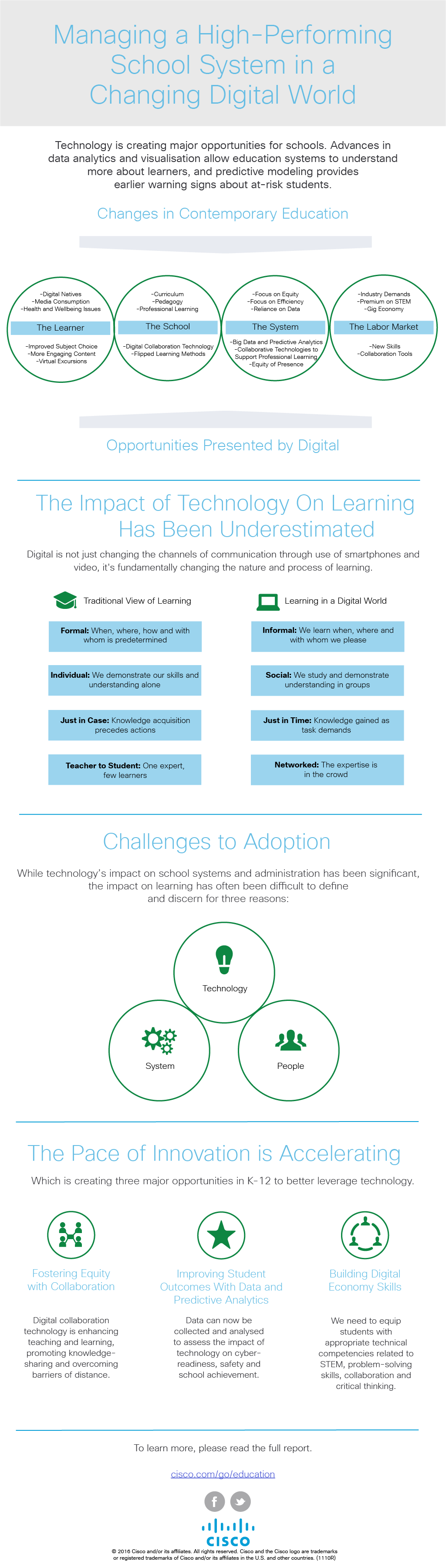
To learn more, refer to the Education Leaders roundtable full report, and check out a brief infographic recap below.

Manging School System in a Changing World- V1


Authors

Reg Johnson

General Manager, Education

Cisco Australia and New Zealand

Avatar

Just as an orchestra relies on the careful selection of instruments and skilled players, each contributing uniquely and working in tight collaboration, to create a truly symphonic experience—so, too, does the development and operation of a smart city. In the case of creating harmony on the urban services stage, a number of companies must come together as part of an ecosystem, each playing their part, to develop, implement, and sustain an integrated set of solutions. And, as with an orchestra, there is a reliance on a common set of signals and standards to conduct the players and devices in order for them to interact effectively.

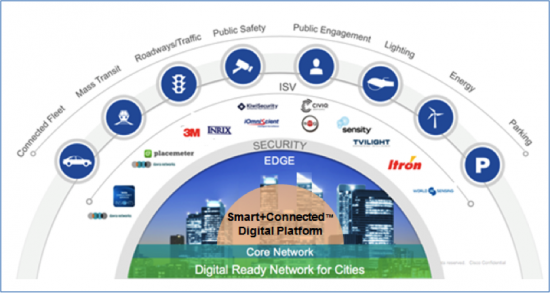
Orchestrating the smart city ecosystem is a combination of art and science that blends company cultures, business models, and objectives into a living, evolving expression of alignment with the goals of city leaders and citizens. It requires a blend of local partners—who have already built key relationships and trust with city leaders and citizens—with global partners who can leverage broad experience and economies of scale. It requires partnering with technology and application experts, data and analysis experts, communications and connectivity experts, services and integration experts, even business and financial experts. Orchestration of these partnerships, this ecosystem, requires a keen understanding of the foundational infrastructure and Cisco takes on this role. In fact, we recently announced a specific new cloud-based tool set to oversee and support this orchestration: The Smart+Connected Digital Platform.

The Smart+Connected Digital Platform provides a cohesive guidance layer to align the expertise of these partners—providers of sensors, applications, data analysis, security, services oversight and so on—and get them and their assets all operating effectively together to gather, analyze and deliver data and a shared experience. Through that integration, data can then be shared with new contextual relevance for better informed decision making, more interactions with citizens, and the identification of new opportunities for revenue generation and cost control.

arvind_blog

Cisco works with a wide variety of partners that fall into the following broad categories and orchestrates their participation across its smart city ecosystem; in some cases, companies may serve in several categories.

Solution Partners (Sensors, Applications and Analytics) 

Solution partners are those that play a role in data management. They may produce hardware such as sensors or software such as applications. They may provide processes such as data analysis schema. When it comes to sensors, there are more and more of them everywhere; their role is to capture data at various points—say on a light pole or in a water pipe—to provide measurements of conditions over time. For instance, a parking sensor—buried in the roadway or embedded in a video camera—senses and reports on whether a parking spot is occupied or vacant.

One of the key roles of the Smart+Connected Digital Platform is to allow sensors to be added into the overall smart city system quickly and have it capturing and feeding data over the network with relatively little fuss. So data from multiple sensors—deployed to serve a single vertical industry or multiple industries—can operate as part of a shared environment to fuel a new synthesis of information through intelligent correlation.

For example, real-time parking, traffic, and public transportation data—fed into the same digital platform—can be correlated to reveal city bottlenecks to city planners, new parking pricing opportunities to parking authorities, or the best transportation option for two excited theatre-goers to get across town on a Saturday night.

Understanding the data requires that it be packaged for its particular purpose and audience—such as on a control-center dashboard or a mobile application, for instance. The Smart+Connected Digital Platform exposes data that various application developers can access via established application program interfaces (APIs) prebuilt into the system. Experts in different domain areas can craft the applications that will serve their audiences best—whether that’s a city agency worker, an arts enthusiast or a city visitor.

Systems Integrators

The marriage of physical infrastructure and technology infrastructure in an urban setting often leads to integration complexity. One category of partners with whom we work often is the traditional technology integrator. These partners are particularly adept at integrating networks, sensors and applications. In addition, infrastructure integrators are critical as they have the right clearances and permits to work on deploying public infrastructure within a city. So, a smart lighting solution, for example, involves combining physical infrastructure elements—light poles, luminaires and fixtures—with elements of technology infrastructure—control nodes, sensors, cameras, access points, and light-management dashboards and so on. And it requires the orchestration between both types of integrators to successfully implement the smart lighting solution.

Urban Operators

We have been building a stronger set of partnerships with this important category of partners more recently and in some cases urban operators are our direct customers. Urban operation partners enter into long-term contracts with cities for the delivery of urban services, such as water, transportation, energy and facilities maintenance. CH2M, for instance, is an urban operator we have worked with that manages end-to-end public infrastructure for eight U.S. cities. In the UK, Amey, a subsidiary of the Spanish urban operation company Ferrovial, manages 30% of the outdoor street lighting in the UK. These partners are, themselves, engaged in their own digital transformation journey to digitize their value chain so that they can offer urban services to their customers more efficiently. We are increasingly working with urban operators as they already have strong relationships in cities, which potentially smooths the integration, deployment and adoption of these solutions.

Service Providers

Services Providers are traditionally providers of communications and Internet connectivity services. But they have been branching out in their service offerings and have increasing begun providing smart city solutions as a natural extension of their business model. Service providers also have strong city relationships and existing footprints by way of their fiber, wireless and wired network investments. They also have a heritage of providing both consumer- and enterprise-related network services.

In Copenhagen, for example, one of the most advanced smart cities and an important customer for Cisco, the top service provider is TDC. Cisco is partnering with TDC to deploy and offer a portfolio of smart city solutions in collaboration with the local ecosystem.

In Kansas City, Missouri, another forward-looking city, Sprint played a key partner role with Cisco in enabling and deploying smart city solutions. Cities worldwide have very different ways of working with service providers and we have clearly maintained a diverse set of relationships to ensure flexibility, collaboration, and strong outcomes for the cities we work with.

Ecosystems should be designed with flexibility in mind

Cities are living, breathing organisms that evolve over time. Smart city projects need to be designed with this in mind so that they are flexible and future-proofed and so that new services can be provisioned easily. Cisco’s approach to having an open ecosystem that can exist over a common network and platform provides this flexibility…and of course what that looks like will continue to evolve over time.

Authors

Arvind Satyam

Managing Director, Global Business Development

Smart+Connected Communities

Avatar

The excitement surrounding the fourth industrial revolution or Industrie 4.0  is largely due to the limitless possibilities that come with connecting everything, everywhere, with everyone. The opportunities to improve processes, reduce downtime and increase efficiency through the Industrial Internet of Things (IIoT) is easy to see in manufacturing, an industry heavily reliant on automation and control, core examples of operational technology.Industry40BlogImage

However, as every traveling gadget enthusiast who is forced to carry a host of power chargers knows only too well, connectivity is far from simple. The manufacturing environment is full of connectivity and communication protocols that are not interconnected and often not interoperable.

That’s why convergence and interoperability are critical if this revolution is to live up to (huge) expectations. Convergence means interconnecting the things so communication can occur.  Interoperability is the use of standard, complementary communications technologies and processes that ensure machines produced by different OEMs can speak the same language.  Industrie 4.0 calls this out.

There are so many types of specialist technologies in use within an increasingly automated manufacturing environment.  It would be impossible to fulfill all business requirements, much less continue to innovate, by sticking to one or even a few vendors. Yet the complexity of integrating technologies has seen this happen far too often, stifling progress.

This is precisely why today at SPS/IPC Drives in Nuremberg, Cisco and ten other leading automation and information technology vendors Continue reading “Driving Convergence and Interoperability for Industrial IoT & Industrie 4.0”

Authors

Martin Dube

Managing Director, Sales

Digital Transformation Group, Manufacturing

Avatar

There’s always going to be shoppers who love the early morning ritual and adrenaline rush of getting up at 4 AM, driving early morning, and outwitting other shoppers to get brag-to-your-friends deals.  But there are those of us who are so busy with parties, meal planning, and Thanksgiving weekend sports that digital is increasingly the way to go.

The Retail Wakeup Call

In the digital shopping world, Amazon remains the growing retail disruptor elephant in the room. The dominance of the largest online retailer in the U.S. is intensifying: A staggering 94 percent of consumers will shop Amazon for gifts this holiday season, according to a BloomReach shopper survey. And 59% of them will start on Amazon. Amazon continues to be the first destination when consumers want to find a product, largely driven by “a perceived superior end-to-end experience,” said Jason Seeba, head of marketing at BloomReach.

New Year’s Resolution: Let’s Get “Phygital” 

Providing a similar superior customer experience is the wakeup call sounding for retailers, not only for Black Friday and Cyber Monday shopping, but for the entire 2017 calendar year.

Unfortunately, many retailers are still stuck in a rut when it comes to optimizing their online and in-store businesses. The reality is that what consumers really care about is the best way to find and purchase what they need, where they are, on a given day. “Customers want brick-and-mortar stores to be as efficient as ecommerce,” according to e-Marketer. This illustrates how consumer expectations are crossing over such that retail customer experience efforts must now transcend historical boundaries of digital and physical stores. This is made possible by today’s trend toward digital transformation.

Learn more about the technologies behind digital transformation in the recent paper The Future of Retail on the Cisco Retail website.

A Retail Digital Transformation Requires New Capabilities

As we all look toward the future of digital retailing, there are three key areas that every retailer needs to focus on:

1. Enhancing Customer Experience 

According to Gartner, 89 percent of retailers compete on customer experience.  As digital becomes the norm in retail and omnichannel capabilities mature, customer expectation continue to evolve. Providing a timely and personalized experience increases loyalty while giving them an enhanced sense of belonging to the brand.

In parallel, creating effortless experiences that reduce friction in all channels make it easier for your customers to shop, also driving stronger brand affinity. The easiest way to achieve this is by getting customers to be more connected both in the physical and digital world. Having data available to create a 360-degree view of their relationship with your brand and knowing how they prefer to shop is critical to creating a superior customer experience.

2. Increasing Associate Productivity

A retailer’s employees should be as connected as the customer. Digital technology plays a key role in empowering employees to best serve your customers while motivating them to be brand ambassadors. In this way, store associates evolve into a trusted advisor, assisting customers in-aisle with real-time inventory information, product specifications, and concierge-like services. Digital technologies also enable training, collaboration, recognition, and apps that help increase worker satisfaction. This, in turn, reduces turnover while having a positive impact on the customer experience.

3. Optimizing and Securing Business Operations

Leveraging technology to understand where a product is within the manufacturing or supply chain process provides the transparency that both retailers and customers demand. This level of information helps assure that product is available as soon as possible, and that the customer can take advantage of a variety of delivery options.  As well, you need to ensure that customer’s retail transactions are secure no matter how they choose to shop.

To learn more about retail security, especially during the holiday shopping season, check out Kathryn Howe’s blog on “Making a List and Checking It Twice.”

By following these three simple steps, your store will be ready to begin its digital transformation journey into the Store of the Future. To stay on top of the latest Cisco thinking in retail, please follow @CiscoRetail.

Authors

Brian McDonald

Global Retail & Hospitality Industries Marketing Lead

Private Sector Industry Marketing

Avatar

Well we just opened up a hornet’s nest didn’t we?! Our recent announcement of the new Cisco UCS S-Series Storage Server definitely caused a stir in the industry. We launched into the emerging scale out storage market with a broad ecosystem of solution partners backed by amazing customers like Cirrity and Green Cloud who use our Unified Computing System. We received really great responses from analysts, press, and independent bloggers alike. But you know you hit the nail on the head when you garner the attention of people selling the opposite of what you are selling. We received passionate comments directly from people either working for Amazon Web Services or whose careers are linked to AWS.

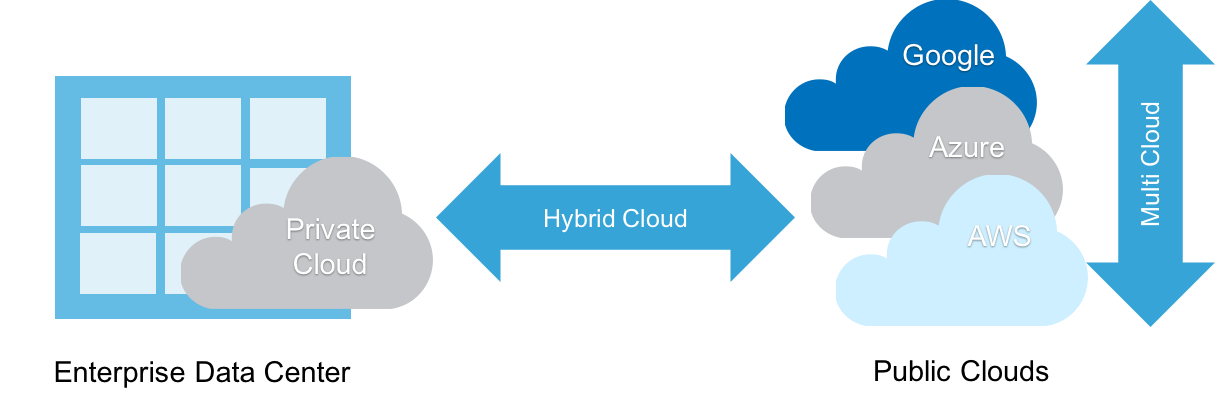
These are the sort of reactions we were looking for that validates we are onto something bigger. Unfortunately the message landed with these folks as “on-premises storage or cloud storage” while our message is “on-premises storage and cloud storage.” Our successful acquisition of CliQr which is now Cisco Cloud Center is one of those proof points. As part of our hybrid cloud storage strategy, we view cloud storage as complimentary to on-premises data center storage. This is why we started a simple TCO analysis to compare the two and the initial results were surprising.

 
hybridcloud

 
A true hybrid cloud approach creates a symbiotic relationship where data should be able to fluidly move to and from public cloud depending on your business needs. Public cloud service providers have done an amazing job creating seemingly low cost services that are easy to adopt and highly scalable. For example take a look at the AWS S3 pricing web page, you can see transferring data into AWS S3 is completely free so you are only paying for the storage you use. Sounds great right? They even take all major credit cards making adoption almost as easy as submitting an expense report to your employer for a monthly mobile phone bill. Who wouldn’t want to start storing their data in the cloud when it’s this easy? The unfortunate downside, *cough* shadow IT, is it enables an individual or line of business to bypass any level of strategic vendor management or long term ROI analysis flying under the CIOs radar. But it definitely gets around having to ask your boss for budget especially when everyone is trying to reduce short term costs and do more with less.

Where you need to be careful is the excitement to get started often overlooks that these services are built on a series of one-way bridges to import your data and keep it there. This is strategic as Cloud storage services generate tremendous revenue based on how often you need to access that data and also where it needs to be distributed geographically. This requires a great feature breadth to cover all customer use-case scenarios for importation. It also requires features for “value added services” to get you to keep your data in their data centers. In reality many of these features are proprietary and create “cloud lock-in” making it difficult to repatriate your data or even switch to a different cloud service provider should pricing change or you are not happy with the service you are receiving.

Due to this lock-in, customers and analysts have shared stories with us on out of control costs for interacting with stored data in the cloud over time resulting in a sort of “cloud debt”. This reminds me of all the cheap credit available in the 1990s resulting in the great recession when the bubble burst. But Josh MckEnty of NASA Cloud Computing fame might have stated it better “AWS in this sense is like a crack dealer. The first hit is free, [but as you scale up, particularly in storage], Amazon will cost you $80,000 a year for something you can buy for $3,000.” Everyone seems to be well aware of the problem but there is not much data put forward to quantify how much of a problem this phenomenon actually is. This is what we are trying to do by providing a simple starting point for a much needed longer conversation on balancing your storage costs with agility and availability.

 
cloud-costs

In our S-Series launch, the hornets nest we shook up was that of an initial TCO study comparing on-premises storage infrastructure to public cloud storage, specifically AWS S3. In this situation creating a baseline is very difficult to do as costs vary dramatically by customer, workload, and how often you need to access the data. Even AWS, Google, and Microsoft Azure’s own TCO calculators make many assumptions to create a simple baseline which is the basis of their ROI sales pitch. In this situation we put out a simple analysis for adding a high capacity raw storage option to existing environments instead of rushing out to augment data center resources with cloud storage. This is a great option for our converged and hyperconverged infrastructure customers using our new S-Series as low $/GB solution for scale out secondary storage or standalone on-premises bulk data storage.

We took every effort to not sound like cloud curmudgeons because we believe there are many use-cases where it is more advantageous for customers to use public cloud vs. on-premises infrastructure. Netflix and Zynga are two really good examples whose business rely on Cloud Native applications catering to geographically diverse users. Additionally, for many startups it would be impossible to invest in their own infrastructure to scale globally and would be a potential investment risk if user demand doesn’t grow.

On the flip side however, we also found there are numerous examples where high growth customers like Apple, The Weather Company, Dropbox, Instagram, General Motors, Target, and Hubspot either outgrew public cloud or use a multi-cloud strategy to take advantage of price wars between the major providers. Reasons we found for leaving AWS were usually to achieve better performance, lower cost, increase control or avoid being impacted by noisy neighbors. But in many of these cases these companies hit a forecasted financial break even point and moved to a managed private cloud service or took everything wholesale back in house and on-premises. The company Moz was one of the more interesting departures as they shared hard data on saving $3.4 Million when returning to building their own data centers which is what got us thinking to dig into this a bit further.

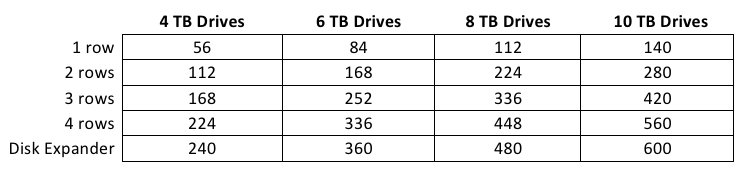
With our S-Series launch we first decided to tackle the same problem by helping customers reduce their data center storage costs. For a foundation we started with a single 4RU storage optimized server which is far more efficient in terms of $/GB as compared to scaling out storage on 2RU fat nodes like our UCS C240s. The UCS S3260 has the ability to let customers start small at 56 TB and scale incrementally up to 600 TB. Customers can also utilize 28 of it’s 56 data drives for high performance SSDs resulting in an 89.6 TB flash front end for high performance localized caching with 280 TB SAS on the back end.

storage-table

The S3260 is not just a high capacity storage server, it is the Swiss Army Knife® of storage optimized servers offering unparalleled flexibility for being deployed in brownfield environments or cost effectively scaling for greenfield projects. The uniqueness of this product is its ability to support file, block, or object storage depending on the software abstraction layer you choose from our many solution partners. You can terminate Gigabit, 10 Gigabit or 40 Gigabit Ethernet up to 160Gbps depending on your throughput requirements but also have native Fibre Channel connectivity to an existing SAN breaking down silos and unifying your storage. Last but not least where Cisco UCS truly shines and where no other vendor can even compare is management. We unified compute, storage, networking, and management systems into a centralized management stack with an embedded policy based automation framework for elastic infrastructure management. This simplified approach significantly reduces the number of physically and logically managed devices but also enables zero-touch provisioning for adds, moves, and changes providing industry leading OPEX savings.

But a product alone doesn’t enable customers to experience a “cloud like” TCO. We reached out to our Cisco Capital team who put together some interesting numbers for how we can make financing storage easier. In our specific offer, Cisco Capital not only delivered a lower total cost as compared to AWS but also lower monthly payments. The great thing about these type of offers is that you can either use CAPEX or OPEX budgets giving you greater flexibility to augment data center resources and or increase staffing quickly. If the ability to have your employees use corporate cards to expense these purchases is valuable to you we can cover that too through our many worldwide partners.

storage-costs

The cost for active data varies widely but everyone needs to access their data. Our analysis only compared the cost of raw storage and purposefully did not include the cost to interact with that data. This multiplier is what makes your storage costs skyrocket when storing data in the cloud vs. your own infrastructure. If we would have included costs associated to accessing the stored data these numbers would look significantly better making a solid case for why on-premises storage is more cost effective. We encourage customers to do their own analysis and not just look at what the storage costs are but make sure to include how much it costs to interact with their data on a monthly and annual basis.

If this is a challenge for you, feel free to reach out to your Cisco account team or contact us directly, we are happy to help you do the compare and even help you with a custom tailored financing offer that is unique to your business. The great thing about our Cisco Capital program is that it is all inclusive of the entire Cisco Data Center portfolio offering single monthly payment financing solutions for products, support, and services. Whether you are building a new data center or expanding your existing environment. You can buy everything you need to run your business from Cisco and even augment your own staff with qualified industry experts unique to your needs.

We appreciate the attention this topic has created and plan to continue this research to better help our readers understand the true costs of cloud storage vs. on-premises storage before they send their data into the abyss. In the meantime, we invite you to share your own experiences and ask for anyone willing to present hard data on their own storage successes and associated cost savings.

If you liked this blog please stay tuned for more on data center storage solutions at Cisco and be sure to follow me on Twitter.

Authors

Chalon Duncan

Partner Managed Service Offer Manager

Global Partner Organization

Avatar


HyperFlex

Cisco’s UCS portfolio has grown significantly over the past few months. Just recently we announced our new storage server brand, the S Series. Before that, a few months earlier, we brought to market HyperFlex Systems, Cisco’s complete hyperconverged infrastructure offering engineered on Cisco UCS.

Intel has been by our side for each of these product introductions with their Xeon Processor powering both. A long time Cisco UCS partner, Intel’s architectures and processor efficiencies help to deliver the performance and scale available to you with the UCS portfolio.

Cisco Hyperconvergence may be new to some of you so to help you learn about HyperFlex we are teaming once again with Intel and will be delivering a joint webinar on the topic of extending hyperconvergence into your UCS environments. Please feel free to join us live on Dec. 1 and listen to Cisco’s Jeff MacTavish and Intel’s Craig LoConti. Please join us HERE.

Jeff and Craig will explore how you can achieve a truly adaptive infrastructure using complete hyperconvergence which extends the benefits of simplicity and speed to more applications and use cases. They will also describe how to fully unlock the potential of Hyperconvergence as part of a comprehensive data center strategy with HyperFlex Systems, powered by Intel Xeon Processors.

If you want to do a little webinar pre-study, here’s a fun way to learn about HyperFlex. You can decide on your own what side you want to be on!

Video: Introducing Cisco HyperFlex Systems – Choose Wisely

We often learn best from others and this is true in the case of HyperFlex, too. Customers such as Ready Pac Foods and the Blue Pearl Veterinarians are yielding business benefits based on their Cisco HyperFlex. Your organization can, too.

We look forward to having you online December 1. If you can’t make it you can learn more on Cisco HyperFlex, please visit www.cisco.com/go/hyperflex.

Authors

Rex Backman

Senior Marketing Manager, Big Data Solutions

Data Center and Cloud

Avatar

This post authored by Nick Biasini

Talos is constantly monitoring the threat landscape including the email threat landscape. Lately this landscape has been dominated with Locky distribution. During a recent Locky vacation Talos noticed an interesting shift in file types being used to distribute another well known malware family, Fareit.

We’ve discussed Fareit before, it’s a trojan used to steal credentials and distribute multiple different types of malware. The focus of this post will not be on Fareit but on a new way attackers are working to distribute it via email. Locky has been a case study in how to leverage different file extensions in email to distribute malware. The use of various file types such as .js, .wsf, and .hta have been used quite successfully for Locky. We’ve already noted other threats making use of .js for distribution largely due to Locky’s success. Recently we observed another uncommon file type associated with email and decided to dig a little further on the infection chain.

Read More >>

Authors

Talos Group

Talos Security Intelligence & Research Group