More than 1,800 customers are deploying Application Centric Infrastructure (ACI) because they see great value in its ability to automate IT tasks, accelerate application deployments and reduce data center TCO. According to Zeus Kerravala of ZK Research, Cisco is now the “market lead by number of deployments”. Watch my interview with Zeus and see why customers are choosing ACI more than any other Software Defined Networking (SDN) solution. And read Zeus Kerravala’s blog in Network World,“Software-defined networking touches every industry segment” for more, including quantifiable business benefits that customers are reaping from ACI.
Attacks have grown more and more complex over the years. The evolution of the threat landscape has demonstrated this where adversaries have had to modify their tactics to bypass mitigations and compromise systems in response to better mitigations. Code-reuse attacks, such as return-oriented programming (ROP), are part of this evolution and currently present a challenge to defenders as it is an area of research that has not been studied in depth. Today, Talos releases ROPMEMU, a framework to analyze complex code-reuse attacks. In this blog post, we will identify and discuss the challenges and importance of reverse engineering these code-reuse instances. We will also present the techniques and the components of the framework to dissect these attacks and simplify analysis.
Code-reuse attacks are not new or novel. They’ve been around since 1997 when the first ret2libc attack was demonstrated. Since then, adversaries have been moving towards code-reuse attacks as code injection scenarios have gotten much more difficult to successfully leverage due to the increasing number of software and hardware mitigations. Improved defenses have resulted in more complex attacks being developed to bypass them. In recent years, malware writers have also started to adopt return-oriented programming (ROP) paradigms to hide malicious functionality and hinder analysis. For readers who are not familiar with ROP and want to learn more, we invite you to please read Shacham’s formulation.
Unfortunately, the analysis of code reuse attacks, such as ROP, has been completely overlooked. While there are a small number of publicly available examples that demonstrate how complex these attacks can be, the trend is clear that adversaries will continue to leverage these types of attacks in the future. For defenders, the general lack of tooling available to help dissect these threats was one of the primary motivations for developing ROPMEMU.
Earlier this year I had a bit of an “aha” moment. After a long day at Retail’s Big Show #NRF2016 at the Jacob Javits Center in New York 25,000 people wanted to get back to their hotel – all of them, all at once, at 5 o’clock. I looked at the taxi lines where people were queuing and preparing themselves to wait in line for at least 30 minutes, if not more.
Of course, the tech-savvy people stepped outside armed and ready with their Uber app. Optimistically I checked Uber too. But that was a disappointment too – at least 10 minutes before the next Uber was available! Unless…? Unless I was willing to share a ride. I had never done this before, but why not give it a try, I thought. And sure enough, within 30 seconds my Uber arrived. On the way to my hotel, the other passenger, with whom I had an interesting conversation in the meantime, was dropped off and minutes later I was at my destination.
That evening I reflected on what had happened and what the impact on Retail might be. Early in my career, when I was working at a major international food retailer, I participated in the creation of our Master Plan for our supply chain. Once a year, we calculated all the routes our trucks would have to follow for delivery of goods from the distribution centers to the stores. We did this only once a year because the optimization took quite a bit of effort to calculate and execution of the plan was a major task (few mobile phones yet). The Master Plan was therefore not dynamic and once in execution mode, optimizing it was almost impossible. As with my Uber experience, today we are capable of solving and executing on the supply chain in real time. The supply chain has become a value network that is completely adaptive and can be monitored, optimized, and communicated in real time using cloud and mobile.
There are many examples of successfully leveraging cloud and mobile technologies to enhance the supply chain or solve the final mile. These include “crowd logistics” projects in progress, where consumers subscribe to a service and help deliver the final mile based on their proximity to the package, at home or in the office: The DHL project is one of these. Volvo is expanding its “deliver to my car” project to three more countries, where products you ordered are delivered to wherever your car happens to be parked. With a one-time soft key, the trunk of the car can be opened without the need for the driver to be present. It requires little imagination to understand the potential power of combining several of these models, all made possible by the cloud and mobile technologies.
What will the retail supply chain look like in a couple of years? Here are a few things you may want to consider:
What are the possibilities when you apply cloud and mobile to your supply chain operation and change to a real-time monitored dynamic value network?
Assuming an existing supply chain operation is not easily transformed into a value network, what would your migration strategy look like?
Who would be your strategic partners to realize and operate such a system?
The success of your business will be determined by your attitude to innovate and revolutionize your supply chain operations with Mobile and Cloud solutions. Click here to learn how Cisco can help you stay competitive in this multi-channel retail world.
Insider threats are of particular concern to organisations as the impact of a rogue insider can be catastrophic to the business. The 2016 Verizon Data Breach Investigations Report showed that 15% of data breaches were a direct result of insider deliberate or malicious behaviour. Given that it is not likely that all insider breaches are discovered and/or reported this number may well be under represented in Verizon’s statistics. In addition, insiders often have legitimate access to very sensitive information, so it is no wonder that it is difficult to detect these breaches. Regardless, they can negatively impact the business in a big way, and must not be overlooked.
As a member of the Cisco Security Services team I speak to a lot of customers and see views of insider threats vary by industry vertical. For example, financial services and gaming companies see financial objectives as the main motivator, manufacturing/high technology/biotech see intellectual property theft as their biggest concern, and personal services store and process large amounts of personally identifiable information which they must protect from insider theft. The unique challenge faced is that insiders are often more difficult to identify behaving maliciously as they are often misusing their legitimate access for inappropriate objectives such as fraud or data theft.
Strong user access policies are a key building block to a good insider threat management strategy. Regular review of user access rights, along with job rotation, mandatory leave, separation of duties, and prompt removal of access rights for departing employees have been the core of managing insider risk for many years. Once you have these key components in place it is time to go to the next level.
As with everything in security there is no single answer and frankly you should question anyone that tells you they can fix all of your security problems with one service.
To reduce the risk of the insider threat, we suggest the following strategies:
Classify your sensitive data. This is the most critical step and often difficult as this requires the technology team and the business to align in order to classify what data is sensitive and to ensure there is consistency in the classification strategy. Remember to not boil the ocean; this step should focus solely on identifying sensitive data that could effect the business should it be stolen. Carnegie Mellon University has a good example that can be adapted to most organisations.
Once the data has been classified, proceed with a plan to protect it.
a. Instrument the network so you can detect atypical accesses to your data. To validate if your instrumentation is setup correctly, you should be able to answer the following questions
i. Have new users started accessing sensitive data?
ii. Have your authorised users accessed more sensitive data than usual?
iii. Have your authorised users accessed different groups of sensitive data more than before?
Many fraud management professionals would recognise these questions as lead indicators of possible fraudulent activity, and astute HR professionals would recognise these as possible lead indicators of an employee about to leave the business. Both of these scenarios are very typical lead indicators of insider data loss. You should try to make use of fraud management and HR personnel to assist you in determining what to look for and actions you can/should take when you detect a possible insider incident.
Data flow analytics may also assist from the technical side as well. Cisco Stealthwatch uses NetFlow to build profiles of expected behaviour for every host on the network. When activity falls significantly outside of expected thresholds, an alarm is triggered for suspicious behaviour. Data hording is one typical use case where data flow analytics detects anomalous behaviours. For example, if a user in marketing usually only accesses a few megabytes of network resources a day but suddenly starts collecting gigabytes of proprietary engineering data in a few hours, they could be hoarding data in preparation for exfiltration. Whether the activity is the result of compromised credentials or insider threat activity, the security team is now aware of the suspicious behaviour and can take steps to mitigate it before that data makes it out of the network.
b. Data Loss Prevention software, or DLP as it is more commonly known, is software that monitors data flows much like an IPS as well as monitoring data usage at the endpoint. Network DLP uses signatures like an IPS, but the signatures are typically keywords in documents or data patterns that can identify sensitive data. Endpoint DLP can be used to control data flow between applications, outside of the network and to physical devices. This becomes especially important if there are concerns about sending data to external data storage systems (eg Google Drive, Box, SkyDrive etc.) or to USB attached storage. DLP can control access to all of these systems, but it is a matter of policy and vigilance as new capabilities are released at the endpoint.
There is a lot of skill in effectively setting up DLP software and much of the complaints about the lack of effectiveness of DLP comes down to a lack of proper data classification and poor DLP software configuration. There is also an argument that network DLP is losing relevance with the increasing amount of encryption of network traffic. This is certainly true and enterprises need to have SSL interception properly configured to maximise the effectiveness of their DLP investment. Still not all traffic will be able to be decrypted and you must determine whether your risk appetite will allow for users having encrypted communications you cannot monitor. This is not exclusively an IT decision, but one that needs to be decided by a well-briefed executive.
c. Network segmentation is unfortunately something that is often not done well until after a security breach. One of the benefits of a properly segmented network is that a malicious insider keeps bumping into network choke points. If these choke points are properly instrumented then alerts flow to warn of potential inappropriate access attempts. This gives the defender more time to detect and respond to an attack before sensitive data leaves the network. For example, if your Security Operations Centre (SOC) observes a user in Finance trying to access an Engineering Intranet server then you should be raising an incident to address why this user is trying to access a server that most likely holds no relevance for their job function.
Honeypots with decoy sensitive data are one of the more controversial strategies that may not be for everyone. The honeypot should be setup with decoy data and a similar look and feel to the production environment. The decoy data needs to look authentic and the knowledge of the existence of a honeypot needs to controlled on a need to know basis. The great advantage of a honeypot over other technical strategies is that all traffic that goes to the honeypot can be considered malicious and by its very nature as the honeypot has no business relevance. The honeypot is only there to trap those that could be looking for sensitive data inappropriately. Our consultants have found it useful in the past to use the same authentication store as the production environment so you can quickly see which user is acting inappropriately, or you may have an external attacker using the legitimate credentials of an insider to hunt for sensitive data. Either way, you need to act quickly and deliberately to head off possible data loss. Like every data loss scenario you need a robust process for managing these incidents types.
Use of non-core applications, especially social media applications – There has been an explosion of social media applications in recent years ranging from Skype, WhatsApp, QQ, WeChat, LINE, Viber and many others. One concern we often hear from our customers is that they are worried that their staff are using these applications to send sensitive data out of the business. These applications are often used for business purposes and depending on the sensitivity of the data this may be considered inappropriate behaviour. Our favoured strategy is to use some of the recommendations above, classify your data, and instrument the network to look for inappropriate use. But, from the user’s perspective, they are trying to perform their job in the most efficient manner and no one wants to discourage “good behaviour!” If there is a legitimate business use for a social media application, we recommend that a corporate social media application be deployed so staff can be efficient in their job. Security needs to enable users to get their job done and not hold up business progress and increase business complexity. Additionally, users must understand the ramifications of their actions and know what data can be sent externally and what cannot leave the organisation without appropriate protections. Education is the key to achieving an effective balance and reminders, like a “nag screen” that alerts the user that they are accessing sensitive data can reinforce the user’s training. Document watermarks and strongly worded document footers about the document sensitivity can also serve as another valuable reinforcement.
Additionally, we recommend that you have the ability to hunt for caches of sensitive data – one phenomena that that our security consultants see time and again is that people have the habit of creating a cache of sensitive data to steal before they send or take it out of the organisation. This is true not just for insiders, but often with external attackers that are preparing to exfiltrate data. Our consultants use endpoint tools to look for caches of documents in user directories, desktop and temp directories as the most common places to find document caches. Often the documents will be compressed into an archive such as a ZIP, RAR or GZ file for quicker data exfiltration and to avoid tripping the DLP keyword filters. Whatever tool you use to hunt for data caches it must be able to return the name and type of documents when it does its scans. You should select a tool that can hunt on the basis of a threshold of data volume and be able to dynamically tune the amount. Some of the more sophisticated DLP solutions can implement this functionality.
Complexity is the arch nemesis of a good security program
Like ever good super hero we have our arch nemesis, and this is often the complexity of our security environment and not the bad guys that are trying to compromise our networks. The 2016 Cisco Annual Security Report recently found the average number of Information Security vendors in enterprises was 46! We were shocked by this number, but that goes to show that there are a lot of point products in this industry. One of the constant comments from our customers is “can you make all of these products work together?” We hear you, and recommend that when you are devising your strategy to combat the insider threat that you also consider that the output from these controls is going to have to be acted upon, and you cannot continue to overburden the existing SOC team. We recommend that you review how the insider threat strategy will integrate with your existing threat management process and platform as a key consideration before you get involved in the “speeds and feeds” bake offs with products.
We hope this blog has given you some ideas about key strategies you can deploy to prevent, detect and respond to insider threats. If you would like to learn more about how to get started, Cisco Security Services can work with you to conduct an Intellectual Property Risk Assessment to get a full view of insider threats in your business and can assist with designing a custom strategy to address these threats.
Today’s Guest Blog comes to us courtesy of Steve Vicinanza, CEO of Cirrity.
As a reseller, your customers depend on you to fully qualify and carefully select the products and services you recommend. This is especially true when you resell cloud computing services, which establish a dependency between the customer and the cloud provider. If the cloud provider fails to live up to the customer’s expectations, your relationship with the customer can be irreparably damaged. It is critical to partner with the right cloud provider, one which understands the reseller’s commitments, business drivers, and responsibilities.
As a 100% channel-focused cloud provider, Cirrity understands the value of your relationship with your customers and takes our partnership seriously. 100% of our sales are through our resellers, so success is mutual; our success depends on your success and vica versa. This means you can invest in your customers with confidence that we will never circumvent your relationship or sell directly.
In addition, we help our resellers develop new relationships with qualified leads that are not just over the fence, so to speak. We have a substantial qualification process in place to make sure every lead we pass on to you is worth your time.
Because Cirrity works with resellers across the U.S., we know what works and what doesn’t when selling cloud. To help you be successful as a reseller, we bring a comprehensive sales enablement plan to the table:
Assess: To begin with, we will work with you to assess your strengths and weaknesses when it comes to selling cloud services. We offer a preliminary assessment you can complete online. Then we perform a more comprehensive assessment with you to help you understand where you need to focus and how you can introduce cloud services into your portfolio.
Recommend: After your assessment, we’ll offer recommendations for how you can be successful in the cloud. For example, we can work with you to create a compelling cloud compensation plan to drive sales. We can also help you develop a “cloud champion” within your company to make sure your cloud strategy is adopted smoothly and yields excellent results.
Transform: Next we’ll step you through the business transformation process. Cirrity understands how challenging it can be to begin selling cloud. We don’t just set you off on your own. Rather, we have extensive processes to help you be successful that go way beyond what other providers offer their resellers.
Training: Your cloud strategy can only be successful when the entire sales and marketing team is knowledgeable about the product set and able and willing to recommend it to customers. Cirrity offers on-site and online training to bring your team up to speed quickly.
Go-To-Market: Getting the word out to your customers that you now offer cloud services can be time-consuming if you have to start from scratch. We provide a wide variety of collateral you can co-brand with Cirrity to help you reach your customers immediately. This includes a web and email marketing automation program that we subsidize as well as “Go-To-Market in a Box” programs that you can execute quickly and easily.
By teaming with Cirrity, you’ll be able to offer not just one service but an entire portfolio of cloud services:
IaaS: Infrastructure as a Service provides the backbone required to operate in the cloud.
DaaS: Desktop as a Service enables your customers to load your applications in the cloud so they run anywhere, anytime, on any device.
DRaaS: Disaster Recovery as a Service, combined with Backup as a Service (BaaS) capabilities enables you to provide your customers with assurance of business continuity even during a catastrophy.
With this portfolio, you can offer your customers greater value through integration that other cloud providers can’t, such as providing IaaS resources protected by DRaaS.
Of course, the best marketing in the world is worth nothing if the product itself is not first rate. That’s why Cirrity’s IaaS, DaaS, and DRaaS cloud services are Cisco Powered. Cisco Powered sets the standard for cloud services. Each service offers enterprise-class performance, security, and reliability. Each service has also been audited by a third party to verify we can deliver to your customers as promised. In addition, as a Cirrity reseller, you can leverage customer recognition of the Cisco Powered designation to accelerate your sales.
The Cirrity platform is also highly secure. Cirrity is audited for all of its security certifications, including HIPAA, ISO 27001, CSA Star, SOC 2, PCI DSS Compliant, and ITAR. A key difference with Cirrity’s certifications compared to other service providers is that many cloud providers only certify the compliance of their data centers. Because Cirrity takes full responsibility for the security of its services, we verify compliance all the way down to our processes as well.
Learn more about how you can offer secure cloud services to your customers with the quality of Cisco Powered through a partnership with Cirrity.
Dr. Steven Vicinanza is Cirrity’s Co-Founder and CEO. Steve has over 30 years of experience in building, managing and delivering IT services to enterprise customers. Steve is responsible for driving the company’s business innovation and strategy. An experienced and accomplished entrepreneur, Steve founded and built one of the Industry’s largest managed services providers prior to launching Cirrity.
As an Intern Experience Leader (a fancy way of saying I mentor interns at Cisco) I get asked a lot of questions.
At a recent intern event, I got asked this very specific question.
“Why Cisco? Why here over the other tech giants?”
It’s not the first time this question has come up. And my standard elaborate answer describes the diversity of products you get to work on, the competitive pay package, the amenities, volunteering opportunities, and of course, the inclusive and collaborative culture. Once I was finished, this intern nudged me with a simple follow up question, “You haven’t told me anything I haven’t heard from others already. Tell me again, why Cisco?”
That’s when I realized she wanted MY story. My personal reason for choosing Cisco.
So I started with the story of my uncle, a researcher, who had moved from India to the United States in the late 1960s. At that time, international telephone calls cost a fortune and the family came up with an innovative communication strategy. They recorded audio cassettes and sent them back and forth by snail mail.
Each tape would take a month to reach its recipient. It took about two months to hear back about the simplest of enquiries, and likely every response was outdated by the time it was heard.
When I listened to this story for the first time from my uncle himself, it left a profound impact on me. I realized how much networking has impacted people, relationships, and the world as it is today. We call, text, chat, email and videoconference with our loved ones across the globe with casual nonchalance.
To me, Cisco has not just made all this possible. It has allowed us to ‘take the network for granted’ and laid the foundation for so many newer business models to flourish. Cisco to me represents wondrous legacy, knowledge, and wisdom for those seeking it.
I started at Cisco as a software engineer fresh out of grad school and it was my first job in the corporate world. I’d moved from Chicago to the Bay Area and everything was new to me. Cisco took me in with open arms and amazed me with its amplitude of opportunities.
I volunteered to mentor interns, started an awesome jamming initiative, joined the early career network and even Cisco’s tennis team (we went on to defeat Apple, NetApp and other companies in the Bay Area!). Over time, my career goals emerged and I realized that Cisco’s leaders led by example and truly cared about their people. In an open forum discussion with now Executive Chairman John Chambers and CEO Chuck Robbins, I voiced my opinions and concerns about the business. Not only was this well received; it was also followed up with candid responses and measurable solutions.
Some of our CSG Interns “engineering” a solution with drink cups.
Cisco supports people to follow their dreams and ambitions. Over the last 3 years, I was given the opportunity to lead several teams as the ScrumMaster and now more recently, I work as an operations manager and drive project strategy for some of our coolest engineering work.
The intern who asked me this question chose to join the Cisco family and now works here full time. I am and will always be grateful to Cisco for the opportunities it has provided me. Not only have I grown as a professional, but I’ve also grown as a person under the mentorship of its visionary leaders.
So, if you’re a passionate and driven individual interested in defining the future of the Internet, Cisco is the right place for you. You’ll have the opportunity to be responsible for nearly every phone call, text message, web click, TV and radio broadcast in the world. Now that’s something worth bragging about!
#IChoseCisco
PS – We recently shot a video talking about why the team I’m a part of, is the coolest place for any entry-level engineer to consider. What do you think?
It was a busy day to kick off this year’s Code Conference. A consistent energy of conversation and connection carried through the day. But that’s what happens when you bring together industry influencers to focus on digital technology, what it is today and how it will influence our future. Interestingly enough, everyone has a perspective about how tech will affect our communities and the world. And with this group, the perspective is anything but status quo.
Today’s general session covered territory from the automobile industry to mosquitos to artificial intelligence and beyond (as in outer space).
Recode’s Peter Kafka and Kara Swisher interviewed Ford CEO Mark Fields. I’d consider most of the automotive industry as pretty traditional manufacturing world. So it was interesting to get Fields’s perspective on digital. He talked about an increasing focus on using technology to interact with customers. Part of that effort includes new innovation teams in the Silicon Valley, where Fields explains, they can become part of the tech community.
Swisher and Walt Mossberg joined forces to talk with Susan Desmond-Hellmann, CEO of the Bill & Melinda Gates Foundation. After assuring everyone that she wasn’t going to unleash a herd of mosquitos on the room, she dug into ideas about precision public health. Instead of a focus on 1:1 medicine (the right treatment for the right patient at the right time), the idea is to focus on many:1 healthcare. That translates to the right prevention for the right population in the right geography. She talked about Eliminate Dengue, a project that discovered that giving mosquitos a particular bacteria makes them incapable of transmitting viruses – including Zika.
Mossberg’s interview with Amazon’s Jeff Bezos covered a lot of territory, starting with artificial intelligence and the Washington Post before launching into space, free speech, and corporate culture. When it comes to tech at Amazon, Bezos had this to say: “We never think of ourselves as tied to any particular technology or skill set. We think of ourselves as being tied to our customers and their needs, and we’ll develop the skill sets we need.”
Cisco Spark and Code Connect
Cisco joined Vox Media as a premier sponsor of this year’s Code Conference. Not only is Cisco a premier sponsor of this year’s conference, but the Vox team is using Cisco Spark to power “Code Connect,” the conference messaging and collaboration platform. Attendees can participate in a set of rooms to get updates, interact with the conference concierge team, receive real-time alerts, and watch for behind-the-scenes videos and content. But most important, Spark helps attendees connect with each other through direct messages in 1:1 rooms.
Behind the scenes, the conference staff and onsite Cisco team are using Spark rooms to manage their own work at the conference. managing their own activities at the conference.
Today was just the beginning of the three-day conference. Wednesday has a full day of meetings and general sessions, including Cisco CEO Chuck Robbins joining the midday agenda.
Follow Recode’s own coverage, including posted and live video, on Recode’s Facebook page.
By Yves Padrines, VP, Global Service Provider EMEAR, Cisco
Broadband meets content meets transformation through innovation at this year’s ANGA COM gathering, scheduled to run three days from June 7-9 in Cologne, Germany.
ANGA COM is one of my favorites in the trade show cycle, because it’s such a focused marketplace for network operators, content providers and their suppliers, all over Europe. The big topics this year are next-gen networks, the Internet of Things, TV Everywhere, Personalized TV, Multiscreen, IP Video and Wi-Fi — all subjects near and dear to us.
We’ll be there in stand H21, in Hall 10.2, with demos ranging from IP network transformation, Gigabit services, cloud-powered video, service agility and the ever-important thread through all of it — security.
Specifically, we’ll be showing our cBR-8, the industry’s first DOCSIS 3.1 / CCAP platform, already making major strides with 90 operators on three continents. That means throughput of 10 Gigabits per second downstream, and 1 Gbps upstream — vitally important in these times of shipping video sourced from smart phones and tablets.
On the next-gen network front, come see our Remote PHY work to take fiber deeper, with different configurations of shelves and nodes to suit all architectural/topological implementations already in the field. Speaking of which — we’ve also developed analog nodes and amplifiers designed for DOCSIS 3.1 upgrades, on the compact form factor preferred in Europe.
It wouldn’t be a next-gen network if it didn’t include some mention of SDN (Software Defined Networking) — we’ll be showing our work on cable-specific SDN virtualization and orchestration, including SDN capabilities on the cBR8, to enable service velocity and to simplify operations.
On the services side, we will also be showing off our Pro-active Network Maintenance (PNM) solution that allows operators to reduce OPEX by pro-actively detecting any network issues within an accuracy of 10 meters! We provide this as a Services (AAS) to support the move from reactive maintenance models to one that’s pro-active, cost effective, at the same time improving the end-customer experience.
We will also demonstrate our Video Quality Monitoring (VQM) solution that continuously monitors the user experience – from signal acquisition to playout, to any end device – any time, anywhere, over any network. Cisco orchestrated partnership with best of breed partners Skyline, Mariner and NimbleThis in building our VQM solution.
To satisfy the trends around immersive 4K video and HDR (High Dynamic Range) encoding, orchestrating cloud-based services, and open media distribution for CDNs (Content Distribution Networks), we’ll have on hand our popular V2P (Virtualized Video Processing) line. It promises to accelerate service velocity by blending Cisco and third party applications across cloud environments, while reducing total cost of ownership and transforming CDN economics.
Connected Home? Oh yes! We’ll be showing our suite of Cisco Connected Home software applications, geared toward helping our service provider customers — and their subscribers — to gain better visibility, security and reliability in digital homes. That includes our HomeGuard whole-home cyber-security protection, with Connected Analytics to proactively defend against would-be digital interlopers.
Speaking of which: Our own JT Taylor, who knocked it out of the park, so to speak, on the Imagine Park stage of INTX last month, will be on-hand to answer your connected home and cyber-security questions. And he’s also speaking on June 7th on a panel about recommendations and the RDK (Reference Design Kit).
Also on the ANGA speaking roster: Yours truly, at 10 on the 7th, about personalized television and everything that comes with it; John Downey, one of our esteemed Broadband Network Engineers, is speaking on a panel about DOCSIS 3.1 on June 8th at 11:30; and Adam Davies, our Product Marketing Manager for our Infinite Video line, will be speaking on a panel about Multi-screen technologies on June 9th at 2:45.
Please come by and say hello in Cologne. Stand H21, in Hall 10.2. See you soon!
The concept of Cloud Video no longer needs much of explanation. Nor does the benefits service providers can reap from a video cloud – benefits like greater service agility, reach to any screen in and out-of-home, personalization, and controlling costs with its “As a Service” framework. I mean, really. Name any flavor of professionally delivered video services, and it’s there in the cloud. Unquestionably, Cloud Video is the key to success in the current and future pay TV industry.
Our contribution to Cloud Video goes under the heading of our Infinite Solutions suite, first introduced last fall, and already gaining huge market momentum. It was the first comprehensive, commercial and “productized” Cloud Video suite, with all the goodness that comes with the cloud, plus useful additional elements like “DevOps for Video” — which, before Cisco Infinite Solutions, was almost exclusively associated with the Web industry.
So how does any of this relate to one-way network providers, both satellite and cable — aren’t they precluded from Cloud Video, because of that lack of a return path? Answer: No, no, no. Maybe it sounds counter-intuitive, but it’s not: One-way networks can reap the benefits from the video cloud.
The truth is that the days of purely “one-way” networks are over. The trends defined by industry consolidation, the need to provide advanced services, and the introduction of new devices all created diversified networks. Typical service providers operate multiple access networks, multiple types of connection, multiple types of managed devices … the operative word being “multiple.”
Cisco’s “Infinite” suite of Cloud Video solutions recognizes this diversity in network types and the “multiples.” From day one, we designed its constituent components for real-life network conditions, including one-way plant. The intent was and is to provide Cloud Video from one headend, as a service, integrated correctly with current headend-delivered services. In other words, all the cloud has to offer, on any access network — even if it isn’t natively two-way.
This means that Cloud Video can be put to work on one-way networks, within operative connectivity limits, and with the applications, user experience/UX upgrades, and modular client software that make for continuously improving video services.
This also means that services such as “video everywhere” can be offered to all subscribers, and that a clean migration path for one-way customers does indeed exist. You can learn more about how Cisco Infinite Broadcast works for one-way and hybrid providers by clicking here.













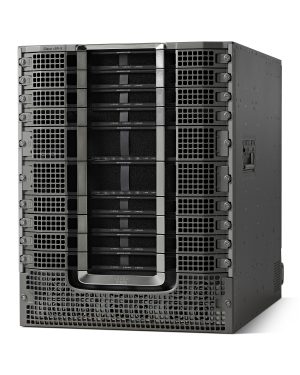 Specifically, we’ll be showing our cBR-8, the industry’s first DOCSIS 3.1 / CCAP platform, already making major strides with 90 operators on three continents. That means throughput of 10 Gigabits per second downstream, and 1 Gbps upstream — vitally important in these times of shipping video sourced from smart phones and tablets.