Once a piece of malware has been successfully installed on a vulnerable system one of the first orders of business is for the malware to reach out to the remote command-and-control (C&C) servers in order to receive further instructions, updates and/or to exfiltrate valuable user data. If the rendezvous points with the C&C servers are hardcoded in the malware the communication can be effectively cut off by blacklisting, which limits the malware’s further operation and the extent of their damage.
To avoid such static detection mechanisms recent attackers have been taking advantage of various Domain Generation Algorithms (DGA) in choosing and updating the domain names of their C&C servers. DGA embedded in the malware generate a large amount of pseudo-random domain names within a given period, most of which are nonexistent. With the same random seed, e.g. time of the day or most popular tweets of the day, the attackers can generate exactly the same list of domain names remotely, among which they will only register a few. The malware will contact some or all of the domains generated by the DGA, giving its opportunity to be able to connect to the C&C server. The sheer amount of nonexistent domains produced by the DGA on a daily basis presents a great burden for security specialists if blacklisting is still to be pursued.
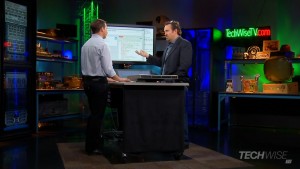
This is the first in a multi-part series where we cover ‘programmability’ for networking. The idea is to fully review the programming options now available inside the Nexus switches, (3000, 9000). This first episode covers new access with Linux tools, NX-API and more. Further shows will be diving into the details around Object Models and orchestration partners.
The primary point for any of these is to understand how Cisco Open NX-OS extensibility exposes greater programmability and automation capabilities. It is fascinating and full of new learning opportunities. It does not come without a few career questions of course…usually, something along the lines of: do network engineers need to become programmers now too?
Two answers: Yes. It depends.
Networking knowledge and skill should not be undersold here. Programming capabilities should be additive. They are useful in just about any tech career and obviously affecting the networking space. I think it’s foolish to ever quit learning but it does depend on your aspirations, your current level of satisfaction and perhaps how narrowly defined your skill set might be.
Full disclosure: I am not a programmer. I have been learning the fundamentals of python and a few others as I work on this series but I am not hire-able for this skill by any means. But the distinct feeling I get, and the feedback I hear from you guys: its not that hard. You are probably well versed in scripting for various CLI operations…take it up a few notches and work on some of these ‘readable’ languages that will have similar syntax. This will give you the ability to judge the appeal of what we are offering with ACI and other solutions much more credibly…and I guarantee you will find ways to get rid of redundant crap and stupid errors you may be fighting with yourself or your team.
JOIN US AT THE WORKSHOP
Live, interactive, never dull.
September 21, 2015
Programmable networks will forever change the way you manage infrastructure enabling you to dramatically accelerate configuration and deployment of your network, automate time consuming manual tasks, and allocate IT resources far more efficiently. Are you ready for the revolution?
Discover how to create a programmable network as we discuss and demonstrate the NX-API and NX-API REST (Object Model) in detail. Understand how Cisco Open NX-OS extensibility exposes greater programmability and automation capabilities that eliminate costly manual errors.
Shane Corban shares Six Key Points: What OPEN means for NX-OS
Changes made across the software stack to address Extensibility, Openness, Programmability.
Auto Deployment (Bootstrap and Provisioning)
Added support for PXE server, operationalize NX-OS software to match an existing server environment
Extensibility – how we package software
We did not use to expose much beyond a bash shell
Now you can install native RPM’s, and third party applications running processes as they would on a Linux server
Open Interfaces
We are now adding support to leverage Linux like tools for debugging, configuration and troubleshooting…manipulate those front panel ports as native Linux interfaces within our switch software stack.
Application Integration (Adaptable SDK)
Published an SDK, a build environment that you can install on any Linux server, download the build agent, and put your source into that directory structure and build into an RPM for installation and run it natively.
Build your own custom automation apps, monitoring agents, and have them run natively on our platform
Programmability Tool Choice
Sandbox
We have a native Python shell today that has a Native Cisco Library that you can utilize for automation
NX-API – the ability to embed CLI commands and structured data (JSON, XML) for execution on the switch via HTTP/HTTPS Interface to get back structured data back on show commands.
Management Tools
Support for Chef and Puppet
Agents will be publicly available on the enterprise sites
Support for Open Stack, Neutron
NX-OS is now more modular, more open, more capable of third party integration providing a wide variety of programmability choices ideal for Dev-Ops environments.
Five case study examples
Nicolas provides five case study examples.
Checking Software Version
Using Python script with NXAPI and JSON to pull version numbers
Python script to query multiple switches to check compliance against a specific version
I love my Lynda.com membership. There are a number of very well done programming courses here. I have been working through ‘Up and Running with Python’ a well done, hands on course from Joe Marini.
What do you think still needs to be covered? I would love any thoughts on how the rest of this series should be shaped. Leave your comments below and just to make sure…tag me on twitter. We are diving into Object Models (taping next week) and then some angle with the Orchestration Partners. Case in point: Puppet Labs is making available today a native Puppet NX-OS agent and Cisco Puppet Module.
If you had asked me a few years ago, I might have predicted that the rise of large scale hacking and network-based Advanced Persistent Threats (APTs) would spell the end of old-school espionage (poison-tipped umbrellas, office break-ins, dangles and the like). Those of us who fancy ourselves logical, savvy cyber security specialists can be forgiven for thinking such analog antics wouldn’t persist in a digital world.
And yet, human espionage remains a nagging issue. A Russian spy ring was disrupted in New York in January. New stories about employees stealing trade secrets from their employers regularly make headlines, such as this one in May. More than one article alleges that Vienna and Lausanne (home to recent Iranian nuclear negotiations) are swarming with spies from Tehran. And these are just the stories that get reported.
There is no question that spycraft is changing with the times. Recent, damaging breaches of US government employee information—amply documented elsewhere—provide some interesting hints as to how: Continue reading “Espionage in the Internet Age”
With the recent launch of FirePower Threat Defense on Cisco 4000 Series Integrated Services Routers, I would like to spend some time talking about enterprise branch security and what are the requirements to keep in mind to secure your branch office. Let’s start out by examining your branch environment.
What’s happening at the branch today?
Cloud is redefining application delivery. Mobility is redefining network architecture. Next generation applications like Ultra High Definition videos, Web, and SaaS applications put increased pressure on bandwidth availability.
Organizations may be considering Direct Internet Access (DIA) at the branch to leverage local internet path for public cloud and internet access. Leveraging the local internet path at the branch reduces IT spending (freeing up costly WAN bandwidth for mission critical applications) and ensures better application experience, for example for applications hosted in the public cloud (less latency) but it may come with a cost since now the branch may be exposed to security threats. Continue reading “Branch Direct Internet Access: is your branch office secure?”
We introduced OpenAppID in early 2014 with the goal of empowering customers and the open source community to control application usage in their network environments. Since then, we have increased our coverage from 1,000 OpenAppID detectors to more than 2,600, and have received valuable feedback from the community on ways to improve the product.
The case of having an open, application-focused detection language and processing module for Snort has attracted the attention of the Internet of Everything (IoE) world. There are countless devices out there using the Internet on their own, varying from a remote IP based camera to an industrial based sensor in which may include some security features on them.
With the combination of OpenAppID and Snort we are giving the capability to the open source community to create their own application-based protocols and classifications, which can be used to Continue reading “Securing the IoE with OpenAppID”
The Internet of Everything (IoE) is connecting everything everywhere — on the land, in the air, and even on the sea. Cisco recently helped a competitive yacht crew win regattas using the IoE to provide the competitive edge. The vessel was outfitted with an IoE ruggedized platform combining boat sensor data; GPS, wind, and weather information; and a local Wi-Fi network to help the crew make critical decisions almost instantaneously.
I’m particularly excited about this implementation of Cisco’s Mobile Asset Management. The program highlights our ability to connect data from billions of things so people can make smarter decisions about how to live, work, and play. This is a perfect example of the immense power of the IoE to solve real-world problems through connectivity, insightful data and analytics.
The most impressive attribute of the Mobile Asset Management Suite is that it applies to all industries. It helps customers identify, track, control, monitor, and secure IT and non-IT assets across buildings, remote sites, retail locations, manufacturing facilities, and more.
I speak with Cisco customers regularly. The topic of the Internet of Everything (IoE) comes up often. Put simply, their concerns can be summed up in a single question: How can I prepare for the network of tomorrow when it’s difficult to keep pace with managing the fast-moving complexity of my network today?
IoT: So Many Vulnerabilities. So Little Time and Resources. So Much at Stake.
Research firm IDC predicts there will be over 28 billion connected devices installed by 2020, while fellow analyst Gartner forecasts that 4.9 billion connected things will be in use in 2015, up 30 percent from 2014, and will reach 25 billion by 2020.
An example of one industry that’s moving to meet this opportunity is retailing. Like me, I’m sure you’ve noticed the change in your shopping experience — whether it’s contextual matching of products to your personal profile or in-store product or pricing comparisons using your mobile device.
But moving into the revolutionary digital retail environment enabled by the Internet of Things doesn’t come without risk. New connectedness brings new security threats. For the typical network administrator a major security issue like the Heartbleed bug can quickly turn into a bad case of heartburn. What’s the nature of the vulnerability? What devices are impacted? How do I respond? When you combine these questions with the day to day demands of directly supporting end-users, answering technical questions, resolving network issues, writing scripts, creating reports, monitoring systems and managing version controls, it’s not surprising that a network operations team can be overwhelmed. And that’s before the growing connectivity fueled by the Internet of Things. Continue reading “IT Paradox: Managing More Complex Networks with Limited Resources”
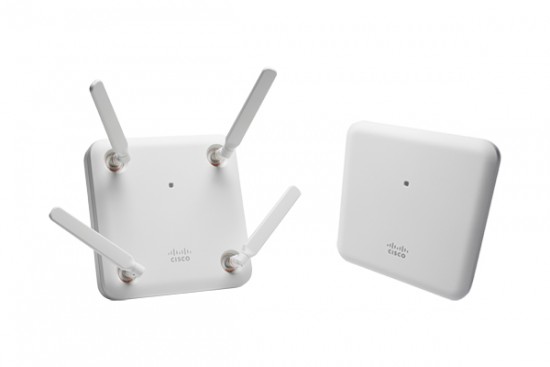
During the Cisco Live! event in San Diego, CA, the Aironet 1850 Access Point was unveiled to the public. Now Cisco has followed up the device’s debut and has announced the orderability and the shipping of the Aironet 1850 AP.
A perfect fit for any small or medium-sized networks, the Cisco Aironet 1850 AP is an entry-level device boasting cutting-edge 802.11ac Wave 2 capabilities that offers faster client performance. This high performance is enabled by multi-user, multi-in, multi-out (MU-MIMO) and the ability to offload to wired networks with two gigabit Ethernet ports.
When your network upgrades to Wave 2, you are afforded the abilities to take advantage of increased wireless bandwidth and to handle the demands of many more devices at one time. Gone are the days of slow and bottlenecked WiFi speeds. With a Wave 2 migration, you’re essentially stretching the bandwidth you already have.
The devices that connect to the Cisco Aironet 1850 AP don’t all have to be Wave 2 compliant. The AP supports the newest generations of WiFi clients as well as any of the previous generations.
For more information or to order the Cisco Aironet 1850 AP, please go here.
Sitting in traffic the other day, I tuned off my Peter Frampton Spotify channel and started to listen to New York area local AM radio. The president of a mortgage business came on in an advertisement. He ended his pitch with the tag line “I promise you the best service humanly possible”.
This caught my attention. At one time I would have viewed this as a very positive statement. But is this still the case?
Consumers consistently cite the “indifference of one person” as a key reason they leave a supplier relationship. (Source: TARP).