Avatar

Industrial control system (ICS) operators and owners have found themselves in an unenviable position. Once air-gapped, serial-based critical industrial control systems are now becoming more and more connected. And while many of the systems themselves have not changed, the networking world around them has changed dramatically, introducing vulnerabilities and threats that had been nearly non-existent ten or 20 years ago. Each networked connection from the control network to the corporate network is another potential avenue of attack. Control networks are designed to be static and predictable, but more and more commercial off-the-shelf applications and operating systems, as well as routable protocols, are now being introduced. This is creating more complexity with no greater visibility leaving operators blind to what is on their networks.

Continue reading “Industrial Cybersecurity and Service Delivery Don’t Need to Be Mutually Exclusive”

Authors

Marc Blackmer

Product Manager, Engineering

IoT Product Mgmt Networking

Avatar

“Voices of Cisco” is a short-term blog series that will feature insight from Cisco OpenStack experts in the lead-up to the OpenStack Summit in Vancouver. The intent is to shine light on our involvement in the project, explain some of the newest features that are coming out, and explain how our own products are engineered to take advantage of all that this powerful platform has to offer. The first post in the series comes courtesy of Patrick Amor, Director of Engineering, OpenStack:

Voices of OpenStack

OpenStack has gathered considerable momentum and I’m looking forward to the community release of Kilo and the upcoming Summit in Vancouver. Here at Cisco, we have been busy this month putting the final touches on our contributions across the various OpenStack projects in which we are actively involved. As one might expect from a company known for networking, Cisco has completed several blueprints in the Neutron project as well as in other projects such as Horizon, Ceilometer, Barbican, Magnum, and Kolla. We are committed to helping OpenStack mature and succeed so that our customers can succeed. In my engineering team this has always been our focus and this is now reflected in our corporate theme for the Summit. “Committed to OpenStack. Committed to You.”

OpenStack is often perceived as an ever expanding universe, with new projects, new services, and new features being added everywhere and frequently. That’s a fine thing as long as the center of the universe remains stable. That center, or core, roughly defined as compute, storage, and networking, need to be strong, stable, and robust or else that universe will start to contract.

Continue reading “A Kilo of Cisco Contributions”

Authors

Ali Amagasu

Marketing Communications Manager

Avatar

First lets talk about what a Network Engineer is. According to The Free On-line Dictionary of Computing. Retrieved April 27, 2015, from Dictionary.com website a Network Engineer is:

“A high-level LAN /WAN technician who plans, implements and supports network solutions between multiple platforms. A network engineer installs and maintains local area network hardware and software, and troubleshoots network usage and computer peripherals.”

Network Engineers can wear many different hats. I believe the more “Traditional” Network Engineers mainly work on devices such as Routers, Switches, Firewalls, Wireless Access Points and Controllers, Load Balancers, Intrusion Detection and Prevention Systems as well as some server maintenance involving virtualization and network management software. Next we should discuss the overview of the differences between Network Engineering and Administration. Keep in mind I am just talking from an industry general view/standpoint. Some companies may not differ between the 2 titles. Engineers and Admins tend to share a lot of responsibility when it comes to maintaining and troubleshooting a network. The dividing line seems to be in the design/installation area with the bulk of this work generally being done by the more “experienced” engineers. Admins usually fall under the NOC (Network Operations Center) which in large companies/agencies is usually staffed 24x7x365. I have also seen the difference broken down into tiers when it comes to troubleshooting escalation. Network Admins usually fall in the Tier 1-2 range with Engineers being considered Tier 3. Continue reading “So You Want to be a Network Engineer. Here’s Where You Should Start!”

Authors

Korey Rebello

Principal Network Engineer

Avatar

You may have seen the news about Google changing their seMobile-Searcharch algorithm to account for ‘mobile-friendly’ results. Excitable folks in the news media are portending significant shifts and swings in search results, with some fortunes dashed, primarily due to the fact that those websites that are not responsive (those that do not re-size and re-configure depending on whether a desktop versus a mobile phone is displaying them) will suffer.

For reference, even just a few shifts in position for a consumer site or keyword can mean millions of $$ in revenue. Yet, the exact ‘weight’ that Google has applied to mobile friendly sites in their rankings is not public, nor are some other details.

The good news is that we have been aware of this change since February.  Knowing that 99.5% of mobile users will not proceed past the home page if it is not responsive web, we have been taking ‘mobile-first’ very seriously within Cisco.  As a result, all new web design and publishing over the last year-and-a-half has been built with a responsive, mobile first framework.  In addition, we’ve prioritized the pages and areas within Cisco.com and are converting templates, designs, and content to be mobile-responsive based on traffic and importance.

The challenge is that there are still legacy portions of Cisco.com that are not yet mobile friendly. This includes many of the product pages within the site (although 5000 product support pages are mobile-optimized).

We have a long way to go until all 500,000 Cisco.com pages, across all 85 country sites and 45 languages, are mobile-friendly. But we are making steady progress and moving forward by maximizing the  resources available while ensuring the highest quality digital experience.  While we are methodically moving these pages to a mobile framework, the long-term solution is to redesign and rebuild these pages with mobile in mind from the beginning. Until the transformation is complete, we estimate a 3-5% reduction on SEO traffic to these pages as a consequence of today’s Google change.

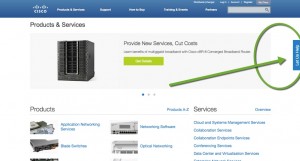
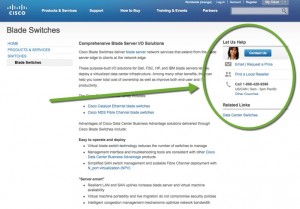
If you manage a web presence, you’ll want to move to a mobile-friendly responsive web design and implementation.  If you consume search and websites from a smart phone, you might notice a change in Google results and a more rapid conversion and broader availability of mobile-friendly web content. And if you are using Cisco.com specifically and need some assistance, don’t hesitate to reach out via click-to-chat or click-to-call functions on our pages (look for one of the following types of “contact us” or “let us help” offers).

LUH1 LUH2


Authors

Mark Yolton

Vice President of Digital

Cisco Marketing

Avatar

As technology continues to evolve rapidly, citizens and end-user government employees are reaping the benefits. Government is responding to the growing demand for increased e-services and faster access to data by aligning resources to more adequately support a fully connected world, or as we like to call it the Internet of Everything (IoE).

The Difference between IoE and Convergence

IoE is the networked connection of people, processes, data and things. This extends beyond machine-to-machine communication (often referenced as the Internet of Things) to embrace complete connectivity. By connecting the unconnected, government agencies have the potential to reduce costs, improve operations, enhance employee productivity and improve citizen safety and services. However, to unlock all the benefits of IoE, the first step is convergence.

Convergence is what we refer to as the union of Big Data, Cloud Computing and Mobility. As these pervasive technology megatrends come together—there is a synergy that is created. This allows for a more streamlined, efficient technology environment that bridges the gap between government operations and citizen services.

Convergence and the Public Sector

The idea of benefiting from IoE is often talked about as something far in the future, but in truth, it is already happening today. IoE is making a significant impact across government as organizations begin using converged resources to shape their IT infrastructure.

For example, Hardik Bhatt, Chief Information Officer for the State of Illinois, spoke recently with FutureStructure about how smarter infrastructure is helping to improve the lives of city residents. With smart street lighting systems, cities can save money by eliminating waste, help citizens feel safer and allow local businesses can tap into the connected infrastructure to build apps using the available data and network.

Federal agencies are also tapping into the power of IoE and orchestrating their cloud, big data and mobile environments. Orchestrating the converged ecosystem, the DoD is connecting the battlefield in ways that are fundamentally changing today’s military operations. Enhanced sensor communications are helping the Department of Defense (DoD) improve monitoring, both on and off the battlefield, with systems that communicate across intelligent networks to increase both visibility to threats as well as improving operational efficiency through better decision making ability. Sensor based systems and video have revolutionized remote healthcare services. In addition, General Services Administration Smart Buildings offer improved management and energy efficiency capabilities. Pressure readings and valve adjustments can be done from a network operations center instead of in person and occupancy sensors can be used to provide optimum lighting during daytime while saving energy.

Build Your Convergence Roadmap Today

Convergence is the key to unlocking the true value of the IoE. Governments with converged technology infrastructure environments will enjoy greater agility and efficiency through aligned resources. Those seeking to achieve maximum value from IoE should develop a convergence roadmap that addresses improvements in the underlying cloud, big data, and mobility services that power IoE. This plan should include an assessment of your current technology assets and capabilities, define what you want to achieve with each technology architecture, identify the workflows and process that will be impacted and build an IT strategy that embraces automation and an application-centric approach to ensure the applications and devices in your environment work together.

To learn more about this new age of convergence and how your public sector organization can benefit from the $4.6 trillion opportunity that IoE presents over the next decade, go to cisco.com/convergence. Additionally, check out some top predictions for the IoE era.


Authors

Dan Kent

Director

Public Sector Engineering & CTO

Avatar

Technology is important to children in terms of how they learn and how they live. A challenge for many school districts is the ability to offer a mobile learning by putting digital resources in a student’s hands with constrained funding for education.

mobile learning

Katy Independent School District located in Katy TX needed a wireless infrastructure that would support this vision. With over 62,000 students, Katy ISD needed to move from a wireless network that was built for coverage to a network that is built for density. By providing 802.11ac-based Wi-Fi access points in classrooms and outdoor locations and centralized management, the school district is supporting more than 40,000 concurrent Wi-Fi users and empowering faculty, students and staff. Continue reading “The shift in Education towards Mobile Learning”

Authors

Bill Rubino

Product Marketing Manager

Enterprise Networking and Cloud Marketing

Avatar

Today at Microsoft Ignite, Cisco continues to prove out our commitment to delivering the best data center and networking infrastructure solutions for the Microsoft portfolio. The proof comes in the form of new Cisco innovations that we committed to deliver as part of our joint multi-year go-to-market agreement with Microsoft in July 2014. Building on the great success we have achieved with the Unified Computing System (UCS) and Integrated Infrastructures, Microsoft and Cisco are now teaming to provide new solutions (see press release this morning) that simplify the movement and management of workloads between private and hybrid cloud environments. Cisco Application Centric Infrastructure (ACI), Cisco Cloud Services Router (CSR) 1000V, and Cisco Intercloud Fabric provide a seamless pathway to Microsoft Azure with Cisco application intelligent networking services.

Application Centric Infrastructure (ACI)

Microsoft and Cisco have been committed to deliver the value of Application Centric Infrastructure to Microsoft users since the announcement of ACI. This video from Brad Anderson, Microsoft CVP, Windows Server and System Center demonstrates the value Microsoft sees in ACI since.

https://youtu.be/E8fNqWTxXHU

Continue reading “Cisco Innovation Highlights Microsoft Ignite”

Authors

Jim McHugh

Vice President, Product and Solutions Marketing

Unified Computing Systems

Avatar
UCS B460 M4
Cisco UCS B460 M4

I’ve heard it said that CIO’s like their ERP systems the same way they like their cars: big, fast and German. Setting nationalities aside, IT pros craving more horsepower for something like SAP HANA need look no further than our UCS B460 M4 and C460 M4 servers, which now supports Intel’s new Xeon E7v3 processor family.

You may wonder why news like this is this important in an age where hardware is so often taken for granted. The answer is speed, in two flavors:

  • Faster Applications
  • Fast IT

Organizations across the spectrum are working to become intelligence-driven throughout their operations, in real time, in order to create a perpetual and renewable competitive edge. Taking a long-term view in choosing the right infrastructure accomplish this important. Here are two reasons why:

  1. You never hear about an analytic environment getting smaller. Massive increases in data volume mean these environments inevitably grow.   For many, this will mean continuously expanding clusters of hundreds or thousands of servers for scale-out big data apps and bringing in ever-larger systems for the scale-up, in-memory analytics.
  2. Data is the lifeblood of the digital enterprise. As the use of big data becomes pervasive and critical to day-to-day decision-making, the performance and predictability of these computing platforms will become increasingly paramount to success. So too will be the speed at which they can be deployed and expanded. You want to choose partners and technology you can trust.

Continue reading “Cisco UCS and Intel Xeon E7v3: bringing the horsepower you need for analytics”

Authors

Todd Brannon

Product Management Senior Director, Cisco Compute