#CiscoChampion Radio is a podcast series by Cisco Champions as technologists. Today we’ll be talking about the Talos Security and Intelligence Research Group with Sr. Technical Leader / Security Outreach Manager Craig Williams.
Learn about the Cisco Champions Program HERE.
See a list of all #CiscoChampion Radio podcasts HERE. Ask about the next round of Cisco Champions nominations. EMAIL US.
Companies’ expectations of IT keep increasing as the pace of business intensifies, creating greater demand for new services and faster access to resources and data. If you have been reading my blogs, you know that THE way for IT to keep pace with the speed of business is automation. But buyers beware.
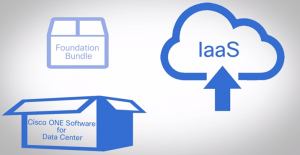
IT automation solutions are difficult to create with multiple products that carry a la carte pricing models and licensing models tied to hardware. The hassles are obvious, and that model doesn’t help IT automate effectively. What is necessary is full functionality automation software that offers simplified pricing and licensing options as well as unified automation that delivers broad coverage for diverse environments. So Cisco offers exactly that. Watch this video to learn how.
The lines between offline and online experiences are blurring. Customers no longer go online, they are online 24/7, and that includes inside your stores. In fact according to recent Google research, 89% of smartphone users leverage their smartphones while shopping in stores. And close to 70% of those used it to look at the retailer’s site and 21% look at apps.
Furthermore, according to Laura Wade-Gery, executive director of Multi-channel eCommerce for Marks & Spencer, “Shoppers who shop on our website as well as in our stores spend four times as much; throw smartphones into the mix and they spend eight times as much.” Enabling web, mobile, and video experiences in the store represents a huge opportunity – whether it is interactive, connected digital signage; Wi-Fi; employee-focused endless aisle apps; and so on.
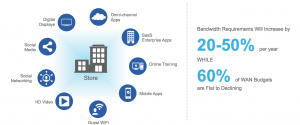
Yet the majority of our customers face the reality that digital innovation is overwhelming their enterprise network. Everything from web apps, HD video, software updates, mobile apps, and even digital signage are traversing the network eating up valuable bandwidth. In addition, most retailers subscribe to doing more with less – particularly when it comes to IT – so upgrading enterprise network bandwidth across every store every few years is often just not viable, both from a budget and agility perspective. That is not to mention that a lot of Cisco customers can’t upgrade their bandwidth due to store location even if they wanted to.
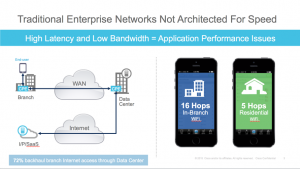
But bandwidth constrained enterprise networks are only one side of the story. Latency is the other, whether caused by distance or amplified by enterprise network architectures such as backhauling Internet traffic over the WAN through the datacenter and out to the Internet. Currently, the vast majority of retailers use this network topology for store Internet access.
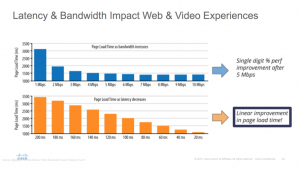
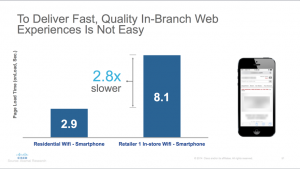
And as we all know, high latency is particularly detrimental to web application performance.
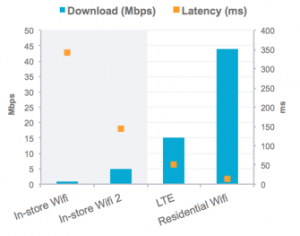
Just look at the difference in latency and bandwidth between in-store and residential Wi-Fi. In fact, latency for in-store Wi-Fi is higher than latency for LTE.
The bottom line is that congested, high-latency, low bandwidth enterprise networks result in slow HTTP applications, video, and software updates.
And we all know that video or apps that are slow or not working properly are bad for business. There has been plenty of research highlighting the fact that as web apps get slower, conversion rates decrease, abandonment rates increase, and employee productivity plummets.
In other words, slow apps – whether inside or outside the store – equals unhappy customers and unproductive employees. The answer to this problem? Retailers need to focus on accelerating HTTP/S applications, video and software updates while maximizing enterprise network bandwidth to ensure fast, high-quality experiences to all of your end users.
The key to retail today is customer understanding —where each customer stands on his or her personal shopping journey, whether in-store or out. Retailers must “know” each shopper as never before. And they must offer the kinds of contextual, personally relevant experiences that will optimize their merchandise mix, create faster inventory turns, and drive greater customer engagement.
Yet, as a recent Cisco study revealed, offline retailers – or retailers that combine on and offline capabilities – have their own unique advantages – if they step up to the opportunities of the Internet of Everything (IoE) economy. By blending the benefits of the physical store — such as the ability to touch, compare, and try on products — with the benefits of the virtual world, retailers can create a new value proposition that can’t be matched by their online-only competitors. In the process, they not only drive their own industry’s disruption but challenge for market leadership.
We are just a few weeks away from what has become my favorite event of the year: Cisco Live. I’ve been attending Cisco Live consistently for the last several years and this year I will be attending as a NetVet for the first time. What has kept me coming back year after year and, this time around, on my own dime and time? Well, there’s the World of Solutions where you can see all the new devices with the latest blinky lights, there are the incredible amount of brain melting tech sessions, the keynote sessions, and of course the much anticipated Customer Appreciation Event (really, it’s all about the hat). At the end of it all though, the reason I keep coming back year after year are the people I meet, both new and known, that are my peers in the industry.
The Year was 2008…
My first Cisco Live was in Orlando, FL in 2008. It was, in a word, overwhelming. So many people, so many sessions, and so much information coming at you. Others have said it’s like drinking from a firehose and I would agree completely. It was both awesome and intimidating (especially being of the introverted type as a lot of us are). Twitter and other social media platforms were in their infancy at the time and other than the CAE, WoS, and meeting with your account team it was hard to connect with people. You know how they say New York City is the place where you can be among millions of people at once but be utterly alone? Yeah, it was kind of like that just on a smaller scale. Continue reading “Cisco Live – It’s All About Networking”
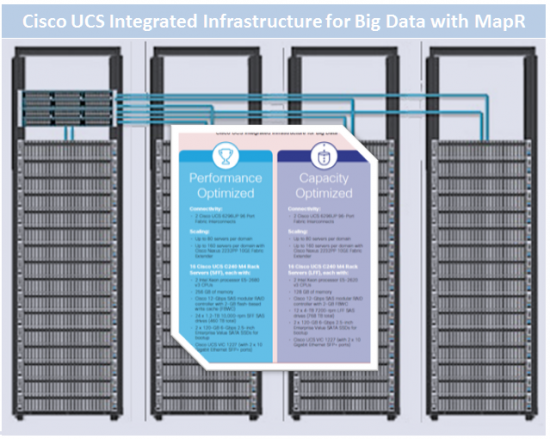
Hadoop is a Game Changer ! Cisco and MapR have partnered to offer a comprehensive portfolio for enterprise Hadoop deployments that combines Cisco UCS and the MapR Distribution for Apache Hadoop. With significant investments in architectural innovations, the joint solution offers a high-performance platform that can be optimized and scaled for any size to meet the demanding needs of our customers. Today, we are announcing the 3rd generation of our joint solution:
Taking full advantage of the high performance compute, internal storage and active-active network fabric with crucial investments in MapR improving performance and scalability while maintaining the Apache Hadoop API and application compatibility for broad applicability
Large scale production deployments in a range of industries including finance, healthcare, media retail and government
Foundation for an enterprise data hub with support for out-of-the-box multi-tenancy ensuring application level SLAs, guarantee isolation, enforce quotas, job placement control, security and delegation as well as providing a low cost of operations and simpler manageability with UCS Manager and the MapR control system
Fully automated provisioning and deployment of a cluster with Cisco UCS Director Express for MapR with a single management pane across both physical infrastructure and Hadoop software, with advanced application-level monitoring
Scalability to very larger clusters with Cisco Application Centric Infrastructure, enabling multi-tenancy, policy-based flowlet switching, packet prioritization to deliver- throughput on demand, leading-edge load balancing across UCS domains.
The problem of the digital age for economy and society is not so much about the digitization of everything – it’s the exponential speed of the change. We human beings are not used to such a speed in all of our history.
Companies who understand that, don’t feel comfortable at all anymore and act.
So did my employer ZEISS, a world famous brand in optical based in Germany – and mechanical technologies since 170 years. I was challenged to find a job shadow position in one of the major digital brands in Silicon Valley, U.S.A., to experience the pace of change at its origin.
Thanks to Gerry McGovern, a leading Internet evangelist and Martin Hardee from Cisco, I found such a unique shadow opportunity. Thanks to even more people from my network, I was able to reach out to Managers, Directors and VPs from Apple, Google, Facebook, Adobe and Marketo to share knowledge and experiences while in Silicon Valley. (Can drive the 101 w/o a GPS meanwhile)Continue reading “Don’t Be Arrogant”
Cisco Live in San Diego is right around the corner. It’s the place to be to meet with people, learn and to stay current with the technology trends of the industry. What are some of the upcoming technology trends to watch out for at Cisco Live.
Software-Defined WAN (SD-WAN)
There is a lot of buzz about Software Defined Networks (SDN), Software Defined Data Centers (SDDC) and everything you can possibly think of and then adding software defined in front of it. Many of these technologies are not mature yet but SD-WAN is a viable technology as of now.
Cisco is realizing the SD-WAN through its technology called IWAN. IWAN is used when connecting to multiple Service Providers (SPs) and can more effectively work in such a setup than with vanilla routing. IWAN can choose the best exit, based on metrics such as latency, jitter and packet loss, which is not feasible with normal routing. It does this through a technology called Performance Routing (PfR). This technology was very complex in the past but has evolved to a much simpler configuration in its current revision. It can also help organizations save money by running DMVPN over the Internet instead of buying more costly MPLS circuits from the SP. Continue reading “Upcoming Technology Trends at Cisco Live”
Innovation – exponential innovation – is needed to capitalize on the $19 trillion in value at stake that the Internet of Everything (IoE) is poised to generate worldwide over the next decade. We’ve entered a time of co-innovation and experimentation via rapid prototyping and an ecosystem of partners to develop new business models and new sources of revenue.


 #CiscoChampion Radio is a podcast series by Cisco Champions as technologists. Today we’ll be talking about the Talos Security and Intelligence Research Group with Sr. Technical Leader / Security Outreach Manager Craig Williams.