Is your healthcare organization doing everything it can to improve productivity while delivering the best possible patient care? Join us at the Community for Connected Health Summit at HIMSS12 as we bring together healthcare innovators and Cisco specialists into a single forum of networking, education, and best practice sharing, all focused on the very latest innovations improving healthcare delivery. You’ll be the first to hear about breakthrough solutions available today — and what’s on the horizon for tomorrow. Read More »
Technology makes all of us smile this holiday season
As we wrap up our holiday time away, I thought it a great time to reflect on the gift we often forget about … spending time with our loved ones and the ability to make each other smile….
These days we constantly talk about how technology in healthcare settings makes us more efficient, more collaborative and more patient-centric. I don’t hear much, however, about how it makes us SMILE. Today I have found the exception: Santa, connecting live via video, to chat with a hospitalized child. Smiles erupt from the child, parent, and staff alike – not to mention Santa himself.
Such is the scene at 15 hospitals across the U.S. the last couple of weeks. As a nurse and caregiver, it touches my heart to know that despite all that medicine and technology offer today, we can’t cure everyone as soon as we would like and some patients and their families will celebrate the holidays surrounded by beeping machines and sterile environments. It is exciting to see the technology we use to care for a child’s illness can be used to boost the spirit as well…
Success stories like this prompt me to think of every increasing ways we can leverage technology to bring better health services – iced with a bit of joy – to our patients in the coming year! Hope it does the same for you!
What are your ideas how technology can be used for multiple purposes? Wishing us all a Happy and Innovative 2012 benefiting society.
There are some interesting security developments on the BYOD front that may present serious HIPAA challenges for healthcare delivery organizations. If you’re not following the story I’ll give you the quick summary. Security consultant Trevor Eckhart discovered monitoring software from Carrier IQ on his Android based smart phone. The software which he could not disable was placed there by the cellular carrier in an effort to monitor and enhance the end user experience. His testing reviled that the software was able to log keystrokes, URL’s, GPS location and SMS text messages amongst other items. All of the juicy information that is collected encrypted and uploaded to the carrier or manufacturer for “analysis” – NICE!
The seriousness of the issue sparked a federal probe with Senator Al Franken sending a request to the software vendor, manufacturers and cellular carriers asking for specific details of the monitoring software capabilities and how the information collected is being used. Many of the responses received to date raised many more questions than they answered.
By the time you read this, the holiday season will be behind us. The second longest post-holiday line over the dreaded Toys-R-Us return line is likely to be in front of the IS Support desk come “Monday Morning”. All the Cindy Lou Who’s will be in line asking that their smart device be given access.
It will be interesting to see the statistics, but I suspect that in comparison to previous years, it’s highly likely that many more BYOD smartphones and tablets will enter the healthcare environment. One of the top care about for CIO’s is to provide rapid provisioning within their organization. This is great, but I often wonder if responding to the demand could result in cutting the proverbial corner without knowing it!
Given the need to deploy a wide variety of BYOD devices quickly and securely, the healthcare Chief Security Officer (CSO) certainly has their job cut out for them these days. The shire volume of consumer devices entering the enterprise environment raises some serious questions as to their readiness, especially in regard to security and privacy – add ePHI and the responsibilities of covered entities and you have some significant reason for concern. Perhaps before a healthcare system adopts a BYOD policy, one should consider the ramifications of allowing the wide range of consumer devices (and contracted carriers) to access protected resources. I’d suggest that it’s certainly time to consider the use of an enterprise ready device – one such as the Cisco Cius where you can control key aspects related to maintaining security and enhancing the user experience.
Cisco Cius with AppHQ is an Enterprise Ready Tablet
First, with the monitoring software described, don’t assume that your security policy by itself is sufficient. Remember this software, as with others to likely follow, are key loggers. Such applications by definition capture each and every keystroke and button press regardless of the application or transport/network encryption being used. Many CSO’s may incorrectly conclude data loss is impossible given the use of VPN technology. Likewise some will conclude that their adoption of VDI assures that the data stays local to the healthcare system and not to the device. While partially true, we are effectively talking about keystrokes being logged. Clearly a physician WILL over time enter data that is classified as ePHI – all nicely collected and uploaded unknowingly to a 3rd party. Even SMS text messages sent or received by such a device is within scope!
My advice is to stay abreast of this developing story, and in the meantime, take the time necessary to fully understand the ramifications of allowing various devices (and carriers under contract) to access your protected resources. It’s no longer about robust authentication mechanisms, secure encryption and remote wipes – It’s now much more than that! Also remember that a device that is classified as “safe” today might not be in compliance after an OS upgrade or application install in the future. Taking accountability for the device and the applications being loaded onto it by either the user or carrier is YOUR business. Having a system in place that facilitates YOU being able to control the OS and the applications that are being installed on BYOD devices is a critical objective.
So make sure that the next time you’re planning a BYOD party that you recognize all the guests being invited – otherwise some valuables in the form of ePHI may be slipping out the back door!
Oh, how I wish tablets were around when I was providing patient care as a Registered Nurse on a busy surgical floor! I had a legion of patients, and masses of information to find and remember ‘in the moment.’ It seemed like I could never find the person or the equipment I needed fast enough.
Sometimes, the most practical option was to take pen to paper (or to my scrubs) to jot down a note, and then go find the information I needed in a chart, the EHR, or reference once I got back to the nurses station. Could I have delivered more timely, efficient and safer care if I had access to the information and data I needed at the patient’s bedside? You bet I could, and here’s how!
Tablets!
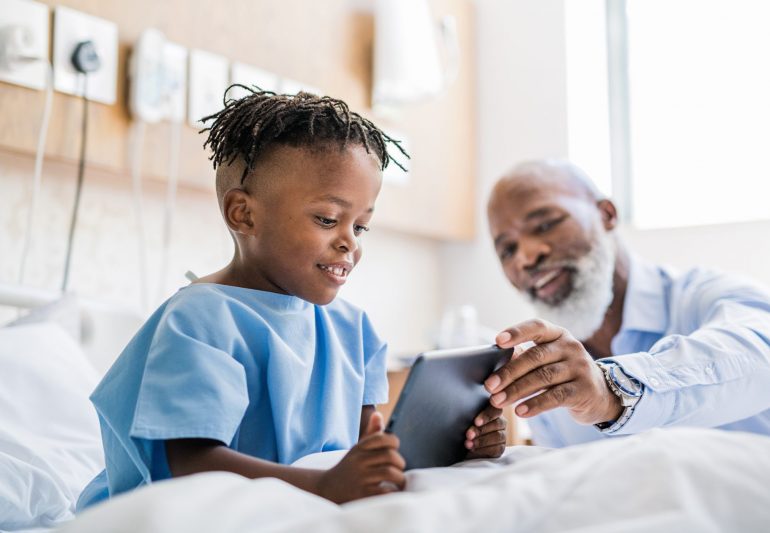
Tablets provide information access at one’s fingertips – especially at the patient bedside – helping doctors and nurses to render quick, safe and sometimes lifesaving care. This is echoed in Institute of Medicine (IOM) reports calling for direct care providers to have quick access to electronic references. Moreover, up to 70% of sentinel events in healthcare are caused by poor communications, according to a Joint Commission study (1995-2006). Given these findings, tablets offer a new and improved way to ensure patient safety because up-to-the-minute information and immediate communication is readily available where and when needed.
Tablets help save time by increasing mobility and productivity, reducing errors and keeping information readily accessible within the clinician’s reach.
Come on clinicians … no mater if you are a doctor, nurse, respiratory therapist, case manager, educator or another team member … surely you can think of all kinds of ways tablets could enable you to have the information you need when you need it. You and your patients will be all the happier and satisfied for it.
I quickly came up with a short list of ways that tablets, one of several mobile devices, can make a difference for patient care delivery:
Workflow efficiencies by having access to information and data at the point of care
Real-time communication amongst team members while in different locations
Video consultations
Patient education
BCMA and real-time drug interaction checking … possibility for a real-time pharmacy consult at the patient’s bedside via voice or video conferencing
Clinician satisfaction
My questions to you: Have you used a tablet to deliver patient care? If so, what has been your experience – is the tablet adding real value, or is it just “another toy”?
Cisco asked a series of medical, design and technology experts about their views on the future of the Emergency Department as well as their insights into how effective communications and technology impacts the delivery of health services. Take a look at the first part of The Future of the Emergency Department, if you missed it.
In this video, the speakers talk more about the importance of effective communications and technology within the Emergency Department.
Historically Healthcare has the reputation of being behind the technology curve, however the next-generation worker is now driving the demand for the Bring Your Own Device business model.
“What? That’s crazy talk! How do I maintain a controlled secure environment?”Exclaims the IT Manager.
This new age of social intelligence and the evolution of social networks and mobility bring the expectation of free choice among the work force. Workers are putting the pressure on organizations for interoperability between the enterprise network and the devices of their choosing.
Today the average person on the planet has 1.8 devices on today’s networks connecting over 13 billion devices in total. By the year 2015 that number is expected to rise to 25 billion equating to 3.47 devices per person. Read More »
After implementing electronic health records and operating on meaningful use, you may ask yourself – ‘now what’?
Now that your hospital or medical practice has an EMR, you are in a unique situation to utilize this resource for several other research capabilities beyond quality reporting. EMRs provide an outlet to access rich clinical data for research use, along with several other secondary uses. They can provide a platform for clinical recruitment, along with recently being recommended to use to document extreme situations, evaluating devices and drugs to provide early information helping to identify side effects that may have been missed during clinical trials.
What are additional secondary uses for EMRs that you have seen in your medical practice places and hospitals? Please share below and feel free to read more on this topic.
Welcome to the first in a series of posts from the Cisco Australia and New Zealand (ANZ) healthcare team.
We’ll be providing regular news and insights from the region covering healthcare issues as well as the role of technology in supporting them.
This is the first of a two part video series on the future of the emergency department.
At a Digital Hospital Design conference hosted by Health Informatics Society of Australia (HISA) and chaired by Brendan Lovelock, head of the healthcare practice for Cisco ANZ, industry spokespeople and medical specialists shared their views on how they envisaged the emergency department in the future. Watch our video summary on what they said.
I had the pleasure of meeting with a number of Biomedical Engineering and Clinical Engineers at CIMIT (Center for Integration of Medicine and Innovative Technology) in Cambridge this week. Lot’s to tell you (more to come), but perhaps nothing more timely then “time” itself. With the eventual “Meaningful Use” requirement to include the integration of Medical Devices to your EHR as a means to correlate patient vitals over time – we have big problems looming as an industry.
Under the direction of Dr. Julian Goldman at CIMIT, researcher Pratyusha Mattegunta, MS, BME and team examined 100’s of medical devices across a particular healthcare system – most of which were network attached. What the team found was an overwhelming number of medical devices with incorrect time and date. Some devices in fact were running some “very advanced firmware” that was able to predict the patient’s condition — Sometimes as much as 6+ months into the future! Read More »
An interesting article titled “Wireless Medical Device Coexistence” (found here) was passed my way recently. The article made a case that by creating a formalized testing strategy the risks associated with the coexistence of wireless technologies could be reduced resulting in a safe and effective wireless medical device. After reading it – I began to consider the problems we all face with wireless device coexistence and began to ask myself if such testing would improve the coexistence challenge.
Many medical devices today include wireless interfaces that utilize 802.11, Bluetooth or even ZigBee all within the ISM (Industrial, Scientific and Medical) band. The criticality of such connectivity varies widely across the various medical device types that exist. The most critical of these devices require continuous wireless connectivity with a “zero or near zero” packet loss factor.
The paper points out that the IEC-60601-1-2 is the standard used for EMC (Electromagnetic Compatibility) testing of medical devices, but the standard does not include testing recommendations to determine the conditions necessary to maintain a wireless connection when subject to interference. Now some of you Biomedical and Clinical Engineers might point to the ISO-14971:2007 standard, but this is focused on identifying the risks during the product lifecycle and does not specifically address the RF aspects.
So I wonder, if the industry created a testing standard for medical device coexistence (in the ISM band), would this advance our cause and allow more of us to get a better night sleep? The article provides some examples of a suggested testing strategy (you can read it here), and I won’t debate the finer points but have to ask if this would result in a safer and more effective medical device. Read More »
It is of particular interest to me to see how technology can be leveraged to help care providers meet legislation requirements and improve care delivery and outcomes at the same time! One of our most recent examples of how this alignment occurred was through collaboration with Saint Thomas Health as part of the MissionPoint Health Partners pilot. We have been working on this project since 2010 to bring our Cisco HealthPresence Solution to underserved communities in Tennessee.
Cisco HealthPresence is one of the solutions designed to facilitate better and more regular care.
The objective is to help extend the reach of healthcare delivery, simplify healthcare communications, and connect patients with medical providers and specialists to enable examinations in a convenient and efficient manner.
I often engage in discussions with IT Directors, CIO’s, BioMed and CE teams at healthcare organizations worldwide. When the topic of medical device connectivity arises, it’s the point in the conversation where it gets – ah interesting. Points of view between the IT and Biomedical sides of the house are – sometimes aligned, but often there are gaps in the expected roles and responsibilities.
So rewind the clock a bit… back to the early 90’s when IBM had a foothold on its proprietary protocol known (and loved) as Systems Network Architecture commonly known as SNA. The two sides of the house back then were the mainframe group and the PC networking teams that were quickly emerging. The thought of providing end user connectivity to the big iron over something called Thinnet was very controversial in many big blue shops. I often thought that perhaps Thinnet was suffering from a market naming perception problem – but none the less at the time it was thought of as an inadequate transport technology to provide green screen access to the datacenter Big Iron (Yes — I said Green Screen). The general feeling was that the sky fall, on-call pagers would endlessly go off and the availability and performance reports would inevitably point the fingers of blame to the mainframe – something that was simply not allowed to happen!
Forwarding the clock a bit – say mid to late 90’s – the next and potentially the most important wave to date of convergence arrived – Voice. The thought of putting voice traffic on an IP network was believed by many at the time as just crazy. Again, falling skys and lots of dropped and unintelligible calls would result – the networks HAD to be separate. It was the way it was… but slowly over time, voice along with its cousin IBM SNA (both sharing the same sir name of “critical” btw) were riding the same converged network and living happily together. Read More »
For those of you not fortunate enough to join us at this year’s first ever Healthcare Day at Cisco Live 2011, you missed a historic and wonderful event. This year, the Cisco Live US conference was held at the Mandalay Bay in sunny Las Vegas! To make things just a little bit better for those of us focused on the Healthcare industry, our “Healthcare Day” debut, far exceeding our wildest expectations.
We started the day with Kathy English, BSN, RN and Director of Global Healthcare Market Management for Cisco. Kathy provided a brief set of introductions along with an overview of the day to follow along with the Cisco Healthcare partners lined up to present throughout the day. Next, Alan Cohen, Vice President of Global Public Sector and Industry Solutions highlighted the need to transform healthcare on a global basis. Read More »
The PPACA known as Healthcare Reform Act in the United States is driving major change in our industry around accountability for the quality outcome of our care. It is making providers accountable for the care that is delivered with measures that will be reported by patients. As I monitor these major changes, it makes me wonder how we can really implement the critically needed change. I wonder, why is the US dead last compared to 6 other leading free world nations” in healthcare quality measures and we spend almost double per capita for healthcare than other countries according to the Commonwealth Fund (June, 2010). Many believe the concepts that have been embraced by the CMS (Centers for Medicare and Medicaid Services) under the direction of Dr. Don Berwick, (appointed on July 7, 2010 by President Barack Obama to serve as the Administrator of the CMS) can drive change. As CMS is the largest healthcare payer in the US, (over half), they can lead a major change of this nature and have adopted the “Triple-Aim” model of evidenced based care and wellness. The aspiration goals, or the Triple Aim, is a phrase coined by Dr. Berwick and it is all about focusing on how to drive improvement so that our populations are healthier, our patients receive better care and instead of working within a volume based business model, move to one of quality and value that rewards prevention, wellness and a positive patient experience.
How can Cisco influence and enable this within our Healthcare Ecosystem?
Welcome to our Global Cisco Healthcare blog! As the leader of Cisco’s Healthcare Market Management team and as a Registered Nurse, I have a passion for this industry and am compelled to drive improvement and transformation in how we promote health and wellness, deliver care and enable quality patient experiences! I hope you will join us and become an active participant and visitor to this community. Each week, we will explore various topics that are top of mind in healthcare. I encourage you to share, comment, and ask questions so that we can have genuine discussions about what is happening in this dynamic industry.
The experts on our team, who bring together decades of experience in advanced healthcare technologies and the value they can bring to healthcare will be blogging about the Healthcare Cloud, Health Information Exchange, Mobility and mHealth, Care-at-a-Distance (TeleHealth), Clinical Workflow, Healthcare industry trends, innovations in healthcare and much more! If you have a topic of interest related to healthcare and technology that you would like to discuss, please comment on this post. We’d love to hear from you!